
Attracting a steady stream of cardinals, chickadees, finches, and nuthatches to your yard depends on one thing: the seed blend you put out. A mix loaded with cheap fillers like milo or red millet gets ignored and rots on the ground, while a premium, high-oil, protein-rich blend keeps your feeders busy from dawn until dusk.
I’m Mo Mahin — the founder and writer behind Furric. I spend my time cross-referencing botanical nutrition data, analyzing manufacturer sourcing claims, and tracking thousands of verified owner reviews to identify which seed blends actually deliver consistent visitation rates without attracting unwanted pests or leaving waste under the feeder.
After comparing oil content, ingredient purity, and reported bird diversity across dozens of options, I’ve narrowed the field to the five blends worth your money in this guide to the best bird food for songbirds.
How To Choose The Best Bird Food For Songbirds
Not all bird seed is created equal. Many budget bags are bulked up with grains that only ground-feeding birds tolerate, while the songbirds you actually want to see — cardinals, chickadees, titmice, and finches — pick through the mix and leave the rest to rot. Focus on three things: ingredient purity, oil and protein content, and processing quality.
Ingredient Purity — The “Filler” Problem
The most common complaint among experienced backyard birders is the presence of milo, wheat, and red millet in cheap blends. Songbirds overwhelmingly prefer black oil sunflower seeds, sunflower chips, peanuts, and safflower. A bag that lists black oil sunflower as the first ingredient — ideally at 80% or higher — will generate far less waste and attract a more consistent crowd.
Oil and Protein Content — Energy Density Matters
Black oil sunflower seeds contain roughly 28–30% fat and 15–18% protein, making them the gold standard for year-round feeding. During winter, that fat content provides critical warmth-maintaining energy. During breeding season, the protein supports feather development and chick growth. Any blend that drops below these benchmarks relies on less nutritious grains.
Processing and Storage — Freshness Guarantees
Seeds processed in USDA- and BRC-GS-approved facilities are typically cleaned, dried, and packaged at optimal moisture levels. Poorly processed seeds can develop mold or lose their oil content before they reach your feeder. A resealable bag adds convenience, but what matters most is that the seeds arrive fresh — plump kernels with the meat still intact inside the shell, not shriveled or dusty.
Quick Comparison
On smaller screens, swipe sideways to see the full table.
| Model | Category | Best For | Key Spec | Amazon |
|---|---|---|---|---|
| Happy Wings 15 lb | Premium | High-volume, year-round feeding | 15 lb bag, USDA-approved facility | Amazon |
| Songbird Melody 7 lb | Premium | Vitamin-enriched breeding support | 7 lb, Vitamin A & D enriched | Amazon |
| Old Potters 12 lb | Mid-Range | Non-GMO, USA-grown sourcing | 12 lb, Non-GMO, small farm grown | Amazon |
| Audubon Park 15 lb | Mid-Range | Diverse variety in a single mix | 15 lb, raisins, peanuts, chips | Amazon |
| Happy Wings 5 lb | Entry-Level | Testing a new feeder or small yard | 5 lb, no-grow formulation | Amazon |
In‑Depth Reviews
1. Happy Wings Black Oil Sunflower Seeds – 15 lb
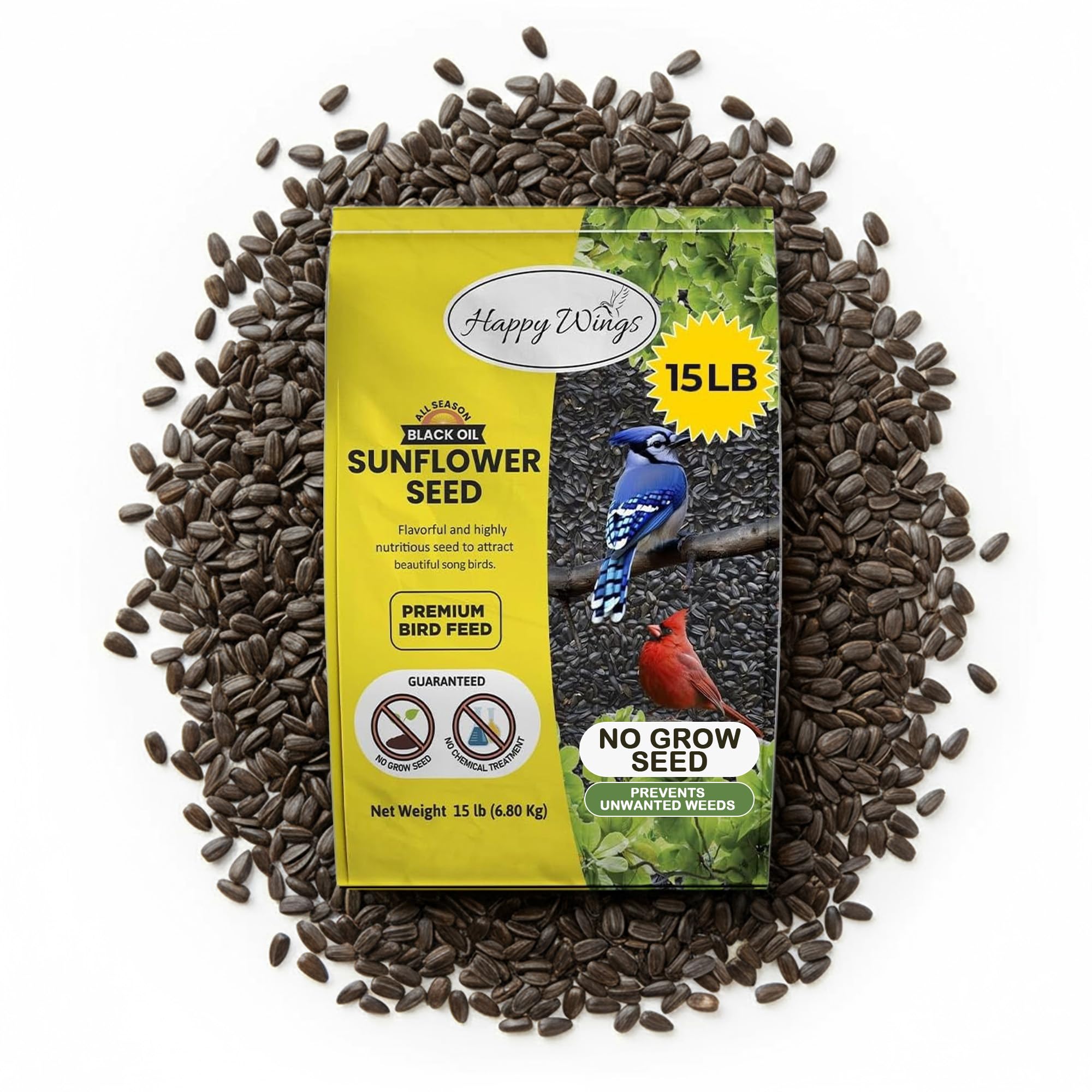
This 15-pound bag of straight black oil sunflower seeds represents the most efficient way to attract cardinals, mourning doves, chickadees, and tufted titmice with zero filler grains. The high oil content — roughly 28% fat — delivers the concentrated energy songbirds need during migration and winter cold snaps. Processed in a USDA- and BRC-GS-approved facility, the seeds arrive plump and clean, minimizing dust at the bottom of the bag.
Owner reports consistently mention that this single-ingredient seed leaves virtually no waste under feeders because birds consume every kernel. The resealable bag helps maintain freshness between refills, though the 15-pound capacity means even heavy-feeding yards get several weeks of use. It is the best choice for anyone who wants maximum bird traffic with minimum mess and no need to sort through a mixed blend.
The only consideration is that black oil sunflower seeds are edible for squirrels as well, so if you have a persistent squirrel population, you may want to pair this with a squirrel-proof feeder. Otherwise, this is a no-compromise option for high-volume, year-round feeding.
Why we love it
- Single-ingredient purity — no milo, wheat, or other fillers that birds ignore
- High oil content supports energy needs through winter and migration
- Large 15-pound bag reduces refill frequency and cost per pound
Good to know
- Attracts squirrels just as readily as birds
- Requires a tube or hopper feeder, not a finch sock designed for nyjer
2. Valley Splendor Songbird Melody – 7 lb
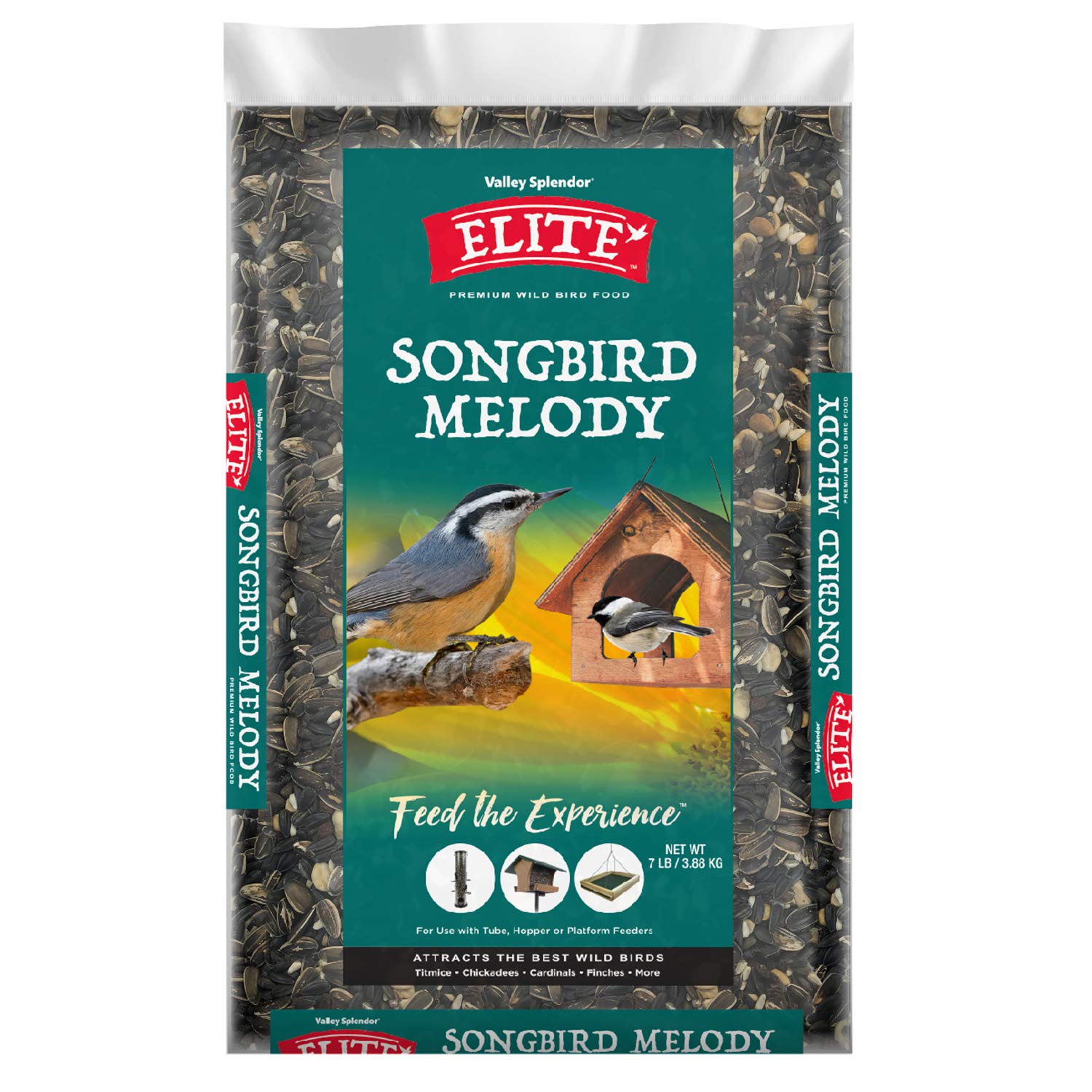
This Valley Splendor blend distinguishes itself by enriching its seed mix with vitamin A and vitamin D, nutrients that directly support feathering, bone development, and reproductive health during breeding season. The ingredient lineup — black oil sunflower seeds, safflower seeds, peanuts, striped sunflower seeds, and raisins — targets a broad range of songbirds including blue jays, cardinals, and finches. The berry scent is a subtle attractant that new feeders may find helpful for drawing in hesitant birds.
Verified buyers consistently note that the blend contains no added fillers, and the high proportion of sunflower and nut pieces keeps waste to a minimum. The raisins add natural sugar for an energy spike that migrating birds appreciate in spring and fall. Because the blend includes multiple seed types, it works well in tube feeders, hopper feeders, and platform trays alike.
At 7 pounds, the bag is smaller than the bulk options, which makes it a good fit for single-feeder yards or for those who want to rotate blends seasonally. A few owners mention that the price per pound runs higher than straight sunflower seed, but the vitamin enrichment and ingredient diversity justify the premium for dedicated birders.
Why we love it
- Fortified with vitamin A and D for breeding and feather health
- Raisins and peanuts add variety that attracts blue jays and woodpeckers
- Zero filler ingredients — every seed is palatable to songbirds
Good to know
- Smaller 7-pound bag requires more frequent repurchase
- Berry scent may not be necessary for established feeders
3. Old Potters Black Oil Sunflower Seeds – 12 lb

Old Potters sources its black oil sunflower seeds from small, sustainable American farms and certifies them as Non-GMO, appealing to birders who prioritize clean, traceable supply chains. The seeds are sold in-shell, which encourages natural foraging behavior — chickadees and titmice will crack each shell open to extract the meat. Buyers consistently report that the seeds arrive noticeably fresh, with plump kernels that have not shriveled inside the shell, meaning the oil content is still high.
The resealable bag is a practical touch that keeps the seeds dry between uses, especially important for outdoor storage where humidity can degrade seed quality. Owners mention that the freshness translates directly to less waste — birds eat every seed rather than leaving shriveled shells untouched. The 12-pound size hits a sweet spot between the smaller 5-pound bags and the bulk 20+ pound options.
One minor point is that the bag includes the occasional piece of field debris — small twigs or plant matter — which is a natural byproduct of minimally processed seed. This is not a quality concern but something to be aware of if you prefer a perfectly clean pour into your feeder.
Why we love it
- Non-GMO seeds sourced from small USA farms
- Consistent freshness reported by buyers — plump, high-oil kernels
- Resealable bag protects against moisture and pests
Good to know
- Occasional field debris may be present from minimal processing
- In-shell format creates shell litter under feeders
4. Audubon Park Extreme Variety – 15 lb
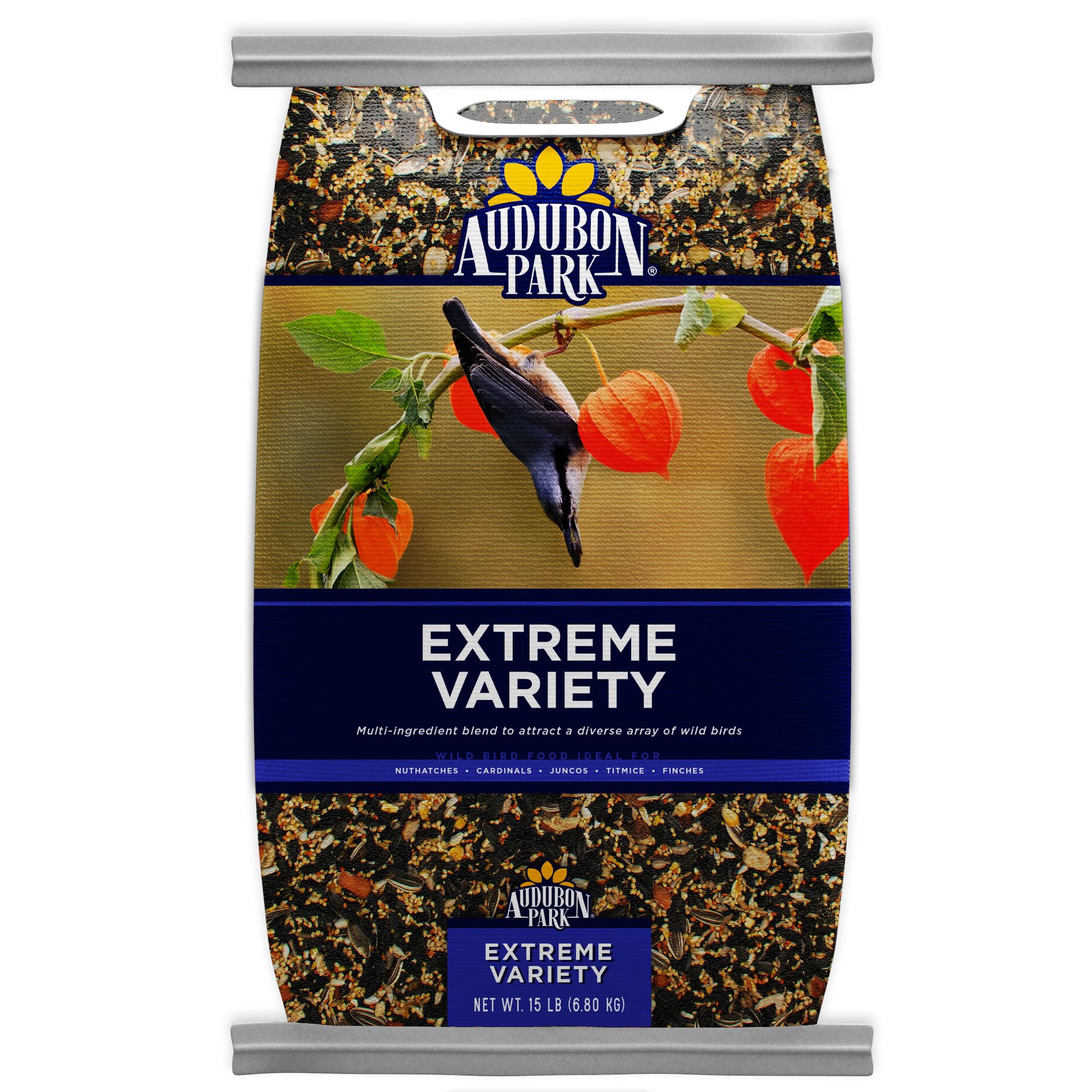
The Audubon Park Extreme Variety blend includes black oil sunflower seeds, sunflower chips, peanuts, striped sunflower seeds, raisins, and nuts — creating a texture and flavor diversity that attracts nuthatches, juncos, titmice, and finches simultaneously. Buyers consistently highlight that this mix is unusually heavy on sunflower and nut content compared to typical big-box blends, with very little of the small millet filler that often gets kicked onto the ground. The 15-pound bag offers solid value for the ingredient quality.
Because of the variety, this blend performs well in platform feeders where birds can pick through and find their preferred pieces. The raisins add a natural sweetness that appeals to bluebirds and robins that might not visit a straight sunflower seed feeder. Verified reviewers also note that the ingredient freshness holds up well even several weeks into a bag.
The variety does mean that certain high-value components — like the raisins and peanuts — may be consumed faster than the striped sunflower seeds, leaving behind a partial selection. If you have multiple feeders, consider offering this blend in one and straight sunflower in another to manage consumption rates.
Why we love it
- Raisins and nuts broaden the species range beyond sunflower-only blends
- Heavy on sunflower content, very low on undesirable filler grains
- Large 15-pound bag at a competitive price point for the ingredient mix
Good to know
- Raisins and peanuts may be claimed first, leaving uneven consumption
- Squirrels are strongly attracted to the nut content
5. Happy Wings Black Oil Sunflower Seeds – 5 lb
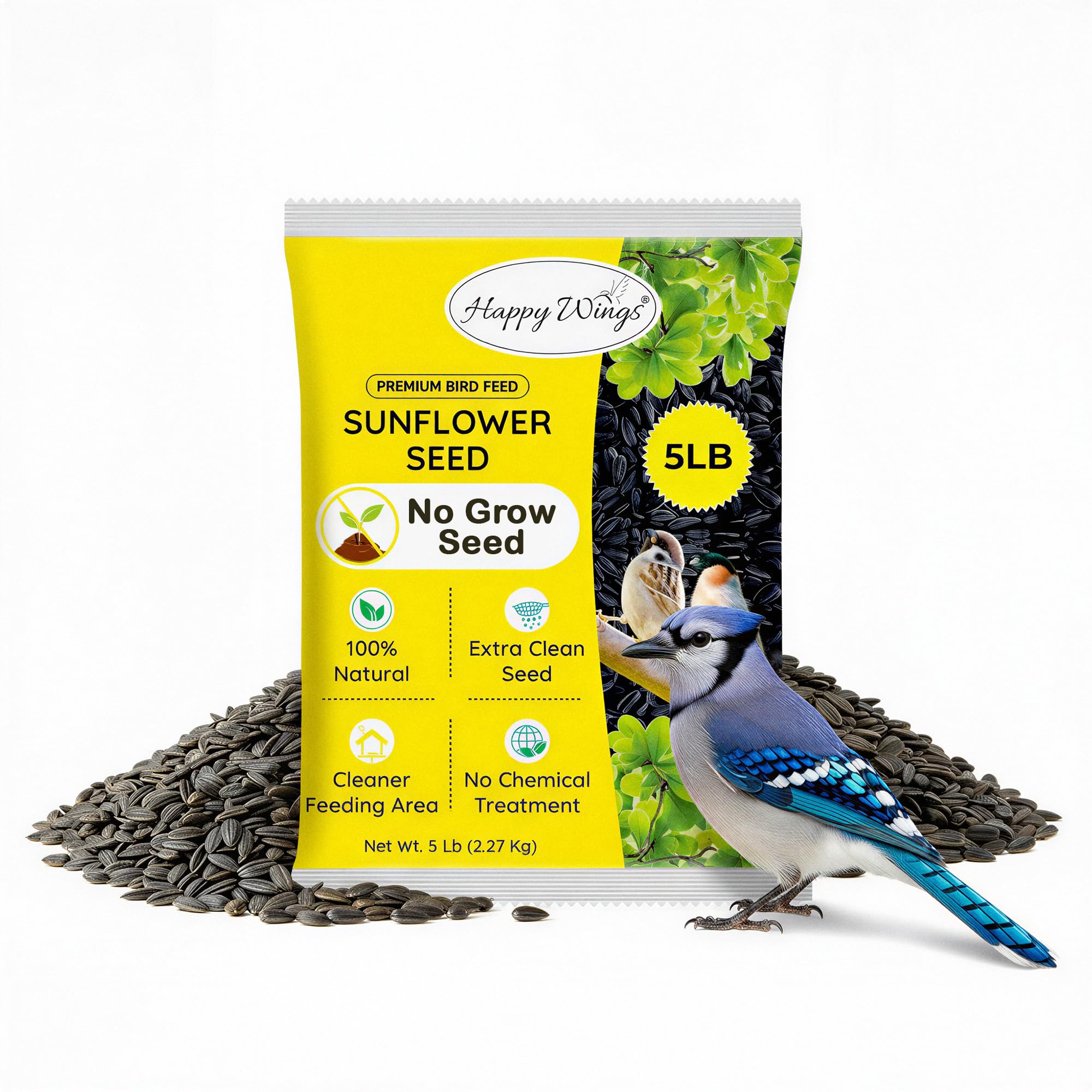
This 5-pound bag of black oil sunflower seeds is an ideal entry point for someone setting up their first feeder or managing a small urban garden. The no-grow formula means any seeds that fall to the ground will not sprout into unwanted sunflower plants, keeping patios, lawns, and landscaped beds clean. The seeds are processed in the same USDA- and BRC-GS-approved facility as the brand’s larger bags, so quality consistency is maintained.
Buyers report that even in small quantities, the high-oil content attracts cardinals, finches, chickadees, and sparrows within the first few days of placement. The manageable bag size is also useful for those who want to test a new feeder design or seed type before committing to a bulk purchase. Because it is a single-ingredient black oil sunflower seed, there is no need to worry about birds sorting through filler grains.
The obvious trade-off is the higher cost per pound compared to the 15-pound version of the same seed. For anyone with heavy bird traffic or multiple feeders, the larger bag will deliver better long-term value. But for a first-time birder or a small balcony setup, this 5-pound bag eliminates the risk of stale seed sitting unused.
Why we love it
- No-grow formulation prevents unwanted sprouts under feeders
- High-oil, single-ingredient purity attracts a wide songbird variety
- Small bag size ideal for testing a new feeder or limited spaces
Good to know
- Higher cost per pound than buying the same seed in a 15-pound bag
- Frequent refills needed if you have multiple feeders or high traffic
FAQ
What is the single best seed type for attracting the most songbird species?
Why do some blends leave a lot of seed on the ground under my feeder?
How often should I replace uneaten seed in the feeder?
Can I feed songbirds bread, oats, or kitchen scraps?
Final Thoughts: The Verdict
For most gardeners, the best bird food for songbirds winner is the Happy Wings 15 lb Black Oil Sunflower Seeds because it delivers single-ingredient purity, the highest energy density per pound, and the lowest waste ratio — all from a USDA-approved facility. You get maximum visitation from cardinals, chickadees, tufted titmice, and finches without paying for filler grains. If you want a vitamin-enriched blend that supports breeding birds through spring, grab the Valley Splendor Songbird Melody. And for budget-conscious birders who prioritize Non-GMO, USA-grown sourcing, nothing beats the Old Potters 12 lb Black Oil Sunflower Seeds.