
A standard GPS fence collar built for a 60-pound Labrador can deliver a static correction that overwhelms a 12-pound Chihuahua, turning a safety tool into a source of fear. Small dogs have thinner necks, lighter bodies, and more sensitive nervous systems than the breeds most containment systems were designed around — which makes picking the right unit a matter of weight-appropriate correction levels and collar fit, not just boundary radius.
I’m Mo Mahin — the founder and writer behind Furric. Over the past decade, I’ve analyzed thousands of pet product data sheets, cross-referenced owner feedback across 40+ containment models, and studied the engineering specs that separate a safe boundary system from one that risks over-correction on compact breeds.
Whether your yard measures a quarter acre or you need a portable setup for the RV, the best gps dog fence for small dogs must pair sub-15-pound collar fit with adjustable low-level corrections and reliable boundary retention.
How To Choose The Best GPS Dog Fence For Small Dogs
Selecting a containment system for a small breed requires more than comparing maximum range. You must evaluate correction granularity, collar weight, neck circumference limits, and whether the system uses GPS satellites or a base-station transmitter — because each approach has different tradeoffs for compact dogs.
Correction Level Granularity & Minimum Intensity
A system that offers 10 or more static correction levels lets you dial in a mild tap rather than a startling jolt. Look for units that start at level 1 or 2 and include tone-only and vibration-only modes as non-aversive options. Small-breed owners should avoid any fence with fewer than 4 levels of static correction.
Neck Circumference Minimum & Collar Weight
Most small dogs need a strap that tightens down to at least 7 or 8 inches. The receiver module should weigh under 4 ounces to prevent neck strain during extended wear. Heavier collars can cause skin irritation and make the dog reluctant to move freely near the boundary.
GPS vs. Base-Station Transmitter
Pure GPS collars offer portability and work on larger properties, but they require satellite lock and can drift near dense tree cover or metal structures. Transmitter-based systems create a circular boundary from a central plug-in unit and tend to be more consistent within 1 to 2 acres, making them a reliable choice for standard suburban yards.
Quick Comparison
On smaller screens, swipe sideways to see the full table.
| Model | Category | Best For | Key Spec | Amazon |
|---|---|---|---|---|
| PetSafe Guardian GPS 2.0 | GPS Collar | Premium all-breed containment | Neck as small as 8 inches | Amazon |
| Halo Collar 5 | GPS Collar | Multi-yard travel & tracking | Dual-frequency GPS + station correction | Amazon |
| PetSafe Guardian GPS | GPS Collar | Large acreage with real-time tracking | 10 static correction levels | Amazon |
| DJNFGQ GPS Wireless | GPS Collar | Custom polygonal fence shapes | Circular + free-form boundary modes | Amazon |
| WIEZ GPS Wireless | GPS Collar | Open-field & farm use | Range up to 3281 ft radius | Amazon |
| FOCUSER Wireless | Transmitter | Entry-level wireless boundary | 4 correction levels; neck 8-21 in | Amazon |
| MIMOFPET X3 | Transmitter + Remote | 2-in-1 fence and training system | 185-day standby in fence-off mode | Amazon |
| eayaco T810Pro | Transmitter + Remote | Real-time activity display | TFT screen shows motion & battery | Amazon |
| Blingbling Petsfun GPS | GPS Collar | Multi-dog GPS on a budget | Adjustable 99 levels from 10-990m | Amazon |
In‑Depth Reviews
1. PetSafe Guardian GPS 2.0 Dog Fence + Tracking
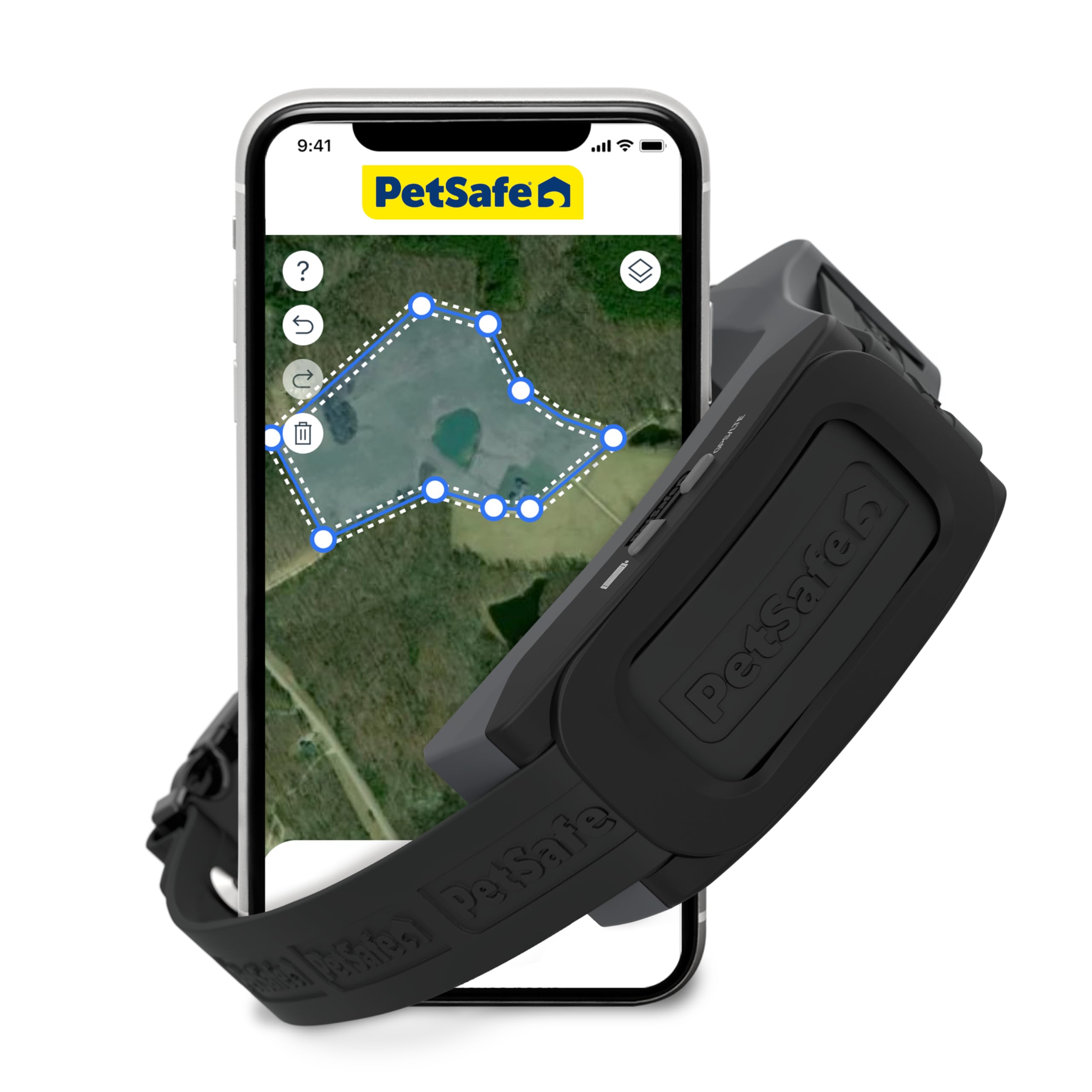
The Guardian GPS 2.0 reduces the collar size by 50% compared to the previous generation, bringing the receiver module down to just 0.29 pounds — a critical spec for any small dog under 15 pounds. The adjustable strap accommodates neck circumferences as small as 8 inches, which covers breeds like Miniature Pinschers, Chihuahuas, and Toy Poodles. The dual-frequency GPS antenna increases tracking reliability in varied terrain, and the 70-hour battery life between charges means fewer interruptions for recharge cycles.
Setup runs through the MyPetSafe smartphone app, which guides you through creating up to 50 custom virtual fences. The system requires a subscription after the one-month free trial, but the cost buys real-time push notifications and AI-driven motion detection via AccuGuard technology. Owners report that the guided app experience makes initial boundary calibration more intuitive than collar-only GPS systems that rely on button presses.
Three training modes — tone, vibration, and 10 levels of static correction — allow you to start low. For a small dog, starting on tone or vibration and only introducing static at level 1 or 2 is the safest path. The IPX7 waterproof rating holds up against rain and sprinkler play, though the system is intended for properties of a half acre or more due to GPS drift constraints in smaller, tree-dense yards.
Why we love it
- Ultra-light collar at 0.29 lb reduces neck fatigue
- Dual-frequency GPS for stable boundary tracking
- 10 static levels plus non-aversive tone/vibration
- 70-hour battery life between charges
Good to know
- Subscription fee required after trial
- Requires 2.4 GHz Wi-Fi for setup
- Best on half acre or larger lots
2. Halo Collar 5 Wireless Dog Fence & GPS

Halo Collar 5 uses dual-frequency L1 and L5 satellites combined with real-time ground-station corrections to deliver GPS accuracy within 2 feet of the dog’s actual location — a precision metric that matters immensely for small breeds who can slip through narrow boundary gaps. The collar fits neck sizes from 8 to 30 inches, and the total weight of 0.26 pounds is lighter than many competing GPS collars, making it suitable for dogs as small as 10 pounds.
Boundary creation happens entirely through the smartphone app, and you can store multiple fences for different locations — home, a friend’s yard, a campsite — switching between them in seconds. The system relies on cellular connectivity for real-time tracking, so a subscription is mandatory after the first month. The proprietary training program by Cesar Millan guides owners through sound, vibration, and optional static warnings, which helps small dogs learn the boundary cues without panic.
Battery charging completes in about 1 hour, which is faster than most collar-type systems. The IP67 waterproof rating means the collar survives full submersion. Owners of breeds like French Bulldogs and Miniature Schnauzers report that the ultra-light receiver sits naturally on the neck without causing the collar to rotate or sag, which is a common failure point with heavier receivers on small dogs.
Why we love it
- Ground-station GPS correction for pinpoint accuracy
- Lightest receiver at 0.26 lb
- 1-hour rapid charge time
- Multiple fence storage for travel
Good to know
- Subscription required for GPS and fence features
- Depends on cellular coverage in remote areas
- Higher upfront investment than transmitter systems
3. PetSafe Guardian GPS + Tracking Dog Fence

The original Guardian GPS collar uses AccuGuard technology that blends GPS data with real-time motion detection and AI, creating a safety net that reduces false corrections — a frequent pain point for small breeds that pause near boundary edges. The collar supports neck sizes fitting most medium to large small breeds (starting around 15 pounds), and the 10 static correction levels allow precise tuning. The battery runs up to 48 hours per charge, with a 2-to-4-hour recharge window.
Up to 20 custom virtual fences can be created through the MyPetSafe app, and the system sends push notifications when a boundary is crossed. Subscription costs are monthly or annual, and the one-month free trial gives time to test fit and correction levels before committing. This model is optimized for properties over 3/4 acre — if your yard is smaller, PetSafe recommends their in-ground or wireless transmitter alternatives.
Owner feedback highlights that the GPS accuracy is reliable in open suburban settings, though dense tree coverage can introduce drift. For small dogs with low pain thresholds, starting with tone-only mode and testing static at level 1 is essential. The 16-ounce collar weight is heavier than the 2.0 version, so it works best for dogs on the larger end of the small spectrum, such as Corgis or Beagles.
Why we love it
- AI-driven motion detection reduces false alerts
- 10 static levels for gentle correction tuning
- Real-time tracking with push notifications
- 20 virtual fence slots for multi-location use
Good to know
- Subscription required after trial
- Collar weight best for dogs 15 lbs and up
- Not recommended for yards under 3/4 acre
4. DJNFGQ GPS Wireless Dog Fence System
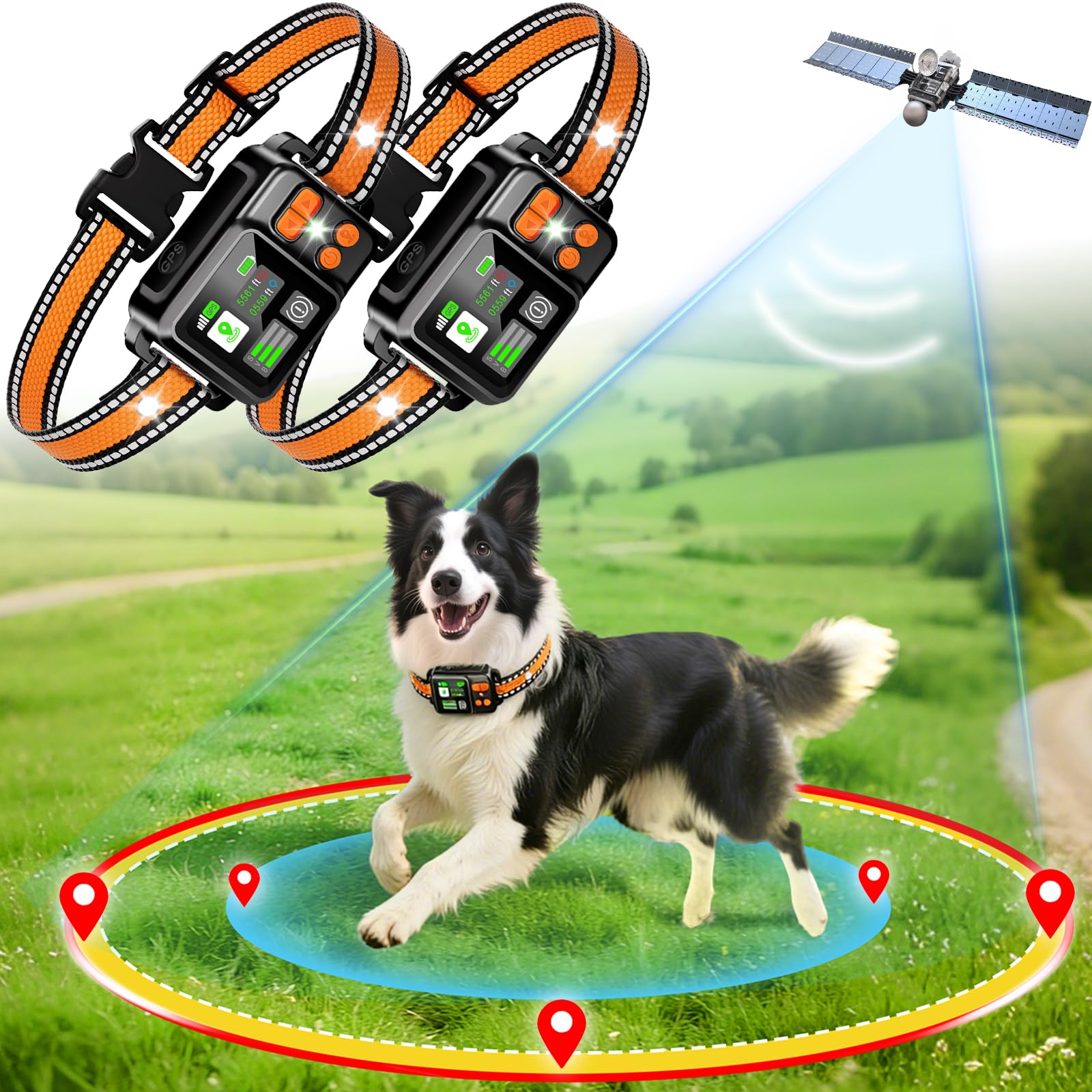
The DJNFGQ GPS system offers two boundary modes — a standard circular fence with radius from 49 to 6561 feet, and a free-form polygonal fence that lets you trace the exact shape of your property. Free-form mode is particularly useful for irregular lots where a circular boundary would intrude into neighbor space or cut across driveways, and it helps avoid placing small dogs near road-facing edges by accident.
The collar is IPX7 waterproof and charges fully in 3 hours for 24 hours of continuous operation. The adjustable strap fits medium and large dogs as noted by the manufacturer, but owners of breeds like Miniature Australian Shepherds report a snug fit at the smaller end of the adjustment range. The receiver operates solely on GPS satellite signals, which means it must be used outdoors — it won’t function as an indoor containment system.
Setting the polygonal fence requires walking the perimeter with the collar in setup mode, which takes about 6 attempts according to some users, but once configured the system holds the boundary consistently. The static correction is automatic when the dog approaches the set line, and the manufacturer does not specify minimum correction level increments, so owners of very small dogs should test tone-only mode first.
Why we love it
- Custom polygonal fence for irregular yards
- 3-hour full charge for 24-hour runtime
- No subscription or base station required
- Huge maximum radius for large properties
Good to know
- No fine-grained level adjustment data available
- Fence shape setup requires multiple passes
- Outdoor use only — no indoor containment
5. WIEZ GPS Wireless Dog Fence

WIEZ’s GPS fence covers a radius adjustable between 65 and 3281 feet, which translates to a maximum area of roughly 776 acres — far more than most suburban small-dog owners need, but useful for rural properties or farm settings where a small breed may roam around barns and outbuildings. The collar receiver is standalone with no additional transmitter, so setup takes minutes: set the boundary distance via the collar interface and turn it on.
The safety algorithm runs a maximum of three 16-second warning cycles with 30-second pauses before the system stops applying correction, which prevents over-correction if a small dog bolts past the boundary and cannot immediately find its way back. The manufacturer explicitly states the system is not intended for small dogs, but the correction level adjustability and non-aversive warning modes allow cautious owners of larger small breeds (15+ pounds) to use it in open environments.
The 2-year product warranty after registration provides long-term support that many budget GPS collars lack. Memory function retains your distance setting between power cycles, so you don’t need to reconfigure after recharging. The collar is light enough for a 20-pound dog, but owners of breeds under 15 pounds should test the strap fit before relying on it for daily containment.
Why we love it
- Safety algorithm prevents runaway over-correction
- 2-year warranty via registration
- Memory function retains settings after recharge
- No transmitter needed — fully collar-based
Good to know
- Marked as not for small dogs by manufacturer
- Best for open fields, not dense tree cover
- No multi-dog independent control
6. FOCUSER Electric Wireless Dog Fence System

The FOCUSER wireless fence uses a central transmitter to create a circular boundary up to 300 meters in radius, and it supports neck sizes from 8 to 21 inches — which covers small breeds like Dachshunds and Shih Tzus. Four adjustable correction levels give a noticeably low starting point for small dogs, and the built-in safety chip prevents over-correction. The IP67-rated receiver collar is waterproof and rechargeable, with backup battery protection during power outages.
Setup involves plugging the transmitter into a central location and keeping it away from other wireless devices to avoid interference — multiple owner reviews mention a 3-hour installation window to find the optimal spot. Once configured, the system reliably contains dogs weighing as little as 10 pounds, based on real-world user reports with Dachshunds and similar breeds. The kit includes two collars, making it a cost-effective solution for multi-small-dog households.
The 4-level correction range is less granular than premium GPS systems, so owners of extra-sensitive small dogs should start at level 1 and observe the dog’s reaction closely. The rechargeable Lithium Ion batteries are included, and each collar operates independently from the transmitter, meaning both collars stay within the same boundary zone simultaneously.
Why we love it
- Fits neck sizes down to 8 inches
- Two collars included for multi-dog homes
- Backup battery for power outage protection
- Waterproof IP67 receiver
Good to know
- Only 4 correction levels — less tuning range
- Installation can take 3 hours to dial in
- Transmitter location critical to avoid interference
7. MIMOFPET X3 Wireless Dog Fence for 2 Dogs
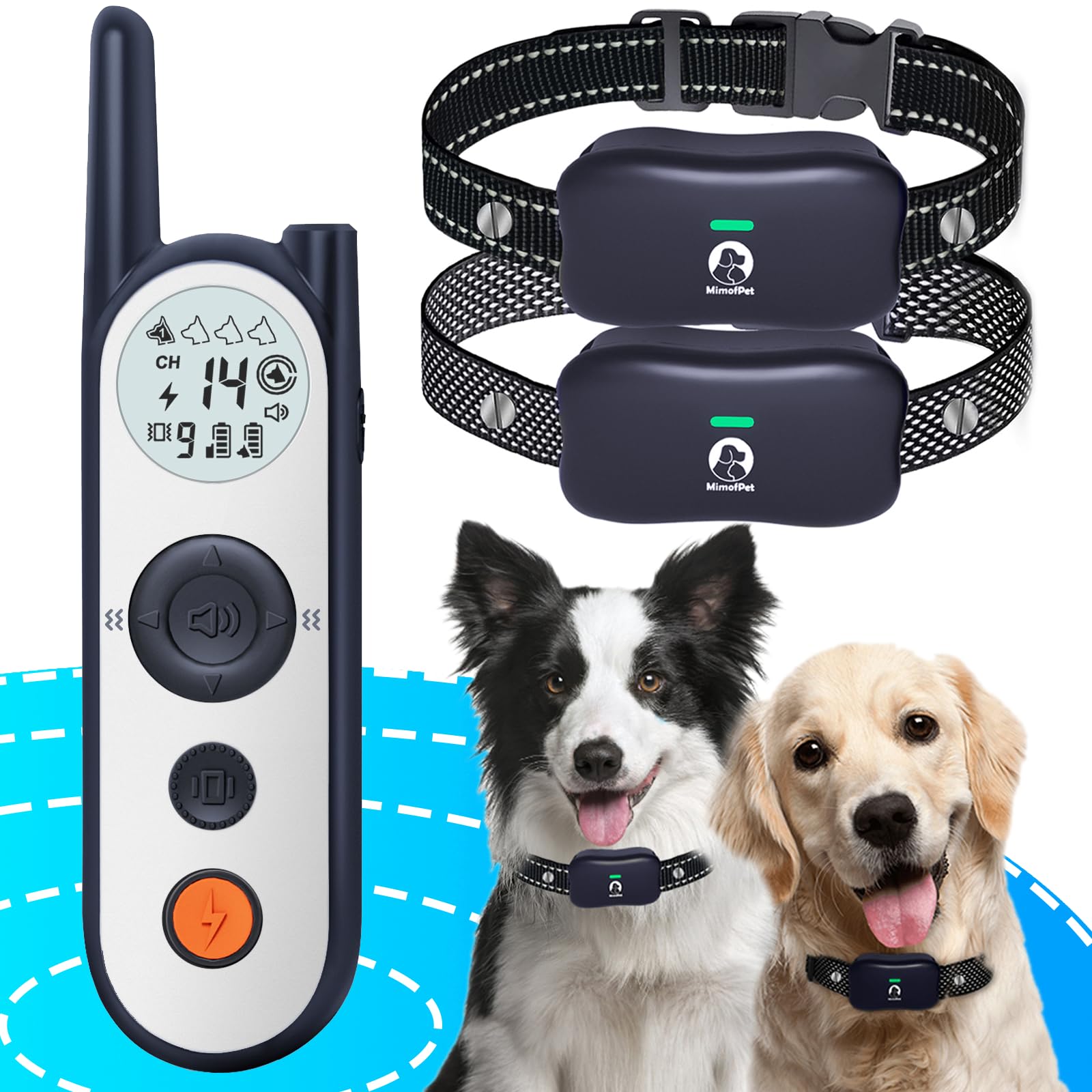
MIMOFPET’s X3 combines a wireless containment fence with a remote training collar in one system, giving owners the ability to both set a boundary for yard containment and use beep-vibration-static corrections for recall training on walks. The remote range extends up to 5900 feet, which is significantly farther than typical training collars. The fence distance is adjustable from 25 to 3500 feet, and the system uses dual-directional signal transmission for stable indoor/outdoor performance.
The receiver collar is IPX7 waterproof and the battery in fence-off standby mode lasts up to 185 days — although in fence mode the runtime drops to about 84 hours, which still covers most weekends between charges. The training remote includes a security keypad lock to prevent accidental correction activation, plus an LED flashlight to locate a wandering dog in the dark. The 3 safety modes — beep, vibration at 9 levels, and static at 30 levels — provide fine control over correction intensity.
For small dogs, the ability to use beep-only or vibration-only modes during training is a major safety advantage. The neck strap adjusts to fit most small breeds, though owners of dogs under 8 pounds should verify the minimum strap length before purchase. The system supports two collars from one transmitter, but each collar must be paired individually.
Why we love it
- Remote training combined with fence containment
- 30-level static correction for precise tuning
- Keypad lock prevents accidental corrections
- Exceptional 5900 ft remote range
Good to know
- Fence runtime limited to ~84 hours per charge
- Two-collar system requires separate pairing
- Transmitter-based, not portable for travel
8. eayaco T810Pro Wireless Dog Fence for 2 Dogs

The T810Pro stands out for its color TFT display on the handheld transmitter, which shows real-time dog activity data — resting, walking, running, jumping — plus battery level and system settings at a glance. This live feedback helps owners of small dogs monitor whether the collar is fitting correctly and whether the dog is moving normally after boundary corrections. The containment zone is adjustable from 33 to 656 feet in open areas, and the system uses 2.4G dual-channel communication for stable signal.
One transmitter supports up to three collars, with independent adjustment for each dog. The receiver is IPX7 waterproof, and the system includes a flashlight, compass, hanging clip, and LED locator light on the transmitter for camping or travel. The manufacturer recommends the system for dogs 6 months and older that can follow basic obedience commands — a reasonable guideline for small breeds who need boundary training.
Owner reviews note that the collars occasionally require re-pairing after charging, which can be frustrating during daily use. The system is designed for supervised outdoor containment and training, not as a leave-unattended solution. For small dogs, starting with sound and vibration modes before moving to static is recommended, and the TFT display makes it easy to confirm which mode is active.
Why we love it
- Real-time activity tracking on TFT display
- Supports up to 3 dogs independently
- Portable design with flashlight and compass
- 2.4G dual-channel for stable outdoor signal
Good to know
- Collars may need re-pairing after charge cycles
- Best for supervised sessions, not 24/7 containment
- Range varies based on terrain and interference
9. Blingbling Petsfun GPS Wireless Dog Fence System

The Petsfun GPS system uses satellite technology with no base station required, and it offers an impressive 99 adjustment levels for radius — from 10 meters to 990 meters — giving fine-grained control over boundary size even on compact lots. The collar fits neck sizes from 7 to 26.5 inches, which covers the smallest toy breeds. The IP67 waterproof receiver is rechargeable with a Lithium Ion battery, and there are no monthly fees or SIM cards required.
The system supports up to 10 dogs by pairing multiple GPS collars, each operating independently. The vibration and static correction modes engage automatically when the dog crosses the set boundary, and the 99-level system provides more precise tuning than most budget GPS collars. The 3.7V operating voltage and static electricity delivery method are designed to be harmless to family members and pets.
Owner data is limited due to the product’s recent availability, but the specifications align well with small-dog needs — the 7-inch minimum neck circumference and 99-level boundary adjustment are both features typically found at higher price points. The GPS satellite-based operation means the collar must be used outdoors, and initial boundary setup requires walking the perimeter to calibrate the GPS lock.
Why we love it
- 99 boundary levels for precise radius tuning
- Fits neck sizes as small as 7 inches
- No monthly subscription fees
- Supports up to 10 dogs per system
Good to know
- Limited real-world owner reviews available
- GPS only works outdoors
- Boundary calibration requires walking the perimeter
FAQ
What is the minimum neck circumference a GPS fence collar can fit for small dogs?
Can I use a GPS fence collar on a dog under 10 pounds?
How does a transmitter-based fence differ from a pure GPS collar for small dogs?
Do all GPS dog fences require a monthly subscription?
How many correction levels do I need for a sensitive small dog?
Final Thoughts: The Verdict
For most small-dog owners, the best gps dog fence for small dogs winner is the PetSafe Guardian GPS 2.0 because its ultra-light 0.29-pound collar, 8-inch minimum neck fit, 10-level static correction, and 70-hour battery life combine to offer the safest balance of protection and comfort for breeds under 20 pounds. If you want subscription-free operation with custom polygonal fence shapes, grab the DJNFGQ GPS Wireless System. And for frequent travel across multiple locations with real-time precision, nothing beats the Halo Collar 5 with its ground-station-corrected GPS and 1-hour rapid charge.