
Finding a dog food when your pup suffers from yeast allergies is about stripping away triggers, not adding trendy superfoods. The wrong protein or carbohydrate source can ignite relentless itching, ear infections, and that distinct yeasty odor — turning mealtime into a health crisis. This guide isolates the foods proven to starve the yeast while nourishing your dog from the inside out.
I’m Mo Mahin — the founder and writer behind Furric. I’ve spent countless hours comparing ingredient panels, cross-referencing mycotoxin reports, and analyzing owner feedback specifically on how limited-ingredient and novel-protein diets affect canine yeast overgrowth and secondary skin infections.
Whether you are dealing with a sudden flare-up or a chronic cycle of ear drops and vet visits, choosing the right bag or can is your first step toward relief. Here is my curated guide to the best food for dogs with yeast allergies, built around single-protein sourcing, low-glycemic carbs, and zero common fillers.
How To Choose The Best Food For Dogs With Yeast Allergies
Yeast (Malassezia pachydermatis) is an opportunistic fungus that overgrows when a dog’s immune system is compromised or the skin’s microbiome is disrupted — often by food sensitivities to chicken, beef, corn, wheat, or soy. The goal of an anti-yeast diet is twofold: eliminate the protein and carb sources the dog reacts to, and keep carbohydrate content low enough that sugars aren’t available to feed the yeast.
Single Novel Protein Source
The most effective anti-yeast diets center on a single protein your dog has never (or rarely) eaten. Common options include lamb, salmon, turkey, or venison. If your dog has already eaten lamb for months, that is no longer a true novel protein. The ingredient panel should list one animal protein and zero poultry or beef by-products, which are common cross-contaminant triggers.
Low-Glycemic, Yeast-Starving Carbohydrates
Carbohydrates metabolize into simple sugars — food for yeast. Potatoes, sweet potatoes, and white rice are high glycemic and should be minimized. Better choices are lentils, chickpeas, brown rice (in moderation), or green peas, which have a lower glycemic index and release sugars slowly. Avoid recipes where the first three ingredients include any form of starch or sugar.
Omega-3 and Omega-6 Fatty Acid Balance
Yeast infections damage the skin barrier, leaving it dry, flaky, and permeable to allergens. Omega-3 fatty acids (from fish oil, flaxseed, or algae) reduce inflammation and help repair the epidermis. Omega-6 supports the lipid barrier. The ideal ratio for inflammatory skin conditions is roughly 2:1 to 5:1 omega-6 to omega-3. Many mass-market dog foods skew 20:1 or higher, which worsens inflammation.
No Hidden Yeast, Probiotics, or Fermented Ingredients
Check the ingredient list for brewer’s yeast, nutritional yeast, autolyzed yeast extract, or any fermented ingredient (e.g., fermented grains, yeast culture). These directly feed the Malassezia. Prebiotic fibers like inulin, chicory root, or beet pulp can also stimulate yeast growth in sensitive dogs. Look for a clean, short ingredient list with no added yeasts or yeast derivatives.
Quick Comparison
On smaller screens, swipe sideways to see the full table.
| Model | Category | Best For | Key Spec | Amazon |
|---|---|---|---|---|
| ACANA Singles Lamb & Apple | Dry Kibble | Single protein + grain-free | 65% animal ingredients, lamb liver | Amazon |
| Dave’s Bland Diet Chicken & Rice | Wet Pâté | Flare-up & transition support | 6% crude fat, limited ingredients | Amazon |
| Blue Buffalo Basics Senior Turkey | Wet Pâté | Senior dogs with joint & skin issues | Glucosamine + Chondroitin, no poultry by-products | Amazon |
| The Honest Kitchen Base Mix | Dehydrated Base | Customizable homemade-style meals | 100% human-grade, add-your-own protein | Amazon |
| Natural Balance LID Salmon & Brown Rice | Dry Kibble | Multi-protein sensitivity, all breed sizes | 24 lbs, single salmon protein, Feed with Confidence tested | Amazon |
In‑Depth Reviews
1. ACANA Singles Lamb & Apple Recipe Dry Dog Food

This 4.5 lb bag features lamb and lamb liver as the sole animal proteins — ideal for dogs reacting to chicken or beef. With 65 percent animal ingredients and a freeze-dried coating, it delivers high protein (32% crude protein typical) while keeping the carb load low. The limited-ingredient frame eliminates corn, wheat, soy, and gluten, which are common triggers for yeast overgrowth in sensitive dogs.
The addition of omega-3 and omega-6 fatty acids supports skin barrier repair, and the fiber, prebiotic, and probiotic blend aids digestion without feeding yeast. Owner reviews highlight a halt in vomiting and allergic skin reactions after switching, particularly for dogs with unknown chicken or egg allergies. The kibble size works for all breed sizes, though soaking it initially helped transition a picky eater.
One minor trade-off: the bag is only 4.5 lbs, which means higher per-pound cost versus bulk bags. However, for owners trying a novel protein for the first time without committing to 20+ lbs, this small bag size is a practical trial format. If your dog tolerates lamb well, ACANA also offers larger bag sizes for ongoing feeding.
Why we love it
- Single lamb protein source with no chicken or beef by-products — safe for most yeast-allergic dogs
- Very high animal-protein ratio (65%) keeps carb content minimal, starving yeast
- Omega fatty acid blend directly targets skin and coat health during flare-ups
Good to know
- Small 4.5 lb bag only; not a bulk economy option
- Freeze-dried coating may irritate extremely sensitive dogs — test with a single kibble
- Not a veterinary therapeutic diet; consult your vet for chronic yeast infections
2. Dave’s Pet Food Bland Diet Chicken & Rice Pâté
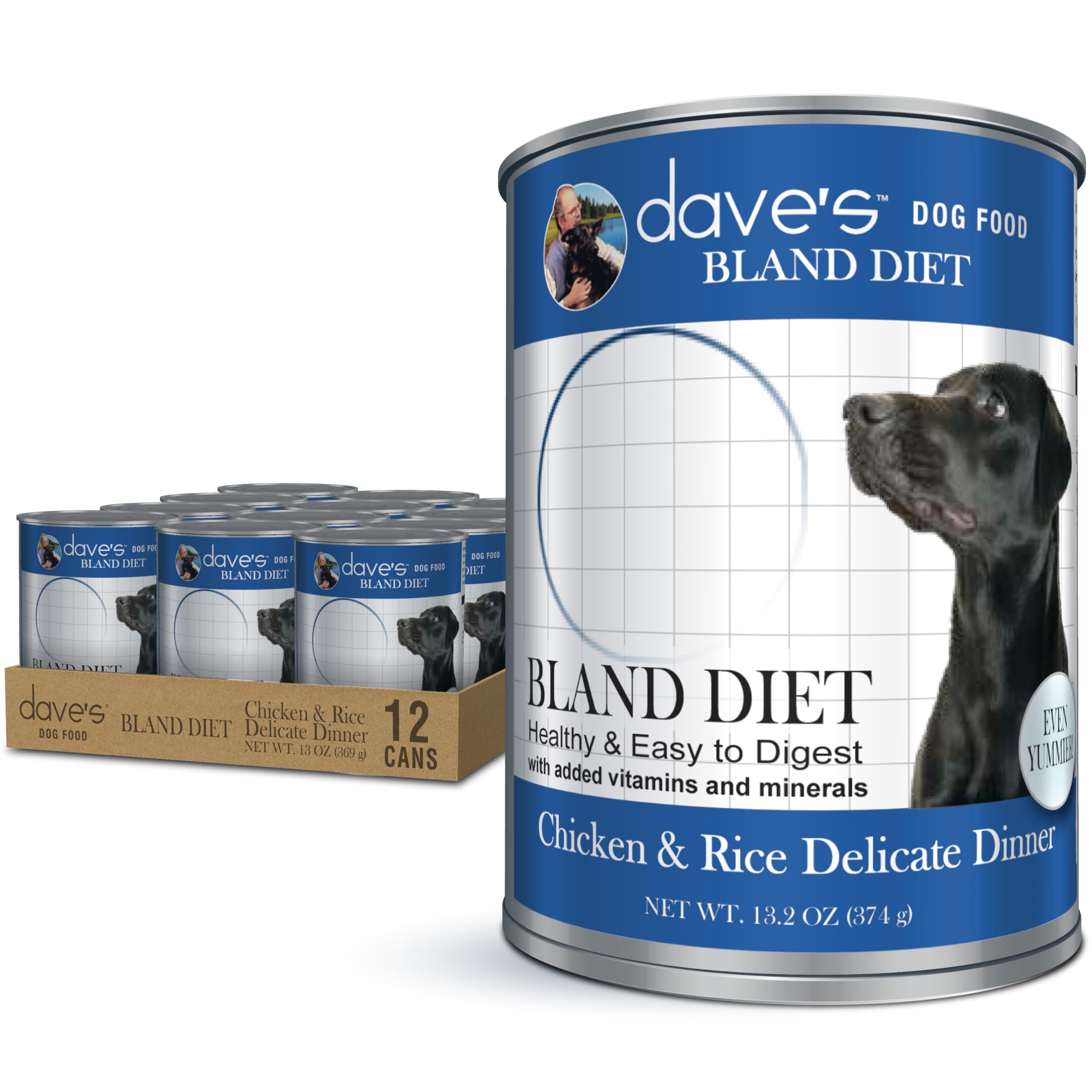
This case of 12 cans is designed expressly for dogs with digestive sensitivity — diarrhea, vomiting, gas, and stomach upset — that often accompany yeast flare-ups. The formula uses a single protein (chicken) and white rice, with a low 6% crude fat level that puts minimal stress on the pancreas and digestive tract. It is a complete and balanced AAFCO adult meal, not just a temporary topper.
The smooth pâté texture makes it easy for senior dogs, small breeds, or dogs with dental pain to eat without chewing irritation. Owners on record have used it successfully during dietary transitions, post-surgery recovery, and as a reliable rotation food for dogs that react to more complex ingredient blends. The absence of wheat, gluten, artificial flavors, and meat by-products reduces the chance of cross-contamination from common allergens.
Keep in mind that chicken is a common dog allergen — if your dog specifically reacts to chicken, this formula is not suitable. However, for dogs whose yeast issue stems from a high-carb diet or general food sensitivity rather than a specific protein allergy, this bland, low-fat recipe provides a clean reset. Dave’s also offers a lamb version for rotation variety.
Why we love it
- Extremely low fat (6%) and minimal ingredients — ideal for resetting the gut during a yeast flare
- Moist pâté texture helps hydration and is easy on sensitive mouths
- Vet-recommended and over 5 million cans sold, showing consistent quality
Good to know
- Chicken protein — avoid if your dog has a confirmed chicken allergy
- White rice is a moderate-glycemic carb; not optimal for long-term yeast control
- Not suitable for puppies; formulated for adult maintenance only
3. Blue Buffalo Basics Senior Turkey & Potato Wet Dog Food

This pack of twelve 12.5-oz cans targets senior dogs that need both skin/stomach care and joint mobility support. Turkey is the sole animal protein, and the formula is completely free of chicken, poultry by-product meals, corn, wheat, and soy — eliminating the five most common canine dietary allergens. The potato carbohydrate base is moderate-glycemic, better than white rice or tapioca for yeast-prone dogs.
Blue Buffalo adds glucosamine and chondroitin for joint health, a smart inclusion for older dogs whose yeast allergies may worsen due to reduced mobility and licking behaviors. The wet food format provides extra moisture, which helps flush toxins from the system and supports kidney function. Owners report successful feeding for dogs with long-standing skin issues who could not tolerate chicken or beef formulas.
Potato is not the lowest-glycemic carb option (lentils or chickpeas are better), but for a senior formula that also addresses joint pain, this balance works well. If your dog has severe yeast overgrowth, consider rotating with a lower-glycemic meal to prevent potato-starch buildup. The lack of a resealable can means you will need to refrigerate unused portions and use within 2–3 days.
Why we love it
- Single turkey protein source — novel for dogs who have eaten chicken or beef for years
- Joint support (glucosamine + chondroitin) addresses age-related mobility alongside allergy relief
- No poultry by-products, corn, wheat, or soy — a clean limited-ingredient list
Good to know
- Potato is a moderate-glycemic carb; not ideal as the sole starch for severe yeast cases
- Wet food format requires refrigeration — not as convenient as dry kibble for travel
- Senior formula only; not appropriate for puppies or active adult dogs with high caloric needs
4. The Honest Kitchen Human Grade Dehydrated Veggie, Nut & Seed Base Mix
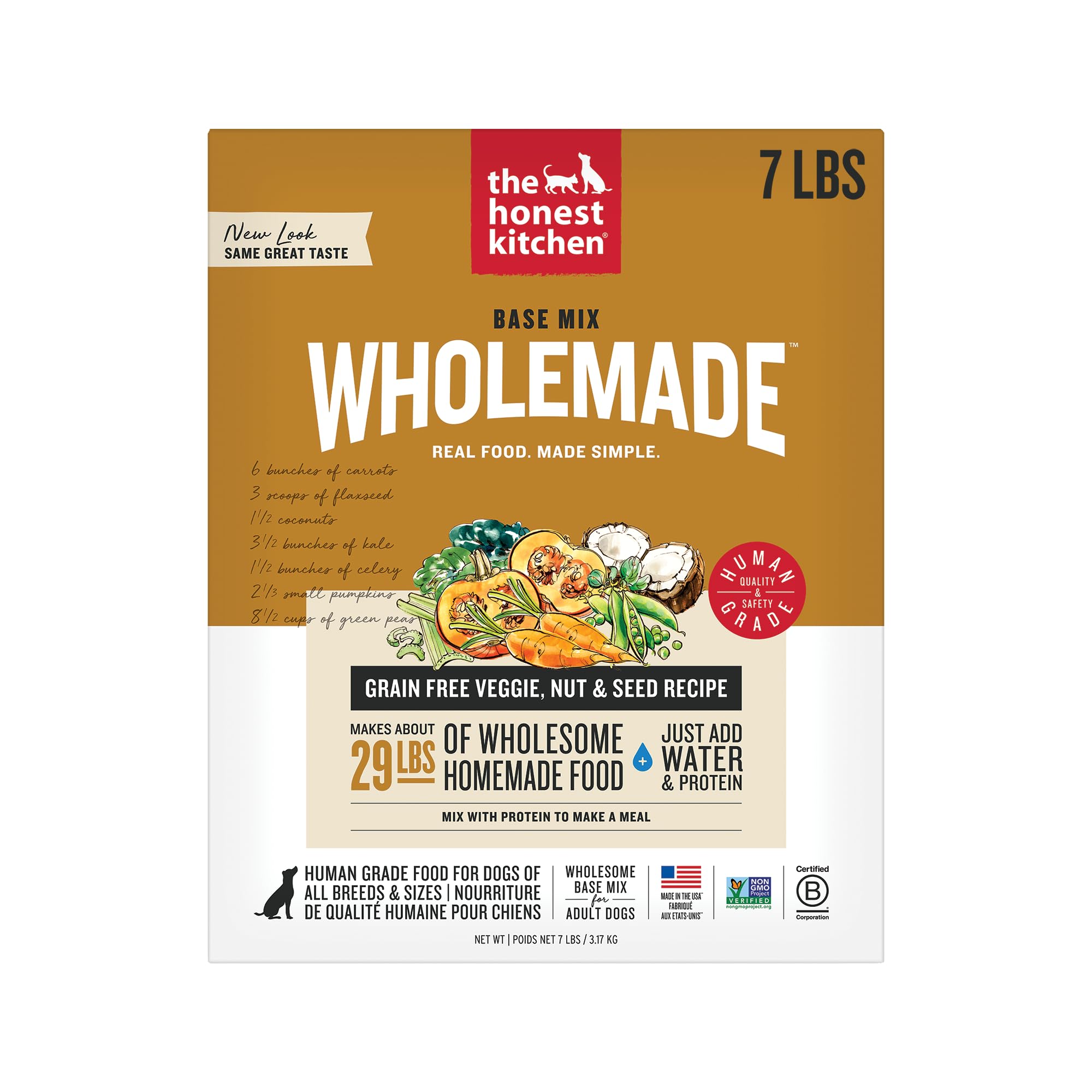
This 7 lb bag is a dehydrated base mix of vegetables, nuts, and seeds — you add your own protein and water to create a complete meal. Because you control the protein source, this is one of the most flexible tools for managing yeast allergies: feed lamb one week, venison the next, or a raw ground turkey your dog tolerates well. The dehydration process preserves nutrients without the high heat of extrusion.
The formula is grain-free and free from artificial preservatives, by-products, corn, wheat, and soy. Owners with dogs that have IBS, food intolerances, or chronic yeast infections report dramatic improvements in stool quality and coat condition after switching. The base mix itself includes flaxseed and chia seeds, which contribute omega-3s for skin repair. You simply add warm water, let it rehydrate for 3 minutes, and mix in your chosen protein.
The downside: pricing is volatile per buyer reports, and the 7 lb bag yields about 12 lbs of prepared food, which is mid-range for cost per serving. It also requires refrigeration if you prep in bulk. For busy owners who need a grab-and-go solution, this is less convenient than kibble. But for the price of controlling exactly what goes into your yeast-allergic dog’s bowl, the effort pays off.
Why we love it
- You choose the protein — allows true novel-protein rotation for yeast management
- 100% human-grade ingredients, no feed-grade meat meals or artificial preservatives
- Omega-3-rich seeds (flax, chia) directly support skin barrier repair
Good to know
- Requires preparation (mix with water and protein) — not a pour-and-serve food
- Price can fluctuate significantly between batches
- Not a complete meal without added protein; you must supply the meat
5. Natural Balance LID Salmon & Brown Rice Dry Dog Food
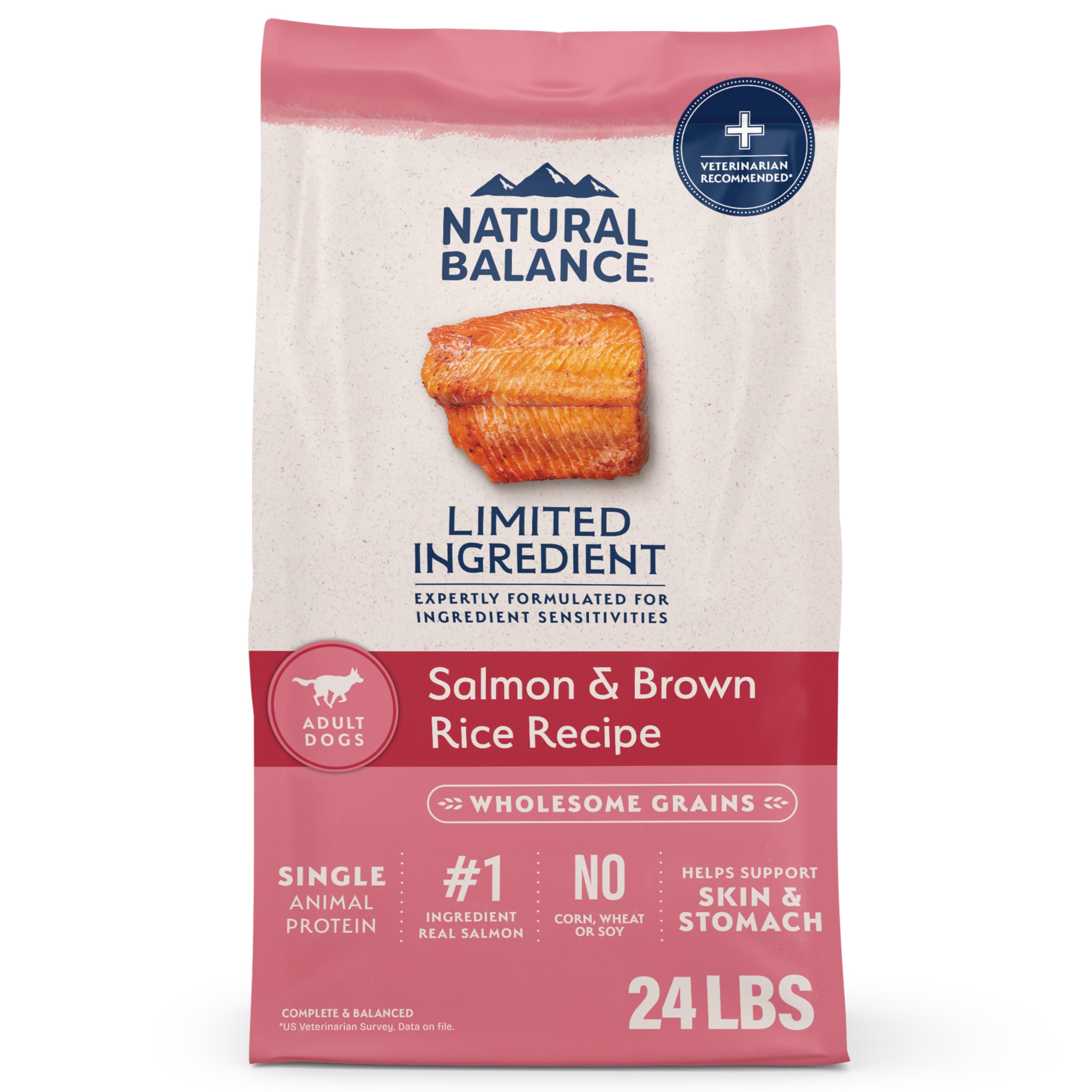
Natural Balance’s 24-pound bag features salmon as the single animal protein source — a great option for dogs that have already failed chicken, beef, and lamb trials. Brown rice provides a complex, moderate-glycemic carbohydrate that digests more slowly than white rice, reducing the sugar spike that feeds yeast. This recipe contains zero corn, soy, gluten, poultry, or artificial colors and flavors.
What sets Natural Balance apart is its “Feed with Confidence” program, which tests every batch from start to finish and provides a traceable lot number. For a dog with yeast allergies — where a batch contaminated with chicken or mycotoxins would set you back weeks — this traceability is valuable. The pellet form is a standard kibble, so it stores easily for bulk feeding and requires no refrigeration.
The trade-off is that brown rice, while better than white rice, is still a starch source. Dogs with very severe yeast overgrowth may do better on a lower-glycemic option like chickpeas or lentils. Additionally, the 24 lb bag is a big commitment if your dog turns out to react to salmon. Start with a smaller size if available, or split the bag with a friend if you’re unsure.
Why we love it
- Single salmon protein — excellent cold-water fish option for dogs with poultry and red meat allergies
- 24 lbs delivers excellent per-serving cost for a limited-ingredient dry food
- Batch-level testing (“Feed with Confidence”) gives peace of mind for allergy management
Good to know
- Brown rice is a moderate-glycemic carb; not as yeast-starving as lentil or chickpea formulas
- Large bag commitment — trial with a smaller size first to confirm salmon tolerance
- Pellet form may be too hard for senior dogs with dental problems
FAQ
Can I feed grain-free food to a dog with yeast allergies?
How long after switching food will my dog’s yeast symptoms improve?
Are probiotics safe for dogs with yeast allergies?
Should I avoid chicken completely for dogs with yeast allergies?
Can I use these foods long term or only during flare-ups?
Final Thoughts: The Verdict
For most dogs with yeast allergies, the best food for dogs with yeast allergies winner is the ACANA Singles Lamb & Apple because it provides a single, high-quality lamb protein with an extremely low-glycemic carbohydrate profile and no common allergens. If your dog needs temporary bland support during an acute flare-up, grab the Dave’s Bland Diet Chicken & Rice. And for ultimate custom control over protein and carb sources — especially if your dog has reacted to multiple commercial foods — nothing beats the The Honest Kitchen Dehydrated Base Mix with your own novel protein added.