
A thriving sheep flock hinges on what goes into the feed pan every morning. The wrong mineral balance leads to poor wool quality, lethargy, and reproductive issues — the right one keeps your ewes cycling, lambs gaining, and coats gleaming. Sourcing the optimal formula for your specific herd requires cutting through marketing claims and focusing on measurable nutrition.
I’m Mo Mahin — the founder and writer behind Furric. I’ve spent thousands of hours analyzing animal nutrition data from state extension offices, comparing ingredient panels across the top feed brands, and aggregating owner-reported outcomes from herds of all sizes to isolate what actually drives sheep health.
This guide breaks down the essential nutrients, copper safeguards, and delivery forms that define the best food for sheep — helping you select a supplement that supports growth, digestion, and immunity without unnecessary fillers.
How To Choose The Best Food For Sheep
Selecting a sheep supplement isn’t about grabbing the cheapest bag off the shelf. It’s about matching the mineral profile to your forage base, water quality, and the specific life stage of your flock. Here are the three factors that separate effective supplementation from wasted money.
Copper: The Goldilocks Mineral
Sheep are uniquely sensitive to copper toxicity, yet they require adequate copper for immune function and wool quality. A proper supplement must have copper locked into a safe ratio with molybdenum and sulfur — typically 100–300 ppm copper with a 6:1 or higher copper-to-molybdenum ratio. The safest formulations use copper oxide or a chelated source, never copper sulfate at high levels. A product that hides copper content or lists it as “proprietary” should be avoided for sheep unless you have a confirmed copper deficiency under vet guidance.
Form Matters: Free-Choice Loose Mineral vs. Liquid Drench
Loose granular minerals delivered in a covered feeder allow sheep to self-regulate intake based on their physiological need. This works best for daily maintenance. Liquid supplements and gels, on the other hand, deliver a precise therapeutic dose of B12, selenium, or vitamin E during periods of stress, illness, or after lambing. A complete program often uses both — loose minerals as the baseline and liquid products for targeted support.
Trace Mineral Density and Fillers
Read the guaranteed analysis for zinc, manganese, selenium, and cobalt. Zinc (1,000–3,000 ppm) supports hoof integrity and skin health. Selenium (30–60 ppm) prevents white muscle disease in lambs. Cobalt (100–300 ppm) enables B12 synthesis for appetite and energy. Products that list salt, grain byproducts, or molasses as the first two ingredients deliver cheap bulk with weak nutrition. The best feeds for sheep pack meaningful trace mineral density into a low-intake format.
Quick Comparison
On smaller screens, swipe sideways to see the full table.
| Model | Category | Best For | Key Spec | Amazon |
|---|---|---|---|---|
| Redmond Sheep Mineral | Loose Mineral | Free-choice daily maintenance | 5 lb, full-spectrum sea minerals | Amazon |
| Manna Pro Goat & Skin Supplement | Feed Supplement | Coat and hoof health on pasture | 4 lb, biotin + vitamins | Amazon |
| Rooster Booster B-12 Liquid | Liquid Drench | Appetite and energy boost | 32 oz, B12 concentrate | Amazon |
| Nutri-Drench Goat & Sheep | Liquid Drench | Recovery and white muscle disease | 16 oz, high-energy + electrolytes | Amazon |
| Durvet Selenium E Gel 3-Pack | Oral Gel | Precision selenium/vitamin E dose | 80 ml gel, 3 tubes | Amazon |
In‑Depth Reviews
1. Redmond All Natural Sheep Mineral Supplement
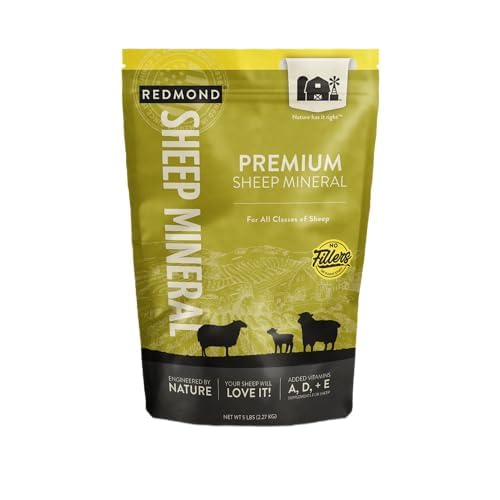
The Redmond supplement draws from an ancient Utah sea deposit to deliver a full spectrum of trace minerals — not just the minimum six. Copper is present at safe levels balanced with molybdenum, which regulates absorption and prevents toxicity in sheep. The granule form stays put in a covered mineral feeder and resists caking, even in humid conditions.
Fortified with vitamins A, D, and E, this 5-pound bag fills roughly three weeks of free-choice feeding for a small flock. Owner reports consistently note improved condition scores, shinier wool, and better manure consistency within two to three weeks of introduction. The clean mineral taste draws sheep in — there are no grain byproducts or molasses fillers masking low potency.
At roughly 1–2 ounces per head per day, cost per feeding sits in the mid-range zone for loose minerals. The only caveat is that sheep on lush legume-heavy pastures may still need a separate selenium booster, as the levels here are moderate rather than therapeutic.
Why we love it
- Full-spectrum sea minerals with safe copper ratios
- No fillers, grain byproducts, or artificial sweeteners
- Fortified with vitamins A, D, and E
Good to know
- Selenium levels are moderate, not therapeutic
- Pricier per pound than generic salt-mineral blocks
2. Manna Pro Goat & Skin Supplement

Manna Pro formulates this 4-pound supplement to target the external signs of nutrient deficiency — dull coats, brittle hooves, and slow wool regrowth after shearing. The blend includes biotin, zinc, and omega fatty acids that directly support keratin production in skin and hoof tissue. While labeled for goats, the ingredient profile is sheep-compatible at standard feeding rates.
The granular texture mixes easily into a morning grain ration or can be top-dressed for picky eaters. Owners of hair sheep breeds like Katahdin and Dorper report visible improvement in hoof wall integrity within two months, reducing trimming frequency. The price per pound falls into the budget-friendly tier, making it a cost-effective addition for flocks on lower-quality forage.
One limitation: this product is a skin-focused topical support, not a complete mineral program. It lacks cobalt and selenium at therapeutic levels, so it should be paired with a loose mineral that covers the full trace mineral base.
Why we love it
- Visible improvement in coat shine and hoof condition
- Budget-friendly price per pound
- Easy to mix with feed or top-dress
Good to know
- Not a complete mineral — must be paired with a base mineral
- Omega levels may cause soft stool if overfed
3. Rooster Booster B-12 Sheep and Goat Liquid
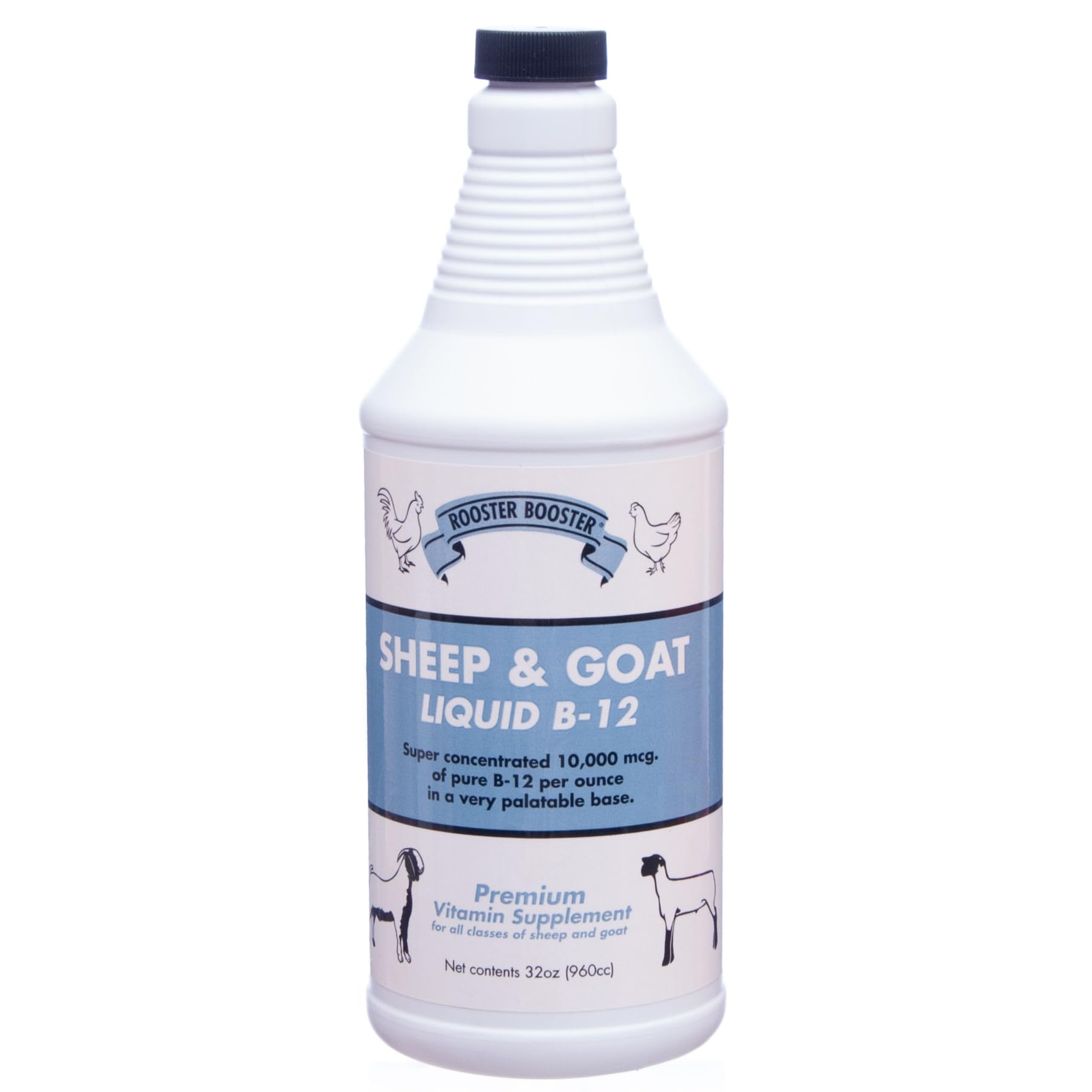
Rooster Booster delivers a 32-ounce liquid B12 drench designed to inject energy and appetite into sheep that are off feed, recovering from illness, or after lambing. B12 is the central cofactor for rumen fermentation efficiency — without it, sheep lose appetite and fail to extract energy from forage. This product comes ready to dose via a standard drench gun or directly squirted into the mouth.
The recommended dose for adult sheep is 4–6 mL per head, providing roughly 10 mg of cyanocobalamin per dose. The liquid is thin enough to flow through a drench gun without clogging. Shepherds report that off-feed ewes return to the feed pan within 12–24 hours of dosing. It also supports nervous system function and red blood cell production, which is critical in flocks with cobalt-deficient soil.
The mid-range price reflects the concentration: a single bottle treats roughly 150 adult sheep, making it a low-cost emergency tool per dose. However, this is a therapeutic product, not a daily feed supplement — overuse can mask underlying mineral deficiencies rather than correct them.
Why we love it
- Fast-acting appetite recovery in 12–24 hours
- High concentration — treats 150+ sheep per bottle
- Does not clog drench guns
Good to know
- Not a daily mineral — therapeutic use only
- Requires a drench gun for accurate dosing
4. Nutri-Drench Goat & Sheep Nutrition Supplement

Nutri-Drench is a comprehensive liquid delivery system for energy, electrolytes, amino acids, vitamins, and trace minerals packaged into one 16-ounce pint. The key differentiator from standard B12 drenches is the inclusion of 2% propylene glycol and dextrose, which provides rapid glucose to sheep suffering from pregnancy toxemia or after transport stress. The vitamin E and selenium content specifically targets white muscle disease prevention in lambs.
This formula delivers 1.3 pounds of liquid per pint. The dosing protocol for adult ewes is 6–10 mL, repeated every 8–12 hours for the first 48 hours in compromised animals. Shepherds report it as a reliable emergency tool for cold, weak lambs that are slow to nurse. The electrolyte profile also supports rehydration in sheep with diarrhea without the need for a separate drench.
The premium price reflects the multi-nutrient formulation — essentially a combined B12, energy, and mineral drench in one bottle. The downside is the small size: a single pint treats only about 25–30 adult sheep at the full loading dose. Owners with large flocks will need multiple bottles for an outbreak response.
Why we love it
- Replaces multiple drenches with one multi-nutrient blend
- Propylene glycol + dextrose for rapid energy boost
- Selenium and vitamin E for white muscle disease prevention
Good to know
- Small bottle — limited coverage for large flocks
- Premium price per fluid ounce
5. Durvet Sheep & Goat Selenium Vitamin E Gel 3-Pack
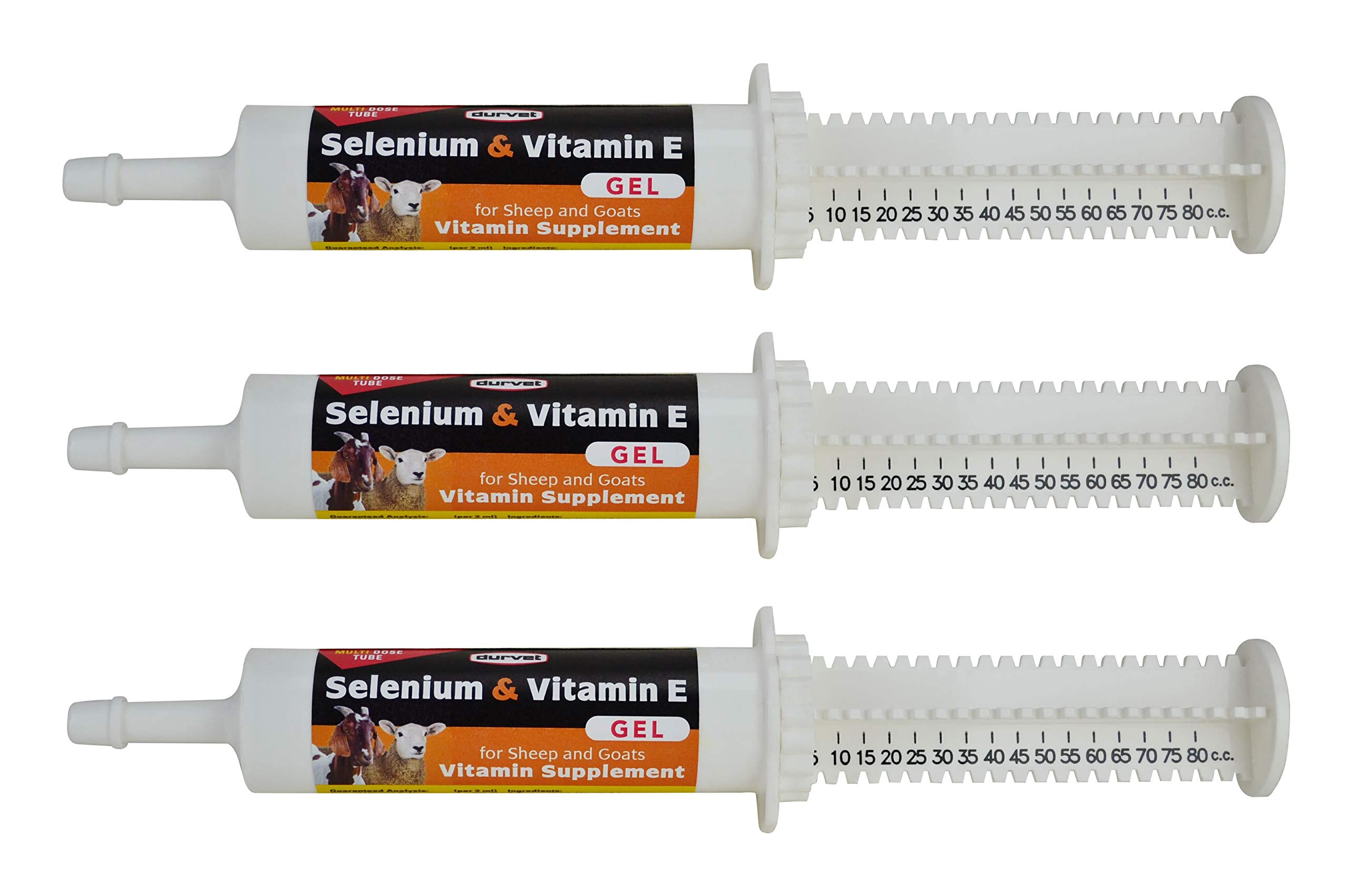
Durvet packages three 80-ml tubes of selenium-vitamin E gel for precision oral dosing. Each ml delivers 1 mg of selenium and 68 IU of vitamin E, making it the most concentrated selenium product in this guide. This matters in regions with selenium-deficient soils — the Pacific Northwest, the Great Lakes area, and parts of the Northeast — where white muscle disease in lambs and retained placentas in ewes are endemic concerns.
The gel consistency stays put in the mouth and won’t run out like a liquid, ensuring full absorption. The recommended dose for newborn lambs is 0.5–1 ml within the first 24 hours, which covers roughly 80 lambs per tube. For adult ewes, 4–8 ml pre-lambing helps prevent selenium-related birthing issues. The three-pack extends shelf life since open tubes stay viable for several months in cool storage.
The budget-friendly price per dose makes this accessible for both small homesteaders and larger operations. The main limitation is specificity: this is purely a selenium and vitamin E supplement. It does not provide B12, energy, or other trace minerals, so it must be layered on top of a base mineral program for complete flock nutrition.
Why we love it
- Highest selenium concentration per dose
- Gel consistency prevents waste from drooling
- Three-pack provides cost-effective per-dose pricing
Good to know
- Pure selenium/E only — no B12 or trace minerals
- Small tube volume requires careful tracking of remaining dose
FAQ
Can I use a goat mineral for my sheep?
How much loose mineral should one sheep eat per day?
When should I use a liquid drench instead of loose minerals?
Do I need selenium gel for my sheep if I already feed a mineral with selenium?
What is the shelf life of liquid sheep supplements after opening?
Final Thoughts: The Verdict
For most shepherds, the best food for sheep winner is the Redmond All Natural Sheep Mineral Supplement because its full-spectrum sea mineral profile with safe copper ratios covers daily maintenance needs without fillers. If you want a fast-acting appetite or energy boost, grab the Nutri-Drench Goat & Sheep Nutrition Supplement. And for precision selenium and vitamin E dosing in deficient-soil regions, nothing beats the Durvet Selenium Vitamin E Gel 3-Pack.