
That constant licking, the sour smell in the ears, the red-brown staining between the toes — canine yeast infections turn mealtime into a medical mystery. The real trick isn’t a topical cream or a medicated wipe; it’s cutting off the fuel. Yeast (Malassezia) thrives on sugar, and in a dog’s diet, sugar comes primarily from starch and carbohydrates. The most effective control begins with what lands in the bowl.
I’m Mo Mahin — the founder and writer behind Furric. I spent months cross-referencing guaranteed analysis panels, parsing ingredient lists for hidden starch sources like potatoes and peas, and studying owner reports of flare-ups resolving after a diet switch to find the formulas that truly starve the yeast cycle.
After evaluating dozens of formulas based on starch content, protein density, fat profiles, and limited-ingredient integrity, these seven contenders emerged as the top picks for anyone seeking the best dog food for yeast prone dogs.
How To Choose The Best Dog Food For Yeast Prone Dogs
Selecting a dog food to manage chronic yeast requires a different lens than a standard dry kibble search. You are looking for metabolic starvation of the organism, not just a “sensitive skin” label. Here is what matters most.
Carbohydrate Ceiling & Starch Content
Yeast ferments simple sugars. Most grain-free kibble replaces wheat with potatoes, tapioca, or peas — all high-glycemic starches that spike blood sugar just as fast. The gold standard for yeast-prone dogs is a formula with a carbohydrate content of 25% or lower on a dry matter basis. Some premium products and starch-free kibble completely eliminate all starch sources, forcing the body to rely on fat and protein for energy instead.
Protein Source & Fat Profile
Single-protein, novel proteins (salmon, white fish, lamb) reduce the likelihood of an allergic cross-reaction that can weaken the skin barrier and allow yeast to proliferate. Omega-3 fatty acids from fish oil and chia seeds are anti-inflammatory and help repair the skin’s lipid barrier. Avoid formulas heavy in omega-6 oils from vegetable blends, as those can promote inflammation and feed the yeast cycle.
Probiotics & Gut Flora Support
A healthy gut microbiome is the first line of defense against systemic yeast overgrowth. Look for formulas fortified with specific bacterial strains — Lactobacillus acidophilus, Bifidobacterium, Enterococcus faecium — and prebiotic fibers like chicory root and yeast extract (a different organism than Malassezia, but a prebiotic that feeds good bacteria). The goal is to outcompete the yeast at the intestinal level.
Quick Comparison
On smaller screens, swipe sideways to see the full table.
| Model | Category | Best For | Key Spec | Amazon |
|---|---|---|---|---|
| Wysong Epigen 90 Starch Free | Starch-Free Dry | Aggressive yeast management | Carb Content: ~4% Dry Matter | Amazon |
| Zignature Salmon Limited Ingredient | Grain-Free Dry | Moderate-priced grain-free | Salmon: #1 Ingredient | Amazon |
| The Honest Kitchen Limited Ingredient Fish | Dehydrated Human Grade | Ultra-sensitive dogs | Human Grade, Dehydrated | Amazon |
| Purina Pro Plan Sensitive Skin & Stomach | Wet Pate | Transitioning / flare-ups | Crude Fat: ~15% Dry Matter | Amazon |
| KOHA Bland Diet Chicken & Rice | Veterinary Diet Wet | Post-flare reset | Single Protein: Chicken | Amazon |
| Dave’s Pet Food Bland Diet Chicken & Rice | Low Fat Wet | Weight maintenance / senior dogs | Crude Fat: 6% As Fed | Amazon |
| PureVita Salmon & Peas | Grain-Free Dry | Budget-friendly starter | Omega 3 & 6 Balanced | Amazon |
In‑Depth Reviews
1. Wysong Epigen 90 Starch Free Dry Formula

This is the single most effective tool in this list for starving yeast at the metabolic level. Wysong’s Epigen 90 is the first extruded kibble on the market that is completely starch-free — no potatoes, no tapioca, no peas, no rice, no oatmeal. The carbohydrate content sits at roughly 4% on a dry matter basis, which is revolutionary compared to the typical grain-free kibble that often hits 30-40% carbs from alternative starches. The formula relies on chicken meal, organic chicken, and meat protein isolate for a massive protein wall, with chicken fat and coconut oil as primary energy sources.
Yeast-prone dogs on this formula often show visible improvement within 10-14 days because there is essentially no glucose substrate left for the Malassezia to ferment. The dense probiotic blend — 10 strains including Lactobacillus acidophilus, Bifidobacterium, and Bacillus subtilis — aggressively repopulates the gut with beneficial flora. The inclusion of apple pectin, chicory root, and yeast extract provides prebiotic fiber to feed those good bacteria.
Because it is extremely nutrient-dense, the manufacturer recommends introducing it slowly over a full week and feeding roughly half the volume of a standard kibble. Owners transitioning too fast often report loose stool as the gut adjusts to the dramatic reduction in carbohydrate load. This is not a food for casual feeding — it is a metabolic intervention for dogs with chronic, recurring yeast issues.
Why we love it
- First and only true starch-free kibble on the market
- 10 strains of probiotics included in the formula
- High meat content with organic chicken and chicken meal
Good to know
- Extremely nutrient-dense requiring slow transition over one week
- Chicken-based, so unsuitable for dogs with poultry allergies
2. The Honest Kitchen Limited Ingredient Dehydrated Fish
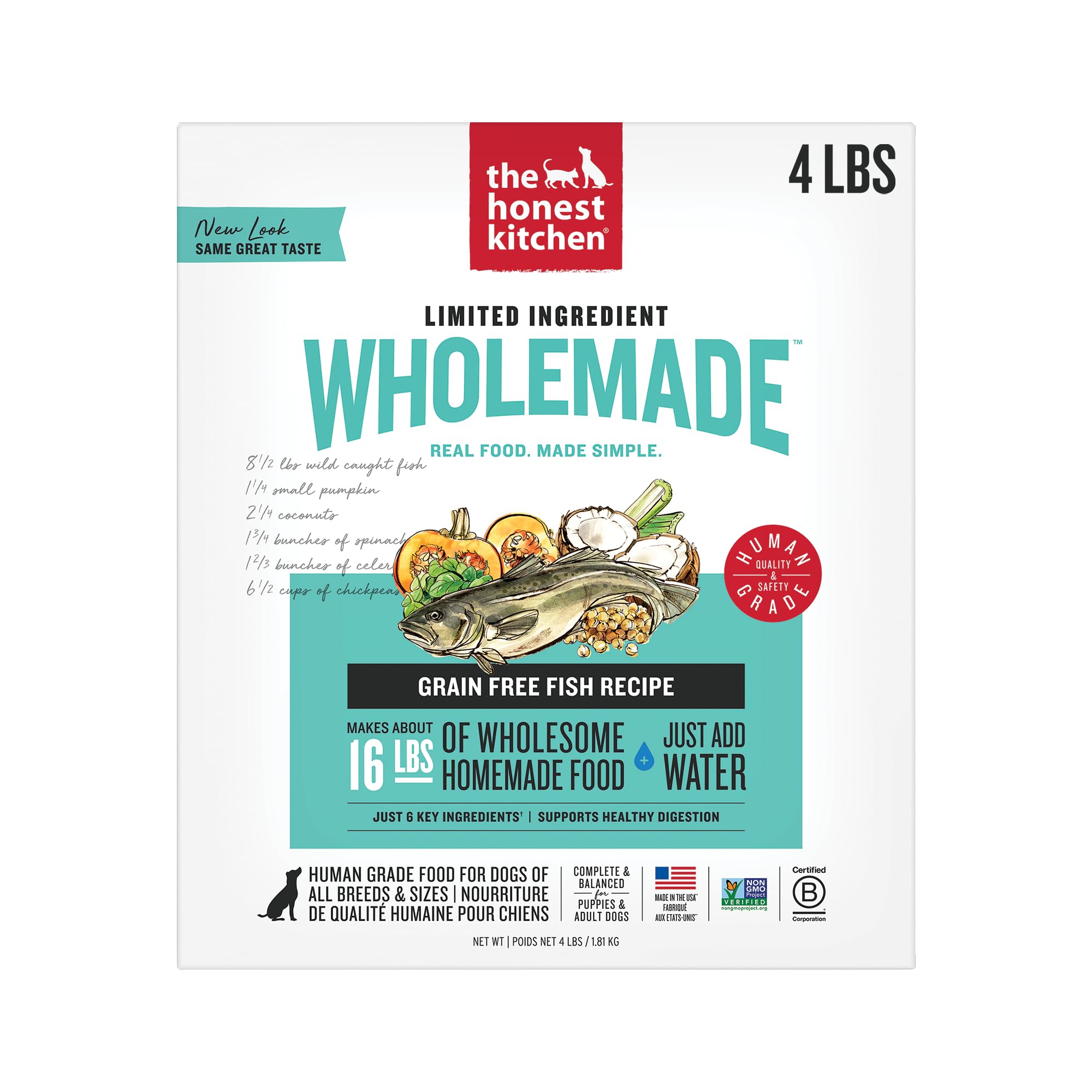
This human-grade dehydrated formula is the closest you can get to a home-cooked meal without cooking. The ingredient list is starkly minimal: wild-caught fish as the single protein source, with no fillers, no by-products, and no GMO ingredients. When rehydrated with warm water, the 4lb box yields 16lbs of fresh food, and the gentle dehydration process preserves enzymes and nutrients that high-heat extrusion destroys.
For dogs with a known or suspected chicken allergy — a common trigger that weakens the skin barrier and allows yeast to take hold — this fish-based recipe removes that antigen entirely. Multiple owner reports confirm that dogs who suffered chronic diarrhea, hair loss, and recurring ear infections cleared up within 2-3 months of switching. The human-grade certification means the processing facility meets FDA standards for human food, which provides an additional layer of quality assurance.
The trade-off is preparation time and cost. Each meal requires 3-5 minutes of mixing and hydration time, which is minimal but still more than pouring kibble from a bag. A single 4lb box lasts a medium-sized dog roughly 8-10 days when fed as a complete meal. The shelf-stable format is convenient for travel, and the food can also be used as a topper for dogs who refuse to eat dry kibble alone.
Why we love it
- Human-grade certification ensures ingredient purity
- Single novel protein (wild-caught fish) avoids chicken allergy triggers
- Dehydration preserves enzymes and nutrient integrity
Good to know
- Requires mixing and hydration time per meal
- Higher daily cost compared to traditional kibble
3. Zignature Salmon Limited Ingredient Formula

Zignature’s Salmon formula earns its place as one of the very few grain-free, limited-ingredient dry foods that does not use sweet potatoes as a binder. This is a critical distinction — most grain-free kibble relies on sweet potato or tapioca as a starch source, both of which are high-glycemic and can feed yeast overgrowth. Zignature uses chickpeas as the primary carbohydrate, which has a lower glycemic index and provides more fiber per serving.
Salmon is the number one ingredient, providing a lean protein source rich in Omega-3 fatty acids (EPA and DHA) that directly support skin barrier repair and reduce systemic inflammation. Owner reports consistently note that coat softness and ear health improve within 2-3 weeks of switching. The probiotic fortification adds Lactobacillus acidophilus and Bifidobacterium to support gut flora balance.
The 25lb bag offers a reasonable cost-per-pound for the ingredient quality, placing it in the mid-range rather than premium tier. Some dogs who are sensitive to chickpeas or legumes may still react, so a 2-week transition period is recommended. The kibble size is appropriate for medium to large breeds, but small-breed owners may find the pieces slightly large for very small mouths.
Why we love it
- No sweet potatoes or tapioca — uses low-glycemic chickpeas
- Salmon provides high Omega-3 content for skin repair
- Probiotic-fortified for gut flora support
Good to know
- Chickpea-based, some dogs may still have legume sensitivities
- Kibble pieces may be too large for tiny breeds
4. Purina Pro Plan Sensitive Skin & Stomach Wet Classic Pate Lamb & Oat Meal
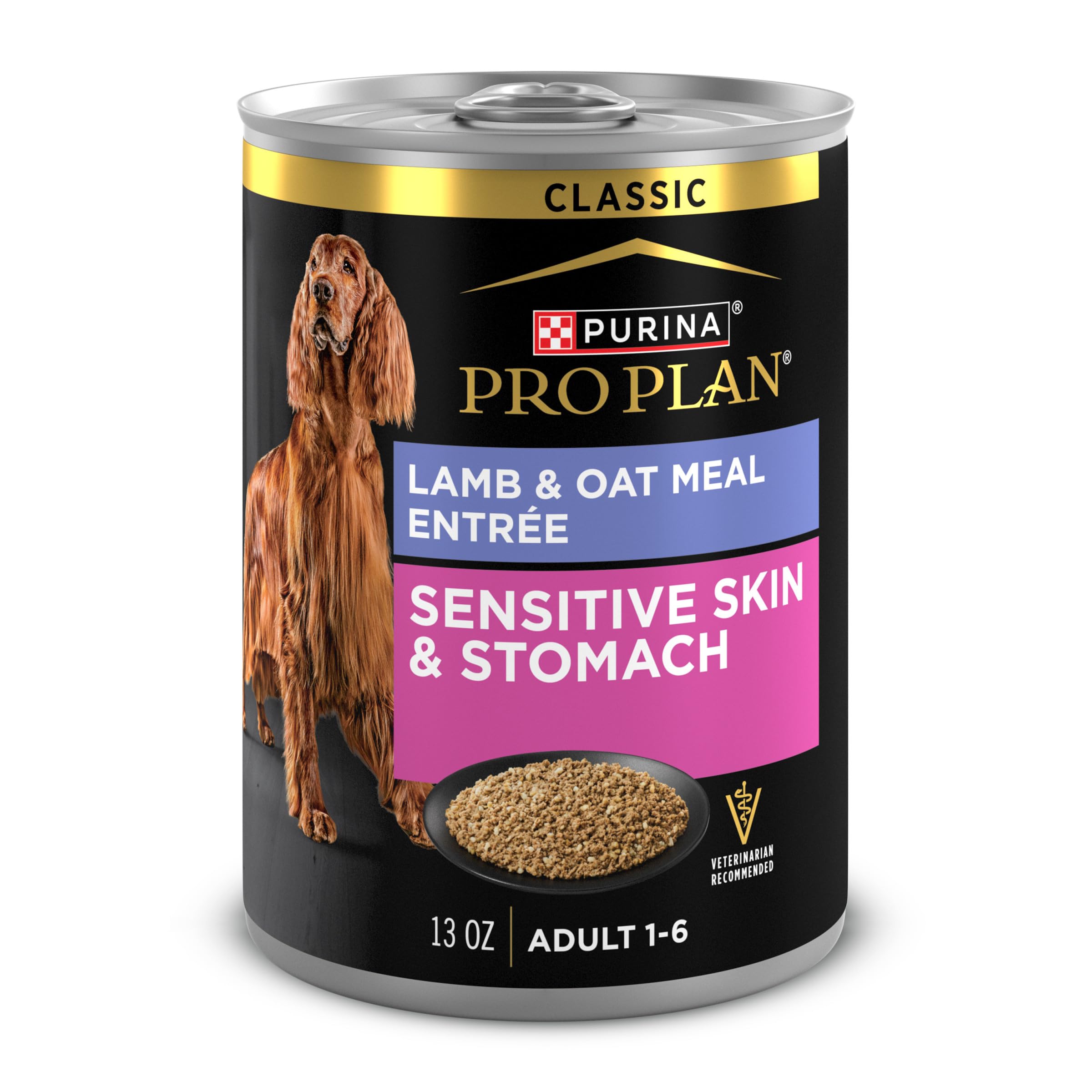
This wet pate from Purina’s vet-recommended Pro Plan line uses lamb as a single novel protein source, making it an excellent choice for dogs who have already developed sensitivities to chicken and beef — both of which are common triggers for skin barrier breakdown and secondary yeast infections. The lamb and oatmeal combination provides easily digestible carbohydrates without the high glycemic spike of potato or tapioca starch.
The formula includes natural prebiotic fiber to nourish intestinal bacteria, and linoleic acid (an omega fatty acid) to support skin and coat health. The pate texture is smooth and moist, which is ideal for senior dogs with dental issues or dogs recovering from a flare-up who have a suppressed appetite. Because it is a wet food with high moisture content, it also helps maintain hydration, which supports skin elasticity and reduces the itch response.
This is a complete and balanced formula for adult maintenance, and it can be fed exclusively or used as a topper. The case of 12 cans provides enough quantity for a multi-week trial. Some owners note that the lamb flavor has a stronger odor than chicken-based pates, which may take a meal or two for a picky dog to accept.
Why we love it
- Novel lamb protein avoids common chicken and beef triggers
- Prebiotic fiber supports healthy gut flora balance
- High-moisture pate texture supports hydration and dental sensitivity
Good to know
- Stronger lamb odor may deter some picky dogs
- Not starch-free — oatmeal still provides carbohydrate fuel
5. PureVita Salmon and Peas Grain-Free Dog Food

PureVita’s Salmon and Peas formula offers an accessible entry point into limited-ingredient, grain-free feeding for yeast-prone dogs without the premium price tag. The recipe relies on salmon as a single fish protein source, which is both a novel protein and rich in Omega-3 and Omega-6 fatty acids for skin barrier repair. Sweet potatoes are the primary carbohydrate source, providing a moderate glycemic load that is lower than white potatoes or rice.
The inclusion of berries, fruits, and vegetables adds phytonutrients and antioxidants that help reduce systemic inflammation. While not as carbohydrate-restricted as the starch-free Wysong formula, this is a solid everyday option for dogs with mild to moderate yeast sensitivity who do not need extreme metabolic intervention. The 5lb bag is ideal for a trial period before committing to a larger, more economical size.
Some owners report that the pea content can still be problematic for highly sensitive dogs, as peas contain moderate levels of digestible starch. The formula is formulated for all life stages, which adds versatility for multi-dog households with both puppies and adults.
Why we love it
- Single fish protein source avoids common poultry allergens
- Omega-3 and -6 balanced fatty acids for skin health
- Affordable trial size for initial evaluation
Good to know
- Sweet potatoes still provide moderate starch load
- Pea content may still trigger some yeast-sensitive dogs
6. KOHA Limited Ingredient Bland Diet Chicken & White Rice

KOHA’s Bland Diet is purpose-built for the acute phase of a yeast flare-up or digestive upset. Unlike a homemade boiled chicken and rice preparation that requires cooking and risks nutritional imbalance, this wet food is ready-to-serve and AAFCO-compliant for adult maintenance. The ingredient list is intentionally short — chicken as the single protein, white rice as the easily digestible carbohydrate, and pumpkin for soluble fiber to regulate stool consistency.
During a yeast flare, the gut lining is often inflamed and the microbiome is disrupted. This formula reduces dietary antigens to the absolute minimum, allowing the gut to rest and heal. The addition of pumpkin provides a gentle source of soluble fiber that helps bind loose stool without adding significant starch. This formula can be fed as a complete meal for 2-3 weeks during recovery, or used as a topper to ease transitions between different dry foods.
Because this is chicken-based, it is not suitable for dogs with confirmed poultry allergies. The white rice does provide a carbohydrate source that, while easily digestible, still contributes glucose that yeast can ferment — so this is a short-term recovery tool rather than a long-term management solution. The 6-pack case is well-priced for an emergency stash.
Why we love it
- Ready-to-serve bland diet eliminates cooking time
- Pumpkin provides gentle soluble fiber for stool regulation
- Complete and balanced nutrition for short-term feeding
Good to know
- Chicken-based, not suitable for poultry-allergic dogs
- White rice provides carbohydrate fuel, best as a short-term recovery food
7. Dave’s Pet Food Bland Diet Chicken & Rice
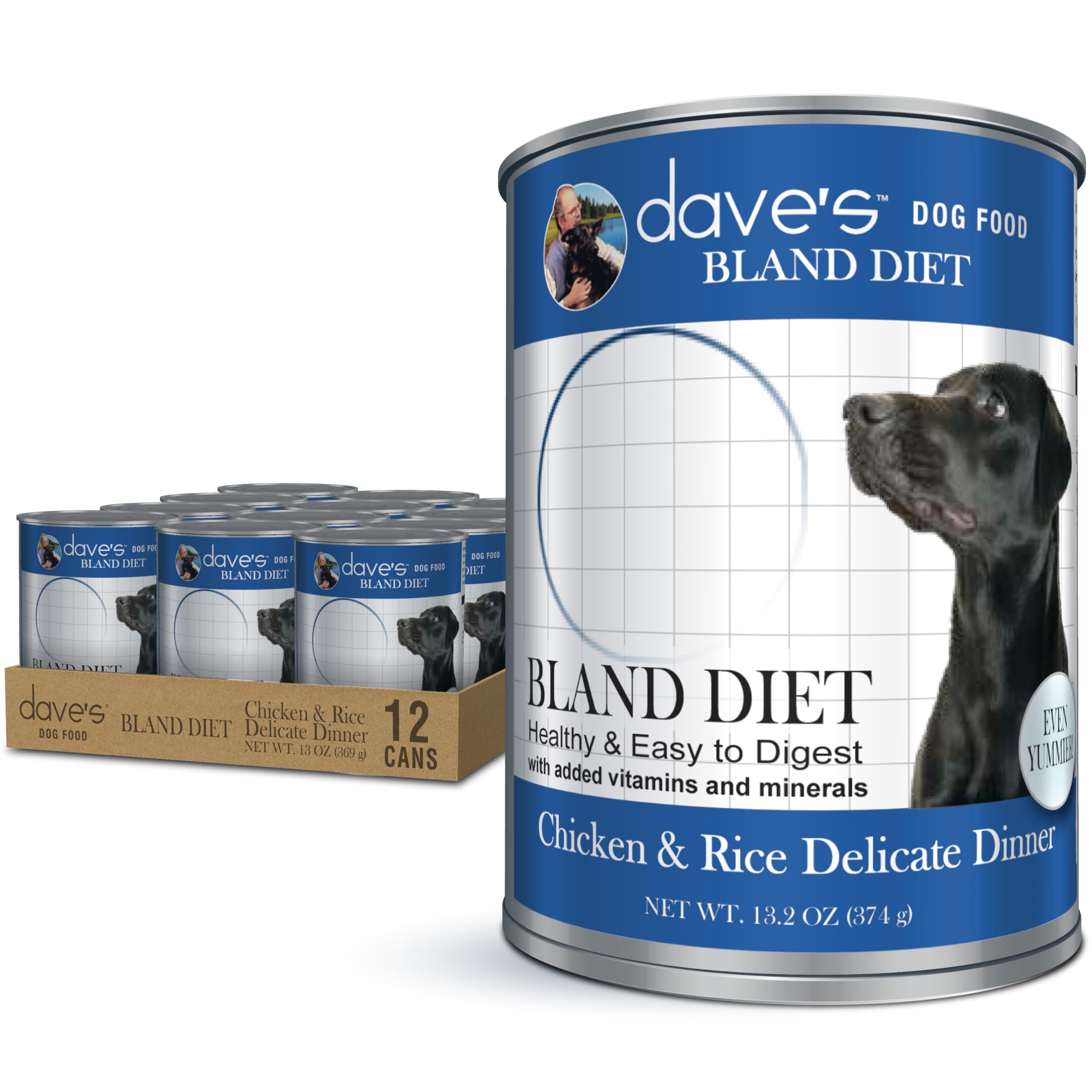
Dave’s Pet Food offers the same “boiled chicken and rice” concept as KOHA but with a key difference: this formula is deliberately low in fat at only 6% crude fat on an as-fed basis. For dogs who are prone to pancreatitis alongside their yeast issues — an unfortunate comorbidity — this low-fat profile is a lifesaver. The pate texture is smooth and easy to swallow, making it ideal for senior dogs or dogs recovering from surgery or illness.
The limited ingredient list sticks to chicken, white rice, and essential vitamins and minerals with no wheat, gluten, artificial flavors, or artificial colors. The formula is AAFCO-compliant for adult maintenance, meaning it can be fed as a complete meal long-term for dogs who simply cannot tolerate more complex formulas. Over 5 million cans sold speaks to the reliability and acceptance of this recipe among picky eaters and sensitive stomachs.
The primary limitation for yeast management is the same as KOHA — chicken and white rice both provide protein and carbohydrate sources that, while gentle on the gut, do not actively starve yeast. This is a maintenance formula that keeps the gut calm but does not reduce the glucose substrate needed to stop yeast proliferation. Owners seeking aggressive yeast control should look to the Wysong or Honest Kitchen options for long-term management.
Why we love it
- Low fat (6%) ideal for dogs with pancreatitis + yeast issues
- Smooth pate texture perfect for senior and dental-sensitive dogs
- Complete and balanced for long-term adult maintenance
Good to know
- Chicken-based, excludes poultry-allergic dogs
- White rice provides carbohydrate fuel, does not actively starve yeast
FAQ
Is grain-free dog food automatically good for yeast prone dogs?
How quickly should I see improvement after switching to a low-carb dog food?
Can I use a bland diet like chicken and rice long-term for yeast control?
Final Thoughts: The Verdict
For most owners fighting chronic yeast, the dog food for yeast prone dogs champion is the Wysong Epigen 90 Starch Free because it is the only kibble that eliminates carbohydrate fuel entirely, forcing the yeast into metabolic starvation. If you want human-grade transparency and a novel fish protein, grab the The Honest Kitchen Limited Ingredient Fish. And for a budget-friendly daily option that avoids sweet potatoes, nothing beats the Zignature Salmon Limited Ingredient Formula.