
Labrador puppies grow fast—too fast. Overshoot their calcium or calorie intake, and those developing hip and elbow joints pay the price later. The wrong kibble shape triggers scarf-and-barf gulping, while the wrong protein-to-fat ratio turns digestion into a daily guessing game. Owners of this breed need a formula that matches the Labrador’s unique growth curve, not a one-size-fits-all puppy chow.
I’m Mo Mahin — the founder and writer behind Furric. I analyze kibble particle geometry, ingredient sourcing, and guaranteed analysis breakdowns alongside aggregated health reports from thousands of verified Labrador owners to pinpoint which formulas actually slow growth rate to a safe pace without skimping on brain-building DHA.
Whether your pup inhales meals in seconds or leaves you cleaning up loose stools, the right bag changes everything. This guide evaluates five contenders to help you pick the best food for labrador puppy diets, ranked by ingredient integrity and breed-specific formulation.
How To Choose The Best Food For Labrador Puppy
Labrador puppies have a double threat: a genetic predisposition to hip dysplasia and a bottomless appetite that makes portion control a daily battle. The right food addresses both with precise macros and particle design. Here is what to look for in a bag.
Calcium, Phosphorus, and Controlled Growth Rate
Large-breed puppies need calcium levels between 0.8% and 1.2% on a dry matter basis. Anything higher accelerates bone growth faster than cartilage can stabilize, raising the risk of osteochondritis dissecans. Phosphorus should stay near 0.7% to 1.0% to balance calcium absorption. A food that follows the World Small Animal Veterinary Association guidelines for large-breed growth is non-negotiable for Labrador pups.
Kibble Geometry and Gulping Prevention
Labradors are notorious for inhaling meals whole. A donut-shaped, large-diameter kibble forces them to chew or at least slow down, reducing the chance of regurgitation or bloat. Compare the kibble diameter and shape before buying; avoid small, round pellets that slide straight down the throat.
Omega-3 Fatty Acids for Brain and Coat
DHA from fish oil or marine microalgae supports retinal and cognitive development during the first year. A minimum of 0.1% DHA in the guaranteed analysis is a solid benchmark. Salmon oil also provides EPA, which reduces inflammatory markers in growing joints.
Protein-to-Fat Ratio for Lean Mass
Aim for 28% to 32% crude protein and 14% to 18% crude fat. Too much fat packs on weight fast; too little protein starves muscle development. A fixed, breed-specific formulation removes the guesswork compared to an all-life-stages bag.
Quick Comparison
On smaller screens, swipe sideways to see the full table.
| Model | Category | Best For | Key Spec | Amazon |
|---|---|---|---|---|
| Royal Canin Labrador Retriever Puppy | Breed-Specific | Purebred Labs 8-15 months | Donut-shaped kibble; 0.9% calcium | Amazon |
| Wellness CORE Large Breed Puppy | Grain-Free | High-protein, grain-free fans | 34% protein; chicken & turkey | Amazon |
| Hill’s Science Diet Large Breed Puppy | Veterinarian Recommended | Balanced growth & digestive health | Chicken & brown rice; 1.0% calcium | Amazon |
| Purina Pro Plan Sport 30/18 Large Breed | High Protein | Active, athletic large-breed pups | 30% protein; glucosamine added | Amazon |
| Bully Max 25/11 High Protein Low Fat | Chicken-Free | Weight management & allergy pups | 25% protein; 11% fat; lamb | Amazon |
In‑Depth Reviews
1. Royal Canin Breed Health Nutrition Labrador Retriever Puppy

Royal Canin engineered this formula specifically for purebred Labrador Retrievers between 8 weeks and 15 months, and the attention to detail shows. The donut-shaped kibble is the standout design decision—Labradors tend to inhale their food, and that central hole forces them to tongue-wrap rather than swallow whole, cutting gulping speed measurably. Calcium sits at around 0.9%, right inside the safe zone for large-breed skeletal development, and the phosphorus balance supports controlled ossification without overdriving growth plates.
Protein comes primarily from chicken meal, landing near 27% crude protein with 16% crude fat—a ratio designed to fuel steady growth without encouraging the rapid weight gain that stresses hips and elbows. Prebiotics and highly digestible proteins keep stool quality firm, a frequent complaint among Lab owners switching between brands. The bag includes antioxidants like vitamin E to support the developing immune system through the puphood vaccination window.
Owner reports consistently mention shinier coats and fewer loose-stool incidents compared to generic large-breed puppy foods. Breeder recommendations appear in multiple verified reviews, and the 30-pound bag lasts roughly six to eight weeks for a 20–40 pound growing pup. The lower protein level compared to grain-free alternatives may concern owners who equate high protein with quality, but for a breed prone to obesity, the conservative macro profile is a deliberate safety feature.
Why we love it
- Donut kibble slows gulping and reduces bloat risk
- Calcium and phosphorus carefully calibrated for Labrador skeletons
- Strong prebiotic support for consistent stool quality
- Backed by decades of breed-specific research
Good to know
- Protein content lower than grain-free alternatives
- Contains chicken, not suitable for poultry allergies
- Premium price point compared to general large-breed formulas
2. Wellness CORE Large Breed Puppy Grain Free
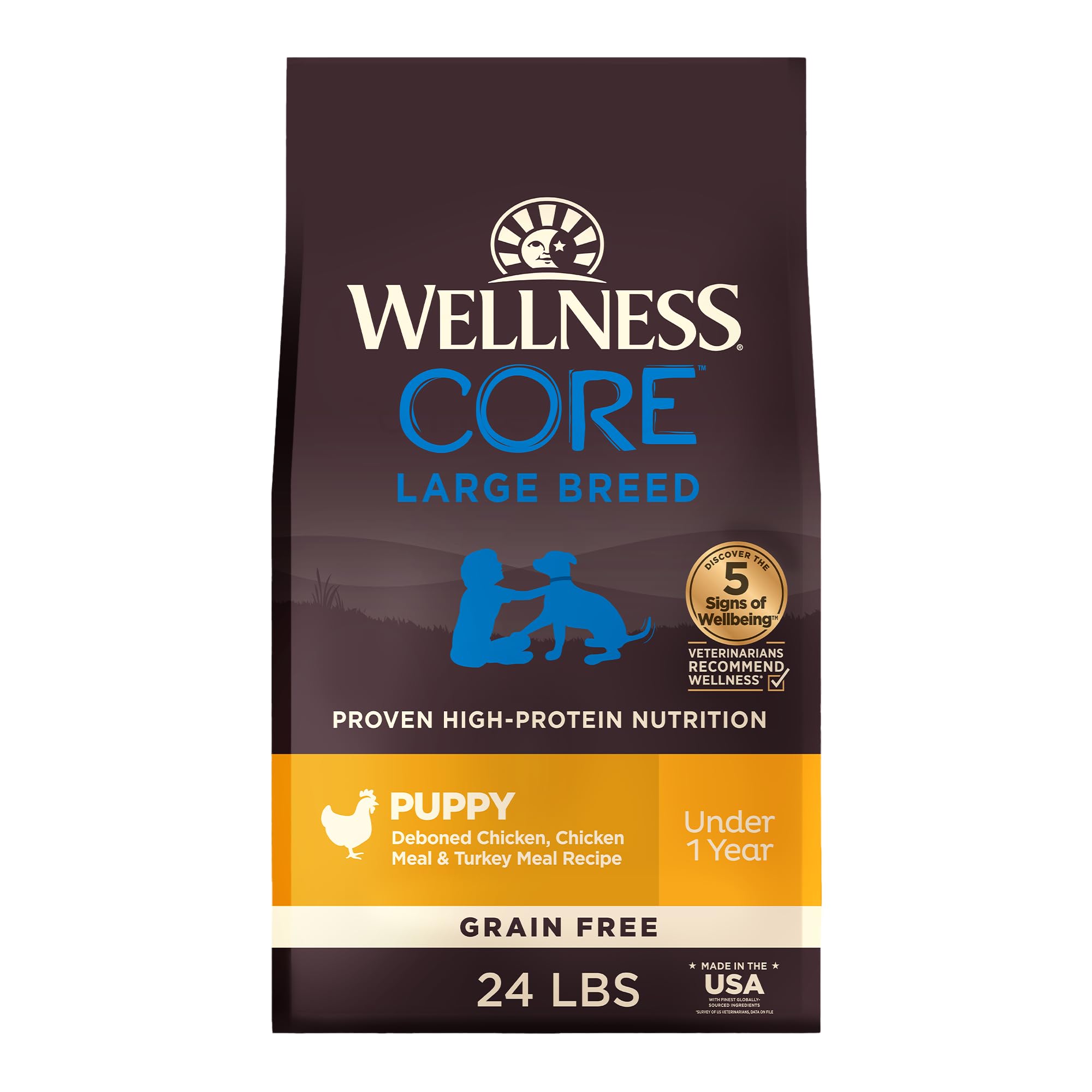
Wellness CORE targets owners who prefer grain-free formulations and want a protein punch for their growing Labrador. The deboned chicken and turkey meal combination delivers 34% crude protein—well above the large-breed puppy average—paired with 15% crude fat. That high protein level supports rapid lean muscle development but requires careful portion control to prevent the Lab puppy from gaining weight too quickly, which strains developing joints.
The grain-free approach uses peas, potatoes, and chickpeas as carbohydrate sources. These provide a lower glycemic response than corn or wheat, but the higher legume content increases dietary fiber, which can loosen stools in sensitive Labs during the transition. Glucosamine and chondroitin are added for joint support, and the omega-3s from salmon oil deliver DHA for cognitive development. The kibble is a medium-sized round shape, not specifically anti-gulping, so fast eaters may still need a slow-feed bowl.
Owners who switch from grain-inclusive formulas often report a noticeable coat shine increase within two weeks. For Labrador puppies with grain sensitivities or skin issues, the grain-free recipe eliminates that variable from the elimination diet process. The 24-pound bag works best for owners who know their pup tolerates legume-heavy fiber without digestive upset.
Why we love it
- High-quality animal protein sources as first ingredients
- Glucosamine and chondroitin for hip and elbow protection
- Grain-free for puppies with grain sensitivities
- Omega-3s from salmon oil support brain development
Good to know
- High protein requires strict portion control to avoid rapid growth
- Legume-heavy fiber may cause loose stools during transition
- Round kibble does not slow gulping speed
3. Hill’s Science Diet Puppy Large Breed Chicken & Brown Rice
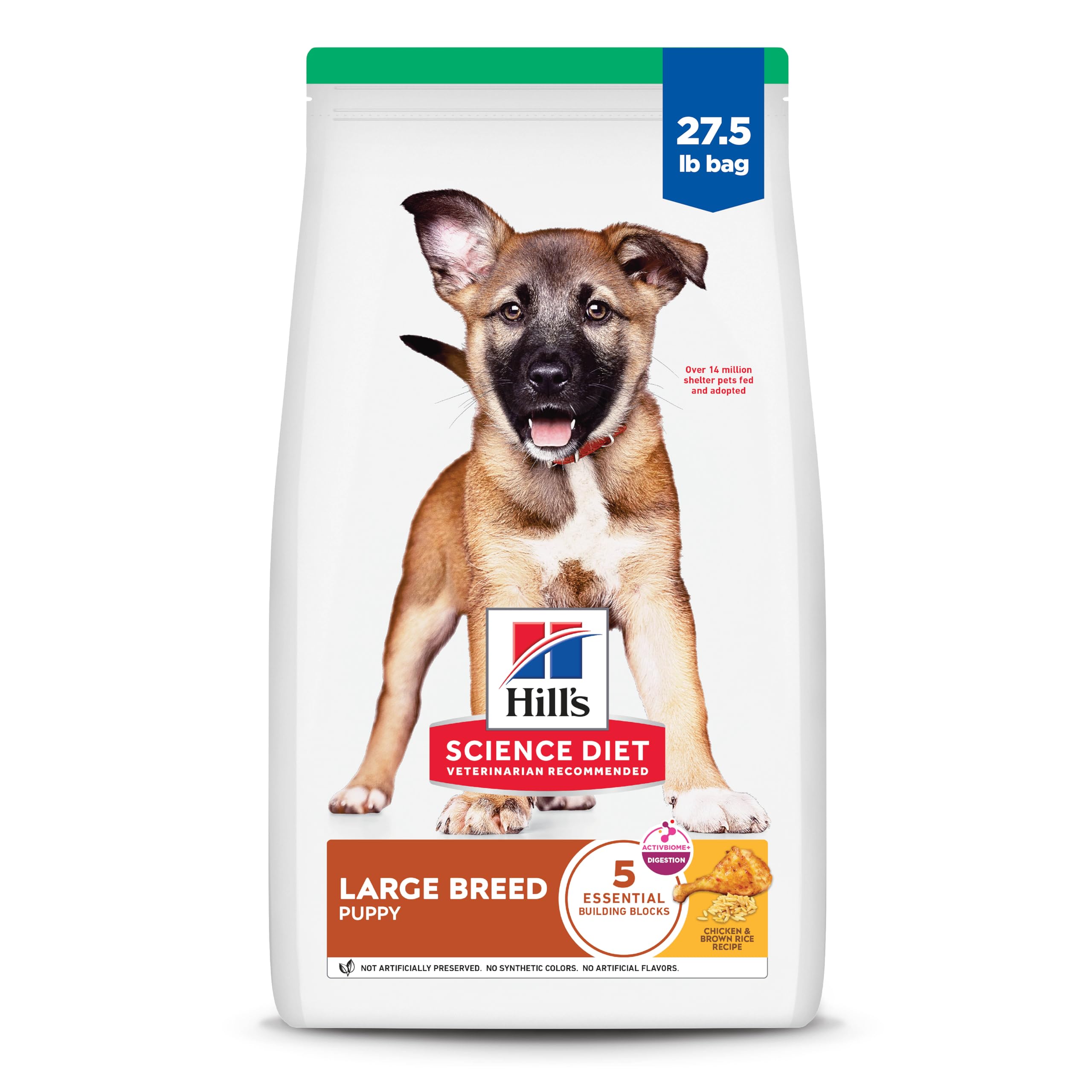
Hill’s Science Diet Large Breed Puppy formula is one of the most frequently recommended by veterinarians for Labrador puppies, and the ingredient profile explains why. Calcium stays at approximately 1.0% with phosphorus at 0.8%, a ratio that supports controlled bone mineralization without overshooting growth acceleration. Crude protein settles around 27% with 15% fat, creating a macro split that supports steady weight gain rather than rapid bulking.
The formula utilizes chicken meal and brown rice as the primary carbohydrate source, avoiding the high legume load found in grain-free alternatives. This makes the transition gentler on a Labrador puppy’s digestive system, reducing the loose-stool episodes common when switching brands. The kibble size is larger than standard puppy kibble but lacks the donut shape—gulping-prone Labs may still benefit from a separate slow-feed insert. DHA from fish oil is included for cognitive development, and vitamin E plus beta-carotene support immune health during the first year.
Owner feedback highlights the formula’s reliability for maintaining consistent stool quality across bag changes, which matters for Lab owners who purchase through auto-ship programs. The 27.5-pound bag is a practical size for single-puppy households, and the nutritional profile aligns with WSAVA guidelines for large-breed growth. The lower protein compared to premium grain-free brands may deter owners seeking ultra-high meat content, but the safety record and clinical backing make it a sound choice for owners prioritizing joint health over protein numbers.
Why we love it
- Veterinarian-formulated with controlled calcium for safe growth
- Gentle on digestion with brown rice rather than legumes
- WSAVA-compliant nutritional profile for large breeds
- Consistent stool quality reported across switching periods
Good to know
- Protein content lower than high-end grain-free recipes
- Standard kibble shape does not slow fast eaters
- Chicken-based; not suitable for poultry allergies
4. Purina Pro Plan Sport Development 30/18 Large Breed Puppy
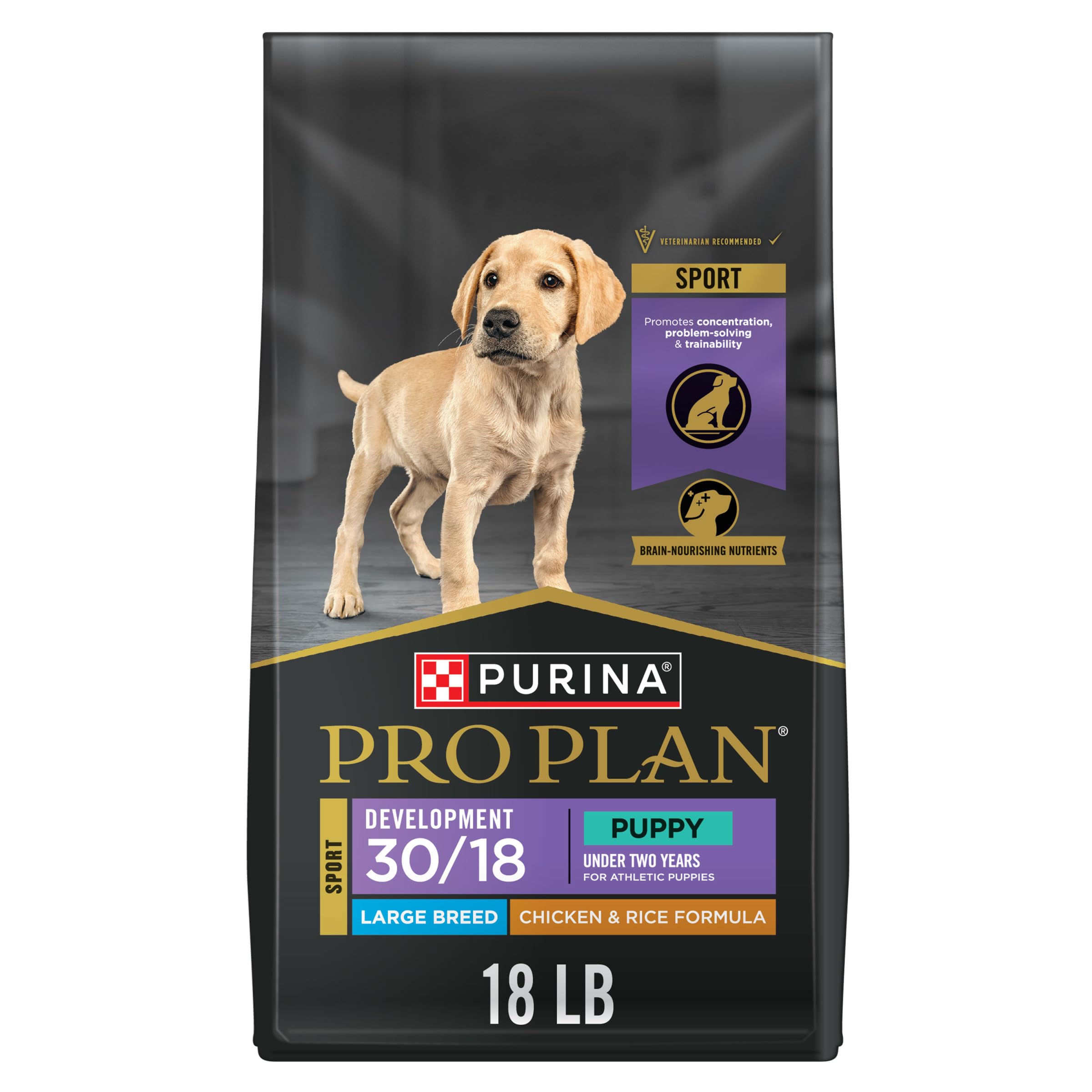
Purina Pro Plan Sport Development targets the owner who plans to put their Labrador through high-activity demands—field work, hunt tests, or intense obedience training. The 30% protein and 18% fat create an energy-dense formula that supports endurance and muscle recovery. Real chicken is the first ingredient, and the kibble is a large, crunchy pellet designed to encourage chewing, though not specifically engineered for anti-gulping like the donut shape.
The formula includes glucosamine at a guaranteed level for joint and cartilage maintenance, alongside calcium and phosphorus at levels appropriate for large-breed growth. DHA from fish oil supports trainability and cognitive function—Purina’s research links this to improved problem-solving in puppies during early learning phases. However, the 18% fat content is higher than many large-breed puppy formulas, which means portion control is critical to prevent the Lab puppy from holding excess weight during the rapid-growth window.
Owner reviews highlight improved stool consistency in active pups fed this formula compared to standard large-breed puppy lines. The 18-pound bag size is smaller than the 27–30 pound competitors, which means more frequent repurchasing for owners of larger Labs. This food fits best when the puppy’s activity level genuinely justifies the extra calorie density—not for the couch-potato Lab who sleeps while you are at work.
Why we love it
- Higher protein and fat for athletic, high-energy Labrador pups
- Glucosamine added for joint protection during active development
- DHA from fish oil supports trainability and cognitive function
- Real chicken as the first ingredient
Good to know
- 18% fat requires strict portion control to avoid excess weight gain
- Smaller bag size leads to more frequent repurchases
- Not ideal for low-activity or obesity-prone puppies
5. Bully Max 25/11 High Protein Low Fat Lamb Dry Dog Food
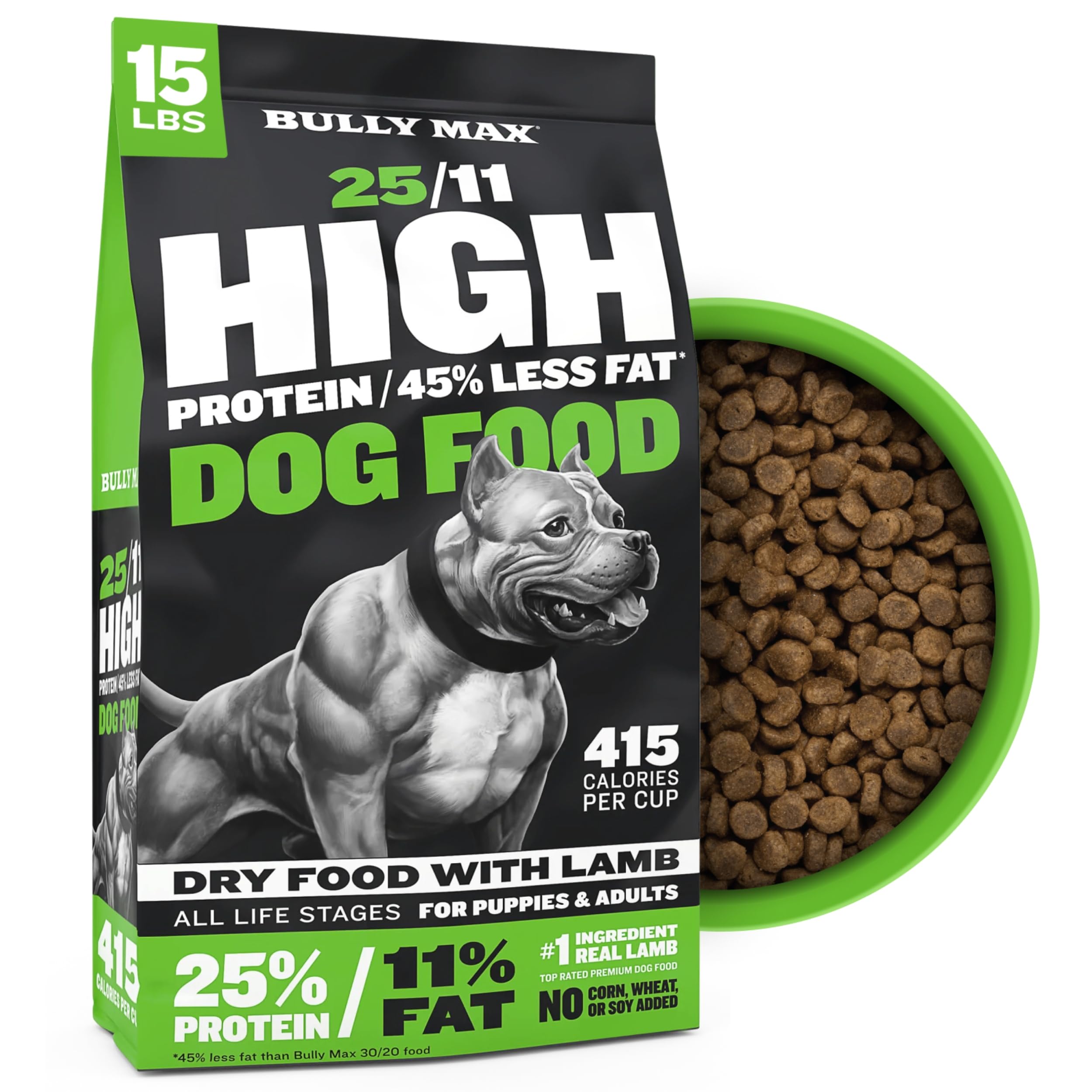
Bully Max 25/11 offers a solution for Labrador puppies who either have poultry allergies or need weight management support from the start. At 25% protein and only 11% fat, this formula is roughly 45% leaner than the brand’s own 30/20 recipe. Lamb meal replaces chicken as the primary protein, making it a viable option for Labs that develop skin irritation or loose stools on poultry-based diets. The lower fat content helps puppy owners maintain a lean body condition during the critical growth phase.
The ingredient list includes barley and oats as grain sources, avoiding corn, wheat, and soy. Sweet potatoes and kelp provide natural vitamin and mineral support, while the addition of postbiotics and probiotics aids digestive health. The formula is marketed for all ages from 4 weeks upward, and the manufacturer meets AFFCO nutritional standards for growth. The 15-pound bag size is compact, which suits smaller households but means more frequent ordering for larger Labs or multi-dog homes.
Customer feedback from owners of show-line Labrador lines and other large breeds indicates the formula supports firm stools even in sensitive pups. The chicken-free angle is the primary differentiator here—if your Lab puppy shows signs of poultry intolerance, this formula removes that variable without dropping protein too low for healthy development. The larger kibble size is textured sufficiently to encourage some chewing, though active gulpers may still benefit from a slow-feed bowl.
Why we love it
- Chicken-free formula for Labs with poultry allergies
- Low 11% fat supports lean growth and weight management
- Probiotics and postbiotics aid digestive health during transitions
- Grain-inclusive without corn, wheat, or soy
Good to know
- 15-pound bag requires more frequent repurchases for larger Labs
- Protein at 25% is on the lower end for active puppies
- Lamb flavor may not appeal to picky eaters
FAQ
How much should I feed my Labrador puppy per day?
What protein percentage is best for a Labrador puppy?
Should I avoid grain-free food for my Lab puppy?
At what age should I switch from puppy food to adult food?
Why does my Labrador puppy have loose stools on high-protein food?
Final Thoughts: The Verdict
For most Labrador owners, the best food for labrador puppy winner is the Royal Canin Labrador Retriever Puppy because its donut-shaped kibble directly addresses the gulping problem Labs are famous for while delivering breed-specific calcium levels for controlled skeletal growth. If you need a chicken-free option for a sensitive pup, grab the Bully Max 25/11 to avoid poultry triggers while maintaining lean body condition. And for owners of high-drive, field-bred Labs who need extra fuel for endurance training, nothing beats the Purina Pro Plan Sport 30/18 for sustained energy and joint support during critical development.