
Bilious Vomiting Syndrome in dogs is a frustrating cycle: an empty stomach triggers bile buildup, the bile irritates the lining, and your dog vomits foam or yellow liquid, often early in the morning or late at night. The direct cause is a stomach that sits empty for too long, making the frequency and timing of meals just as critical as the ingredients themselves. The wrong kibble can worsen the irritation, while a specifically structured diet can buffer the stomach and prevent the bile surge before it starts.
I’m Mo Mahin — the founder and writer behind Furric. My analysis of this condition focuses on comparing macronutrient profiles, fat percentage ceilings, fiber type ratios, and feeding schedule compatibility across veterinary diets and limited-ingredient formulas using aggregated owner feedback and ingredient panel data.
This guide ranks the most effective options for managing bile reflux, highlighting low-fat, highly digestible recipes that keep the stomach coated between meals. If your dog regularly vomits foam or bile, you need a targeted dog food for bilious vomiting syndrome that pairs proper meal timing with stomach-soothing nutrition.
How To Choose The Best Dog Food For Bilious Vomiting Syndrome
Bilious Vomiting Syndrome isn’t a food allergy — it’s a mechanical problem of the stomach sitting empty. Choosing the right food means prioritizing three levers: fat restriction, digestibility, and feeding schedule compatibility. Here is what matters most.
Crude Fat Percentage — The BVS Ceiling
A dog with BVS typically cannot tolerate high-fat meals. Fat slows gastric emptying, which keeps the stomach full longer — but it also stimulates bile production. The sweet spot for most BVS dogs is a crude fat content between 4% and 8% on a dry matter basis. Anything above 10% risks triggering a bile surge. Always check the guaranteed analysis on the bag or can, not just the marketing phrases.
Fiber Profile — Soluble Over Insoluble
Soluble fiber (like pumpkin, psyllium, or beet pulp) absorbs water and forms a gel that buffers the stomach lining and slows bile movement. Insoluble fiber (like cellulose or wheat bran) speeds transit and may not provide the same coating effect. For BVS, a formula with a clear soluble fiber source is more effective at preventing the morning bile vomit.
Protein Source Simplicity
BVS dogs often have concurrent sensitive stomachs. A limited ingredient formula with a single novel or low-irritation protein — such as chicken, pollock, or lamb — reduces the chance that a second issue (a food sensitivity) is contributing to the vomiting. The fewer ingredients on the panel, the fewer variables to troubleshoot.
Quick Comparison
On smaller screens, swipe sideways to see the full table.
| Model | Category | Best For | Key Spec | Amazon |
|---|---|---|---|---|
| #7 Royal Canin Veterinary Diet GI LF Low Fat | Veterinary Diet | Prescription-grade BVS management | < 7% crude fat (dry matter) | Amazon |
| #6 Dave’s Pet Food Bland Diet | Limited Ingredient | Bland pate for daily use or flare-ups | 6% crude fat (as fed) | Amazon |
| #5 KOHA Limited Ingredient Bland Diet | Veterinary Diet | No-cook bland diet for sensitive tummies | Single protein chicken & white rice | Amazon |
| #4 Best Breed Dr. Gary’s German Dog Diet | Holistic Formula | Large breed dogs with sensitive digestion | 13 lb. soluble fiber blend | Amazon |
| #3 Open Farm Digestive Health Pollock & Oatmeal | Grain-Inclusive | Gentle dry kibble with probiotics | Wild Alaskan pollock first ingredient | Amazon |
| #2 Weruva Meals ‘n More Belly Belly Nice! | Wet Food Variety | Hydration and stomach coating | 3.5 oz cup, variety pack | Amazon |
| #1 Hill’s Science Diet Perfect Weight & Joint Support | Weight Management | Dual BVS & joint health support | 3.5 lb. dry formula | Amazon |
In‑Depth Reviews
7. Royal Canin Veterinary Diet Canine Gastrointestinal LF Low Fat – 6.6lb
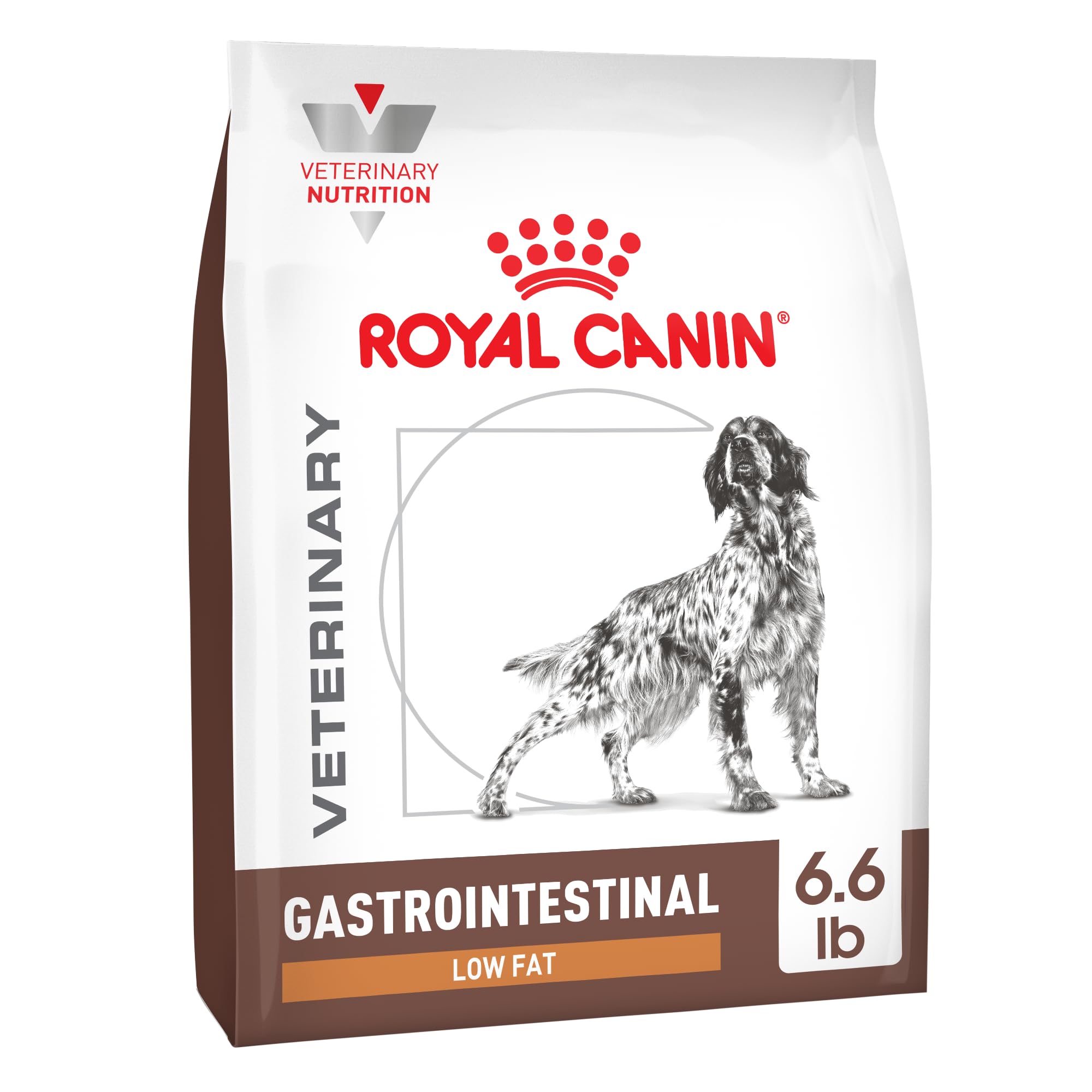
This is the prescription-grade benchmark for BVS management. The Gastrointestinal LF Low Fat formula is specifically engineered to be low in fat and highly digestible, with a precise fiber blend that includes prebiotics to support healthy gut bacteria. Veterinary diets like this one undergo rigorous feeding trials for digestive health, not just formulation, which sets it apart from over-the-counter options.
The kibble texture is designed to be highly palatable even for dogs with reduced appetite — a common secondary issue in BVS dogs who associate eating with vomiting. The low fat ceiling (targeting crude fat well under 8% on a dry matter basis) directly addresses the bile stimulation problem. Owners typically report that the controlled feeding schedule, combined with this kibble, eliminates the morning vomit within days.
Because it requires a veterinary prescription, you must work with your vet to confirm it is appropriate for your dog’s specific BVS diagnosis. It is the most targeted therapeutic option on this list, but it also costs more per pound than non-prescription alternatives. For severe or chronic BVS, this is the first line of defense.
Why we love it
- Clinically proven low-fat formula specifically for digestive health
- Prebiotic blend supports gut microbiome stability
- High palatability encourages eating in reluctant dogs
Good to know
- Requires veterinary prescription — not OTC
- Higher cost per pound than standard kibble
6. Dave’s Pet Food Bland Diet Dog Food (Chicken & Rice) – 13.2oz Case of 12
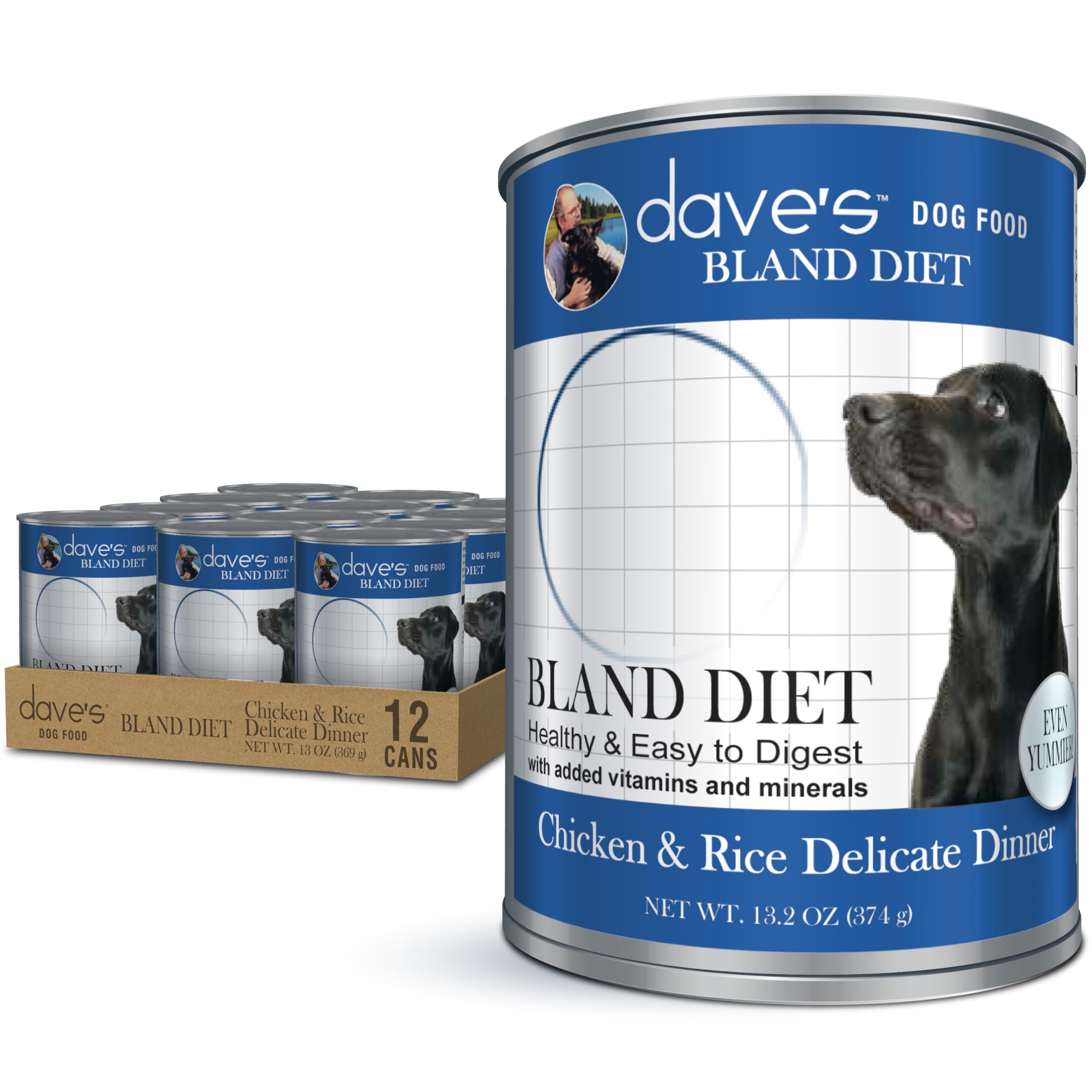
Dave’s Bland Diet has become a staple in BVS households for good reason: it delivers exactly 6% crude fat, making it one of the lowest-fat wet foods readily available without a prescription. The pate texture is soft and easy to chew, ideal for dogs with dental sensitivity or those recovering from a vomiting episode. Its limited ingredient profile — chicken, white rice, and essential vitamins — removes the guesswork from ingredient sensitivity.
Owner reviews repeatedly confirm that this food stops both vomiting and diarrhea in sensitive dogs, including French Bulldogs and senior Havaneses who have failed on multiple other foods. The smooth pate also makes it easy to hide medication, which is useful during BVS flare-ups. Because it is complete and balanced per AAFCO standards, it can be fed as a full meal long-term, not just as a transition diet.
The case of 12 provides a strong cost-per-can value, especially compared to prescription wet diets. Some dogs may tire of the single chicken flavor, but the brand also offers a lamb recipe for rotation. For BVS management, this is the most practical ready-to-serve bland diet on the market.
Why we love it
- Only 6% crude fat — directly addresses bile stimulation
- Smooth pate texture for easy eating and medication hiding
- Complete & balanced for long-term feeding
Good to know
- Single chicken flavor may need rotation for picky dogs
- Pate texture may not suit dogs who prefer chunks or shreds
5. KOHA Limited Ingredient Bland Diet for Dogs, Chicken and White Rice – Pack of 6

KOHA’s bland diet solves a practical BVS problem: when your vet says “feed a bland chicken and rice diet,” you no longer need to cook it yourself. This ready-to-serve formula uses chicken as the single protein source with white rice and pumpkin, providing both the soluble fiber from pumpkin and the bland carbohydrate base that buffers the stomach. It is sold in over 5,000 vet clinics, which signals strong professional buy-in for digestive management.
The pumpkin inclusion is a key differentiator — pumpkin provides soluble fiber that helps absorb excess bile and supports stool regularity. For BVS dogs, this can reduce the frequency of bile reflux episodes. The formula is free from peas, potatoes, corn, and soy, which aligns with a truly limited-ingredient approach. KOHA positions this as suitable for both chronic digestive issues and acute flare-ups from stress or travel.
The pack of six offers a convenient supply for a short-term bland diet reset. The main trade-off is the higher cost per serving compared to making a homemade bland diet, and some owners report the pate consistency is slightly more watery than Dave’s. For a no-fuss, vet-backed option that includes pumpkin, this is a strong choice for BVS flare-up management.
Why we love it
- Ready-to-serve — no cooking required, a major convenience
- Pumpkin provides soluble fiber for bile absorption
- Widely used in veterinary clinics for digestive support
Good to know
- Higher per-serving cost than homemade bland diets
- Pate texture may be more watery than other brands
4. Best Breed Dr. Gary’s German Dog Diet, Digestive Health & Skin Support – 13 lb Bag
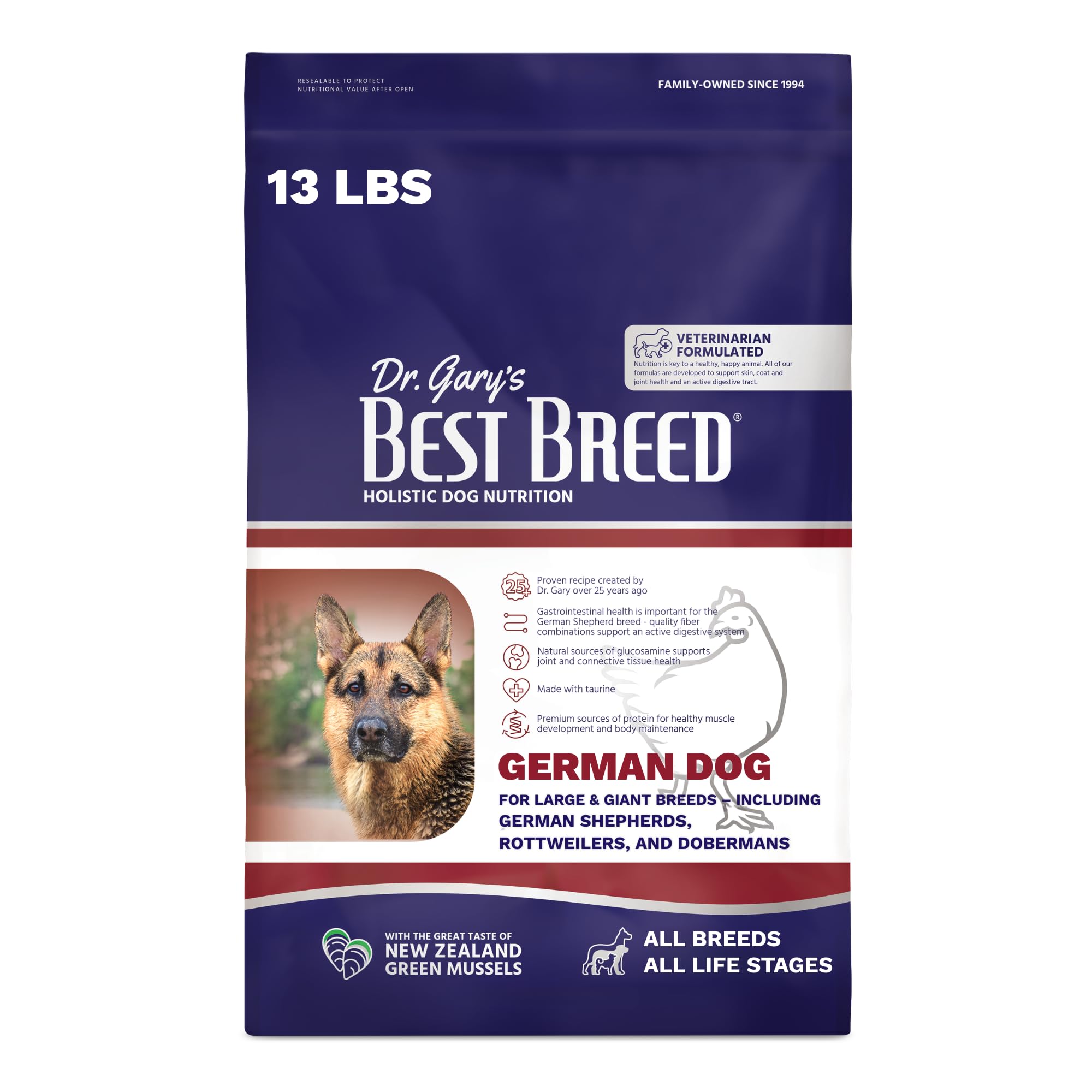
Dr. Gary’s German Dog Diet was created specifically for large and giant breeds — German Shepherds, Rottweilers, Dobermans — that are prone to both digestive sensitivity and skin issues. For BVS, the key spec is the “synergistic blend of soluble and insoluble fiber” designed to keep the large breed’s sensitive digestive system active. This dual fiber approach helps regulate bile movement and prevent the rapid bile accumulation that triggers vomiting.
The formula also includes New Zealand Green-Lipped Sea Mussel for joint support, which is a practical bonus for large breeds where BVS often coexists with joint concerns. The slow-cooking process at lower temperatures is said to preserve nutrient integrity better than high-heat extrusion. It is corn-free, pea-free, and potato-free, which reduces the risk of triggering concurrent food sensitivities that could mimic or worsen BVS.
This is a dry kibble, so it works best for dogs that tolerate dry food. For BVS dogs that also need a wet food component to increase moisture, this can be paired with a bland wet topper. The 13-pound bag is a strong value for large breed owners, though the fiber blend may cause looser stools in some dogs during the transition period.
Why we love it
- Synergistic fiber blend specifically for large breed digestion
- Joint support from Green-Lipped Sea Mussel
- Corn-free, pea-free, potato-free ingredient panel
Good to know
- Dry kibble may require moisture addition for some BVS dogs
- Fiber blend can cause stool changes during transition
3. Open Farm Digestive Health Dog Food, Wild-Alaskan Pollock & Oatmeal – 4lb Bag
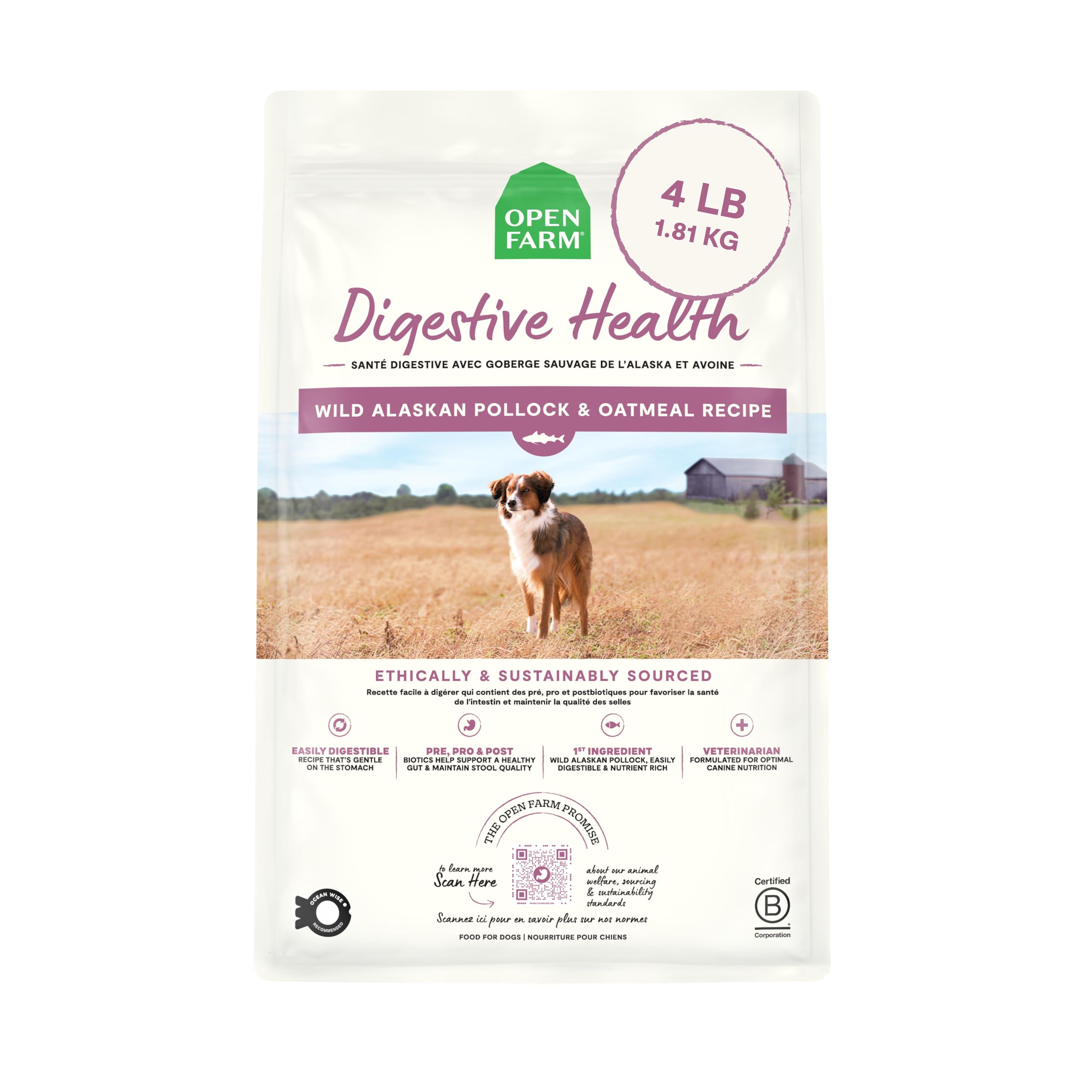
Open Farm’s Digestive Health formula uses Wild Alaskan Pollock as the first ingredient — a single, novel protein source that is naturally lean and highly digestible. For BVS dogs that may also have chicken or beef sensitivities, this pollock-based recipe offers an alternative protein that is less likely to provoke a gastric response. The oatmeal provides soluble fiber that helps coat the stomach and slow bile release.
The formula includes probiotics specifically selected for digestive health, which supports the gut microbiome after episodes of vomiting that can disrupt bacterial balance. The pellet form is small and easy to chew, suitable for dogs of all sizes. Owners transitioning from a bland diet have reported success using this as a long-term dry food that maintains the quiet stomach they achieved during the bland phase.
The 4-pound bag is a compact trial size — practical for testing whether your BVS dog tolerates the formula before committing to a larger bag. Some owners note that the fish smell is more pronounced than chicken-based kibble, which may be a pro or a con depending on your dog’s preference. For a grain-inclusive dry option with probiotics, this is a solid mid-range pick.
Why we love it
- Single novel protein (pollock) ideal for sensitive stomachs
- Probiotic support for gut health after vomiting episodes
- Oatmeal provides gentle soluble fiber for stomach coating
Good to know
- Fish smell may be strong for some owners
- 4lb bag is small; larger sizes may be needed for multi-dog households
2. Weruva Meals ‘n More Natural Wet Dog Food, Belly Belly Nice! Digestive Support – 3.5oz Pack of 10

Weruva’s Belly Belly Nice! variety pack is designed specifically for digestive support, and the 3.5-ounce cup format is a BVS advantage — smaller, more frequent meals are the cornerstone of BVS management. Feeding multiple small portions throughout the day keeps the stomach from sitting empty too long, which is the primary trigger for bile reflux. The wet food texture also provides hydration, which supports overall gastric health.
The variety pack includes multiple recipes, which helps prevent flavor fatigue in picky dogs. Each cup is formulated with easily digestible proteins and limited filler ingredients. For BVS dogs that need a late-night snack to bridge the gap between dinner and breakfast, these small cups are perfectly portioned for a midnight meal without overfeeding.
The main consideration is that this is not a complete balanced diet for every dog if used exclusively — it works best as a rotational topper or a supplementary meal. Some BVS owners use a cup at bedtime to ensure the stomach has something to process overnight, reducing the morning bile vomit. The cost per cup is higher than bulk wet food, but the portion control is valuable for BVS management.
Why we love it
- Small 3.5oz cups ideal for frequent small meals
- Variety pack prevents flavor fatigue
- Excellent as a late-night snack to buffer the stomach
Good to know
- Not designed as a complete long-term sole diet
- Higher cost per serving than bulk wet food
1. Hill’s Science Diet Adult Perfect Weight & Joint Support Dry Dog Food, Chicken – 3.5 lb Bag
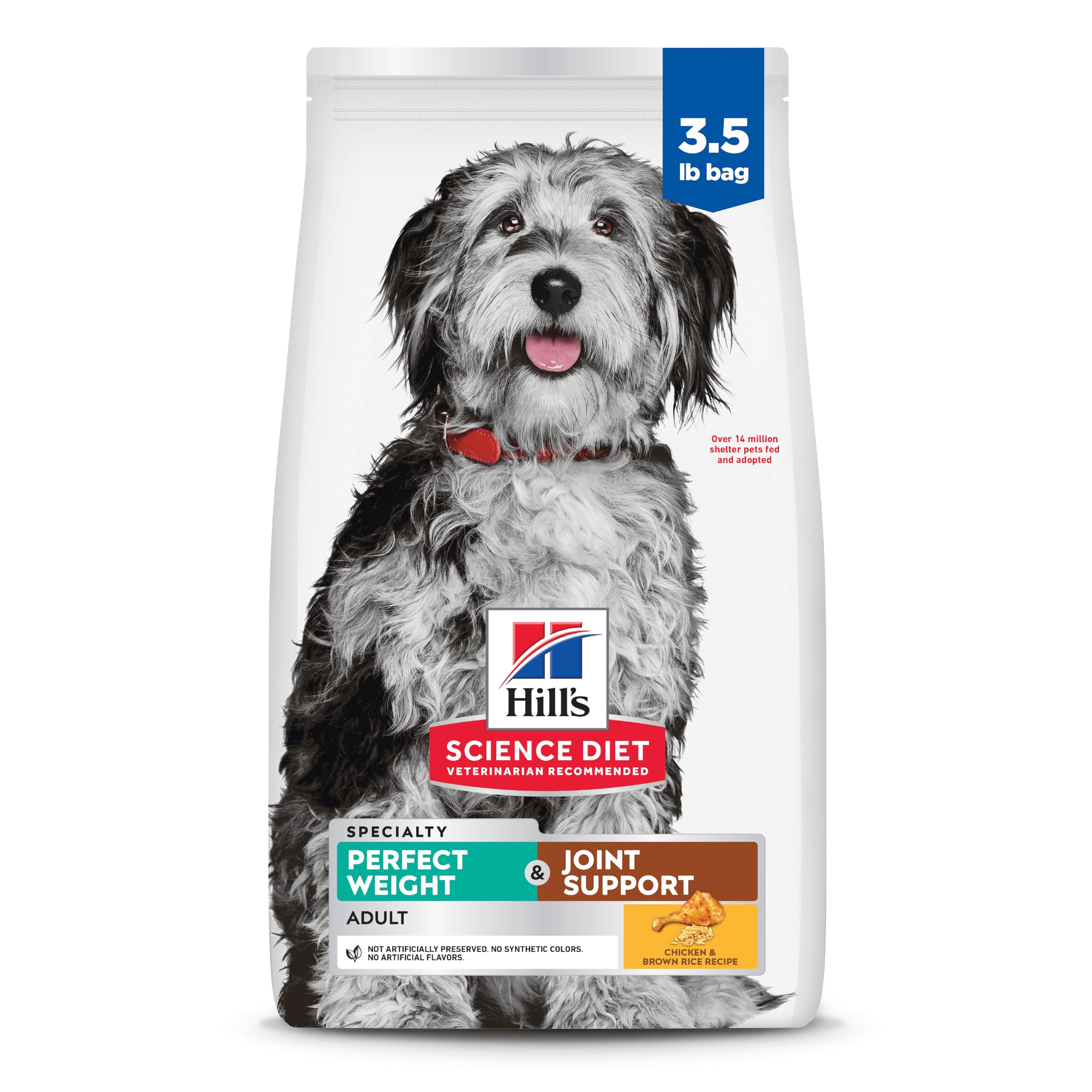
While not formulated specifically for BVS, Hill’s Perfect Weight & Joint Support dry food occupies a unique position on this list: it is a controlled-calorie, moderate-fiber formula that can help BVS dogs that also need weight management. Excess body weight increases intra-abdominal pressure, which can exacerbate reflux. By maintaining a lean body condition, this diet indirectly reduces the mechanical pressure on the stomach that contributes to bile backup.
The formula includes clinically proven omega-3 fatty acids for joint health, which is relevant for older BVS dogs where arthritis and digestive sensitivity often co-occur. The controlled calorie content ensures smaller portion sizes, which aligns with the BVS requirement for small, frequent meals. Owners have reported success using this as a base kibble while supplementing with a small wet food portion for the overnight meal.
The 3.5-pound bag is a trial size, allowing you to test your dog’s tolerance without a large commitment. Because it is not a low-fat or limited-ingredient diet, it is best suited for BVS dogs that do not have a specific fat intolerance and can handle a moderate crude fat level. For dogs where weight and joint health are secondary concerns to BVS, this offers a practical dual-purpose solution.
Why we love it
- Controlled calorie formula supports lean body condition
- Omega-3s for joint health in older dogs
- Small trial bag allows easy tolerance testing
Good to know
- Not a low-fat or limited-ingredient formula
- Best for BVS dogs without concurrent fat sensitivity
FAQ
Can I feed a raw diet to a dog with bilious vomiting syndrome?
How soon after switching food should I see improvement in BVS symptoms?
Is a grain-free diet better for bilious vomiting syndrome?
Should I use wet food or dry kibble for BVS management?
Final Thoughts: The Verdict
For most dogs with Bilious Vomiting Syndrome, the winner of the dog food for bilious vomiting syndrome category is Dave’s Pet Food Bland Diet because it delivers the lowest accessible fat percentage (6%) in a ready-to-serve limited-ingredient pate at a strong value. If your dog needs the precision of a veterinary-exclusive therapeutic formula, grab the Royal Canin GI LF Low Fat. And for large breed owners who need dual digestive and joint support in one kibble, the Best Breed Dr. Gary’s German Dog Diet provides the most comprehensive fiber profile.