
Hermit crabs are not garbage disposals for leftover fish flakes or random table scraps. These tropical crustaceans have specific nutritional requirements that directly impact their molting success, shell health, and lifespan — and most commercial foods fail to deliver the calcium-to-protein ratio they actually need.
I’m Mo Mahin — the founder and writer behind Furric. I’ve spent years analyzing the ingredient profiles of hermit crab diets, cross-referencing them with published crustacean nutritional research and thousands of owner-reported feeding outcomes.
The right diet provides the calcium, protein, fiber, and chitin necessary for proper exoskeleton development. This guide breaks down the top options to help you confidently choose the best hermit crab food for your shell-dwelling pet.
How To Choose The Best Hermit Crab Food
Hermit crabs are omnivorous scavengers that require a mix of plant matter, protein, and calcium in precise proportions. The wrong diet leads to incomplete molts, limb loss, and shortened lifespans. Here are the three factors that separate quality crab food from snake oil.
Calcium and Chitin for Exoskeleton Health
Crabs need a steady supply of calcium carbonate and chitin to build new exoskeletons during molting. Look for foods listing cuttlebone, oyster shell, or calcium carbonate among the first five ingredients. A calcium-poor diet leaves crabs vulnerable to molting death syndrome, where they cannot harden their new shell properly.
Protein Source and Amino Acid Profile
Hermit crabs require animal-based protein for tissue repair and growth. Quality foods include fish meal, shrimp meal, or insect protein rather than relying solely on soybean meal or corn gluten. A protein content between 25% and 35% is ideal for active crabs, with slightly lower levels for crabs entering premolt.
Absence of Toxic Preservatives
Ethoxyquin and copper sulfate are common in low-grade pet foods but are toxic to hermit crabs over time. Ethoxyquin acts as a synthetic preservative linked to liver damage, while copper sulfate accumulates in crustacean tissues and interferes with hemocyanin function. Stick with brands that use natural preservation methods and disclose every ingredient.
Quick Comparison
On smaller screens, swipe sideways to see the full table.
| Model | Category | Best For | Key Spec | Amazon |
|---|---|---|---|---|
| Gargeer Complete Diet | Staple Food | Daily balanced nutrition | Formulated by biologist | Amazon |
| Zoo Med Fruit-Salad | Treat | Fruit supplementation | Dried apples, cranberries, mango | Amazon |
| Needzo Food & Treat Set | Starter Kit | New crab owners | 4oz food + 1.5oz treat | Amazon |
| Aquatic Foods Calcium Disks | Supplement | Calcium boosting | Sinking tablet form | Amazon |
| Aquatic Foods Calcium Shells | Supplement | Thick calcium source | Extra thick sinking shells | Amazon |
In‑Depth Reviews
1. Gargeer Hermit Crab Complete Diet
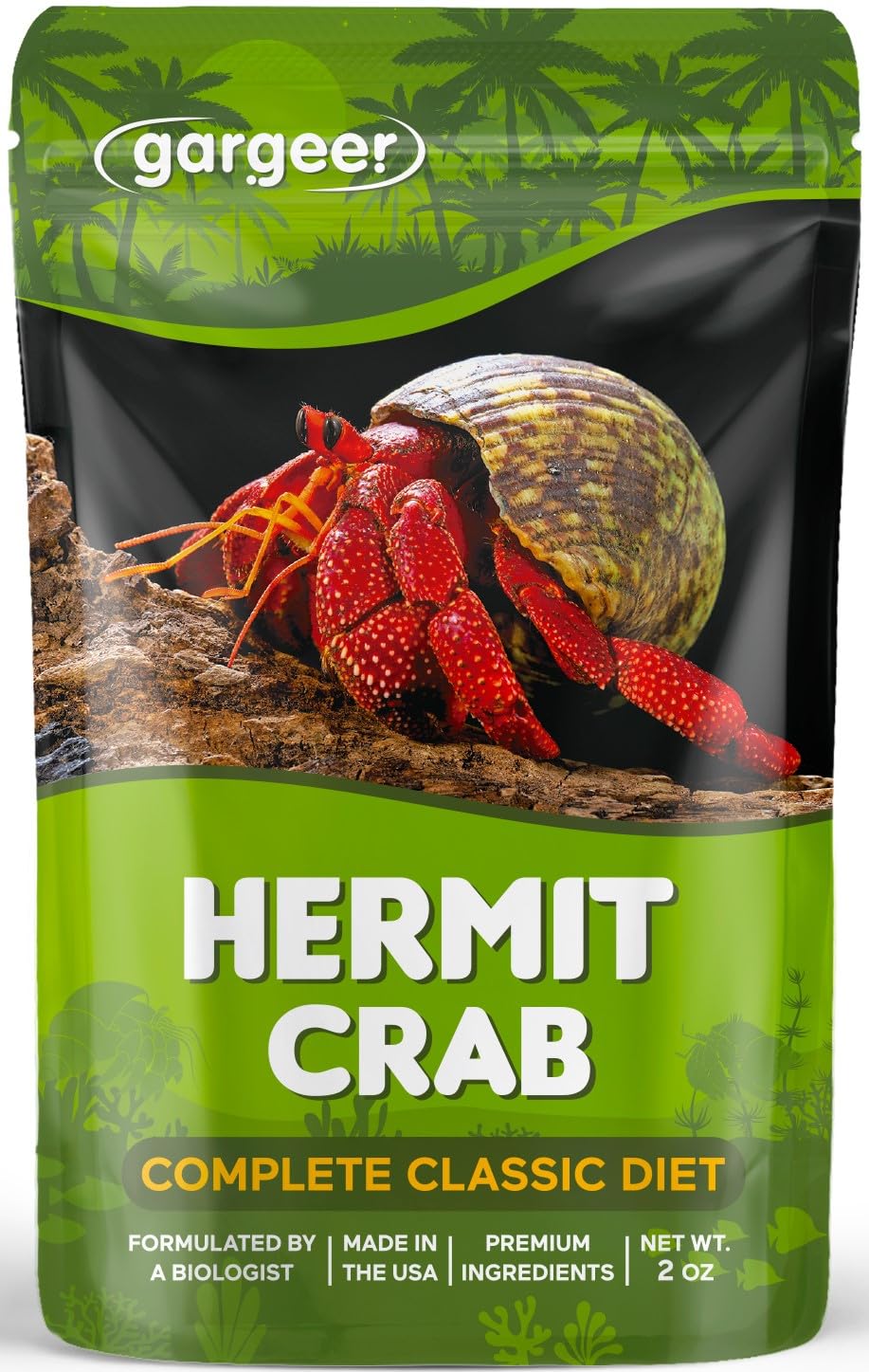
Gargeer’s Complete Diet is formulated by a biologist and contains non-GMO grains including barley, whole wheat, oats, and wheat germ as a base, with organic carrot, spirulina, and coconut providing essential fatty acids and fiber. The calcium carbonate content supports shell growth, and the absence of ethoxyquin and copper sulfate makes it one of the safest daily staple options available.
The finely ground powder texture allows crabs to sort through and select preferred morsels, which mimics natural foraging behavior. Owners report crabs eagerly consuming the food within minutes of offering, and the 2-ounce bag lasts a reasonable time for a single crab or a small colony when fed sparingly.
Multiple verified buyers have kept their crabs alive and thriving for six to seven years on this diet alone, which is a strong real-world indicator of nutritional completeness. The small batch processing ensures consistent grind size without overprocessing, and the bag can be stored in the refrigerator to extend freshness.
Why we love it
- No ethoxyquin or copper sulfate preservatives
- Biologist-formulated with calcium and spirulina
- Long-term owner reports of 6+ year crab lifespans
Good to know
- Bag is small at 2 ounces
- Powder form may be messy in humid tanks
2. Zoo Med Hermit Crab Fruit-Salad
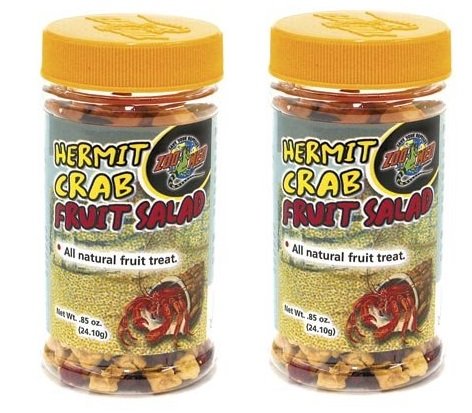
Zoo Med’s Fruit-Salad is a 100% natural dried fruit blend featuring apples, cranberries, and mango in a convenient pellet form. It serves as a supplemental treat rather than a complete diet, providing natural sugars and antioxidants that crabs enjoy as part of a varied feeding rotation.
The packaging includes two 0.85-ounce cans, making it easy to portion out small amounts without exposing the entire supply to humidity. The pellet format stays intact longer than powders in high-humidity environments, reducing the risk of molding inside the dish.
This product is best used two to three times per week alongside a protein-and-calcium-rich staple like the Gargeer diet. Keep in mind that the target species listed includes cats and dogs in the technical specs — this appears to be a listing error, and the product is specifically marketed for hermit crabs in practice.
Why we love it
- 100% natural dried fruits with no added sugars
- Convenient two-pack for portion control
- Pellet form resists humidity better than powder
Good to know
- Only a treat — not a complete nutritional diet
- Amazon listing has confusing species data
3. Needzo Hermit Crab Food and Treat Set
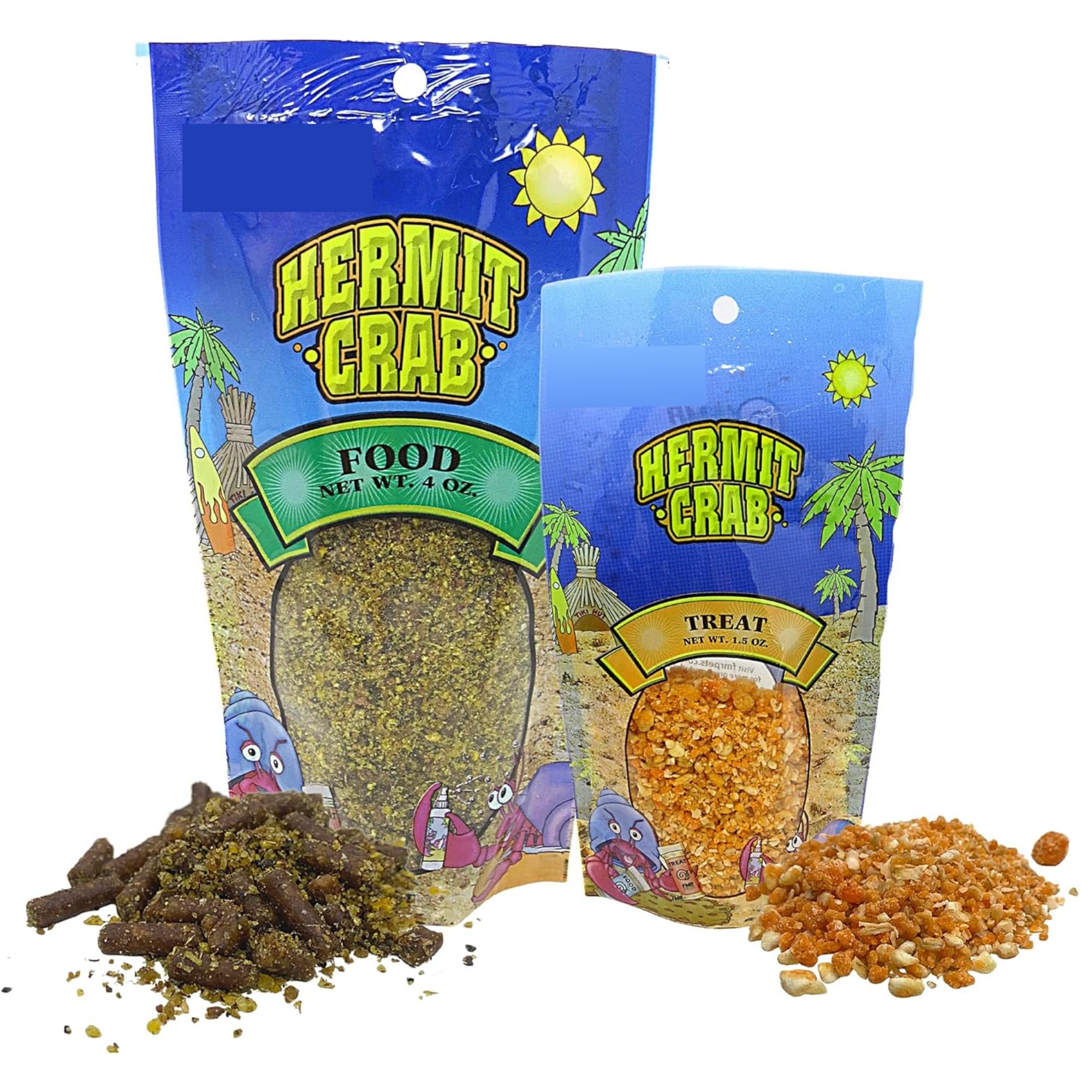
The Needzo set includes a 4-ounce bag of staple food and a 1.5-ounce bag of fruit-and-grain treats, giving new hermit crab owners a complete feeding foundation right out of the box. The staple food is formulated mostly from natural ingredients with fruits and grains as the primary components.
The flake form is easy for crabs of all sizes to pick up and consume, and the packaging is straightforward — no frills, just the food. The instruction to replace food every two days is standard for hermit crab care and helps prevent spoilage in warm, humid terrariums.
One consideration is that the treat bag is smaller than the food bag, which is appropriate since treats should be offered less frequently. Owners looking for a no-research starter bundle will appreciate having both components ready to go, though the ingredient list is less detailed than biologist-formulated options.
Why we love it
- Complete starter kit with food and treats
- Mostly natural ingredient profile
- Good value for new crab owners
Good to know
- Ingredient list lacks the detail of premium brands
- Treat bag is relatively small at 1.5 ounces
4. Aquatic Foods Calcium Feeder Disks

Aquatic Foods Inc. produces these calcium-enriched sinking tablets designed for shrimp, snails, crabs, and tropical fish. Each 2.5-ounce bag contains approximately 26 disks fortified with vitamins and minerals, with a high protein content that aids exoskeleton development and overall crustacean health.
The disk format sinks quickly and holds its shape in water, making it suitable for crabs that forage in shallow water dishes or humid substrate. The family-run business behind this product has over 400 tropical fish foods in their catalog, and the calcium formulation has been a long-standing seller despite recent Amazon listing resets that removed older reviews.
These disks work best as a calcium supplement alongside a complete staple diet rather than a sole food source. The color enhancer claim is a bonus for owners who want vibrant shell coloration, though the primary benefit remains the bioavailable calcium for molting support.
Why we love it
- High calcium content in a slow-dissolving disk
- Fortified with vitamins and minerals
- Family-run business with 400+ food products
Good to know
- Primarily designed for aquatic tanks — less ideal for dry setups
- Listing reset removed previous verified reviews
5. Aquatic Foods Calcium Feeder Shells

This 4-ounce bag of extra-thick calcium shells from Aquatic Foods Inc. offers a denser calcium delivery system than standard disks. Each shell piece sinks rapidly and provides a slow-release calcium source that crabs can nibble on over several days without the food breaking down into mush.
The raw diet type classification means the shells are minimally processed, retaining natural mineral profiles that mimic what crabs would consume in the wild. The sifting process used by Aquatic Foods removes dust and particles before shipping, so you get mostly intact shells with minimal waste at the bottom of the bag.
With 26 pieces per bag, these shells are best used as a long-lasting calcium supplement placed in a shallow dish or directly on the substrate. Owners with multiple crabs or large colonies will appreciate the 4-ounce quantity, which outlasts smaller supplement bags by a significant margin.
Why we love it
- Extra-thick shells provide extended calcium release
- Minimally processed raw format retains nutrients
- Sifted before shipping to reduce dust waste
Good to know
- Designed for aquatic environments primarily
- Newer listing with limited customer reviews
FAQ
How often should I feed my hermit crab?
Can hermit crabs eat fruits from my kitchen?
What happens if my hermit crab food contains ethoxyquin?
Why wont my hermit crab eat the food I provide?
Is it safe to feed my hermit crab commercial fish food?
Final Thoughts: The Verdict
For most crab owners, the best hermit crab food winner is the Gargeer Hermit Crab Complete Diet because its biologist-formulated blend provides balanced daily nutrition without ethoxyquin or copper sulfate. If your crab is a picky eater that loves fruit variety, grab the Zoo Med Fruit-Salad as a supplemental treat. And for boosting calcium intake during molting, nothing beats the Aquatic Foods Calcium Feeder Disks.