
Michigan’s harsh winters and humid summers demand a bird seed that withstands moisture, resists spoilage, and provides high-energy nutrition for the state’s diverse resident and migratory species. A bag filled with cheap milo or red millet simply gets kicked to the ground by cardinals and chickadees, creating a moldy mess beneath your feeder.
I’m Mo Mahin — the founder and writer behind Furric. I’ve spent years analyzing seed composition, reading USDA plant-hardiness zone data, and cross-referencing thousands of owner reviews to find the blends that actually work for the Great Lakes region’s unique bird populations.
Whether you are feeding year-round residents or spring migrants, this guide breaks down the top options to help you choose the right bird seed for michigan without wasting money on filler ingredients that birds ignore.
How To Choose The Best Bird Seed For Michigan
Michigan spans USDA hardiness zones 4 through 6, with heavy snowfall in the Upper Peninsula and humid summers in the southern Lower Peninsula. The ideal seed must resist moisture, deliver high fat content for winter thermoregulation, and appeal to species like black-capped chickadees, cardinals, nuthatches, and downy woodpeckers that dominate local backyards.
Seed Composition vs. Filler Content
Many budget blends include milo, cracked corn, and red millet — grains that Michigan songbirds largely ignore. A seed with 90% or higher black oil sunflower or sunflower hearts ensures that nearly every kernel gets eaten rather than rot on the ground. Premium blends often remove shells entirely, reducing waste and deterring rodents.
Oil Content and Caloric Density
Black oil sunflower seeds contain roughly 40% fat by weight, essential for birds burning 1,000 calories per day during Michigan winter nights. Thin-shell varieties allow smaller birds like goldfinches and chickadees to crack open seeds without exhausting energy reserves. Nut-and-fruit blends provide additional carbohydrates for migratory species refueling in spring and fall.
Bag Size and Storage Practicality
Michigan’s humidity can turn a 25-pound bag into a clumpy, moldy brick within weeks if not stored properly. Resealable bags with heavy-gauge plastic or zip closures extend freshness. A 10- to 12-pound bag may suit a single feeder household, while a 20- to 25-pound bag better serves those with multiple tube, hopper, and platform feeders active year-round.
Quick Comparison
On smaller screens, swipe sideways to see the full table.
| Model | Category | Best For | Key Spec | Amazon |
|---|---|---|---|---|
| Backyard Seeds Black Oil Sunflower | Premium | High-volume feeding | 25 lbs, thin shell, no fillers | Amazon |
| Happy Wings Black Oil Sunflower | Premium | Year-round nutrition | 15 lbs, high oil content | Amazon |
| Old Potters Black Oil Sunflower | Mid-Range | Non-GMO buyers | 12 lbs, USA grown | Amazon |
| Audubon Park Waste Free Blend | Mid-Range | Deck & patio feeders | 12 lbs, shell-free | Amazon |
| Pennington Ultra Double Nut | Budget-Friendly | Attracting woodpeckers | 10 lbs, nut & fruit blend | Amazon |
In‑Depth Reviews
1. Backyard Seeds Black Oil Sunflower Seeds 25lbs
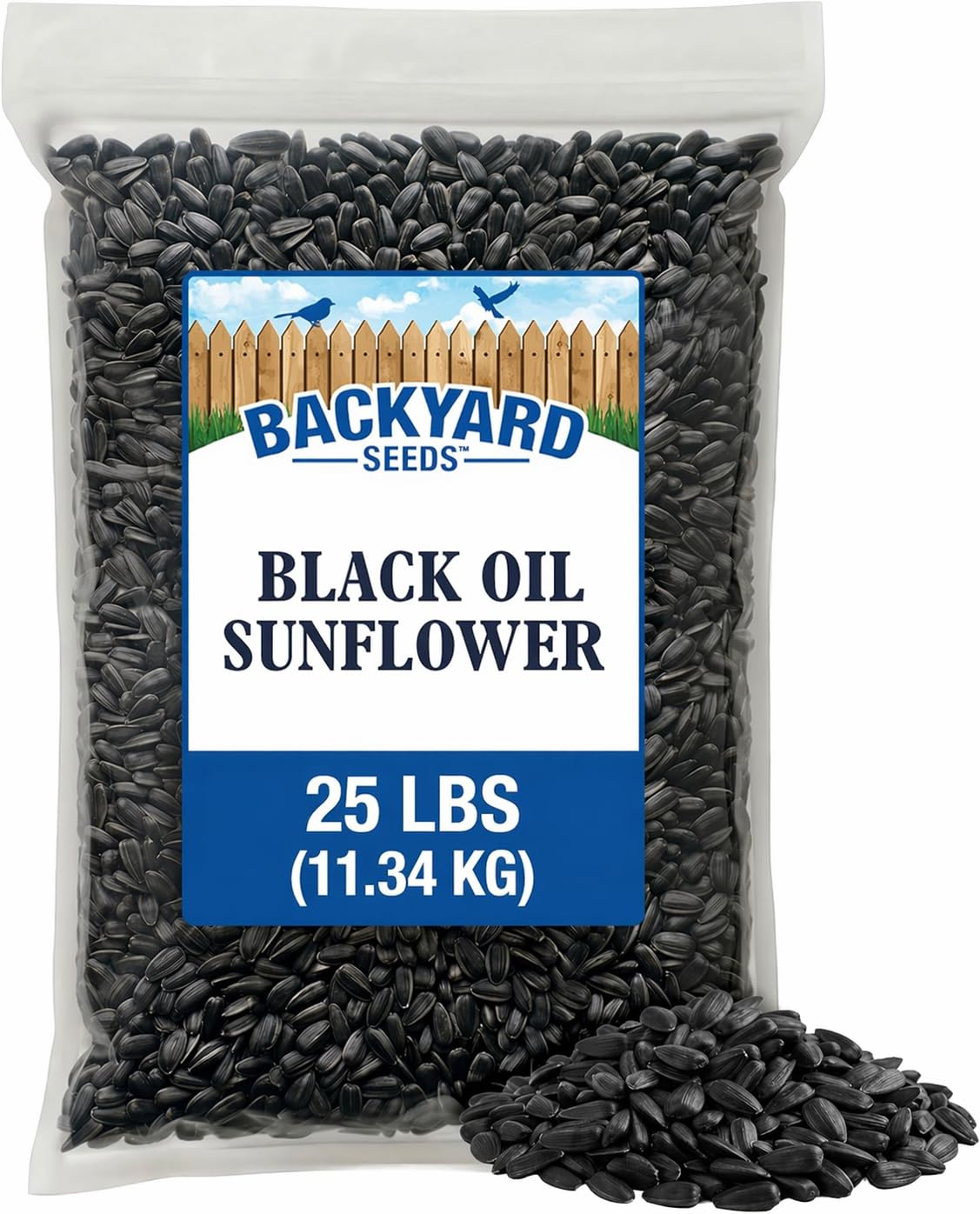
This 25-pound bag from CountryMax delivers the highest usable seed per pound in this lineup, with owner reports noting virtually no sticks, stems, or chaff in the bag. The thin shells allow smaller Michigan visitors like black-capped chickadees and goldfinches to access the protein-rich kernel without expending energy on thick husks, which matters when temperatures drop below freezing.
Each seed is packed with essential proteins, healthy fats, and natural sugars that support cardinals and mourning doves through breeding season and harsh winter months. The “no fillers” guarantee means every kernel in the bag is edible — none of the milo or cracked corn that Michigan birds typically ignore and that rots on wet ground.
Owners report that cardinals especially gravitate toward this seed, and the resealable bag design helps maintain freshness through Michigan’s humid summers. For anyone running multiple tube and hopper feeders simultaneously, the 25-pound size reduces refill frequency while keeping per-pound cost impressively low for a premium product.
Why we love it
- Thin shells make it accessible to small songbirds
- Zero filler ingredients — every kernel is edible
- Large 25-pound bag suits high-volume feeding
Good to know
- Some customers inquire whether it is grown in Michigan or Minnesota
- Best stored in a cool, dry place or sealed bucket
2. Happy Wings Black Oil Sunflower Seeds 15lbs
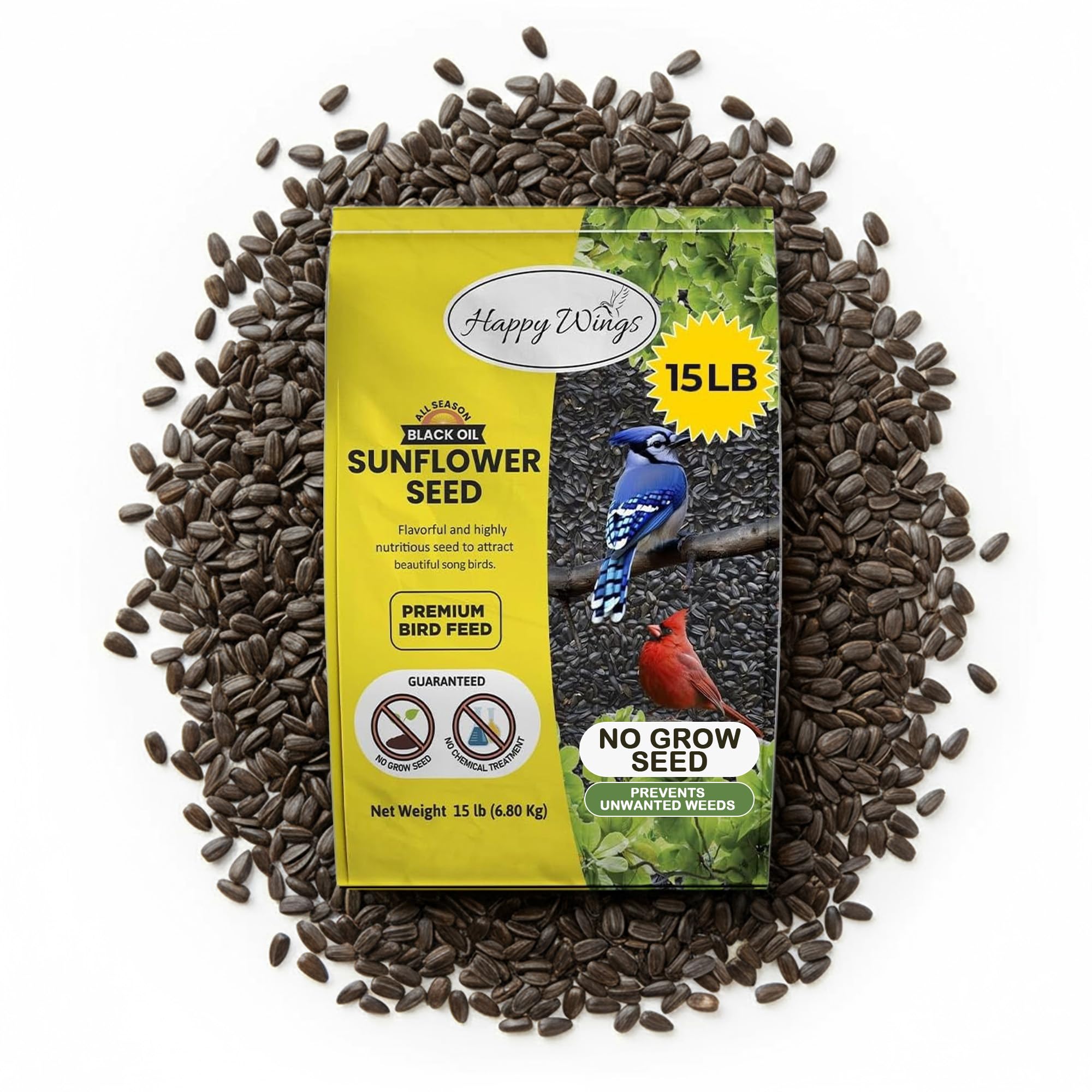
Happy Wings processes its seeds in a USDA and BRC-GS approved facility, adhering to Wild Bird Feeding Institute quality standards that matter for buyers concerned about mold or spoilage in transit. The 15-pound bag hits a sweet spot — large enough for families running two feeders, yet manageable for carrying and pouring compared to bulkier 25-pound sacks.
The high oil content, approximately 40% fat, provides the caloric density Michigan birds need during subzero nights when they burn energy rapidly to maintain body temperature. This single-grain approach attracts mourning doves, siskins, tufted titmice, chickadees, and cardinals without the selective rejection that plagues multi-grain blends.
Buyers consistently praise the seed’s freshness and the absence of dust at the bottom of the bag. Given that Happy Wings sources from a facility that meets Food Safety Modernisation Act standards, this is a strong choice for anyone prioritizing quality control and consistent kernel size in their feeder.
Why we love it
- Processed in a USDA-approved facility for quality assurance
- High oil content supports winter energy needs
- 15-pound size balances volume with easy handling
Good to know
- Slightly higher per-pound cost than 25-pound bags
- Limited customer reviews available at launch
3. Old Potters Black Oil Sunflower Seeds 12lbs

Old Potters sources its black oil sunflower seeds exclusively from small, sustainable USA farms and uses non-GMO stock — a differentiator for environmentally conscious Michigan buyers who want to support domestic agriculture. The seeds arrive with traces of field debris and twigs, which the company highlights as evidence of minimal processing rather than a quality flaw.
Owner feedback consistently reports that birds flock to these seeds within hours of filling the feeder, and several reviewers note that the resealable bag design extends freshness across Michigan’s humid months. The 12-pound bag suits single-feeder households, and the protein-packed kernels keep cardinals, chickadees, and nuthatches returning throughout the day.
Multiple verified buyers describe this as their “go-to” seed for three feeders, with the bag lasting roughly a month under consistent use. The slightly higher price reflects the non-GMO certification and small-farm sourcing, but owners frequently cite the freshness and bird activity as justifying the premium over generic store-brand sunflower seeds.
Why we love it
- Non-GMO and sourced from small USA farms
- Resealable bag keeps seed fresh in humid conditions
- Birds show strong preference even compared to other brands
Good to know
- Traces of field debris may surprise buyers expecting ultra-clean seed
- 12-pound bag runs small for multi-feeder setups
4. Audubon Park Waste Free Wild Bird Seed 12lbs
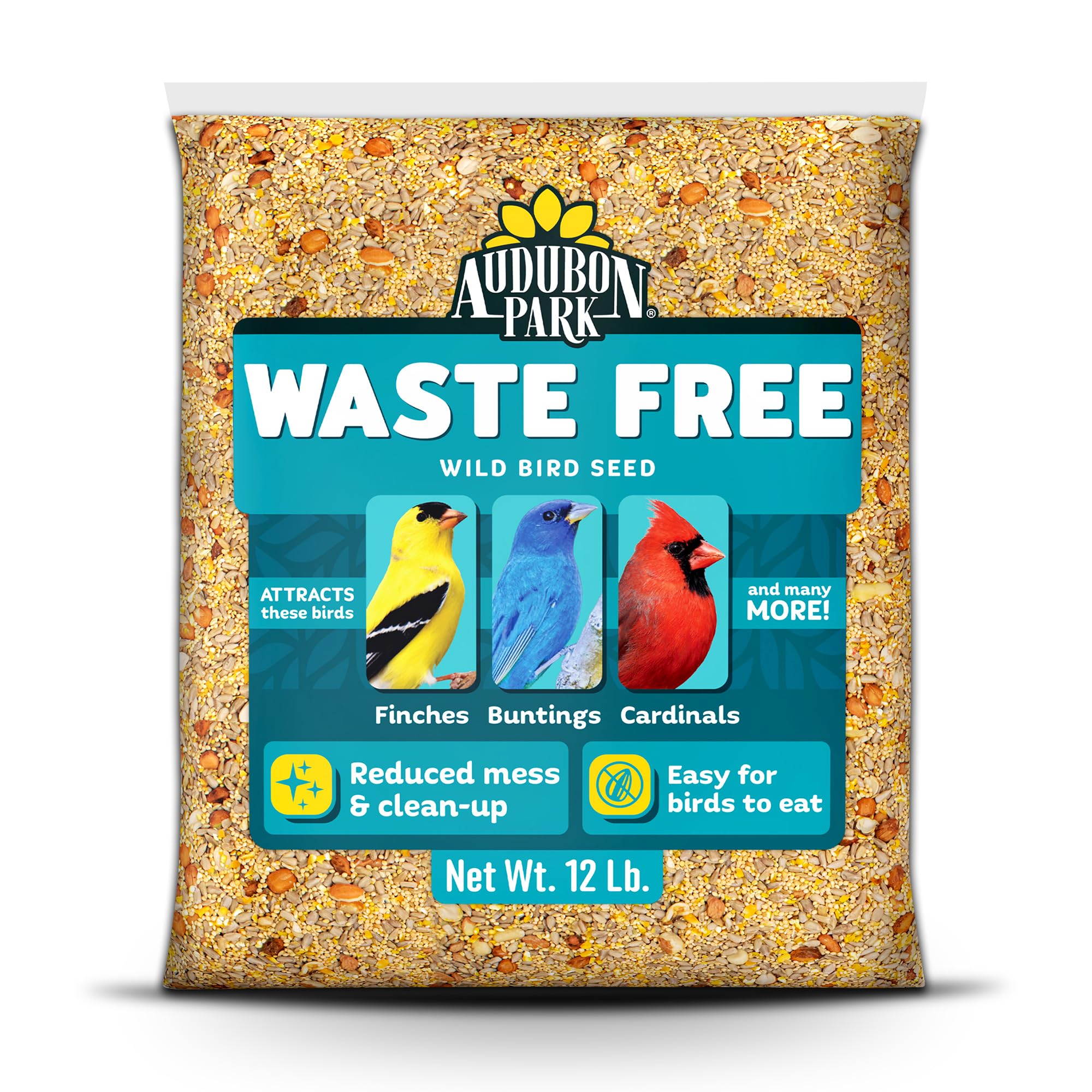
This Audubon Park blend eliminates the mess entirely by using sunflower hearts, chips, and peanut pieces — all shell-free. For Michigan homeowners with feeders on decks, patios, or near walkways, this design prevents the accumulation of empty hulls that stain concrete and attract rodents to the ground below.
The high-energy nutrition from shell-free sunflower hearts means every gram is digestible, giving finches, cardinals, thrushes, and wrens immediate access to calories without expending energy cracking shells. This matters in late fall when birds need to maximize feeding efficiency before migration or winter survival mode kicks in.
Because there are no shells to discard, you will see noticeably less debris accumulating under the feeder week after week. The blend works with tube, tray, hopper, and platform feeders, and the 12-pound bag is well-suited for patio setups where space and cleanliness are top priorities.
Why we love it
- Zero shells means zero mess on decks and patios
- Sunflower hearts provide instant digestible energy
- Compatible with all standard feeder types
Good to know
- Higher per-pound cost due to shell-free processing
- Less suitable for ground-feeding birds that prefer in-shell seeds
5. Pennington Ultra Double Nut & Fruit Blend 10lbs
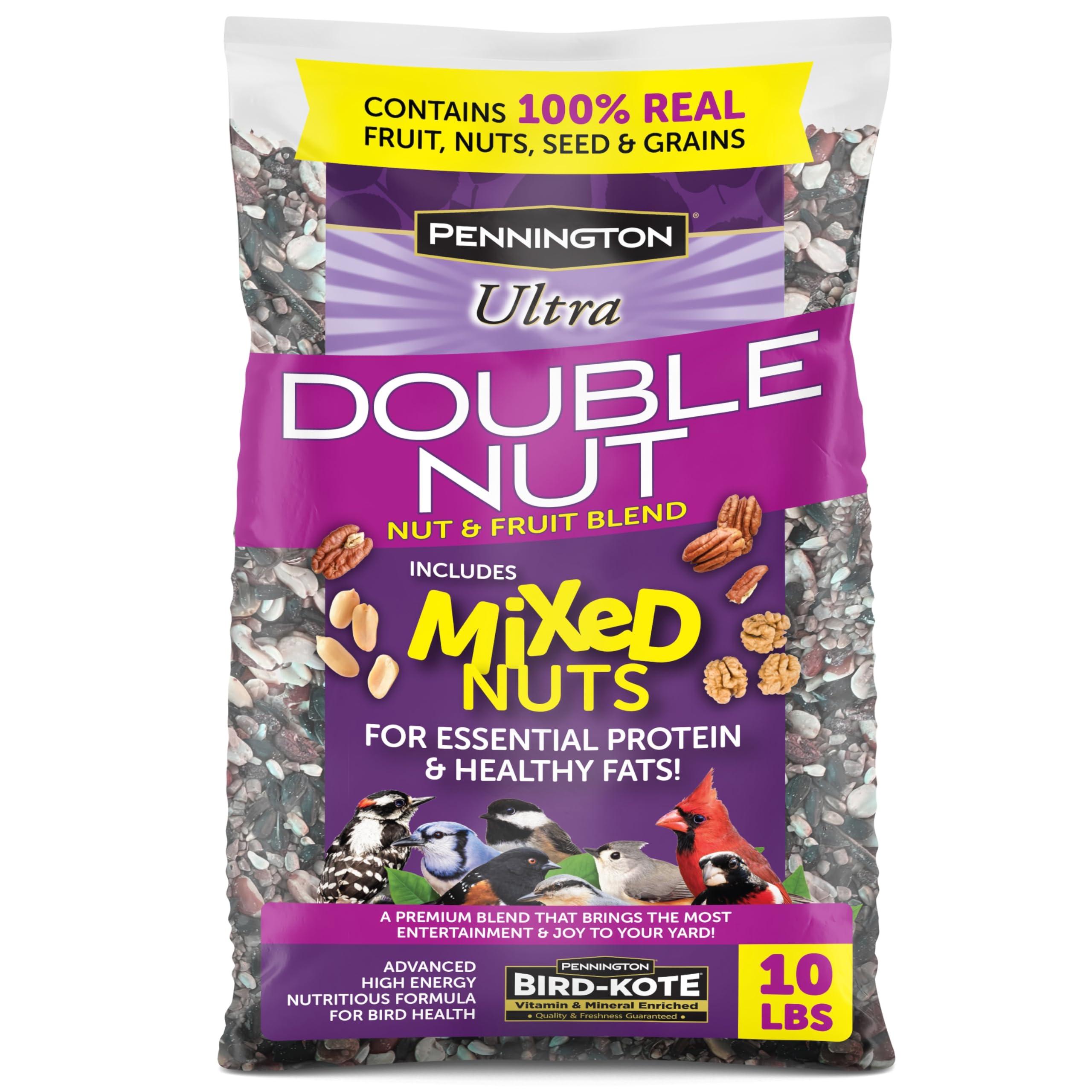
Pennington’s blend includes whole or nearly whole walnuts, peanuts, and almonds mixed with real fruits, seeds, and grains — a combination that specifically draws Michigan woodpeckers, which owner reviews confirm flock to this feed. The Bird Kote technology adds supplemental vitamins and minerals, offering more balanced nutrition than plain sunflower seeds alone.
The high-energy, nutritious composition works well for year-round feeding, especially during spring migration when species like rose-breasted grosbeaks and Baltimore orioles pass through and crave carbohydrate-rich fruit components. The blend is compatible with gazebo, hopper, platform, and tube feeders, giving flexibility regardless of your existing setup.
Several owners report using this as a mixer with basic sunflower seed to extend their supply, noting that the squirrel resistance is moderate but manageable. The 10-pound bag is a smart entry point for first-time buyers who want to test a diverse blend before committing to a larger volume of a single ingredient.
Why we love it
- Whole nuts attract woodpeckers and larger songbirds
- Bird Kote technology adds vitamins and minerals
- Works well as a high-value mixer with basic seed
Good to know
- 10-pound bag empties quickly with heavy feeder traffic
- Squirrels show strong interest in the nut content
FAQ
What birds will I attract with black oil sunflower seeds in Michigan?
How does Michigan’s climate affect bird seed freshness?
Should I avoid blends with milo and red millet?
How much seed should I expect to go through each month?
Final Thoughts: The Verdict
For most Michigan birders, the right bird seed for michigan winner is the Backyard Seeds Black Oil Sunflower because its thin shells, zero filler content, and 25-pound size offer the best per-pound value for high-volume feeders that need to attract cardinals, chickadees, and woodpeckers through harsh winters. If you want a shell-free option for a clean patio setup, grab the Audubon Park Waste Free Blend. And for non-GMO sourcing from small USA farms, nothing beats the Old Potters Black Oil Sunflower Seeds.