
Watching your cat vomit after every meal or struggle with chronic loose stools is a stressful, helpless feeling. The underlying cause is often a reaction to common proteins (like chicken or beef), low-quality fillers, or an unbalanced gut microbiome, making the switch to a specialized formula essential.
I’m Mo Mahin — the founder and writer behind Furric. I’ve spent years cross-referencing veterinary nutritional guidelines, analyzing ingredient panels for hidden triggers, and studying owner-reported outcomes to identify which formulas deliver on their digestive-health promises.
Whether your cat has a chicken allergy, requires a limited ingredient diet, or simply needs more fiber, this guide isolates the top-performing options so you can confidently choose the right sensitive cat food.
How To Choose The Best Sensitive Cat Food
Choosing a food for a sensitive cat goes beyond reading the front-of-bag claims. You need to scrutinize the ingredient deck and match the formula to your cat’s specific symptom pattern — is it vomiting, diarrhea, itchy skin, or all three?
Identify the Protein Trigger First
The most common dietary allergens for cats are chicken, beef, fish, and dairy. If your cat shows persistent symptoms, a novel protein (duck, turkey, rabbit, venison) or a single-protein limited ingredient formula is your first-line strategy. Check the “Allergen Information” field in the specs — “Allergen-Free” on a product like Purina Pro Plan means it avoids the top triggers, but always confirm the single meat source matches your cat’s tolerance.
Look for Digestive Support Additives
Prebiotic fibers (inulin, chicory root, beet pulp) feed beneficial gut bacteria and firm up stools. Omega-3 fatty acids from fish oil or flaxseed reduce GI inflammation and support skin repair. High-end formulas may use hydrolyzed proteins or proprietary blends like Hill’s ActivBiome+, which rapidly activates beneficial gut bacteria for faster relief.
Match the Texture to Your Cat’s Preferences
Wet food (pate, chunks in gravy) provides extra moisture essential for urinary tract health and is often more palatable for picky or senior cats. Dry kibble is convenient for free-feeding but usually requires more chewing. The best approach is mixed feeding — a high-quality dry base with a wet topper — to combine digestive stability with hydration.
Quick Comparison
On smaller screens, swipe sideways to see the full table.
| Model | Category | Best For | Key Spec | Amazon |
|---|---|---|---|---|
| Hill’s Prescription Diet GI Biome Stress | Veterinary Diet | Severe stress-related digestive issues | ActivBiome+ fiber & L-tryptophan | Amazon |
| Purina Pro Plan Sensitive Duck Entree | Veterinary Diet | Novel protein for chicken-allergic cats | Real duck, 24 x 3 oz pull-top cans | Amazon |
| Hill’s Science Diet Sensitive Stomach Wet Variety | Wet Food | Gentle gravy hydration & mixed proteins | Chicken, Beef, Salmon, Tuna Stew | Amazon |
| Royal Canin Digestive Care Dry | Veterinary Diet | Slower eating & stool quality improvement | Ring-shaped kibble, prebiotic blend | Amazon |
| Blue Buffalo Basics Mature Turkey & Potato | Limited Ingredient | Senior cats with chicken & grain sensitivities | Turkey #1, 5-lb limited diet bag | Amazon |
| Purina Cat Chow Gentle Turkey | Budget Dry | Everyday sensitive stomach maintenance | Farm-raised turkey, 4 x 3.15 lb bags | Amazon |
| Applaws Natural Fish Variety Wet | Limited Ingredient | Grain-free high protein topper or meal | 12 x 2.47 oz, 100% natural limited ingredients | Amazon |
In‑Depth Reviews
1. Hill’s Prescription Diet Gastrointestinal Biome Stress Dry Cat Food

Hill’s Gastrointestinal Biome Stress is the most advanced tool in this roundup, combining a veterinary-strength prebiotic fiber matrix (ActivBiome+) with hydrolyzed casein and L-tryptophan — an ingredient combination designed to soothe both gut inflammation and behavioral stress. The clinical promise is bold: regular healthy stool in as little as 24 hours, which internal studies confirm over 95% effectiveness after 10 days.
Each 4-pound bag packs high levels of omega-3 DHA and EPA, which directly reduce gastrointestinal inflammation and improve coat luster. The kibble size and shape encourage slower eating, reducing the risk of regurgitation. Because it’s a strict veterinary diet, this formula is best purchased after a vet confirms your cat’s condition requires therapeutic intervention.
Owner reports consistently note dramatic reductions in vomiting frequency and loose stool within the first week. The price reflects its prescription-grade formulation, but for cats with chronic, stress-exacerbated IBD or pancreatitis, the results justify the investment.
Why we love it
- Clinically proven to improve stool quality in 24 hours
- Dual-action stress and digestive support
- High EPA/DHA levels for inflammation
Good to know
- Requires veterinarian authorization for purchase
- More expensive than non-prescription alternatives
2. Purina Pro Plan Sensitive Skin and Stomach Duck Entree – 24 Cans
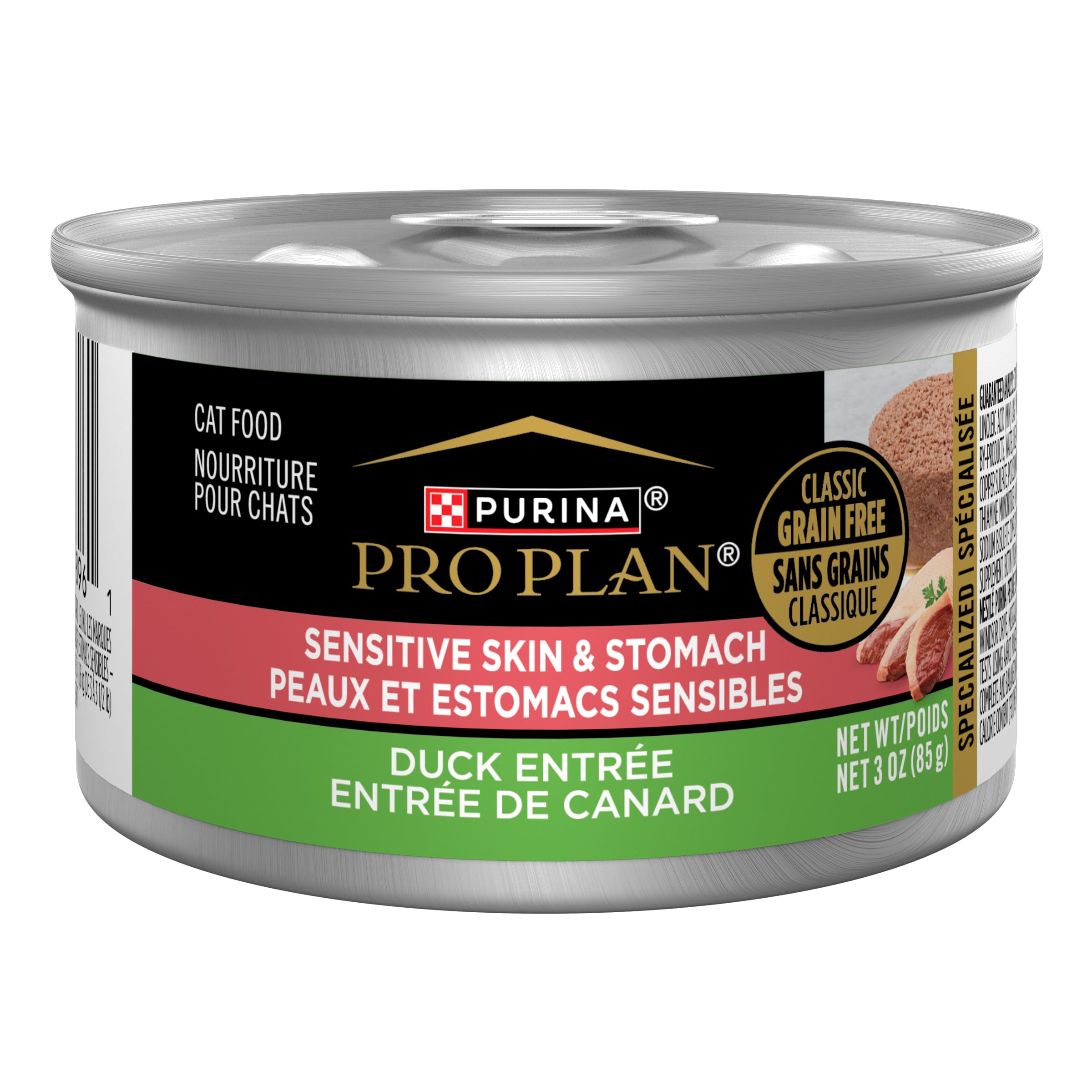
When a cat has developed a sensitivity to chicken or beef over years of exposure, introducing a novel protein like duck is often the turning point. Purina Pro Plan uses real duck as the single meat protein source in this highly digestible pate, removing the common allergens that trigger loose stools and itchy skin.
Each 3-ounce pull-top can delivers natural prebiotic fiber (inulin) to feed good bacteria and 25 essential vitamins plus taurine for heart and vision support. The pate texture is easy to mash for toothless seniors or add water to for extra hydration. Owners of cats with chronic diarrhea (some over 15 years old) report resolution of symptoms within days of switching to this protein source.
It’s a wet-food-only option, so you’ll need a dry base if you want mixed feeding. The 24-can pack provides a full month of food for a single cat, making the per-can cost very competitive for a veterinary-grade product. No artificial colors or preservatives — just duck, prebiotics, and clean nutrition.
Why we love it
- Duck is a true novel protein for chicken-allergic cats
- Pull-top cans for easy, no-mess feeding
- Prebiotic fiber supports stool firmness
Good to know
- Wet food only — must supplement with dry if desired
- Duck flavor may not appeal to all picky eaters
3. Hill’s Science Diet Adult Sensitive Stomach & Skin Wet Cat Food Variety Pack

This 12-pouch variety pack from Hill’s Science Diet delivers a rotating menu of chicken & beef and salmon & tuna stews, each loaded with a savory gravy that boosts feline hydration while providing easy-to-digest ingredients. The gravy component is a strategic advantage — many sensitive-stomach cats will lap up the moisture first, which reduces dehydration risk and helps move hairballs through the GI tract more smoothly.
Each recipe contains high-quality protein to maintain lean muscle, plus vitamin E and omega fatty acids for skin and fur repair. Clinically proven antioxidants (vitamin C+E) support the immune system without relying on artificial colors or preservatives. Owner reviews highlight that cats with chronic vomiting recover dramatically within 2-3 weeks of switching solely to this wet food.
The 2.8-ounce pouch size is larger than competition cups per serving, and the smooth texture makes it easy to serve as a topper over dry kibble. If your cat is sensitive to fish, note the salmon & tuna stew recipe — you may want to separate and feed the chicken & beef pouches exclusively. Slight odor noted if food sits out, but that’s a sign of no artificial stabilizers.
Why we love it
- Gravy-based for superior hydration
- Rotation of flavors prevents taste fatigue
- Clinically proven antioxidants for immune support
Good to know
- Contains chicken and fish — not for novel-protein diets
- Gravy spoils quickly if left uneaten
4. Royal Canin Feline Care Nutrition Digestive Care Adult Dry Cat Food

Royal Canin’s Digestive Care dry formula is built around an ingenious mechanical solution: the ring-shaped kibble. That unique geometry forces cats to chew and break the piece rather than inhaling whole chunks, slowing down eating speed by up to 20 seconds per meal. For cats that regurgitate because they eat too fast, this alone can solve the problem.
Beyond the shape, the formula contains a precise blend of prebiotics (fructooligosaccharides and beet pulp) and highly digestible proteins to maximize nutrient absorption while minimizing residue. An internal Royal Canin study showed over 95% healthy stool quality after just 10 days on this diet. The kibble is sized for adult cat jaw structure, making it easier to manage for seniors or cats with dental issues.
It’s a dry-food-only product, but pairs perfectly with Royal Canin Digestive Care wet formulas for mixed feeding. The 3-pound bag lasts roughly 3-4 weeks for a 10-pound cat. Owners of cats with intermittent diarrhea and vomiting report observable stool firming within a week and fewer urgent bathroom incidents.
Why we love it
- Ring shape mechanically slows speed-eaters
- Clinically proven stool improvement in 10 days
- Highly digestible protein source
Good to know
- Contains chicken and grains — not grain-free
- Dry food only; needs wet pairing for high-hydration cats
5. Blue Buffalo Basics Grain-Free Mature Dry Cat Food, Turkey & Potato

Blue Buffalo Basics targets mature cats with a truly limited ingredient deck: turkey is the #1 ingredient, followed by potatoes as the carbohydrate source, with no chicken, corn, wheat, soy, dairy, or eggs. The complete elimination of poultry meal and grains makes this an excellent “reset” diet for senior cats whose digestive systems have become reactive over years of eating standard formulas.
The 5-pound bag contains antioxidant-rich LifeSource Bits — a cold-processed blend of vitamins, minerals, and antioxidants that survive the kibble extrusion process intact. Omega 3 and 6 fatty acids from flaxseed and fish oil nourish the skin barrier, reducing itching and dander. Owner reviews frequently note that cats who vomited with premium competitors stopped completely after switching to this turkey recipe.
While labeled for mature cats (7+ years), younger adults with sensitivities also thrive on it. The kibble size is slightly smaller than average, which benefits cats with dental wear. If your cat is a dedicated senior with arthritis, consider mixing with a wet food topper for joint support supplementation. Grain-free diets require monitoring for a specific cardiac condition (DCM) in susceptible breeds, so check with your vet.
Why we love it
- Single novel protein (turkey) with no chicken anywhere
- LifeSource Bits for preserved antioxidant potency
- Grain-free and limited ingredient, ideal for elimination trials
Good to know
- Grain-free — may require vet approval for long-term feeding
- Smaller bag size for the price
6. Purina Cat Chow Gentle Sensitive Stomach & Skin Dry Cat Food – Pack of 4
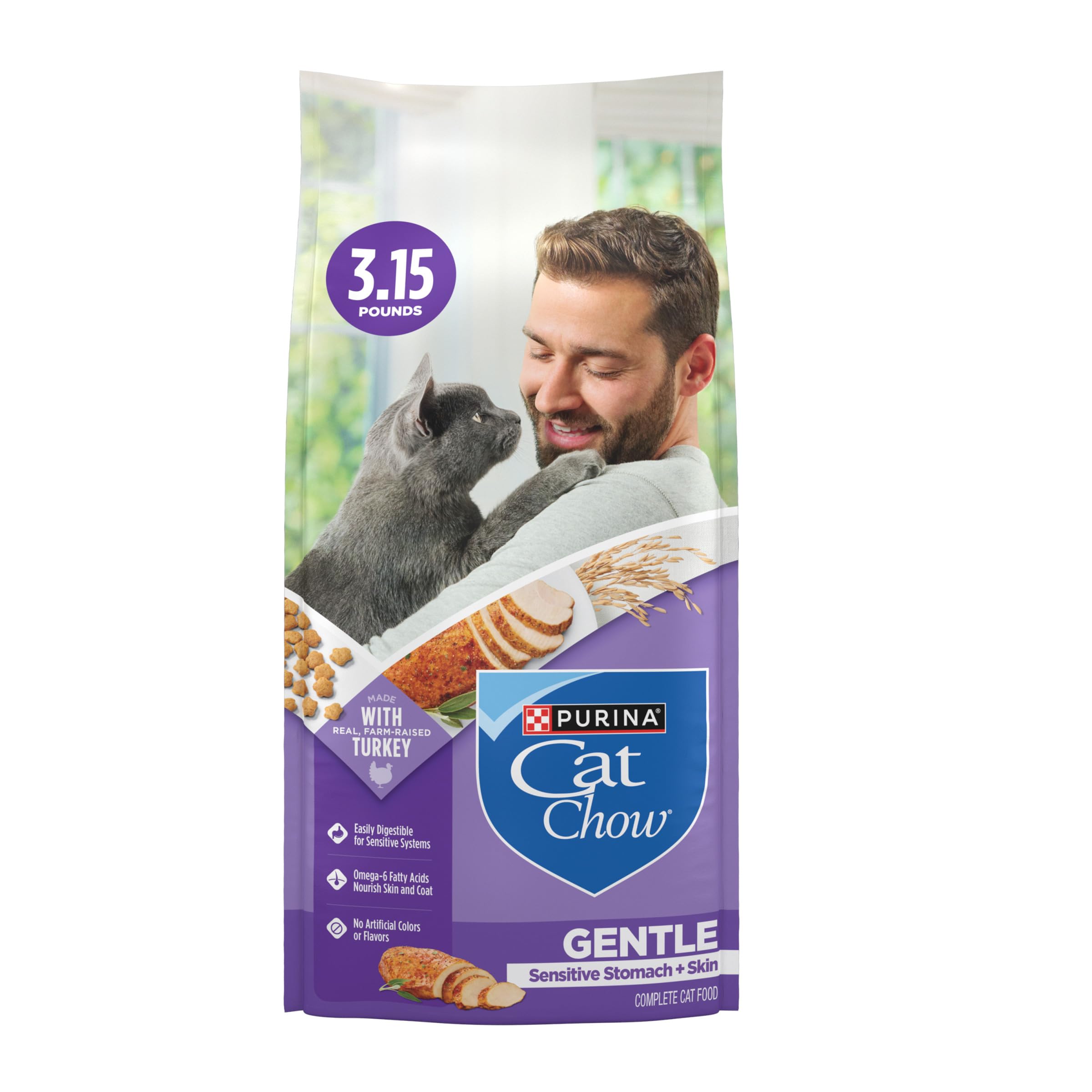
Purina Cat Chow Gentle offers an accessible entry point into sensitive-stomach feeding without the price jump of veterinary or limited-ingredient brands. This 4-pack of 3.15-pound bags (12.6 lbs total) uses farm-raised turkey as the primary protein and includes omega-6 fatty acids for skin and coat maintenance.
The formula is designed around digestive health with prebiotic fiber and 29 essential vitamins and minerals, covering heart, immune, and muscle support. It also contains no artificial colors or flavors. For a cat that vomits occasionally or has soft but not liquid stools, this is often enough to stabilize digestion. Owner reports indicate it works well for cats with mild to moderate sensitivity who don’t require novel proteins.
The primary trade-off is that it contains chicken by-product meal, corn, and wheat — fillers that can trigger reactions in highly sensitive cats. The kibble is crunchy, which helps with dental scraping, but the texture won’t slow down speed-eaters. This is an ideal maintenance food for long-term use once you’ve confirmed your cat isn’t reactive to poultry or grains.
Why we love it
- High value per pound in a 4-bag bundle
- Turkey-based with prebiotic fiber for gentle digestion
- Complete & balanced for maintenance
Good to know
- Contains chicken by-product meal and grains
- Not suitable for strict elimination diets
7. Applaws Natural Wet Canned Cat Food, Fish Variety Pack in Broth

Applaws represents the philosophy of “what you see is what you get” — each 2.47-ounce can lists only whole fish and broth as its ingredients, with absolutely no artificial additives, colors, flavors, or gums. The variety pack includes tuna fillet, tuna with salmon, and tuna with crab recipes, providing a rotating menu that keeps even finicky cats interested at mealtime.
Because it’s labeled as a complementary food (not a complete diet), Applaws lacks the balanced vitamin/mineral profile required for sole-source feeding. It’s designed to be mixed with a high-quality dry sensitive-stomach kibble to deliver extra moisture, natural protein, and variety. This makes it a powerful tool for cats who refuse dry food or need a hydration boost without consuming synthetic binders or thickeners.
The flake-in-broth texture is excellent for cats recovering from GI upset because the high moisture content is gentle on the stomach lining and encourages gradual eating. Owner reviews confirm picky cats who ignored other wet foods eagerly wolf down the tuna broth mixture. The limited nature of the ingredient list also means fewer potential triggers — but if your cat is allergic to fish, this entire line is off the table.
Why we love it
- Transparent ingredient list — just fish and broth
- High moisture content supports cat hydration
- Ideal topper for picky or convalescing cats
Good to know
- Not a complete diet — must be combined with balanced dry food
- Fish-based — not suitable for cats with seafood allergies
FAQ
Can I feed my sensitive-stomach cat a raw or homemade diet instead?
How do I know if my cat’s symptoms are caused by food allergies versus IBS?
Is grain-free sensitive cat food always better for digestion?
How long should I wait before expecting results from a new sensitive stomach food?
Final Thoughts: The Verdict
For most gardeners, the sensitive cat food winner is the Hill’s Prescription Diet Gastrointestinal Biome Stress because its ActivBiome+ technology and stress-reducing compounds address both the physical and behavioral components of digestive upset. If your cat needs a clean, single-novel-protein wet diet to rule out chicken allergy, grab the Purina Pro Plan Sensitive Duck Entree. And for a budget-friendly maintenance kibble that still prioritizes prebiotic fiber and turkey protein, nothing beats the Purina Cat Chow Gentle Turkey Pack.