
When your cat’s litter box becomes a source of anxiety, every mealtime decision feels urgent. Diarrhea in cats isn’t just messy—it signals digestive distress that demands the right nutritional intervention. The wrong wet food can aggravate loose stools further, while a formula built for sensitive digestion can help restore normal, firm bowel movements within days.
I’m Mo Mahin — the founder and writer behind Furric. I’ve spent years studying the correlation between ingredient bioavailability, fiber content, and stool quality in feline diets, cross-referencing manufacturer nutritional data with verified owner reports on cats recovering from gastrointestinal upset.
This guide breaks down five formulations that use prebiotic fibers, limited ingredients, and highly digestible proteins to stabilize your cat’s gut health. If you are searching for the highest quality wet food for cats with diarrhea, these options meet the clinical threshold for managing sensitive stomachs.
How To Choose The Best Wet Food For Cats With Diarrhea
Selecting a wet food for a cat with active diarrhea requires filtering for specific digestibility markers that standard maintenance formulas lack. Focus on four non-negotiable criteria before reading ingredient lists.
Prebiotic Fiber Content
Pumpkin, psyllium, and chicory root fiber provide soluble fiber that absorbs excess water in the colon and firms stool. A formula with at least one of these ingredients helps regulate transit time without adding insoluble bulk that can worsen cramping.
Single or Limited Ingredient Protein Sources
Chicken, duck, egg, or whitefish as the sole animal protein reduces the chance of triggering a food sensitivity. Multi-protein blends increase the antigenic load on an already inflamed gut—stick to recipes listing one meat source in the first two ingredients.
Texture and Moisture Ratio
Mousse and pate textures break down more easily in the stomach compared to shreds or chunks in gravy. High moisture content (78% or above) supports hydration during diarrheal episodes when electrolyte loss is highest, but the liquid should come from broth or gelatin, not added starches.
Absence of Common Irritants
Carrageenan, artificial colors, wheat gluten, and carrageenan are known gastrointestinal irritants for sensitive cats. Scrutiny of the guaranteed analysis should also confirm that phosphorus levels stay moderate—excess phosphorus stresses kidneys and can exacerbate loose stools in older cats.
Quick Comparison
On smaller screens, swipe sideways to see the full table.
| Model | Category | Best For | Key Spec | Amazon |
|---|---|---|---|---|
| Royal Canin Digestive Care Loaf | Veterinary Diet | Chronic digestive sensitivity | Highly digestible proteins | Amazon |
| Hill’s Science Diet Sensitive Stomach | Variety Pack | Sensitive skin & coat combo | Vitamin E & fatty acids | Amazon |
| Tiki Cat Solutions Digestion Mousse | Prebiotic Formula | Picky eaters with loose stool | Pumpkin & prebiotics | Amazon |
| Wellness CORE+ Digestive Health | Seafood Variety | All-life-stage sensitive stomachs | Omega 3 for gut lining | Amazon |
| Tiki Cat Solutions Fussy Mousse | Limited Ingredient | Transitioning from dry to wet | Single protein duck & egg | Amazon |
In‑Depth Reviews
1. Royal Canin Feline Care Nutrition Digestive Care Adult Loaf in Sauce

Royal Canin’s Digestive Care formula is engineered for cats with chronic gastrointestinal sensitivity, using hydrolyzed proteins that minimize antigenic load on the small intestine. The loaf-in-sauce texture provides a moisture content above 80%, which supports hydration without diluting gastric enzymes, while the precise fiber blend—including psyllium—binds excess water in the colon to normalize stool consistency. This is a veterinary-backed diet proven to reduce stool odor and improve nutrient absorption in cats with recurring diarrhea.
Owner reports consistently highlight the dramatic turnaround in stool quality within five to seven days of switching, even for cats that had loose movements for months. The 3-ounce can size is portion-controlled for a single feeding, and the formula pairs seamlessly with Royal Canin’s Digestive Care dry kibble for a full gut-support protocol. The pate-like consistency is soft enough for cats with dental pain or stomatitis to lap up without chewing.
The main drawback is the higher cost per ounce compared to over-the-counter brands, and the strong fish-based aroma may be off-putting to some owners during preparation. A small subset of picky cats reject the loaf texture initially and require gradual mixing with their previous food. For cats with confirmed food sensitivities, this is the most clinically reliable option on the market for managing diarrheal episodes long-term.
Why we love it
- Clinically proven to reduce stool odor and firm consistency
- Hydrolyzed proteins minimize digestive irritation
- Water-soluble fiber binds excess moisture effectively
Good to know
- Premium price point compared to standard wet foods
- Strong aroma may not appeal to all owners
- Transition period required for picky cats
2. Hill’s Science Diet Adult Sensitive Stomach & Skin Wet Cat Food Variety Pack

Hill’s Science Diet Sensitive Stomach variety pack addresses both digestive upset and dermatological health in one formula, using prebiotic fiber from beet pulp to regulate intestinal transit time. The gravy-based stew format delivers extra moisture, and the inclusion of Vitamin E and fatty acids supports skin barrier recovery—important because chronic diarrhea can deplete fat-soluble vitamins. Each 2.8-ounce pouch contains easily digestible proteins from chicken and beef or salmon and tuna, making it a well-rounded option for cats that also struggle with dry, flaky skin.
Owner feedback indicates that this variety pack is particularly effective for cats who vomit undigested food after meals, as the gravy texture reduces regurgitation risk. The low-sodium formulation is suitable for senior cats with early renal concerns, and the absence of artificial colors and preservatives aligns with clean-label expectations. The four-flavor rotation prevents flavor fatigue, which matters for long-term sensitive-stomach management.
The trade-off is that the stew format contains visible chunks and shreds, which some cats with acute diarrhea may find harder to digest than a uniform pate. Cats accustomed to exclusively fish-based diets may reject the chicken and beef options, and the limited fiber profile relies on beet pulp alone—cats needing pumpkin-based fiber may respond better to other formulas. It is a reliable mid-range choice for combined skin and stomach sensitivity.
Why we love it
- Dual-action for sensitive stomach and skin
- Low sodium content safe for senior cats
- Gravy texture reduces vomiting risk
Good to know
- Chunky texture may be less digestible during acute diarrhea
- Fish-averse cats may reject chicken varieties
- Beet pulp fiber less effective than pumpkin for some
3. Tiki Cat Solutions Digestion Mousse, Chicken & Egg Recipe in Broth
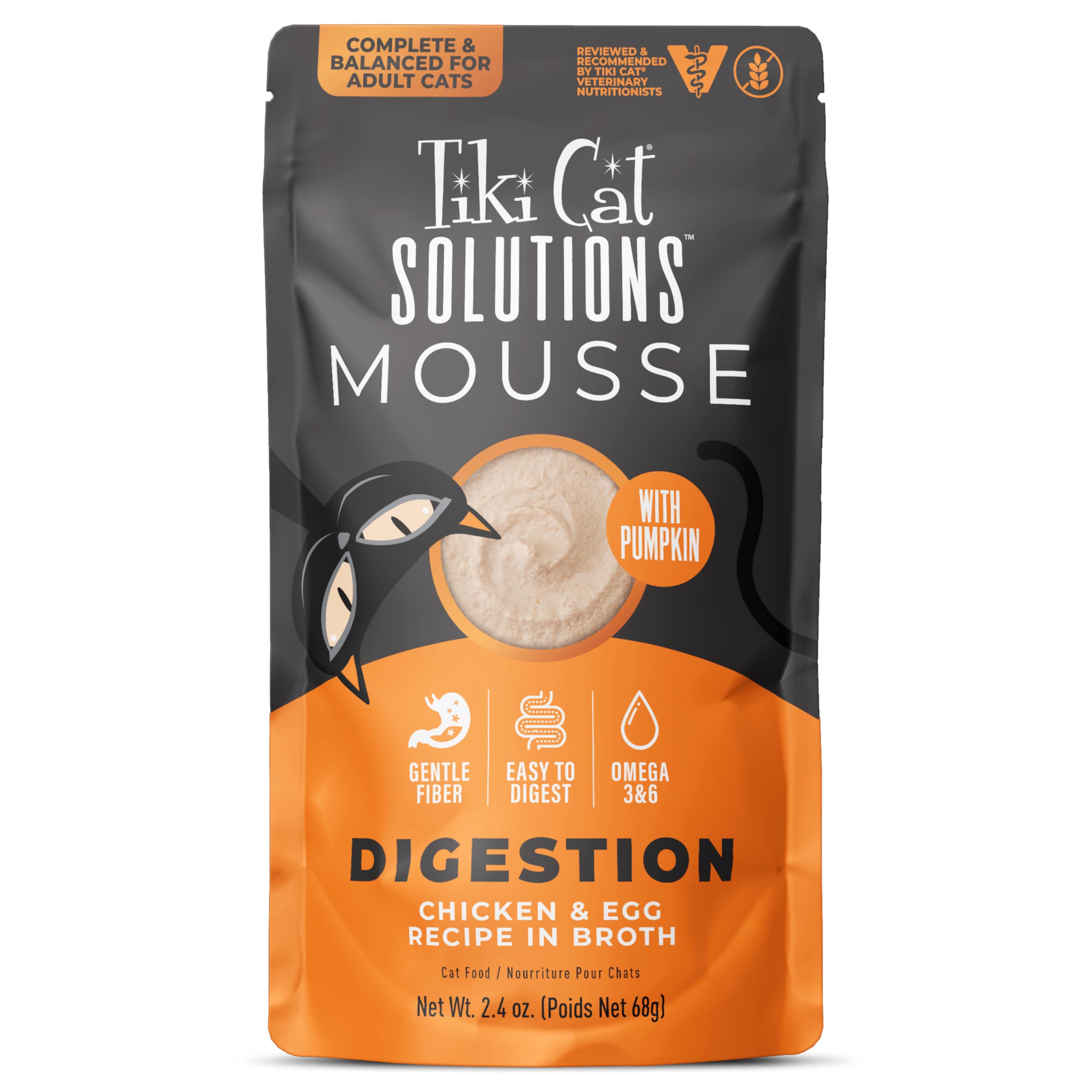
Tiki Cat Solutions Digestion Mousse uses a combination of pumpkin—a proven soluble fiber source—and natural prebiotics to regulate motility while providing a soft, airy mousse that requires minimal gastric work to break down. The chicken and egg protein pair offers a single-species amino acid profile that is exceptionally easy to digest, and the moisture content from the broth base helps counteract dehydration common during diarrheal episodes. This is a limited-ingredient formula free from carrageenan, grains, and fillers, making it a clean choice for cats with multiple food sensitivities.
User reports highlight that cats with chronic vomiting or regurgitation tolerate the mousse texture far better than chunkier wet foods, with many owners noting an end to post-meal “puking” within three days of switching. The non-GMO ingredient claim provides added transparency, and the 2.4-ounce pouch size is convenient for portion control during the transition phase. The egg content adds digestible lecithin, which supports the mucosal lining of the intestinal tract.
The consistency is extremely airy, which means a single pouch provides less caloric density per volume compared to denser pates, potentially requiring an additional pouch for larger cats. Some cats accustomed to meatier textures may refuse the mousse initially, and the egg component is not suitable for cats with confirmed egg allergies. The high-moisture, low-fat profile means it works best as a transitional or supplemental food rather than a standalone maintenance diet for very active cats.
Why we love it
- Pumpkin provides natural fiber for stool firming
- Ultra-soft mousse texture ideal for regurgitation-prone cats
- Limited ingredients minimize allergen exposure
Good to know
- Low caloric density may require larger portions
- Not suitable for cats with egg allergies
- Some cats need time to accept mousse texture
4. Wellness CORE+ Digestive Health Pate Variety Pack

Wellness CORE+ Digestive Health combines prebiotic fiber with omega-3 fatty acids from salmon and whitefish, providing a dual mechanism: soluble fiber firms loose stool while EPA and DHA reduce inflammation in the intestinal lining. The pate texture is dense and uniform, ensuring consistent digestibility across every bite, and the grain-free formulation eliminates wheat gluten as a potential irritant. This is an all-life-stage formula, making it suitable for kittens through seniors dealing with intermittent diarrhea.
Owners report that the seafood variety pack helps transition cats away from lower-quality grocery brands, with noticeable improvements in stool firmness within a week. The smooth pate requires no chewing, making it accessible for cats with stomatitis or missing teeth, and the absence of carrageenan addresses a common concern among owners of cats with chronic gut inflammation. The hydrolyzed gelatin binder provides additional joint support without introducing allergenic proteins.
The fish-forward flavor is strong, which cats with sensitive noses may reject after a few servings, and the pate can be quite firm when cold from the refrigerator—warming it to room temperature is necessary to achieve the proper consistency. Some owners note that the variety pack contains only salmon and whitefish, so cats with confirmed fish allergies cannot use this option. For multi-cat households where one cat has digestive issues, the strong aroma often attracts all cats, which can complicate portion control.
Why we love it
- Omega-3 fatty acids support intestinal lining repair
- Dense pate texture ensures consistent digestibility
- Suitable for all life stages including kittens
Good to know
- Strong fish aroma may not suit all cats
- Pate becomes firm when refrigerated
- Not an option for cats with fish allergies
5. Tiki Cat Solutions Fussy Mousse, Duck Liver & Egg
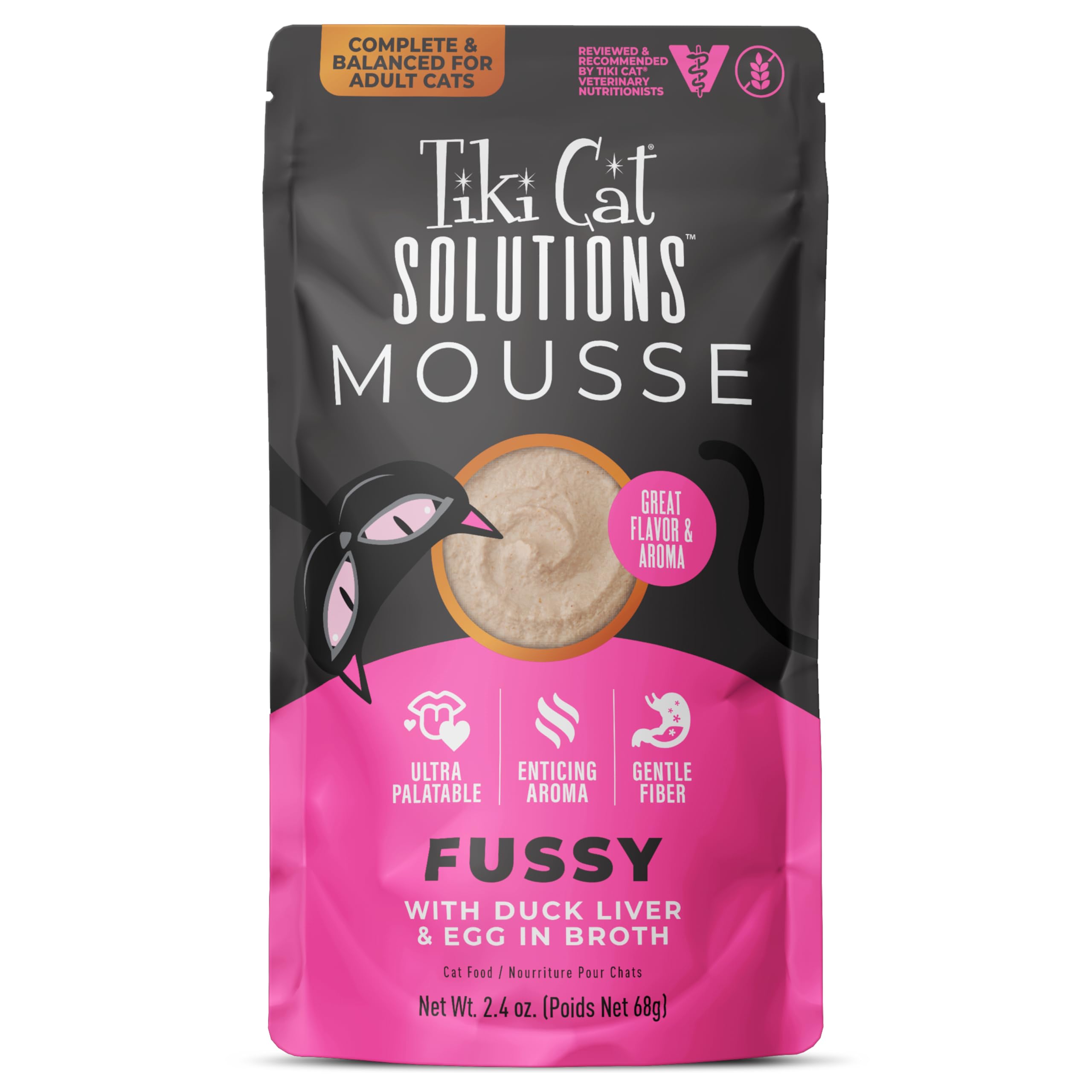
Tiki Cat Solutions Fussy Mousse uses duck liver and egg as a single-animal-protein base, offering a novel protein source for cats that have developed sensitivities to chicken or fish. The mousse texture is extremely light, making it ideal for cats transitioning from dry kibble to wet food during a diarrheal episode—the airy consistency mimics the mouthfeel of dry food while delivering the high moisture content needed for hydration. The formula is explicitly marketed to support healthy digestion and lacks carrageenan, grains, and artificial additives.
Owner reviews consistently point to the Fussy Mousse as the only food picky eaters with sick stomachs will accept when nothing else works, with several users adding water to create a soupier consistency for gravy-loving cats. The duck liver content provides a concentrated source of B vitamins and iron, which helps compensate for nutrient loss during persistent diarrhea. The 2.4-ounce pouch size is ideal for small portions during the critical first days of dietary transition.
The phosphorus content is not the lowest among digestive-sensitive formulas, so cats with concurrent kidney disease may need a more restricted option. The duck flavor is divisive—some cats reject it outright, which makes the 12-pouch commitment a risk without first testing a single can at a pet supply store. The mousse is calorie-light, so active cats may require supplementation with a higher-calorie food once stool normalizes.
Why we love it
- Novel duck protein ideal for chicken-sensitive cats
- Airy mousse texture eases transition from dry food
- High moisture content supports hydration
Good to know
- Not the lowest phosphorus for kidney-compromised cats
- Duck flavor may be rejected by some cats
- Low caloric density requires larger portions
FAQ
How quickly should a cat’s diarrhea improve after switching wet food?
Can I feed wet food for diarrhea alongside dry kibble?
Is grain-free wet food always better for cats with diarrhea?
Should I add probiotics to my cat’s wet food during a diarrheal episode?
Final Thoughts: The Verdict
For most cats with recurring diarrhea, the wet food for cats with diarrhea winner is the Royal Canin Digestive Care Loaf because its hydrolyzed protein profile and psyllium-based fiber system offer the highest clinical success rate for normalizing stool consistency across all age groups. If you want a more budget-friendly option with dual skin-and-digestion benefits, grab the Hill’s Science Diet Sensitive Stomach Variety Pack. And for a cat that refuses every other food during a flare-up, nothing beats the Tiki Cat Solutions Fussy Mousse for sparking appetite while supporting digestive recovery.