
A bag of birdseed is a promise to the creatures outside your window, but too many blends break that promise with cheap fillers that end up as weeds in your flowerbeds. Real birders know the difference between a bag that empties fast and one that actually nourishes the local flock through the seasons.
I’m Mo Mahin — the founder and writer behind Furric. I analyze market trends, veterinary-grade seed data, and thousands of verified owner experiences to pinpoint exactly which seed blends deliver measurable attraction rates and which are mostly hulls and milo.
After sifting through dozens of competitive products, I’ve locked in the definitive list of best seeds for birds that cut waste, maximize feeder visits, and keep your yard clean from invasive sprouts.
How To Choose The Best Seeds For Birds
Not all birdseed is created equal. Many mass-market bags are loaded with red milo, cracked corn, and wheat — cheap fillers that most wild birds toss aside to reach the sunflower hearts. Understanding the composition of the blend is the first step toward a feeder that empties because it was eaten, not wasted.
Filler vs. High-Value Ingredients
The single biggest mistake new birders make is buying the cheapest bag per pound. Those blends often contain 40-60% red milo, a grain that only a few ground-feeding species like doves will touch. Premium blends prioritize black oil sunflower seeds, white millet, peanuts, and sunflower chips — ingredients that cardinals, chickadees, nuthatches, and finches actually consume entirely. Check the ingredient panel for the first two or three listed seeds; if sunflower or millet isn’t near the top, pass.
No-Mess vs. Whole-Seed Blends
Hulled sunflower chips and shelled peanuts create zero waste under the feeder, which eliminates sprouting in your lawn and reduces cleanup. Nyjer seed is another nearly 100% consumable option that attracts goldfinches without leaving hulls. Whole-seed blends are more affordable per pound and work well in platform or hopper feeders where ground-feeding birds can clean up fallen seeds, but they will leave hull debris. Choose based on whether you prioritize a tidy patio or maximum biodiversity.
Seasonal Considerations
Birds need high-fat content in winter to maintain body temperature — look for blends heavy on black oil sunflower (around 45% oil) and peanuts. In spring and summer, protein-rich blends with sunflower chips and millet support nesting and molting. Many premium blends are formulated for year-round feeding, but you can optimize by swapping seasonal offerings. Also, a 40-pound bag is economical for heavy winter traffic, but a 10-pound bag keeps freshness higher if you refill a small tube feeder weekly.
Quick Comparison
On smaller screens, swipe sideways to see the full table.
| Model | Category | Best For | Key Spec | Amazon |
|---|---|---|---|---|
| Audubon Park Extreme Variety | Mid-Range | Maximum species diversity | 15 lb, heavy sunflower & peanut | Amazon |
| Cool Birds All Birds Classic Blend | Mid-Range | Songbird attraction year-round | 10 lb, no artificial colors | Amazon |
| Kaytee No Mess Finch Blend | Mid-Range | Clean patio/lawn friendly | 8 lb, 100% consumable | Amazon |
| Wagner’s Deluxe Wild Bird Food | Budget | Entry-level value blend | 10 lb, general purpose | Amazon |
| Armstrong All Season Blend | Budget | High-volume ground feeding | 40 lb, CO2 flushed freshness | Amazon |
In‑Depth Reviews
1. Audubon Park Extreme Variety Wild Bird Seed
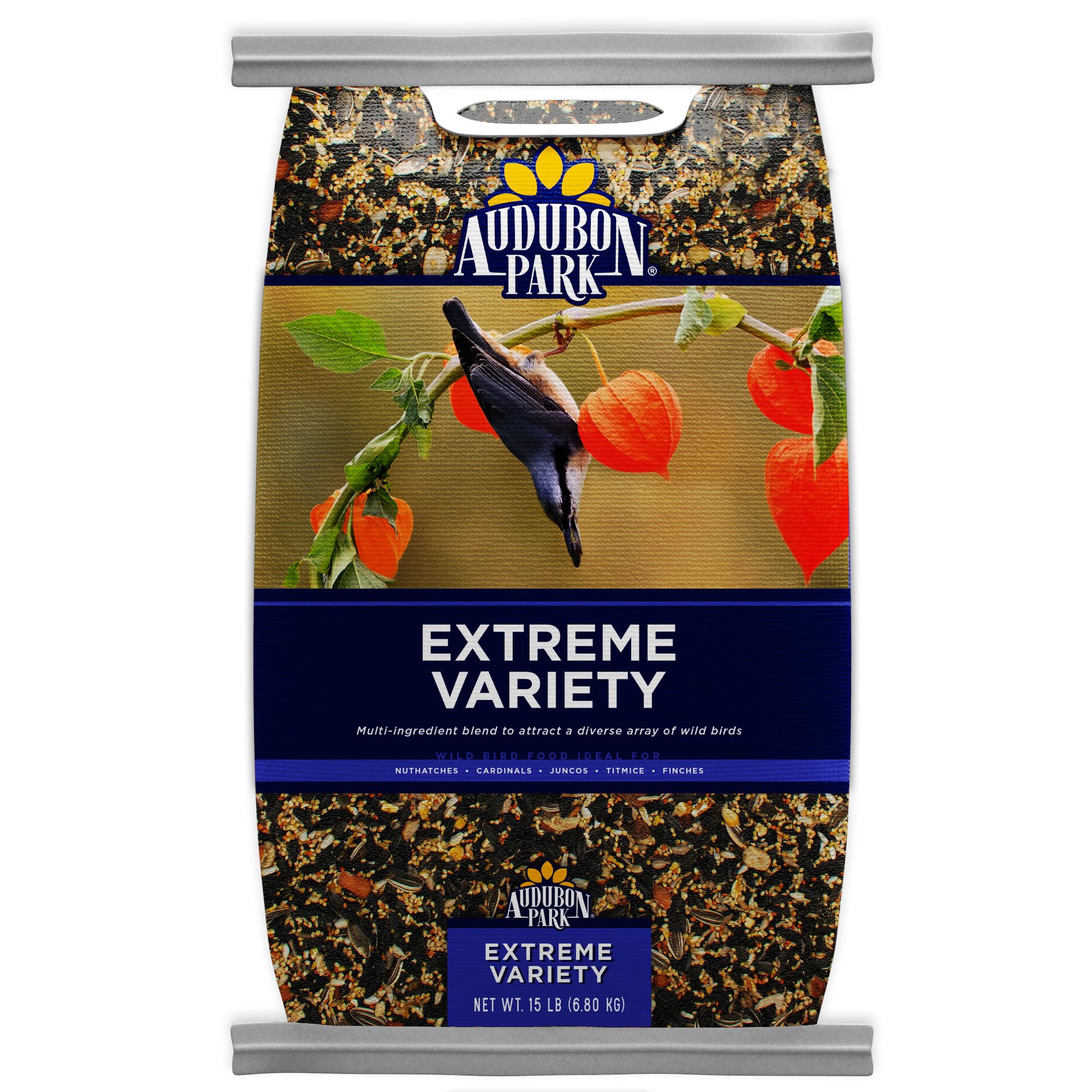
The Audubon Park Extreme Variety blend immediately impressed me with its low filler content — verified owners consistently note the heavy presence of sunflower seeds, sunflower chips, and whole peanuts. This is a mix built for species diversity, attracting nuthatches, cardinals, juncos, titmice, and finches to the same feeder. The 15-pound bag lands in the mid-range tier, delivering a genuinely premium ingredient profile without pushing into top-shelf pricing.
Customer feedback highlights almost zero waste, with very few “filler” seeds like red milo being tossed aside. The blend works across tube, hopper, and platform feeders, making it versatile for any backyard setup. The inclusion of raisins and nuts adds a protein and fat boost that winter birds especially crave when natural food sources are scarce.
For anyone seeking a single bag that reliably turns a quiet yard into a busy avian hub, this is the most balanced option. The only minor drawback is the bag size — at 15 pounds, you’ll want a sealed storage bin to maintain freshness if you feed slowly.
Why we love it
- Very low red milo filler waste reported consistently by buyers
- Attracts the widest range of perching and ground-feeding species
Good to know
- Requires airtight storage to preserve freshness over time
- Squirrels and grackles will also be drawn to the peanuts and sunflower
2. Cool Birds All Birds Classic Blend
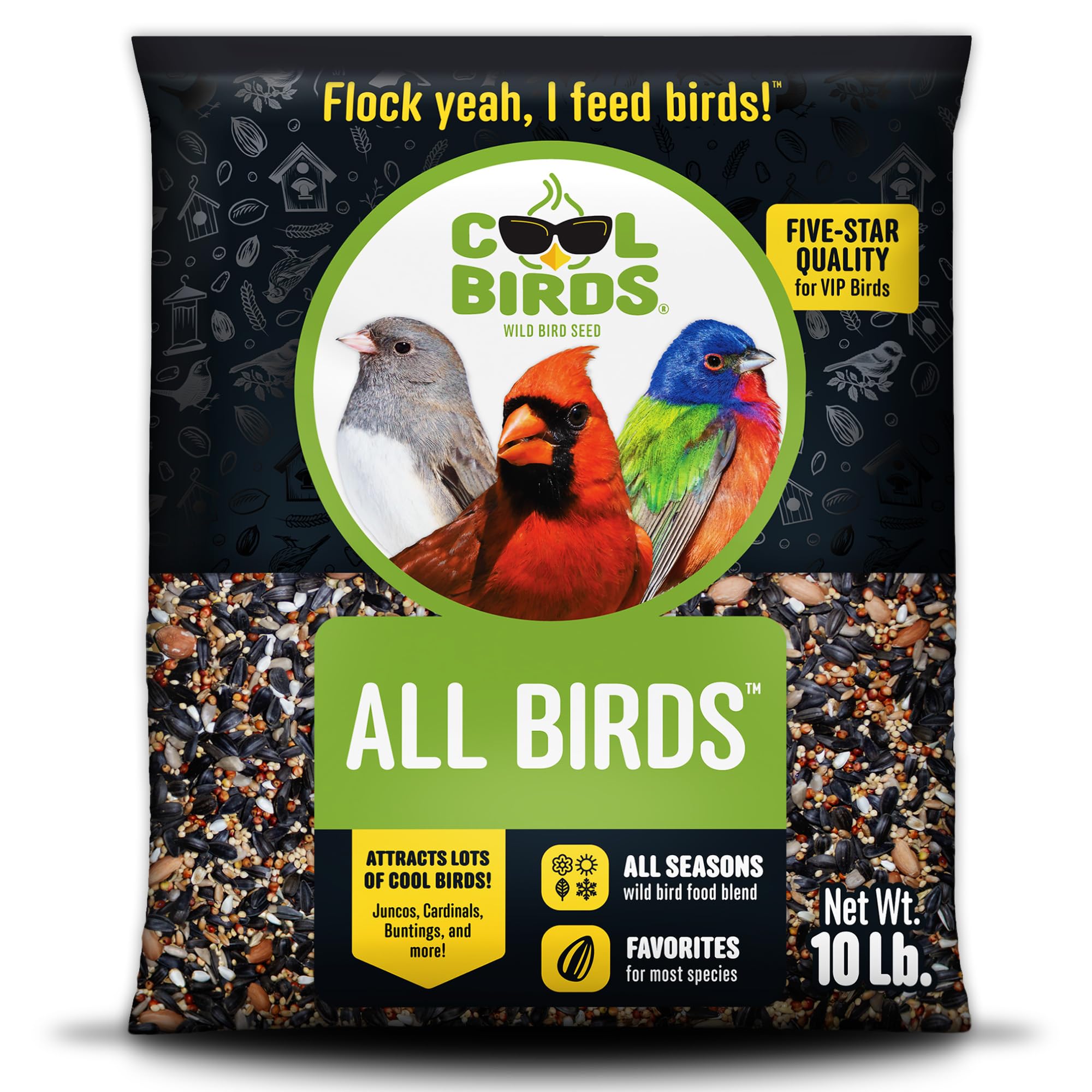
The Cool Birds Classic Blend positions itself as an all-season solution with a targeted five-ingredient lineup: black oil sunflower, white millet, safflower, peanuts, and sunflower hearts. This specific combination avoids wheat and red milo entirely, which explains the steady stream of five-star feedback from owners who report cardinals, jays, and doves cleaning the feeder daily. The 10-pound bag is compact, but reviews note it stretches surprisingly far because every seed gets eaten.
Owner reports specifically highlight the freshness — the seeds smell rich and oil-heavy straight out of the bag, a sign that the CO2-flushed packaging or rapid turnover is working. The blend is formulated for tray, tube, hopper, platform, and even smart camera feeders, making it one of the most adapter-friendly mixes on the market. Energy and protein content are emphasized, supporting birds during both winter cold and spring molting.
The only real consideration is that the 10-pound bag may feel small for heavy winter feeding. Owners with multiple feeders or large flocks will burn through it quickly, but the quality per pound is exceptional.
Why we love it
- Zero filler seeds — every ingredient is a high-value food source
- Works in virtually every feeder type including camera feeders
Good to know
- 10-pound bag depletes quickly with multiple bird species visiting
- Safflower may be ignored by some local bird populations initially
3. Kaytee No Mess Finch Seed and Nyjer Blend

For anyone tired of sweeping hulls off the patio or pulling sunflower sprouts out of flowerbeds, the Kaytee No Mess Finch Blend is a specialized solution. The key differentiator here is that every seed in the bag is 100% consumable — hulled sunflower chips and Nyjer seed leave no shell debris behind. This makes it the ideal choice for balcony feeders, rental properties, or yards where the lawn is part of the aesthetic.
This blend is specifically targeted at small-beaked birds like goldfinches, chickadees, and juncos. If your area has a high population of house finches or American goldfinches, this mix will empty fast. The Nyjer component is particularly effective for attracting finches that ignore standard millet blends. Because there are no hulls, the seeds cannot germinate, which eliminates the weed problem altogether.
The trade-off is that large birds like blue jays and cardinals will struggle with the small particle size, and ground-feeding doves won’t find much of interest. This is a niche tool — perfect for its intended audience, but not a general-purpose flock builder.
Why we love it
- Completely eliminates hull waste and sprouting under feeders
- Finches and chickadees flock to the Nyjer component rapidly
Good to know
- Large birds like cardinals and blue jays cannot eat the small seeds
- Nyjer seed can be less attractive to birds in some regional areas
4. Wagner’s Deluxe Wild Bird Food, 10 lb Bag

Wagner’s Deluxe is the classic entry-level blend that has been a staple in the birdseed aisle for years. It contains sunflower and general purpose seeds, and the brand states that the highest quality grains are used. The 10-pound bag places it in the budget-friendly tier, making it an accessible option for new birders or those feeding a small flock with a single tube feeder.
The composition leans toward a more traditional mix, meaning you’ll likely see some red milo or cracked corn in the blend. Ground-feeding birds like doves and juncos will clean up the fallen seeds, but finches and small perching birds may pick around the lower-value grains. The bag is competitively sized and priced for first-time buyers who want to test if their local birds will visit before committing to a premium blend.
For the price, this mix does attract a decent variety of birds, but owners should expect some waste and potential sprouting from uneaten seeds. It’s a solid starting point, not a long-term solution for serious birders.
Why we love it
- Very accessible price point for beginners or multi-feeder setups
- Made in the USA with consistent quality control
Good to know
- Contains some filler seeds that may be tossed aside by picky species
- Uneaten seeds can germinate and create weeds in lawn areas
5. Armstrong Wild Bird Food All Season Blend, 40 Pounds
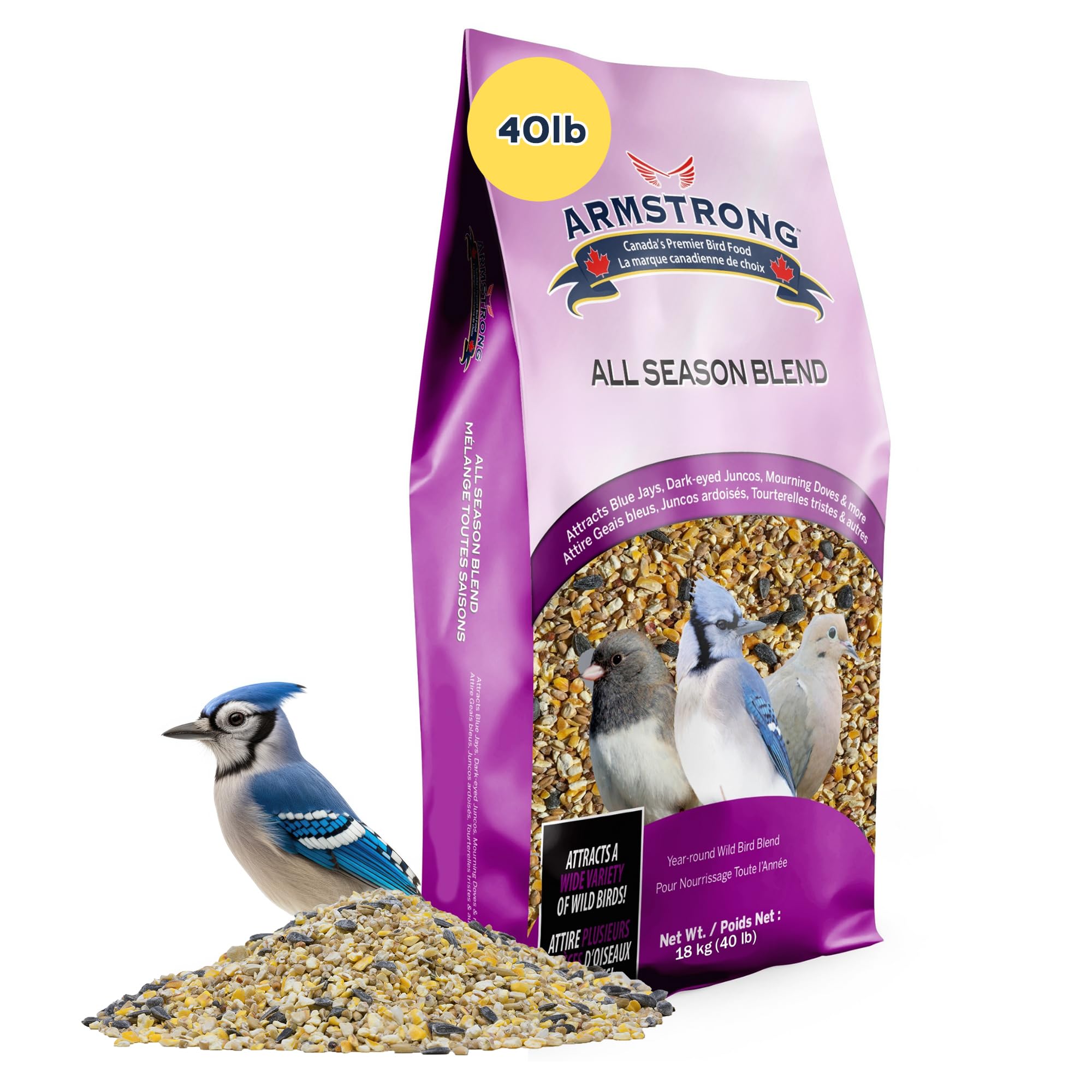
The Armstrong All Season Blend is designed for bulk-volume feeding, packing 40 pounds into a single CO2-flushed barrier bag that locks in freshness. The formulation includes cut corn, wheat, red milo, white millet, black oil sunflower seeds, and red millet — a recipe that targets ground-feeding and large perching birds like blue jays, mourning doves, and dark-eyed juncos. If your goal is to keep a platform feeder or a tray stocked for a flock of doves, this is a high-value load.
Owner feedback is mixed but leans positive for the price point. Several verified buyers note that the birds “love it” and that it attracts Steller’s jays and cardinals. However, one critical review highlights that the blend contains significant red milo, which some birds ignore, leading to waste on the ground. This is a common trade-off with budget-tier 40-pound mixes — the volume keeps costs down, but the ingredient hierarchy may not satisfy pickier species.
This bag shines when used in a hopper or large tray feeder where ground birds can clean up the dropped seeds. If you have squirrels, they will also enjoy the corn and wheat components. Freshness is well-preserved thanks to the CO2 flushing, which is a genuine advantage over cheaper bulk bags that sit on shelves.
Why we love it
- Massive 40-pound bag at an economical per-pound value
- CO2-flushed barrier bag preserves freshness effectively
Good to know
- Significant red milo content leads to ground waste
- Not ideal for picky finches or chickadees
FAQ
Why do some birds toss seeds out of the feeder?
What is the best seed to attract cardinals?
Can Nyjer seed go bad before birds eat it?
Final Thoughts: The Verdict
For most gardeners, the best seeds for birds winner is the Audubon Park Extreme Variety because its heavy sunflower core and minimal filler reliably attract the widest range of species. If you want a spotless feeding area with zero sprouting, grab the Kaytee No Mess Finch Blend. And for high-volume ground feeding on a budget, nothing beats the Armstrong All Season Blend.