
A nursing queen’s energy demands explode by 300 to 400 percent above maintenance levels, meaning her body is now running a constant metabolic marathon to produce milk for her litter. The wrong diet — even a high-quality adult maintenance formula — lacks the dense caloric, protein, and fat profile that milk synthesis requires, leading to rapid weight loss and degraded milk quality for the kittens.
I’m Mo Mahin — the founder and writer behind Furric. I spend my time cross-referencing AAFCO nutrient profiles against cat food manufacturer guaranteed analyses, comparing specific fat-to-protein ratios, and analyzing aggregated owner feedback from nursing queens to identify which formulas actually sustain lactation without draining the mother cat.
This guide breaks down the critical fat, protein, calcium, and DHA levels a lactating queen needs, then ranks the market’s top contenders. Whether you’re buying pouches, pate, or kibble, you can now confidently choose food for nursing cats that supports both mother and growing kittens.
How To Choose The Best Food For Nursing Cats
Selecting the right diet for a lactating queen is not the same as picking a random kitten food. You need specific nutritional profiles that keep the mother healthy while fueling robust growth in her litter. Here are the three non-negotiable factors.
Caloric Density & Fat Content
Nursing cats burn calories at a staggering rate. Look for wet foods that provide at least 900 to 1,100 kcal per kilogram, and dry foods that clear 3,800 kcal per kilogram. Fat content should be a minimum of 20% on a dry matter basis. Products like Royal Canin Mother & Babycat are built around this high-fat, high-calorie requirement.
Protein Quality & Amino Acid Profile
Milk is protein-rich, so the queen needs a diet with at least 30% protein from named meat sources (chicken, chicken liver, salmon). Two amino acids are critical: taurine for heart and vision health in both mother and kittens, and DHA (an omega-3 fatty acid) for kitten brain development. Tiki Cat Baby formulas and Purina Pro Plan Complete Essentials highlight these components.
Digestibility & Hydration
A lactating cat’s digestive system is under constant strain. Wet food with high moisture content (78–82%) supports hydration, which is crucial since milk production pulls water from her body. Avoid foods with corn, wheat, or soy as primary fillers. Pate or mousse textures are often easier on a nursing cat’s stomach than chunky shreds. Sheba Perfect Portions and Blue Buffalo Baby Blue provide that smooth, digestible texture.
Quick Comparison
On smaller screens, swipe sideways to see the full table.
| Model | Category | Best For | Key Spec | Amazon |
|---|---|---|---|---|
| Royal Canin Mother & Babycat | Premium Dry | Queen & kitten from pregnancy to weaning | Rehydratable kibble, 6 lb bag | Amazon |
| Hill’s Science Diet Kitten | Premium Wet Pouch | Picky eaters and gentle digestion | 24 pack, 2.8 oz pouches | Amazon |
| Tiki Cat Baby Whole Foods Mega Pack | Premium Wet Can | High-protein shredded whole foods | 24 count, 2.4 oz cans | Amazon |
| Tiki Cat Baby Mousse Pouch | Mid-Range Wet Pouch | Weaning transition and organ meat nutrition | 12 count, 2.4 oz pouches | Amazon |
| Blue Buffalo Baby Blue Pate | Mid-Range Wet Can | Double-duty for queen and kitten hydration | 24 count, 3 oz cans | Amazon |
| Purina Pro Plan Kitten | Mid-Range Dry | Budget-friendly nutrition with live probiotics | 6 lb bag, shredded blend | Amazon |
| Sheba Perfect Portions Kitten | Budget Wet Tray | Portion-controlled weaning for small litters | 24 twin-packs, 48 servings | Amazon |
In‑Depth Reviews
1. Royal Canin Feline Health Nutrition Mother & Babycat Queen Dry Cat Food
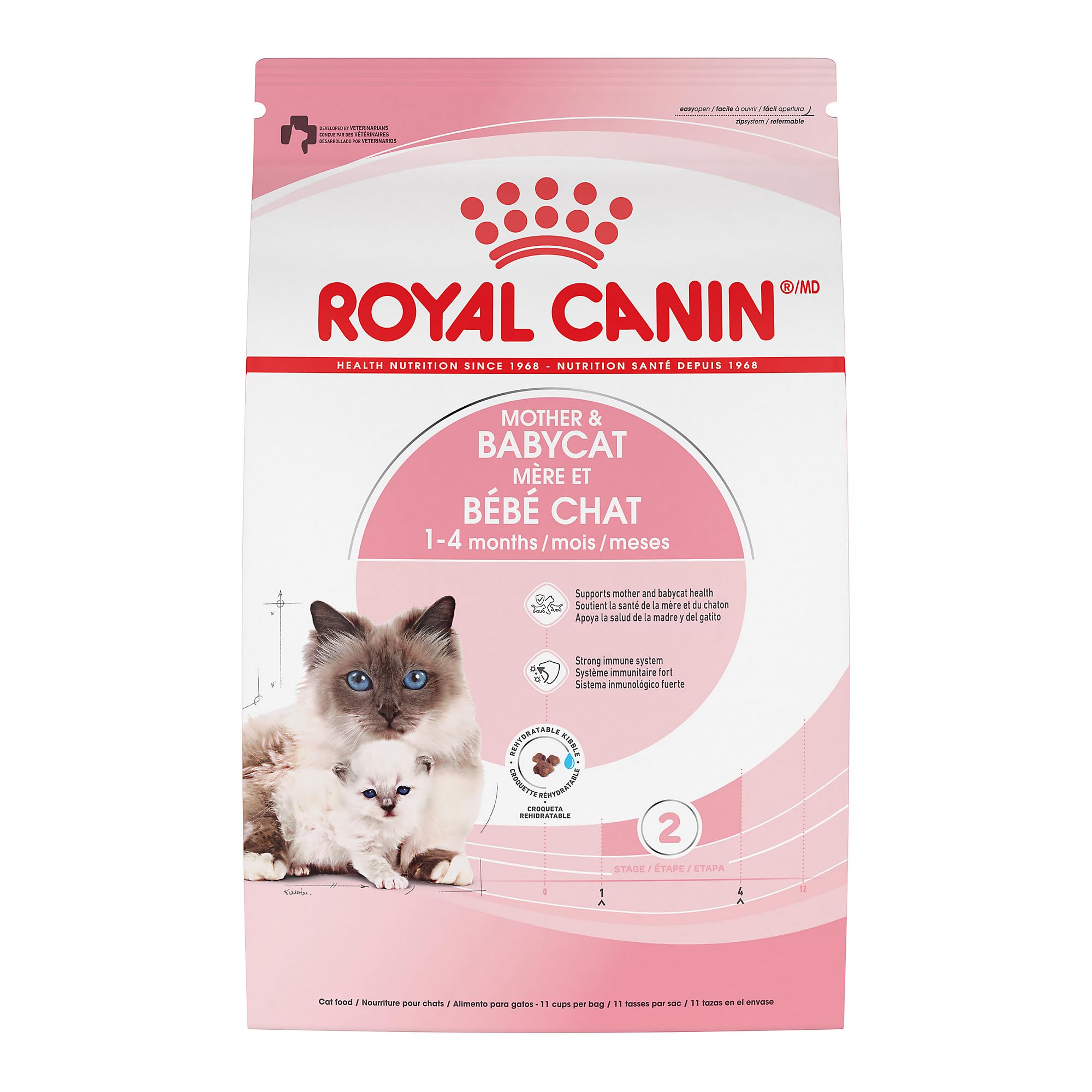
Royal Canin built this formula specifically for the entire reproductive cycle — from late pregnancy through lactation and weaning up to four months of age. The 6-pound bag delivers rehydratable kibble that softens when mixed with warm water, making it easier for a nursing queen with sore gums or a reduced appetite to eat. The kibble is small enough for tiny kitten mouths, so the queen and kittens can share the same bowl without the risk of choking.
The ingredient panel is anchored by chicken by-product meal (a concentrated protein source) and chicken fat, hitting the high caloric density a lactating mother demands. Clinically proven antioxidants, including vitamins E and C, support the queen’s stressed immune system while she transfers passive immunity to her litter. The prebiotic blend and highly digestible proteins keep her gut microbiome balanced during weeks of constant nursing.
This is the only formula in this roundup explicitly designed for both the mother and her kittens simultaneously, which makes it the single most efficient choice for a multi-cat litter scenario. If you want a single-bag solution that covers the queen’s metabolic needs and the kittens’ growth requirements from day one, this is the pick.
Why we love it
- Rehydratable kibble eases eating for both queen and kittens
- Clinically proven antioxidants for immune health
- Prebiotics promote healthy intestinal bacteria balance
Good to know
- Chicken is not the first ingredient; poultry by-product meal is listed higher
- Not grain-free (includes brewers rice and corn gluten meal)
2. Hill’s Science Diet Kitten Wet Cat Food, Chicken, 2.8 oz. Pouches, 24-Pack
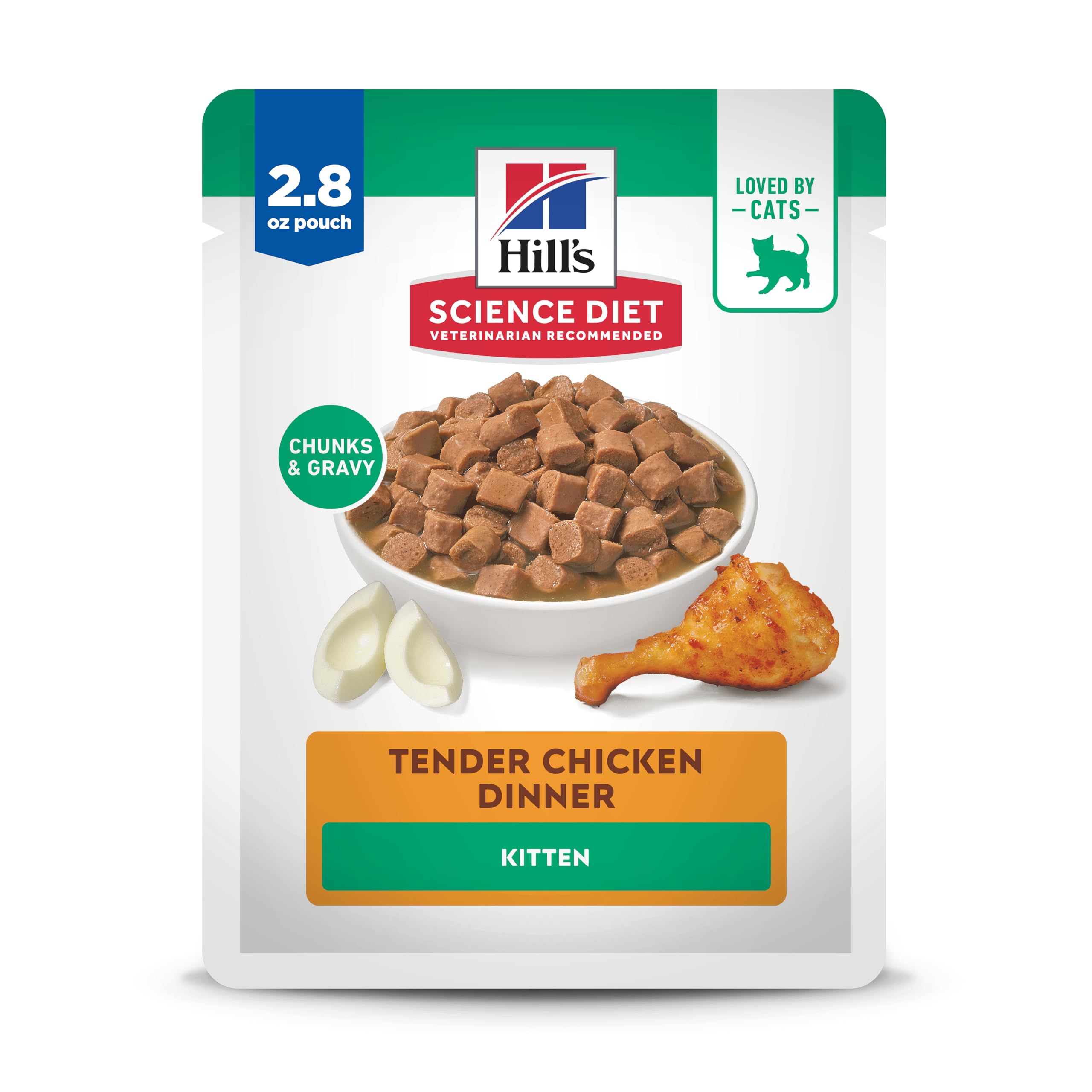
Hill’s Science Diet is the number-one veterinarian-recommended pet food brand, and this kitten wet food formula carries that same science-backed credibility into the nursing queen context. Each 2.8-ounce pouch is a single serving designed for perfect portion control, which matters when a nursing cat eats multiple small meals throughout the day. The chicken stew texture is a smooth consistency that high-stomach-acid lactating queens tolerate well.
The guaranteed analysis shows a crude protein minimum of 11% and crude fat minimum of 4.5% on an as-fed basis, translating to approximately 45% protein and 20% fat on a dry matter basis. That fat level is adequate for lactation, though not as high as some grain-inclusive formulas. Added vitamins, minerals, and amino acids supplement the queen’s depleted reserves, helping her maintain coat condition and energy despite the constant feedings.
Because this pouch contains no artificial flavors or preservatives and uses natural chicken as the primary protein source, it is a clean, low-risk option for queens with sensitive digestion. The high moisture content (around 80%) also supports the queen’s hydration needs during milk production, making this pourable stew an effective hydration delivery system.
Why we love it
- Chicken stew texture is easy on sensitive stomachs
- Natural ingredients with no artificial preservatives
- High moisture content supports hydration during lactation
Good to know
- Fat content is lower than competing queen-focused formulas
- Price per ounce is higher than most other wet foods in this guide
3. Tiki Cat Baby Whole Foods Wet Cat Food for Kittens Mega Pack, 2.4 oz. Cans (24 Count)

Tiki Cat Baby Whole Foods pushes protein density to the forefront with shredded chicken, duck, salmon, tuna, and organ meats as primary ingredients. For a nursing queen, this concentrated amino acid profile directly translates into high-quality milk production. The Mega Pack includes 24 cans of 2.4 ounces each, offering variety across species — different protein sources can help prevent nutritional boredom in a picky lactating cat.
The chunky, shredded texture is designed for kittens 8 weeks and older, but it works just as well for adult nursing cats who need to chew easily. The inclusion of chicken liver provides naturally occurring vitamins A, D, and B-complex, plus iron, all of which are depleted during lactation. DHA and added taurine support the queen’s heart function and her kittens’ developing nervous systems simultaneously.
Because this is a Whole Foods line with no carrageenan, guar gum, or artificial binders, the texture can be runnier than pate-based products. For queens who prefer a thicker consistency, you may need to drain some liquid before serving. The heavy reliance on organ meats also means the aroma is stronger than standard chicken stews, which can trigger appetite in a queen who has stopped eating.
Why we love it
- Multiple animal protein sources for diverse nutrition
- Organ meats provide natural vitamins and minerals
- DHA supports kitten brain development
Good to know
- Shredded texture can be messy compared to pate
- Stronger aroma may be too intense for some queens
4. Tiki Cat Baby Mousse Wet Cat Food for Kittens, Chicken & Chicken Liver, 2.4 oz. Pouch (12 Count)

Tiki Cat Baby Mousse is formulated for kittens from 4 weeks upward, making it the ideal weaning tool for a queen transitioning her litter from milk to solid food. The mousse texture is smooth enough to mix with kitten milk replacer, creating a slurry that tiny mouths can lap up. For the nursing queen herself, this pourable mousse is easy to eat in short bursts between nursing sessions, and the chicken liver inclusion packs concentrated calories and iron into each 2.4-ounce pouch.
The ingredient list opens with real chicken broth, chicken, and chicken liver, delivering a protein profile that mimics the high-meat diet a feral queen would hunt. Added DHA and supplemental taurine ensure that the mother’s milk is fortified for her kittens’ brain and eye development. This recipe is also grain-free and GMO-free, which removes the risk of grain sensitivities causing digestive upset in a stressed nursing queen.
With 12 pouches per pack, this is a smaller quantity than many other options, so frequent feeders will need to reorder quickly. The low-caloric density of mousse compared to pate or kibble means a nursing queen may need to consume more pouches per day to meet her energy requirements. It works best as a supplement to a higher-calorie dry food rather than as the sole ration for a lactating queen.
Why we love it
- Mousse texture is perfect for mixing with kitten milk replacer
- Chicken liver provides natural iron and B vitamins
- Grain-free and GMO-free formulation
Good to know
- Low caloric density may not sustain a full day’s needs alone
- Only 12 pouches per pack, requires frequent reordering
5. Blue Buffalo Baby Blue Natural Kitten Wet Cat Food, Healthy Growth Formula with DHA, Chicken Recipe Multi-Pack, 3-oz Cans (24 Count)
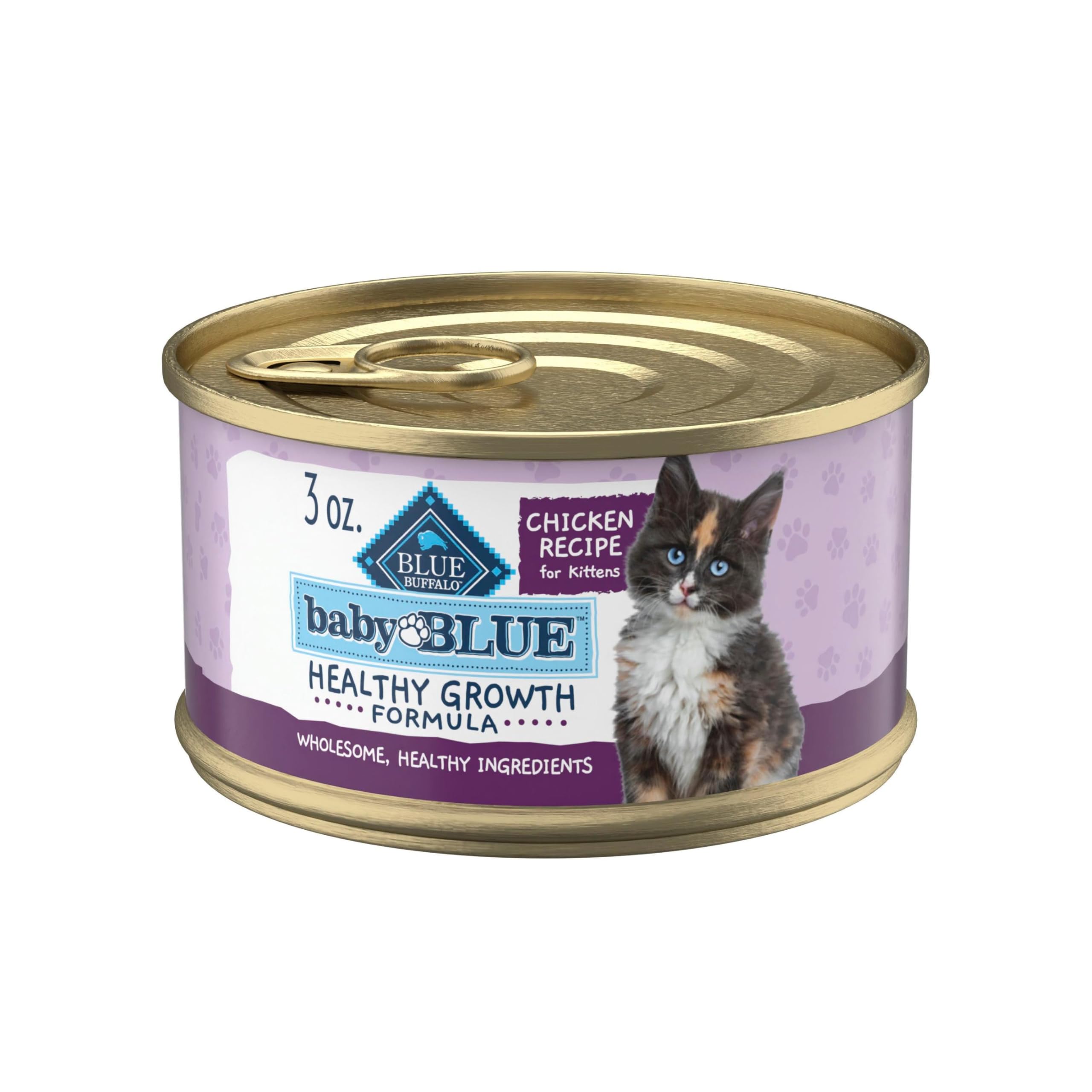
Blue Buffalo Baby Blue provides 72 ounces of wet food across 24 three-ounce cans, making it the largest volume-per-dollar option in this guide. The larger can size means fewer open containers to manage per feeding, and the pate texture is thick enough to portion out while remaining soft enough for a queen to eat quickly. Real deboned chicken is the first ingredient, delivering a clean protein source with no chicken by-product meals.
The formula includes DHA for healthy brain development and taurine for vision support. It is also free of corn, wheat, and soy, which means a lower risk of triggering food sensitivities while the queen’s digestive system is already stressed. The high moisture content of pate (approximately 78%) supports the queen’s hydration needs — a crucial factor since milk production pulls water from her body and can lead to dehydration if not compensated.
One notable consideration is that this formula is labeled as a kitten food, not a specific queen food. While it meets the nutritional demands of growth, it may be slightly lower in fat than specialized queen diets. For a nursing queen with a large litter requiring maximum energy, combining these cans with a higher-fat kibble may produce better weight maintenance. Still, for a singleton kitten or smaller litter, this is a solid stand-alone option.
Why we love it
- Large 3 oz cans offer best volume per dollar in the guide
- Deboned chicken is the first ingredient, no by-products
- Free of corn, wheat, and soy
Good to know
- Fat content may be lower than dedicated queen formulas
- Pate texture may be too thick for some nursing cats
6. Purina Pro Plan Kitten Dry Food Complete Essentials Shredded Blend Chicken and Rice Formula – 6 lb. Bag
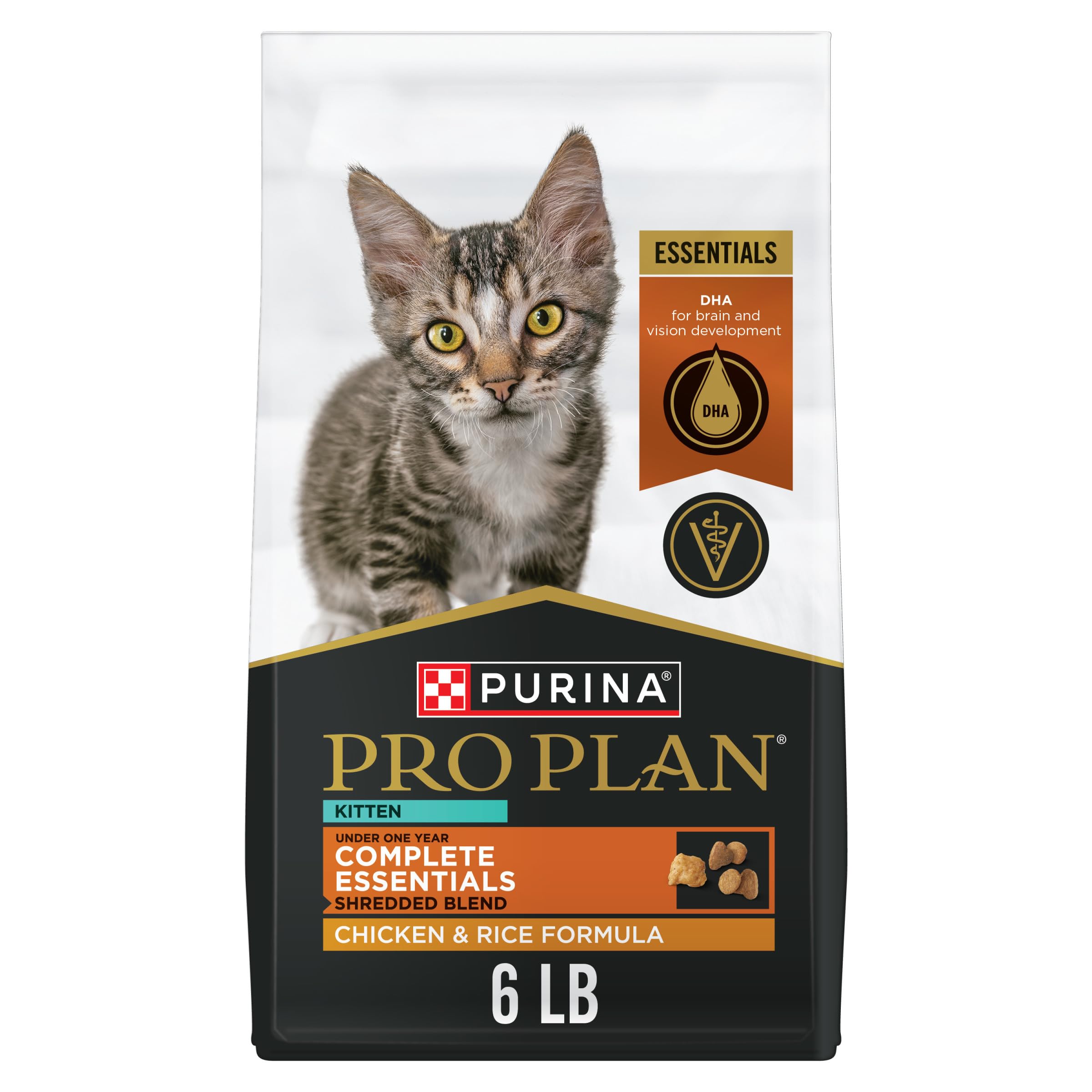
Purina Pro Plan Complete Essentials delivers a nutrient-dense dry kibble that combines crunchy bites with shredded meaty pieces, creating a texture that appeals to nursing queens who may be picky about monotony. Real chicken is the first ingredient, and the guaranteed analysis shows a crude protein minimum of 42% on a dry matter basis, paired with a fat content of approximately 20%. This macronutrient split aligns well with the demands of lactation.
The standout feature here is the inclusion of guaranteed live probiotics, which are rare in shelf-stable dry cat foods. These probiotics support the queen’s digestive and immune health during her most taxing weeks. DHA from omega-3 fatty acids supports the kittens’ brain and vision development through the mother’s milk. Vitamin A and taurine further support healthy vision for both mother and kittens. The 6-pound bag is an affordable entry point for feeding a lactating cat with a large appetite.
Because this is a dry-only formula, it lacks the moisture content that wet foods provide. Pairing it with one of the wet options in this guide ensures the queen stays hydrated. The rice and corn meal ingredients also mean it is not grain-free, which may be a concern for owners who prefer a more ancestral diet. It is, however, an excellent cost-effective base diet that can be supplemented with wet food for complete coverage.
Why we love it
- Live probiotics support digestive health during lactation
- DHA omega-3 for kitten brain development
- Affordable price point for a high-protein dry food
Good to know
- Dry-only formula lacks hydration support
- Contains corn meal and brewers rice, not grain-free
7. Sheba Perfect Portions Kitten Wet Food, Pate Cat Food Wet Entree, Salmon Recipe, 2.6 oz. Twin-Pack Trays (24 Count, 48 Servings)

Sheba Perfect Portions solves two practical problems for owners managing a nursing queen: portion control and freshness. Each tray contains two separately sealed 1.3-ounce servings, totaling 2.6 ounces per tray, with 48 individual servings across the 24-tray pack. The salmon recipe features real sustainable salmon as the primary protein, providing bio-available omega fatty acids that support the queen’s coat condition and milk fat profile. The pate texture is smooth and easy to chew for a cat whose appetite may be variable.
The salmon flavor distinguishes Sheba from the standard chicken-based options, which is helpful if your queen has developed an aversion to chicken through constant exposure. DHA is included to support healthy brain development in the kittens, and vitamin E acts as an antioxidant for immune support. The limited-ingredient approach means no corn, no grain, and no soy, reducing digestive irritation risk for a nursing queen who may be more sensitive than usual.
The single downside is the serving size. Each 1.3-ounce portion is relatively small for a nursing cat who needs up to four times her maintenance calories. You will need to feed multiple portions per feeding session, which means opening more trays. However, the convenience of the tear-and-serve trays and the consistently positive owner reviews about weaning kittens make this a practical option for short-term use during the first weeks of nursing.
Why we love it
- Salmon protein offers variety if chicken aversion arises
- Twin-pack trays keep the second portion fresh for later
- Grain-free and limited ingredient formulation
Good to know
- Small 1.3 oz portions require multiple servings per meal
- Salmon flavor may be too strong for some queens to tolerate
FAQ
Can I feed kitten food to a nursing cat?
How much food does a nursing cat need daily?
What happens if the mother cat loses too much weight while nursing?
Final Thoughts: The Verdict
For most owners, the food for nursing cats winner is the Royal Canin Mother & Babycat because it is the only formula designed explicitly for pregnancy, lactation, and weaning, offering rehydratable kibble that supports both queen and kittens. If you want a high-protein wet option with varied animal protein sources, grab the Tiki Cat Baby Whole Foods Mega Pack. And for a budget-friendly dry base with live probiotics, nothing beats the Purina Pro Plan Kitten Complete Essentials.