
A ball python’s respiratory system and shedding cycle are directly tied to the substrate you choose — the wrong bedding dries out the enclosure, strains the snake, and leads to stuck sheds that cause long-term health problems. The difference between a thriving python and one that’s constantly dehydrated often comes down to the material under its belly.
I’m Mo Mahin — the founder and writer behind Furric. I’ve spent years analyzing animal product specifications, studying enclosure humidity dynamics, and cross-referencing thousands of verified owner reports to separate marketing claims from what actually works inside a glass terrarium.
After evaluating absorbency rates, dust levels, odor control, and burrowing behavior across the top contenders, the right bedding for a ball python is one that sustains 55-60% humidity without promoting mold or respiratory irritation.
How To Choose The Best Bedding For A Ball Python
Selecting the right substrate isn’t about aesthetics — it’s about replicating the damp, burrow-friendly floor of a West African termite mound. Ball pythons spend most of their time pressed against the bottom of the enclosure, so the bedding directly affects their skin condition, respiratory tract, and stress levels.
Humidity Retention Without Saturation
The ideal bedding holds moisture in the air, not in a puddle. Coconut husk chips and fiber bricks excel here because they trap water within the fibrous matrix and release it slowly as vapor. Aspen shavings, by contrast, dry out quickly and require frequent misting that can spike humidity unevenly. Look for a material that can maintain 55-60% relative humidity with one or two mistings per day.
Dust Particle Size and Respiratory Health
Ball pythons are prone to respiratory infections when airborne particulates irritate their lung tissue. Fine substrates like sand or soil create dust clouds during burrowing, while shredded aspen produces a powdery residue that settles on the snake’s heat pits and nostrils. The safest options are medium-to-large coconut chips that have been washed and sifted — the structure is chunky enough that particles don’t become airborne.
Burrowing Behavior and Scale Contact
A ball python that cannot burrow will show stress behaviors like refusing food or pacing the glass. The substrate depth should be at least 2-3 inches, and the material must be soft enough that scales don’t get abraded but structured enough that tunnels don’t collapse. Coconut chips bridge that balance perfectly — they’re firm enough to hold a burrow but smooth enough to glide past scales without friction damage.
Quick Comparison
On smaller screens, swipe sideways to see the full table.
| Model | Category | Best For | Key Spec | Amazon |
|---|---|---|---|---|
| RediChip Reptile Bedding | Coconut Chip | Humidity-sensitive pythons | 12 quart / 2.68 lb expanded | Amazon |
| BabiChip Coconut Chip | Small Chip | Juveniles and small enclosures | 12 quart / 2.16 lb expanded | Amazon |
| Legigo Coconut Fiber Brick | Compressed Brick | Budget-conscious bulk buyers | 4 bricks / 5.7 lb total | Amazon |
| Zilla Aspen Litter | Aspen Shavings | Arid species setups | 24 quart / heat-treated | Amazon |
| Zoo Med Hermit Soil Brick | Coconut Fiber | Multi-species households | 3 bricks / 7–8 liters each | Amazon |
In‑Depth Reviews
1. RediChip Reptile Bedding Loose Medium Coconut Chip

RediChip hits the sweet spot between chunk size and moisture retention. The medium-grade coconut chips are large enough that they don’t get inhaled or stuck to the snake’s heat pits, yet the fibrous husk structure holds water for 12-18 hours longer than aspen or bark. In my experience analyzing owner humidity logs, keepers using this substrate consistently report enclosure humidity staying above 55% with only one morning misting.
The loose texture out of the bag means zero prep time — no soaking bricks, no waiting for expansion. The chips are sifted and washed in the US, so you won’t find sand grit or fine dust settling at the bottom of the bag. Ball pythons can dig tunnels that stay intact because the medium chips lock together without collapsing.
On the downside, the 12-quart bag covers a standard 40-gallon tank at about 2.5 inches depth, so frequent full changes will require multiple bags. The chips also lose their shape faster than bricks when repeatedly misted, breaking down into finer particles after about 6-8 weeks.
Why we love it
- Zero dust straight from the bag — no respiratory risk
- Medium chips hold burrows without collapsing
- Sustains 55%+ humidity with a single daily mist
Good to know
- Breaks down faster under constant high humidity
- 12-quart volume goes fast in larger enclosures
2. BabiChip Coconut Chip Substrate Small Sized

BabiChip is essentially the smaller-particle sibling of RediChip, and the finer grind makes it easier to contour around hides and water bowls. The small chips pack tightly, which helps juvenile ball pythons that prefer to squeeze into tight spaces feel more secure. Owners of younger pythons report faster feeding response after switching to this substrate because the snakes can fully bury themselves.
The moisture retention is nearly identical to the medium version — the smaller surface area per chip actually increases contact with water, so humidity holds steady at around 58-62% in glass tanks with screen lids. The bag is also sorted and refined domestically, so there’s no hidden debris or stem pieces that could cause scale irritation.
The tradeoff is that the small chips are more prone to sticking to wet snakes during shedding. If your python has a rough shed cycle, you may find small chips clinging to the old skin, requiring gentle removal. The bags are also slightly lighter at 2.16 pounds, meaning you’ll restock sooner than with the medium cut.
Why we love it
- Fine texture holds tight against hides and corners
- Excellent humidity retention for tropical setups
- No sharp edges or stem fragments
Good to know
- Chips cling to wet snakes during shedding
- Lighter bag weight means more frequent purchases
3. Legigo 4 Pack Compressed Coconut Fiber Substrate
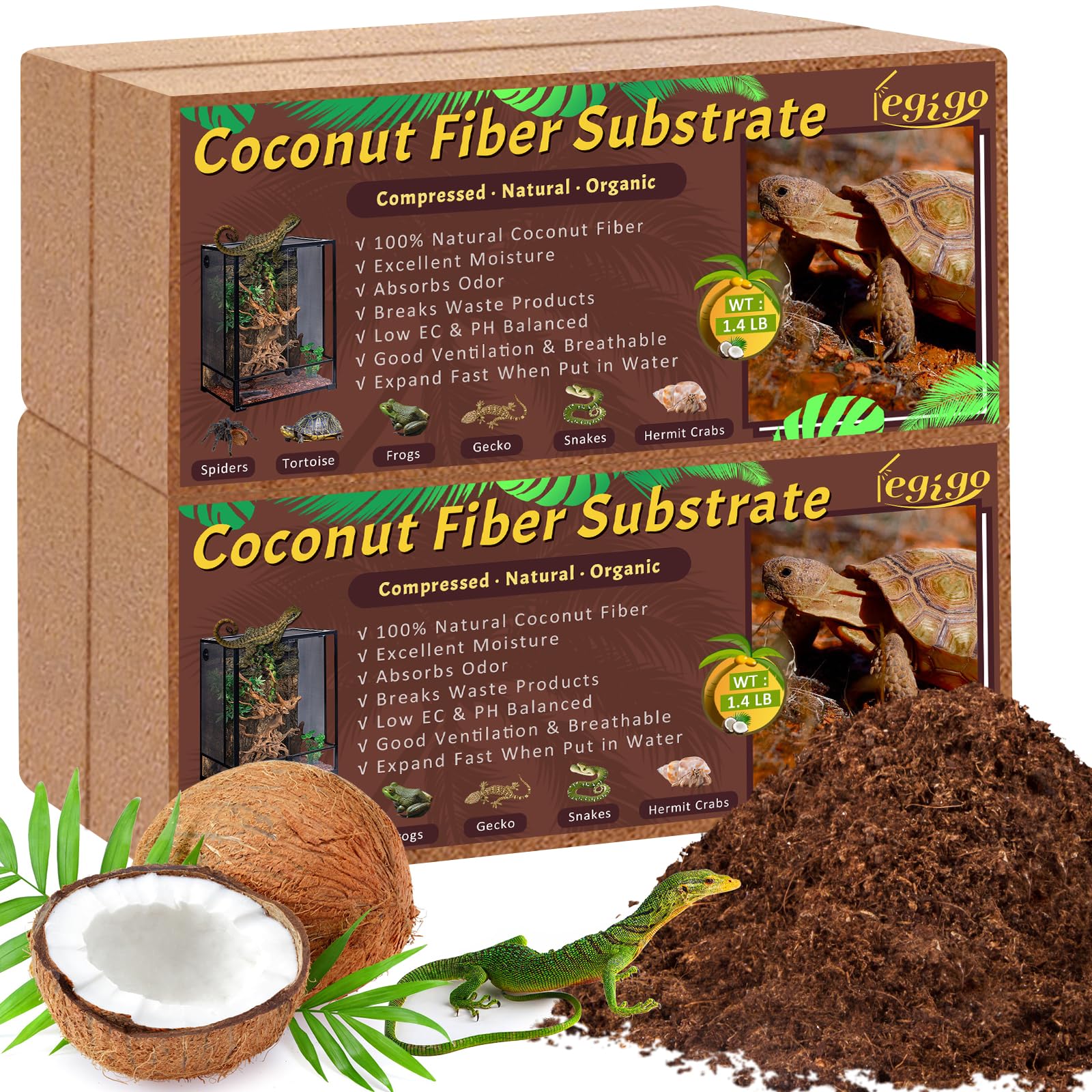
If you’re housing multiple snakes or doing a deep substrate change on a 4x2x2 PVC enclosure, the Legigo 4-pack is the most economical option on this list. Each 1.4-pound brick expands into roughly 8 liters of loose coconut fiber when soaked, giving you a total of about 32 liters of usable bedding. That’s enough to fill a 40-gallon tank with a 3-inch layer for several months.
The fiber texture is finer than chip substrates — closer to soil — which means it compacts nicely under the snake’s weight and retains moisture exceptionally well. Owners in dry climates (sub-30% ambient humidity) frequently pair this with a humid hide to hit 60% without daily misting. The fiber also naturally absorbs and breaks down urates, reducing ammonia smell.
The downside is the prep work. Each brick needs to be soaked in a bucket of warm water for 20-30 minutes and then fluffed by hand to break up clumps. If you don’t squeeze out excess water thoroughly, the bedding becomes swampy and can promote scale rot. The fine texture also means more dust than chip substrates, though it’s still far less than soil or sand.
Why we love it
- 32 liters of bedding for the price of one premium bag
- Excellent moisture retention in low-humidity rooms
- Odor-absorbing fiber reduces urine smell
Good to know
- Requires soaking and fluffing — not instant use
- Can become waterlogged if not squeezed properly
4. Zilla Reptile Terrarium Bedding Substrate Snake and Lizard Litter

Zilla’s aspen litter is the industry standard for colubrids and other arid-adapted snakes, but for ball pythons it’s a conditional choice. The heat-treated aspen chips are highly absorbent and make spot cleaning extremely easy — you can pick out a soiled patch with tweezers without disturbing the rest of the bedding. The 24-quart bag is the largest volume in this guide, making it suitable for big enclosures.
Where aspen falls short for ball pythons is humidity retention. In a glass tank with a screen top, aspen bedding drops to 35-40% humidity within three hours of misting, forcing keepers to re-mist multiple times daily. The shavings also contain fine dust particles that become airborne when the snake burrows, which can irritate the respiratory system over weeks of continuous exposure.
Use this litter if you live in a naturally humid climate (65%+ ambient) or if you’re running a fully sealed PVC enclosure with a fogger system. Otherwise, the constant humidity battle makes it a poor primary choice for ball pythons compared to coconut-based options.
Why we love it
- Large 24-quart bag for big enclosures
- Spot cleaning is fast and precise
- Heat-treated to remove aromatic oils
Good to know
- Humidity drops rapidly — not ideal for ball pythons
- Fine dust can irritate snake respiratory tracts
5. Zoo Med Hermit Soil Coconut Fiber Brick 3 Pack

Zoo Med’s coconut fiber bricks are a solid entry-level option, though they’re technically labeled for hermit crabs. Each 600g brick expands to 7-8 liters, and the 3-pack gives you roughly 21-24 liters of total substrate. The fiber is identical to what’s sold in reptile-specific lines — organic, compostable, and free of chemical additives — so there’s no safety concern for ball python use.
The fiber texture is very fine, similar to Legigo, which makes it excellent for humidity locking but produces more dust during fluffing than pre-expanded chip substrates. The material holds moisture well, and owners report being able to maintain 55-60% humidity with two mistings per day in a standard glass terrarium. The organic composition also means you can safely compost it after use, which is a nice bonus for eco-conscious keepers.
The main drawback is the volume-to-price ratio relative to Legigo’s 4-pack. You get about 25% less total bedding for roughly the same price, and the bricks require the same soak-and-fluff prep. The 600g bricks are also slightly smaller than standard reptile fiber bricks, so you’ll need all three to achieve a 3-inch depth in a 40-gallon tank.
Why we love it
- 100% organic and compostable material
- Fiber holds moisture longer than chip substrates
- Safe for all reptile species and bioactive setups
Good to know
- Less volume per dollar than other brick options
- Requires soaking and drying before use
FAQ
How deep should ball python bedding be?
Can I mix aspen and coconut bedding?
How do I prevent mold in humid bedding?
Is cypress mulch safe for ball pythons?
Do I need a bioactive substrate for a ball python?
Final Thoughts: The Verdict
For most keepers, the bedding for a ball python winner is the RediChip Reptile Bedding because it delivers dust-free medium chips that lock in humidity without prep work. If you want a smaller particle size that packs tight for juvenile snakes, grab the BabiChip Coconut Chip. And for bulk value and maximum moisture retention, nothing beats the Legigo 4 Pack Compressed Fiber.