
Every bird enthusiast knows the frustration: a carpet of discarded sunflower hulls beneath the feeder, unwanted sprouts pushing through the lawn, and bags of seed where half the weight is inedible shell. No waste bird seed eliminates this entirely by using shelled kernels, hearts, and chips that birds consume completely — leaving your patio or garden spotless and free from invasive seedlings.
I’m Mo Mahin — the founder and writer behind Furric. My approach to this category involves comparing the nutritional density, species attractiveness, and actual inedible content ratios across dozens of blends, then cross-referencing those specs against thousands of verified owner experiences.
After sorting through the leading formulations, I’ve assembled a tight list of the very best options to help you find the ideal no waste bird seed for a cleaner backyard and happier birds.
How To Choose The Best No Waste Bird Seed
The core promise of a no-waste blend is that every piece in the bag is edible — no shells, no fillers, no seeds that birds will discard. But formulations vary significantly in protein content, fat ratios, and which species they attract. Understanding these trade-offs makes the difference between a feeder that empties quickly and one that leaves a mess.
Ingredient Core: What Actually Makes It Waste-Free
Look for blends where the primary ingredients are sunflower hearts (the kernel removed from the shell), sunflower chips (broken kernel pieces), nyjer seed, peanut pieces, or suet nuggets. Avoid any mix that lists whole sunflower seeds — those hulls are the very waste you are trying to eliminate. A true no-waste formulation should have a 100 percent edibility rate.
Species Targeting and Protein Density
Sunflower hearts attract the widest variety of songbirds — cardinals, finches, chickadees, nuthatches, and woodpeckers all feed on them readily. Nyjer-based finch blends are more specialized, drawing goldfinches and siskins while being less interesting to larger birds. Higher protein content (14–18 percent) supports breeding and migration, while higher fat content (40 percent plus) provides critical winter energy.
Bag Size and Storage Considerations
No-waste seed is more expensive per pound than traditional seed because the shell has been mechanically removed. A 10-pound bag is a practical starting point for a single tube feeder. The higher oil content in shelled kernels means these seeds can go rancid faster in heat — resealable bags and cool, dry storage are non-negotiable for maintaining freshness.
Quick Comparison
On smaller screens, swipe sideways to see the full table.
| Model | Category | Best For | Key Spec | Amazon |
|---|---|---|---|---|
| Audubon Park Waste Free Wild Bird Seed | Premium Blend | All-around clean feeding for patios | 12 lb bag, sunflower hearts + peanut pieces | Amazon |
| CountryMax Sunflower Chips Shelled | Pure Sunflower Chips | Maximum species variety | 10 lb bag, 100% shelled sunflower chips | Amazon |
| Happy Wings Finch Blend | Specialty Finch Mix | Colorful finch and siskin attraction | 5 lb bag, sunflower hearts + nyjer seeds | Amazon |
| Kaytee Seed & Suet No Mess Blend | Blended Suet & Seed | Woodpecker and bluebird interest | 10 lb bag, seed + blueberry suet nuggets | Amazon |
| Happy Wings Black Oil Sunflower Seeds | Budget Shelled Sunflower | Entry-level no-waste feeding | 5 lb bag, shelled sunflower seeds | Amazon |
In‑Depth Reviews
1. Audubon Park Waste Free Wild Bird Seed
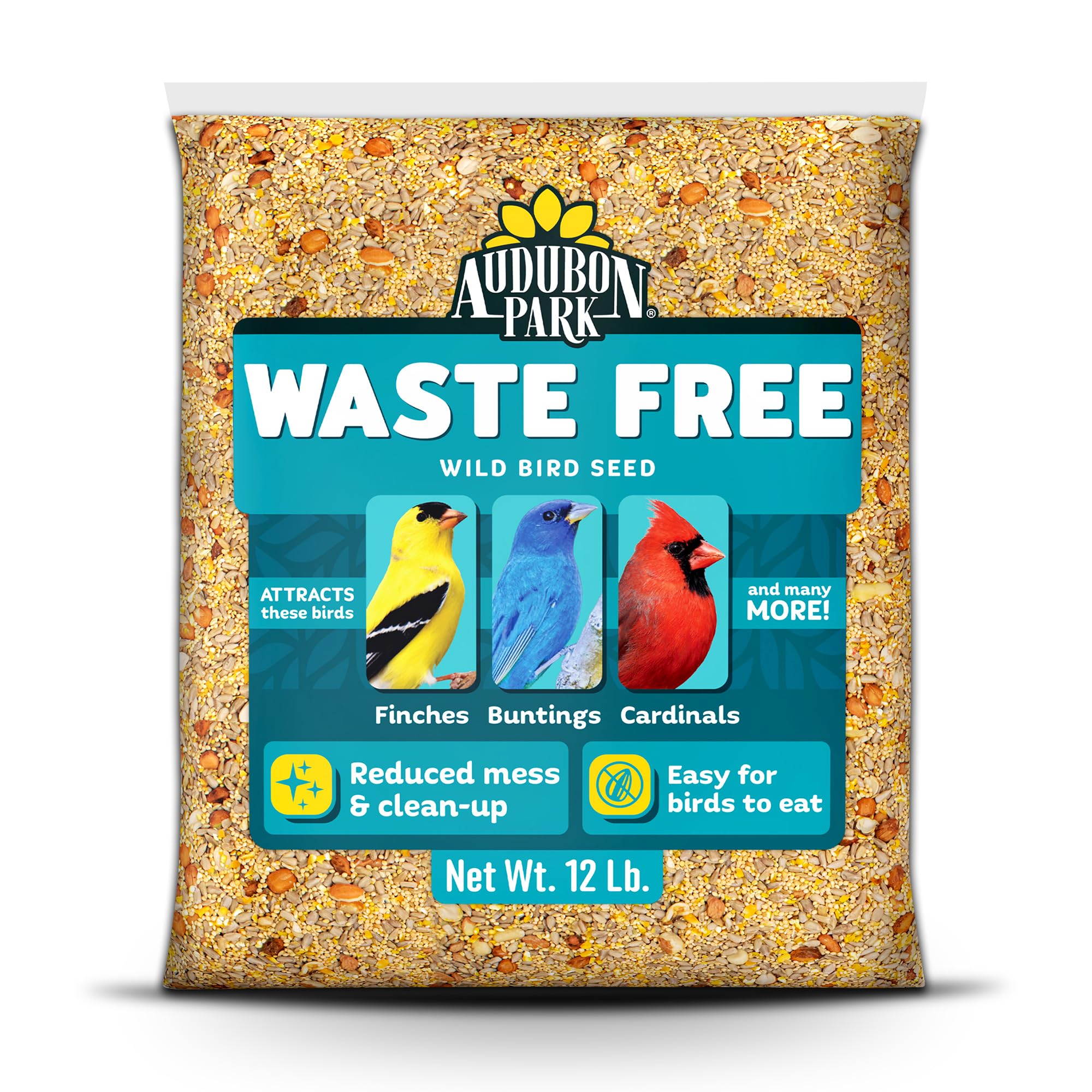
Audubon Park’s 12-pound waste-free formula uses sunflower hearts and peanut pieces exclusively — no shells, no hulls, nothing a bird would leave behind. This combination delivers a high-fat, high-protein meal that appeals to finches, cardinals, chickadees, thrushes, and wrens. The 12-pound bag size makes it a strong value for households with a single tube feeder or a medium tray setup.
The shell-free design means the seed flows smoothly through most feeder types, including tube, tray, hopper, and platform styles. Owners consistently report virtually no debris under the feeder after weeks of use, which is the entire point of switching to a no-waste blend. The peanut pieces add variety that larger species like blue jays find hard to resist.
Because this is a raw seed blend without flavor additives, it stays fresh longer than suet-infused options when stored properly. The bag is not resealable, so transferring to an airtight container is recommended for humid climates. For anyone wanting one clean, effective blend that covers the most common feeder birds, this is the strongest all-around pick.
Why we love it
- Complete shell-free design — zero mess on the ground
- 12-pound bag offers excellent longevity for the price tier
- Attracts a wide range of songbirds including thrushes and buntings
Good to know
- Bag is not resealable; needs transfer to a storage container
- Peanut pieces may attract squirrels more than pure sunflower blends
2. CountryMax Sunflower Chips Shelled No Waste Bird Seed
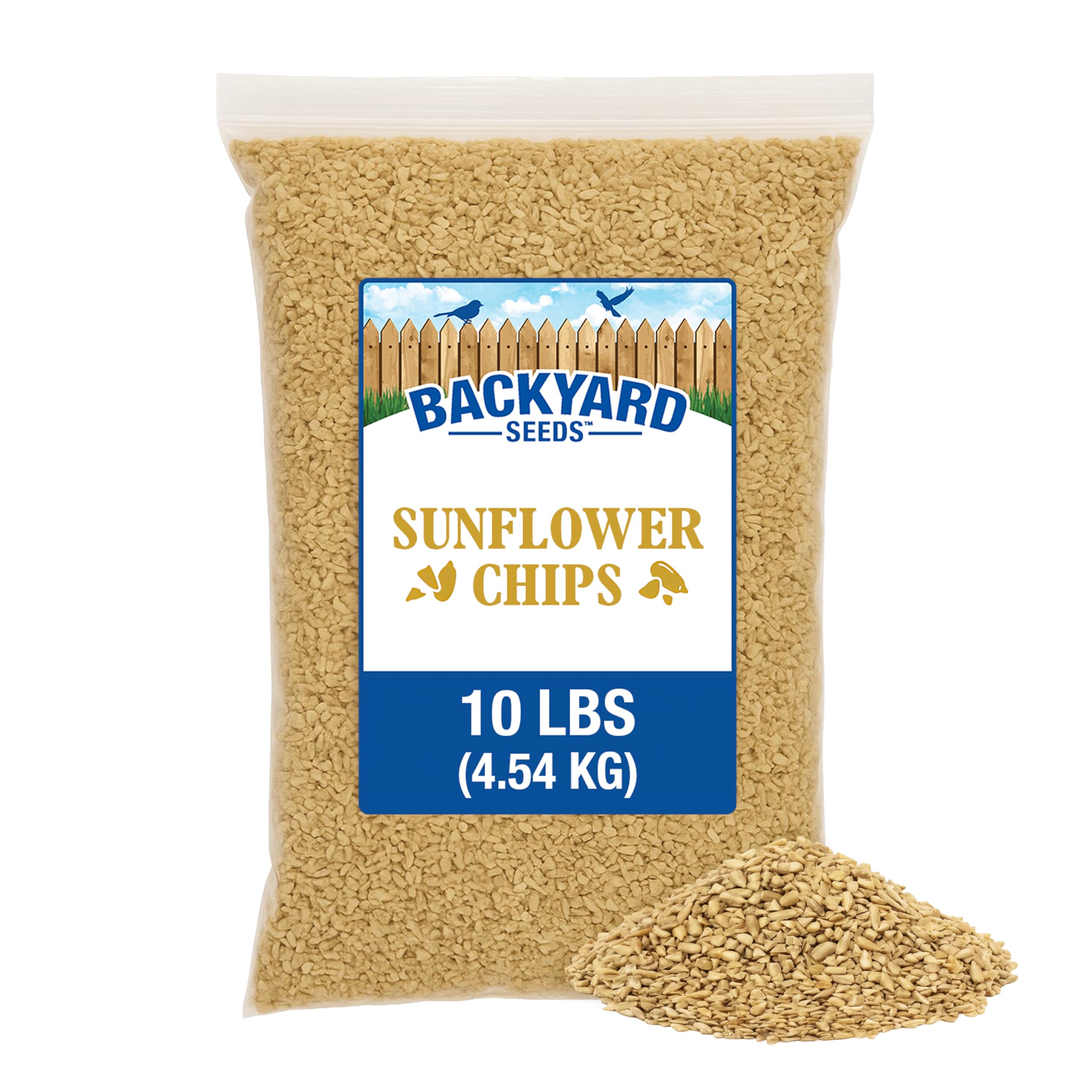
CountryMax takes the purest possible approach: nothing but shelled sunflower chips in a 10-pound bag. There are no fillers, no blends, no added flavors — just the kernel of the sunflower broken into small, bite-sized chips that every seed-eating bird can consume entirely. This simplicity makes it a favorite for birders who want maximum species attraction without complexity.
Because sunflower chips are mechanically broken during processing, small birds like goldfinches and siskins can eat them easily, while larger birds like cardinals and woodpeckers also feed heavily. The 10-pound bag uses a resealable closure, which is a practical advantage for maintaining freshness over multiple weeks of use. The protein and fat content remain high since the seed coat has been removed.
One trade-off: pure sunflower chips contain no added variety like nyjer or peanuts, so the blend targets sunflower-loving species exclusively. But for those species, the feed conversion is nearly 100 percent — nothing goes to waste. Sourced and processed in the USA, this is the most straightforward no-waste option available for the volume.
Why we love it
- Every piece is 100 percent edible — true zero waste
- Resealable bag keeps chips fresh during extended use
- Attracts the widest variety of songbirds
Good to know
- No ingredient variety; pure sunflower only
- High oil content means faster spoilage in heat without resealing
3. Happy Wings Finch Blend Bird Food
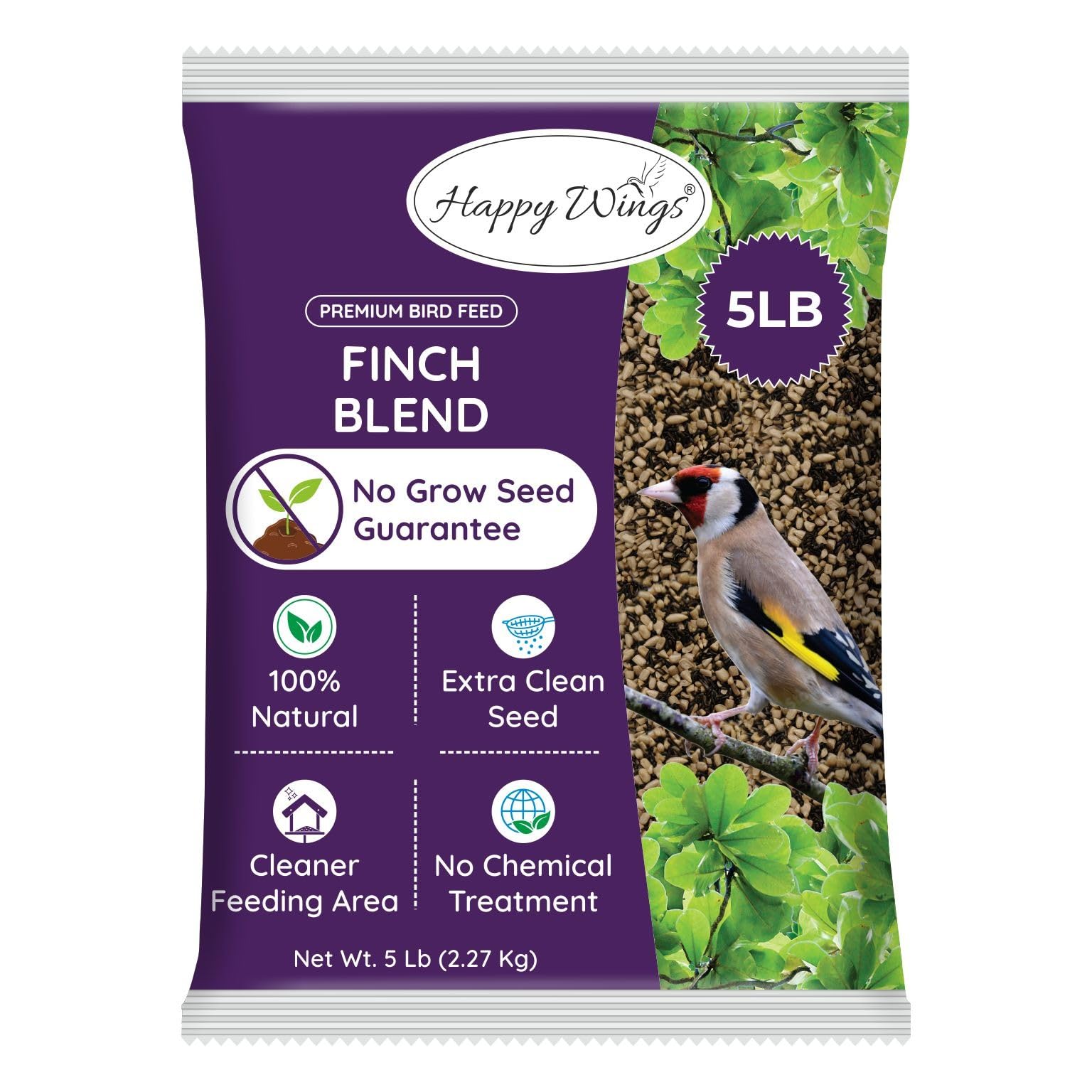
Happy Wings has formulated this 5-pound blend specifically for finch enthusiasts. The mix combines sunflower hearts with nyjer seed (often called thistle seed), creating a high-oil, high-protein combination that goldfinches, house finches, purple finches, and siskins find irresistible. Both ingredients are 100 percent edible — no hulls, no waste, no germination potential at all.
The no-grow claim is particularly relevant for this blend because nyjer seed is naturally non-germinating when heat-treated, and the sunflower hearts lack the protective shell needed to sprout. This means you can position the feeder directly over a deck, patio, or manicured lawn without worrying about unwanted seedlings. The blend is processed in USDA and BRC-GS approved facilities with verified quality controls.
At 5 pounds, this is a lighter bag compared to other options, which makes sense for finch-only setups where consumption is lower than a general songbird feeder. The Non-GMO claim and the specific finch-targeting formulation justify the slightly higher per-pound cost. Owners report that finches clean out every seed in this blend, confirming the waste-free promise.
Why we love it
- Specialized blend that finches and siskins prefer over general mixes
- Both ingredients are non-germinating — safe for lawns and patios
- Processed in certified facilities with verified quality standards
Good to know
- 5-pound bag is small for multi-feeder setups
- Finch-specific blend may not attract cardinals or larger birds
4. Kaytee Seed & Suet No Mess Blend Blueberry Flavor

Kaytee takes a different angle by combining traditional seed with blueberry-flavored suet nuggets. The result is a no-mess blend where every component — seed and suet — is fully edible. The suet nuggets add a concentrated fat source that attracts woodpeckers, nuthatches, and bluebirds more effectively than seed alone. According to Kaytee’s data, this formulation attracts three times more woodpeckers than black oil sunflower seed alone.
The 10-pound bag works well in tube, hopper, and platform feeders, and the blueberry flavoring appears to be a genuine attractant rather than a gimmick. Owners consistently note that the suet nuggets stay intact enough to resist melting in moderate heat but soften easily for birds to consume. The seed-to-suet ratio is balanced so that neither component dominates the other.
One practical consideration: the blueberry flavor may draw more attention from squirrels and raccoons than unflavored seed. Additionally, suet-based blends have a shorter shelf life in warm weather compared to pure seed blends. For birders targeting woodpeckers and wanting the energy boost of suet without the mess of traditional suet cakes, this is the most efficient format available.
Why we love it
- Suet nuggets triple woodpecker visits versus sunflower alone
- Every piece is edible — seed and suet consumed completely
- Versatile across tube, hopper, and platform feeders
Good to know
- Blueberry flavor may increase squirrel and raccoon interest
- Suet component degrades faster in warm weather than pure seed blends
5. Happy Wings Black Oil Sunflower Seeds
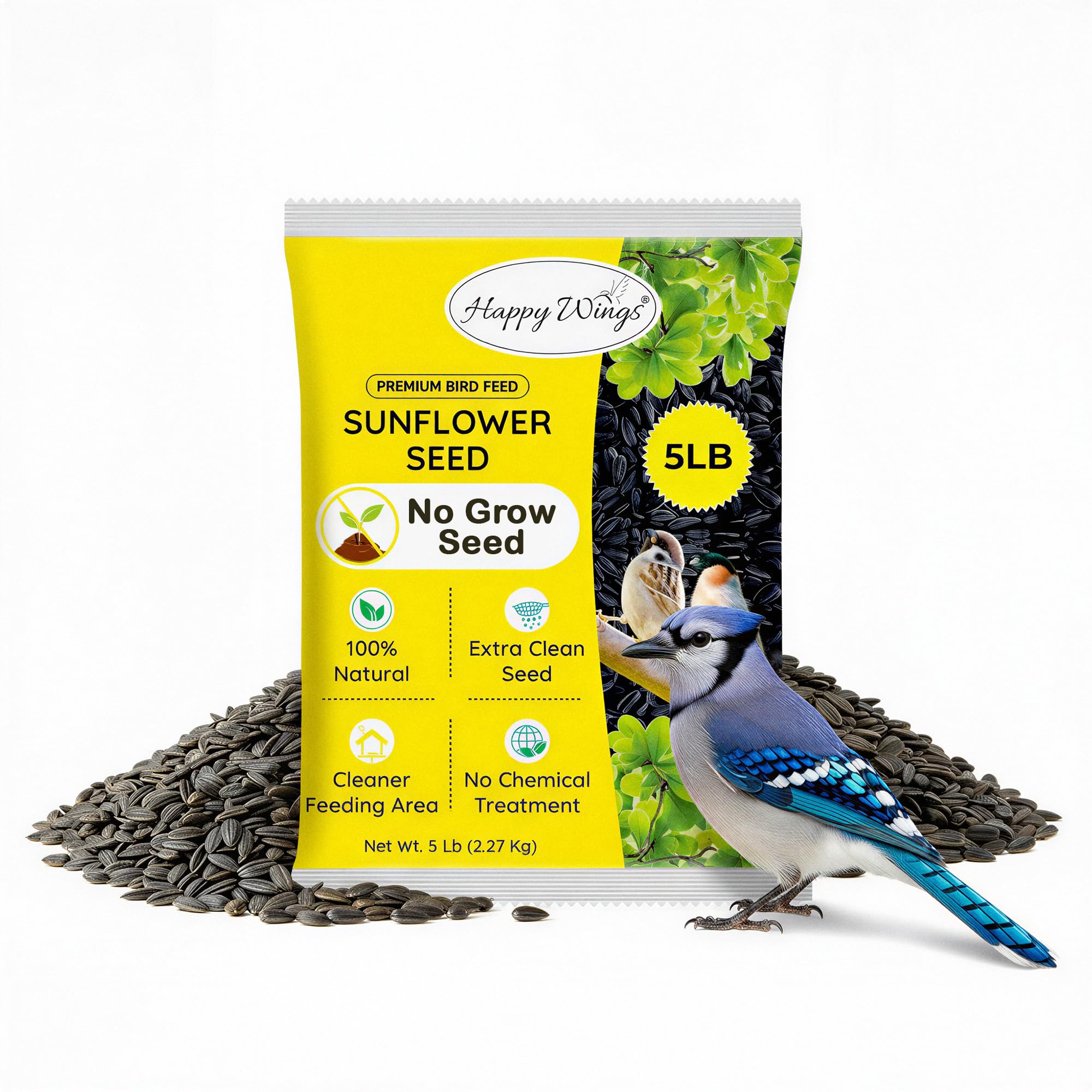
Happy Wings’ shelled black oil sunflower seeds offer the most accessible entry point into no-waste bird feeding. At 5 pounds, the bag is compact and manageable, and the formulation consists entirely of shelled sunflower seeds — no husks, no hulls, no filler grains. This simplicity means cardinals, finches, sparrows, and chickadees can eat every seed without leaving any trace on the ground.
The no-grow designation is accurate because without the protective shell, sunflower seeds cannot germinate. This makes the blend suitable for feeding directly over patios, decks, or garden beds where sprouting is a concern. The seeds are processed in USDA and BRC-GS approved facilities, which matters for those who prioritize food safety standards in their bird feed.
The main limitation is the bag size: 5 pounds disappears quickly if you have multiple feeders or a large bird population. However, for a single feeder or someone new to no-waste seed, this is a low-commitment way to test whether the switch works for your birds. The per-pound cost is competitive among shelled sunflower offerings.
Why we love it
- 100 percent shelled sunflower — nothing inedible in the bag
- Non-germinating seeds are safe for lawn and patio placement
- Certified processing facilities ensure consistent quality
Good to know
- 5-pound bag is small; refills needed more frequently
- Only sunflower — no variety for species that prefer nyjer or suet
FAQ
Does no waste bird seed really leave zero mess under the feeder?
Can I mix no waste seed with regular bird seed in the same feeder?
How long does an opened bag of shelled sunflower seed stay fresh?
Does no waste bird seed attract the same species as whole sunflower seed?
Why is no waste bird seed more expensive per pound than regular seed?
Final Thoughts: The Verdict
For most gardeners, the no waste bird seed winner is the Audubon Park Waste Free Wild Bird Seed because it combines shell-free sunflower hearts with peanut pieces in a generous 12-pound bag, attracting the broadest range of songbirds while leaving your feeding area clean. If you want pure sunflower simplicity with resealable storage, grab the CountryMax Sunflower Chips. And for targeting specific finch species with a no-grow guarantee, nothing beats the Happy Wings Finch Blend.