
Roosters are the sentries of the flock, and their dietary needs differ from laying hens. While a layer ration supports egg production, your rooster requires a balanced profile focused on muscle maintenance, feather quality, and sustainable energy—without the excess calcium that can harm his kidneys over time.
I’m Mo Mahin — the founder and writer behind Furric. I’ve spent years studying poultry nutrition data, comparing feed formulations, and analyzing aggregated owner feedback to isolate what truly matters for a rooster’s long-term health.
Below, I break down five standout feeds and supplements that deliver the right protein-to-calcium ratio. This is the definitive guide to finding the very best food for roosters on the market right now.
How To Choose The Best Food For Roosters
Selecting the right feed for your rooster means looking past the marketing on the bag. The biggest mistake owners make is feeding a standard layer crumble, which is loaded with calcium meant for eggshell production. Roosters don’t need that level of calcium, and excess intake can lead to kidney damage and urinary tract blockages. Here are the critical factors to weigh.
Protein Content and Amino Acid Profile
Roosters need a crude protein level between 14% and 20% depending on the season and activity level. During molt or cold winter months, push toward the higher end to support feather regrowth and body heat maintenance. A feed with a strong amino acid profile—particularly methionine and lysine—directly supports muscle tone, comb health, and feather structure.
Calcium Levels Must Stay Low
Layer feed typically contains 3% to 4.5% calcium. For roosters, anything above 1.5% is excessive unless they are being fed as a treat alongside a balanced diet. Look for all-flock or grower formulations, or supplement a low-calcium base with high-protein treats like black soldier fly larvae or mealworms.
Whole Grains vs. Processed Pellets
Whole grain blends encourage natural scratching and foraging behavior, which keeps roosters mentally stimulated and physically active. Processed pellets offer convenience and uniform nutrition, but they don’t provide the same enrichment. Many keepers prefer a mix: a base of whole grains with a top-dressing of protein-rich larvae or mealworms.
Quick Comparison
On smaller screens, swipe sideways to see the full table.
| Model | Category | Best For | Key Spec | Amazon |
|---|---|---|---|---|
| Hatortempt 10lb BSFL | Larvae | Protein & calcium boost | 40% Protein / 4% Calcium | Amazon |
| Classic Flock 10lb BSFL | Larvae | Natural treat for all ages | High Protein / Sustainable | Amazon |
| Wholesome Harvest Layer Blend | Complete Feed | Mixed flock with hens | 16% Protein / With Oyster Shell | Amazon |
| Scratch & More 5-Grain Mix | Grain Mix | Foraging enrichment | 5 Grains + Mealworms | Amazon |
| FCI GRUBS Dried Mealworms | Treat | High-protein supplement | 2 lbs / Non-GMO | Amazon |
In‑Depth Reviews
1. Hatortempt 10lb Dried Black Soldier Fly Larvae
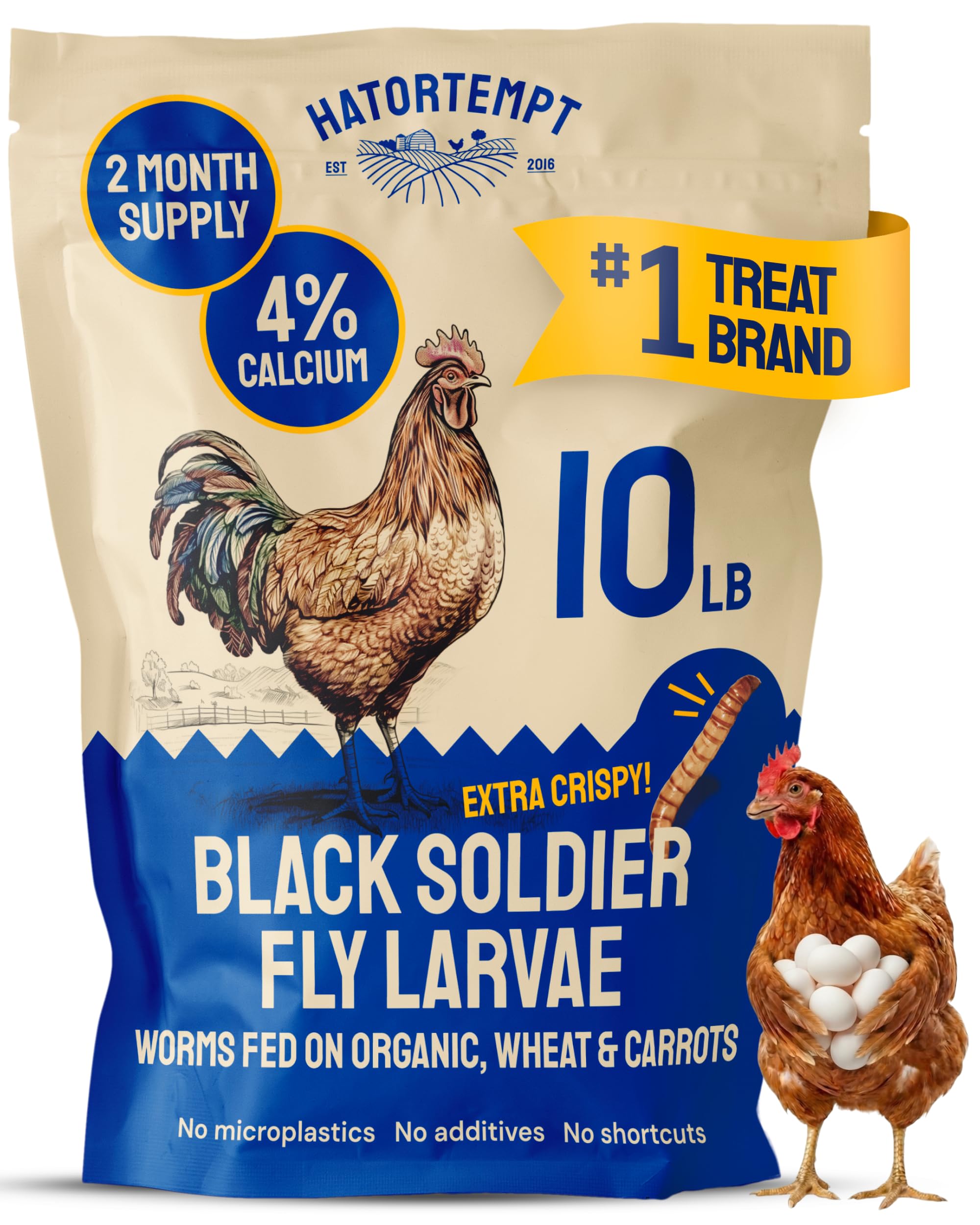
Hatortempt’s black soldier fly larvae deliver a protein density that rivals any feed additive on the market. At 40% crude protein and 4% calcium, this supplement strikes the ideal macro balance for a rooster needing muscle support and strong feather development without the excessive calcium load found in layer rations. The larvae are double-dried for extra crispness, which encourages foraging behavior as roosters scratch and peck through their bedding.
The 10-pound bag size is generous for multi-bird flocks, and the hand-inspected quality control means you get whole grubs rather than dusty fragments. Owners report noticeably shinier plumage and more vigorous crowing within two weeks of consistent feeding. Because the calcium-to-protein ratio skews toward skeletal health rather than egg production, this is a safer alternative for roosters compared to oyster-shell-laced layer feeds.
One practical consideration: the larvae are small enough to work as a training treat for handling your rooster. The nutty aroma is highly attractive to poultry, so even picky eaters tend to accept them immediately. Use as 10% to 15% of the daily intake to keep the overall calcium level in check.
Why we love it
- Exceptional 40% protein content supports muscle and feather health
- 4% calcium is high enough for bones but not excessive as a treat
- Double-dried texture resists spoilage and encourages natural scratching
Good to know
- Should be used as a supplement, not a complete feed base
- Premium pricing per pound compared to grain-based feeds
2. Classic Flock 10lb Dried Black Soldier Fly Larvae
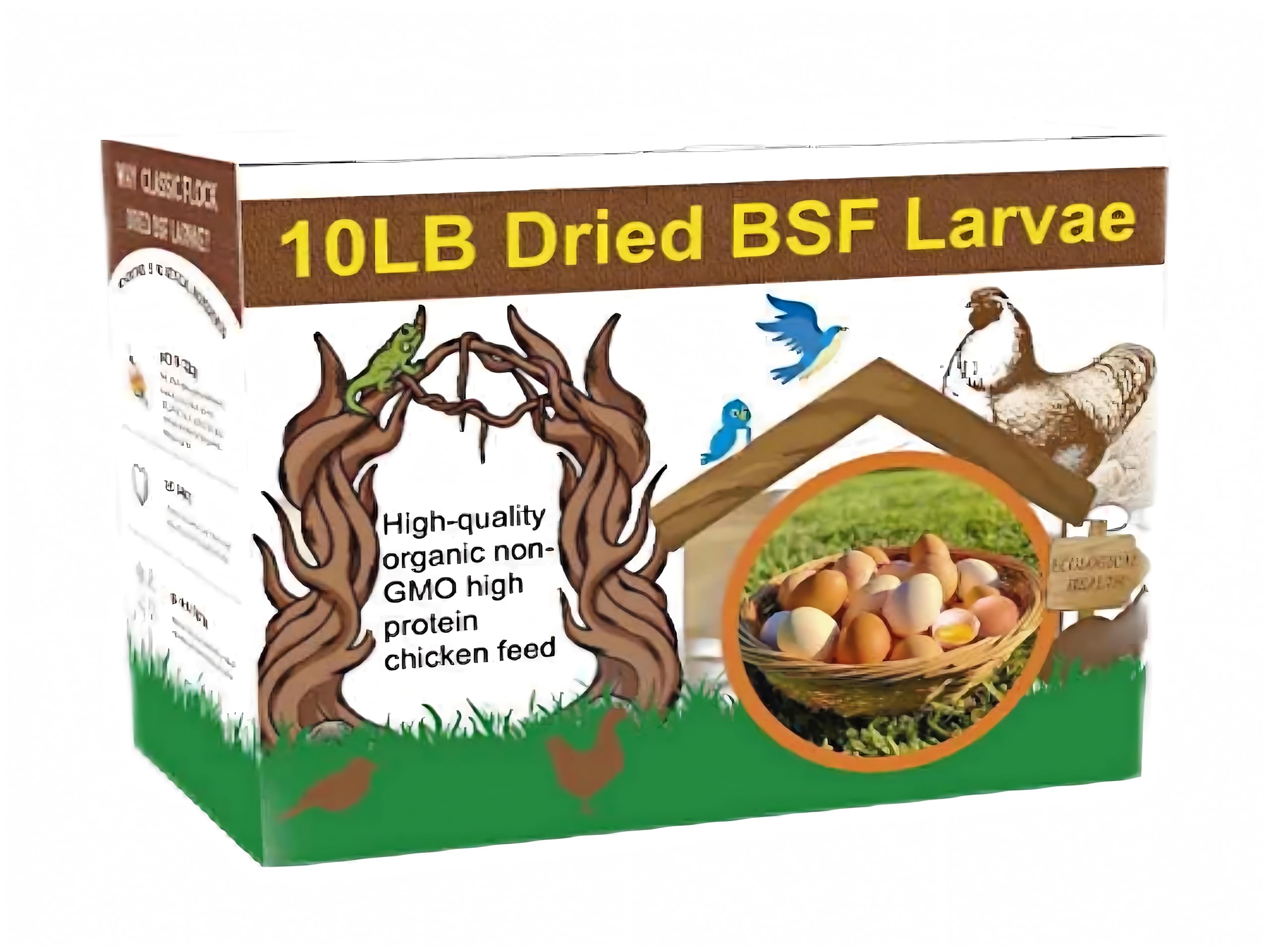
Classic Flock offers a 10-pound bag of dried black soldier fly larvae that stands out for its digestibility. The larvae are harvested at an optimal stage where the exoskeleton remains soft, making it easier for roosters to break down compared to harder-shelled mealworms. This is particularly beneficial for older roosters whose digestive efficiency may be declining.
The product is 100% natural and non-GMO, with no additives or preservatives. Owners consistently note that the larvae boost egg production in hens, but for roosters the primary benefit is sustained energy levels and a noticeable reduction in feather-pecking behavior. The high protein content supports a healthy molt cycle, helping roosters regrow feathers faster without the stress of nutritional gaps.
As with other BSFL products, this is a supplement rather than a complete feed. The bag features a resealable closure that preserves freshness. Because the calcium content is moderate, it can be fed more liberally than layer treats, but smart keepers still limit supplemental treats to 10% of the daily diet.
Why we love it
- Soft exoskeleton makes digestion easier for all ages
- Non-GMO with no fillers or preservatives
- Encourages natural foraging and reduces feather-pecking
Good to know
- Calcium content is not listed explicitly on the bag
- Some buyers prefer a larger quantity for bigger flocks
3. Wholesome Harvest Non-GMO Whole Grain Layer Blend 16%
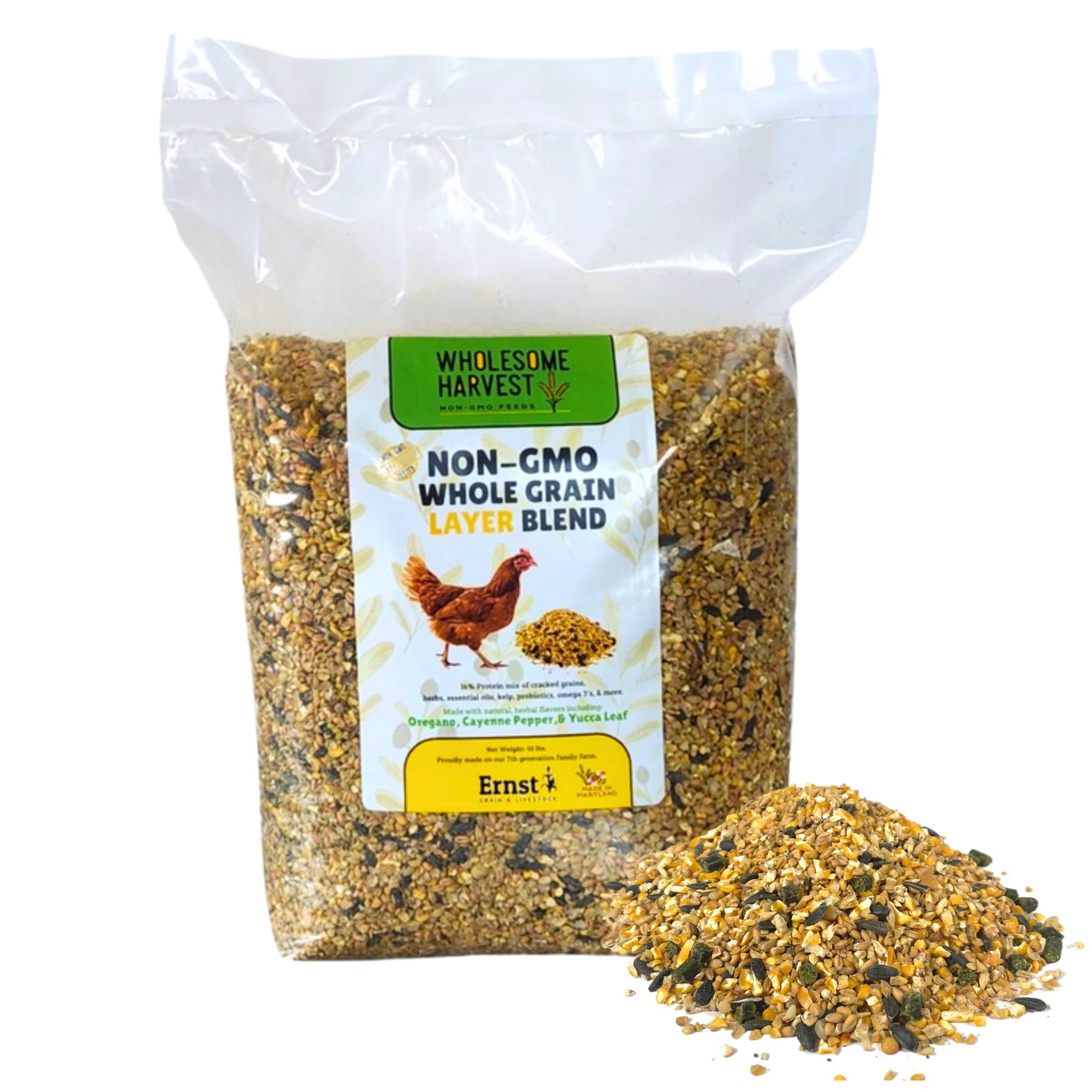
Wholesome Harvest’s layer blend is technically formulated for laying hens, but its 16% protein content and whole-grain base make it acceptable for roosters when managed carefully. The key is calcium management: the feed includes oyster shell for shell fortification, so roosters should not receive this as their sole ration. It works best as a component of a mixed feeding strategy where the rooster gets access to this feed alongside lower-calcium grains.
The blend features cracked corn, soybeans, wheat, and barley, plus flax oil for omega-3 fatty acids. Roosters benefit from the omega-3s for cardiovascular health and feather sheen. The probiotic inclusion supports digestive regularity, which is especially helpful during seasonal transitions when birds are stressed.
This is a solid option for keepers who run a mixed flock and want one bag that covers both hens and roosters. To offset the calcium load, feed the blend at 50% of the rooster’s daily intake and supplement the other half with whole oats, barley, or protein-rich treats like mealworms.
Why we love it
- Whole grain base encourages natural foraging behavior
- Omega-3 from flax oil supports feather and heart health
- Probiotic blend aids digestion during stress periods
Good to know
- Calcium from oyster shell is too high as a sole feed for roosters
- Designed as a laying hen feed, so it’s not tailored to rooster metabolism
4. Scratch & More Enriched 5-Grain Mix with Mealworms & Fish Oil
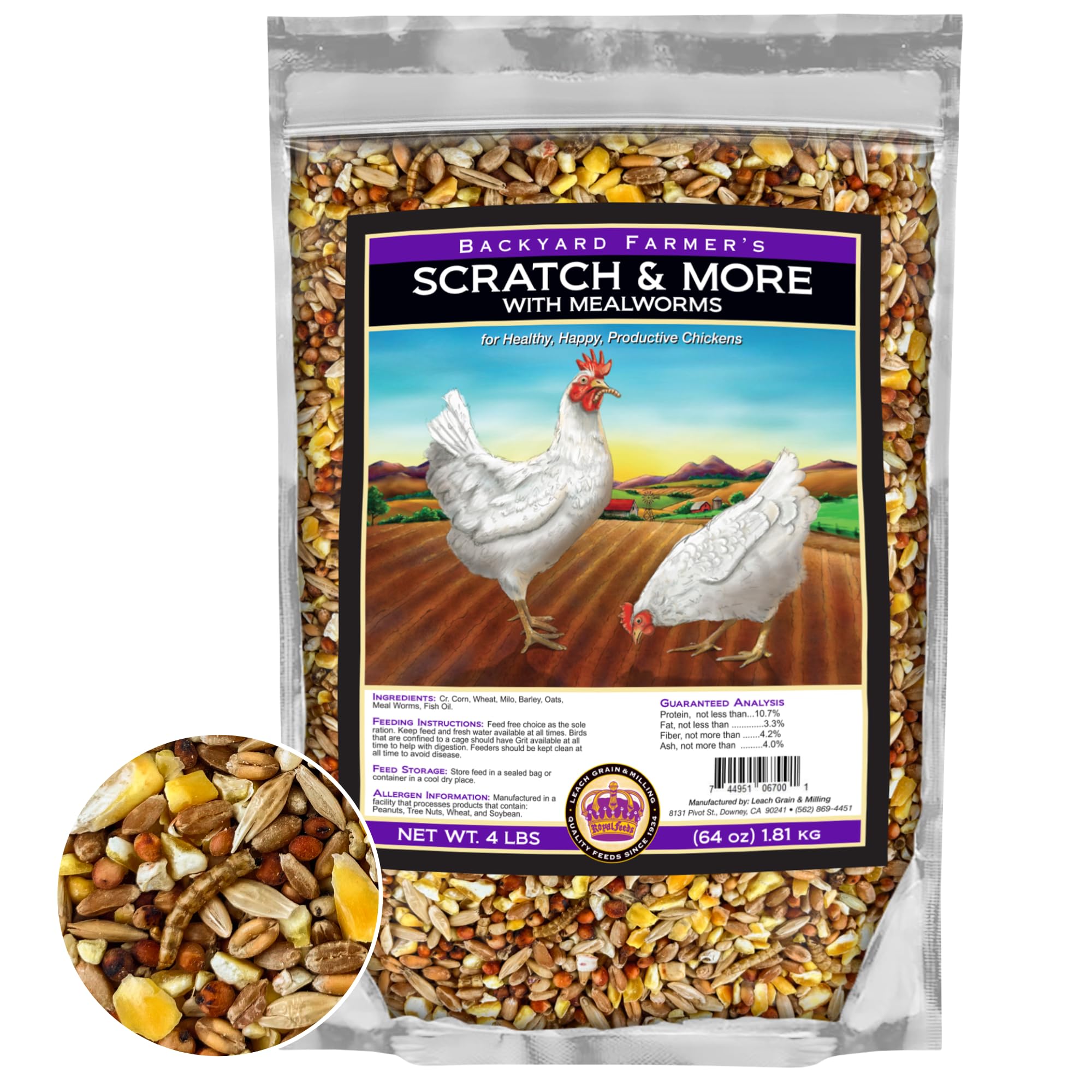
Scratch & More blends five grains—typically corn, wheat, barley, oats, and milo—with real mealworms and fish oil to create a scratch feed that doubles as an enrichment tool. For roosters, this mix is best used as a midday scatter treat that encourages scratching, pecking, and social foraging. The mealworm inclusion bumps the protein content above standard scratch grains, making it more nutritionally beneficial than plain cracked corn.
The fish oil adds omega-3 fatty acids, which contribute to feather condition and joint health—an underrated factor for roosters that spend hours on their feet patrolling the flock. The grain variety means roosters get a broader amino acid profile than from a single-grain scratch. Owners report that their roosters become more active and alert after switching to this mix as their daily scatter.
Because this is a scratch mix and not a complete feed, it should never exceed 20% of the daily intake. Use it to break up boredom in the run or as a reward during training sessions. The 4-pound bag is small, so larger flocks will need multiple bags per week if it becomes a staple treat.
Why we love it
- Five-grain variety provides diverse nutrients and foraging stimulation
- Fish oil supports feather quality and joint mobility
- Mealworms add a protein punch not found in standard scratch
Good to know
- Not a complete feed; must be supplemented with a balanced ration
- Small bag size requires frequent reordering for multiple birds
5. FCI GRUBS Dried Mealworms 2LB
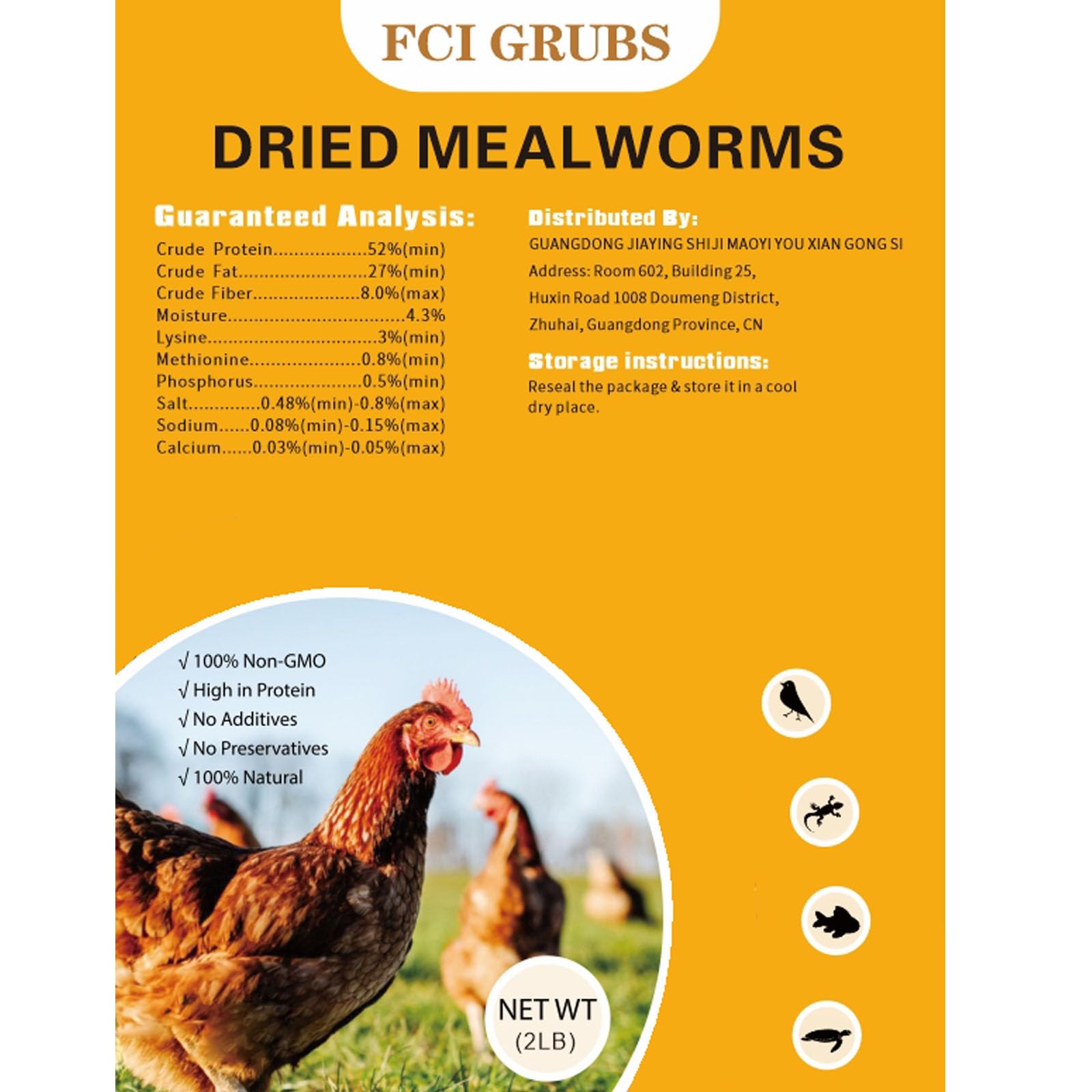
FCI GRUBS offers a 2-pound bag of dried mealworms that serves as a straightforward, no-frills protein supplement for roosters. The mealworms are all-natural, non-GMO, and free of additives or preservatives. With a crude protein content significantly higher than whole grains, these mealworms fill a critical gap when your rooster’s base feed is grain-heavy or lower in protein.
The resealable zipper bag is a practical touch that keeps the mealworms crispy and prevents moisture ingress. Owners commonly use these as a hand-fed treat to build trust with a new or wary rooster. The small size of the mealworms means they work as a scatter treat for foraging without creating competition-related aggression, since the birds can pick up individual worms easily.
Feeding guidelines suggest using as 5-10% of the total daily food intake, which is a conservative recommendation that helps prevent any calcium or fat imbalance. The 2-pound bag is a good trial size for keepers who are unsure whether their flock will accept dried mealworms. If your rooster is a picky eater, this is the lowest-risk entry point into supplementing with insect protein.
Why we love it
- Clean ingredient list with no additives or fillers
- Resealable bag maintains freshness between feedings
- Ideal for hand-feeding and trust-building with new roosters
Good to know
- 2-pound bag is small for larger flocks
- Should be limited to 10% of daily diet to avoid nutritional imbalance
FAQ
Can I feed my rooster the same layer feed as my hens?
How much protein does a rooster need daily?
Are black soldier fly larvae better than mealworms for roosters?
Can roosters eat scratch grains as their main feed?
Final Thoughts: The Verdict
For most keepers looking for the best food for roosters, the winner is the Hatortempt 10lb Dried Black Soldier Fly Larvae because it delivers a precise 40% protein and 4% calcium profile that supports muscle, feathers, and bone health without the kidney stress of layer feed. If you want a whole-grain base feed for a mixed flock, grab the Wholesome Harvest Layer Blend and dilute it properly. And for a budget-friendly, low-commitment protein supplement, nothing beats the FCI GRUBS Dried Mealworms for hand-feeding and trust-building.