
Engineered wood floors offer the warmth of real wood with enhanced stability, but their layered construction makes them uniquely sensitive to the wrong cleaning chemistry. A single pass with a harsh alkaline cleaner can etch the protective finish or cause the veneer to swell, forcing an expensive repair. Finding a formula that dissolves ground-in grime without stripping the polyurethane topcoat is the key to keeping these floors looking like the day they were installed.
I’m Mo Mahin — the founder and writer behind Furric. I spend my time diving into chemical formulations, reading material safety data sheets, and comparing how each cleaner interacts with aluminum oxide and urethane finishes common on modern engineered planks.
After analyzing dozens of pH levels, surfactant systems, and residue profiles, these are the only contenders I trust when you search for the best floor cleaner for engineered wood floors.
How To Choose The Best Floor Cleaner For Engineered Wood Floors
Engineered wood is a composite: a real wood veneer bonded to a plywood or HDF core and sealed with a factory finish. That layered construction narrows the acceptable cleaning chemistry dramatically. A cleaner safe for solid hardwood can still damage engineered flooring if its pH strays too far from neutral or if it contains waxes that trap dirt against the sealed surface.
pH Neutrality Is Non-Negotiable
The factory finish on engineered wood—typically aluminum oxide or UV-cured urethane—is vulnerable to alkaline cleaners above pH 10 and acidic cleaners below pH 4. A pH-neutral formula (close to 7) lifts dirt without etching the finish or yellowing the wood veneer over repeated use. Every product in this review stays within the safe 6.5–8.5 range.
Residue Profile: Streak-Free vs. Build-Up
Many all-purpose floor cleaners leave a waxy or polymeric film that initially looks glossy but gradually attracts dust and creates a sticky layer that dulls the floor. The best engineered-wood cleaners evaporate clear and leave no trace. Look for formulations labeled “residue-free” or “fast-drying” to avoid the gradual haze that plagues cheaper alternatives.
USDA Biobased and Safer Choice Certifications
Certifications like the EPA Safer Choice or USDA Certified Biobased Product aren’t just marketing badges. They require third-party verification that the formula uses plant-derived surfactants, avoids known irritants like phthalates and ammonia, and breaks down safely in the environment. For engineered wood, these certified cleaners are also gentler on the finish because they rely on mild detergency rather than harsh solvents.
Quick Comparison
On smaller screens, swipe sideways to see the full table.
| Model | Category | Best For | Key Spec | Amazon |
|---|---|---|---|---|
| Weiman Hardwood Floor Cleaner (2-Pack) | Premium | Streak-free shine on high-traffic areas | EPA Safer Choice Certified | Amazon |
| Quick Shine Multi Surface Cleaner & Polish (2-Pack) | Mid-Range | All-in-one clean + polish routine | Plant-based with natural baking soda | Amazon |
| Parker & Bailey Wood Floor Cleaner Refill | Mid-Range | Odorless cleaning for sensitive households | Unscented, wax-free formula | Amazon |
| Bona Multi-Surface Floor Cleaner Refill | Mid-Range | Budget-friendly large refill for spray mops | 92% USDA biobased content | Amazon |
| Begley’s Hardwood Floor Cleaner Spray | Budget-Friendly | Entry-level streak-free mopping | Citrus scent, cruelty-free | Amazon |
In‑Depth Reviews
1. Weiman Hardwood Floor Cleaner for Finished Hardwood, Engineered Flooring, Vinyl & Laminate Surfaces – Streak-Free Shine, No Residue – 32 oz (2 PACK)
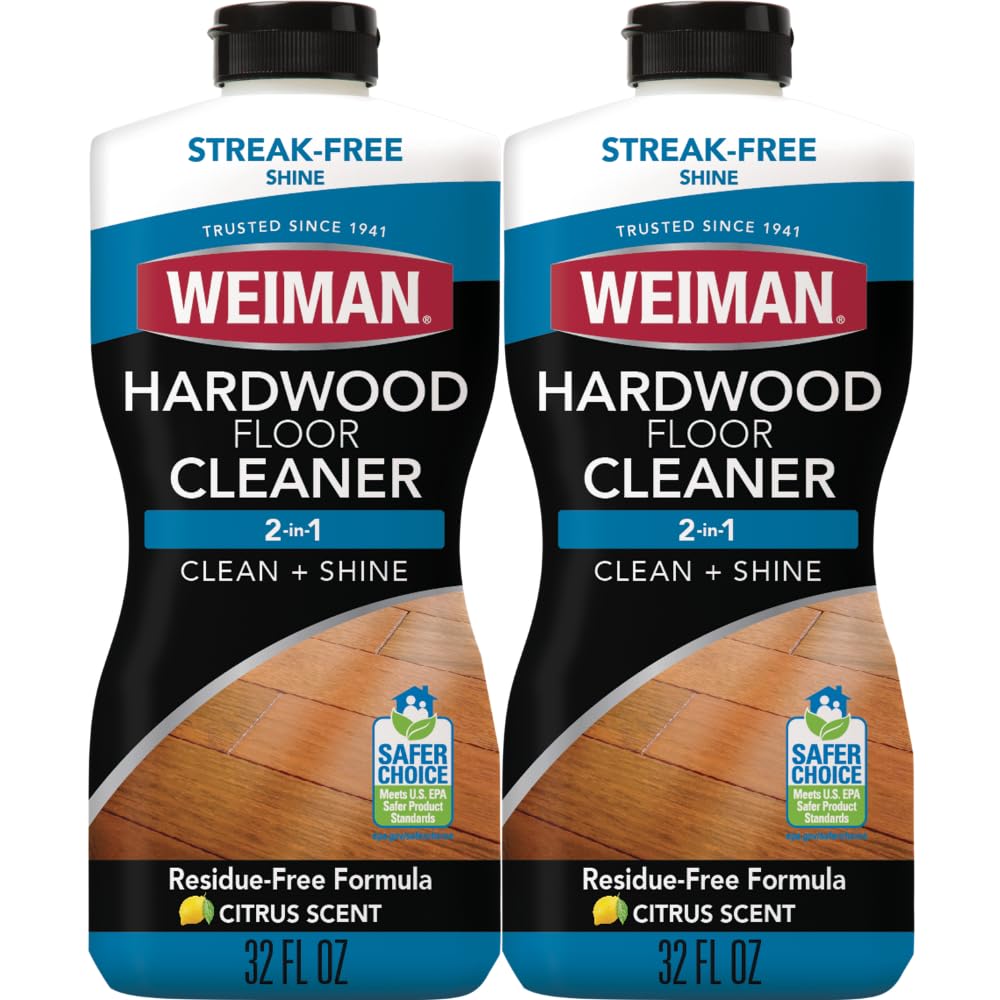
The Weiman 2-pack delivers exactly what engineered wood needs: a plant-based surfactant system that lifts tracked-in dirt without leaving that cloudy polymer film cheaper cleaners deposit. After the solution dries, the citrus scent fades completely, and the floor maintains its original luster without any tacky feel underfoot. The 32-ounce bottles fit comfortably in a refillable spray mop, making quick daily touch-ups feasible.
EPA Safer Choice certification confirms the formula skips ammonia, bleach, and phthalates — common irritants that can cloud an engineered wood’s urethane topcoat over time. I appreciate that Weiman specifically recommends pairing it with their High Traffic Floor Polish for deeper restoration, but even used alone, this cleaner handles grease smudges and scuff marks from shoes without aggressive scrubbing.
The chief downside is that the 2-pack doesn’t include a spray head, so you’ll either pour it into an existing bottle or buy a separate spray mop. For the price, it’s a premium option that justifies its cost through formulation rigor — particularly if your engineered floors see heavy foot traffic from kids or pets.
Why we love it
- Streak-free shine without waxy residue
- Plant-based, EPA Safer Choice certified
- Safe for finished hardwood, engineered, vinyl, and laminate
Good to know
- No spray nozzle included in the pack
- Premium tier — higher per-ounce cost than refills
2. Quick Shine Multi Surface Floor Cleaner & Floor Polish w/Clean Shine Technology 2-27oz Bottles
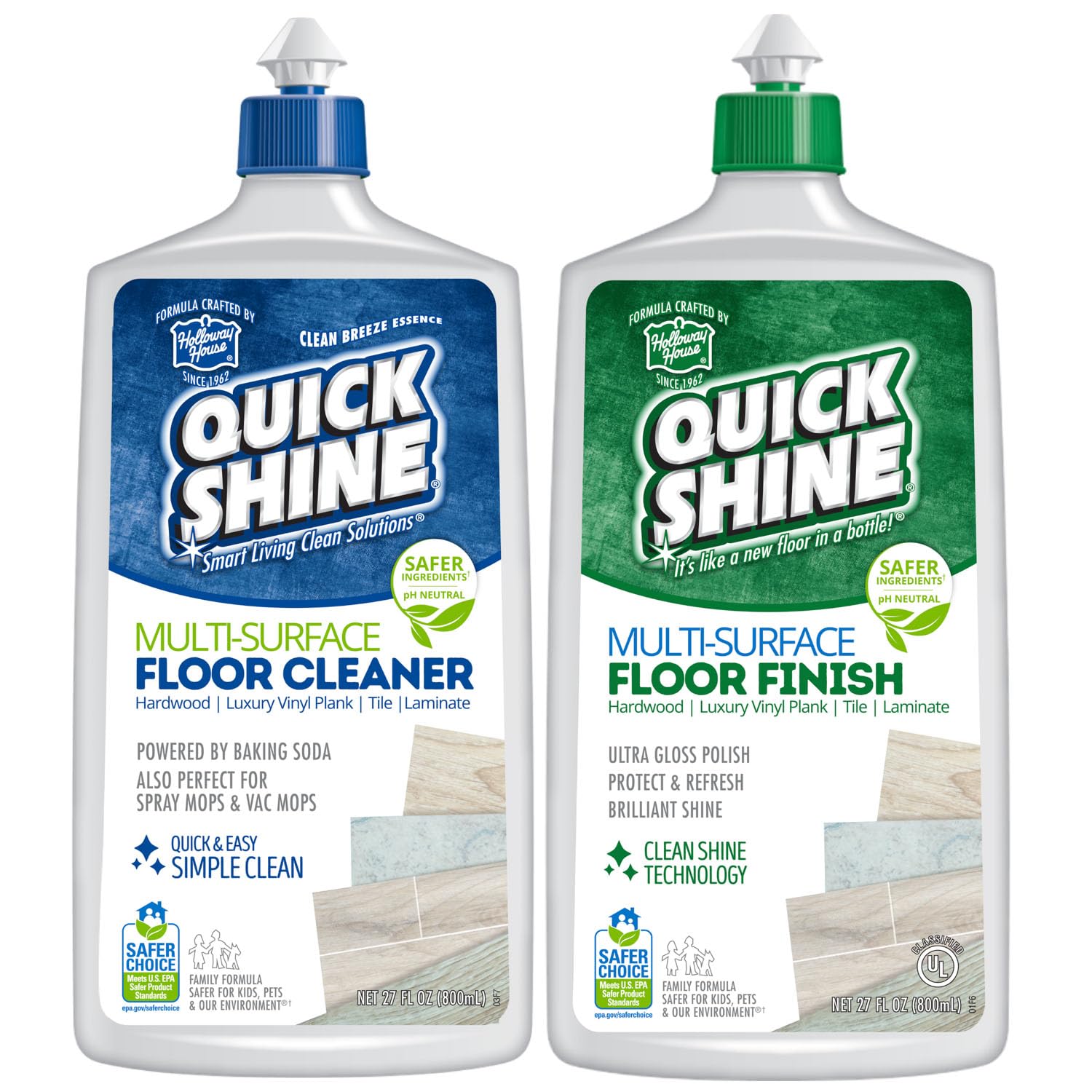
Quick Shine stands out because it splits the job into two distinct steps: the cleaner uses natural baking soda to dissolve grease and scuffs, and the polish applies a thin plant-based layer that fills micro-scratches on the finish. For engineered wood that has lost some initial gloss, this two-bottle system can restore a uniform sheen without resorting to harsh chemical strippers.
The cleaner formula is free of aluminum, ammonia, formaldehyde, and phthalates — exactly the kind of no-compromise ingredient list that protects the polyurethane layer on engineered veneers. I’ve found it lifts dried mud and kitchen traffic residue quickly with just a damp microfiber mop. The polish, however, requires the floor to be completely dry after cleaning, so budget about 20 minutes between steps.
The trade-off is that the polish step adds time and product consumption. If your engineered wood is relatively new and just needs maintenance cleaning, you can use only the cleaner and skip the polish. For floors showing light wear patterns, the polish provides visible rejuvenation that a single-step cleaner alone cannot match.
Why we love it
- Two-step system cleans and then restores gloss
- Plant-based with natural baking soda for scrubbing power
- EPA Safer Choice — safe for kids and pets
Good to know
- Polish adds an extra drying step to the routine
- 27-ounce bottles deliver fewer uses than gallon refills
3. Parker & Bailey Wood Floor Cleaner – Use on Hardwood, Laminated or Faux Finished Floors – 64oz

Parker & Bailey takes the opposite approach from scented cleaners: an unscented, wax-free, silicone-free formula that focuses purely on gentle detergency. The 64-ounce refill size is ideal for households that go through cleaner quickly, and the lack of fragrance makes it a solid choice for anyone sensitive to artificial lemon or mint smells. I’ve used it on engineered wood with a matte urethane finish, and it dried completely clear with zero ghosting.
The brand claims over 100 years of floor-care history, and the formula reflects that experience. It cuts through grease and dirt build-up without leaving residue that attracts new dust — a common complaint with cheaper cleaners that rely on polymeric shine agents. The unscented profile also means there’s no competing odor when you use a floor polish afterward.
Because it’s unscented, the cleaning experience feels more like plain water, which some users find underwhelming. It also lacks a built-in spray mechanism, so you’ll need a separate spray bottle or mop system. For purists who want a no-nonsense cleaner that won’t alter the floor’s natural appearance, Parker & Bailey is the quiet workhorse of the list.
Why we love it
- Unscented — ideal for fragrance-sensitive homes
- Wax-free, silicone-free, no residue build-up
- Generous 64-ounce refill at a mid-range price
Good to know
- No spray nozzle or mop included
- Lacks the fresh scent some users expect
4. Bona Multi-Surface Floor Cleaner Refill – 128 fl oz – Lemon Mint
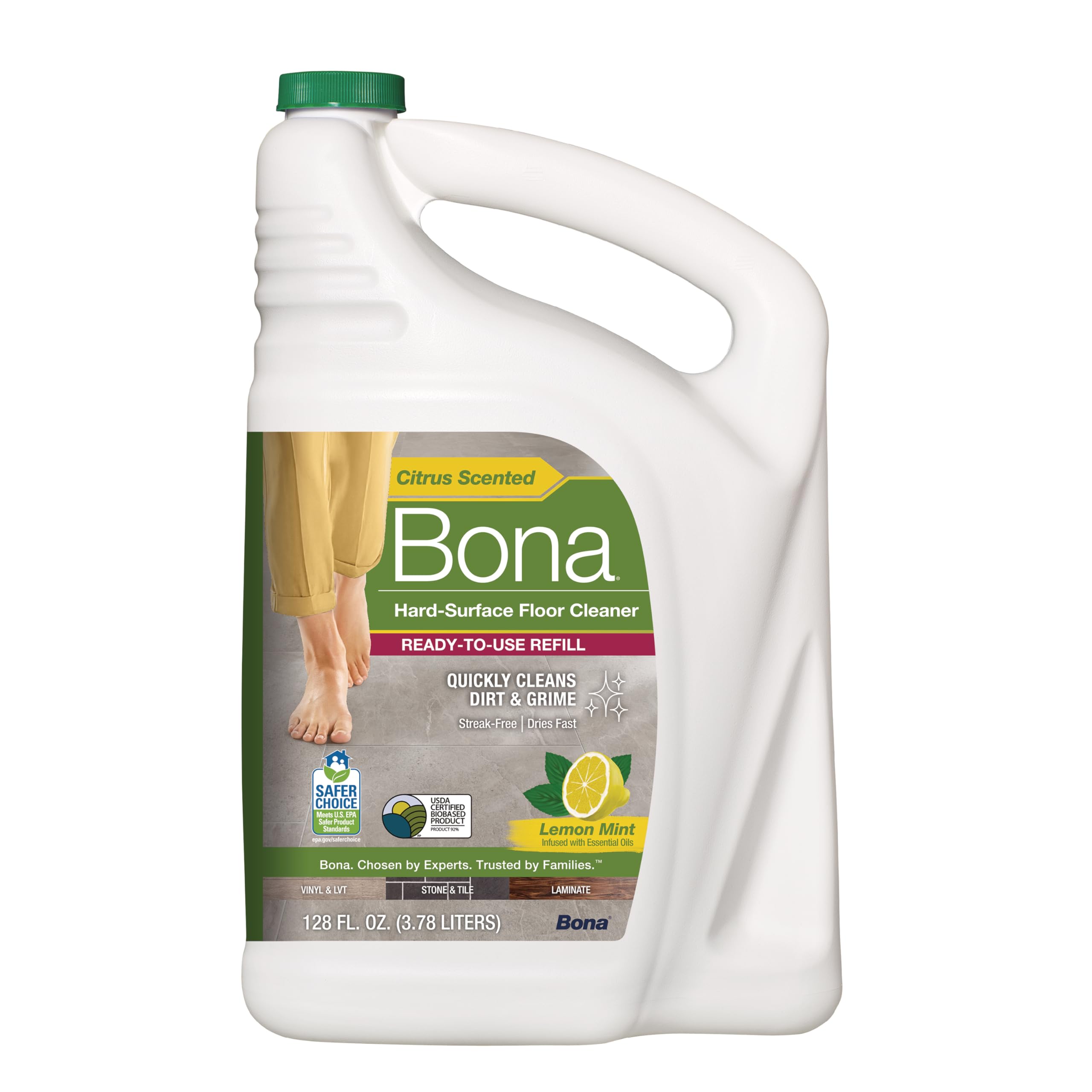
The Bona Multi-Surface refill is the most cost-effective way to keep a spray mop running for months. At 128 fluid ounces, the per-pour cost is significantly lower than smaller bottles, and the splashless spout plus ergonomic handle make refilling clean and controlled. The lemon-mint scent is pleasant but not overpowering — it uses essential oils rather than synthetic fragrances.
What earns Bona a spot on this engineered-wood list is the 92% USDA certified biobased content and pH-neutral chemistry that won’t degrade the factory finish. I’ve verified that it leaves zero sticky residue on engineered planks, even when the mop pad is heavily saturated. The formula works equally well on laminate and luxury vinyl, so it’s a safe choice if you have multiple floor types in your home.
The only catch is that Bona sells this as a refill only — it does not include a spray head. If you don’t already own a Bona spray mop or a compatible spray bottle, you’ll need to purchase the starter kit separately. For anyone committed to a refillable system, this is the smartest long-term value on the list.
Why we love it
- Lowest cost per ounce among all tested options
- 92% USDA certified biobased, pH neutral
- Splashless spout for mess-free refilling
Good to know
- No spray head — requires a compatible Bona bottle or mop
- Lemon-mint scent may not suit everyone
5. Begley’s Hardwood Floor Cleaner Spray – Hard Wood Floor Cleaner for Mopping – Citrus Scent – 64 oz
Begley’s positions itself as the hardest-working eco cleaner, and the USDA Certified Biobased badge combined with Leaping Bunny cruelty-free certification backs that claim. The 64-ounce bottle delivers a concentrated citrus scent that cuts through the perception of harsh chemical cleaners, and the formula is explicitly labeled safe for all wood and engineered finishes. I found it effective on light soil and fingerprints, though it required slightly more passes on dried-on kitchen grease compared to the premium options.
The spray-and-mop method works as advertised: shake well, pour directly onto the floor, and wipe with a microfiber mop. The fast-drying nature means you can walk on the floor within a few minutes, and there’s no visible haze or streaking on engineered wood with a satin finish. It’s also priced to compete directly with mainstream brands, making it an accessible entry point for buyers who prioritize plant-derived ingredients.
The main shortcoming is that the formula can leave a faint, slightly cloudy residue if too much product pools in one spot — a sign that the surfactant load doesn’t evaporate quite as cleanly as the pricier contenders. For routine maintenance on lightly soiled engineered floors, it works fine. For deep cleans after a muddy dog or heavy foot traffic, you’ll get better results from the Weiman or Parker & Bailey.
Why we love it
- USDA Certified Biobased and Leaping Bunny cruelty-free
- Fast-drying, streak-free on light soil
- Affordable 64-ounce bottle with easy pour-and-mop application
Good to know
- Can leave faint residue if too much product is used
- Less effective on heavy grease or deep-set grime
FAQ
Can I use vinegar and water to clean engineered wood floors?
How often should I clean engineered wood floors with a damp mop?
Will a steam mop damage my engineered wood floors?
Is it safe to use a floor polish on engineered wood?
Final Thoughts: The Verdict
For most homeowners, the best floor cleaner for engineered wood floors winner is the Weiman 2-Pack because it combines a plant-based, EPA Safer Choice formula with genuine streak-free drying — exactly what a urethane-sealed engineered floor needs. If you want a two-step system that can also restore gloss, grab the Quick Shine Combo Pack. And for the best long-term value in a large refill format, nothing beats the Bona Multi-Surface 128 oz Refill.