
An under-powered or poorly positioned internal filter leaves your tank cloudy, stresses your fish, and turns maintenance into a chore. The right submersible unit does the opposite — it stays silent, handles the bioload, and keeps the glass clean without taking up floor space.
I’m Mo Mahin — the founder and writer behind Furric. I’ve spent years dissecting filtration specs, comparing flow rates against tank volumes, and cross-referencing owner feedback to separate the pumps that last from those that hum with vibration.
Every pick here targets a specific tank size and budget. Whether you want whisper-quiet operation for a bedroom tank or high-GPH turnover for a heavy-stocked community aquarium, this roundup of the best internal fish tank filter options covers the real specs that matter — flow rate, media capacity, and fit.
How To Choose The Best Internal Fish Tank Filter
An internal filter sits directly in the water, so it must balance flow rate, media volume, and physical size against your tank dimensions and stocking level. Picking one without understanding a few core specs leads to either a dead spot that collects debris or a current so strong your fish can’t swim.
Match GPH to Tank Volume and Stocking
Flow rate, measured in Gallons Per Hour (GPH), is the single most important spec. A general rule: aim for a pump that turns over the entire tank volume 4 to 6 times per hour. For a 50-gallon tank, you need 200–300 GPH. Add 20–30% more flow if you keep heavy waste producers like goldfish, cichlids, or turtles. Too much flow, and you create a washing-machine effect; too little, and waste settles in dead zones.
Filter Media Stages — Mechanical vs Biological
Most internal filters come with a coarse sponge that traps visible particles — that’s the mechanical stage. Units that include ceramic rings, bio-balls, or a secondary finer sponge also handle biological filtration, where beneficial bacteria break down ammonia and nitrite. If you plan to run a single filter on a medium-to-large tank, choose one with at least two distinct media stages. For a quarantine or hospital tank, a simple sponge-only design is often easier to medicate and clean.
Mounting and Submersion Depth
Submersible internal filters use suction cups to attach to the glass. Check whether the unit supports vertical and horizontal mounting — important for shallow breeder tanks or odd-shaped habitats. Also verify the minimum water level required. Some filters have a minimum submersion depth of 4–5 inches; others, like the TARARIUM, can run in as little as 2.6 inches of water. If you keep turtles or amphibians that prefer shallow water, a low-water-level filter is non-negotiable.
Quick Comparison
On smaller screens, swipe sideways to see the full table.
| Model | Category | Best For | Key Spec | Amazon |
|---|---|---|---|---|
| coospider-repta 75-200 Gal | Premium | Large heavily stocked tanks | 400 GPH, 3-stage sponge | Amazon |
| TARARIUM IX-120 | Mid-Range | Shallow turtle/amphibian tanks | 290 GPH, waterfall bio-filtration | Amazon |
| coospider-repta 55-150 Gal | Mid-Range | Standard 55–150 gal aquariums | 300 GPH, dual-sponge | Amazon |
| NO.17 15W 400 GPH | Budget | Large turtle tanks, high flow needed | 400 GPH, 4-nozzle spread | Amazon |
| NO.17 12W 320 GPH | Budget | 50–100 gal entry-level setups | 320 GPH, multi-media | Amazon |
In‑Depth Reviews
1. coospider-repta 75-200 Gallon Internal Aquarium Filter
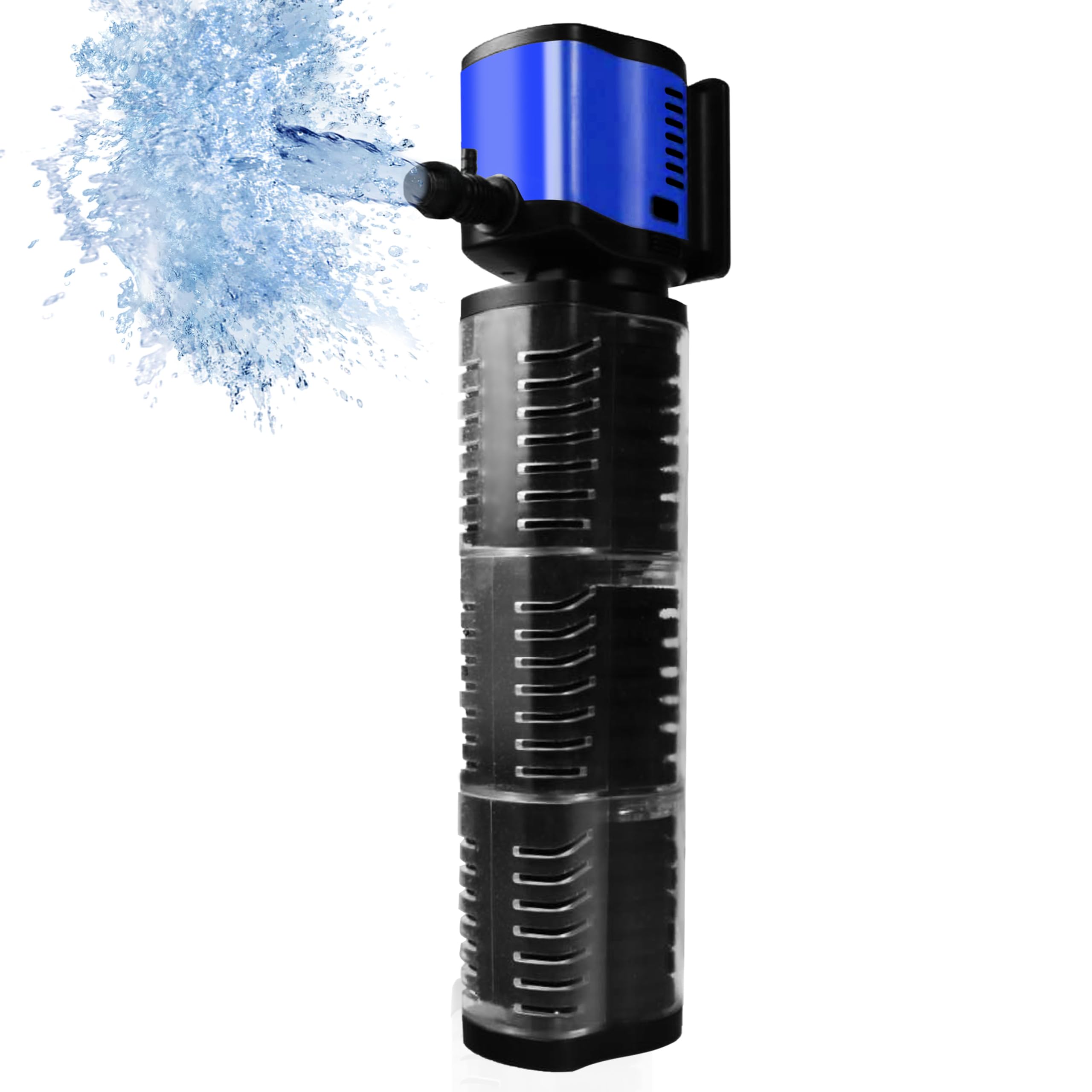
Rated for 75 to 200 gallons, this coospider-repta unit delivers a full 400 GPH — enough to turn over a 150-gallon tank nearly three times per hour. The three-level sponge stack handles mechanical and biological filtration in one body, which cuts down the number of media replacements you need to track. Each sponge layer is removable individually, so you can clean the coarse pre-filter without disturbing the finer bio-sponge.
The detachable design is a practical upgrade: the pump head separates from the media chamber, making deep cleans faster and less messy. An adjustable valve on the intake lets you dial back flow for smaller tanks or sensitive fish without swapping the pump. The unit also includes a built-in aeration venturi that pulls in air and increases dissolved oxygen — beneficial for heavy-stocked cichlid or goldfish tanks where surface agitation alone isn’t enough.
At 2.11 pounds, this filter is heavier than the NO.17 models, which translates to a more solid build and less vibration transfer to the glass. The suction cups are wide-diameter and hold firmly on standard aquarium glass. Owners running planted tanks report the adjustable flow prevents substrate disturbance while still maintaining good circulation at the surface. A premium choice for large aquariums where consistent turnover and easy maintenance are the priority.
Why we love it
- Three independent sponge stages allow staggered cleaning cycles
- Adjustable flow and venturi aeration improve oxygen levels
- Detachable pump head simplifies deep cleaning
Good to know
- Requires at least 4–5 inches of water for full submersion
- Best suited for tanks 75 gallons and up
2. TARARIUM IX-120 Internal Filter

The TARARIUM IX-120 is built around a three-stage filtration path that starts with a double-sided mesh sponge (white/black density) for mechanical trapping, then passes through a chamber of ceramic bio-balls for biological breakdown. The 290 GPH pump is modest compared to the coospider-repta units, but it’s deliberately sized for the 20-to-75-gallon range where slower, more consistent turnover matters — especially in planted tanks or those housing shrimp and fry.
One standout feature is the minimum submersion depth: this filter runs in as little as 2.6 inches of water. That makes it a strong pick for turtle tanks, shallow breeder setups, paludariums, or even 10-gallon hospital tanks. The waterfall outlet adds surface agitation without aggressive turbulence, and the adjustable control valve lets you reduce flow for species that dislike strong currents. The top-lid canister design gives quick access to the media without dismounting the whole unit from the glass.
Owners appreciate the quiet operation — the bio-ball compartment dampens pump noise better than solid-sponge designs. The included media is ready out of the box, though you may want to add extra ceramic rings for heavier bioloads. The 1-year warranty offers decent peace of mind for a filter in this price tier. Ideal for aquarists who need a low-silhouette unit that works in shallow water without sacrificing biological filtration.
Why we love it
- Works at just 2.6 inches water depth — rare for an internal filter
- Three-stage system with ceramic bio-balls handles biological load
- Top-lid access makes media swaps quick
Good to know
- 290 GPH is too low for tanks over 75 gallons
- Bio-balls need rinsing in tank water, not tap water, to preserve bacteria
3. coospider-repta 55-150 Gallon Aquarium Filter

Sitting at the middle of the coospider-repta lineup, this 300 GPH model targets the 55-to-150-gallon sweet spot where many community aquariums live. The dual-stage sponges — a coarse outer layer and a finer inner pad — capture waste and provide surface for nitrifying bacteria. The pump includes an adjustable valve and a venturi for aeration, similar to the larger 75–200 gallon sibling, but the flow rate is dialed back to avoid overwhelming tanks on the smaller end of the range.
The detachable body is a notable convenience: the lower half of the filter sponge can be removed for tanks under 15 inches tall. That means you aren’t forced into a vertical footprint that doesn’t fit your aquarium’s height. The pump can also be laid flat, which opens up placement options in long, shallow tanks where vertical clearance is limited. The biochemical sponge is treated to resist odors and discoloration, a feature that matters when the filter runs for weeks between cleanings.
Customer feedback consistently highlights the quiet operation and the solid suction cups that hold position even on curved-front bow-front tanks. The included 1-year manufacturer warranty adds a safety net that budget NO.17 filters lack entirely. For anyone stepping up from a hang-on-back filter to an internal, this is the most balanced choice in terms of GPH-to-tank-size ratio and media flexibility.
Why we love it
- Dual-sponge system with odor-fighting treatment
- Removable lower half fits tanks under 15 inches tall
- Quiet pump with adjustable flow and aeration venturi
Good to know
- Comes with a 1-year warranty, not lifetime support
- Occasional suction cup slip on textured glass surfaces
4. NO.17 15W 400 GPH Submersible Filter

This NO.17 model pushes 400 GPH from a 15-watt pump, making it one of the highest flow-per-watt internal filters in this lineup. It’s rated for 150 to 300 gallons, though many users run it successfully in 100-gallon tanks with heavy bioloads like Oscars or large plecos. The four included nozzles let you direct outflow in multiple patterns — a concentrated jet for circulation, a wider spread for surface agitation, or a combination of both.
The media chamber holds multiple filter media types, including coarse sponge, bio-sponge, and activated carbon (though carbon pads are not included). The pump uses a ceramic axle for quieter operation than the nylon-shaft pumps common in budget submersibles. The key-style flow adjustment on the outlet allows you to reduce output without restricting the intake, which reduces strain on the impeller. The 5.25-foot power cord is generous for tanks placed against a wall.
Where this filter falls short of the coospider-repta units is in build refinement: the ABS plastic has a thinner feel, and the suction cups lose grip over time on tanks with silicone residue. If you need raw water turnover on a large tank and want to stay at a budget entry point, the NO.17 15W delivers the GPH without extra features like detachable media stacks or dedicated pre-filter sponges.
Why we love it
- 400 GPH at 15W is one of the highest efficiency ratings
- Four nozzles give versatile flow control
- Ceramic axle pump runs quieter than nylon alternatives
Good to know
- Suction cups may require periodic replacement
- No dedicated pre-filter sponge for mechanical separation
5. NO.17 12W 320 GPH Submersible Aquarium Internal Filter
The 12W variant of the NO.17 filter drops the flow rate to 320 GPH while keeping the same physical footprint and media capacity as the 15W model. This spec is a better match for 50-to-100-gallon tanks where 400 GPH would create too much surface agitation for species like angelfish or gouramis. The pump still uses the same ceramic axle and key-style flow adjustment, so you get the same quiet operation in a lower output package.
Like its 15W sibling, this unit comes with four nozzles and supports horizontal or vertical mounting. The multi-media basket accommodates sponge, bio-media, and carbon, giving you flexibility to customize filtration based on your tank’s needs. The 5.25-foot power cord is identical, and the 1.46-pound weight makes it one of the lighter options in this list — easier to move during water changes or while cleaning the impeller.
The trade-offs are consistent with the NO.17 design: thinner ABS plastic than the coospider-repta builds, and suction cups that benefit from being soaked in hot water before first use to improve adhesion. New aquarists setting up their first 55-gallon tank will find this a simple, effective starting point. For lightly stocked community tanks or goldfish-only setups, the 12W NO.17 provides reliable circulation without requiring a large upfront investment in a premium unit.
Why we love it
- 320 GPH is appropriate for 50–100 gal standard tanks
- Ceramic axle pump stays quiet over long runtime
- Multi-media basket accepts custom media combinations
Good to know
- ABS housing feels less robust than coospider-repta units
- Not recommended for tanks over 100 gallons
FAQ
Can an internal filter be used in a saltwater aquarium?
How often should I replace the sponges in an internal filter?
What does GPH mean and how much do I need?
Final Thoughts: The Verdict
For most aquarists, the best internal fish tank filter winner is the coospider-repta 75-200 Gallon because it delivers 400 GPH with three removable sponge stages, adjustable flow, and a venturi aerator — all in a detachable build that makes deep cleaning genuinely simple. If you need a filter that runs in ultra-shallow water for a turtle or amphibian tank, grab the TARARIUM IX-120. And for a no-fuss entry-level pump on a 50-gallon community setup, nothing beats the price-to-performance ratio of the NO.17 12W 320 GPH.