
Nothing ruins a crisp morning ride faster than a horse swishing its tail, stomping its hooves, or shaking its head in a cloud of biting flies. Fly pressure isn’t just annoying — it stresses your horse, distracts them under saddle, and turns your pasture into a war zone. The difference between a calm, workable horse and a miserable one often comes down to the few seconds it takes to spray a quality repellent that actually stays on the job.
I’m Mo Mahin — the founder and writer behind Furric. I spend my days cross-referencing active ingredient concentrations, reading through hundreds of verified buyer reports, and studying how different repellent bases (water, oil, or pyrethrin blends) perform across barn environments to separate the formulas that truly repel from those that just smell strong for a few hours.
This guide breaks down five competitive sprays by knockdown power, residual days, and formula feel — so you can confidently choose the top-rated equine fly repellent for your horse’s specific turnout and trail needs.
How To Choose The Best Equine Fly Repellent
The right fly spray hinges on your horse’s sensitivity, your barn routine, and the specific pest pressure in your region. Before you buy, weigh these four factors carefully — they separate a one-spray-and-done formula from a product you’ll have to reapply before lunch.
Residual Protection vs. Reapplication Frequency
The most important measurable spec on any equine fly repellent label is the residual days — how long one application keeps working after it dries. Budget-friendly options often claim a few hours of coverage, while premium permethrin-based formulas can hold flies off for up to 14 days. If you’re turning out for long hours or trailering frequently, aim for a spray with a residual window of 7 to 14 days to avoid daily re-spraying.
Active Ingredients: Permethrin vs. Natural Oils
Permethrin is the most common synthetic insecticide in equine sprays — it offers strong, long-lasting knockdown and repelling action but can feel harsh on sensitive skin if over-applied. Natural oil blends (geraniol, clove, peppermint, and citronella) provide safer coverage around horses with allergies or respiratory issues, but they generally demand more frequent reapplication, especially in wet conditions or high bug zones.
Formula Base: Water-Based vs. Oil-Based
Water-based formulas (often labeled as non-greasy) dry clear, leave the coat clean, and don’t attract dust or dirt — ideal for show horses or horses worked in dusty arenas. Oil-based sprays cling longer through sweat and light rain but can leave a slick residue that traps grit and may dull the hair coat over prolonged use. Check the ingredients list: if water is the first ingredient, you’re getting a light feel; if oil (mineral oil, neem oil) tops the list, expect heavier sticking power.
Concentrate vs. Ready-to-Use
Concentrates offer better per-bottle value and allow you to adjust the dilution strength based on fly pressure, but they require a separate sprayer and consistent mixing. Ready-to-use (RTU) sprays cost more per ounce but eliminate guesswork — you grab, pump, and spray. If you’re treating multiple horses daily, a concentrate like Farnam Repel-X pe saves serious money over the season. If you own a single horse and want convenience, an RTU bottle is the simpler route.
Quick Comparison
On smaller screens, swipe sideways to see the full table.
| Model | Category | Best For | Key Spec | Amazon |
|---|---|---|---|---|
| Farnam Tri-Tec 14 | Ready-to-Use | Long residual coverage | 14-day protection | Amazon |
| Manna Pro Pro-Force | Ready-to-Use | Broad-spectrum knockdown | 70+ pest species | Amazon |
| Farnam Repel-X pe | Concentrate | Economical multi-horse use | Makes 4 quarts RTU | Amazon |
| Pyranha Zero-Bite | Ready-to-Use | Natural ingredient preference | Water-based / non-greasy | Amazon |
| Zep Country Vet Metered | Premise Spray | Barn and stall fly control | 30-day aerosol refill | Amazon |
In‑Depth Reviews
1. Farnam Tri-Tec 14 Horse Fly Spray
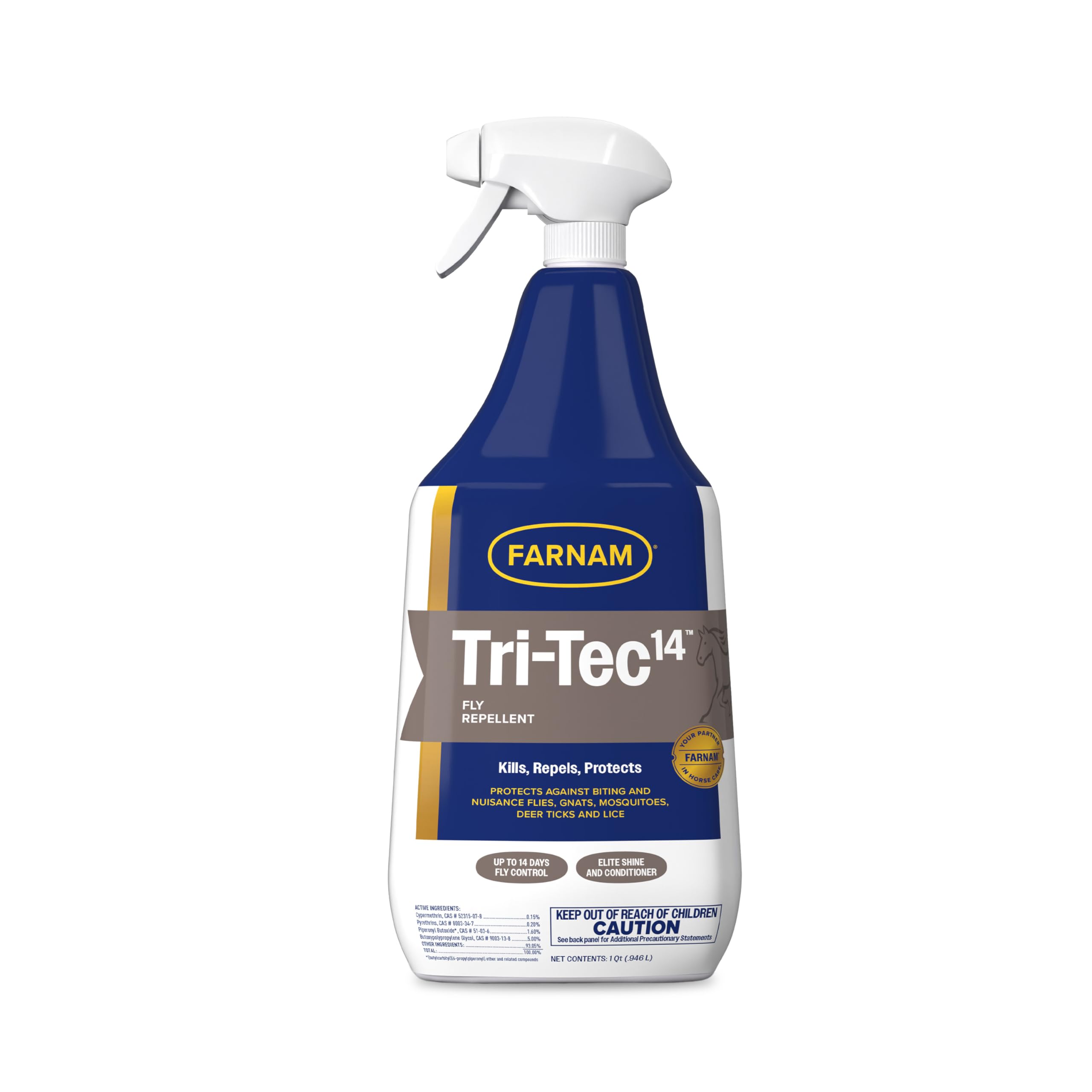
Farnam Tri-Tec 14 earns the top position because it delivers the longest advertised residual window in this lineup — a full 14 days of activity after drying into the coat. The triple active ingredient formula (permethrin combined with other synergists) provides both rapid knockdown against flies and gnats and sustained repellency that holds up through sweat, turnout, and trailering. For riders who can’t spare time for daily spraying, this RTU bottle offers unmatched convenience per application.
The included coat conditioners are a second-stage benefit — they leave the hair with a visible healthy shine that offsets the drying effect permethrin can have over repeated use. Owners handling multiple horses will appreciate the 32-ounce size alongside the easy-pour gallon refill option. The spray pattern delivers a fine mist with enough volume to cover a 15-hand horse in roughly 8 to 10 pumps.
On the downside, the synthetic actives can feel strong around the face and ears, so applying with a cloth rather than direct spray is recommended for sensitive horses. The scent is distinctly chemical — not unpleasant but noticeable. Overall, this is the benchmark spray for barns that prioritize staying power over all else.
Why we love it
- Full two-week residual coverage across flies, gnats, mosquitoes, and ticks
- Coat conditioners leave a polished, dust-shedding finish
- Powerful permethrin knockdown stops biting insects on contact
Good to know
- Chemical odor may linger briefly after application
- Must keep away from eyes and mucous membranes when spraying
2. Manna Pro Pro-Force Fly Spray

Manna Pro Pro-Force is a strong mid-range competitor that matches Farnam’s 14-day residual window while covering the widest variety of listed pests in this review — more than 70 species including biting flies, nuisance flies, ticks, mosquitoes, and gnats. The RTU formula requires zero mixing, and the unscented (essentially low-odor) profile makes it a solid choice for barns where strong perfume or chemical smells aggravate respiratory conditions.
The rapid knockdown effect is noticeable within seconds of application — flies that land on treated areas drop quickly or immediately take off. Owners also report effective use on dogs for flea and tick control, adding a multi-pet value that few equine-specific sprays offer. At the 32-ounce size, the bottle covers roughly one horse for three to four full-body applications, depending on coat density.
The slight trade-off is a thinner consistency compared to oil-blended sprays — it dries fast but may require slightly more frequent reapplication during heavy rain or after washing. Additionally, the unscented formulation means it lacks the herbal masking odor that some handlers prefer for pasture use. For barns that need a single spray covering multiple pest types across species, Pro-Force is a versatile workhorse.
Why we love it
- Labels 70+ species — the broadest pest coverage in this test group
- Near odorless formula works well in enclosed barn spaces
- Safe for use on dogs as a flea and tick control supplement
Good to know
- Thinner water-like base may wash off faster in wet turnout conditions
- No added coat conditioners for shine or detangling
3. Farnam Repel-X pe Concentrate
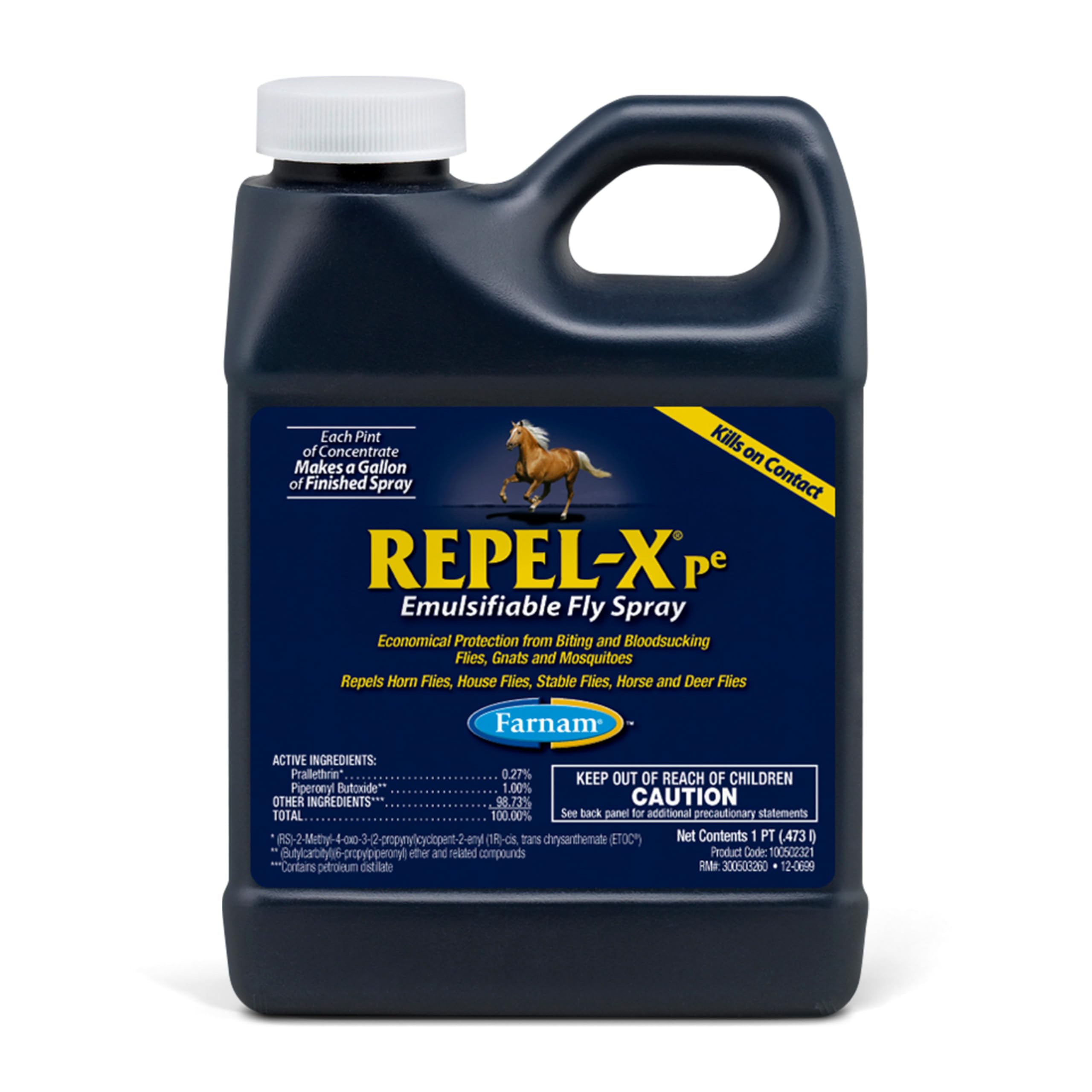
Farnam Repel-X pe is the only concentrate on this list, and for barns managing three or more horses, it represents the lowest per-quart cost of any option here. The 16-ounce bottle mixes with water to produce four full quarts of ready-to-use spray — enough to cover multiple horses for weeks without repurchasing plastic bottles. The permethrin-based formulation targets barn flies, gnats, mosquitoes, ticks, deer ticks, and lice, making it equally effective in pasture and stable environments.
Because it’s a concentrate, you can adjust the dilution strength slightly depending on pest pressure — a tighter mix during peak fly season and a lighter mix for maintenance through cooler months. The formula is also labeled for use on dogs and as a premise spray around the barn, adding flexibility beyond direct horse application. Users familiar with the old Repel-X (without the pe suffix) will notice improved emulsification — the concentrate mixes more readily and stays suspended longer before requiring a shake.
The primary consideration is the additional equipment required: you need a clean pump sprayer and the willingness to mix consistently. Over-dilution reduces residual efficacy, and under-dilution can irritate sensitive skin. For single-horse owners who spray infrequently, this concentrate may feel like more effort than the RTU alternatives. But for a multi-horse operation looking to stretch dollars without sacrificing active ingredient density, Repel-X pe is the smart seasonal purchase.
Why we love it
- 16 oz makes 4 quarts — extremely economical for multiple horses
- Adjustable dilution allows custom strength per season or pest load
- Effective against a broad range of insects including deer ticks
Good to know
- Requires a separate sprayer and consistent mixing
- Over-concentration may cause skin irritation in sensitive horses
4. Pyranha Zero-Bite All Natural Fly Spray

Pyranha Zero-Bite is the go-to option for owners seeking a plant-based repellent without synthetic permethrin. The active combination of geraniol, peppermint, and clove oils delivers a strong herbal scent that masks CO₂ and movement cues, confusing biting insects without relying on neurotoxins. The formula is over 90% water, producing a non-greasy, fast-drying finish that leaves the coat clean and dust-free — a huge plus for show barns or horses worked in drylot conditions where traditional oil sprays turn the hair gritty within hours.
Pyranha’s proprietary Suspension Technology means the bottle never needs shaking before use — the oils stay uniformly suspended in the water base. This is a small but meaningful improvement over similar natural sprays that separate and require vigorous shaking between every few pumps. The quart size covers about a week of daily full-body applications for one horse under moderate fly pressure.
The natural oil base, however, has a shorter residual window compared to permethrin sprays — typically lasting several hours to a full day depending on temperature and sweat levels, rather than the multi-week coverage of synthetic options. The peppermint forward scent is pleasant to most handlers but can be strong immediately after application. For horses with skin sensitivities or respiratory concerns, and for owners who prefer to avoid synthetic chemicals entirely, Zero-Bite is a well-engineered natural alternative.
Why we love it
- Plant-based formula ideal for sensitive horses and organic-minded barns
- Water-based, non-greasy finish leaves the coat naturally clean
- No-shake Suspension Technology saves time and ensures consistent spray
Good to know
- Shorter residual coverage — requires daily reapplication under heavy pressure
- Peppermint-clove scent may be too strong for some handlers initially
5. Zep Country Vet Metered Fly Control Spray
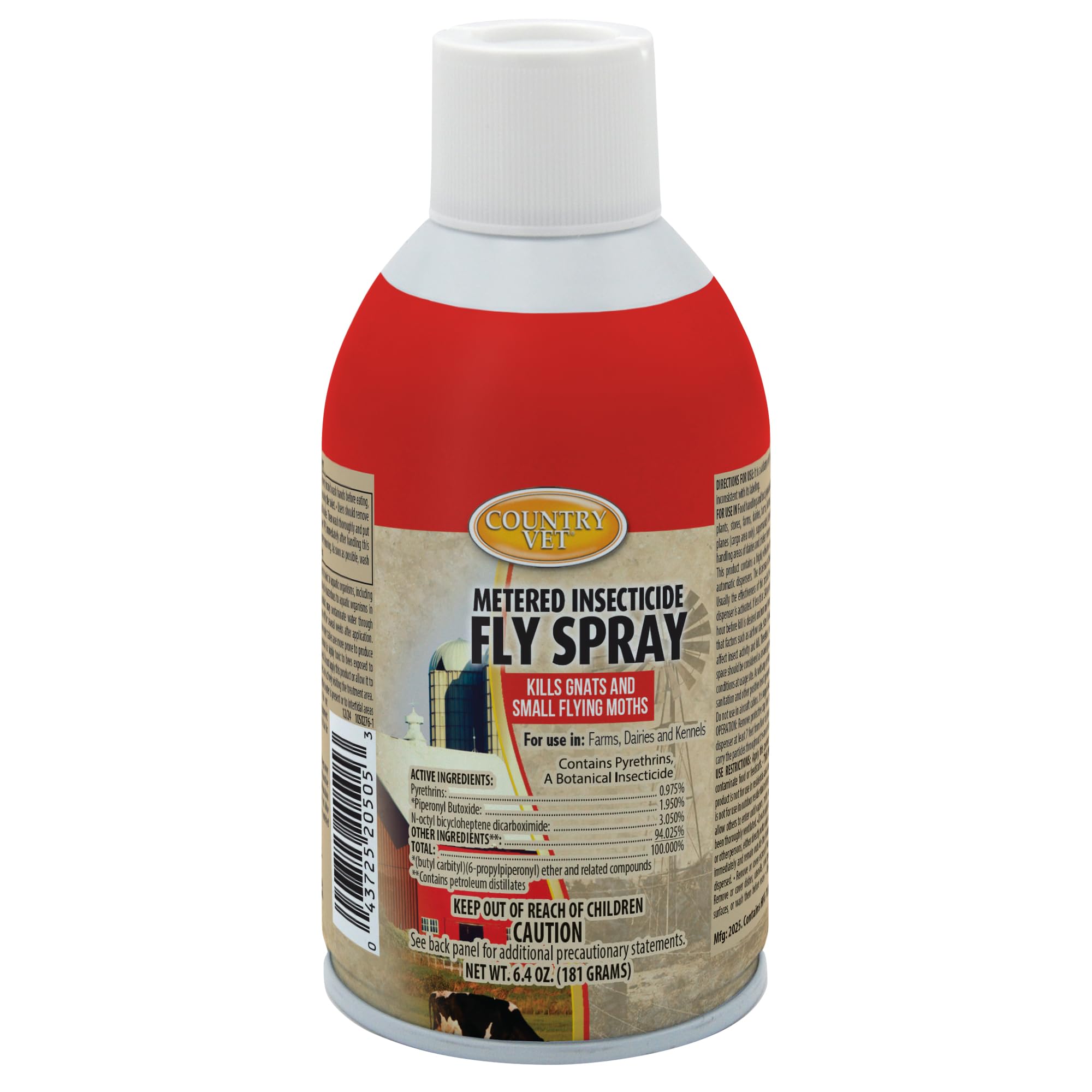
Zep Country Vet Metered Fly Control Spray takes a fundamentally different approach from the other four products — it’s not a direct horse spray but an automated premise dispenser refill designed for barns, stalls, and stables. The 6.4-ounce aerosol canister fits into automatic metered dispenser units, releasing measured bursts of pyrethrin-based insecticide at programmed intervals to maintain a pest-free microclimate around your horse’s living area. Each refill claims approximately 30 days of coverage under standard operation cycles.
The active ingredient is pyrethrin, a botanical insecticide derived from chrysanthemum flowers — it delivers rapid knockdown on gnats and small flying moths while producing a fresh outdoor scent rather than a chemical odor. This approach works best as a secondary layer of defense: the metered spray keeps flying insect populations low inside the stall, while a direct horse spray (like Farnam Tri-Tec 14) handles the personal, on-animal protection needed during turnout and trailering.
It should be noted that this product is not intended for application directly on horses — it is strictly a premise treatment. For barns with high fly pressure in enclosed spaces, combining a metered dispenser system with a topical horse spray creates the most comprehensive coverage. The refill’s light 0.01-ounce weight reflects that the can is the aerosol payload itself; the full item weight includes the valve and propellant. For single-stall setups, this metered approach requires the upfront purchase of a compatible dispenser housing.
Why we love it
- Automated, hands-off premise control keeps stalls fly-reduced 24/7
- Pyrethrin base offers botanical origin with fast knockdown action
- Fresh scent profile is barn-friendly without heavy chemical aroma
Good to know
- Not for direct use on horses — premise application only
- Requires a separate metered dispenser unit to function
FAQ
How many days of protection should I expect from a permethrin-based equine fly spray?
Can I use a horse fly spray concentrate on my dog for flea control?
Why does natural oil-based fly spray need more frequent reapplication?
What is the difference between a premise fly spray and a direct horse repellent?
Final Thoughts: The Verdict
For most horse owners, the equine fly repellent winner is the Farnam Tri-Tec 14 because it delivers the longest residual window with proven permethrin knockdown and built-in coat conditioning. If you prefer a broad-spectrum, near-odorless alternative that also works on dogs, grab the Manna Pro Pro-Force. And for barns on a budget or multi-horse operations, the Farnam Repel-X pe Concentrate stretches your dollar without compromising active ingredient strength.