
Finches are picky eaters. They will literally knock a hulled sunflower seed out of the feeder if it doesn’t crack right. The wrong blend means wasted money, a yard full of sprouting weeds, and a flock that moves to your neighbor’s garden. Getting the mix right isn’t about grabbing a generic bag — it’s about matching the specific oil content, seed size, and shell structure that small-beaked finches actually process.
I’m Mo Mahin — the founder and writer behind Furric. I’ve spent years cross-referencing manufacturer nutritional disclosures, analyzing customer reports of feeder refusal rates, and studying the FDA compliance standards of bird food facilities to separate the blends that deliver results from the ones that just fill a bag.
Finding the right best bird food for finches means understanding the difference between nyjer and sunflower hearts, protein percentages vs filler content, and which no-grow formulas actually prevent sprouting under a tube feeder.
How To Choose The Best Bird Food For Finches
Finches have small, conical beaks designed to crack tiny seeds. They prefer foods rich in oil for energy, especially during migration and winter. The wrong blend — one heavy with cracked corn or red milo — will be ignored entirely, leaving the feeder full and the ground littered with waste.
Seed Composition: Dual-Base Blends Win
The most effective formulas feature two primary seeds: nyjer (also called thistle) and sunflower hearts or chips. Nyjer is high in oil and tiny enough for finches to handle, while sunflower hearts provide protein and fat without the tough hull that larger birds crack easily. Avoid blends with “black oil sunflower seeds” in the shell — they are too large for most finches to shell efficiently, causing selectivity and waste.
No-Grow vs No-Mess: What the Terms Actually Mean
A “no-mess” claim usually means the seed is hulled (the shell is removed before bagging). This prevents germination under the feeder because there is no hull to sprout from. A “no-grow” label often implies the seeds have been heat-treated to sterilize them. Both methods eliminate weed sprouts, but hulled seeds are lighter and more expensive per pound because you are paying for edible kernel only. For finches, hulled options (sunflower hearts, nyjer) are ideal because they eliminate the time birds spend shelling.
Protein and Fat Content
Finches require a minimum of roughly 14% crude protein for muscle maintenance during molting and egg production, and at least 12% crude fat for energy. The best blends for year-round feeding push protein above 15% and fat near 18%. Foods below 10% fat often contain excessive filler seeds like millet, which finches tolerate but do not thrive on.
Quick Comparison
On smaller screens, swipe sideways to see the full table.
| Model | Category | Best For | Key Spec | Amazon |
|---|---|---|---|---|
| Dr. Harvey’s Fabulous Finch Food | Premium Blend | Birds with high nutritional needs | Crude Fat (min) 18% | Amazon |
| Happy Wings Finch Blend | No-Grow Mix | Clean yard, zero sprouts | Sunflower hearts + Nyjer | Amazon |
| Kaytee No Mess Finch Seed | Hulled Blend | Low waste under feeders | 100% consumable no hulls | Amazon |
| Better Bird Finch Food | Budget-Friendly | Attracting common finch species | Corn free, Milo free | Amazon |
| Higgins Vita Seed Finch | Entry Level | Indoor or small feeder trial | Probiotics + Extruded Morsels | Amazon |
In‑Depth Reviews
1. Dr. Harvey’s Fabulous Finch Food

This is the highest protein and fat option in the list, with a guaranteed minimum of 15% crude protein and 18% crude fat. That energy density comes from a diverse blend of seeds, nuts, fruits, vegetables, and grains — not just two base seeds. The resealable bag is a practical touch for keeping freshness over multiple refills, and the all-natural formulation excludes artificial colors and preservatives that serve no benefit to wild birds.
The wholefood approach means it appeals not only to finches but also to cardinals, canaries, and chickadees. If your backyard hosts mixed flocks, this single bag covers multiple species without needing separate feeders. The 15% minimum protein is directly supportive of feather regrowth during molting, which is a peak nutritional stress period for finches.
One trade-off is the premium cost per pound compared to single-seed blends. The variety includes larger ingredients like nut pieces that some finches may drop in favor of picking out the sunflower hearts and nyjer, causing minor under-feeder debris. Still, the nutritional ceiling here is unmatched for keepers who prioritize bird health over absolute cleanest ground.
Why we love it
- Highest protein (15%) and fat (18%) levels for peak finch health
- Wholefood ingredients with fruits, nuts, and vegetables for dietary variety
- Resealable bag maintains freshness and keeps pests out
Good to know
- Premium cost per pound compared to basic nyjer-only blends
- Some larger nut pieces may not be eaten by smaller finches
2. Happy Wings Finch Blend
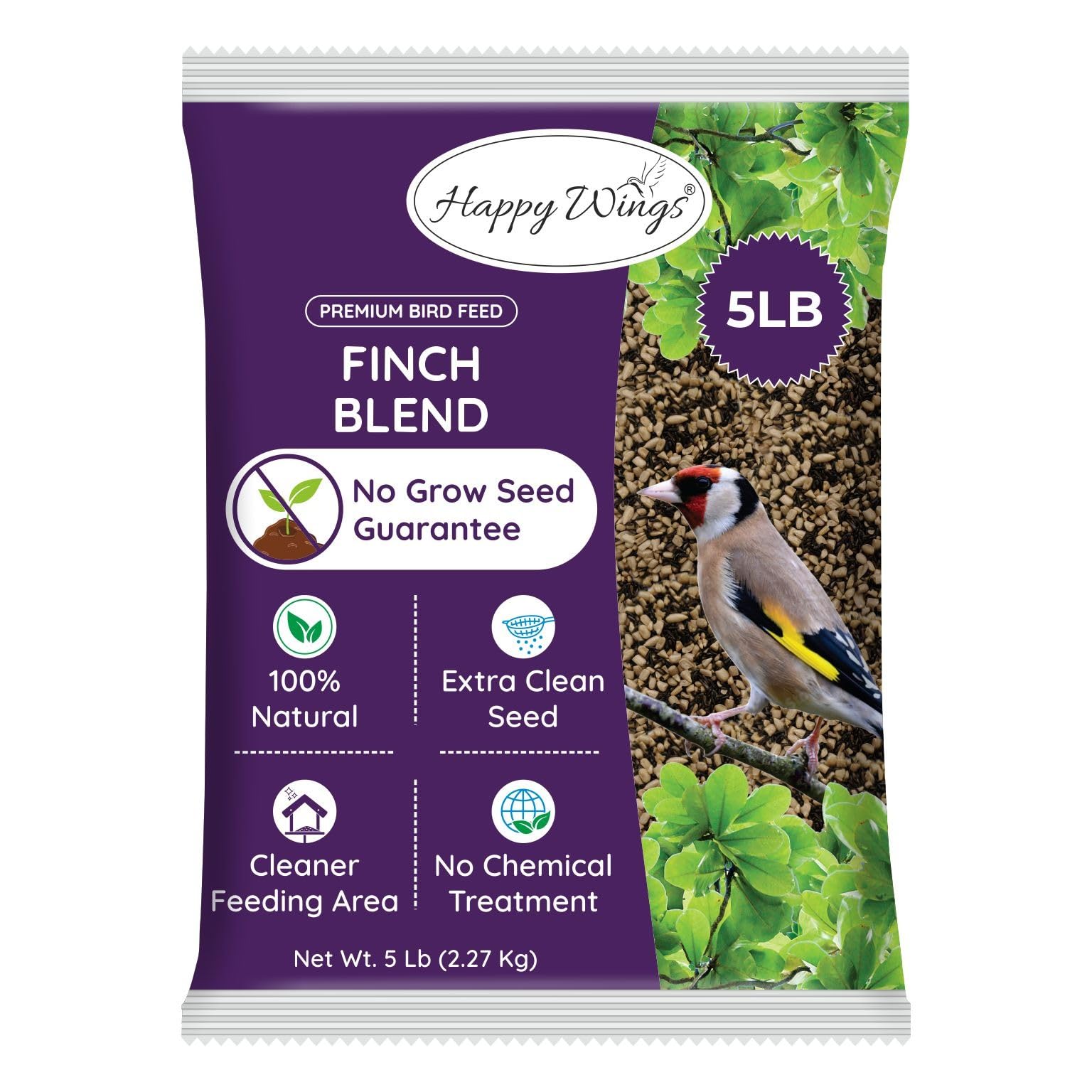
Happy Wings blends sunflower hearts with nyjer to create the classic dual-base formula that finches recognize as food. The seeds are processed in a USDA and BRC-GS approved facility, and the brand cites compliance with the Wild Bird Feeding Institute standards — traceability that matters for buyers worried about imported seed quality. The 5-pound bag is a practical mid-size that fits most standard tube feeders without overflowing.
The “no growth” claim is backed by heat treatment that sterilizes the seeds. When dropped under a feeder, these seeds will not germinate into weeds. This is a critical feature for anyone maintaining a manicured lawn or planting beds directly under feeding stations. The sunflower hearts are already hulled, so finches eat 100% of what they take — no discarded shells piling up.
One common customer observation is that the bag could be fresher at opening; some users report a dry smell that dissipates once aired. The protein and fat percentages are not printed on the label as a guarantee, but the nyjer-sunflower heart combination inherently delivers a high-oil profile. For pure cleanliness and finch specificity, this is a strong contender.
Why we love it
- Heat-treated seeds prevent any weed sprouting under feeders
- Dual-base formula (sunflower hearts + nyjer) is a proven finch attractant
- USDA and BRC-GS approved processing facility adds quality assurance
Good to know
- No guaranteed protein or fat percentage printed on the bag
- Some bags may arrive with a slightly dry or stale odor initially
3. Kaytee No Mess Finch Seed and Nyjer Blend

Kaytee’s offering solves the two biggest finch-feeding frustrations: hull waste and weed growth. By selling only the edible kernel of the seed, every gram in the bag is consumed — nothing falls to the ground as a discarded shell. The 8-pound bag is the largest in this comparison, providing up to 50% more volume per dollar than the 4- and 5-pound competitors, making it the most economical option for heavy feeders.
The blend combines nyjer with sunflower chips, both of which are preferred by goldfinches, house finches, and purple finches. Because there are no hulls, the seeds cannot germinate, meaning you can hang the feeder over a patio or deck without the risk of bird-seed sprouts growing in the cracks. This is a particular advantage for apartment balconies and elevated feeders where cleanup access is limited.
The main limitation is the lack of nutritional variety beyond the two base seeds. It lacks the fruit, nut, and vegetable components that Dr. Harvey’s provides. For finches that share feeders with larger birds, the smaller kernel size may be less appealing to cardinals and jays, keeping the mix more exclusive to finches — which many owners regard as a positive rather than a drawback.
Why we love it
- Largest 8-pound bag offers the lowest cost per feeding day
- 100% consumable — no discarded hulls, no sprouts
- Ideal for balcony, deck, or patio feeding with zero clean-up mess
Good to know
- Limited to two seed types — lacks fruit, nut, and vegetable diversity
- Small kernel size may not attract larger backyard birds like cardinals
4. Better Bird Finch Food

Better Bird positions itself as a low-filler option by explicitly excluding corn and milo from its recipe. Corn and milo are cheap bulking agents that many mass-market bird foods rely on, but finches largely ignore them — they will eat around those kernels, leaving them to rot in the feeder. Eliminating both means the entire 4-pound bag is composed of seeds that finches actually process: primarily nyjer, sunflower chips, and canary seed.
The “all-natural” and “plant-based” claims align with a minimally processed approach. The seeds are chunk-form, which for finches means smaller pieces that match their beak size. This blend is specifically formulated to attract American goldfinches, purple finches, and house finches while being unappealing to larger, more aggressive birds like grackles and starlings that prefer whole corn.
The 4-pound bag size is modest, and the bag lacks a resealable closure, so transferring to an airtight container is recommended. Some long-term users note that the mix can be dusty at the bottom of the bag (fine seed fragments that finches may ignore), but the overall refusal rate is low because it omits the two fillers that cause most food rejection.
Why we love it
- Zero corn and zero milo — no filler seeds that finches refuse
- Attracts goldfinches, house finches, and purple finches exclusively
- All-natural, plant-based ingredients with minimal processing
Good to know
- Bag lacks a resealable zipper — must store in a separate container
- Some fine dust at the bottom of the bag may be left uneaten
5. Higgins Vita Seed Finch
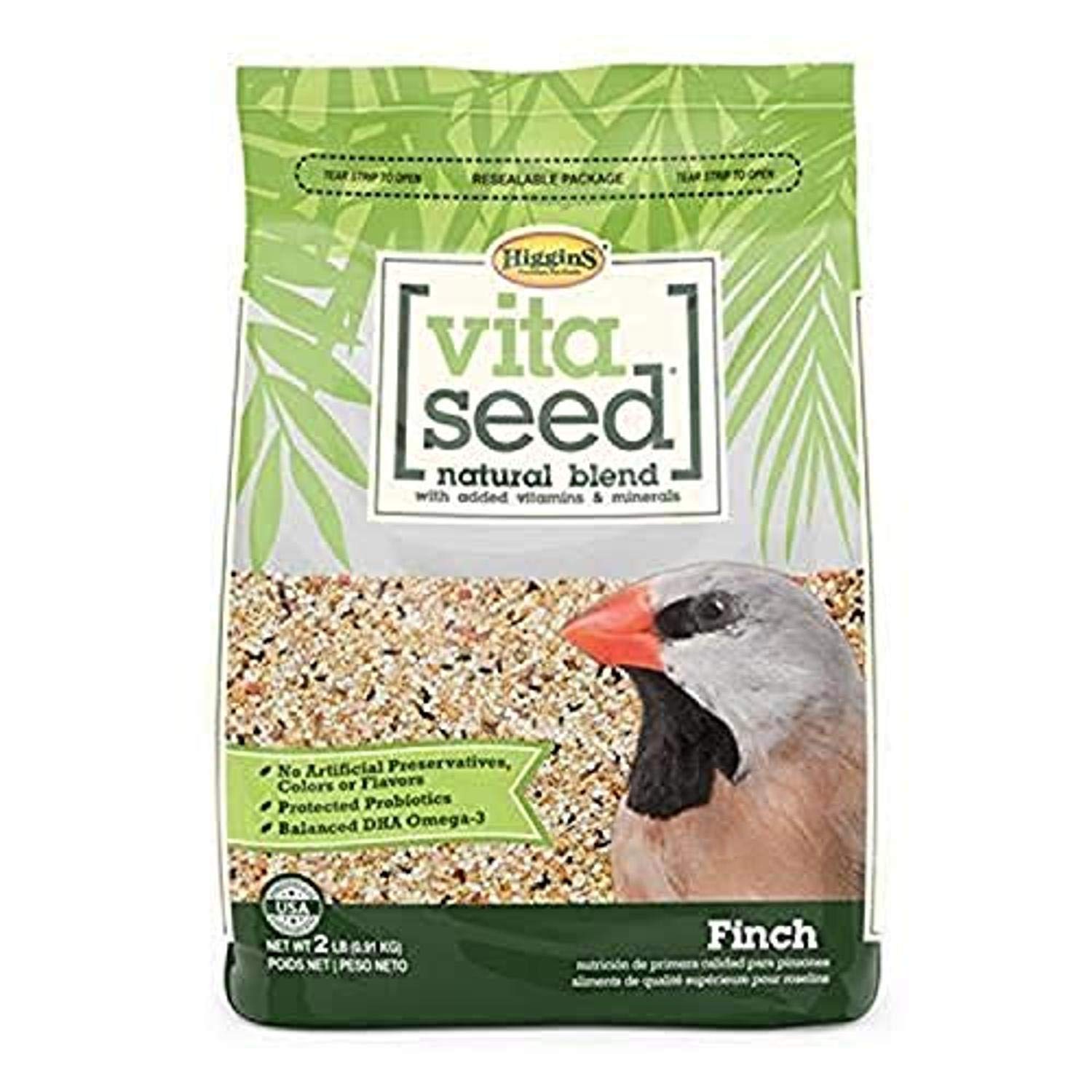
Higgins Vita Seed takes a different approach by adding probiotics to support digestive health and immune function in finches. The formula includes “nutrient-rich extruded morsels” — pelletized pieces that contain vitamins and minerals not naturally present in plain seeds. This makes the product functionally closer to a supplement blend than a straight seed mix, which can be useful for finches dislodging from stressful environments or new birds adjusting to a feeder location.
The 2-pound bag is the smallest in this comparison, making it suitable for first-time finch feeders testing local bird interest without committing to a large quantity. The pellet form in the morsels means some finches may take a few days to recognize the extruded pieces as edible, especially if they are accustomed to whole seeds. Once they do, the nutritional density in each bite is higher than unfortified seeds alone.
The raw diet claim and low-fat labeling suggest this is not an energy-dense winter fuel source. For cold months, it pairs better as a mixed supplement rather than the primary feeder fill. The bag is lightweight and easy to store, and the probiotic angle is genuinely unique in this category — no other product in the list targets gut health specifically for finches.
Why we love it
- Probiotic inclusion supports finch digestive health uniquely
- Extruded morsels deliver vitamins and minerals beyond plain seeds
- Compact 2-pound size is ideal for testing local finch interest
Good to know
- Small bag size requires frequent refill for heavy feeding activity
- Some finches may initially reject the extruded morsels in favor of whole seeds
FAQ
Do finches prefer nyjer seed over sunflower hearts?
Can I mix finch food with cheap bird seed to save money?
Final Thoughts: The Verdict
For most gardeners, the best bird food for finches winner is the Kaytee No Mess Finch Seed because it combines the largest 8-pound bag size with 100% consumable hulled seed, eliminating both waste and weed sprouting. If you want the highest nutritional density and wholefood variety for plumage health, grab the Dr. Harvey’s Fabulous Finch Food. And for a completely clean, no-sprout feeding station with zero corn or milo fillers, nothing beats the Happy Wings Finch Blend.