
Boxer puppies are a unique package: a short, barrel-chested body that needs to grow slow and steady, paired with a boundless, bunny-hopping energy that demands precise nutrition. Get the protein-to-fat ratio wrong, and you risk skeletal issues that haunt them for life. The right kibble doesn’t just fill their belly — it paces their growth plate closure and fuels that supersonic metabolism without piling on dangerous fat.
I’m Mo Mahin — the founder and writer behind Furric. I spend my weeks comparing guaranteed analysis panels, dissecting ingredient sourcing, and mapping amino acid profiles against breed-specific orthopedic studies to give Boxer owners the cold, hard data they need.
Whether you’re dealing with a teething 8-week-old land shark or a rambunctious 14-month-old who still thinks he’s lap-sized, this guide to the best puppy food for boxer breed breaks down the five formulas that actually match their developmental windows.
How To Choose The Best Puppy Food For Boxer Breed
Boxer puppies aren’t small dogs in big bodies — they’re a giant breed with a brachycephalic head and a deep chest that demands slow, controlled growth. Selecting the wrong formula can accelerate growth plates, leading to angular limb deformities and hip dysplasia before their first birthday.
Calcium & Phosphorus Ratios (The Skeleton Rule)
Boxer puppies need a calcium level around 1.0% to 1.5% on a dry matter basis, with a Ca ratio roughly 1.2:1 to 1.4:1. Too much calcium (common in all-breed puppy foods) triggers osteochondrosis; too little leads to brittle bones. Always check the guaranteed analysis — if the calcium exceeds 1.8%, skip it.
Protein & Fat Balance for Muscle, Not Obesity
Boxers are muscled athletes, but they gain weight easily if fat is too high. Look for a protein range of 28% to 32% with fat between 14% and 18%. Higher fat (over 20%) is designed for working sled dogs, not your couch-cuddling Boxer pup, and will pack on visceral fat around their deep chest.
Kibble Shape & Size Matters More Than You Think
A Boxer’s short muzzle and undershot jaw make large, flat kibble difficult to pick up. Breed-specific formulas (like Royal Canin’s Boxer kibble) use a wide, donut-shaped piece that sits on the tongue rather than falling off. If using a standard large-breed kibble, ensure the pieces aren’t too tall — or your puppy may lose interest after five frustrating attempts.
Quick Comparison
On smaller screens, swipe sideways to see the full table.
| Model | Category | Best For | Key Spec | Amazon |
|---|---|---|---|---|
| Royal Canin Boxer Puppy | Breed-Specific | Growth-stage precision for purebred Boxers | Tailor-made kibble shape, L-carnitine | Amazon |
| Hill’s Science Diet Large Breed Puppy | Veterinarian Trusted | Lean muscle + controlled growth | DHA + balanced minerals, 30 lbs | Amazon |
| Wellness CORE Large Breed Puppy | High-Protein Grain-Free | Active pups with sensitive stomachs | 34% protein, no corn/wheat/soy | Amazon |
| Purina Pro Plan Sport Development 30/18 | Athletic Formula | Working-line or high-drive Boxer pups | 30% protein / 18% fat, glucosamine | Amazon |
| Blue Buffalo Baby Blue Large Breed | Natural Recipe | Owners wanting DHA-rich natural ingredients | Chicken & brown rice, 24 lbs | Amazon |
In‑Depth Reviews
1. Royal Canin Breed Health Nutrition Boxer Puppy Dry Dog Food

This is the only formula on the market designed exclusively for the Boxer breed’s structural quirks. The kibble isn’t round or triangular — it’s a wide, shallow donut shape that fits a Boxer’s undershot jaw perfectly, preventing the frustrating kibble-dropping game. The 30-pound bag delivers a precise protein content paired with L-carnitine, which supports lean muscle without encouraging the fast, risky growth that predisposes Boxers to hip dysplasia.
The antioxidant complex (with vitamin E) directly supports immune system development during the vulnerable 8-to-15-month window when Boxers are most prone to environmental allergies and digestibility issues. High-quality proteins and prebiotics in this recipe are formulated specifically to manage stool quality — a major concern given the breed’s notorious flatulence and sensitive digestion.
One real downside: the price tag reflects the specialized research that went into breed-specific micronutrition. If you have a mixed-breed Boxer cross, you may need a different calcium-to-phosphorus ratio than what this purebred-targeted formula provides. For purebred puppies, this is the gold standard.
Why we love it
- Kibble shape is engineered for Boxer’s short muzzle and undershot bite
- L-carnitine helps maintain lean body composition during rapid growth
- Prebiotics significantly reduce digestive upset and gas
Good to know
- Premium price point reflects breed-specific R&D investment
- Not ideal for Boxer mixes who may need different calcium levels
2. Hill’s Science Diet Puppy Large Breed Dry Dog Food, Lamb Meal & Brown Rice

Hill’s Science Diet is the #1 veterinarian-recommended brand in the US, and this large-breed puppy formula reflects that pedigree. The lamb meal and brown rice recipe provides balanced minerals that precisely manage the growth rate of large-breed puppies — critical for Boxers whose deep chest and long legs need coordinated ossification. The DHA from fish oil supports retinal and cognitive development during the intense socialization window.
The antioxidant blend here is particularly well-documented: vitamins C and E combined with beta-carotene strengthen the developing immune system during the period when Boxer puppies are most vulnerable to kennel cough and environmental pathogens. The protein source (lamb meal) is a novel protein for many puppies, making this an excellent choice for Boxers with suspected chicken sensitivities.
The 30-pound bag offers solid value per pound for a premium veterinarian brand. However, the kibble is a standard large-breed round shape — not optimized for Boxer muzzle anatomy. Some owners report their Boxer pup needs to tilt its head to pick up pieces, which can slow down mealtime for a breed that already eats enthusiastically.
Why we love it
- Balanced mineral content supports controlled skeletal growth
- Lamb meal is a novel protein source, ideal for sensitive Boxer stomachs
- Veterinarian-recommended brand with extensive clinical research
Good to know
- Standard round kibble shape isn’t Boxer-muzzle optimized
- Lamb flavor may not appeal to all picky eaters
3. Wellness CORE Large Breed Puppy Dry Dog Food
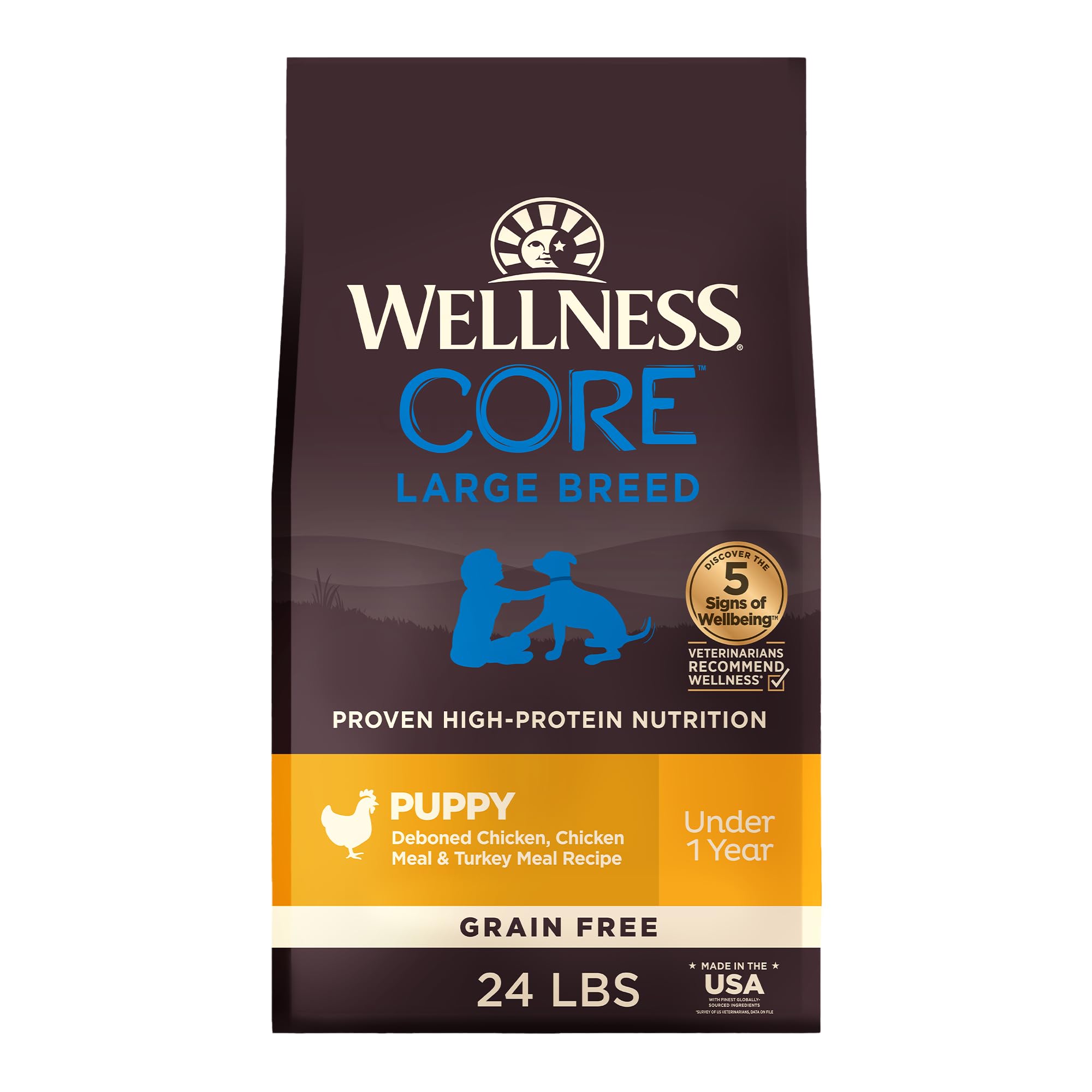
Wellness CORE takes a high-protein, grain-free approach that resonates with owners of high-energy Boxer puppies. The chicken and turkey recipe delivers 34% protein — the highest among the five products here — which fuels the muscle development of a breed that was originally a working bull-baiting dog. The fat and calorie levels are carefully modulated to prevent the excessive weight gain that strains Boxer joints during the first year.
DHA levels in this formula are guaranteed to support brain development, which is particularly beneficial during the fearful period (8-12 weeks) when Boxer puppies need consistent cognitive stimulation. The calcium and phosphorus ratio is balanced for large-breed growth, and the addition of taurine supports cardiac health — a crucial consideration for a breed with a predisposition to Boxer cardiomyopathy.
A significant consideration: grain-free diets have been linked to dilated cardiomyopathy in some dogs, though research is ongoing. If your Boxer puppy has a known grain sensitivity, this formula works well; if they have no digestive issues, the added fiber from grains can actually benefit a Boxer’s sometimes-touchy digestion. The 24-pound bag is smaller than the other options on this list, so you’ll reorder more frequently.
Why we love it
- 34% protein supports athletic Boxer muscle development
- Guaranteed DHA levels for cognitive growth during the fearful period
- No corn, wheat, soy, or artificial preservatives
Good to know
- Grain-free formulation may not suit all Boxer digestive systems
- 24-pound bag requires more frequent repurchasing
4. Purina Pro Plan Sport Development Large Breed 30/18 Puppy Formula
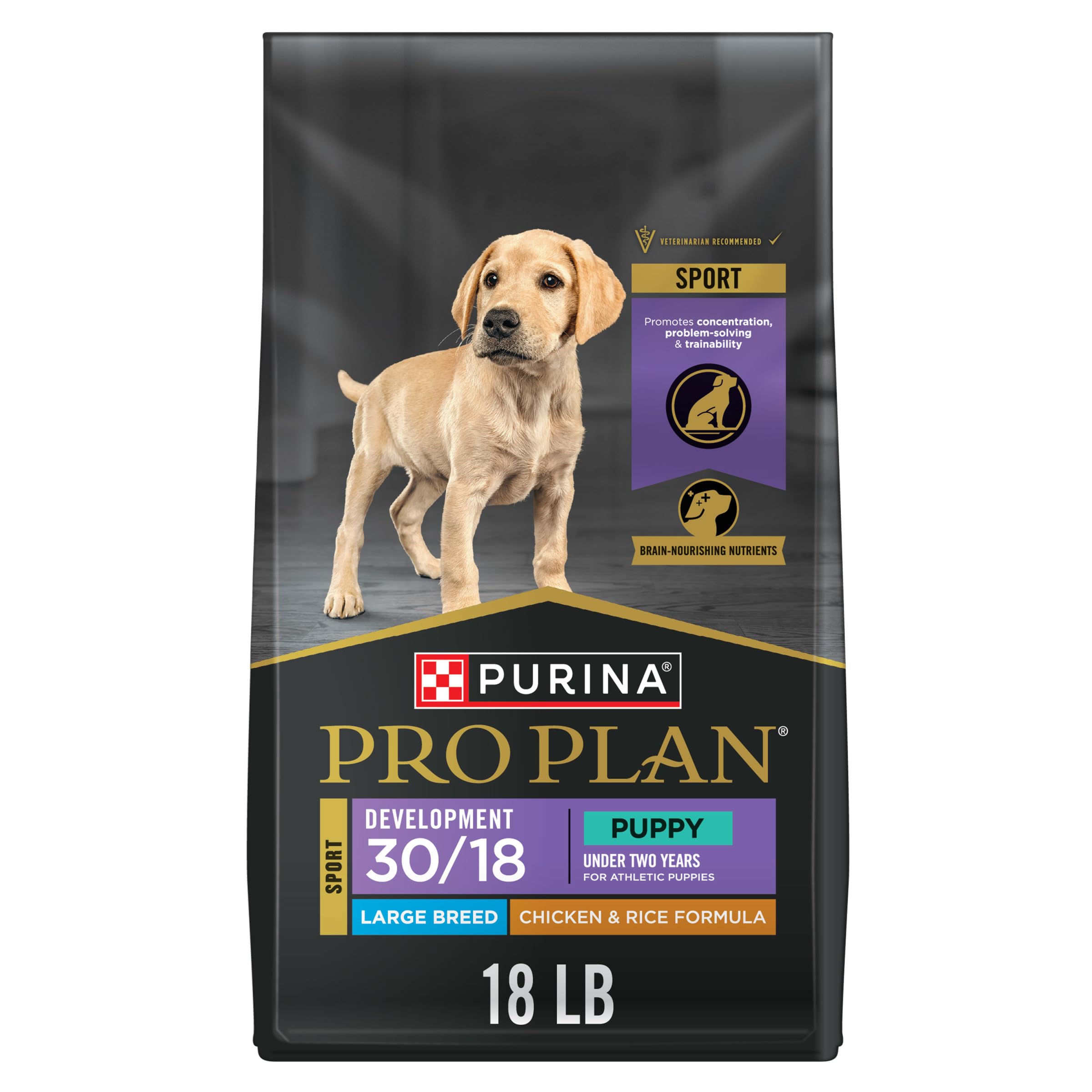
This Purina Pro Plan formula is built for athletic large-breed puppies — exactly the right profile for a Boxer from working lines or one destined for agility, obedience, or protection sports. The 30% protein and 18% fat ratio gives higher fat than the breed-specific formulas, designed to support the caloric demands of high-drive puppies in training. Real chicken is the #1 ingredient, providing a high-quality animal protein source.
The glucosamine content (targeted at joint and cartilage support) is a major differentiator here — especially relevant for Boxers whose deep-chested conformation puts extra torque on shoulder and hip joints during high-impact play like fetch and jumping. The bone-supporting nutrients (calcium, phosphorus, and essential vitamins) are calibrated for controlled growth, but the fat content requires careful portion management to prevent obesity in less active Boxer puppies.
One practical note: the 18-pound bag is the smallest on this list. For a Boxer puppy eating 3-4 cups per day, you’ll go through one bag every two to three weeks. This is a better fit for owners who want to rotate proteins or who have a single-puppy household where a larger bag might go stale before it’s finished.
Why we love it
- 30/18 ratio fuels high-drive athletic Boxer puppies effectively
- Glucosamine provides direct joint support for deep-chested conformation
- Real chicken is the first ingredient for superior amino acid profile
Good to know
- 18% fat requires precise portion control to avoid weight gain
- 18-pound bag is relatively small for continuous feeding
5. Blue Buffalo Baby Blue Natural Large Breed Puppy Dry Dog Food
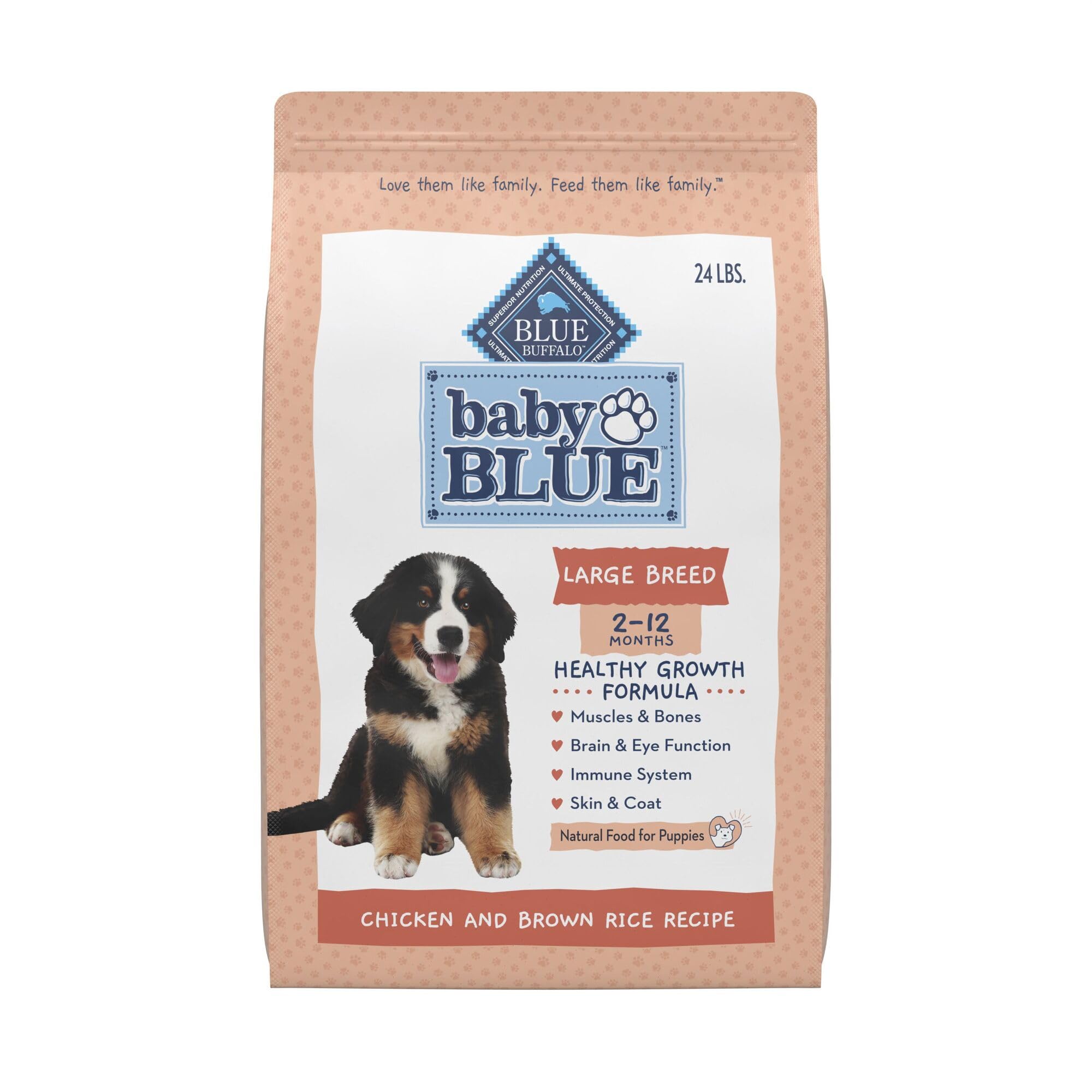
Blue Buffalo’s Baby Blue formula delivers solid nutritional value at a more accessible price point. The chicken and brown rice recipe provides DHA for brain development and a balanced calcium-to-phosphorus ratio appropriate for large-breed growth. This is a natural recipe — no chicken by-product meals, corn, wheat, or soy — which makes it gentler on the digestive system of Boxer puppies prone to food sensitivity.
The 24-pound bag fits well between the smaller Purina bag and the larger Hill’s or Royal Canin options. The chicken and brown rice base provides digestible carbohydrates and a steady energy release, which helps maintain stable blood sugar during the frenetic play sessions Boxer puppies are famous for. The natural DHA source is derived from fish oil rather than synthetic additives, appealing to owners who prefer whole-food nutrition.
However, the protein content hovers around 27% — lower than the Wellness CORE or Purina Pro Plan. For a highly active Boxer puppy with working-line genetics, this may not provide sufficient amino acid density to maintain lean muscle during rapid growth phases. It’s a better fit for the average pet Boxer whose exercise is limited to daily walks and backyard play.
Why we love it
- Natural recipe with no corn, wheat, soy, or by-products
- DHA from natural fish oil supports brain development
- Balanced calcium-to-phosphorus ratio for proper growth plate closure
Good to know
- Lower protein content (27%) may not satisfy high-drive working pups
- Standard kibble shape not optimized for Boxer jaw mechanics
FAQ
Can I feed my Boxer puppy an all-breed puppy formula?
Why does kibble shape matter for Boxer puppies?
Is grain-free puppy food safe for Boxers?
How much should I feed my Boxer puppy per day?
When should I switch from puppy food to adult food?
Final Thoughts: The Verdict
For most Boxer puppy owners, the puppy food for boxer breed winner is the Royal Canin Boxer Puppy because it addresses the breed’s unique jaw mechanics, digestive sensitivity, and controlled growth requirements in one formula. If you want veterinarian-backed research and a novel lamb protein for sensitive stomachs, grab the Hill’s Science Diet Large Breed Puppy. And for the high-drive, athletic Boxer destined for sports or working trials, nothing beats the Purina Pro Plan Sport Development 30/18 for fueling that explosive energy without sacrificing joint health.