
German Shepherds are prone to a sensitive gut, loose stools, and skin flare-ups that drive both them and their owners crazy. The right probiotic doesn’t just settle the stomach—it tackles the yeast, boosts immunity, and puts a stop to the constant paw licking and scratching that plagues the breed.
I’m Mo Mahin — the founder and writer behind Furric. I’ve spent years analyzing breed-specific supplement data, studying veterinary research on canine gut microbiomes, and cross-referencing thousands of owner reports to find exactly which formulas deliver for this deep-chested, high-energy breed.
Whether you’re dealing with antibiotic aftermath or chronic digestive sensitivity, this guide breaks down the science behind the best probiotic for german shepherds and which chews or powders actually earn their spot in your dog’s bowl.
How To Choose The Best Probiotic For German Shepherds
The German Shepherd’s deep chest and long digestive tract create a unique environment where gut bacteria populations shift quickly. A one-strain probiotic won’t cut it. You need a formula that covers the full digestive landscape—from the stomach to the colon—while supporting the immune system that 70 percent of the breed’s defenses depend on.
Strain Diversity Is Non-Negotiable
Look for at least three to five clinically studied strains. Lactobacillus acidophilus handles the small intestine. Bifidobacterium animalis colonizes the large intestine. Bacillus coagulans survives stomach acid to reach the lower gut. A blend of these ensures coverage across the entire digestive tract, which is critical for a breed prone to deep-seated inflammation and food sensitivities.
Prebiotics Feed the Good Bacteria
Probiotics are only as effective as the fuel they receive. Fructooligosaccharides (FOS) from chicory root or sweet potato act as prebiotic fiber that feeds the live cultures once they reach the gut. Without prebiotics, many of the ingested bacteria die off before they can colonize. A formula with a dual prebiotic blend gives the colonies a foundation to thrive.
Shelf Stability and Delivery Form
German Shepherds can be picky eaters, and powders are easier to hide in wet food than chews that might get rejected. However, chews often contain digestive enzymes and pumpkin that add bulk to stool—a major plus for the breed’s tendency toward loose stools. Whichever form you choose, ensure the strain is shelf-stable (spore-forming Bacillus strains or Saccharomyces boulardii yeast) so refrigeration isn’t required.
Quick Comparison
On smaller screens, swipe sideways to see the full table.
| Model | Category | Best For | Key Spec | Amazon |
|---|---|---|---|---|
| FortiFlora | Powder | Vet-recommended diarrhea management | 1×10^8 CFU Enterococcus faecium per sachet | Amazon |
| Vetnique Glandex Probiotic | Soft Chew / Powder | Gut-skin-immune all-in-one | 5 strains + Bromelain enzyme + dual prebiotics | Amazon |
| Royal Canin Probiotics | Powder | Live yeast for sensitive stomachs | Saccharomyces boulardii 1.13×10^9 CFU | Amazon |
| Purina Multi Care | Chew | 3-in-1 skin + digestion + immunity | Psyllium, postbiotics, omega-3s, biotin | Amazon |
| WEALLIN 200ct | Soft Chew | Long supply for multi-dog homes | 6 strains + pumpkin + 4-in-1 digestive blend | Amazon |
In‑Depth Reviews
1. Purina Pro Plan Veterinary Supplements FortiFlora Daily Probiotics for Dogs

FortiFlora is the number one probiotic supplement recommended by veterinarians for a reason—it uses a single, highly researched strain of Enterococcus faecium SF68 at 1×10^8 CFU per sachet. For German Shepherds experiencing acute diarrhea after a food change or antibiotic course, this powder provides targeted relief that often firms up stool within 12 to 24 hours.
The unflavored liver-flavored powder mixes easily into wet food without altering texture or taste, which matters for Shepherds that turn their nose up at chews. Each 1-gram sachet delivers a consistent dose of live bacteria that survive stomach acid, and the packaging is designed to keep the culture viable without refrigeration until opened.
Where FortiFlora stops short is strain diversity—it relies on a single bacterium. For ongoing daily maintenance of a German Shepherd’s sensitive gut, a multi-strain formula might provide more comprehensive coverage across the entire digestive tract. But for fast-acting diarrhea management, this remains the gold standard.
Why we love it
- Clinically proven single strain stops loose stools quickly
- Easy-to-feed powder works with wet or dry food
- Widely trusted by vets for acute diarrhea episodes
Good to know
- Only one bacterial strain—lacks diversity for long-term gut balance
- No prebiotics or digestive enzymes in the formula
2. Vetnique Glandex Dog Probiotic Chews
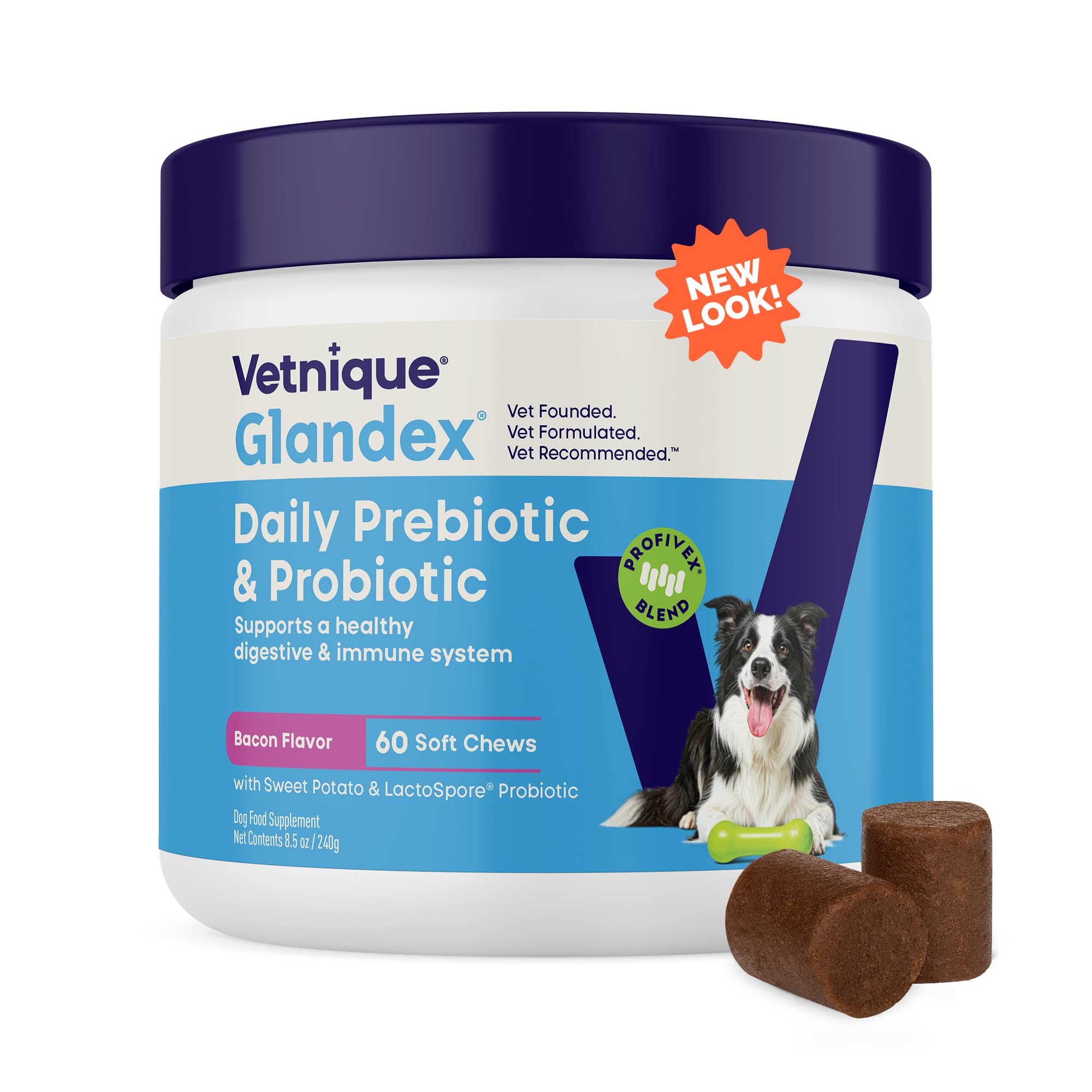
Vetnique Glandex Daily Probiotics goes beyond basic gut support by pairing five clinically studied strains (including LactoSpore, Lactobacillus acidophilus, and Bifidobacterium bifidum) with Bromelain—a natural digestive enzyme from pineapple that helps break down proteins for better nutrient absorption. For a German Shepherd prone to both loose stools and skin itching, this dual-action approach addresses the gut-skin axis directly.
The formula includes a dual prebiotic blend of sweet potato and FOS that feeds the live cultures, increasing the chance of colonization. The soft chews come in a bacon flavor that even picky Shepherds tend to accept, and the strain blend is shelf-stable at room temperature so you don’t need to worry about refrigeration.
Trusted by over 125,000 veterinarians, this is a complete daily maintenance probiotic that works for puppies 12 weeks and older through seniors. If your Shepherd scoots or has fishy odors alongside digestive issues, pairing this with Glandex Anal Gland Chews creates a full gut-and-gland system—but as a standalone probiotic, it’s one of the most comprehensive options available.
Why we love it
- Five-strain blend covers the entire digestive tract
- Bromelain enzyme improves protein digestion and nutrient absorption
- Dual prebiotics (sweet potato + FOS) feed the good bacteria
Good to know
- Higher price point per chew compared to single-strain options
- Bacon flavor may not appeal to all dogs
3. Royal Canin Probiotics for Dogs Digestive and Immune Health Powder
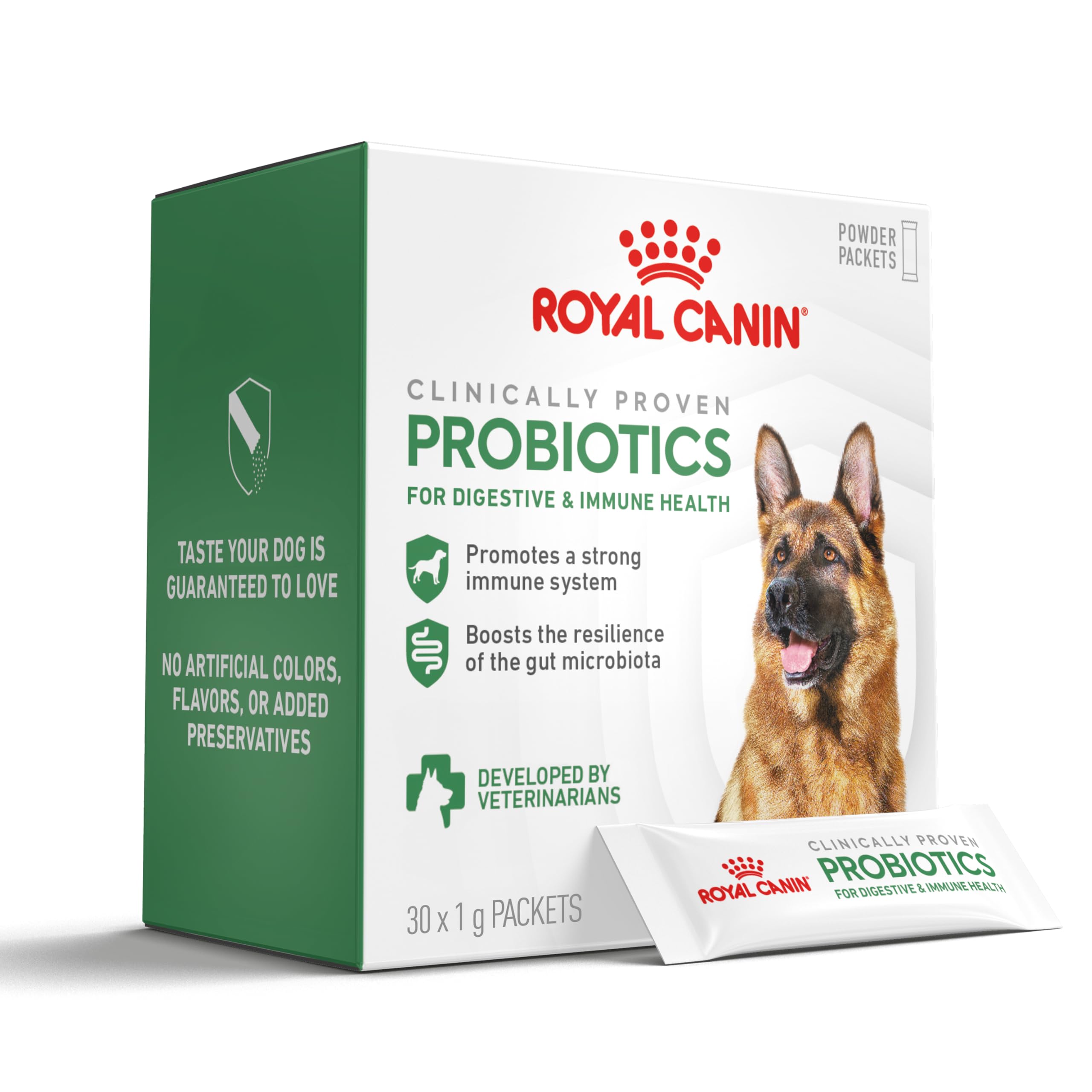
Royal Canin takes a targeted approach by using live yeast probiotic Saccharomyces boulardii CNCM I-1079 at a high dose of 1.13×10^9 CFU per packet. Unlike bacterial probiotics, yeast strains are naturally resistant to stomach acid and antibiotics, making this an excellent choice for German Shepherds recovering from a course of antibiotics or dealing with chronic yeast overgrowth in the gut.
The powder format—sprinkle one packet daily on wet or dry food—is ideal for dogs that reject chews or need a hidden supplement. Developed by veterinarians, the formula focuses on boosting the resilience of the gut microbiota to support digestive health and promote optimal stool quality. It’s unflavored, so it won’t clash with your Shepherd’s regular food.
Because it’s a single-organism product, it lacks the multi-strain diversity that some Shepherds need for comprehensive immune and skin support. But for a dog with a truly sensitive stomach that reacts to everything, the yeast-based approach often succeeds where bacterial blends fail.
Why we love it
- Yeast probiotic survives antibiotics and stomach acid better than bacteria
- High CFU count provides potent immune and digestive support
- Unflavored powder hides easily in any food
Good to know
- Single strain lacks bacterial diversity for full-spectrum gut health
- No prebiotics or digestive enzymes in the formula
4. Purina Pro Plan Veterinary Supplements Multi Care Dog Supplements

Purina’s Multi Care supplement combines a probiotic, prebiotic, and postbiotic blend with a derm blend featuring omega-3 fatty acids, vitamin E, zinc, and biotin. For German Shepherds that battle both digestive upset and a dull, itchy coat, this chewable addresses both issues in one daily dose without requiring separate skin and gut supplements.
The inclusion of psyllium husk adds soluble fiber that helps firm up loose stools while the postbiotics (metabolites produced by probiotics) provide immediate gut-lining support. The L-glutamine further supports intestinal cell health, which is particularly valuable for Shepherds with chronic inflammation or food sensitivities that damage the gut barrier over time.
The chew form is convenient, but the 30-count pouch means a single pouch lasts only a month for one dog. For larger Shepherds or multi-dog households, the supply runs out faster than a jar with 60 or 200 chews. Still, for a dog that needs skin and gut support simultaneously, this 3-in-1 approach reduces pill burden significantly.
Why we love it
- 3-in-1 formula covers skin, digestion, and immunity in one chew
- Psyllium fiber + postbiotics provide immediate gut barrier support
- Omega-3s and biotin improve coat and skin condition
Good to know
- Only 30 chews per pouch—short supply for daily use
- Chew form may be rejected by picky Shepherds
5. WEALLIN 200 PCS Probiotics for Dogs Soft Chews
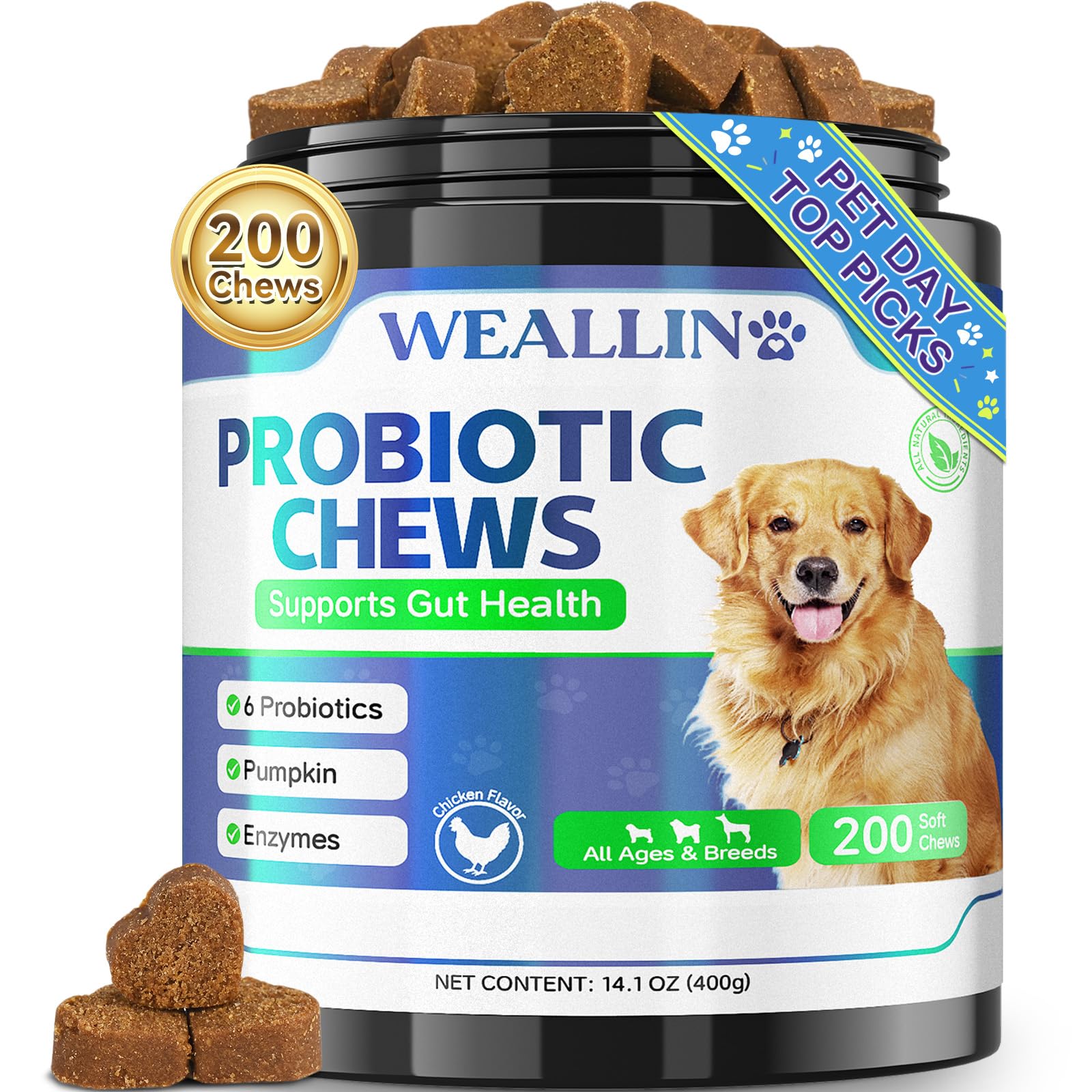
WEALLIN packs 200 soft chews per jar with a six-strain probiotic blend including Lactobacillus rhamnosus, Lactobacillus acidophilus, and Bifidobacterium animalis, alongside pumpkin and flaxseed meal for added fiber and omega-3s. For German Shepherd owners on a budget or those with multiple dogs, this supply can last two to three months depending on daily dosage.
The 4-in-1 digestive blend includes probiotics, prebiotics (FOS from chicory root), digestive enzymes, and pumpkin to target gas, diarrhea, constipation, and upset stomach simultaneously. The chicken flavor soft chew format is generally well-accepted, and the formula is corn-free, gluten-free, grain-free, and non-GMO, making it suitable for Shepherds with multiple food sensitivities.
While the strain diversity is impressive for the price point, the CFU count per chew isn’t explicitly listed on the label, which makes it harder to compare potency against vet-recommended brands. For daily maintenance rather than acute treatment, however, this long-lasting jar offers solid value without sacrificing strain variety.
Why we love it
- 200 chews per jar—best value for long-term daily use
- Six strains provide good bacterial diversity
- Pumpkin and flaxseed add natural fiber and omega-3s
Good to know
- CFU count per chew not clearly listed on packaging
- Chicken flavor may not suit dogs with poultry allergies
FAQ
How many CFUs does a German Shepherd need daily?
Can a probiotic stop my German Shepherd from scooting?
Are chews or powders better for a picky German Shepherd?
Should I give my Shepherd a probiotic every day or just when they have diarrhea?
Do German Shepherds need different probiotic strains than other breeds?
Final Thoughts: The Verdict
For most German Shepherd owners, the best probiotic for german shepherds winner is the Vetnique Glandex Daily Probiotics because its five-strain blend, dual prebiotics, and Bromelain enzyme provide comprehensive gut and immune coverage that matches the breed’s complex digestive needs. If you need fast-acting diarrhea relief from a vet-recommended formula, grab the Purina FortiFlora. And for a sensitive stomach that rejects everything, nothing beats the Royal Canin Probiotics with its yeast-based approach that survives antibiotics and stomach acid.