
If your daily walk has turned into a tug-of-war, with your dog lunging ahead and you fighting for control, an ineffective harness is the culprit. The wrong design chokes, rubs, or simply fails to redirect that forward momentum, turning a bonding experience into a frustrating test of strength.
I’m Mo Mahin — the founder and writer behind Furric. I’ve spent years analyzing pet product specs, comparing martingale loop designs against front-clip geometries, and studying thousands of owner reports to understand precisely which construction techniques actually stop pulling without causing discomfort.
This guide breaks down the martingale loops, front chest attachments, and fit tolerances that define a truly effective anti pull harness, so you can choose a model that teaches better leash manners and makes every walk more enjoyable.
How To Choose The Best Anti Pull Harness
Choosing an anti pull harness is about understanding leverage. The anatomy of the harness — where the leash attaches and how the straps loop around the chest — determines whether it gently steers your dog or simply lets him pull against a belly strap. Focus on these three factors for a purchase that actually changes walking behavior.
Clip Position: Front vs. Back
The single most important feature is a front chest leash attachment. A harness with only a back clip gives your dog full mechanical advantage to pull like a sled dog. A front clip, especially when paired with a martingale loop that tightens across the sternum, redirects forward force to the side, turning the dog’s body when he pulls and breaking his momentum.
Martingale Loop Design
A true no-pull harness uses a martingale action — a loop that encircles the chest and gently tightens when tension is applied. This is not choking; it’s a pressure signal that mimics the gentle correction a mother dog gives her puppy. Look for a harness where the martingale loop sits across the chest, not the throat, and where the range of constriction is limited by a stop stitch so it cannot over-tighten.
Fit Adjustability and Body Geometry
An anti pull harness only works if it fits. Measure your dog’s chest girth at the widest point behind the front legs, not the neck. The best models offer separate adjustability for the belly strap and the neck opening, allowing you to dial in a snug fit that prevents the harness from shifting sideways — a common failure point that allows a determined dog to slip or continue pulling effectively. Padded neoprene lining on the chest plate also reduces chafing during long walks.
Quick Comparison
On smaller screens, swipe sideways to see the full table.
| Model | Category | Best For | Key Spec | Amazon |
|---|---|---|---|---|
| PetSafe Easy Walk Deluxe | Mid-Range | General training & everyday walks | Front chest martingale loop | Amazon |
| Sporn No Pull Harness | Mid-Range | Durable control for medium breeds | Padded restraint sleeves | Amazon |
| ShawnCo Essential Dog Harness | Mid-Range | Versatile multi-clip no-pull training | 3 leash clips (front + back) | Amazon |
| Embark Adventure No-Pull Harness | Premium | Large breeds & rugged outdoor use | Military-grade nylon construction | Amazon |
| Carhartt Nylon Duck No Pull Harness | Premium | Heavy-duty work & all-weather walking | 500-denier with DWR coating | Amazon |
In‑Depth Reviews
1. PetSafe Easy Walk Deluxe Dog Harness

The PetSafe Easy Walk Deluxe is arguably the most frequently recommended anti pull harness on the market, and for good reason. Designed by veterinary behaviorist Dr. R.K. Anderson, its patented front martingale loop rests across the dog’s chest, not the throat, so when your dog pulls, the harness gently redirects his front legs to the side rather than constricting his airway. The Deluxe version upgrades the standard model with padded neoprene straps that stay cool on warm days and integrated reflective strips for low-light visibility.
Fit is straightforward thanks to the quick-snap shoulder and belly straps, and the harness is notably lightweight at just 7.64 ounces — a real advantage for dogs that dislike bulky gear. The nylon construction is durable enough for daily walks, and because it covers less body surface than many vest-style designs, it runs cooler in summer heat. The martingale action has a stop stitch that prevents over-tightening, giving you the leverage you need to correct pulling without worrying about injury.
Some users note that the front clip placement can cause the leash to get under the dog’s front legs during extended sniffs, but this is a minor trade-off for the control it offers. For general training, daily neighborhood walks, and owners who want a proven, well-documented system, this harness is the standard to measure others against.
Why we love it
- Patented martingale loop steers body, not the throat, preventing gagging
- Reflective strips improve safety during early morning or evening walks
- Padded neoprene reduces chafing and keeps the dog cool
Good to know
- Front clip can occasionally snag on a dog’s front leg
- Less body coverage than some owners prefer for very strong pullers
2. Carhartt Nylon Duck No Pull Dog Harness

The Carhartt Nylon Duck No Pull Harness brings work-grade durability to the walking world. It’s built from 500-denier polyester with Rain Defender DWR technology, meaning it shrugs off light rain and won’t soak up mud and moisture on wet morning walks. The martingale chest strap is stitched with a stop to prevent over-tightening, and the over-the-head yoke-style fit paired with fully adjustable chest and belly straps lets you dial in a secure fit for dogs with deep chests or narrow shoulders.
What sets this harness apart is its integrated quick-control handle on the back — a gel-lined loop that gives you immediate grab-and-go control near traffic, at the vet, or in crowded spaces. The spacer mesh backing provides a layer of breathability, and the reflective low-light stitching runs across multiple panels, not just a small strip, so your dog remains visible from several angles. Carhartt designed the sizing chart explicitly around chest girth, with the X-Large accommodating a 33- to 46-inch chest, making this one of the better options for giant breeds.
The main consideration is that the Carhartt is heavier than nylon strap harnesses, though the weight is distributed well. Some owners also find the chest strap sits slightly higher than expected on short-legged breeds, so it’s worth measuring carefully. If you need a harness that doubles as an outdoor work tool and can handle wet, dirty conditions without breaking down, this is the clear choice.
Why we love it
- DWR coating repels light rain and resists waterlogging
- Reflective stitching across multiple panels for 360-degree visibility
- Gel-lined quick-control handle for immediate restraint in high-traffic areas
Good to know
- Heavier than strap-style harnesses; not ideal for all-day wear in hot weather
- Chest strap fit may need careful adjustment for shorter-legged dogs
3. ShawnCo Essential Dog Harness
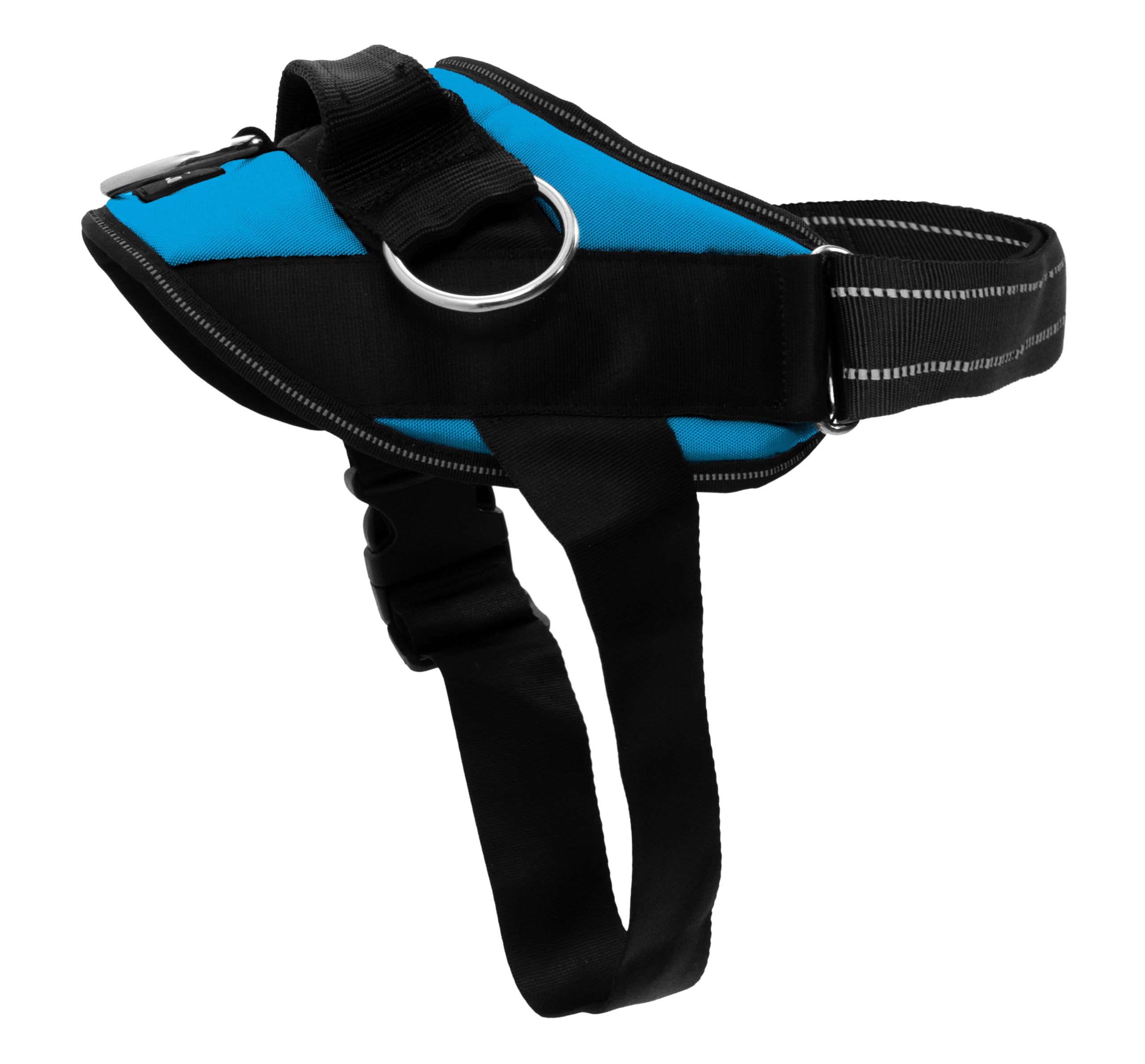
The ShawnCo Essential Dog Harness offers a flexible approach to no-pull training with its three-leash-clip system — one on the front chest and two on the back. This design allows you to start training with the front clip to discourage pulling, then gradually transition to a back clip as your dog learns better leash manners. The padded vest-style body distributes pressure evenly and includes reflective stitching for visibility during evening walks.
Adjustability is a strong point: the harness fits through separate straps at the neck and belly, allowing you to dial in a snug fit for small, medium, and large breeds. The Oceanic Blue color is vibrant, and the padded chest plate helps prevent rubbing even during extended training sessions. Because the front clip is a D-ring rather than a martingale loop, it works by redirecting the dog’s body to the side when he pulls, which is gentler than a traditional choke-style correction but requires you to hold the leash steady for best effect.
Some owners note that the padding adds slight bulk, which can be a challenge for very small dogs or those with extremely short coats where the vest may slip if not tightened enough. However, for an entry-to-mid-level harness that covers all training phases — from strong puller to polite walker — the ShawnCo’s clip flexibility makes it a smart, budget-conscious choice.
Why we love it
- Three clip points support front-clip training and back-clip maintenance
- Padded vest distributes pressure evenly across the chest
- Reflective stitching improves safety in low light
Good to know
- Padding adds bulk; may slide on very short-coated dogs
- Front clip redirects but lacks martingale tightening action
4. Embark Adventure No-Pull Large Dog Harness
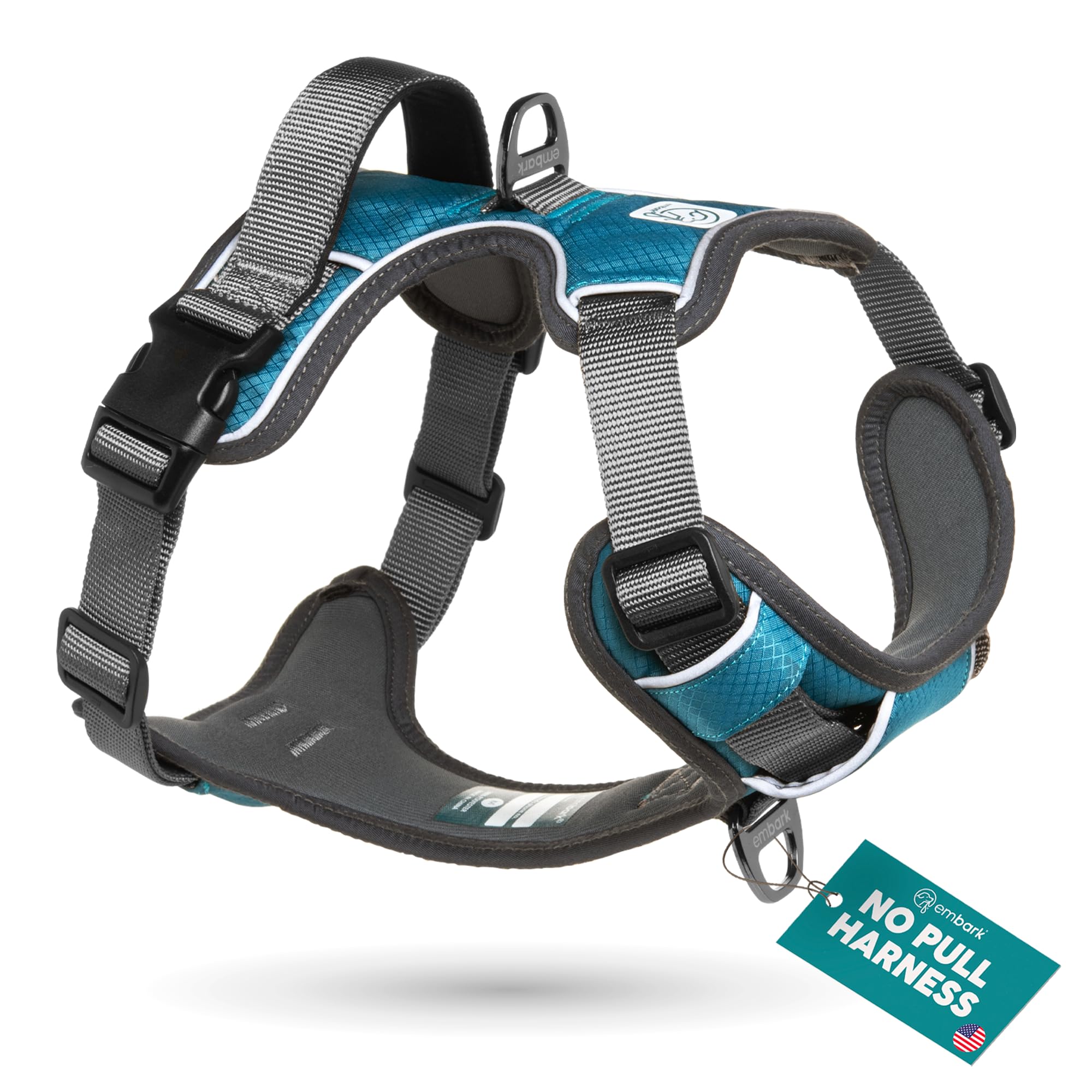
The Embark Adventure No-Pull Harness is built specifically for large breeds and rugged outdoor use. Its military-grade nylon construction is significantly tougher than standard polyester or nylon strap harnesses, making it a strong candidate for dogs that tend to chew or drag their gear through brush. The front clip is reinforced with a heavy-duty D-ring, and the gel-lined top handle gives you a non-slip grip for lifting or restraining a dog over rough terrain.
Reflective trim runs across the chest and back panels, and the padded interior provides a layer of comfort that prevents chafing during long hikes. The fit is adjusted through a two-buckle system at the neck and belly, and the harness sits securely without shifting sideways — a common complaint with cheaper vest models on barrel-chested breeds like Bulldogs or Mastiffs. The front clip uses a simple geometric redirection rather than a martingale design, but the heavier nylon construction adds enough structural integrity that even strong pullers are effectively redirected.
The main trade-off is weight: this harness is noticeably heavier than the PetSafe or ShawnCo, which some small-to-medium dogs may find cumbersome. Additionally, the sizing runs slightly large, so owners should err on the smaller side of the chest girth range for the best fit. If you need a harness that can survive off-road adventures and heavy pulling, this is the rugged option you want.
Why we love it
- Military-grade nylon resists chewing and trail abrasion
- Gel-lined handle offers non-slip grip for lifting and control
- Heavy-duty front D-ring withstands strong pullers
Good to know
- Heavier construction; not ideal for small dogs
- Sizing runs slightly large; measure chest girth carefully
5. Sporn No Pull Dog Harness
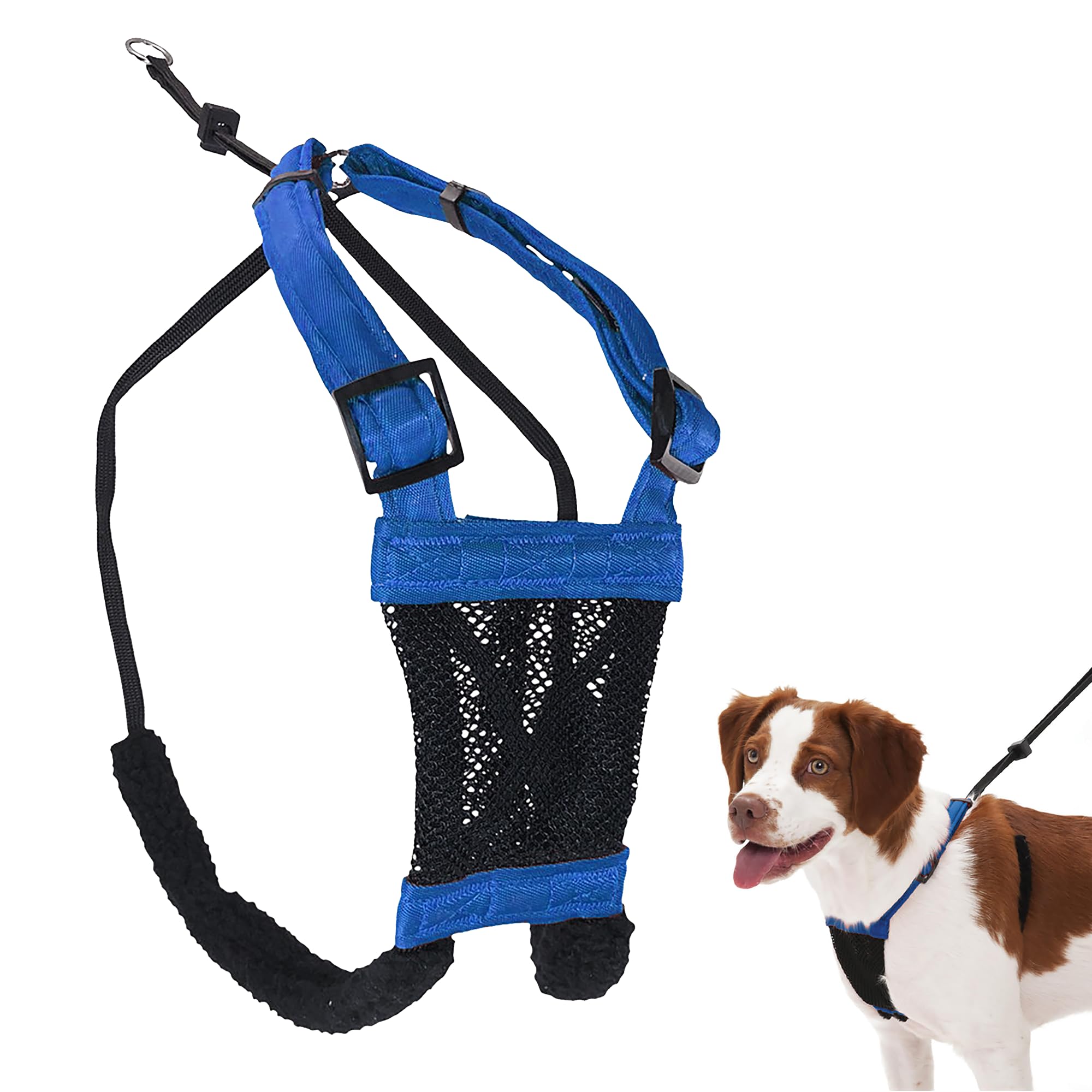
The Sporn No Pull Dog Harness takes a different approach to the no-pull problem. Instead of a front chest martingale loop, it uses padded restraint sleeves that wrap around the upper front legs and connect to a belly strap. When the dog pulls, the sleeves apply gentle pressure to the armpit area, creating an uncomfortable but harmless sensation that encourages the dog to slow down and walk politely. This design has been on the market for years and has a loyal following among owners of medium breeds who want a lightweight, no-fuss solution.
The harness is incredibly easy to put on and take off — the restraint sleeves slide over the legs and the belly strap buckles in seconds. The nylon mesh construction is breathable and dries quickly if it gets wet, and there are no heavy chest straps or vest panels to worry about. This harness is also one of the lightest options on this list, making it a good choice for dogs that dislike weight on their shoulders. The no-choke design means the pulling pressure is entirely on the chest and shoulders, never the throat.
Some trainers note that the sleeve design can be less effective on dogs that are unusually agile and try to back out of the harness, and it requires a particular orientation to function correctly — the leash must clip to the belly ring, not the chest. But for owners who need a budget-friendly, intuitive, and comfortable anti pull harness for moderate pullers, the Sporn delivers solid value without unnecessary complexity.
Why we love it
- Padded sleeves create a gentle pulling deterrent without chest loops
- Lightweight and quick-drying nylon mesh for all-weather comfort
- Extremely easy to get on and off
Good to know
- Less effective on dogs that try to back out of sleeve-style harnesses
- Requires leash attachment to belly ring for no-pull function
FAQ
Will a front-clip anti pull harness hurt my dog’s shoulder joints?
How tight should I adjust the martingale chest strap?
Can I use a retractable leash with an anti pull harness?
Why does my dog still pull even with a front-clip harness?
Final Thoughts: The Verdict
For most gardeners, the anti pull harness winner is the PetSafe Easy Walk Deluxe because its padded neoprene construction, patented front martingale loop designed by a veterinary behaviorist, and lightweight build make it the most practical and proven choice for daily walks and training. If you need a rugged, all-weather harness for heavy-duty outdoor work or a large breed that pulls hard, grab the Carhartt Nylon Duck for its DWR water repellency and gel-lined control handle. And for a budget-conscious option that offers flexible multi-clip training without breaking your wallet, nothing beats the ShawnCo Essential Dog Harness.