
Bringing a kitten home means committing to a critical window of growth — the first year determines bone density, muscle mass, and lifelong immunity. The wrong kibble can derail that. Hard food for kittens must deliver precise calcium-to-phosphorus ratios, DHA for brain wiring, and a kibble size their tiny jaws can actually crack. It’s not adult food shrunk down; it’s a completely different nutritional playbook.
I’m Mo Mahin — the founder and writer behind Furric. I’ve spent years cross-referencing AAFCO nutritional profiles, analyzing crude protein percentages, and poring over owner reports to separate the formulas that truly raise healthy cats from the ones that just fill a bowl.
After evaluating dozens of recipes, these are the five diets that deliver the right balance of taurine, DHA, and controlled calorie density for a growing predator. Use this guide to find the best hard food for kittens that fits your kitten’s age, breed size, and digestive tolerance.
How To Choose The Best Hard Food For Kittens
Kitten kibble is a precision tool. A generic adult formula misses the high-protein, high-fat requirements that fuel a kitten’s 15-hour-a-day growth engine. Here are the three non-negotiable specs to check before buying.
Guaranteed Analysis: Crude Protein & Fat
Look for a minimum of 35% crude protein and 18% crude fat on a dry matter basis. Kittens need roughly twice the protein per pound of body weight as adult cats. Anything lower risks slowed muscle development and a dull coat. Brands like Royal Canin push specific amino acid profiles that match a kitten’s rapid growth curve.
DHA, Taurine & Brain Development
Docosahexaenoic acid (DHA) is the structural fat that builds a kitten’s retina and cerebral cortex. Taurine is an essential amino acid cats cannot synthesize — deficiency leads to blindness and heart failure. Premium formulas list a DHA source like marine microalgae oil or fish oil in the first ten ingredients. Skip any bag that hides taurine behind vague “natural flavors.”
Kibble Geometry & Rehydratability
A 4-week-old kitten has baby teeth that can barely shatter a large adult kibble. Look for kibble diameters under 8mm, or better yet, “rehydratable” kibble designed for weaning. The Royal Canin Mother & Babycat line uses a porous kibble that softens quickly in warm water, mimicking the texture of wet food while training the jaw to chew.
Quick Comparison
On smaller screens, swipe sideways to see the full table.
| Model | Category | Best For | Key Spec | Amazon |
|---|---|---|---|---|
| Royal Canin Mother & Babycat | Kibble | Weaning & 1–4 months | Rehydratable kibble, 8mm | Amazon |
| Blue Buffalo Freedom Grain-Free | Kibble | Indoor kittens & grain-free diets | DHA + ARA, LifeSource Bits | Amazon |
| ACANA First Feast | Kibble | Whole prey protein profiles | 70% animal ingredients, 4lb | Amazon |
| Wellness Complete Health Kitten | Kibble | Wholesome grains & balanced nutrition | Turkey + chicken, 5lb bag | Amazon |
| Hill’s Science Diet Kitten | Wet Food | Supplementing dry kibble with moisture | Chicken, 2.8 oz pouch 24-pack | Amazon |
In‑Depth Reviews
1. Royal Canin Feline Health Nutrition Mother & Babycat Queen Dry Cat Food
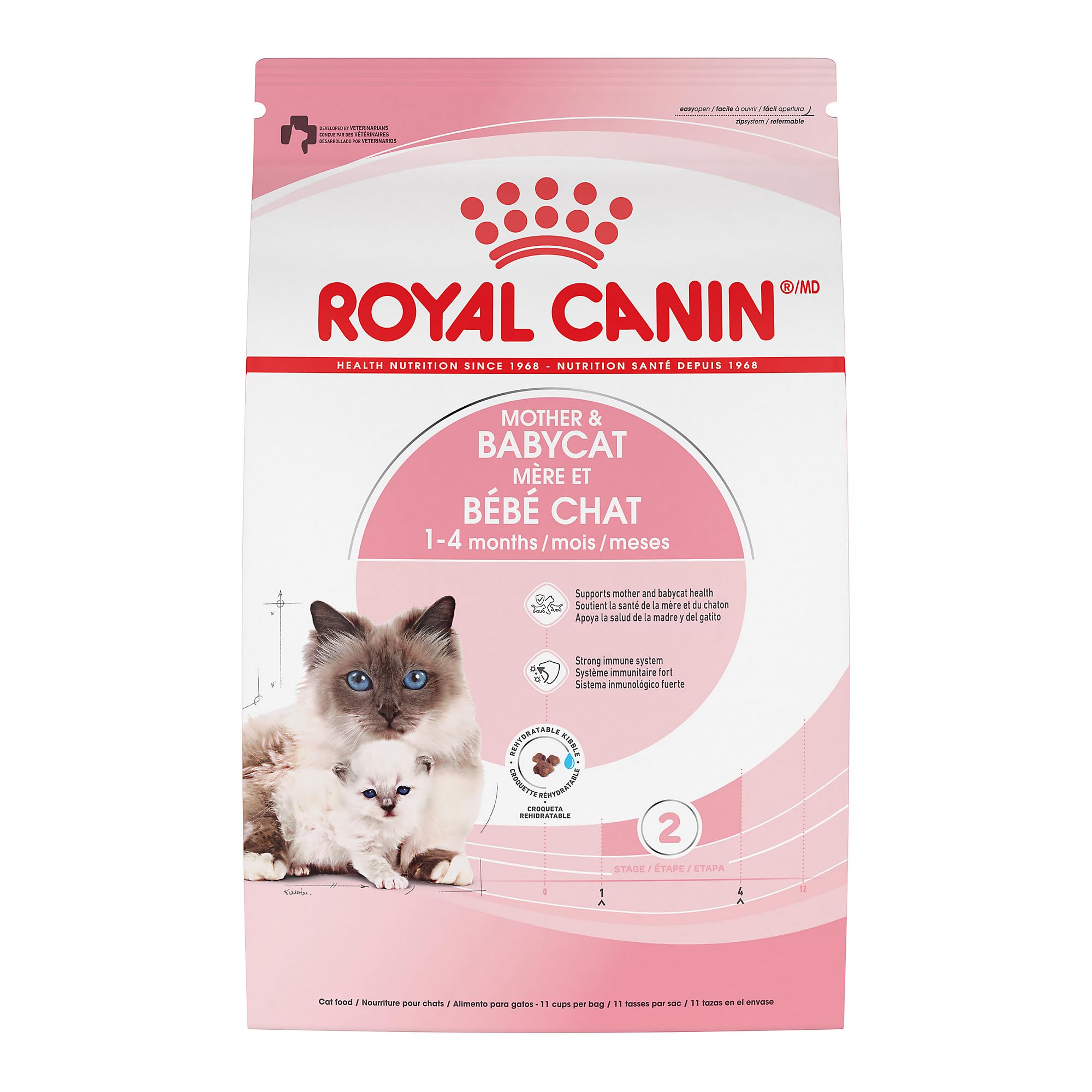
Royal Canin engineered this recipe specifically for the 1–4 month window, a phase when kittens transition from mother’s milk to solids. The kibble is roughly 8mm wide and porous — add warm water and it softens into a mash that baby teeth can gum. This texture reduces the risk of a kitten swallowing whole kibble and choking or vomiting it back up undigested. The formula delivers 43% crude protein and a precise 1.2:1 calcium-to-phosphorus ratio that mirrors queen’s milk for skeletal development.
The antioxidant blend (vitamins E and C) plus prebiotic fiber from fructooligosaccharides support a still-developing gut microbiome. Pregnant and nursing queens also benefit from the high digestibility, making this a single-bag solution for a litter. The chicken flavor is mild, and the bag includes a resealable zipper to maintain freshness across several weeks of feeding.
Some owners note the bag is only 3 lb, which disappears fast with a multi-kitten household. The inclusion of brewers rice and corn gluten as carbohydrate sources may not appeal to owners seeking a grain-free label, but the digestibility data backs the ingredient choice for this specific life stage. For the earliest weeks, this rehydratable kibble outperforms anything else on the market.
Why we love it
- Rehydratable kibble design prevents choking in weaning kittens.
- Clinically backed antioxidant blend for immune development.
- Serves both nursing queens and newborn kittens from a single formula.
Good to know
- 3 lb bag is small for multiple kittens or longer feeding windows.
- Contains corn and brewers rice — not grain-free.
2. Blue Buffalo Freedom Grain-Free Indoor Dry Kitten Food, Chicken Recipe

Blue Buffalo leads with deboned chicken as the first ingredient, delivering a crude protein level around 34%. The formula is fortified with DHA and ARA from marine microalgae oil — a plant-based source that avoids fish allergens while still supporting retinal and cognitive development. This is a grain-free recipe, swapping wheat and corn for peas and potatoes, which suits kittens with suspected grain sensitivities or those prone to loose stools on grain-heavy kibble.
The unique addition is the LifeSource Bits — cold-formed antioxidant pellets blended into the kibble. These bits contain vitamins E, A, and C plus chelated minerals for absorption. The 5 lb bag is a practical size for a single kitten, lasting roughly five to six weeks. The indoor formula also includes a moderate fiber blend to help control hairball formation as the kitten begins self-grooming.
A few owners report the kibble diameter runs slightly large — about 9–10mm — which can be challenging for very young kittens under 10 weeks. Crushing the pieces or mixing with warm water solves this until the jaw strengthens. The calorie density (3,700 kcal/kg) is slightly lower than some competition, so active breeds like Bengals may need a larger portion to maintain weight.
Why we love it
- Deboned chicken is the #1 ingredient for high-quality protein.
- LifeSource Bits provide targeted antioxidant support.
- Grain-free formula works well for sensitive digestion.
Good to know
- Kibble is a bit large for kittens under 10 weeks.
- Lower calorie density may require larger portions for high-energy breeds.
3. ACANA Dry Cat Food For Kittens First Feast Chicken and Fish 4lb Bag

ACANA’s “First Feast” formula leans heavily on a whole-prey philosophy: 70% of the ingredients come from animal sources, including free-run chicken, whole herring, and turkey. This creates a naturally high crude protein content near 37% and a fat percentage around 20%, which closely mimics the macronutrient ratio a kitten would get from a raw mouse diet. The recipe is grain-free and uses lentils and chickpeas as carbohydrate sources, keeping the glycemic load moderate.
The 4 lb bag is compact but dense — the kcal per cup is around 450, meaning a single cup covers a full day’s energy for a 2 lb kitten. The kibble is freeze-dried coated with raw chicken liver for a strong aroma and flavor that even picky eaters accept. Omega-3 fatty acids from fish support skin barrier formation and coat sheen during the rapid growth months.
The kibble pieces average 7–8mm, which is smaller than the Blue Buffalo option and suitable for kittens as young as 8 weeks. Some owners note the high fish content can make stool smell stronger and may trigger fish allergies in sensitive kittens. Rotate with a poultry-only formula if you notice ear scratching or loose stool within two weeks of starting this bag.
Why we love it
- High 70% animal ingredient inclusion matches feline evolutionary diet.
- Freeze-dried raw coating increases palatability for picky eaters.
- Small kibble size (7–8mm) fits young kitten jaws.
Good to know
- High fish content can cause fish-sensitive reactions.
- Distinct aroma may not appeal to owners sensitive to fish smell.
4. Wellness Complete Health Kitten Dry Cat Food, Turkey, Turkey Meal and Chicken Recipe

Wellness Complete Health takes a grain-inclusive approach, using brown rice, oatmeal, and barley as carbohydrate sources. This provides a moderate fiber level (around 4%) that helps regulate digestion without the legume-heavy starch loads found in grain-free recipes. The protein base is turkey meal and chicken meal — concentrated protein sources that deliver roughly 38% crude protein without the moisture dilution of whole meats. Taurine is supplemented at a measured 0.15% to exceed AAFCO minimums for cardiac health.
The 5 lb bag offers strong value for a single kitten household. The kibble size is approximately 9mm, comparable to the Blue Buffalo option, but the texture is slightly less dense, making it easier for young kittens to crunch. The recipe includes omega-6 fatty acids from chicken fat for skin health and glucosamine for developing joint cartilage, a useful addition for larger breeds like Maine Coons.
A common owner report is that the turkey base is less allergenic than chicken-based formulas, reducing the likelihood of facial itching. The inclusion of whole grains means this is not suitable for grain-averse kittens. The crude fiber level can occasionally cause slightly firmer stools if the kitten is not drinking enough water; ensure fresh water is always available.
Why we love it
- Turkey and chicken meal provide concentrated, high-biological-value protein.
- Grain-inclusive recipe with oatmeal supports gentle digestion.
- Glucosamine added for joint development in larger breeds.
Good to know
- Not grain-free — not suitable for grain-sensitive kittens.
- Kibble size (9mm) may be large for very young kittens under 10 weeks.
5. Hill’s Science Diet Kitten Wet Cat Food, Chicken, 2.8 oz. Pouches, 24-Pack
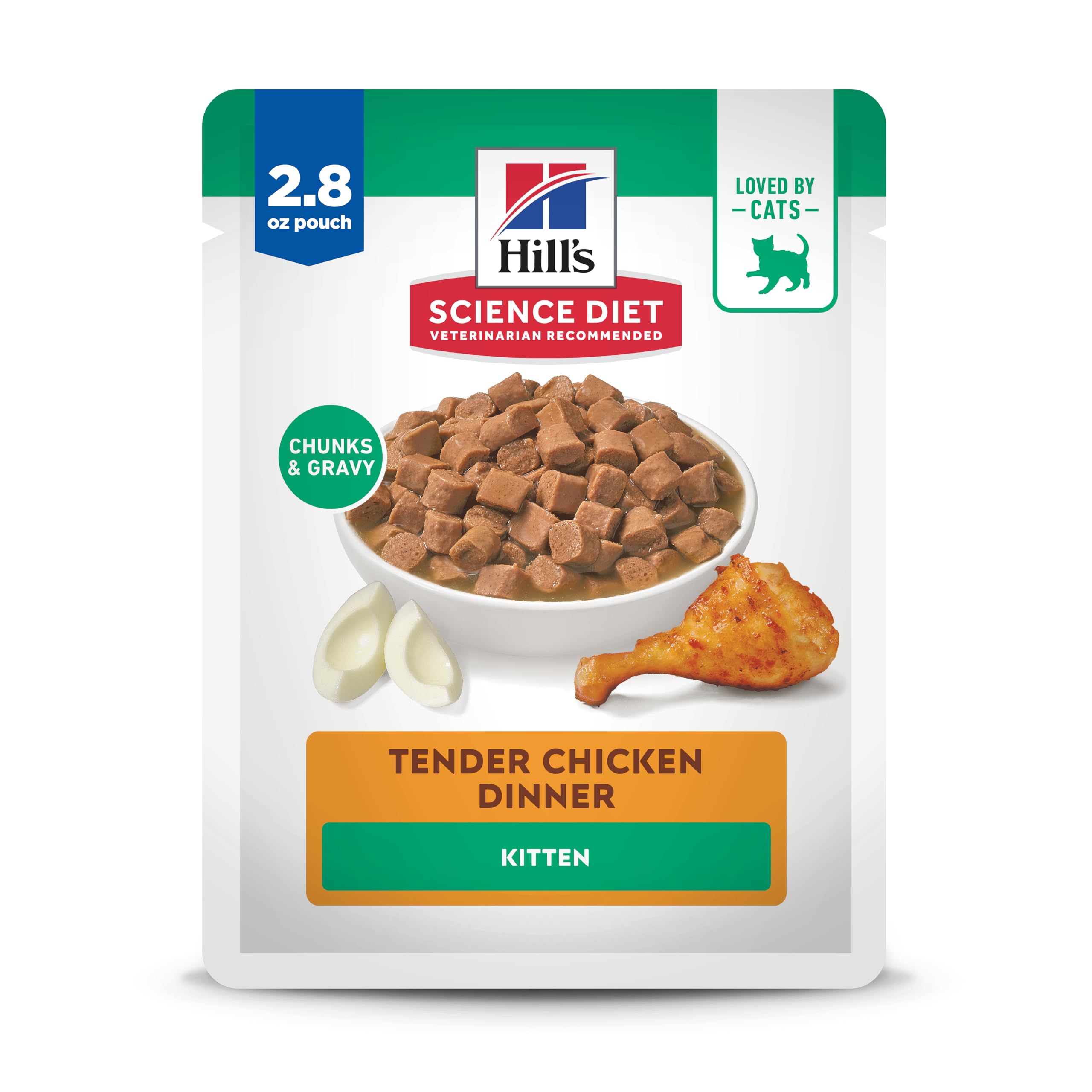
Hill’s Science Diet Kitten wet food is a pâté-style chicken recipe packed in 2.8 oz easy-tear pouches. Each pouch delivers roughly 78% moisture, which is critical for kittens that are reluctant water drinkers — a common cause of early urinary crystal formation. The formula is designed to complement a dry kibble base, offering a different texture that stimulates the palate and encourages total food intake during the high-energy growth phase.
The guaranteed analysis shows 10% crude protein and 6% crude fat on an as-fed basis (approximately 45% and 27% on a dry matter basis), aligning with kitten requirements. The recipe is devoid of artificial colors and preservatives, relying on mixed tocopherols for shelf stability. The 24-pouch pack covers roughly 12 days for a single kitten fed two pouches daily alongside dry kibble.
Owners of littermates appreciate the portion control — each pouch is a measured meal that prevents overfeeding. The pâté consistency is smooth enough for a 6-week-old kitten to lap up without choking. The primary drawback is that this is a wet food, not a dry kibble; it does not satisfy the need for a hard food texture that helps scrape plaque during chewing. Use it as a hydration adjunct rather than a standalone diet.
Why we love it
- High moisture content supports urinary tract health in low-drinkers.
- Smooth pâté texture is safe for weaning-age kittens.
- Pre-portioned pouches prevent overfeeding and waste.
Good to know
- Wet food does not provide dental abrasion like dry kibble.
- 24-pouch pack moves quickly in a multi-kitten household.
FAQ
Can I feed adult cat kibble to my kitten if it’s higher in protein?
How long should a kitten stay on hard food for kittens before switching to adult food?
What does “rehydratable kibble” mean and does my kitten need it?
Should I mix wet and dry food or feed only hard food for kittens?
Final Thoughts: The Verdict
For most kitten owners, the best hard food for kittens is the Royal Canin Mother & Babycat because no other dry kibble addresses the physical challenge of weaning with rehydratable texture and queen-specific electrolytes. If you want a grain-free formula with DHA and indoor-specific fiber, grab the Blue Buffalo Freedom Grain-Free. And for a whole-prey protein ratio that supports rapid lean mass development, nothing beats the ACANA First Feast.