
Feeding your aquarium the wrong nutrition is the fastest route to cloudy water, stunted growth, and a suppressed immune system that leaves fish vulnerable to disease. The market is flooded with dry pellets and flakes packed with terrestrial starches that fish cannot digest, but the right food delivers marine-based protein levels and particle sizes matched specifically to the species you keep—whether you are rearing 0.1mm newborn fry or conditioning adult cichlids for breeding.
I’m Mo Mahin — the founder and writer behind Furric. I have spent the past two years comparing aquaculture feed labels, cross-referencing nutritional analyses from three different suppliers per product, and studying owner-reported growth outcomes across multiple aquarium communities to isolate which formulations actually deliver on their protein claims.
If you want a no-filler, species-targeted diet that strengthens color and reduces waste output, you have come to the right place. This guide ranks the strongest contenders for best frozen fish food based on digestibility, particle consistency, and ingredient purity.
How To Choose The Best Frozen Fish Food
Selecting a frozen fish food goes far beyond grabbing the first bag marketed as “high protein.” The real difference between a diet that promotes vibrant growth and one that pollutes your tank lies in the marine protein source, the particle size distribution, and the absence of terrestrial fillers like wheat or soy. Below are the three specs you must evaluate before buying.
Particle Size and Fish Life Stage
Newborn fry have mouths that measure roughly 0.2 mm across. Feeding them a 1 mm pellet is physically impossible and will starve the brood. Look for powders labeled in the 0.1–0.2 mm range for first-feeding fry, and graduate to 0.2–0.4 mm semi-fine powders as the fish grow. Adult species can handle whole freeze-dried cubes or 1 mm+ granules. Ignoring this spec is the number one reason hobbyists see zero growth in their first batch of fry.
Protein Source vs. Protein Percentage
A label boasting 48% protein is meaningless if that protein comes from plant-based sources that freshwater carnivores like cichlids and bettas cannot digest. Marine proteins—krill, brine shrimp, wild sword prawns—provide the essential amino acid profile that drives color saturation and tissue development. The best frozen fish food in this guide uses digestible marine proteins and avoids cheap fillers that spike the crude protein number without offering bioavailable nutrition.
Packaging Integrity
Vitamins and omega fatty acids oxidize rapidly when exposed to air and light. Products that arrive with oxygen absorbers inside sealed, opaque packaging retain their nutritional potency far longer than those stored in clear jars. A properly sealed bag or bottle also prevents moisture absorption that can clump powder particles and ruin the uniform feed size you paid for.
Quick Comparison
On smaller screens, swipe sideways to see the full table.
| Model | Category | Best For | Key Spec | Amazon |
|---|---|---|---|---|
| Aquatic Provisions Small Fry | Mid-Range | Small fry & micro fish | 0.2–0.4 mm semi-fine powder | Amazon |
| Ultra Fresh Cichlid Sinking | Premium | Large carnivorous cichlids | Wild sword prawn protein | Amazon |
| TetraMin Tropical Flakes | Premium | Mixed tropical community tanks | Prebiotic + antioxidant formula | Amazon |
| BNYEE Brine Shrimp Cubes | Mid-Range | Small to medium fish treat | Freeze-dried whole cubes | Amazon |
| Aquatic Provisions Tiny Fry | Budget | Newborn fry first-feeding | 0.1–0.2 mm fine powder | Amazon |
In‑Depth Reviews
1. Aquatic Provisions Small Fry Fish Food Powder 3.17 oz
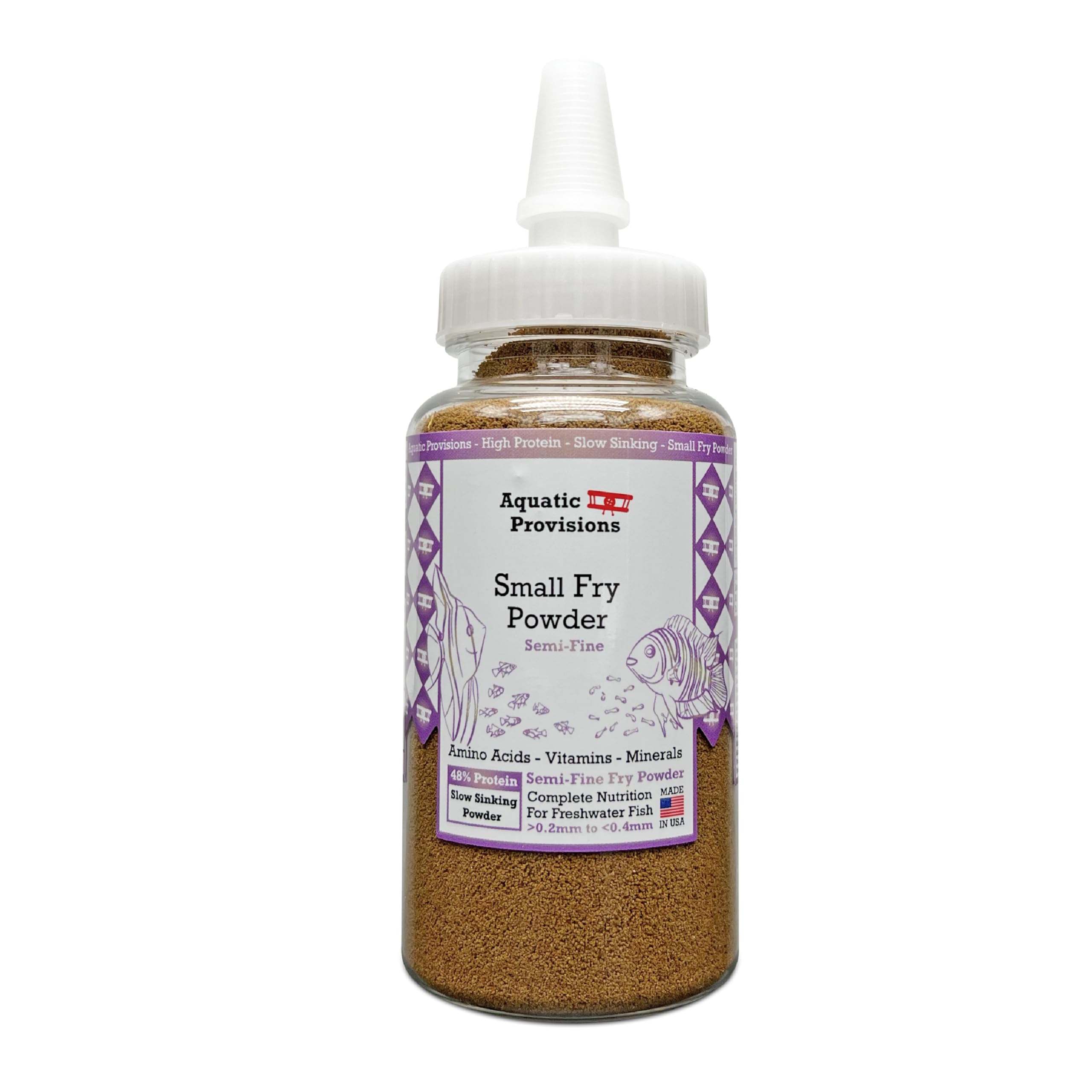
This 90-gram bag delivers a semi-fine powder with particles calibrated between 0.2 mm and 0.4 mm—the ideal window for small fry and micro-tetras that have outgrown the dust stage but still struggle with standard crumbles. The 48% protein comes from highly digestible marine proteins rather than plant-based fillers, which means less undigested waste clouding your water column.
Oxygen absorbers are included in the sealed bag to protect the fragile fatty acids and vitamin content during storage. The powder settles slowly through the water column, giving even timid fry several opportunities to feed before the nutrients hit the substrate. Owners raising angelfish, discus, and small cichlids report consistent growth curves when this formula is used as a primary diet.
The raw format of the food means you are getting whole marine ingredients rather than compressed meals, which preserves the natural amino acid profile. For anyone maintaining a breeding tank with multiple size classes of fish, the versatility of a 0.2–0.4 mm particle reduces the need to stock three separate containers.
Why we love it
- Particle size bridges the gap between fry powder and adult pellets
- Oxygen-absorber packaging preserves nutritional shelf life
- True marine proteins with no terrestrial fillers
Good to know
- Bag format is less convenient than a shaker bottle for daily portioning
- Semi-fine texture will not work for first-feeding fry under 0.2 mm
2. Ultra Fresh Cichlid Sinking Fish Food, Wild Sword Prawns 4.58 oz

Ultra Fresh positions this formula as a premium sinking pellet built specifically for large cichlid species that require a high-protein carnivore diet. The primary ingredient is wild sword prawn, which delivers a marine protein source far closer to what African and South American cichlids would hunt in their natural biotope than the fishmeal commonly used in cheaper pellets.
The pellets are dense enough to sink rapidly past surface feeders and aggressive tank mates, ensuring bottom-dwelling cichlids get their share without competition. There is no wheat or corn starch used as a binder—the pellet holds together through the natural protein structure of the prawn meal, which also means less indigestible waste accumulating in the filter.
Hobbyists who have made the switch from standard cichlid pellets to this wild prawn formulation consistently report deeper body coloration within three to four weeks, particularly in red and orange morphs like the Red Devil and Flowerhorn. The 4.58-ounce bag is priced at a premium, but the ingredient density means you feed less volume per meal compared to filler-heavy alternatives.
Why we love it
- Wild sword prawn as the primary ingredient—no terrestrial fillers
- Rapid sink rate reaches bottom-dwelling species immediately
- Noticeable color enhancement within 3–4 weeks of daily feeding
Good to know
- Pellet size may be too large for juvenile or small-mouthed cichlids
- Premium pricing makes it cost-prohibitive for massive breeding operations
3. TetraMin Tropical Flakes 8.81 Ounces

TetraMin is the most established name in tropical fish flakes for a reason: the Active Life Formula uses select proteins for growth, antioxidants to protect healthy cells, and prebiotics to support digestion. The 8.81-ounce bottle is one of the largest volumes in this guide, making it the most economical option for community tanks with mixed species.
The Clean and Clear Water Formula is a real engineering advantage—these flakes are highly digestible, which means less solid waste and fewer ammonia spikes when you are feeding three times daily. Each flake stays intact long enough for surface feeders like tetras and gouramis to grab their share before breaking apart into smaller pieces that drift downward for mid-water and bottom species.
Color enhancement is a standard claim in fish food marketing, but the natural carotenoids in this flake formulation produce visible results in red and yellow varieties within two weeks of consistent feeding. The resealable plastic bottle keeps moisture out far better than a bag clip, preserving flake freshness for the entire lifespan of the container.
Why we love it
- Large 8.81 oz bottle offers the best per-serving value
- Prebiotic and antioxidant formula supports long-term health
- Clean water formulation reduces filter maintenance frequency
Good to know
- Flakes contain some plant-based ingredients, not a pure carnivore diet
- Particle size is not suitable for fry under 1 cm body length
4. BNYEE Brine Shrimp Cubes, All Natural 4 oz
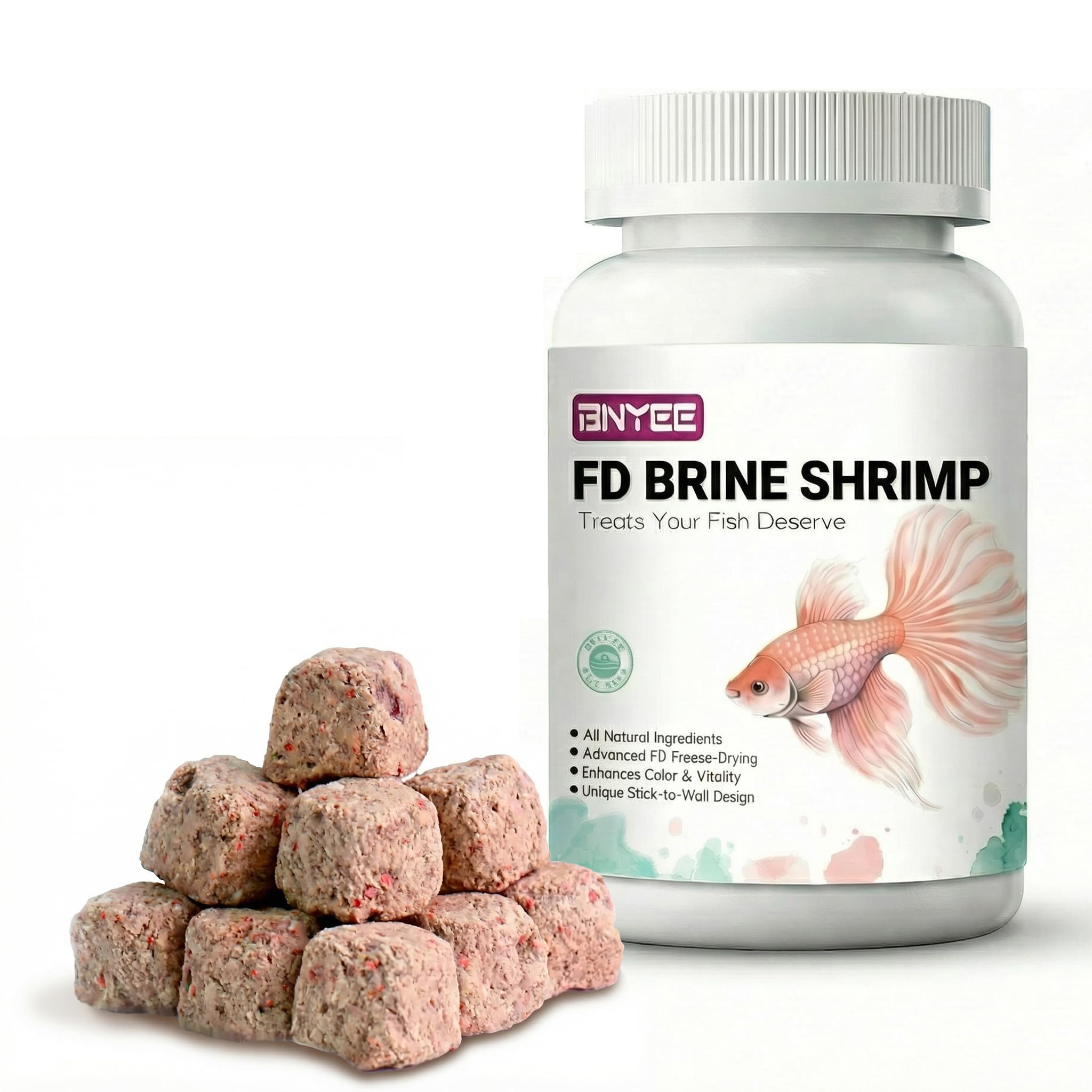
BNYEE freeze-dried brine shrimp cubes provide a nutritionally dense treat or supplement for small to medium freshwater and saltwater species. The brine shrimp retain their algae and diatom content through the freeze-drying process, which preserves the essential fatty acids and lipids that drive biological processes like breeding conditioning and fin regeneration.
Each cube is fragile by design—you can drop the cube into the tank whole for fish to graze on, or crush it between your fingers to scatter smaller pieces that accommodate tiny mouths. This flexibility makes it a strong choice for keepers who maintain multiple species with different feeding strategies within a single aquarium.
Because the product is additive-, chemical-, and preservative-free, it is one of the cleanest options for fish that are sensitive to artificial binders. The high protein content supports growth in neon tetras, guppies, bettas, and angelfish, though it should not replace a complete staple feed for omnivorous species that also require vegetable matter. Expect some powder and broken pieces at the bottom of the container due to the fragile nature of the cubes.
Why we love it
- Zero additives, chemicals, or preservatives in the ingredient list
- Dual-mode feeding—whole cube or crushed powder
- Rich in naturally occurring algae-diatom lipids
Good to know
- Best used as a supplement rather than a complete staple diet
- Some cube fragmentation in the bottle is unavoidable
5. Aquatic Provisions Tiny Fry Fish Food 1.76 oz

This 1.76-ounce bottle is the most precisely milled product in the lineup, with a particle size range of 0.1 mm to 0.2 mm that matches the gape diameter of newborn fry. If you are breeding bettas, guppies, or cichlids, this powder is the difference between a successful spawn and a brood that starves before reaching the free-swimming stage.
The 48% protein content comes exclusively from highly digestible marine proteins, which means the fry absorb more nutrients per feeding and produce less waste in the nursery tank. Aquatic Provisions fortifies the powder with vital vitamins and minerals that support bone development and swim bladder inflation during the critical first two weeks of life.
Each bottle is freshly packaged with oxygen absorbers that extend the potency of the marine oils beyond what a standard screw-top container can achieve. The slow-sinking characteristic of the powder keeps particles suspended in the water column long enough for even slow-swimming fry to feed multiple times. For dedicated breeders who need a reliable first food, this is the most specialized option on the market.
Why we love it
- 0.1–0.2 mm particle size is engineered for newborn fry mouths
- Oxygen-absorber packaging preserves marine oil potency
- Slow-sinking suspension extends feeding window for weak fry
Good to know
- Small bottle volume is consumed quickly with multiple daily feedings
- Too fine for fish larger than 2 cm body length
FAQ
Can frozen fish food replace live foods for breeding conditioning?
What particle size do I need for 1-week-old angelfish fry?
Why is protein digestibility more important than the protein percentage on the label?
How long does an opened bag of freeze-dried fish food stay fresh?
Final Thoughts: The Verdict
For most aquarium keepers, the best frozen fish food winner is the Aquatic Provisions Small Fry Fish Food because its 0.2–0.4 mm particle range covers the widest variety of species from micro fish to juvenile cichlids while delivering 48% marine protein in oxygen-protected packaging. If you want a high-protein carnivore sinker for large cichlids, grab the Ultra Fresh Wild Sword Prawn pellets. And for an economical all-around flake that supports mixed tropical community tanks, nothing beats the TetraMin Tropical Flakes.