
Filling a tube feeder only to watch finches pick through the mix and toss the cheap filler onto the ground is a frustrating waste. The right seed blend doesn’t just feed birds—it brings specific species to your yard while keeping your patio clean and your feeder full of what actually gets eaten.
I’m Mo Mahin — the founder and writer behind Furric. I spend hours comparing seed-to-waste ratios, oil content percentages, and regional attraction data from the Wild Bird Feeding Institute and university field trials to separate premium blends from grocery-store filler.
Whether you want to attract cardinals to a hopper feeder or keep ground-feeding doves happy with a tray, choosing the right food for birds means matching the seed mix to the species in your area.
How To Choose The Best Food For Birds
A bag of bird seed can look deceptively similar on the shelf, but the ingredient list tells the real story. The right blend for your yard depends on the species you want to attract, your feeder type, and how much waste you’re willing to clean up.
Seed Type Matters Most
Black oil sunflower seed is the universal favorite among seed-eating songbirds because its thin shell is easy to crack and its kernel is high in fat and protein. Safflower seed offers similar nutrition but has a bitter taste that deters squirrels and grackles. White millet attracts ground-feeding birds like doves and juncos, while peanuts and sunflower hearts draw titmice and woodpeckers. Fillers like milo, wheat, and cracked corn are often ignored by most feeder birds and simply rot on the ground.
Regional vs. Generic Blends
A regional blend is formulated to attract the species commonly found in your part of the country. University field tests have shown that these blends can outperform generic black oil sunflower seed alone because they match the specific seed preferences of birds in your area. If you live in the Northeast, a Northeast blend will contain a higher proportion of seeds that local chickadees, nuthatches, and cardinals prefer.
Waste and Mess Reduction
Some blends are labeled “no grow” or “waste free,” meaning the seeds have been heat-treated to prevent sprouting under the feeder. This keeps your lawn from turning into a millet patch and makes cleanup easier. Hull-less seed options produce zero shell debris, which keeps patios and decks pristine.
Quick Comparison
On smaller screens, swipe sideways to see the full table.
| Model | Category | Best For | Key Spec | Amazon |
|---|---|---|---|---|
| Happy Wings Black Oil Sunflower Seeds | Premium | High-energy songbird feeding all year round | High oil content, no-grow formula | Amazon |
| Cool Birds All Birds Wild Bird Seed | Premium | Attracting a broad variety of species | Five-ingredient blend with sunflower hearts | Amazon |
| Kaytee Northeast Regional Wild Bird Blend | Mid-Range | Attracting birds in the Northeast region | University field-tested regional formula | Amazon |
| Kaytee Cardinal Wild Bird Seed | Mid-Range | Attracting cardinals and deterring squirrels | Black oil sunflower + safflower mix | Amazon |
| Wagner’s Deluxe Wild Bird Food | Budget-Friendly | Feeding ground and perching birds on a budget | 10-pound bag with sunflower and millet | Amazon |
In‑Depth Reviews
1. Happy Wings Black Oil Sunflower Seeds – 5 lb
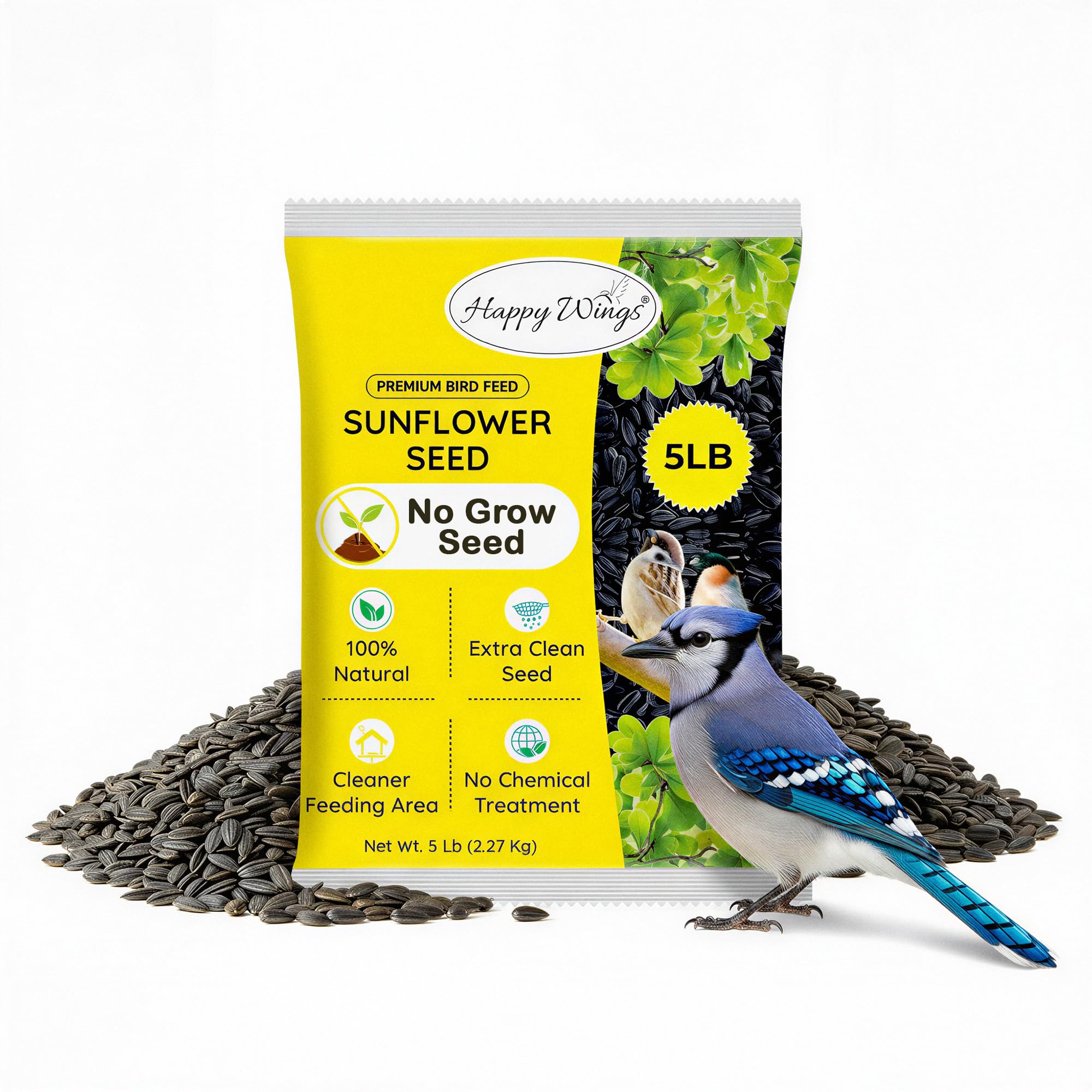
Black oil sunflower seed is the gold standard for attracting a wide variety of songbirds, and this 5-pound bag from Happy Wings delivers exactly that without any filler. The oil content is high, which provides the fat and protein cardinals, chickadees, and finches need during colder months.
The no-grow claim holds up well—fewer sprouts popped up under the feeder compared to standard mixes, which means less weeding and wasted seed. The shell debris is minimal, so your patio or lawn stays cleaner between refills.
Produced in USDA- and BRC-GS–approved facilities, this seed meets strict quality and safety standards. If you want a single-ingredient seed that most birds will flock to and you value a clean feeding area, this is a top-tier pick.
Why we love it
- High oil content provides excellent year-round energy
- No-grow formula minimizes under-feeder sprouts
- Attracts cardinals, finches, chickadees, and more
Good to know
- 5-pound bag is smaller than many budget options
- No variety of seeds if you want a multi-ingredient blend
2. Cool Birds All Birds Wild Bird Seed – 10 lb
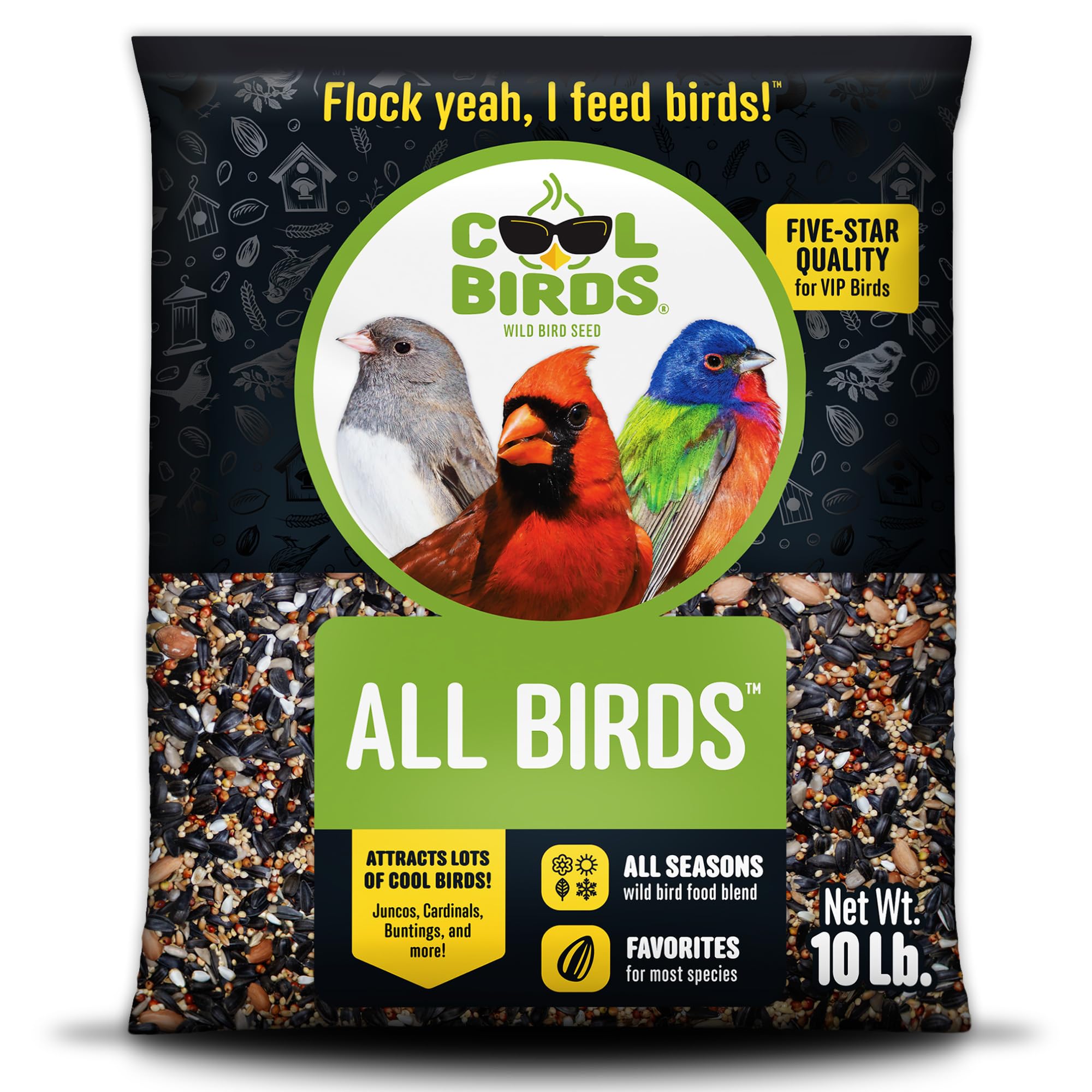
The Cool Birds blend is built around five ingredients: black oil sunflower, white millet, safflower, peanuts, and sunflower hearts. That lineup covers perching birds on a tube feeder and ground feeders alike—doves, jays, sparrows, and titmice all find something they want.
The inclusion of sunflower hearts is a smart touch. Shell-less seed means zero cleanup of hulls under the feeder, and it also attracts birds that prefer easier access to the kernel. The blend flows well through tray, hopper, and tube feeders without jamming.
This 10-pound bag is a strong choice if you want a single mix that satisfies multiple species without having to buy separate bags. The protein-packed formula supports feeding throughout all seasons, not just winter.
Why we love it
- Five-ingredient blend attracts a wide variety of species
- Sunflower hearts reduce shell waste under feeders
- Works in tray, tube, hopper, and platform feeders
Good to know
- Not a regional-specific formula
- May attract squirrels if safflower content is low
3. Kaytee Northeast Regional Wild Bird Blend – 7 lb

Kaytee’s Northeast Regional blend was field-tested by university researchers and proven to attract more birds than straight black oil sunflower seed or non-regional blends. The formula is designed specifically for the species common to the Northeast, so you’ll see more chickadees, nuthatches, and native sparrows.
Independent testing means you’re not just trusting a marketing claim—the data backs up the attraction rate. The blend is additive-free and comes in a 7-pound bag that’s easy to store and pour into most feeder types.
If you live in the Northeast and want to maximize the variety of birds at your feeder without experimenting with different seed mixes, this is the most scientifically grounded option available.
Why we love it
- University field-tested and proven to attract more birds
- Formulated for Northeastern species
- Additive-free and allergen-free ingredients
Good to know
- Only works optimally in the Northeast region
- 7-pound bag is smaller than some value options
4. Kaytee Cardinal Wild Bird Seed – 7 lb

This blend combines black oil sunflower and safflower—two seeds cardinals prefer heavily. Safflower has a naturally bitter taste that squirrels avoid, so you can still keep your feeder full without attracting bushy-tailed raiders.
Chickadees, nuthatches, and grosbeaks also flock to this mix. The 7-pound bag is manageable for a single tube feeder and the seeds stay fresh if stored in a cool, dry place.
The unique bitterness of safflower is a natural solution for squirrel problems. If squirrels rob your feeders regularly, switching to a safflower-heavy blend like this one reduces their interest without requiring special hardware.
Why we love it
- Safflower naturally deters squirrels
- Attracts cardinals, chickadees, nuthatches, and grosbeaks
- Additive-free raw seed blend
Good to know
- Not a broad-spectrum attractor for all species
- Some ground-feeding birds may ignore safflower
5. Wagner’s Deluxe Wild Bird Food – 10 lb

Wagner’s Deluxe blend is a solid entry-level option that combines sunflower seeds with general-purpose grains to attract both perching and ground-feeding birds. The 10-pound bag offers more volume than many premium blends at a budget-friendly price point.
The mix uses high-quality grains and is made in the USA. It’s a moderately priced blend that reliably gets birds to the feeder, though discerning species may pick through it more than they would a premium single-seed option.
For someone filling multiple feeders or who wants to attract a variety of birds without spending on specialized blends, this bag delivers dependable results. Just be prepared for some filler waste if you have picky visitors.
Why we love it
- Large 10-pound bag for frequent feeders
- Attracts both perching and ground birds
- Made in the USA with high-quality grains
Good to know
- May contain wheat, which some species ignore
- Not a waste-free or no-grow formula
FAQ
Which bird seed do cardinals prefer most?
Does the no-grow formula actually prevent sprouts?
How do I discourage squirrels from eating the bird seed?
Final Thoughts: The Verdict
For most gardeners, the food for birds winner is the Happy Wings Black Oil Sunflower Seeds because it delivers high-energy nutrition with a no-grow formula that keeps your yard clean and attracts the widest range of songbirds. If you want a multi-species blend that works in every feeder type, grab the Cool Birds All Birds Wild Bird Seed. And for a budget-friendly option that still draws both ground and perching birds, nothing beats the Wagner’s Deluxe Wild Bird Food.