
A lawn that survives dogs isn’t about luck—it’s about choosing grass with the genetic grit to shrug off urine spots, constant trampling, and divot digging. The wrong blend turns your backyard into a mud pit within a season, requiring expensive sod or full reseeding. The difference between a brown patchwork and a resilient green carpet comes down to three traits: wear tolerance, rapid recovery, and urine resistance.
I’m Mo Mahin — the founder and writer behind Furric. I’ve spent years analyzing turfgrass data, comparing seed trial results, and mapping wear recovery rates against hundreds of owner experiences to find blends that genuinely withstand active dogs.
The best solution for a durable yard is a targeted grass for high traffic dogs—a category defined by perennial ryegrass blends, endophyte-enhanced varieties, and coatings that accelerate germination so the lawn recovers faster than your dog can wear it down.
How To Choose The Best Grass For High Traffic Dogs
Not all grass seeds are engineered to handle the daily abuse of active dogs. The blend you select must match your climate, your dog’s size and energy level, and the amount of shade in your yard. Here are the four factors that separate long-lasting turf from temporary fixes.
Wear Tolerance and Recovery Rate
Perennial ryegrass and tall fescue dominate the dog-friendly category because their fibrous root systems hold soil together and regrow from the crown after being trampled. Kentucky bluegrass spreads via rhizomes and recovers from damage, but its slower germination means bare spots stay bare longer. For high-traffic dogs, a blend that prioritizes ryegrass or endophyte-enhanced fescue gives you the fastest recovery window.
Urine Resistance and pH Tolerance
Dog urine contains high nitrogen concentrations that scorch leaf blades and raise soil pH. Some grass varieties—particularly certain perennial ryegrasses—show better tolerance to urine burn because they metabolize nitrogen more efficiently. You can mitigate damage by watering the area after your dog urinates, but choosing a blend with inherent urine resistance reduces visible patches.
Coatings for Faster Establishment
Coated seeds—like those with Moisture Boost or OptiGrowth—absorb up to 50 percent more water than naked seeds, which accelerates germination by three to five days. Faster germination means the grass canopy closes sooner, leaving less time for paws to disturb vulnerable seedlings. Any blend marketed for “high traffic” should include a coating technology; bare seed blends take too long to establish under real-world dog pressure.
Shade and Sun Adaptability
A backyard with trees and dog paths creates mixed light conditions that kill sun-only grass under the canopy and shade-only grass in open zones. The best dog traffic blends contain fine fescue for shade tolerance and perennial ryegrass for sun performance. Avoid single-species seeds unless your yard has uniform light—by late summer you’ll see thin patches.
Quick Comparison
On smaller screens, swipe sideways to see the full table.
| Model | Category | Best For | Key Spec | Amazon |
|---|---|---|---|---|
| Outsidepride Fireball & Hattrick Rye Grass Blend | Ryegrass Blend | Wear tolerant, fast recovery | OptiGrowth coating, 5 lbs | Amazon |
| Jonathan Green Black Beauty Ultra | Tall Fescue | Deep roots, urine resistance | 7 lb bag | Amazon |
| Barenbrug Turf Star Regenerating Ryegrass | Perennial Ryegrass | Fast coverage, self-repair | Yellow Jacket coating, 10 lbs | Amazon |
| X-Seed Ultra Premium Quick and Thick | Fescue/Rye/Blue Blend | Sun to shade, fast germination | Moisture Boost coating, 3 lbs | Amazon |
| GreenView Perennial Ryegrass Blend | Perennial Ryegrass | Drought resistance, weed-free | 7 lb bag, 3500 sq ft overseed | Amazon |
| Jonathan Green Dense Shade | Shade Mix | Shaded yards with dog paths | Shade resistant, 3 lbs | Amazon |
| Scotts Turf Builder Quality All-Purpose Mix | All-Purpose Blend | Large coverage, budget entry | WaterSmart coating, 20 lbs | Amazon |
In‑Depth Reviews
1. Outsidepride Fireball & Hattrick Rye Grass Seed Blend
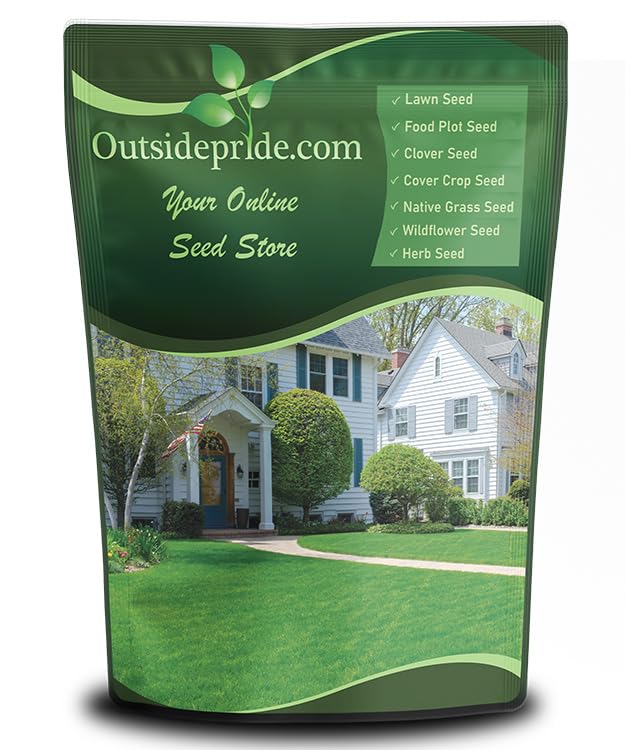
This 50/50 blend of Fireball and Hatrick perennial ryegrass is the gold standard for dog owners because it combines two wear-tolerant cultivars specifically bred for sports turf and high-traffic lawns. The OptiGrowth coating improves seed-to-soil contact and moisture retention, which means germination happens days faster than naked seed—critical when your dog is already walking over the seeded area. At 5 pounds, it covers roughly 2,500 square feet for overseeding, giving you enough material to patch a moderately sized backyard without overspending.
The endophyte enhancement is the real differentiator for dog households. Endophytes are naturally occurring fungi that live inside the grass and produce alkaloids that repel sod webworms, billbugs, and chinch bugs—common pests that attack stressed lawns. Because dogs constantly disturb the soil and grass crowns, a lawn under traffic is more vulnerable to insect damage; endophyte protection reduces the need for chemical pesticides that you’d rather not have around pets. Fine leaf texture means the grass feels soft under bare feet and doesn’t develop the coarse, clumpy look of budget ryegrass.
One practical limitation: perennial ryegrass performs best in full sun to partial shade, so heavily shaded corners of the yard will thin out over two seasons. Pair this with a fine fescue blend for the shadiest areas if your property has dense tree cover. The salt tolerance mentioned in the spec sheet also makes it viable for winter overseeding of warm-season lawns in transitional zones.
Why we love it
- Endophyte-enhanced natural pest resistance reduces chemical use near dogs
- OptiGrowth coating accelerates establishment for fast canopy closure
- Wear-tolerant cultivars proven on sports turf and golf courses
Good to know
- Not suitable for dense shade—needs at least 4 hours of sun daily
- 5-pound bag covers moderate yards; larger properties need multiple bags
2. Jonathan Green Black Beauty Ultra Grass Seed

Jonathan Green’s Black Beauty Ultra uses tall fescue cultivars that develop root systems reaching up to four feet deep, making this the most drought-tolerant option among premium dog-friendly seeds. Deep roots pull moisture from lower soil layers, which means the grass stays green without constant watering even when your dog’s traffic compacts the surface soil. The 7-pound bag provides generous coverage for overseeding—roughly 2,000 square feet—or about 1,000 square feet for establishing a new lawn.
Tall fescue’s natural urine resistance comes from its waxy leaf cuticle and high nitrogen utilization efficiency. While no grass is completely immune to urine burn, fescue-stressed areas recover faster because the crown stays alive below the scorched tip. This blend also includes Jonathan Green’s proprietary “Black Beauty” genetics selected for dark green color and fine blade width—it avoids the coarse, bunchy look of older tall fescue varieties. For owners of large dogs that urinate frequently, this is the strongest performer in the urine-resistance category.
Tall fescue does have slower establishment than ryegrass, typically germinating in 10 to 14 days with consistent moisture. During that window, you must restrict dog access to the seeded zone or use temporary fencing. Once established, it requires less frequent mowing than ryegrass because its growth rate slows during summer heat—reducing lawn maintenance for busy pet owners.
Why we love it
- Deep root system provides superior drought and urine tolerance
- Fine blade texture without the coarse look of standard tall fescue
- Dark green color persists through summer stress
Good to know
- Slower germination requires 10–14 days of restricted dog access
- Not ideal for dense shade; needs 4–5 hours of sun
3. Barenbrug Turf Star Regenerating Perennial Ryegrass

Barenbrug’s Turf Star uses Yellow Jacket seed coating, which contains a nutrient packet that feeds the seedling for the first 30 days—essentially giving the young grass a built-in starter fertilizer. This is critical for dog lawns because the coating reduces the seedling’s vulnerability window during establishment. At 10 pounds, this is the largest premium bag in the review, covering up to 4,000 square feet for overseeding, making it cost-efficient for larger backyards.
The “regenerating” label refers to the turf-type perennial ryegrass’s ability to tiller—sending up new shoots from the base of the plant after the crown is damaged. While perennial ryegrass doesn’t spread via rhizomes like Kentucky bluegrass, the tillering response is rapid when you maintain a mowing height of 2.5 to 3 inches. This means bare spots from digging or urine burns fill in from surrounding plants within two to three weeks during the growing season, reducing the need for spot reseeding.
Like most ryegrasses, Turf Star performs best in full sun to light shade. Its fine leaf texture and medium-dark green color match well with existing fescue or bluegrass lawns if you’re overseeding a mixed stand. The coating also helps the seed survive brief dry periods between waterings, which is helpful for owners with inconsistent sprinkler schedules.
Why we love it
- Yellow Jacket coating includes 30-day nutrient supply for faster root growth
- Tillering recovery fills bare spots without replanting
- 10-pound bag covers large areas affordably
Good to know
- Requires at least 4 hours of direct sun for consistent density
- Not endophyte-enhanced; may need pest management in high-insect zones
4. X-Seed Ultra Premium Quick and Thick Lawn Seed Mixture
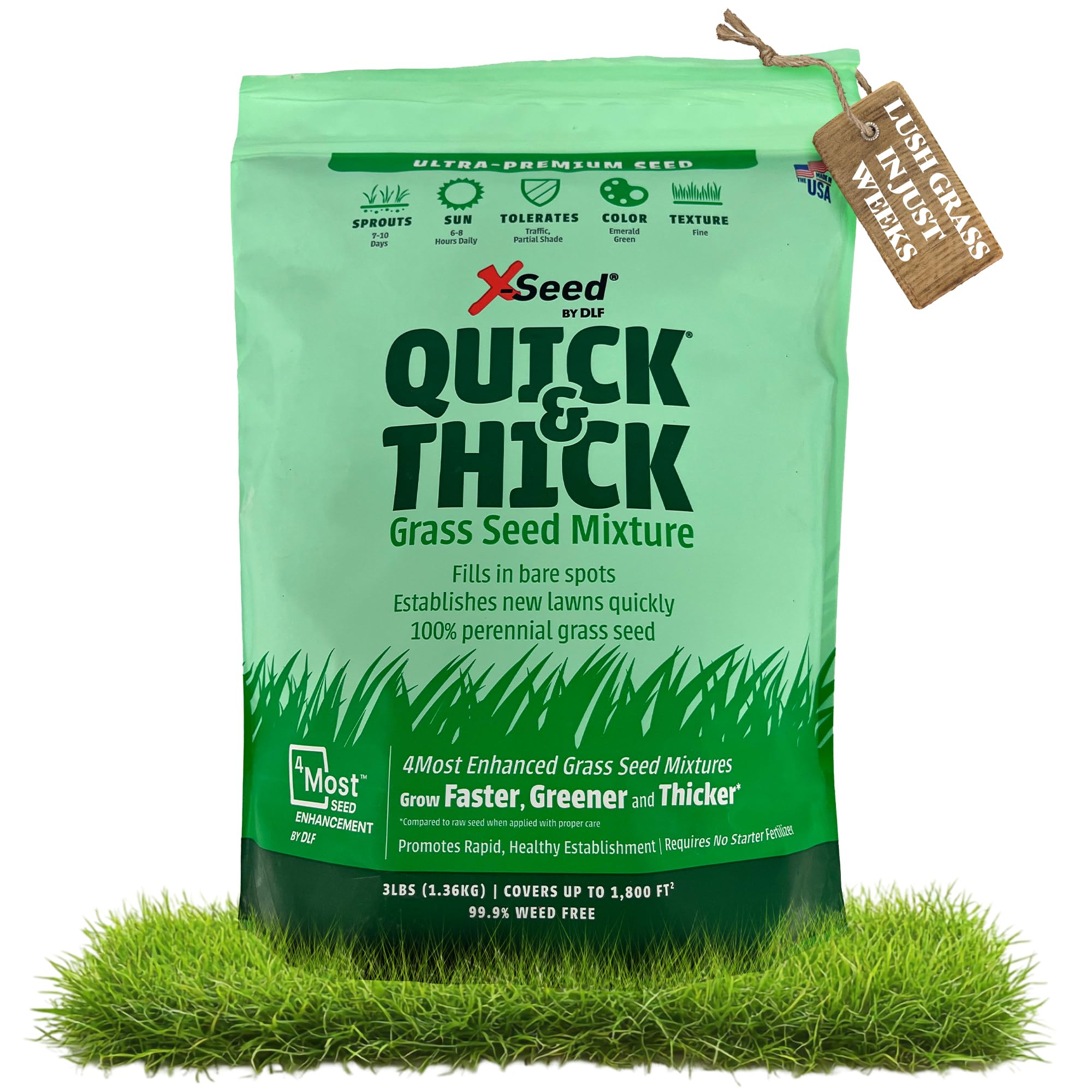
X-Seed combines perennial ryegrass, fine fescue, and Kentucky bluegrass into a single blend that adapts to both sunny zones and shaded dog paths—the exact mixed-light scenario most suburban backyards present. Fine fescue handles the shaded edges where dogs lie down, Kentucky bluegrass fills the open sunny center, and ryegrass provides the wear tolerance where dogs run. The Moisture Boost coating absorbs 50 percent more water than uncoated seed, cutting germination time to roughly 5 to 7 days in ideal conditions.
The 3-pound bag covers 2,100 square feet for overseeding, which is a surprisingly large area for the weight because the coating is lightweight. At 99.9 percent weed-free, you won’t introduce crabgrass or broadleaf weeds that compete with the slow-establishing bluegrass component—a real risk with cheap blends. This blend works well for owners who want a “set it and forget it” overseed product that handles variable light without needing two different seed types.
One nuance: the Kentucky bluegrass fraction germinates in 14 to 21 days, while the ryegrass pops up in under a week. This creates a temporary two-tone look where the ryegrass appears lush while the bluegrass catches up. Within 30 days the color evens out, but impatient owners might mistake the slower patches for failure. Water consistently for the full three-week window and the blend will knit into a uniform turf.
Why we love it
- Triple-blend handles mixed sun/shade without separate products
- Moisture Boost coating speeds ryegrass germination to 5–7 days
- 99.9% weed-free prevents competition from invasive species
Good to know
- Kentucky bluegrass component takes 14–21 days to germinate
- Two-tone appearance during first three weeks may look uneven
5. GreenView Pure Grass Seed Perennial Ryegrass Blend

GreenView’s blend focuses on heat and drought resistance after establishment, making it a strong contender for warmer transition zones where summers stress cool-season grasses. The perennial ryegrass varieties in this bag are selected for deep rooting and better brown-patch resistance—a fungal disease that thrives in hot, humid weather and attacks stressed lawns. The 7-pound bag covers 3,500 square feet for overseeding at the label rate, which is excellent coverage per dollar for owners patching large backyards.
Germination occurs in 7 to 12 days with consistent moisture, and the seed is tested at 99.9 percent weed-free with no noxious weed seeds—important for avoiding invasive grasses like quackgrass that spread through rhizomes. The medium-to-fine texture and dark green color match well with existing fescue or bluegrass stands, so overseeding doesn’t create a patchwork of different shades. This matters for dog owners who want a uniform lawn rather than a visible repair job.
Because it’s a straight perennial ryegrass blend without fescue or bluegrass, it won’t perform as well in deep shade or under heavy tree canopy. If your yard has significant shaded areas, you’ll see thinning by midsummer. For open, sunny backyards with moderate dog traffic, this is one of the best value blends available, balancing coverage area, establishment speed, and long-term durability.
Why we love it
- Heat and drought tolerance reduces summer thinning in warm zones
- Large 7-pound bag covers up to 3,500 square feet for overseeding
- 99.9% weed-free with no noxious weed seed content
Good to know
- Straight ryegrass blend—not for heavy shade areas
- Requires consistent watering during 7–12 day germination window
6. Jonathan Green Dense Shade Grass Seed
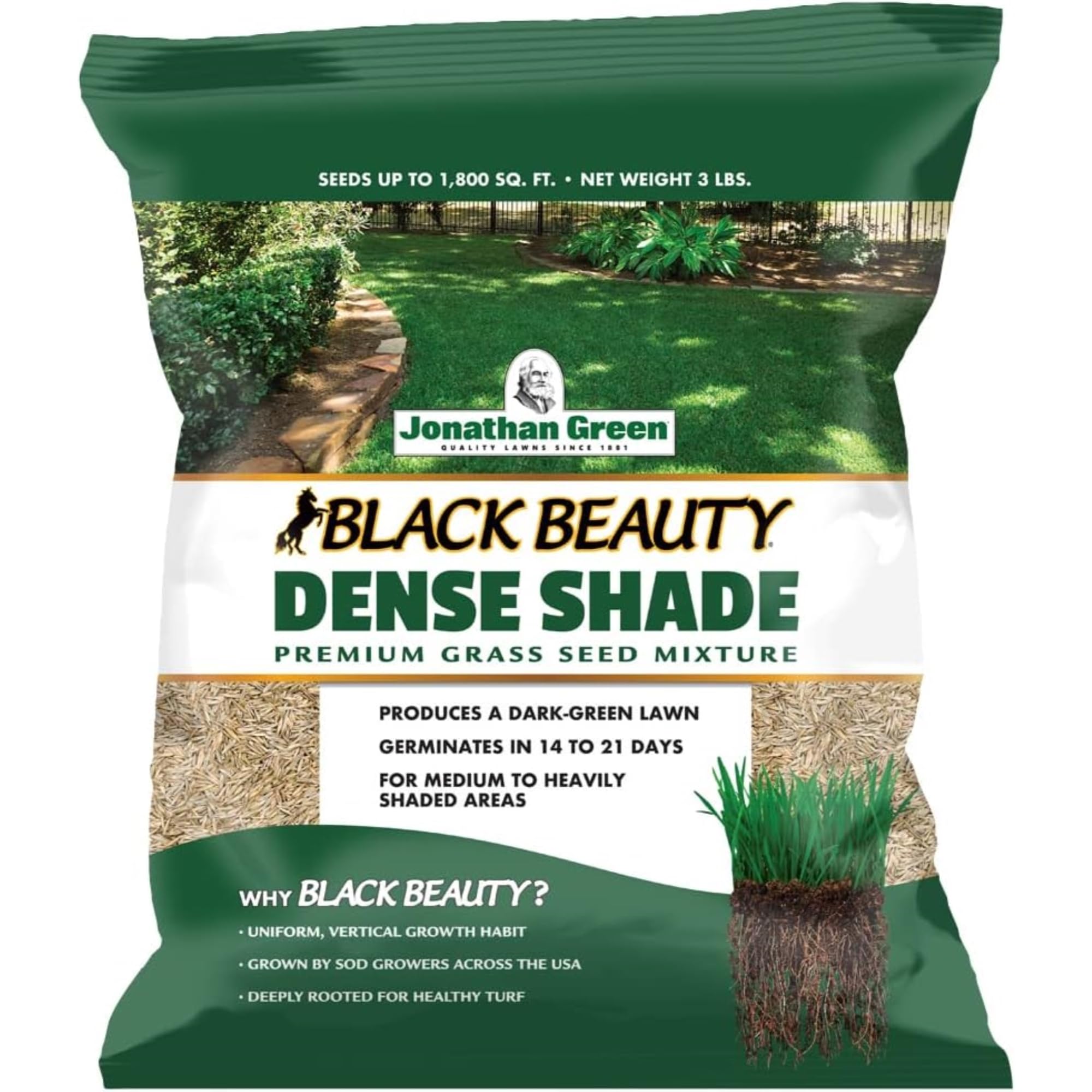
If your backyard is dominated by tree canopy with only dappled light, Jonathan Green’s Dense Shade formula is the best option for keeping a dog-friendly lawn alive under those difficult conditions. This blend uses fine fescue species—creeping red fescue and chewings fescue—that naturally thrive in low light, requiring as little as four hours of indirect sun per day. The 3-pound bag covers 1,800 square feet for overseeding, which is appropriate for shaded side yards and under-deck areas where standard blends fail.
Fine fescue has softer leaf blades than ryegrass or tall fescue, which means your dog’s paws won’t create the same thatch compaction issues common in shady zones. The tradeoff is that fine fescue has lower wear tolerance than ryegrass—it’s not designed for a sprinting Labrador. For shaded areas where dogs lounge, sleep, or walk slowly, this blend holds up well. For full-sun traffic zones, pair this with ryegrass or tall fescue to get the best of both worlds.
Germination takes 10 to 14 days with consistent moisture, similar to tall fescue. The seed is 100 percent pure grass seed with no inert fillers, so every ounce contributes to coverage. Expect a medium-green color with a fine, almost lawnlike appearance that blends acceptably with sun-loving grasses in the transition zones of your yard.
Why we love it
- Thrives in as little as 4 hours of indirect sun per day
- Soft leaf blades reduce paw tension and thatch buildup
- 100% pure grass seed with no filler content
Good to know
- Lower wear tolerance—not for high-speed dog zones
- 3-pound bag best suited for small shaded areas, not full lawns
7. Scotts Turf Builder Quality All-Purpose Mix

Scotts Turf Builder Quality All-Purpose Mix is the volume leader for a reason: the 20-pound bag seeds up to 8,000 square feet for overseeding, making it the most coverage-efficient option in this review. The WaterSmart coating absorbs twice as much water as uncoated seed, which helps germination in inconsistent watering conditions—a common scenario for households where the dog’s schedule takes priority over lawn care. It’s formulated for sunny and partially shady areas, covering the typical suburban backyard without requiring zone-specific blends.
This mix combines perennial ryegrass, creeping red fescue, and Kentucky bluegrass, similar to X-Seed’s triple blend but at a significantly lower per-pound cost. The blend is 99.9 percent weed-free, and Scotts backs it with a no-quibble guarantee. For pet owners on a budget who need to cover a large area or patch multiple spots after a single bag purchase, this is the most practical entry point. The coating also reduces the seed’s susceptibility to bird predation—the outer layer makes the seed less palatable to sparrows and finches.
Because it’s an all-purpose blend, it doesn’t specialize in any single stress factor. Wear tolerance is decent but not exceptional—you’ll see more thinning than with the Outsidepride or Barenbrug choices if you have two or more large dogs running daily. For households with one medium dog or smaller, this blend provides acceptable durability at a fraction of the cost of premium options.
Why we love it
- 20-pound bag covers up to 8,000 sq ft—best coverage per dollar
- WaterSmart coating absorbs 2x more water for forgiving germination
- 99.9% weed-free with no-quibble satisfaction guarantee
Good to know
- All-purpose blend lacks the wear tolerance of dedicated dog blends
- Thins faster under multiple large dogs compared to premium options
FAQ
Will perennial ryegrass survive winter in cold climates?
How long should I keep my dog off newly seeded grass?
Does endophyte-enhanced grass harm dogs?
Can I mix shade grass and sun grass in the same bag?
Final Thoughts: The Verdict
For most gardeners, the grass for high traffic dogs winner is the Outsidepride Fireball & Hattrick Rye Grass Blend because its OptiGrowth coating and endophyte enhancement deliver fast establishment, natural pest resistance, and proven sports-turf wear tolerance—everything an active-dog lawn needs. If you want the deepest root system for drought and urine resistance, grab the Jonathan Green Black Beauty Ultra. And for covering a vast backyard on a budget, nothing beats the Scotts Turf Builder Quality All-Purpose Mix.