
A guinea pig’s digestive system is a finely tuned machine that demands a constant supply of long-strand fiber to grind down continuously growing teeth and keep gut motility moving. The wrong pellet mix—loaded with seeds, dried fruit, and artificial colors—can lead to selective eating, obesity, and serious dental disease. Your choice of daily ration directly determines whether your cavy thrives or develops chronic health issues.
I’m Mo Mahin — the founder and writer behind Furric. I’ve analyzed hundreds of feed formulations, cross-referenced ingredient labels against veterinary nutritional guidelines for small herbivores, and tracked long-term owner feedback on palatability, stool quality, and coat condition to identify which products actually deliver balanced nutrition.
Whether you’re bringing home your first cavy or refining a picky eater’s diet, the right choice comes down to stable vitamin C, crude fiber above 18%, and zero sugary additives. This guide breaks down the best pellets for guinea pigs based on nutritional density, ingredient transparency, and real-world feeding results.
How To Choose The Best Pellets For Guinea Pigs
Unlike rabbits or hamsters, guinea pigs cannot synthesize their own vitamin C, making their pellet selection a matter of medical necessity rather than convenience. A proper pellet serves as the nutritional backbone of a cavy’s diet, with hay and fresh vegetables providing additional fiber and moisture. Here are the critical factors that separate a genuinely balanced pellet from a veterinary risk.
Stabilized Vitamin C Content
Guinea pigs require 10–30 mg of vitamin C per kilogram of body weight daily, and pellets are the most reliable delivery method. Look for “stabilized vitamin C” (often listed as L-ascorbyl-2-polyphosphate) rather than plain ascorbic acid, which degrades rapidly after the bag is opened. A bag stored for more than 90 days may lose the majority of its vitamin C potency, so check the manufacturing date and buy quantities your pig will finish within 6–8 weeks.
Crude Fiber Percentage and Pellet Uniformity
Crude fiber should be no lower than 18% and ideally between 20–25%. Lower fiber content forces the cecum to work harder, increasing the risk of enteritis and GI stasis. Equally important is pellet shape and hardness: a uniform, dense extruded pellet encourages chewing, which grinds down the constantly growing molars. Muesli-style mixes containing seeds, dried corn, or fruit chunks allow selective feeding, leading to obesity and calcium imbalances from the leftover portions.
Base Hay Type: Timothy vs. Alfalfa
Adult guinea pigs (over six months old) require a timothy hay-based pellet because alfalfa is too high in calcium and protein, which can lead to bladder sludge and urinary stones. Alfalfa-based pellets are suitable only for pregnant or nursing sows and juveniles under six months who need extra protein for growth. Always check the first ingredient on the guaranteed analysis — if alfalfa meal appears first, the formula is intended for young or breeding animals only.
Quick Comparison
On smaller screens, swipe sideways to see the full table.
| Model | Category | Best For | Key Spec | Amazon |
|---|---|---|---|---|
| Supreme Science Selective Guinea Pig | Premium Pellet | Uniform feeding with no selective waste | Crude Fiber 22% | Amazon |
| Oxbow Foraging Hay Blend | Premium Hay | Picky eaters needing variety | Crude Fiber 26% | Amazon |
| F.M. Brown’s Tropical Carnival | Complete Diet Pellet | Owners wanting an all-in-one mix | Crude Fiber 16% | Amazon |
| Kaytee Timothy Hearty Hay | Hay Foundation | Supplementing hay for dental health | First-cut timothy hay | Amazon |
| OHCOOL Timothy Hay Cubes | Hay Cube Treat | Reducing mess from loose hay | 0.5-inch cube size | Amazon |
In‑Depth Reviews
1. Supreme Petfoods Science Selective Guinea Pig

Supreme Petfoods formulated this pellet specifically around the dental and digestive needs of guinea pigs, using a uniform extruded shape that prevents the selective feeding common with muesli-style diets. Every pellet delivers a consistent 22% crude fiber and stabilized vitamin C, with dandelion and fennel providing natural palatability without added sugars or artificial flavors.
Owner reports consistently mention that even notoriously picky cavies clean their bowls completely, and the pellet’s firm texture encourages the grinding motion necessary for molar wear. The 1.5 kg bag size is practical for a single pig over roughly four weeks, maintaining vitamin C potency better than larger bags that sit open for months.
The only trade-off is the bag size — some owners with multiple pigs wish for a larger bulk option. Given the nutritional consistency, high fiber content, and absence of fillers, this pellet sets the gold standard for adult guinea pig maintenance diets.
Why we love it
- Uniform pellet prevents selective eating
- Crude fiber at 22% supports healthy gut motility
- Natural dandelion and fennel flavor without sugar
Good to know
- Only available in 1.5 kg bag size
- Some cavies may find the texture too hard initially
2. Oxbow Foraging Hay Blends Western Timothy & Teff
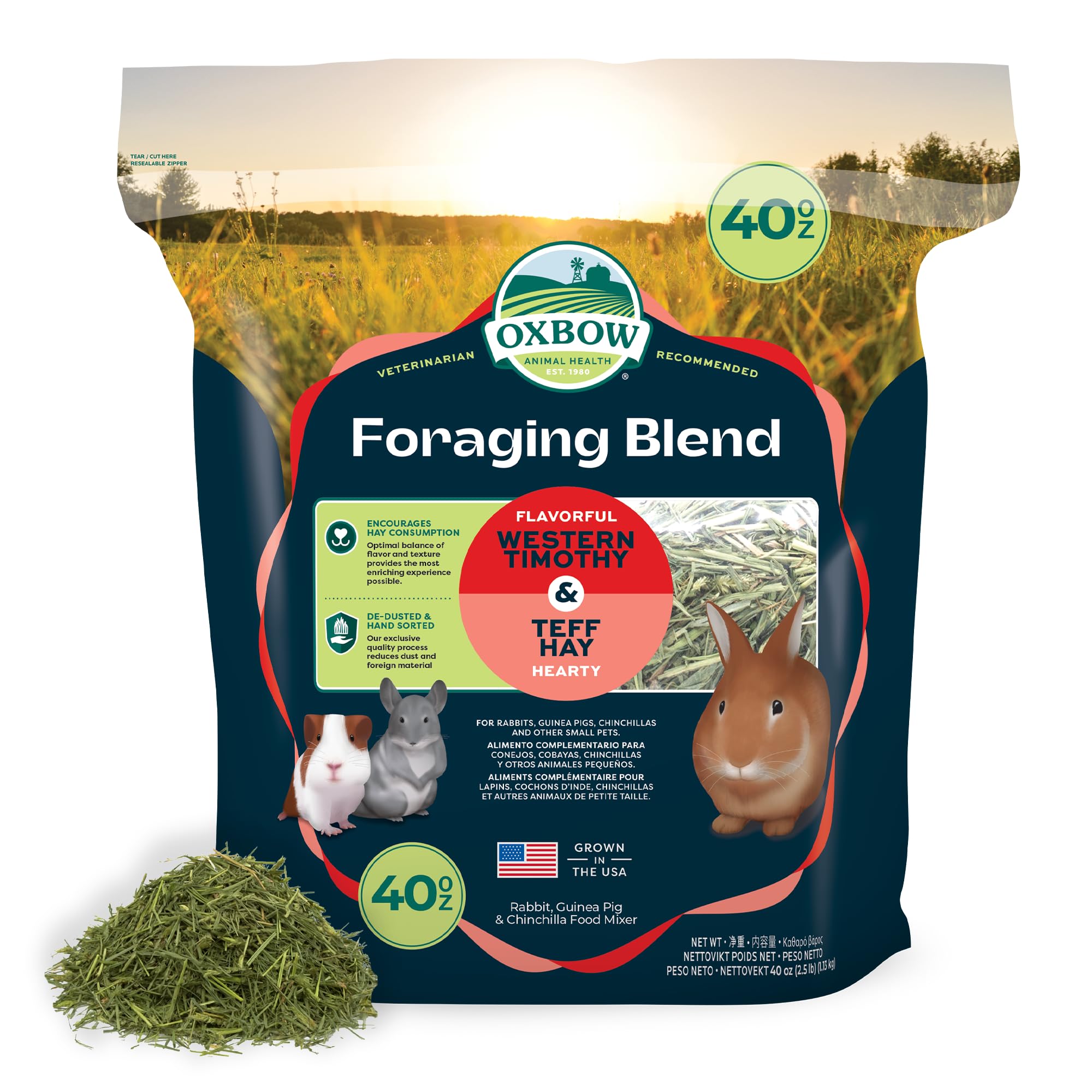
Oxbow’s Foraging Hay Blend combines two grass types — Western Timothy and Teff — to create a texturally diverse hay that keeps guinea pigs engaged with their forage. Teff hay is naturally lower in sugar than straight timothy, making this blend particularly suitable for cavies prone to obesity, diabetes, or sensitive digestion.
Owner side-by-side taste tests consistently show a clear preference for this blend over standard timothy hay. The strands are hand-sorted and hand-packed, resulting in minimal dust and a fresh green aroma that signals low oxidation. With a crude fiber content around 26%, this hay provides the long-strand material essential for dental wear and cecal fermentation.
Because this is a hay product rather than a pellet, it should be offered free-choice alongside a complete fortified pellet. The 40 oz bag provides roughly two weeks of hay for a single pig, and the resealable packaging helps maintain freshness.
Why we love it
- Low-sugar Teff hay suits sensitive digestive systems
- High crude fiber promotes dental and gut health
- Hand-sorted for minimal dust and consistent quality
Good to know
- Shorter strand length may not suit nesting or bedding
- Premium price compared to standard timothy hay
3. F.M. Brown’s Tropical Carnival Guinea Pig Food

F.M. Brown’s Tropical Carnival is a complete diet that includes timothy hay pellets, alfalfa pellets, and ZOO-VITAL Biscuits designed to support dental health through mechanical chewing.
Owner feedback highlights that guinea pigs find the banana flavor and crunchy biscuit texture highly appealing, often running to the bowl at feeding time. The 5-pound bag offers good volume for multi-pig households, and the inclusion of probiotics is a genuine bonus for cavies recovering from digestive upset.
The crude fiber content sits at 16%, which is below the ideal 18% minimum for adult guinea pigs. Additionally, the mix-style format means some components (the softer alfalfa pellets) may be selectively rejected, leading to waste. This works best as a transitional or supplementary diet rather than a primary pellet.
Why we love it
- Fortified with stabilized vitamin C and probiotics
- Large 5-pound bag offers good value per feeding
- ZOO-VITAL Biscuits encourage chewing and dental wear
Good to know
- Crude fiber at 16% is below the ideal threshold
- Mix format enables selective eating and waste
4. Kaytee Timothy Hearty Hay

Kaytee’s first-cut timothy hay is harvested early in the season, resulting in thicker, heartier stems that provide superior crunch and dental abrasion. The longer, coarser strands encourage extended chewing sessions, which is the primary mechanism for keeping guinea pig molars ground down to a healthy length.
Owner reports note that this hay consistently arrives fresher and greener than other Kaytee hay variations, with a notably clean, grassy smell that indicates low mold risk. The 48 oz bag is a practical size for single-pig households and provides roughly 10–14 days of free-choice hay when paired with daily pellet rations.
Because this is pure hay rather than a pellet, it does not supply measurable vitamin C. You must pair it with a complete fortified pellet such as the Supreme Science Selective to meet your cavy’s daily nutritional requirements. The coarser stems also produce more loose debris than softer second-cut hay.
Why we love it
- First-cut stems provide maximum dental grinding
- Consistently fresh and fragrant across batches
- Naturally grown without chemical pesticides
Good to know
- No stabilized vitamin C — must pair with a fortified pellet
- Coarser texture produces more loose debris
5. OHCOOL Timothy Hay Cubes

OHCOOL’s timothy hay cubes are compressed mini blocks measuring just half an inch across, designed specifically for small herbivore mouths. The baking process creates a hard, dense texture that provides excellent dental exercise while eliminating the loose dust and scattered stalks typical of bagged hay.
Owners appreciate the contained format for reducing cleanup around the cage, and the resealable plastic tub keeps the cubes fresh for extended periods without clumping. Multiple customers report that picky hay eaters enthusiastically accept these cubes as a treat or enrichment tool, making them useful for encouraging fiber intake.
These cubes are a treat or supplement rather than a complete diet — they lack added vitamin C and the balanced mineral profile of a formulated pellet. Overfeeding can contribute to dehydration because the compressed form is very dry, so limit to 2–3 cubes per day and ensure constant access to fresh water and fresh hay.
Why we love it
- Mini cube size fits small mouths perfectly
- Resealable tub keeps product fresh and dust-free
- Excellent for encouraging dental wear in picky eaters
Good to know
- Not a complete diet — no added vitamin C
- Very dry texture requires ample fresh water intake
FAQ
Can guinea pigs eat alfalfa pellets instead of timothy pellets?
How long do pellets stay fresh after opening the bag?
What crude fiber percentage should I look for in guinea pig pellets?
Why do my guinea pigs leave some pellets uneaten in the bowl?
Can I mix two different brands of pellets together?
Final Thoughts: The Verdict
For most guinea pig owners, the best pellets for guinea pigs winner is the Supreme Petfoods Science Selective Guinea Pig because it delivers a uniform, high-fiber (22% crude fiber) extruded pellet with stabilized vitamin C and no fillers — eliminating selective feeding while providing complete nutrition for adult cavies. If you need a premium hay blend to encourage a picky eater, grab the Oxbow Foraging Hay Blends Western Timothy & Teff for its low-sugar Teff content and hand-sorted quality. And for owners looking to reduce hay mess while offering a dental enrichment treat, the OHCOOL Timothy Hay Cubes provide a tidy, crunchy alternative that picky hay eaters reliably accept.