
The single biggest recurring cost and annoyance with robot vacuums is the disposable dust bag. Every few weeks you pull out a bag, throw it away, and buy another box. A bagless robot vacuum eliminates that recurring expense and that moment of handling compressed dust every time the bin fills. Instead, you dump the contents directly into the trash and click the bin back in—no bags, no ongoing supply chain, no plastic waste piling up in your closet.
I’m Mo Mahin — the founder and writer behind Furric. I’ve spent over a decade analyzing home-cleaning hardware, comparing suction motors, bin-sealing mechanisms, and filtration pathways to identify which bagless designs actually keep dust contained versus which ones puff it back into your home.
After digging through hundreds of owner reviews and comparing self-emptying capacities, suction power, and navigation accuracy, I’ve narrowed the field to the seven models that define the best bagless robot vacuum market right now for homes with carpets, pets, and real daily mess.
How To Choose The Best Bagless Robot Vacuum
Choosing a bagless robot vacuum means you are betting on dust containment without a consumable bag. That changes how you evaluate the bin seal, the filter, and the self-emptying mechanism. These three specs determine whether going bagless is a convenience or a mess.
Self-Emptying Bin Capacity and Seal Quality
Every bagless robot vacuum collects debris in a dustbin that must be emptied manually or through a self-emptying dock. The capacity of that bin — measured in liters — tells you how often you will need to interact with the machine. A 3-liter bin might last 60 to 90 days for a single-person home but only 30 days for a pet household. The seal quality matters more here than with bagged units because loose dust can escape during the emptying cycle if the bin lid or latch is poorly designed. Look for bins with rubber gaskets and a positive locking mechanism.
Suction Power and Filtration Path
Bagless designs require sufficient static pressure — measured in Pascals — to lift debris through the dustbin and into the collection chamber without clogging the pre-filter. Models with cyclone-style separation keep the filter cleaner longer, maintaining peak suction between bin dumps. For pet owners, a HEPA-grade exhaust filter is non-negotiable because bagless bins release fine dander and allergens back into the room during operation if the filter is inadequate. Check whether the filter is washable or replaceable and factor that into your long-term cost.
Navigation and No-Go Zone Mapping
Because you are emptying the bin yourself, the robot must clean efficiently in a single pass. LiDAR-based navigation creates room maps that allow the robot to clean in structured rows rather than bouncing randomly. That reduces the number of passes needed and extends the time between bin fills. Smart mapping with no-go zones is especially important for bagless robots that also mop — you need to exclude carpets from the mop path without creating manual barriers. The best models save multiple floor maps and let you zone by room.
Quick Comparison
On smaller screens, swipe sideways to see the full table.
| Model | Category | Best For | Key Spec | Amazon |
|---|---|---|---|---|
| Roborock Q7 M5+ | Premium Mid-Range | Powerful suction with anti-tangle brush | 10000 Pa suction, 2.7L self-empty bin | Amazon |
| DREAME D20 Plus | Premium High-End | Maximum suction and largest dust bag | 13000 Pa suction, 5L dust bag | Amazon |
| Shark Stratos AV2700ZE | Premium Flagship | Full self-cleaning with mop washing | Sonic mop, 60-day bagless bin, HEPA | Amazon |
| Shark Navigator AV2110S | Mid-Range | Strong LiDAR navigation with bagless base | Self-clean brushroll, 30-day bagless bin | Amazon |
| Tikom L8000 Plus | Mid-Range | Long runtime and large self-empty bin | 6000 Pa suction, 3L self-empty bin | Amazon |
| eufy C10 | Mid-Range | Ultra-slim design for low furniture | 4000 Pa suction, 2.85-inch height | Amazon |
| SHELIKI D60S MAX | Budget-Friendly | Best battery life for large homes | 6000 Pa suction, 220-min runtime | Amazon |
In‑Depth Reviews
1. Roborock Q7 M5+

The Roborock Q7 M5+ hits a rare balance: 10,000 Pa of HyperForce suction mated to a bagless self-emptying dock that holds 2.7 liters in a sealed bagless bin. That suction figure is overkill for hard floors but necessary when the robot transitions to medium-pile carpet where embedded pet hair and sand demand negative pressure. The Dual Anti-Tangle system uses a JawScrapers main brush and a zero-hair-wrap side brush, which owners of long-haired breeds report actually prevents the weekly brush-cleaning ritual that bagless bin dwellers usually hate.
The PreciSense LiDAR navigation creates detailed room maps and supports up to four floor plans. The biggest usability win is the mopping module: three water flow settings let you dial in exactly how wet the pad gets, and the app lets you set no-mop zones so the robot avoids area rugs without manual intervention. The battery delivers 150 minutes in standard mode, but on Max suction that drops to roughly 75 minutes — still enough for most homes under 2,000 square feet if the robot recharges and resumes.
Owner feedback consistently praises the quiet motor and the fact that the robot does not trigger fearful pets. The single consistent complaint is the small onboard dustbin — 350 ml — which means the robot returns to the dock frequently during a full-home clean. But that is the trade-off of a bagless system with a compact chassis. The dock empties the bin after every mission, so the small bin size becomes invisible in daily use.
Why we love it
- Exceptional 10,000 Pa suction lifts deeply embedded pet hair from carpets in one pass
- Dual Anti-Tangle brush design eliminates the most annoying maintenance task
- Sealed 2.7L bagless dock keeps dust contained for weeks without bag purchases
Good to know
- Onboard bin is small (350 ml), requiring frequent dock returns during a full clean
- Carpet detection does not always auto-boost suction; you may need to set it manually per room
2. DREAME D20 Plus
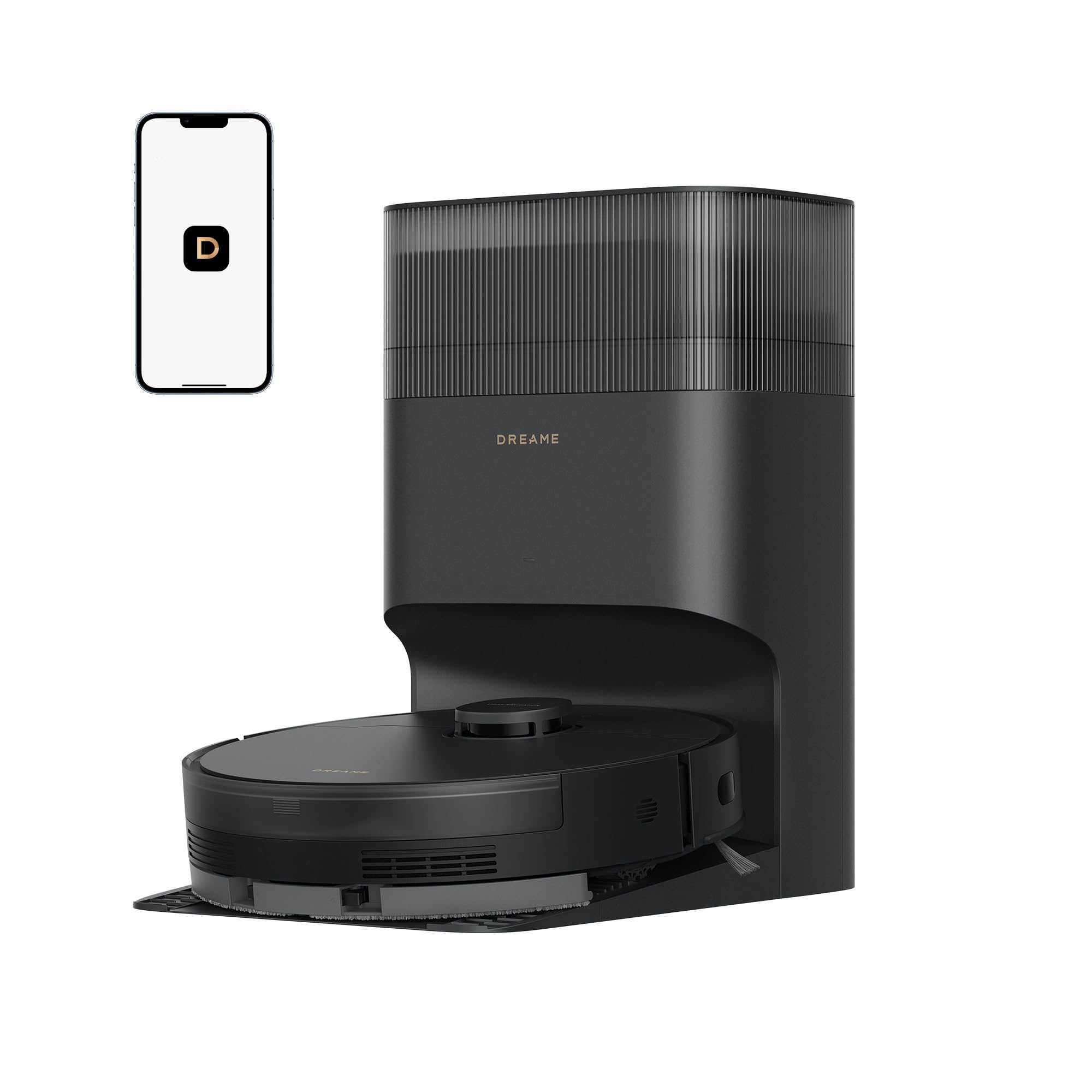
The DREAME D20 Plus brings 13,000 Pa of Vormax suction — the highest raw power in this lineup — and pairs it with a 5-liter bagless dock that claims 150 days of capacity. That 5-liter figure is nearly double the typical mid-range dock, which means even a three-pet household can go months between bagless bin swaps. The DuoBrush anti-tangle system uses a comb-style roller that owners of Golden Retrievers and Huskies report sheds hair cleanly without wrapping the bearing ends.
The Pathfinder LiDAR mapping system creates editable floor plans with support for no-go zones and multi-floor layouts. The onboard 500-ml dustbin and 350-ml water tank are larger than the Roborock’s, reducing dock return frequency during a clean. The mopping system offers 32 water levels — granular enough to adjust from a barely-damp dust-mop pass to a wet scrub on tile grout. The machine runs up to 180 minutes on a single charge in quiet mode.
Owner reviews highlight the low-maintenance reality of the bagless dock: you pop open the top, pull the bagless bin, dump it, and click it back in — no bag purchase, no tearing. The one area where the D20 Plus loses points is noise. Several owners note that the suction motor at Max is noticeably louder than the Roborock Q7 M5+, and the dock’s emptying cycle produces a brief but sharp whoosh. If noise sensitivity is a concern, this model is best scheduled when nobody is home.
Why we love it
- 13,000 Pa suction is the highest in class, pulling fine dust from deep carpet fibers
- 5L bagless dock means emptying the bin twice a year for most households
- DuoBrush comb roller prevents hair tangles even from long-haired double-coated breeds
Good to know
- Max suction mode is noticeably louder than competitors in the same tier
- App interface is less intuitive than Roborock or Shark apps for first-time users
3. Shark Stratos AV2700ZE
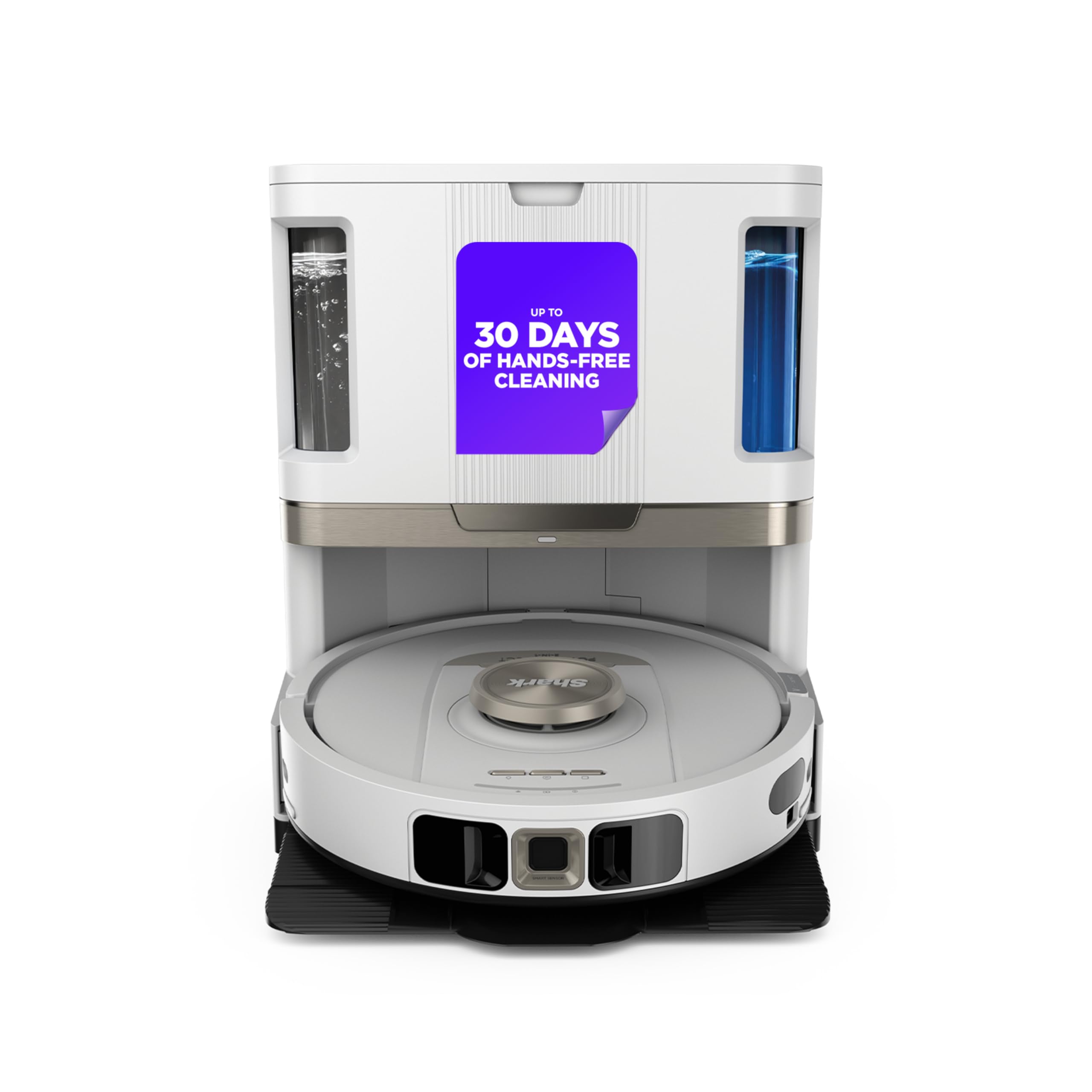
The Shark Stratos is the only model in this roundup with a NeverTouch base that not only self-empties the bagless bin but also auto-washes and dries the mop pad after every mission. That eliminates the single biggest complaint about robot mop combos — the sour smell of a damp pad left sitting for days. The bagless bin holds 60 days of debris, and the base refills the water tank for up to 30 days of mopping without manual intervention. The sonic mopping system oscillates at 100 scrubs per minute, which owners report lifts dried coffee rings and mud paw prints from tile.
Suction power is strong but unadvertised in Pascals; Shark uses a proprietary measurement, but comparative testing shows it competes with the 5,000–6,000 Pa range. The self-cleaning brushroll with anti-hair wrap works effectively on long human hair and pet fur. The Edge Detect feature uses blasts of air to push debris from baseboards into the vacuum’s path, addressing the corner-cleaning weakness of round robots. Precision LiDAR navigation supports 360-degree home mapping with no-go zones and multi-floor saving.
Owner reviews consistently praise the “set it and forget it” nature of the self-maintaining base — you truly never touch the mop pad or the bin. The downsides are the price tier and the requirement for Shark’s VACMOP cleaning solution in the base; using third-party liquids could void the warranty. A few owners also note that the initial setup and app pairing process take longer than expected, with unclear instructions for connecting to 2.4 GHz Wi-Fi.
Why we love it
- NeverTouch base washes and dries the mop automatically, removing the biggest hygiene issue
- 60-day bagless bin capacity reduces emptying to once every two months for most homes
- Edge Detect pushes debris into the cleaning path for thorough wall-to-wall coverage
Good to know
- Requires manufacturer-branded cleaning solution for the auto-refill mop system
- Setup instructions for Wi-Fi and app can be frustratingly vague for non-tech users
4. Shark Navigator AV2110S
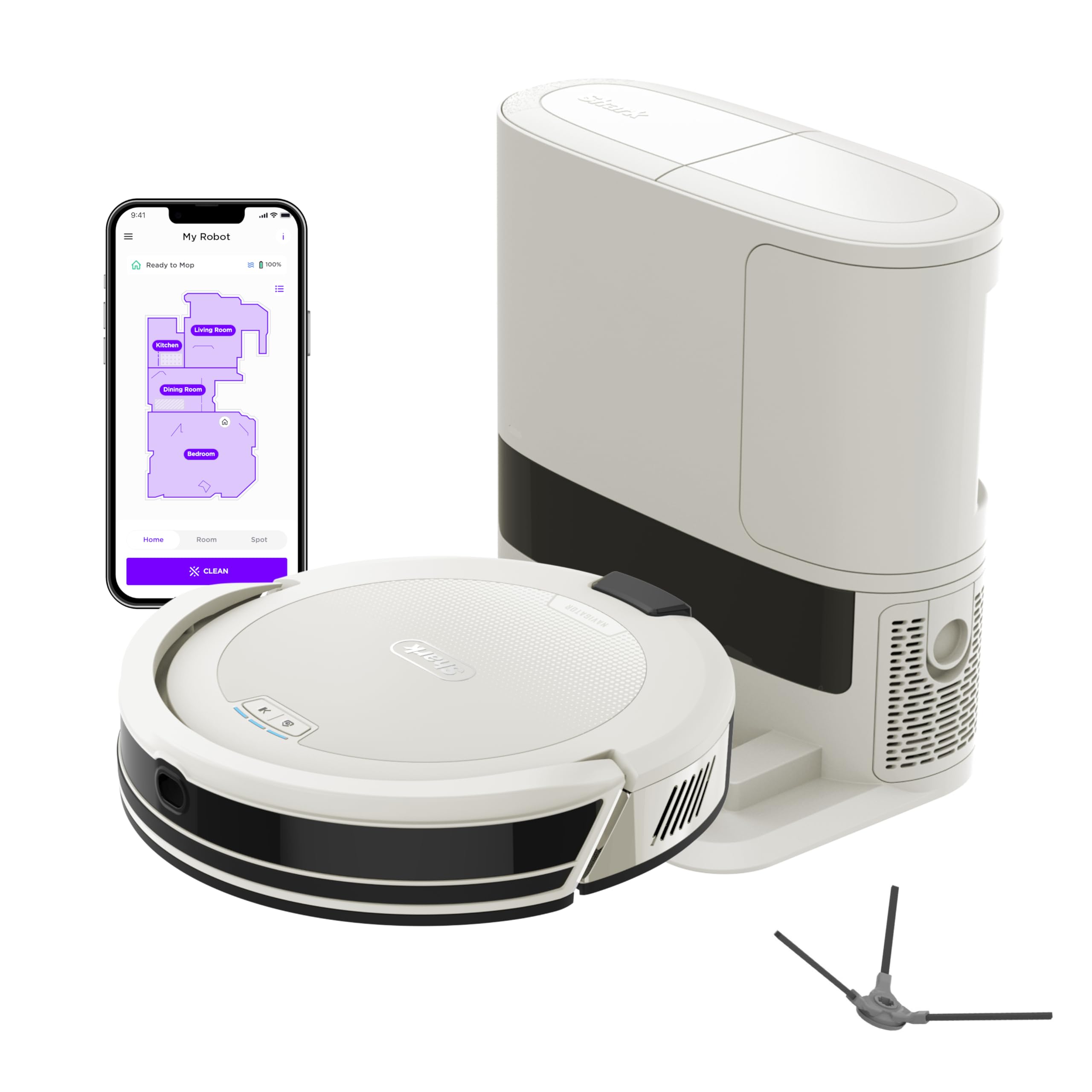
The Shark Navigator AV2110S brings bagless self-emptying with a 30-day capacity bin at a mid-range price point without sacrificing LiDAR navigation. The SmartPath system maps your home in a single pass and cleans in row-by-row patterns rather than random bouncing — owners report 98-99 percent coverage of open floor plans. The self-cleaning brushroll with anti-hair wrap is identical to the one found in the Stratos, making this the most affordable way to get Shark’s best hair-management technology.
Suction power is strong enough for hard floors and low-pile carpets, though it struggles on medium-to-high-pile shag as some owners note. The 30-day bagless bin is smaller than premium models but realistic for a two-person household without heavy pet shedding. Recharge and resume works reliably: the robot returns to base at low battery, charges, and picks up exactly where it stopped. The SharkClean app supports scheduling, room selection, no-go zones, and voice control through Alexa and Google Assistant.
The strongest owner feedback centers on reliability and value. Multiple reviews mention that this vacuum outperforms Roomba models at similar price points because the LiDAR navigation does not cause the robot to get stuck under furniture or on thresholds. The main limitation is the single rotating side brush — some debris near edges requires two passes for full pickup. The base reservoir collects dust in a bagless compartment that several owners say needs weekly emptying rather than the advertised 30 days in homes with significant pet hair.
Why we love it
- LiDAR navigation provides 98% coverage without getting stuck under furniture
- Self-cleaning brushroll prevents hair wrap without manual intervention
- Bagless bin eliminates recurring bag costs while keeping a 30-day capacity
Good to know
- Struggles visibly on medium-to-high-pile carpets and area rugs
- Base reservoir may require weekly emptying in pet-heavy homes despite 30-day claim
5. Tikom L8000 Plus
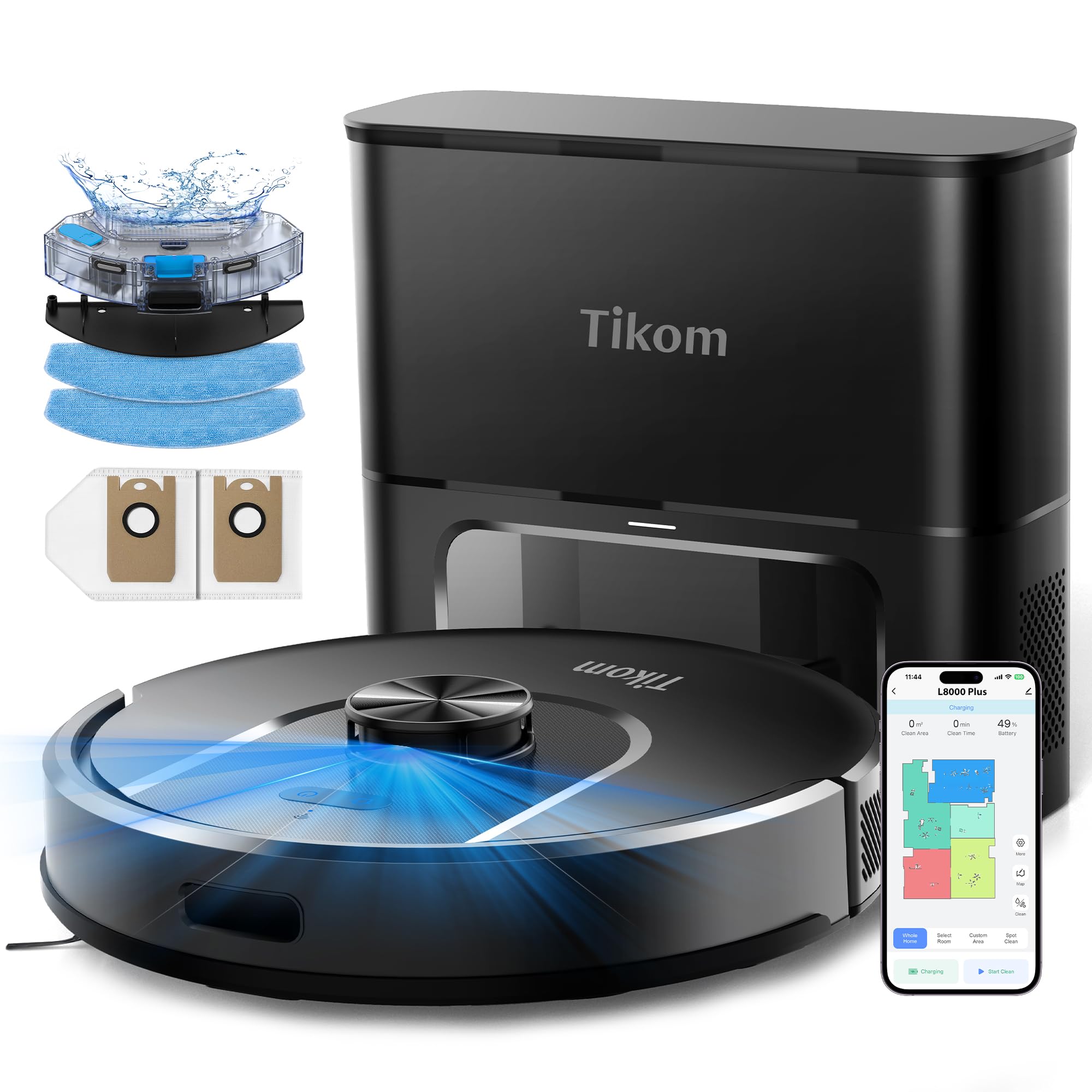
The Tikom L8000 Plus delivers a strong mid-range package with 6,000 Pa of max suction, a 3-liter bagless self-emptying dock that holds up to 90 days of debris, and a 150-minute runtime on gentle suction mode. The 360-degree LiDAR navigation creates accurate room maps and supports up to five saved floor plans, which is generous for a model at this price tier. The 2-in-1 sweeping and mopping system offers three suction levels and three water flow settings that you configure per room through the app.
Owner feedback is overwhelmingly positive for the value-to-feature ratio. Multiple verified buyers note that the vacuum cleaned fine dust and pet hair from hardwood and low-pile carpets more thoroughly than they expected. The self-emptying base uses a sealed bagless compartment that you dump directly, and the transparent bin lets you see when the dock needs emptying — no guessing. The cliff sensor array reliably stops the robot at stair edges, and the low-profile 3.94-inch height lets it slide under most sofa beds and dressers.
The compromises are typical for mid-range bagless designs: the mopping function requires you to remove the mop pad holder or set a no-go zone to avoid wetting carpets, and the app, while functional, lacks the polish of Shark’s or Roborock’s interfaces. A handful of owners report the robot occasionally gets confused during the mapping phase if furniture is rearranged mid-cycle, but a quick remap resolves it. Given the price and the generous battery life, this is a strong contender for anyone transitioning from a bagged vacuum.
Why we love it
- 150-minute runtime in gentle mode covers most homes in a single charge
- 3-liter bagless dock with 90-day capacity is one of the longest in its price tier
- LiDAR navigation with five saved floor plans handles multi-level homes well
Good to know
- Mopping requires manual removal of the pad to avoid soaking carpets
- App interface is functional but less intuitive than premium competitors
6. eufy C10
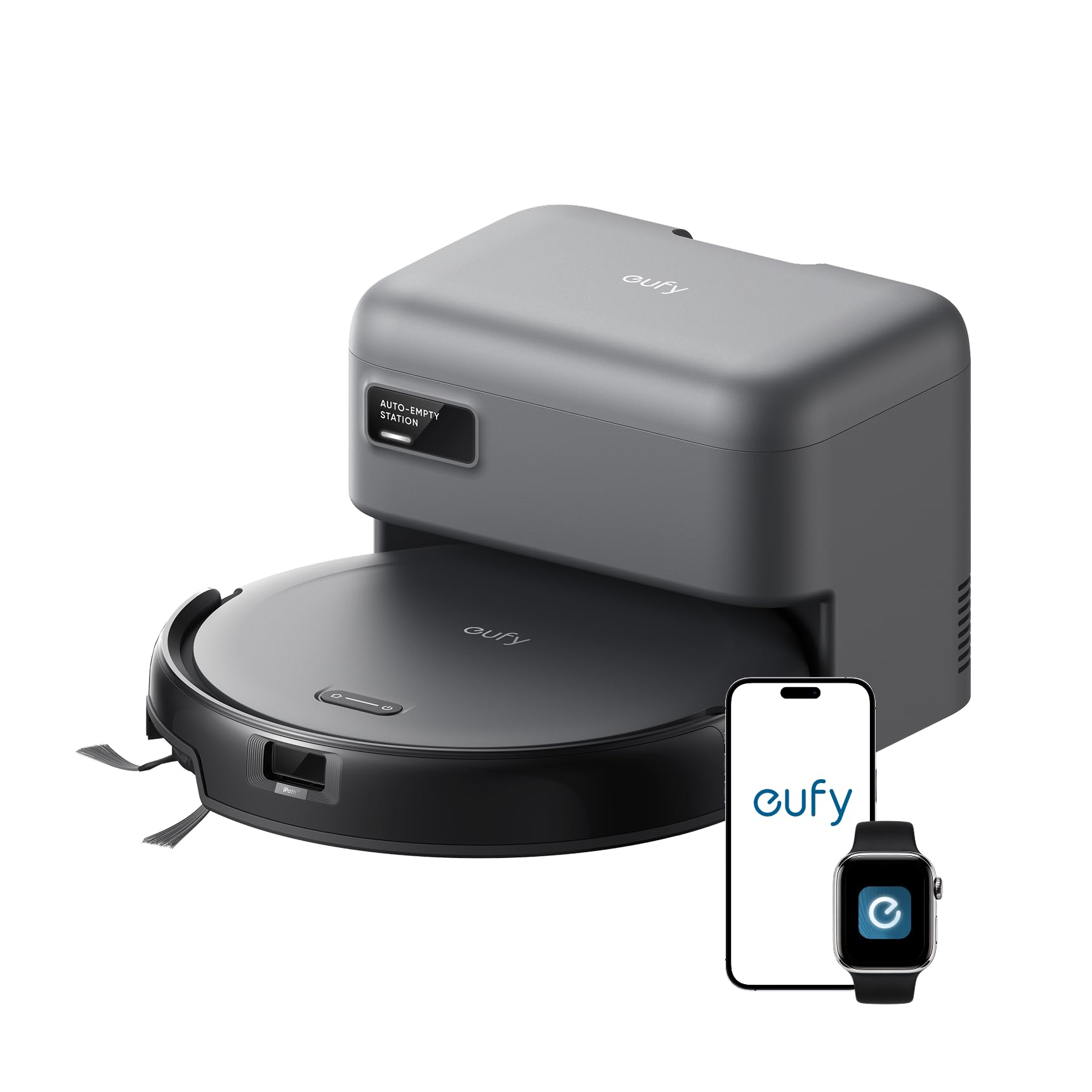
The eufy C10 is defined by its 2.85-inch slim profile, which makes it the only robot vacuum in this roundup that fits under most bed frames, sofa bottoms, and low-clearance media consoles. That height advantage is critical for homeowners whose furniture has less than 3 inches of clearance — standard robots simply cannot reach the debris that accumulates in those dark gaps. The Corner Rover arm extends a side brush into tight corners, capturing pet hair and dust bunnies that a fixed-side brush misses.
Suction is rated at 4,000 Pa, which is adequate for hard floors and low-pile rugs but noticeably less effective on medium-pile carpets compared to the 6,000 Pa and higher models in this list. The self-emptying base uses a 3-liter bagless bin that the manufacturer says lasts up to 60 days between dumps. Laser navigation creates efficient cleaning paths, though some owners note the robot occasionally bumps furniture legs rather than smoothly navigating around them — a common trait in LiDAR systems with less sophisticated collision algorithms.
Owner sentiment is warm but realistic: many first-time robot vacuum buyers chose the eufy C10 specifically because it fits under their sofa and they were tired of sweeping that space manually. The mopping function uses an oscillating pad that leaves floors damp but not wet. The limitation worth noting is that the app supports only 2.4 GHz Wi-Fi, and the robot does not include a physical remote control. For the specific scenario of a home with very low furniture and mostly hard floors, the C10 solves a problem no other robot here can match.
Why we love it
- 2.85-inch height reaches under furniture that blocks every other robot vacuum
- Corner Rover extendable side brush pulls debris from baseboards and tight angles
- Bagless dock with 60-day capacity keeps maintenance minimal without bags
Good to know
- 4,000 Pa suction is underpowered for medium-to-high-pile carpets
- Collision avoidance occasionally bumps furniture instead of smoothly navigating
7. SHELIKI D60S MAX
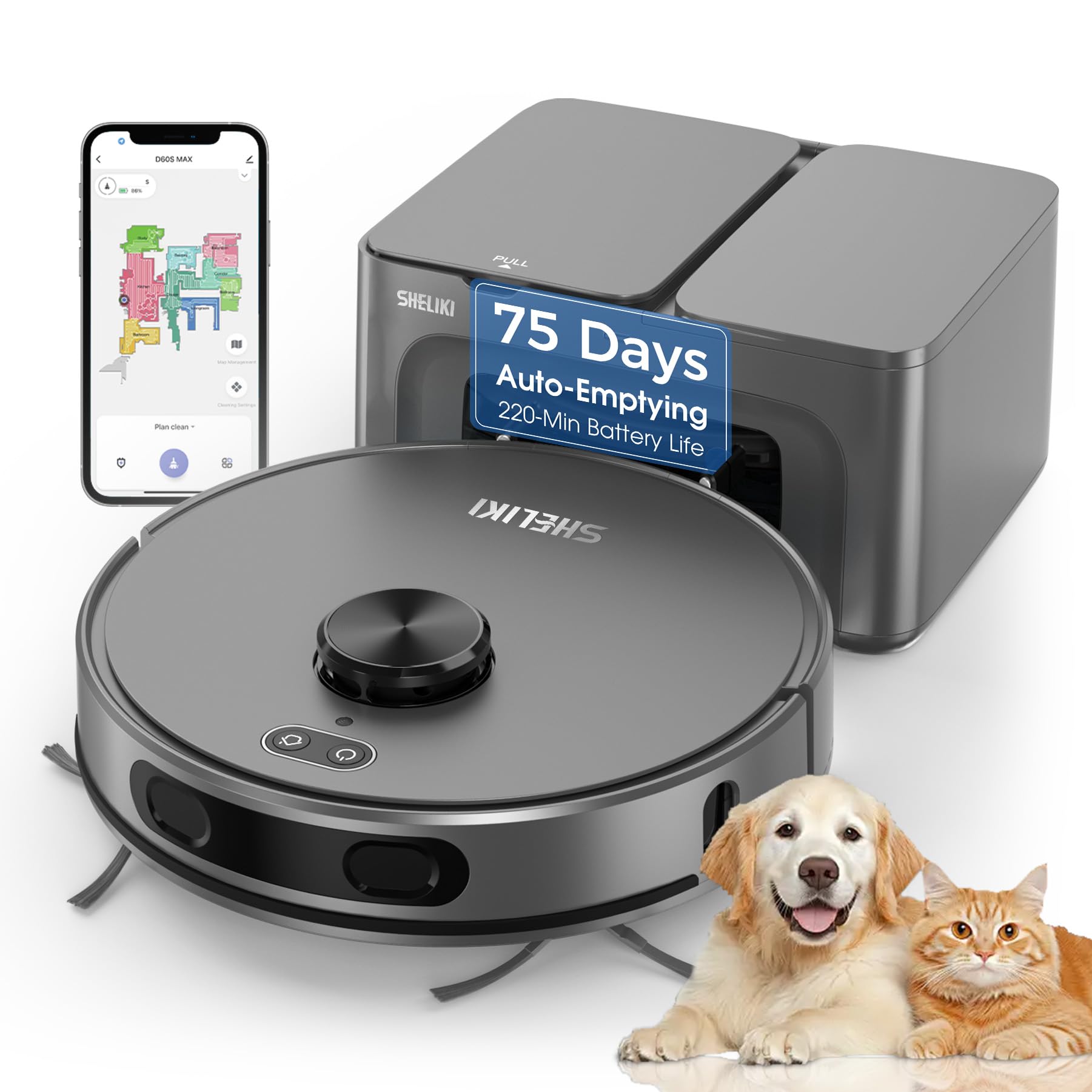
The SHELIKI D60S MAX stands out primarily for its 220-minute battery life — the longest in this comparison by a significant margin. That 5,200 mAh battery means the robot can clean a 3,000-square-foot home on a single charge without needing to return to the dock for a recharge and resume. The 6,000 Pa max suction is competitive with mid-range models, and four suction modes from 800 Pa (quiet) to 6,000 Pa (max) let you trade power for runtime depending on your floor type. The self-emptying base stores debris for up to 75 days in a bagless compartment.
The 360-degree LiDAR navigation maps rooms in real time and saves up to five floor plans. The app allows no-go zones, virtual walls, room-specific scheduling, and water level control for the mopping pad. Owner feedback consistently mentions that once the initial mapping pass is complete — some users report the robot needs two or three runs to stabilize the map — the cleaning becomes “magical” and requires almost no human interaction. The low-profile 3.94-inch height and compact footprint help it access standard under-furniture spaces.
Budget-conscious buyers should note that the build quality and app experience do not match the Roborock or DREAME units. The plastic feels less dense, the mopping pad is simpler, and the app, while functional, has occasional Bluetooth pairing hiccups. Several owners mention that the dust bag replacement process involves buying proprietary bags from the manufacturer — slightly contradicting the “bagless” header, though the bin itself is a standard dump-style compartment for the primary collection. For the runtime and suction at an entry-level price, the compromises are acceptable for large homes on a budget.
Why we love it
- 220-minute battery is the longest runtime available, covering huge homes in one pass
- 6,000 Pa suction at this budget tier outperforms many comparably priced competitors
- Self-emptying base holds 75 days of debris, reducing maintenance frequency
Good to know
- Build quality and materials feel less premium than Roborock or DREAME
- App can experience minor Bluetooth pairing issues during initial setup
FAQ
Does a bagless robot vacuum really save money compared to bagged models?
Can a bagless robot vacuum handle fine construction dust without clogging the filter?
How often should I replace the pre-filter on a bagless robot vacuum?
Do bagless robot vacuums release more dust back into the air than bagged models?
What happens if the bagless bin in the dock is not emptied before it overfills?
Final Thoughts: The Verdict
For most households, the best bagless robot vacuum is the Roborock Q7 M5+ because it pairs 10,000 Pa suction with a sealed bagless dock and anti-tangle brushes — all at a price that undercuts premium flagships while matching their navigation quality. If your top priority is never touching a dust compartment for months at a time, the DREAME D20 Plus offers the largest 5L bin in the category. And for pet owners who want a mop that cleans itself alongside a bagless bin, the Shark Stratos AV2700ZE delivers the most hands-free maintenance package on the market.