
A muddy, ammonia-smelling chicken run is the fastest way to lose your enthusiasm for backyard poultry. The wrong wood chips trap moisture, breed bacteria, and turn a simple chore into a daily battle. The right material, however, suppresses odor, breaks down naturally into safe compost, and gives your flock a soft surface that keeps their feet healthy and their foraging instincts engaged.
I’m Mo Mahin — the founder and writer behind Furric. My approach to evaluating run bedding relies on months of cross-referencing absorbency data, particle-size distribution reports, and long-term owner feedback from flocks kept in wet, dry, and mixed climates.
Whether you manage a small backyard coop or a large free-range setup, the best wood chips for chicken run strike a balance between moisture control, dust level, compostability, and the physical comfort your birds need to thrive.
How To Choose The Best Wood Chips For Chicken Run
Not all bedding labeled “natural” performs equally under a roof. The moisture level in a covered run differs from an open pasture, and the particle structure of the material directly determines how often you need to scoop, turn, or replace the entire floor.
Particle Size and Dust Load
Chickens have sensitive respiratory systems. Fine sawdust or powdery shavings trigger sneezing, eye irritation, and long-term lung damage. The safest run bedding uses coarse chips, pellets, or flakes that release minimal airborne particles. Hemp flakes and pine pellets both score well here because their dense structure holds shape without crumbling.
Absorbency and Ammonia Control
A run that stays wet for more than a few hours develops ammonia from urea breakdown. Hemp absorbs roughly twice as much liquid as pine shavings by weight, while pine pellets expand into a sawdust-like mat that traps urine underneath. Aspen excelsior fibers wick moisture away from the surface. The goal is a material that dries fast enough to prevent bacterial bloom but stays damp long enough to support the deep litter composting process.
Compostability and Disposal
Run bedding gets mixed with manure, feathers, and spilled feed. The best wood chips for a chicken run break down completely in a hot compost pile within three to six months. Untreated pine, aspen, and hemp all decompose readily. Avoid materials treated with anti-fungal agents or artificial scents — those chemicals survive the compost cycle and can harm garden soil biology.
Quick Comparison
On smaller screens, swipe sideways to see the full table.
| Model | Category | Best For | Key Spec | Amazon |
|---|---|---|---|---|
| Eaton Pet and Pasture Hemp Bedding | Hemp Flake | Deep litter method in covered runs | Absorbs 2x more than pine shavings | Amazon |
| Standlee Flock Fresh Premium Poultry Bedding | Zeolite-Infused Straw | Ammonia neutralization in wet climates | Contains natural zeolite for ion exchange | Amazon |
| Trendiees Aspen Chicken Nesting Pads (12-Pack) | Aspen Excelsior Pad | Quick daily cleanup of nesting boxes | 13″x13″ pads with paper backing | Amazon |
| Small Pet Select Pine Pellet Bedding | Pine Pellet | Budget-friendly moisture absorption in dry runs | 20 lb bag, 99% dust-free pellets | Amazon |
| HoazHoald 21 Oz Chicken Nesting Herbs | Dried Herb Blend | Natural miticide and nesting box freshener | 8-herb blend including lavender and rosemary | Amazon |
In‑Depth Reviews
1. Eaton Pet and Pasture Hemp Bedding (28L)

This hemp flake bedding stands apart because it absorbs roughly double the moisture of standard pine shavings while releasing almost no airborne dust. The long hemp fibers mat together naturally, forming a stable floor that resists compaction even when chickens scratch and dig all day. Multiple owners report running the deep litter method for six months straight without a single ammonia spike.
The bag size (28 liters) feels modest compared to 40-pound pine pellet bags, but the functional coverage is high because the flakes fluff up considerably. Users consistently note that the earthy, neutral scent beats the sharp pine aroma that some birds avoid. The low-dust profile also makes this a strong choice for brooder use with young chicks.
On the downside, shipping speed varies because this is a farmer-owned brand, not a mass-market product stocked at big-box retailers. The cost per cubic foot runs higher than pellet options, though the reduced frequency of full changes often offsets the upfront difference.
Why we love it
- Nearly dust-free — supports healthy respiratory function
- Holds moisture 2x longer than pine shavings
- Composts readily with no chemical residues
Good to know
- Small bag size may require multiple orders for large runs
- Shipping can be slower than mainstream brands
2. Standlee Hay Company Flock Fresh Premium Poultry Bedding (2 cu. ft.)
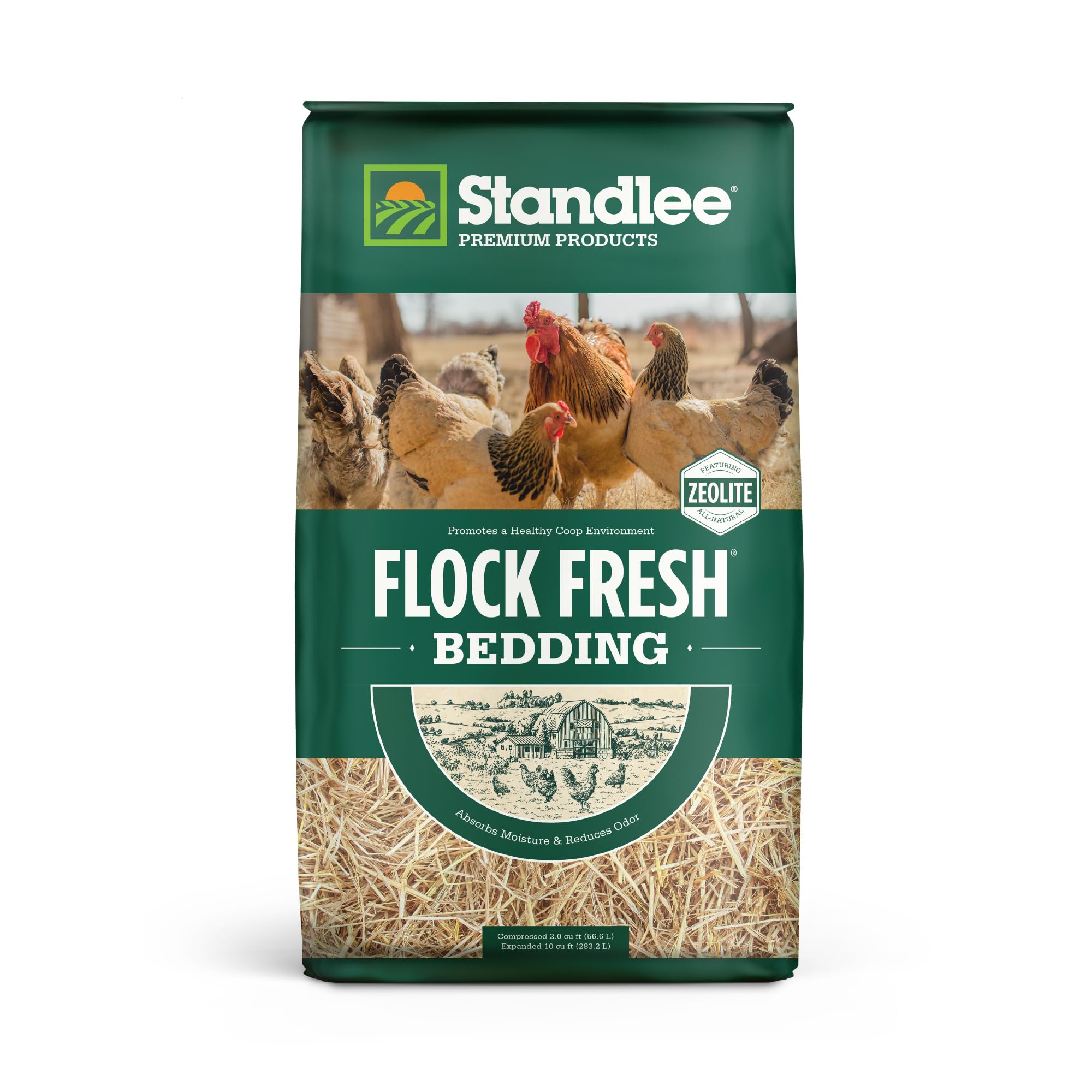
This is not a pure wood chip product — it is a chopped straw base blended with natural zeolite, a volcanic mineral that traps ammonia molecules through ion exchange. That chemistry matters for runs in humid regions where moisture and heat accelerate odor buildup. The straw structure stays light and fluffy, encouraging natural scratching behavior.
Owners praise the volume per bale; the compressed package expands significantly when opened, covering a standard 4×8 run floor with a generous 3-inch layer. The zeolite additive keeps the run smelling fresh for weeks longer than plain straw. The bedding also releases trapped nitrogen slowly during composting, which enriches garden soil.
The main drawback is dust. While not excessive, the straw particles produce more airborne fines than hemp flakes or aspen pads. Some users also report torn bags during delivery, which can spill material and attract rodents if not transferred to a sealed container immediately.
Why we love it
- Zeolite chemically neutralizes ammonia at the source
- Compressed bale delivers excellent coverage per dollar
- Scratch-friendly texture keeps flock active
Good to know
- Higher dust level than hemp or aspen alternatives
- Bag may arrive torn; transfer to a bin on arrival
3. Trendiees Aspen Chicken Nesting Pads (12-Pack, 13×13)
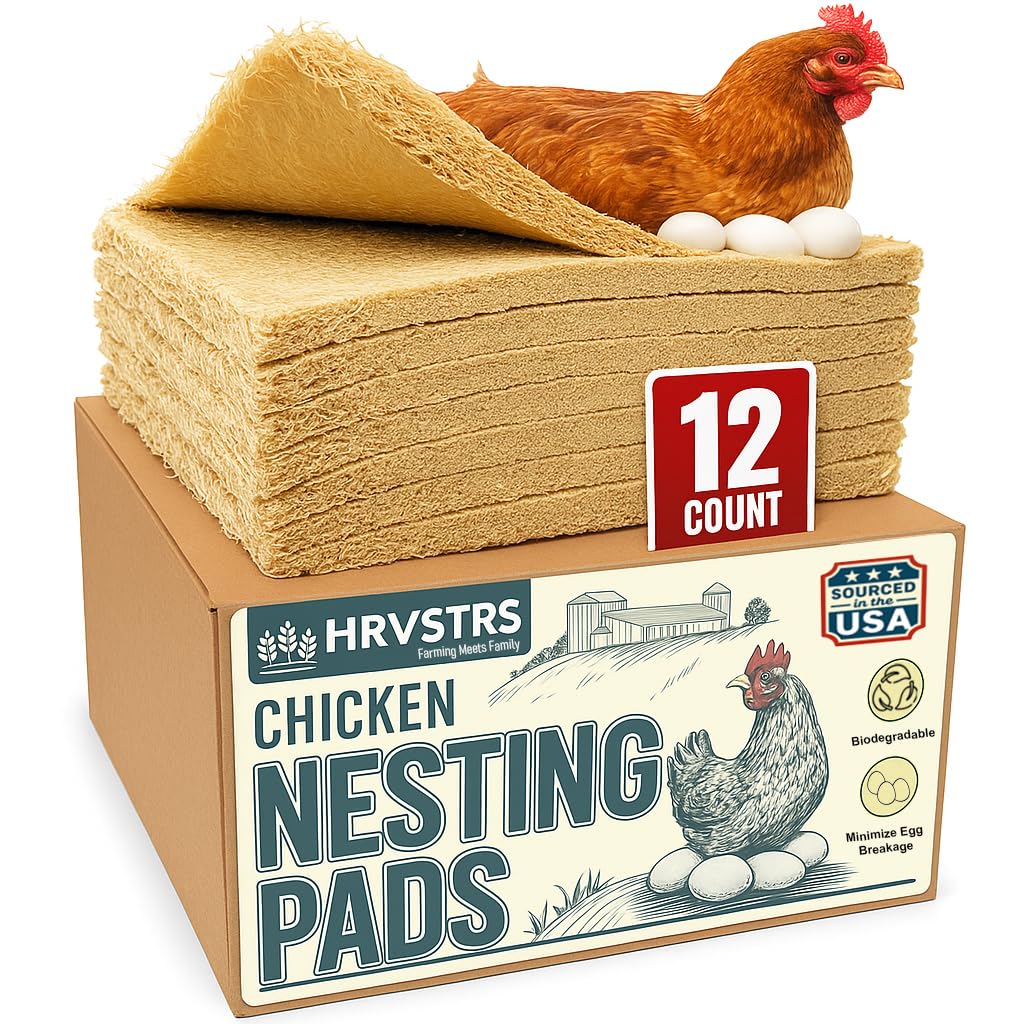
These pre-formed pads solve the mess problem of loose bedding. Each 13×13-inch pad is made from aspen excelsior fibers bonded to a biodegradable craft paper base. When a pad gets soiled, you lift it out by the paper backing in one piece — no scooping, no dust clouds. The aspen fibers wick moisture downward while droppings stay on the surface, keeping eggs clean and reducing cracked shells.
Aspen is a smart choice for respiratory health because it contains none of the aromatic phenols found in cedar or fresh pine. The pads measure 2.5 inches thick when fluffed, providing enough cushion to prevent eggs from rolling onto hard surfaces. Owners report that a single pad lasts three to five days in a standard nest box before needing replacement.
The tradeoff is cost-per-square-foot. These pads are more expensive than bulk pine pellets or hemp flakes, making them best suited for nesting boxes rather than the entire run floor. Some users also note that very active hens can shred the paper backing faster than expected.
Why we love it
- Lift-and-replace design cuts cleanup time to 30 seconds
- 100% dust-free aspen protects bird airways
- Thick cushion reduces egg cracks from hard landings
Good to know
- Higher cost than loose bedding for full-run coverage
- Active hens may tear the paper backing prematurely
4. Small Pet Select Pine Pellet Bedding (20 lb)

Pine pellets are the classic entry-level choice for chicken run floors because they expand into a sawdust mat that traps liquid underneath a dry top layer. This 20-pound bag is triple-screened to 99% dust-free, which puts it far ahead of generic wood stove pellets that often contain mystery additives or high fines content.
The pellets work well under a thin layer of loose shavings or directly on compacted dirt. One reviewer specifically uses them before storms to pre-absorb rainwater in an uncovered run. The pine aroma is pleasant but not overpowering, and the pellets compost safely after a few months in a hot pile.
The main limitation is weight-specific coverage. A 20-pound bag covers roughly 4 to 6 square feet at a 2-inch depth, which means large runs require several bags. Some owners note that Tractor Supply sells 40-pound bags for less, so bulk buyers should compare regional pricing before committing to this specific brand.
Why we love it
- Triple-screened for minimal dust
- Pellets expand to trap moisture below the surface
- Safe, natural pine with no chemical binders
Good to know
- Coverage per bag is limited for large runs
- Local farm stores may offer better bulk pricing
5. HoazHoald 21 Oz Chicken Nesting Herbs Flowers Premixed
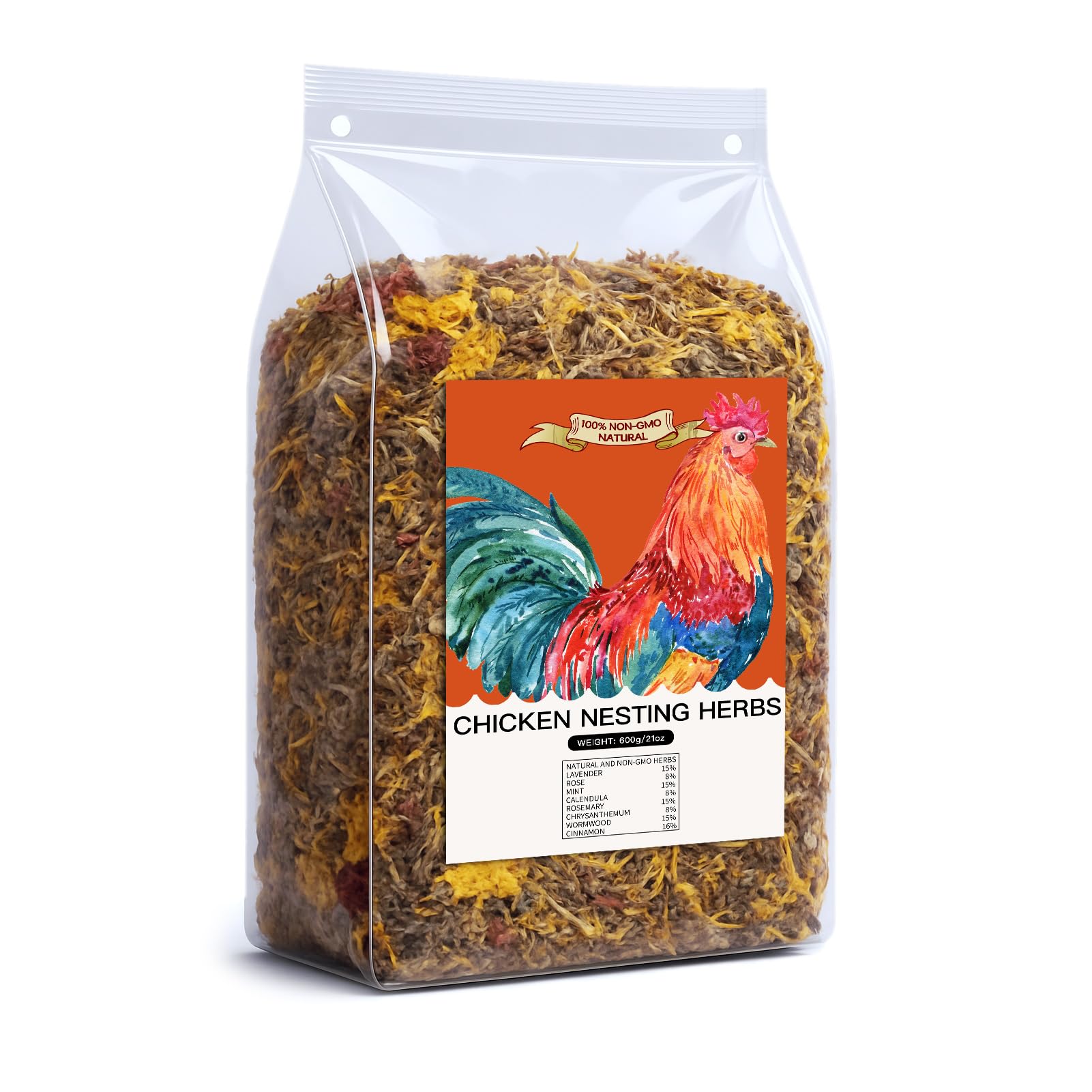
This is not a structural bedding material — it is a dried herb blend designed to be sprinkled over your existing run bedding or nesting box filler. The mix contains lavender, rose, mint, calendula, rosemary, chrysanthemum, wormwood, and cinnamon. These herbs serve dual purposes: they mask ammonia odor with natural fragrance, and several of the ingredients (wormwood, rosemary, mint) act as mild mite and fly deterrents.
Owners report that the scent lasts about three to five days in an active coop before needing a refresh. The herbs are edible, so chickens will peck at them as a treat while foraging. The vitamin and mineral content — calcium from the calendula, trace elements from the rose — adds a small nutritional boost to the flock’s diet.
The 21-ounce bag is lightweight and covers roughly 30 to 40 square feet when sprinkled lightly. It should not replace absorbent base bedding; instead, use it as a top-dress to freshen the coop between full cleanings. The plastic bag packaging is functional but not resealable, so transfer the herbs to an airtight container after opening.
Why we love it
- Natural mite-deterrent herbs reduce chemical spray needs
- Pleasant scent keeps the coop inviting for both birds and keepers
- Edible blend adds variety to foraging activity
Good to know
- Not a standalone bedding — requires a base layer underneath
- Scent fades within a few days in high-activity coops
FAQ
Can I use regular wood stove pellets in my chicken run?
How often should I replace wood chips in a covered run?
Do wood chips attract mites or other pests to the coop?
Final Thoughts: The Verdict
For most backyard keepers, the best wood chips for chicken run winner is the Eaton Pet and Pasture Hemp Bedding because it combines superior moisture absorption, minimal dust, and reliable odor control without chemical additives. If you need targeted ammonia neutralization for a wet-climate run, grab the Standlee Flock Fresh. And for keepers who value quick daily cleanup of nesting boxes, nothing beats the Trendiees Aspen Nesting Pads.