
A Siberian Husky’s instinct to pull is genetic—born from centuries of sled work. A standard collar or flimsy harness not only fails to control this drive but risks tracheal injury and escape. The right harness redirects that power into safe, manageable walks without sacrificing your dog’s comfort or freedom of movement.
I’m Mo Mahin — the founder and writer behind Furric. I spend my time dissecting product specifications, cross-referencing owner feedback from hundreds of verified buyers, and analyzing how breed-specific anatomy (deep chest, narrow waist, thick double coat) interacts with harness design to separate genuinely functional gear from marketing fluff.
This guide compiles only models that survive that scrutiny — the ones that actually fit, control, and endure a Husky’s strength. If you are searching for the best harness for siberian husky, these picks will save you the trial-and-error cycle that costs both time and your dog’s trust.
How To Choose The Best Harness For Siberian Husky
A Husky’s deep chest, narrow waist, and dense double coat create a fitting challenge that generic harnesses simply ignore. Selecting the right model means understanding how these anatomical traits interact with harness geometry, not just picking a color you like.
Understand the Husky Body Geometry
Huskies have a chest significantly deeper than their waist, meaning a one-size-fits-all step-in harness often slides sideways or loosens at the belly. Look for a Y-front or X-back design with multiple adjustment points — at least two on the chest strap and two on the belly strap — so you can cinch the fit independently at both ends.
Match the Harness to the Activity
Not all pulling is the same. A daily walker needs a front-clip no-pull harness to redirect momentum, while a sled or canicross dog requires an X-back pulling harness that transfers load to the hindquarters without restricting the shoulders. A tactical vest with pouches works for service or hiking roles but adds weight that fatigues a pet on casual strolls.
Prioritize Buckle and Strap Integrity
Huskies are masters of escape and can snap weak plastic buckles with a single lunge. Insist on metal alloy D-rings for leash attachment and UTX-Duraflex or similar heavy-duty side-release buckles. The webbing should be at least 1 inch wide — narrow straps dig into the armpits and cause chafing, especially under load.
Check for Padding and Breathability
Your Husky’s thick coat traps heat, so foam padding that is too dense or non-breathable (cheap polyester fill) can cause overheating on warm walks. Look for neoprene lining, ventilated mesh, or polypropylene padding that wicks moisture and allows airflow while still distributing pressure across the chest and ribcage.
Quick Comparison
On smaller screens, swipe sideways to see the full table.
| Model | Category | Best For | Key Spec | Amazon |
|---|---|---|---|---|
| Neewa Pro Sled Harness | Premium Sled | Sledding & canicross | Polypropylene X-back, 126g | Amazon |
| Spark Paws No Pull | Mid-Range | Daily walks & control | Triple-stitched nylon, neoprene | Amazon |
| Ruffwear Front Range | Mid-Range | Training & everyday use | Closed-cell foam, dual clips | Amazon |
| Carhartt Nylon Duck | Mid-Range | Urban durability | 500D polyester, DWR finish | Amazon |
| OneTigris Guardian | Mid-Range | Service & hiking | 1000D nylon, MOLLE panels | Amazon |
| Neewa Reflective H-type | Budget | Light running & hiking | PP webbing, machine washable | Amazon |
| PET ARTIST Sled | Budget | Weight pulling & training | 50mm webbing, 1200 lb limit | Amazon |
In‑Depth Reviews
1. Neewa Pro Sled Dog Harness

The Neewa Pro Sled Harness was designed specifically for Nordic breeds, and it shows in the details. The X-back construction distributes pulling force evenly across the ribcage and shoulders, preventing the load from riding up into the spine — a common issue with generic harnesses on deep-chested dogs. At just 126 grams, it won’t add fatigue during long runs, and the polypropylene material is both breathable and non-allergenic for Huskies with sensitive skin under their thick coats.
Owner reports confirm that this harness allows a Husky to pull without choking, a direct result of the padded neck and ribcage panels that keep pressure off the trachea. The reflective inserts improve visibility during early morning or dusk runs, and the secure carabiner attachment point eliminates the risk of the leash slipping off. Some users note that the sizing runs small and suggest ordering one size up, especially for a larger Alaskan Malamute or a heavily built male Husky.
The buckleless design, while streamlined for movement, does require a bit of practice to put on correctly. Owners who master the fit praise it as the most natural pulling harness they have used, with several reporting immediate improvement in their dog’s gait and willingness to engage in pulling sports like canicross and skijoring.
Why we love it
- Breed-specific X-back design avoids spine pressure
- Ultra-lightweight at 126g, ideal for endurance activities
- Reflective trim for low-light safety
- Breathable, non-allergenic materials for sensitive coats
Good to know
- Sizing runs small — measure carefully and consider going up one size
- Buckleless design takes practice to put on and adjust
- Best suited for pulling activities, not casual loose-leash walking
2. Spark Paws No Pull Dog Harness
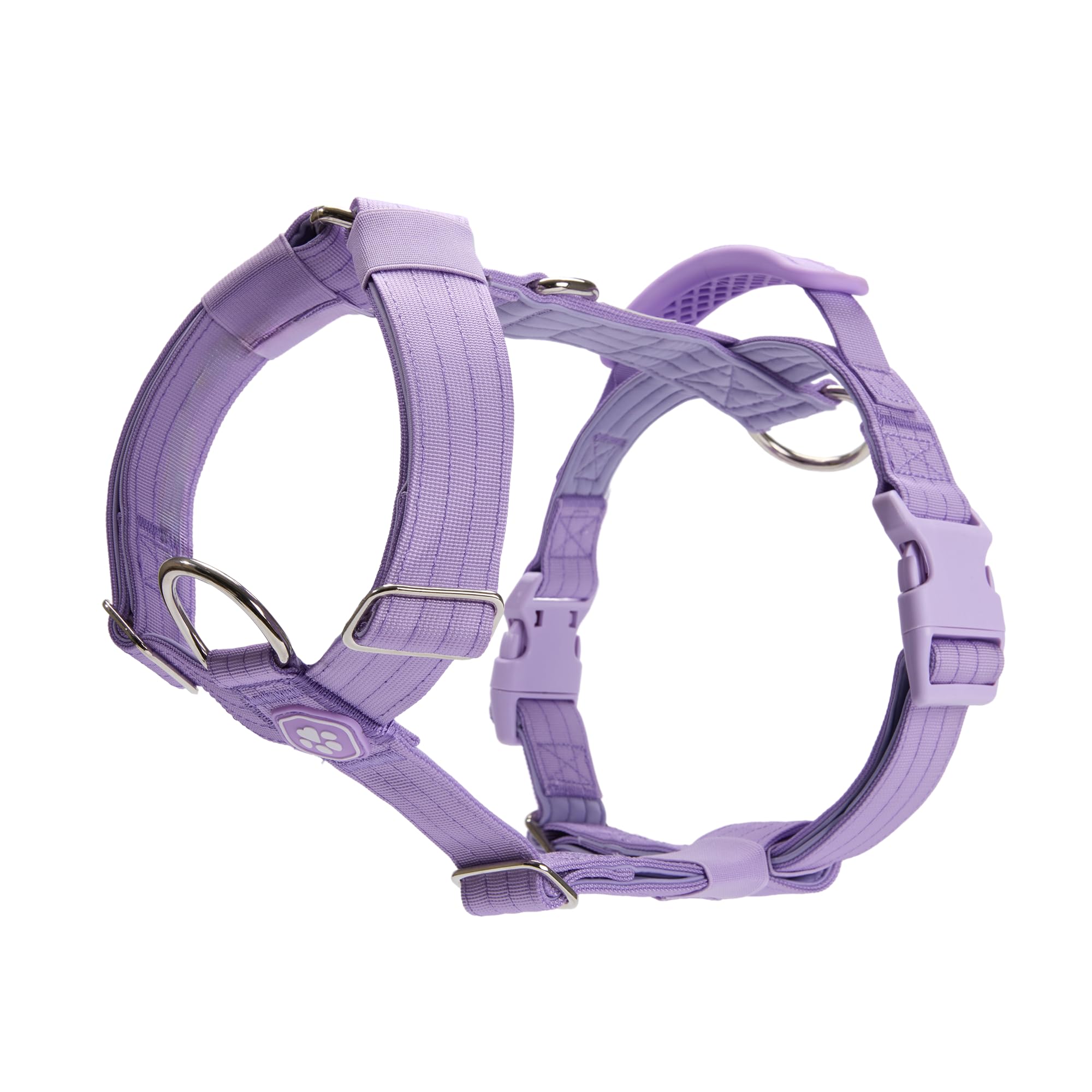
The Spark Paws harness tackles the two biggest frustrations of Husky owners: pulling strength and coat chafing. The heavy-duty nylon webbing uses triple-stitched seams at every stress point, and the reinforced metal D-rings can handle the full force of a 90-pound lab or a determined 70-pound Husky without deformation. The Y-shaped front design naturally centers the leash point on the chest, giving you leverage to redirect pulling rather than absorbing it through your shoulders.
Under the nylon exterior, soft neoprene padding runs along the chest and belly panels, which is crucial for a Husky’s double coat. Standard foam padding traps heat and causes moisture build-up, leading to hot spots; neoprene wicks and dries faster. The integrated control handle on the back offers a quick grab for tight situations — crossing a busy street or breaking up a scuffle — without having to wrap your hand around the harness body.
The adjustable chest and torso straps allow a tailored fit for the Husky’s narrow waist, though some owners of deep-chested dogs have noted that the neck min-spec can be snug while the chest max-spec is nearly reached. It is slightly heavier than a minimalist sled harness, so consider it a daily walker and training tool rather than a marathon running partner.
Why we love it
- Triple-stitched nylon and reinforced D-rings for extreme pullers
- Neoprene padding prevents chafing on double coats
- Quick single-buckle on/off for easy daily use
- Control handle adds safety in high-traffic areas
Good to know
- Heavier build may feel bulky for smaller females
- Neck fit can be tight on very deep-chested Huskies
3. Ruffwear Front Range Dog Harness

Ruffwear’s Front Range is a gold standard for training harnesses, and its dual-leash-clip system is the standout feature for Husky owners. The aluminum V-ring on the back gives you standard walking control, while the reinforced webbing clip on the chest provides a redirect point for dogs that pull. Switching between the two as your training progresses — starting with the chest clip to discourage pulling, then moving to the back ring once loose-leash behavior is consistent — makes this a versatile tool.
The closed-cell foam padding in the chest and belly panels is firmer than typical polyester fill, which helps it maintain its shape wash after wash. This firmness also prevents the harness from sagging and rubbing against the armpits, a common chafing point for active Huskies. The four points of adjustment let you dial in a precise fit around the deep chest and narrow waist, reducing the risk of your Husky backing out of the harness during a sudden lunge.
The reflective trim and dedicated Beacon Light loop add real visibility for nighttime walks — a critical safety feature for a breed that loves to roam. The light weight (6.72 ounces) means your Husky can wear it for hours without fatigue. Some owners find the over-the-head step-in style a bit tight for dogs with large skulls, but the overall secure fit compensates.
Why we love it
- Dual leash clips allow training progression from no-pull to loose-leash
- Closed-cell foam padding resists sagging and armpit chafing
- Four adjustment points for a precise deep-chest fit
- Lightweight construction suitable for all-day wear
Good to know
- Over-the-head step-in can be snug for dogs with broad skulls
- Adjustment buckles can be slightly stiff initially
4. Carhartt Nylon Duck No Pull Dog Harness

Carhartt’s reputation for workwear durability carries over directly to this harness. The 500-denier polyester shell with Rain Defender DWR (durable water repellent) coating sheds light rain and snow, keeping the harness from soaking through and becoming heavy during wet walks. This is a meaningful advantage for Husky owners who walk in all weather — the harness dries fast and maintains its shape even after repeated exposure to moisture.
The martingale chest strap is the core no-pull mechanism. Unlike a standard front clip that physically turns the dog, the martingale tightens slightly when your Husky pulls, providing a gentle correction that discourages lunging without choking. The over-the-head yoke style combined with fully adjustable chest and belly straps allows a secure fit for the Husky’s unique proportions. The spacer mesh backing provides airflow, preventing the harness from turning into a sweat trap under the double coat.
Reflective low-light stitching is integrated into the seams rather than added as a separate patch, so it won’t peel or fade with washing. Owners of strong pullers report immediate improvement on the first walk, though careful initial fitting is required to avoid armpit chafing on deep-chested dogs. The single-buckle design makes it one of the easiest premium harnesses to put on and remove.
Why we love it
- DWR coating sheds rain and snow for all-weather walks
- Martingale chest strap gently corrects pulling without choking
- Spacer mesh backing breathes to prevent overheating
- Single-buckle design for fast on/off
Good to know
- Must go over the head, which some dogs dislike
- Requires careful fitting to prevent armpit chafing
5. OneTigris Service Dog Vest Harness (Guardian)

The OneTigris Guardian harness blurs the line between a working vest and a carry-all. The 1000-denier nylon shell is significantly denser than typical harness fabric, resisting dirt, water, and abrasion from brushy trails. For a Husky that hikes or serves as a service dog, the MOLLE webbing on the sides lets you attach pouches for treats, poop bags, or a collapsible bowl without needing a separate backpack.
The detachable saddle pouches add utility without permanent bulk — you can remove them on hot days to reduce weight and improve airflow through the breathable mesh lining. The clear ID window and large patch panels are useful for service dog identifiers or reflective patches. The reinforced stitching and metal D-rings hold up well under pulling, though this harness is more about load-carrying than pure pulling performance.
One potential drawback for Husky owners is the extra weight of the tactical construction. While the padding is breathable and well-distributed, the full vest design adds ounces that a lean racing Husky may find fatiguing on long runs. For daily walks, hikes, and service roles, the trade-off in utility is worthwhile.
Why we love it
- 1000D nylon shell resists trail abrasion and water
- MOLLE system and pouches carry essentials without a backpack
- Breathable mesh lining suits hot-weather hikes
- Ample patch space for service dog identification
Good to know
- Heavier than a minimalist harness for running
- Front fit may be loose on slimmer Huskies
6. Neewa Medium Reflective Dog Harness

The Neewa H-type harness strips away frills to deliver a functional, breathable option for Huskies who run, hike, or mush on a budget. The polypropylene webbing is lightweight and quick-drying, which matters when your Husky’s thick coat holds moisture against the straps. The four-point adjustment system (two neck, two chest) provides enough customization to accommodate the breed’s deep chest and narrow waist, though the adjustment straps can slip through the bracket under heavy load.
The padding in the chest and neck areas is adequate for casual pulling but not as dense as premium options. Owners have reported that this harness works well for Greyhounds and Huskies in nose work and light canicross, with the reflective stitching providing decent visibility in low light. The machine-washable construction is a practical advantage — a muddy Husky after a trail run means the harness can go straight in the wash without special care.
Some medium-sized male Huskies have found the size range tight, and the adjustment strap slippage is a real concern for persistent pullers. Consider this a solid entry-level or backup harness rather than a primary choice for a strong, determined Husky.
Why we love it
- Machine washable for easy cleaning after muddy runs
- Lightweight polypropylene dries quickly and breathes well
- Four adjustment points for a custom fit
- Reflective elements enhance visibility
Good to know
- Adjustment straps can slip through the bracket under heavy pull
- Sizing runs small for larger male Huskies
7. PET ARTIST Dog Sled Harness
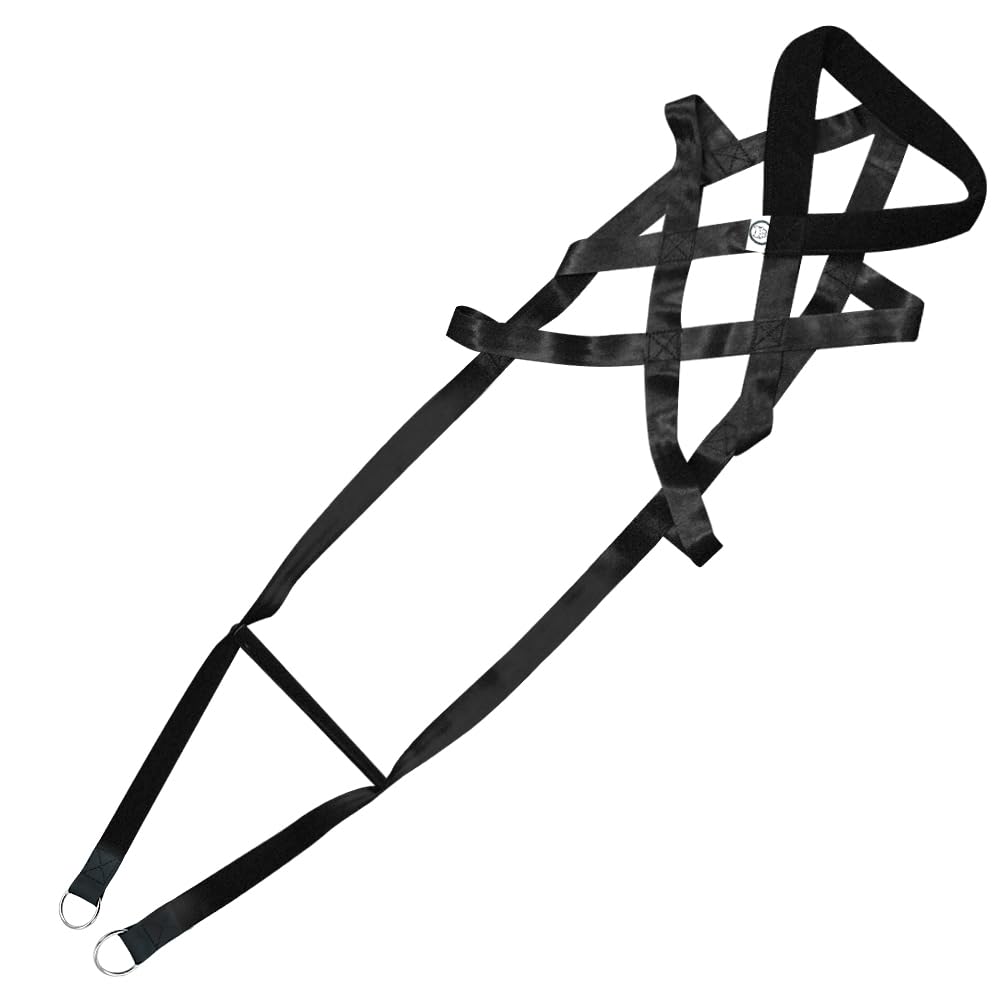
The PET ARTIST harness is built for a single purpose: transferring maximum pulling force from a large working dog to a load. The 50mm wide nylon webbing is rated to withstand up to 1200 pounds, making it one of the strongest harnesses available for weight pulling, sled training, and canicross. The X-back geometry distributes the pull across the ribcage and shoulders, preventing the harness from riding up into the spine — a critical feature for Huskies that put their full body weight into the harness.
The padding on the neck and chest is wide and soft, but several owners of deep-chested breeds have reported chafing under the front armpits after repeated pulling sessions at higher weights (30+ pounds). Adding a shirt or pad underneath can mitigate this, but it is a design gap that heavier pullers will notice. The harness is adjustable via multiple strap points, though some users note a lack of clear instructions for proper fitting — studying the product images carefully is recommended.
For a Husky that needs to burn energy through structured pulling work, this harness delivers exceptional durability at a reasonable tier. It is not intended for casual walks; the bulk and weight of the webbing make it overkill for loose-leash training. Stick to dedicated pulling sports or weight training to get full value from this design.
Why we love it
- 1200 lb rated webbing is nearly indestructible for heavy pullers
- X-back design distributes force evenly across the body
- Wide padding provides comfort during extended pulling sessions
- Specifically suited for weight training and sled sports
Good to know
- Armpit chafing can occur at higher pull weights — use a liner
- Fitting instructions are minimal for first-time users
- Overly bulky for casual daily walks
FAQ
Why does my Husky keep escaping from standard harnesses?
Should I use a front-clip or back-clip harness for my Husky?
Will a harness damage my Husky’s thick double coat?
How do I measure my Husky for an X-back sled harness?
Final Thoughts: The Verdict
For most Husky owners, the best harness for siberian husky winner is the Spark Paws No Pull because it balances triple-stitched durability with neoprene comfort for daily walks and training. If you want a breed-specific X-back design for pulling sports, grab the Neewa Pro Sled Harness. And for all-weather urban durability with martingale correction, nothing beats the Carhartt Nylon Duck.