
The relentless cycle of licking, biting, scratching, and scooting is not only heartbreaking to watch, but it also signals that your dog’s immune system is reacting to something in the bowl. For dogs with environmental allergies, seasonal triggers can often be managed, but food-driven dermatitis—manifesting as red paws, ear infections, hot spots, and hair loss—requires a surgical fix at the ingredient level. Finding a formula that eliminates the specific protein or carbohydrate causing the histamine response is the single most impactful move an owner can make.
I’m Mo Mahin — the founder and writer behind Furric. I’ve spent years cross-referencing veterinary dermatology guidelines with the chemical breakdown of over 200 commercial kibble formulas, mapping ingredient decks against owner-reported symptom resolution data to separate marketing claims from actual allergen avoidance.
Below, I’ve stacked and sorted the proven formulas that consistently break the itch-scratch-itch loop, filtering out the recipes that miss on sourcing or cross-contamination risk so you can confidently buy the best anti itch dog food for your pet’s specific sensitivity profile.
How To Choose The Best Anti Itch Dog Food
Eliminating dietary itch requires a methodical approach to ingredient sourcing. The common allergens—chicken, beef, dairy, egg, wheat, and soy—are found in nearly every mass-market formula, so simply buying a “sensitive skin” bag is rarely enough. You need to look at what is deliberately left out.
Novel or Single Animal Protein Source
The protein is the most frequent histamine trigger. A single animal protein source, especially one the dog has never eaten before (novel protein) or one that is simply isolated (salmon, turkey, bison), removes the guesswork. If your dog has eaten chicken-based food for years, switching to a salmon or turkey-only formula removes that known variable immediately.
Omega-3 & Omega-6 Fatty Acid Profile
These essential fats drive skin barrier repair from the inside. High levels of EPA and DHA (from fish or flax) directly suppress inflammatory cytokines, reducing redness, flaking, and the urge to scratch. A good anti-itch formula will list a specific source of these fatty acids early in the ingredient list—not hidden at the bottom as filler.
Limited Ingredient Count
A limited-ingredient diet (LID) caps the total components in the recipe to around 10–15 recognizable ingredients. Fewer ingredients mean fewer potential triggers. This is especially critical during an elimination trial, where you want to isolate the culprit without contaminants like “poultry by-product meal” muddying the results.
Quick Comparison
On smaller screens, swipe sideways to see the full table.
| Model | Category | Best For | Key Spec | Amazon |
|---|---|---|---|---|
| Blue Buffalo Basics Turkey & Potato | Limited Ingredient | Chicken-allergy & grain-sensitivity triage | Single turkey protein source | Amazon |
| Blue Buffalo Basics Salmon & Potato | Limited Ingredient | Skin irritation & coat recovery | Single salmon protein source | Amazon |
| Natural Balance L.I.D. Salmon & Brown Rice | Limited Ingredient + Grain | Dual digestive & skin allergy management | Batch-tested single-animal protein | Amazon |
| Rachael Ray Nutrish Salmon | Grain-Inclusive | Budget-friendly coat shine improvement | Omega-3 & 6 fatty acid content | Amazon |
| Hill’s Prescription Diet Metabolic + Mobility | Veterinary Prescription | Weight-related joint strain + inflammation | High omega-3 & weight management | Amazon |
In‑Depth Reviews
1. Blue Buffalo Basics Turkey & Potato

This formula hits the anti-itch trifecta: a single animal protein (turkey), no chicken by-products, and a grain-free carbohydrate base. By eliminating the most common allergen sources—corn, wheat, soy, chicken, and dairy—it immediately narrows the potential trigger list for elimination diets. The inclusion of omega-3 and omega-6 fatty acids from flaxseed directly supports epidermal barrier repair, which is why owners report visible improvements in redness, paw yeast, and scooting within the first month.
The 11-pound bag size is a sweet spot for starting a trial without committing to a 30-pound investment if the formula doesn’t agree with your dog. Reviews consistently call out the resolution of chronic ear infections and hot spots, which are hallmark signs of food-driven atopic dermatitis. The LifeSource Bits add antioxidant support for immune modulation, which can help reduce the inflammatory cascade triggered by allergens.
What makes this a standout mid-range pick is its reliability across breeds and age ranges. Owners of French bulldogs, labradoodles, and small terriers all report positive results, suggesting the limited ingredient deck works across varying gut physiologies. The bag is resealable, which helps maintain kibble freshness and fat stability—important because rancid fats can themselves trigger a histamine release.
Why we love it
- Single turkey protein removes chicken-bias allergy unknowns efficiently
- Grain-free potato base is gentle on sensitive stomach linings
- Omega fatty acid profile is front-loaded, not listed as a minor additive
Good to know
- 11-pound bag runs out quickly for multiple-dog households
- Turkey isn’t a novel protein for every dog; may not work if turkey is already in rotation
2. Blue Buffalo Basics Salmon & Potato

This salmon version of the Blue Basics line targets dogs that need a marine-sourced protein to avoid poultry allergens, and it offers a higher natural concentration of omega-3 fatty acids compared to the turkey variant. The first ingredient is real salmon, which provides a single-animal-protein profile while delivering EPA and DHA directly—these are the specific fatty acids clinically shown to reduce transepidermal water loss and improve coat gloss. For dogs with flaky skin or dull coats, the difference is often visible within 10–14 days.
The limited ingredient deck excludes chicken, corn, wheat, soy, and dairy, making it a safe choice for the elimination trial phase. However, because salmon is a fairly common protein in premium foods, some dogs that have been on salmon-based rotation diets may not respond if they have already developed a sensitivity to it. The key differentiator here is that no poultry by-product meals are used, which is often where cross-contamination occurs in other “salmon” formulas.
Owner feedback on this bag leans heavily toward resolution of hives and facial rubbing, which are classic type-1 hypersensitivity reactions. The LifeSource Bits provide antioxidant support that helps stabilize mast cells, potentially reducing the severity of flare-ups. At the 11-pound size, it’s a perfect trial pack before scaling up to a larger bag.
Why we love it
- Salmon offers naturally higher omega-3 concentration than white-meat poultry options
- Zero poultry by-product meals eliminates hidden chicken cross-contamination risks
- Grain-free potato base is low-glycemic, reducing systemic inflammation
Good to know
- Not suitable for dogs already reacting to salmon from a previous diet
- Medium-breeds may blow through the 11-pound bag faster than expected
3. Natural Balance Limited Ingredient Salmon & Brown Rice
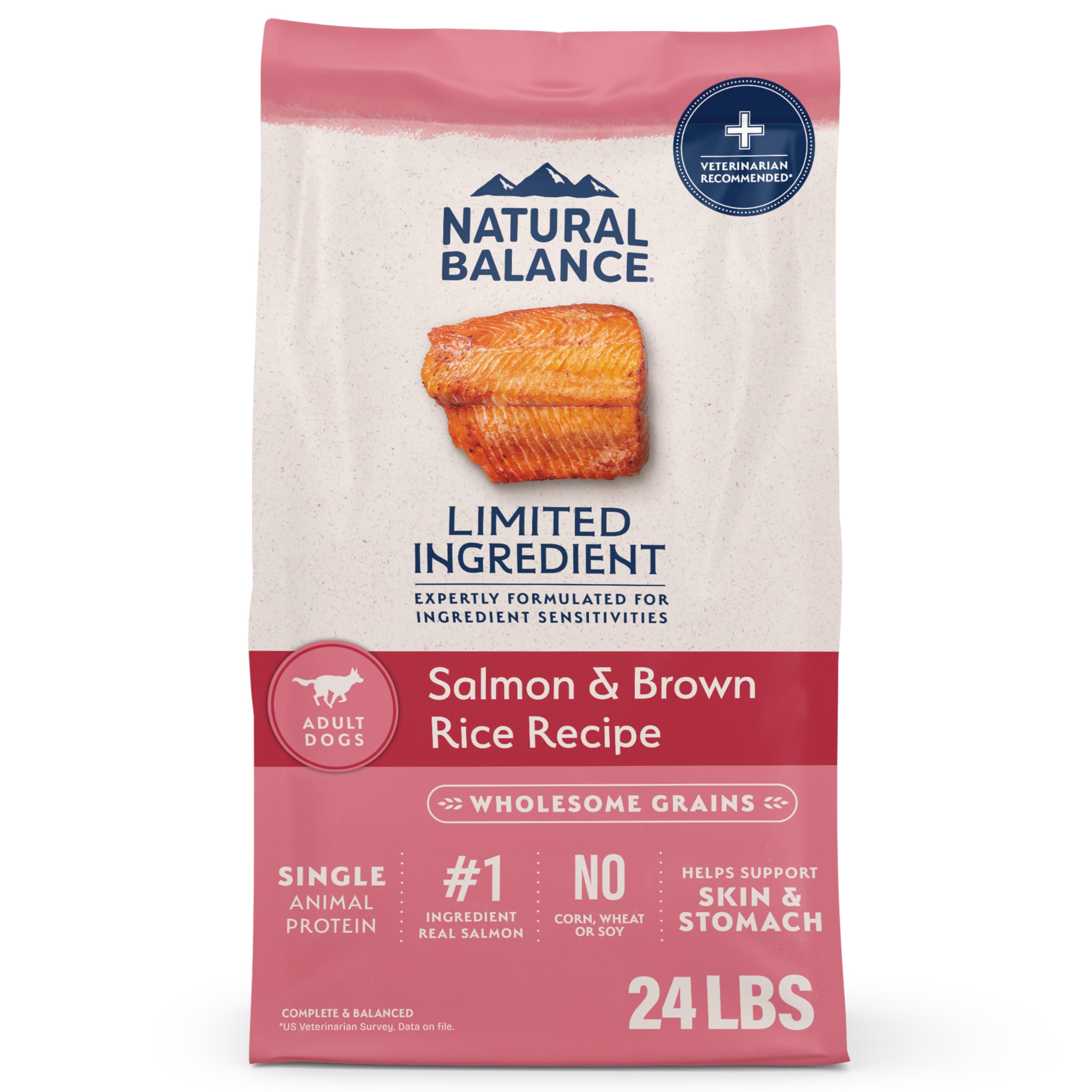
Natural Balance’s L.I.D. line is built around a “Feed with Confidence” batch-testing program, meaning every production run is tested for contaminants and nutritional consistency—critical for owners whose dogs have experienced cross-contamination reactions with other brands. The formula uses salmon as the sole animal protein and brown rice as the carbohydrate source, offering a grain-inclusive option for dogs that process grains well. Brown rice provides soluble fiber that supports a stable microbiome, which is directly linked to reduced gut-mediated inflammation and fewer flare-ups.
The simplified ingredient deck excludes corn, wheat, soy, gluten, and artificial colors or flavors. This makes it a strong candidate for dogs with both skin and digestive symptoms, as the low ingredient count reduces the odds of a dual trigger. Reviews highlight that even picky eaters with chronic soft stool or loose stool firm up on this formula, which suggests the fiber and single-protein structure work synergistically to reduce GI permeability—a known contributor to atopic dermatitis.
For owners looking to transition from a grain-free LID to a balanced grain-inclusive LID, this bag is a smooth pivot. The kibble size is moderate, which works well for smaller jaws, and the mild salmon odor keeps the bag less pungent than some marine-based formulas. The 24-pound bag offers a better price-per-pound ratio than the 12-pound option, making it more sustainable for long-term management.
Why we love it
- Batch-tested formula provides safety transparency for allergy-prone dogs
- Brown rice inclusion supports gut stability for dogs with concurrent GI sensitivity
- Single-animal protein plus single grain creates a very low variable count
Good to know
- Not suitable for dogs requiring a strictly grain-free or low-fiber approach
- Packaging seam integrity has been flagged in some batches; use an airtight bin
4. Rachael Ray Nutrish Salmon
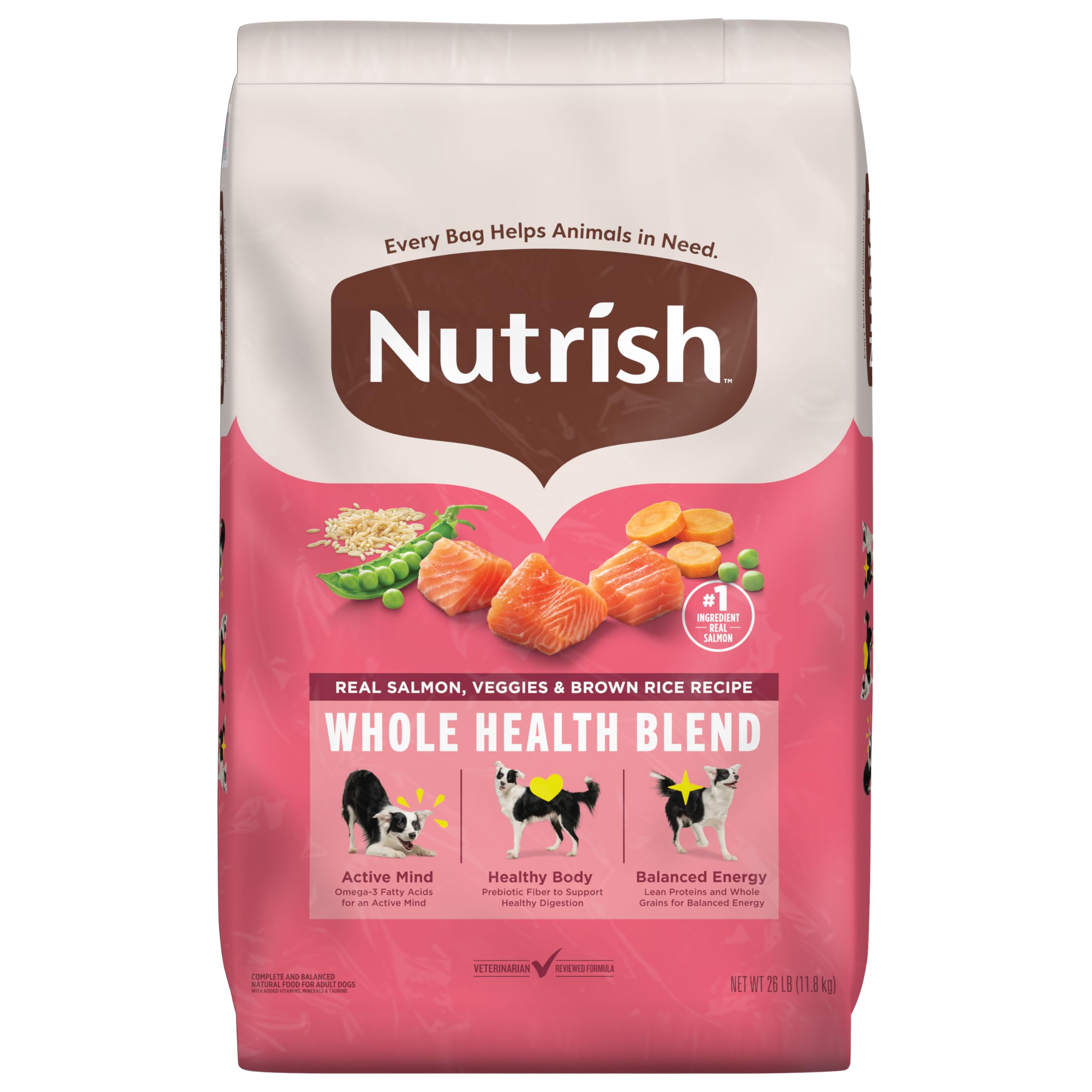
This entry-level option provides a decent omega-3 and omega-6 profile from real salmon at a per-pound cost that undercuts most limited-ingredient competitors by a significant margin. The 26-pound bag size is practical for multi-dog households or owners managing a single large breed on a tight budget. The formula includes brown rice and veggies, making it a grain-inclusive recipe that works well for dogs that tolerate grains without showing increased itching.
While the ingredient list is less restricted than the LID formulas above—it contains more total ingredients and a broader vitamin/mineral premix—it still avoids artificial flavors and preservatives. The primary benefit for itch management comes from the salmon’s natural EPA/DHA content, which helps improve coat condition and reduce mild surface inflammation. Owners routinely report shinier coats and less dander within two to three weeks of switching, even if deep allergic symptoms like ear infections persist.
This is not a precision elimination diet; it is a good maintenance food for dogs that have mild, non-chronic itching or that are already known to tolerate multiple ingredients. The charitable donation component adds psychological value for owners who want their purchase to support shelter animals, but the real draw is the volume-per-dollar ratio. For a dog that just needs a coat boost without a full dietary overhaul, this is the pragmatic choice.
Why we love it
- 26-pound bag offers the lowest per-serving cost in this roundup
- Real salmon provides measurable coat and skin improvement within weeks
- No artificial flavors or preservatives keeps the chemical load low
Good to know
- Not a limited-ingredient formula; contains multiple protein and carb sources
- May not resolve severe atopic dermatitis or food allergies with complex triggers
5. Hill’s Prescription Diet Metabolic + Mobility

This is a veterinary prescription diet designed for dogs with concurrent weight management and joint health needs, but it plays a relevant role in the anti-itch equation because obesity-driven inflammation and joint pain can amplify inflammatory skin conditions. The formula is engineered to support weight loss at home in two months while providing high levels of omega-3 fatty acids that reduce systemic inflammation, including skin-based histamine responses. The synergistic blend of L-carnitine and omega-3s works on metabolic rate and cytokine suppression simultaneously.
The primary concern for itch management here is that the protein source is chicken, which is the single most common canine allergen. For dogs with a confirmed poultry allergy, this formula would likely worsen itching. However, for dogs whose scratching is secondary to obesity—excess body weight creates mechanical pressure on skin folds and amplifies inflammatory mediators—this diet can break the cycle by reducing the inflammatory load while promoting lean muscle mass. The joint support from glucosamine and chondroitin is a secondary benefit for older dogs with arthritis.
This is a niche weapon, not a general-purpose anti-itch solution. It is best deployed under veterinary supervision for overweight dogs with mild to moderate itching that does not respond to protein elimination alone. The satiety profile helps dogs feel full between meals, reducing food-seeking behavior, and the stool quality metrics improve noticeably, which reduces perianal irritation and scooting.
Why we love it
- Clinically proven weight-loss formulation reduces obesity-linked inflammation
- High omega-3 fatty acid content targets skin and joint inflammation simultaneously
- Vet-designed satiety profile prevents overeating without begging behavior
Good to know
- Chicken-based protein is a non-starter for dogs with poultry allergies
- Requires a veterinary prescription, adding a consultation barrier
FAQ
How quickly should I see improvement in my dog’s scratching after switching food?
Can grain cause itching, or is it always the protein?
What does ‘limited-ingredient diet’ legally mean on a dog food label?
Final Thoughts: The Verdict
For most owners, the best anti itch dog food winner is the Blue Buffalo Basics Turkey & Potato because it eliminates chicken, grain, and soy in a single move while delivering measurable skin and coat benefits within weeks. If you want a salmon-based option with higher omega-3 density for coat restoration, grab the Blue Buffalo Basics Salmon & Potato. And for owners managing weight and inflammation together under veterinary guidance, nothing beats the Hill’s Prescription Diet Metabolic + Mobility.