
Sand colic is a silent threat in any pasture or dry lot, and the only reliable defense is a psyllium supplement that your horse will actually eat. The challenge isn’t finding psyllium—it’s finding one that stays in the feeder long enough to sweep sand out of the ventral colon.
I’m Mo Mahin — the founder and writer behind Furric. I’ve spent years analyzing market trends, comparing ingredient purity, studying equine digestive research, and cross-referencing hundreds of owner testimonials to separate effective psyllium formulas from those that just collect dust at the bottom of a bucket.
Whether you manage a sandy Florida pasture or board on rocky California soil, choosing the right psyllium for horses means balancing palatability, fiber concentration, and cost per serving to build a monthly routine your horse won’t fight.
How To Choose The Best Psyllium For Horses
Not all psyllium supplements work the same way inside the equine gut. The key variables are fiber purity, pellet size, flavor masking, and serving cost. Here’s what to watch for when you’re standing in the feed aisle or scrolling online.
100% Psyllium Husks vs. Blended Formulas
A label that says “psyllium” may hide wheat middlings, molasses fillers, or other bulking agents that dilute the soluble fiber content. Pure psyllium seed husk—ideally 95% or higher—delivers the gel-forming capacity needed to encapsulate sand and move it through the ventral colon. Blended products can still work, but you’ll need to feed more volume to achieve the same mechanical effect.
Pellet Size and Palatability
Pelleted psyllium is overwhelmingly preferred over powder because horses can’t selectively sort dust from grain. Look for small, consistent pellets that mix evenly with feed without turning into a sticky mess. Apple and molasses flavorings help mask the bitter husk taste, but some horses still reject certain brands—so palatability is the single biggest compliance risk in any sand-prevention program.
Cost Per Serving for Monthly Maintenance
Most vets recommend a five-to-seven-day psyllium course once or twice a month. That means a 5-pound bag covers roughly 16 to 30 days of treatment, depending on dosage. A 12-pound bucket can stretch to nearly two months of daily feeding. Compare cost per scoop—not just bag price—especially if you’re managing multiple horses.
Quick Comparison
On smaller screens, swipe sideways to see the full table.
| Model | Category | Best For | Key Spec | Amazon |
|---|---|---|---|---|
| Farnam Equi Aid Psyllium Pellets | Premium Pellet | Vet-recommended monthly gut maintenance | 5 lb, 16 scoops, apple/molasses flavor | Amazon |
| Formula 707 Psyllium Pellets (12lb Bucket) | Bulk Premium | Long-term supply for picky horses | 12 lb bucket, 48-day supply | Amazon |
| Equus Psyllium Fiber Blend Pellets | High Palatability | Extremely picky eaters | 5 lb, pellet form, no added flavor | Amazon |
| SandPurge Psyllium Pellets | Mid-Range Pellet | Florida sand-country horses | 5 lb, 100% psyllium seed husk | Amazon |
| Durvet Sandrid Psyllium Pellets | Apple Flavored Pellet | Horses that refuse unflavored psyllium | 5 lb, apple flavor, gluten free | Amazon |
| Konsyl Original Formula Psyllium Fiber | Human-Grade Powder | Budget dual-use human/equine fiber | 10.6 oz, 6g pure fiber per tsp | Amazon |
| Formula 707 Psyllium Pellets (3lb Bag) | Entry-Level Pellet | Trying a new psyllium brand | 3 lb, 12-day supply, pelleted | Amazon |
In‑Depth Reviews
1. Farnam Equi Aid Natural Horse Psyllium Pellets

Farnam’s Equi Aid is the most thoroughly documented psyllium pellet on this list. The label clearly states it supports removal of sand from the ventral colon, and real owners report annual fecal sand tests coming back “low to undetected” after regular use. The 5-pound container yields roughly 16 scoops—enough for a full monthly seven-day course plus a few extra days for two horses.
The apple and molasses flavoring is the secret weapon here. Multiple reviewers with notoriously picky geldings say this is the only psyllium that disappears into their feed without sorting. Unlike some pelleted brands that crumble into dust at the bottom of the bucket, Equi Aid holds its shape, which means each scoop delivers a consistent dose of soluble fiber.
The 5-pound size is smart for owners who want to test a new brand without committing to a bulk bucket. Vet recommendations are common in the reviews, and several long-term subscribers note that switching to Equi Aid lowered their monthly sand-colic risk dramatically—especially in arid, sandy turnout environments.
Why we love it
- Vet-recommended with proven fecal sand test results
- Apple/molasses flavor masks psyllium bitterness effectively
- Scoopable pellets hold shape in feed not dust at the bottom
Good to know
- Flavoring may not appeal to every horse—some still refuse it
- 5-pound bag runs out fast if feeding multiple horses monthly
2. Formula 707 Psyllium Pellets Equine Supplement (12lb Bucket)
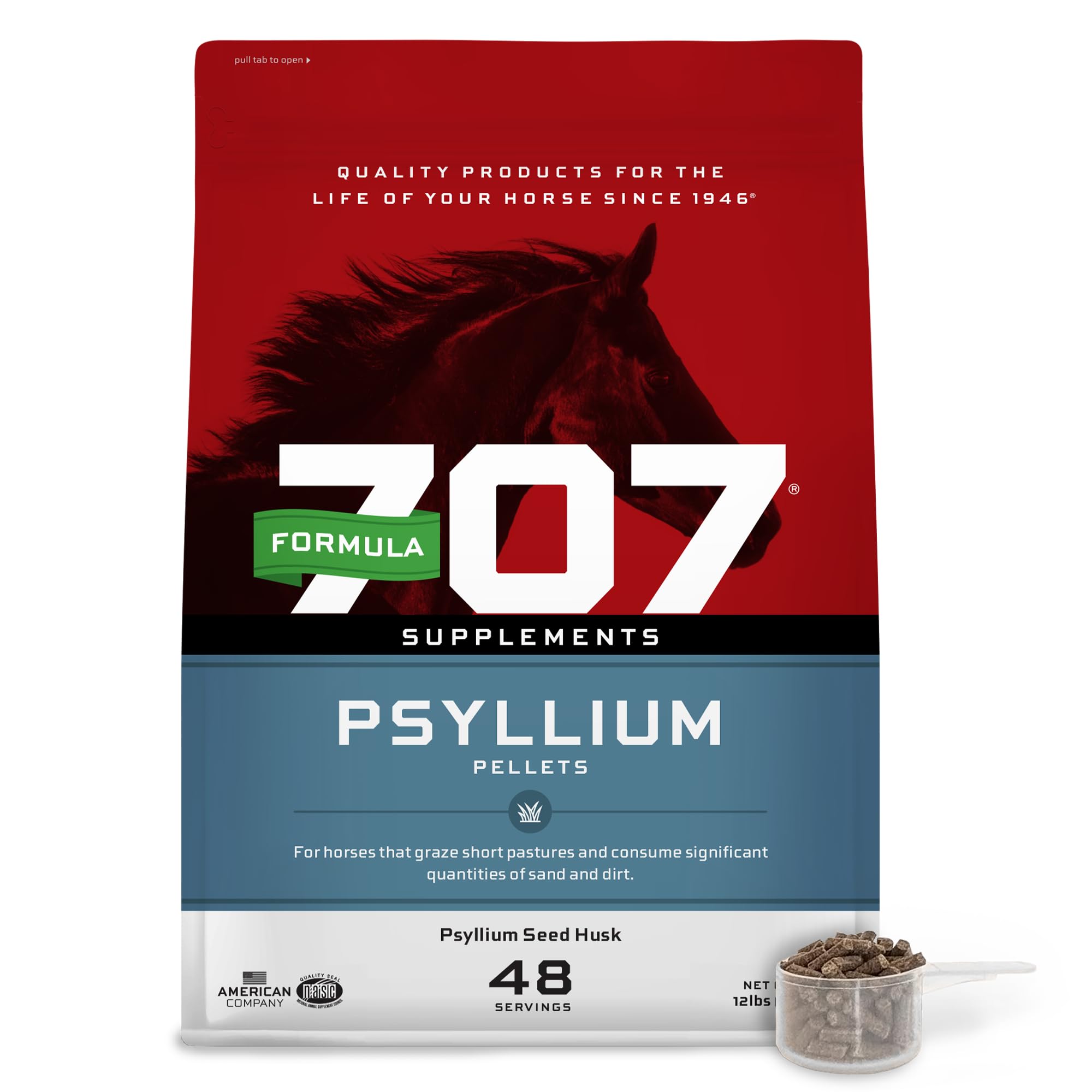
Formula 707’s 12-pound bucket solves two problems at once: palatability for picky horses and a long supply that reduces reorder frequency. The pellets are small and consistent, mixing cleanly with grain or beet pulp. Owners of horses with fecal water syndrome report that five days of once-daily dosing cleared up symptoms—a strong signal that the psyllium is reaching the distal colon intact.
The bucket format is a practical upgrade over bags because it seals out humidity and pests. In humid barn environments, paper bags of psyllium can clump or attract weevils. The 12-pound bucket stays fresh through multiple monthly cycles, and the 48-day supply at the recommended daily rate makes it cost-effective per scoop compared to smaller bags.
The primary drawback is the initial outlay. If your horse rejects the pellet, you’re stuck with a large bucket. But the reviews consistently mention that horses who hate other brands accept Formula 707—likely because the pellet texture and mild flavor profile avoid the bitterness that triggers sorting behavior.
Why we love it
- Sealed bucket protects against humidity and pests in the barn
- Proven effective for fecal water syndrome in owner reports
- Lowest per-scoop cost among premium pellet options
Good to know
- Large commitment if your horse refuses the pellets
- Heavy bucket may be awkward to carry to the feed room
3. Equus 5 lb Psyllium Fiber Blend Pellets
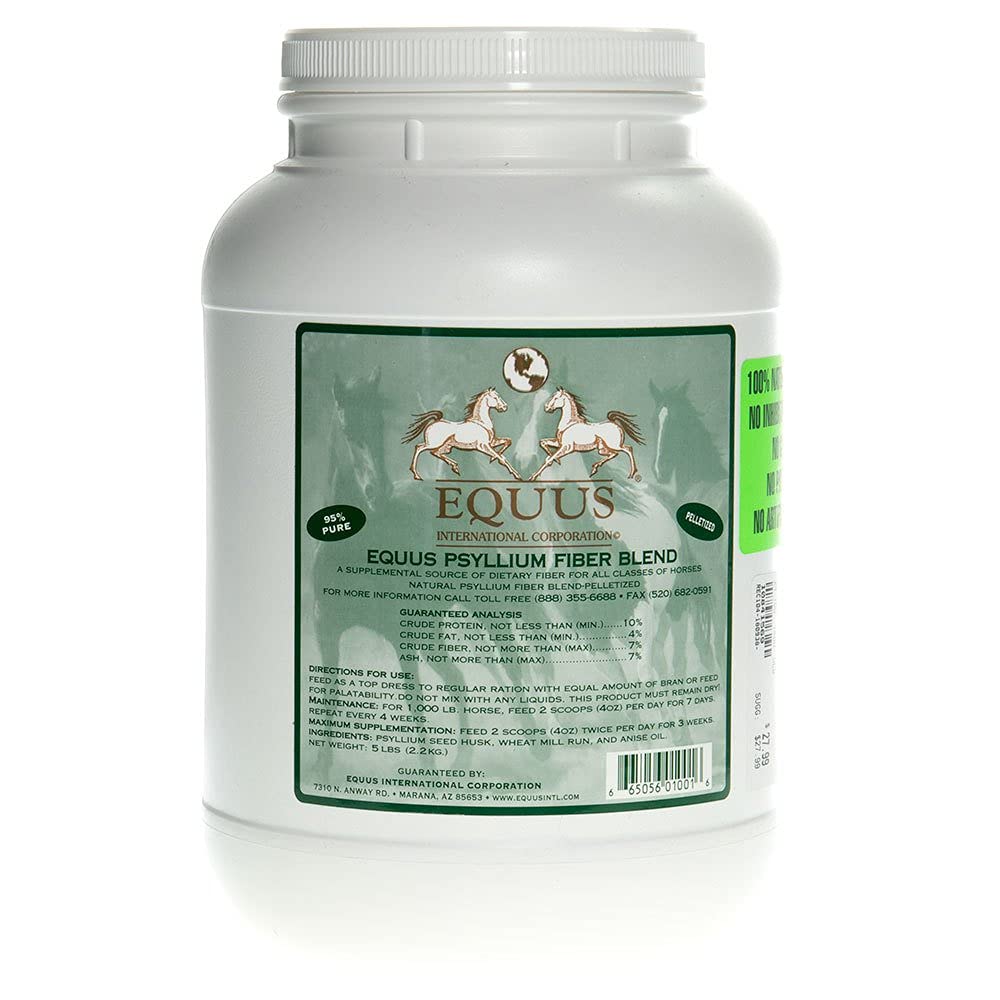
Equus pellets have an almost cult following among owners of the most stubborn eaters. Multiple reviewers report trying three or four other psyllium brands before finding Equus—and their horses finally eating without tricks or added sweetener. The pellets are unflavored, which suggests the base psyllium source is less bitter than competitors, making masking unnecessary.
The 5-pound bag includes a scooper, which is a small but welcome convenience for dosing consistency. Owners of donkeys and mini horses also report high acceptance rates, which broadens the usefulness beyond full-size equines. The pellet texture holds together well in wet feed without dissolving prematurely, ensuring the psyllium stays intact until ingestion.
On the downside, Equus is not the cheapest option per pound, and some owners note that it’s harder to find in local tack shops compared to Farnam or Durvet. The unflavored profile also means horses accustomed to apple or molasses may need an adjustment period before accepting the neutral taste.
Why we love it
- Highest palatability rating among owners with picky horses
- Works for donkeys and mini horses as reported by multiple owners
- Includes a dosing scooper for consistent serving sizes
Good to know
- Slightly higher per-pound cost than some competing brands
- Unflavored pellets may still be rejected by sugar-addicted horses
4. SandPurge Psyllium Pellets 5lb

SandPurge is a no-frills psyllium pellet that delivers exactly what the name promises: sand removal. The ingredient list is straightforward—100% psyllium seed husk—with apple and molasses flavoring to encourage intake. Owners in Florida’s sandy coastal regions are the most vocal advocates, reporting that fecal sand levels dropped noticeably after switching to this product.
The pellet size is slightly larger than some competitors, which can be either a pro or con depending on your horse’s chewing behavior. Larger pellets tend to survive mixing better without crumbling, but some horses may sort them out if they’re accustomed to smaller grain textures. The 5-pound bag is a manageable weight for traveling or feeding in multiple stalls.
The main complaint is pricing volatility. Some owners report paying nearly double the local store price when buying on Amazon, particularly during shortages. If you have a reliable local supplier, this might be a better in-person purchase. Still, for owners without a feed store nearby, the convenience of delivery outweighs the premium.
Why we love it
- Proven effective for Florida sand-country horses
- 100% psyllium seed husk with no filler ingredients
- Apple and molasses flavor helps mask bitter husk taste
Good to know
- Price fluctuates significantly on Amazon vs. local stores
- Larger pellet size may not suit all chewing preferences
5. Durvet Sandrid Psyllium Pellets, 5 lb
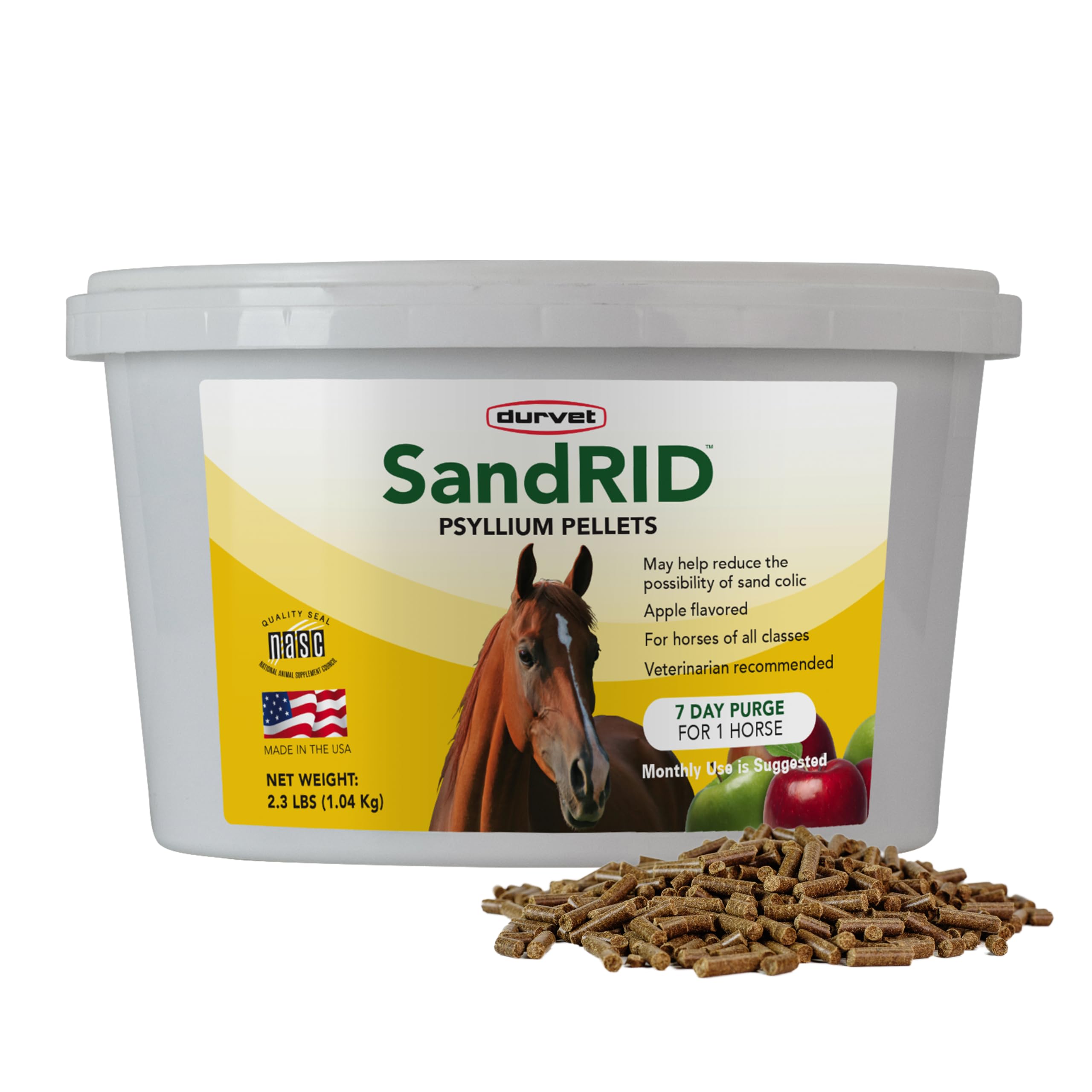
Durvet’s Sandrid line leans hard on apple flavoring to overcome the natural bitterness of psyllium husks, and the strategy works. Reviews consistently mention that horses who spat out previous psyllium brands accepted these pellets without hesitation. The manufacturer claims gluten-free processing, which is relevant for horses with suspected grain sensitivities.
The 5-pound bag is competitively priced for the mid-range tier, and the pellet size is uniform enough to mix with sweet feed or textured grain without noticeable sorting. One Arizona owner reports that their horses on dry, sandy turnout accepted Sandrid immediately and showed reduced colic frequency after a three-month monthly course.
The downside is that the apple flavor may not be strong enough for the hardest-to-please eaters. A few owners note that their horses still picked around the pellets when they were mixed with plain hay pellets. Adding a small amount of molasses or wetting the feed can resolve this, but it adds an extra step to feeding time.
- Apple flavoring improves acceptance for most picky eaters
- Gluten-free processing suitable for sensitive digestion
- Uniform pellet size mixes easily with textured grain
- Flavor may not strong enough for extremely finicky horses
- Some owners report sorting behavior with plain hay pellets
6. Konsyl Original Formula 100% Psyllium Fiber Powder

Konsyl is a human-grade psyllium powder that some horse owners repurpose as an equine supplement. At 6 grams of pure psyllium fiber per teaspoon, it’s more concentrated than most pelleted horse supplements per volume. The powder form dissolves quickly in water, which makes it possible to syringe-feed horses that refuse pellets entirely.
The catch is palatability. Without the apple or molasses coatings found in equine-specific brands, most horses will reject Konsyl mixed dry into grain. Owners who successfully use it typically dissolve the powder in warm water and add it to a wet mash or alfalfa pellet soup. The unflavored profile also means it can double as a human fiber supplement, which justifies buying a larger container.
This is not a convenient option for barns with multiple horses. The powder requires mixing and can clump if not stirred immediately. It’s best viewed as a backup option for emergencies or for owners who already use psyllium personally and want a single product for both human and equine use.
- Highest fiber concentration per teaspoon on this list
- Can be syringe-fed for horses that refuse all pellets
- Dual-use for human and equine fiber supplementation
- Unflavored powder is unpalatable to most horses
- Requires wet mixing—not suitable for dry feed toss feeding
7. Formula 707 Psyllium Pellets Equine Supplement (3lb Bag)
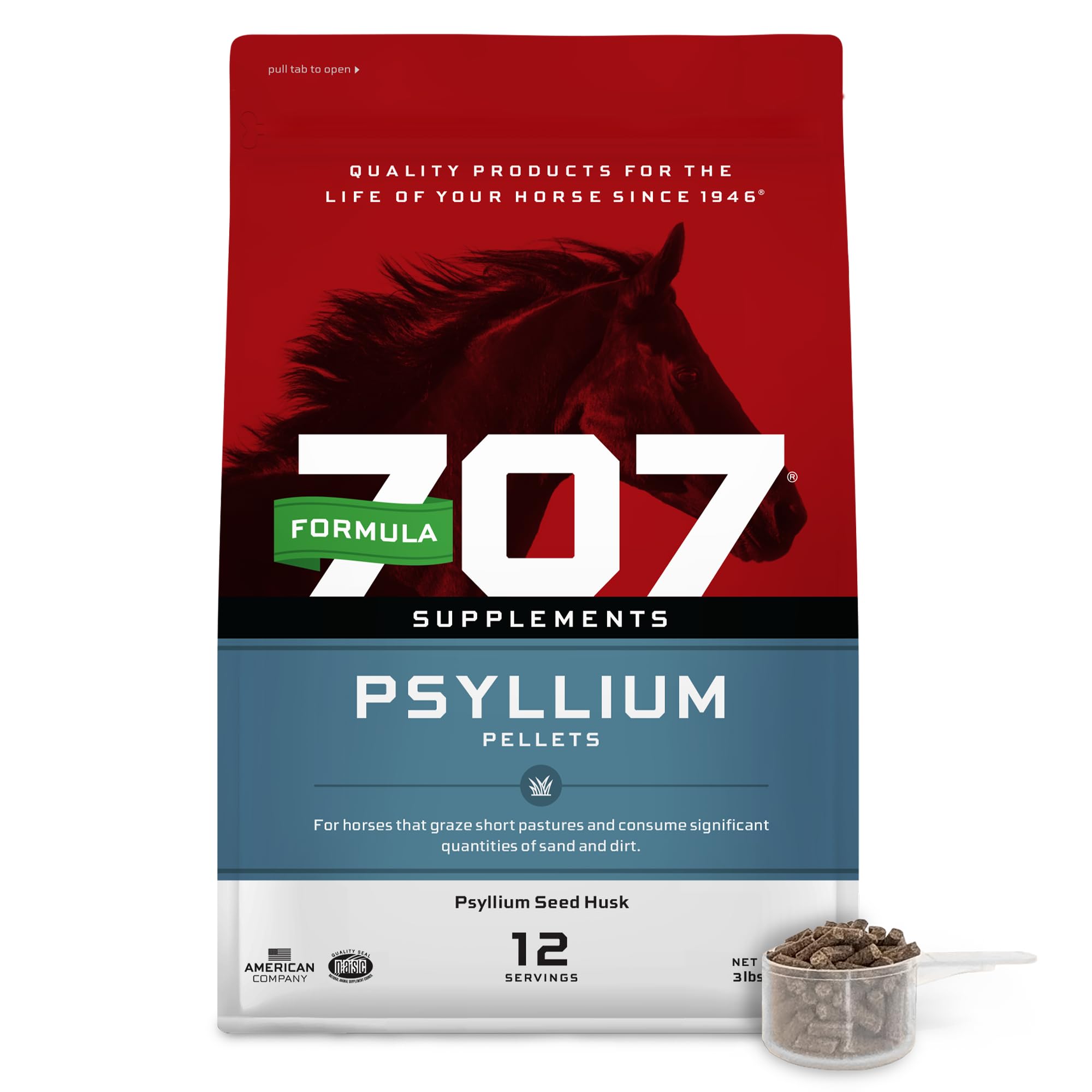
The 3-pound bag of Formula 707 is the smallest entry point on this list, designed for owners who want to test a new product before committing to a larger size. Despite the compact bag, the pellets carry the same formulation as the 12-pound bucket: no powder, no fillers, just compressed psyllium husk that expands into a gel upon reaching the intestine.
Palatability is strong for this size. Owners of the pickiest horses—those that refuse multiple other brands—report that Formula 707 pellets disappear into their feed without hesitation. The 12-day supply at the recommended four-scoop daily dose makes this a good fit for one horse during a single monthly “sand sweep” week.
The obvious trade-off is value. If your horse accepts the pellets, buying the larger bucket immediately will save you money over the course of a year. But if you’re still searching for a brand that works, this bag is the lowest-risk way to find out.
- Lowest-risk way to test Formula 707’s palatability
- Consistent small pellets mix easily with grain
- 12-day supply matches a standard monthly treatment course
- Highest per-scoop cost due to small bag size
- Bag format lacks humidity protection of the bucket
FAQ
Can psyllium alone prevent sand colic in horses?
How do I know if my horse needs psyllium supplementation?
What is the difference between psyllium pellets and psyllium powder for horses?
Can I feed psyllium every day to my horse?
Why do some horses refuse psyllium supplements?
Final Thoughts: The Verdict
For most horse owners, the best psyllium for horses is the Farnam Equi Aid Psyllium Pellets because it balances vet-backed formulation, proven fecal sand test results, and reliable palatability at a mid-range cost. If your horse is the pickiest eater you’ve ever met, grab the Equus Psyllium Fiber Blend Pellets—they have the highest acceptance rate among hard-to-please horses. And for multi-horse barns looking to minimize reorder frequency, nothing beats the Formula 707 12-pound bucket for value per scoop.