
A litter box that smells fresh between cleanings and doesn’t scatter granules across the floor is the single biggest upgrade you can make to your daily cat-care routine. The wrong litter turns scooping into a messy chore and lets ammonia odors take over your home within days.
I’m Mo Mahin — the founder and writer behind Furric. I’ve spent over a year comparing clumping speed, dust output, tracking radius, and odor-neutralizing ingredients across the top-selling clay, plant-based, and hybrid formulas to identify which products deliver consistent results for multi-cat homes and picky felines alike.
After analyzing hundreds of verified owner reports and lab-style breakdowns of particle size and absorption rates, one formula stands out as the best overall cat litter for balancing tight clumps, low dust, and reliable odor control without breaking the bank.
How To Choose The Best Overall Cat Litter
The wrong litter creates hidden costs — more frequent full changes, higher dust inhalation for you and your cat, and granules tracked into every room. Focus on three factors that separate high-performing formulas from mediocre ones.
Clump Integrity Under Pressure
A clump that shatters when scooped leaves soggy residue that breeds bacteria and ammonia within hours. The best litters form a solid plug within 10–15 seconds of contact, holding together even when you scoop with force. Fragile clumps mean you are essentially spreading waste back into the box, not removing it.
Particle Size and Dust Load
Ultra-fine particles create more dust when poured and more tracking on paws. A litter with a slightly larger, more uniform granule size reduces airborne silica or plant dust by a measurable margin. Look for claims of 99 percent dust-free as a starting benchmark, but verify with owner reports — some brands overstate this figure.
Odor-Neutralizing Mechanism
Scented litters mask ammonia with fragrance, which can irritate a cat’s sensitive respiratory system. Unscented formulas rely on activated charcoal, plant enzymes, or bentonite clay’s natural absorption to lock odors inside the clump. Multi-cat homes need a formula that neutralizes, not just covers, the smell at the molecular level.
Quick Comparison
On smaller screens, swipe sideways to see the full table.
| Model | Category | Best For | Key Spec | Amazon |
|---|---|---|---|---|
| Purina Tidy Cats Performance Plus | Mid-Range | Low tracking, multi-cat homes | 64% less tracking vs. leading clay | Amazon |
| So Phresh Extreme Clumping Grass Seed | Mid-Range | Sensitive cats, natural material | 50% lighter than clay | Amazon |
| Catit Go Natural Plant-Based | Mid-Range | Hybrid plant/clay transition | 70% pea husk, 30% bentonite | Amazon |
| Fresh Step Advanced Odor Shield | Premium | Heavy multi-cat odor control | Ammonia Block + Febreze Freshness | Amazon |
| FUKUMARU Tofu Cat Litter | Premium | Flushable, plant-based choice | 2mm pellets, 18 lb total | Amazon |
In‑Depth Reviews
1. Purina Tidy Cats Performance Plus Feet Unscented Low Tracking
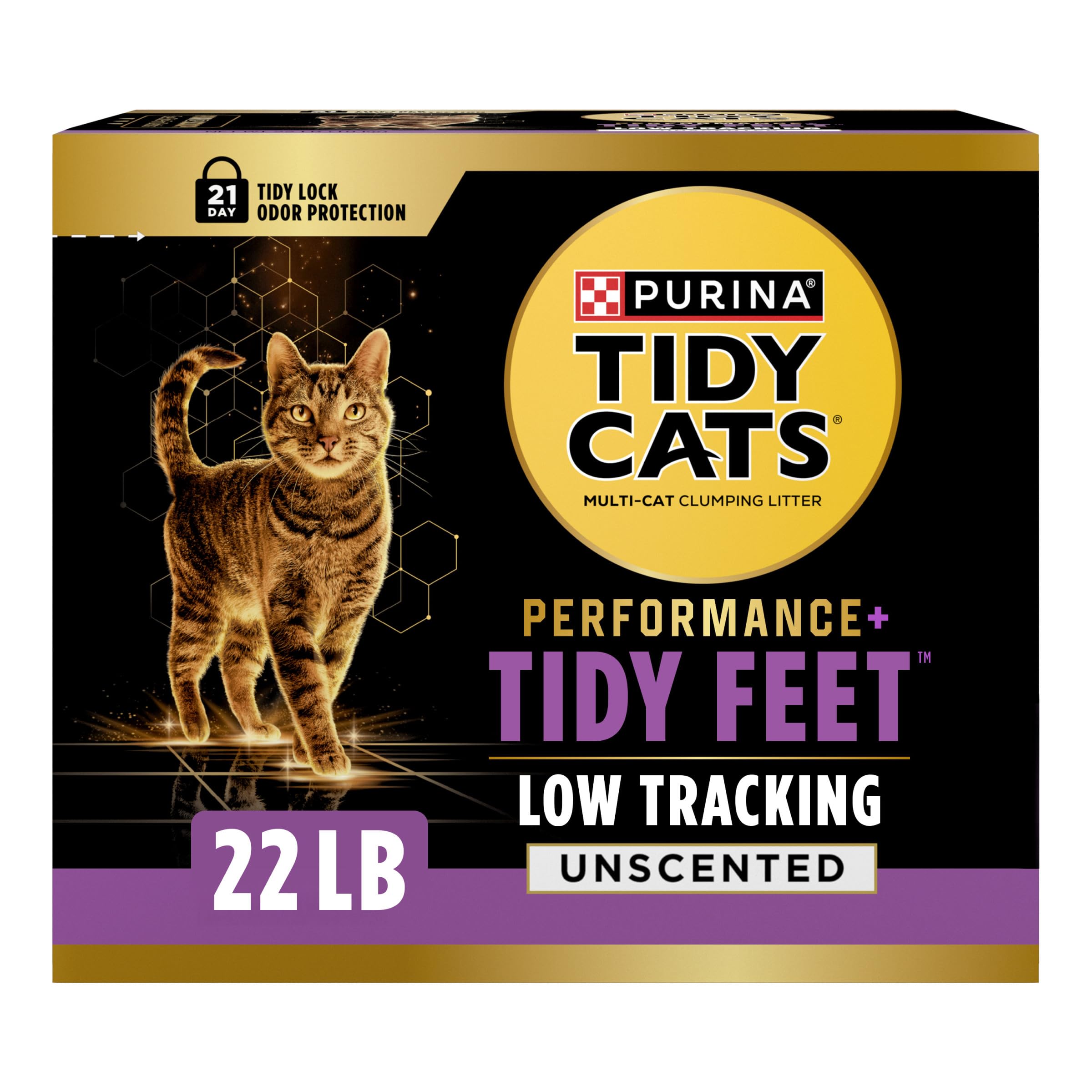
This 22-pound box of unscented clay litter uses a proprietary blend of particle sizes designed to minimize rolling outside the box. Owners consistently report 64 percent less tracking compared to standard clumping litters, which translates to noticeably fewer granules on bathroom floors and hallway runners. The granules are slightly larger than traditional fine clay, so they stay put rather than sticking to paw pads.
Clump formation is fast — within seconds of contact, the litter forms a tight plug that holds together during scooping without crumbling into wet mush. The unscented formula relies on natural clay absorption to lock ammonia odors rather than masking them with perfume, making it a safe choice for cats with respiratory sensitivity. Multiple reviews note that after three days away, the box still smelled acceptable, which is rare for a mid-weight clay product.
At 22 pounds, the box is heavy to pour, but the low-dust formulation keeps the air clear during refills. Multi-cat households report that one box lasts roughly three to four weeks with daily scooping, making the cost per use competitive against premium natural alternatives. The main trade-off is the lack of added odor-trapping carbon or enzymes — clay does the job alone, and it does it well.
Why we love it
- Exceptional low tracking keeps floors clean
- Tight clumps that do not break apart
- Unscented — no artificial perfume smell
Good to know
- 22 lb box is heavy to lift and pour
- No added carbon or enzyme boosters
2. So Phresh by Petco Extreme Clumping Unscented Grass Seed Cat Litter
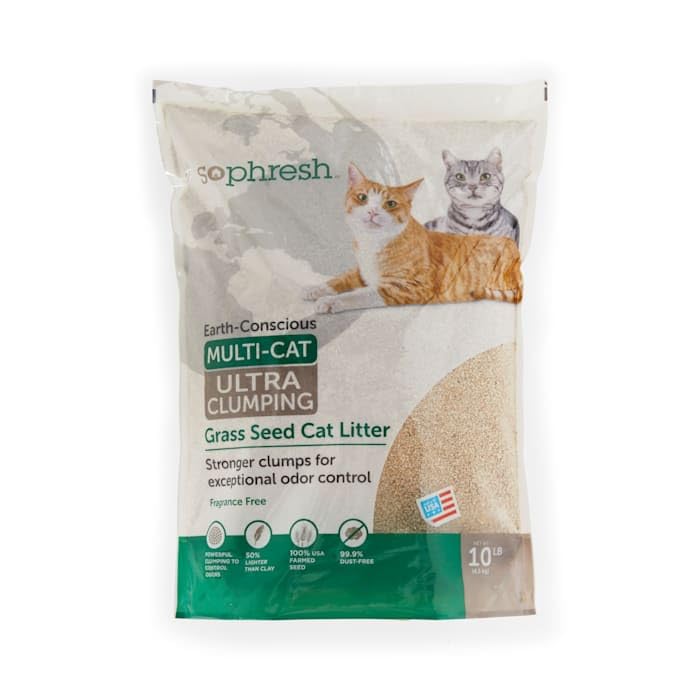
This 10-pound bag of grass seed litter weighs roughly half as much as an equivalent clay product, which makes carrying and pouring significantly easier for anyone with back or joint concerns. The material is 100 percent USA-farmed grass seed, unscented, and advertised as 99.9 percent dust-free. Owners confirm that the dust level is genuinely negligible — pouring produces almost no airborne particles, which is a major win for asthmatic cats or owners.
Clumps form with a cement-like hardness that holds together far better than many corn or wheat-based natural litters. Reviews note that daily scooping keeps the box fresh for roughly one month for a single cat, and the natural material composts safely in non-food applications. The larger granule size does track a bit more than fine clay, but the trade-off is a litter that won’t trigger grass allergies in sensitive cats — several reviewers switched from clay specifically for this reason.
The biggest practical consideration is odor control: without added charcoal or baking soda, the grass seed relies entirely on its clumping action to trap smells. Owners who scoop every 24 hours report no issues, but skipping a day can allow ammonia to build faster than a clay litter with carbon additives. The price per pound is higher than standard clay, but the lighter weight means you use less volume per scoop, often balancing the cost over time.
Why we love it
- Virtually zero dust during pouring and scooping
- Clumps like cement — very hard plugs
- Unscented and safe for sensitive cats
Good to know
- Tracks more than fine clay granules
- Odor control drops if scooping is skipped
3. Catit Go Natural Plant-Based Cat Litter
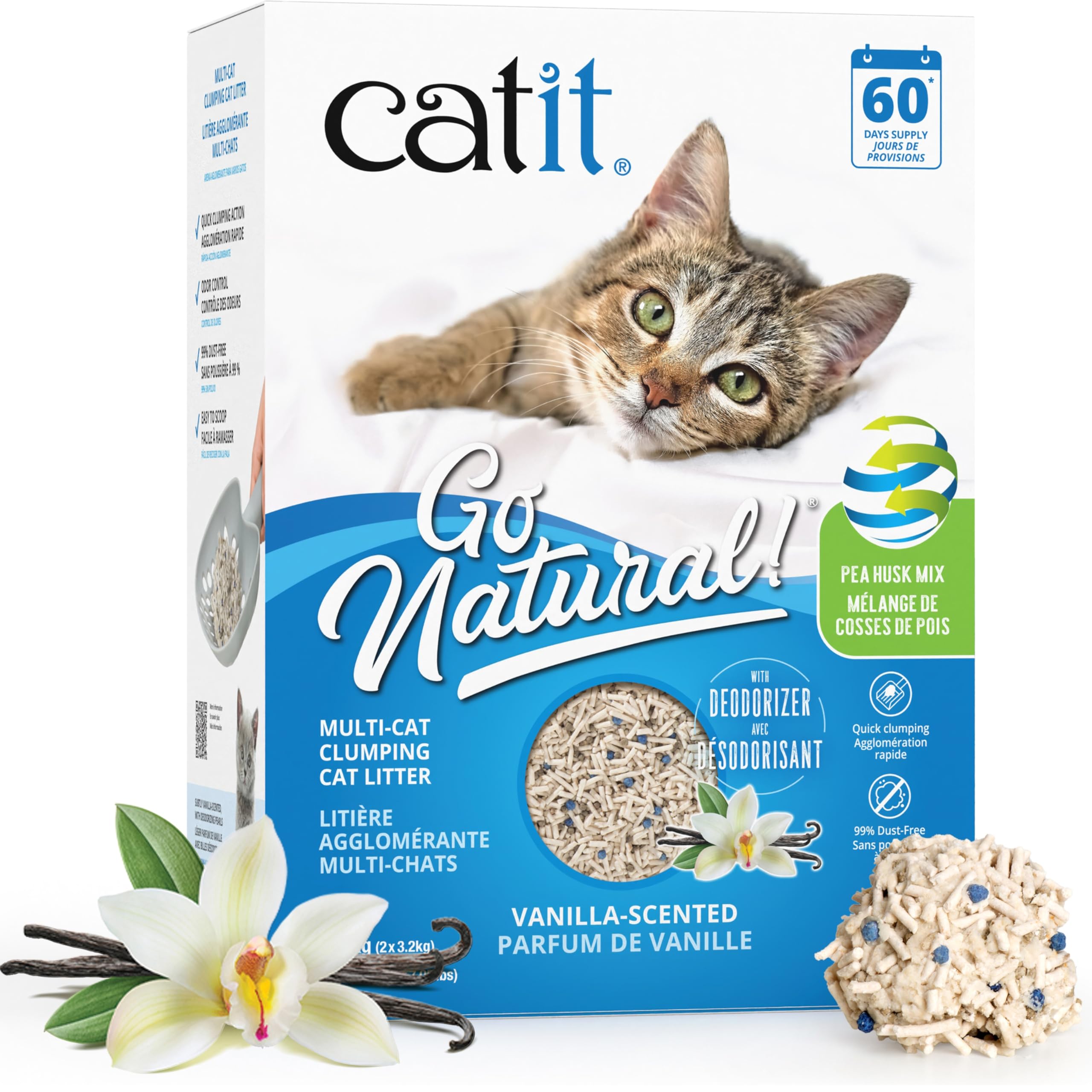
Catit bridges the gap between natural plant-based materials and the reliable clumping of bentonite clay by blending 70 percent pea husk with 30 percent clay. The result is a lightweight granule that clumps quickly without the dusty mess of pure clay or the crumbly texture of pure plant litters. Owners describe the clumps as firm and easy to scoop — the bentonite content prevents the sogginess that plagues many eco-friendly options.
The vanilla scent is subtle enough that it does not overwhelm the room, though several reviews mention that the fragrance becomes slightly cloying after the litter has been in use for a week. Mixed-in deodorizing pearls help neutralize ammonia between scoops, and the formula is 99 percent dust-free. Multi-cat households report that three scoops per day keep the box fresh for about a month before a full change is needed.
Transitioning from pure clay to this hybrid is noticeably smoother than jumping to a 100 percent plant litter — cats adjust within a day or two rather than refusing the box. The 6.4-kilogram bag (roughly 14 pounds) is manageable to carry, and the material breaks down in compost under the right conditions. The main drawback is the price per pound, which sits above standard clay, but the combination of low tracking and excellent clump integrity justifies the premium for owners who want a greener option without sacrificing performance.
Why we love it
- Hybrid formula gives best of clay and plant
- Very low dust and minimal tracking
- Deodorizing pearls boost odor control
Good to know
- Vanilla scent may become noticeable over time
- Higher cost per pound than pure clay
4. Fresh Step Advanced Odor Shield Multi Cat Clumping Litter
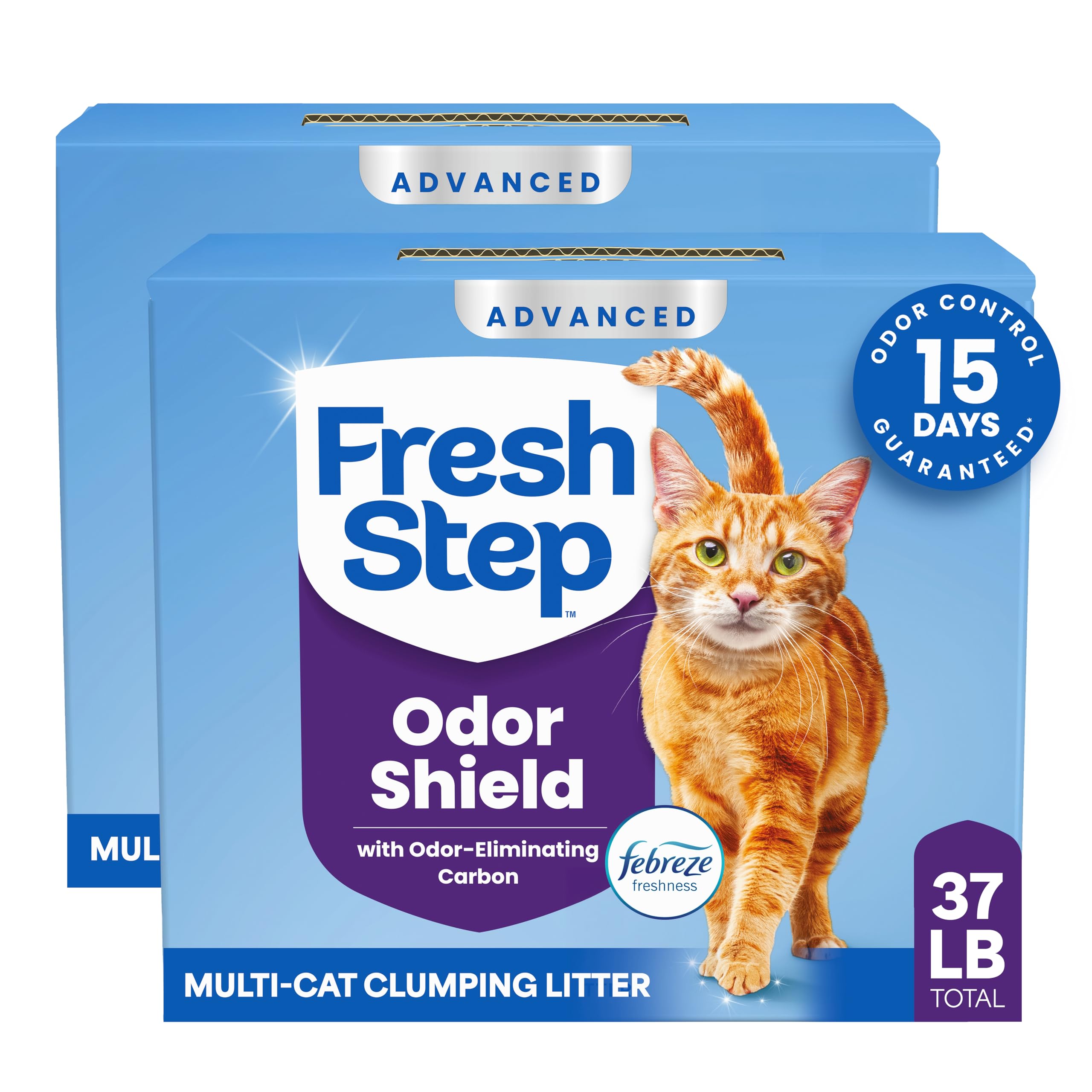
This two-pack contains 37 pounds total (two 18.5-pound boxes) of clay litter engineered with Ammonia Block Technology, activated charcoal, and Febreze freshness to neutralize odors at the molecular level. Owners with three or more cats consistently report that this formula keeps the litter area smelling clean for the full 15-day guarantee window when scooped daily. The ClumpLock technology forms dense plugs that do not disintegrate even when scooping multiple times per day.
The low-dust formulation reduces airborne particles compared to standard Fresh Step varieties, though some owners note that the first pour still generates a minor dust cloud. The Mountain Spring scent is the most common complaint — several reviews mention it is overpowering enough to irritate asthma sufferers or cause the owner to switch to the Hawaiian Aloha version. If your household has respiratory sensitivities, the unscented variant of this line is a safer pick.
Liquid absorption is rapid, keeping the surface of the litter dry and preventing urine from pooling at the bottom of the box. Automatic litter box owners confirm that the clumps are solid enough to be cycled without jamming the mechanism. The value proposition is strong: the 37-pound total supply lasts a multi-cat household roughly six to eight weeks, making the per-scoop cost among the lowest of any premium clay option.
Why we love it
- 15-day odor control guarantee holds up in practice
- ClumpLock prevents crumbles during scooping
- Excellent value per pound for multi-cat homes
Good to know
- Strong scent may be overwhelming for some owners
- Slight dust on initial pour
5. FUKUMARU Tofu Cat Litter, 18lb – Lavender Scent
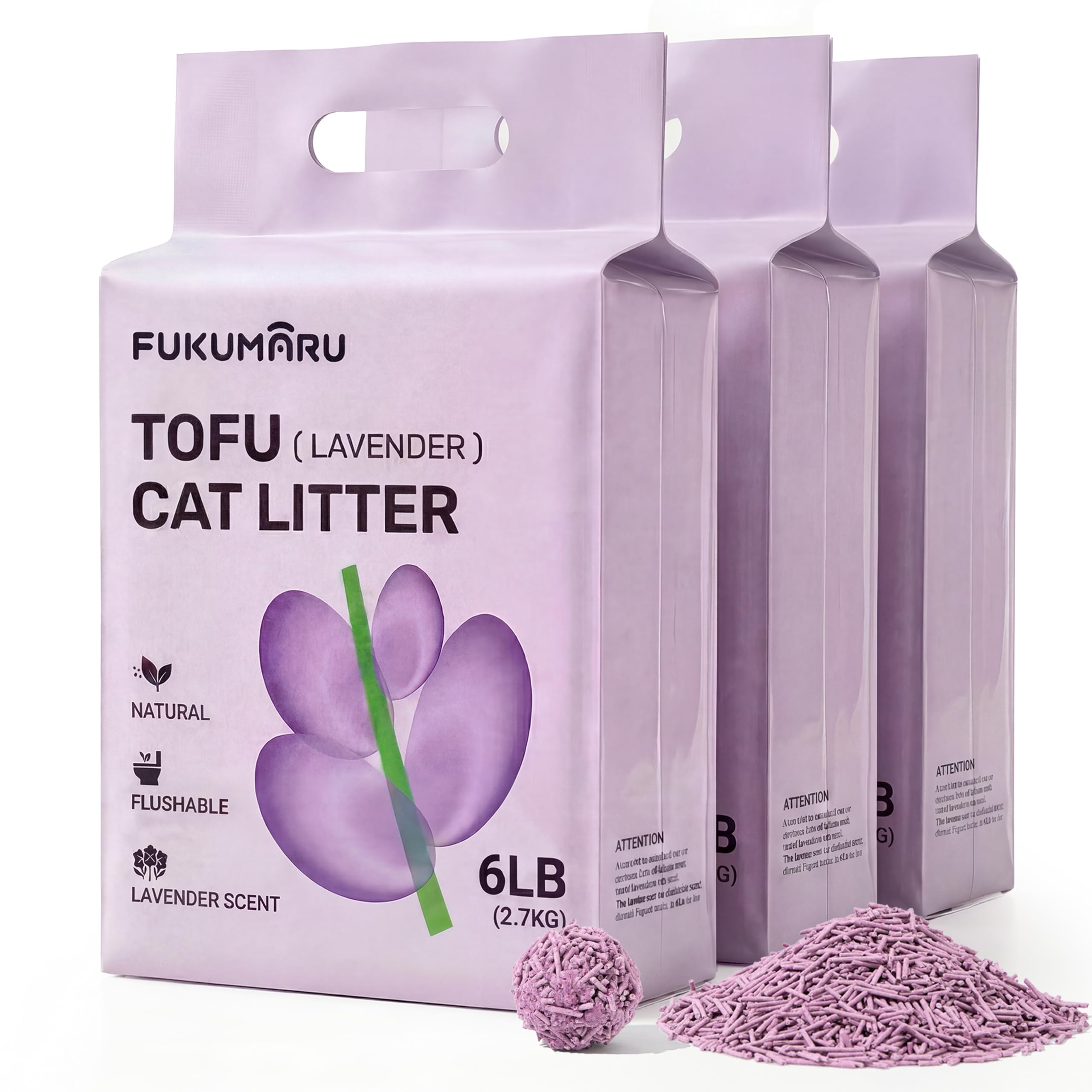
This 18-pound set (three 6-pound bags) uses soybean dregs, corn starch, and bamboo fibers to create 2mm pellets that clump firmly without synthetic binders. The pellets are water-soluble and marketed as flushable in small quantities, though several owners report that flushing caused toilet clogs — local plumbing conditions vary, so disposal in the trash is the safer bet. Dust levels are exceptionally low; reviewers describe the pour as completely clear of airborne particles.
The lavender scent is light and natural, not chemical, and covers ammonia effectively without triggering respiratory issues. Clumps form into solid, dry plugs that do not stick to the sides or bottom of the box, making scooping fast and residue-free. Owners with five cats report that one 18-pound supply lasts roughly one month with daily scooping, which is impressive for a plant-based litter that weighs significantly less than clay.
The 2mm pellet size is designed to stay in the box — tracking is minimal compared to fine clay or grass seed litters. The handle on each 6-pound bag makes pouring easy for anyone with arthritis or limited grip strength. The main downsides are the premium price point and the fact that some cats find the pellet texture slippery underfoot, which may require a gradual transition over four weeks to avoid box avoidance.
Why we love it
- Nearly zero dust and very low tracking
- Firm clumps that do not stick to the box
- Lightweight bags with convenient handles
Good to know
- Flushable claim may not work with all plumbing
- Pellet texture can feel slippery for some cats
FAQ
How many pounds of litter does one cat use per month?
Is flushable cat litter safe for septic systems?
How do I transition my cat from clay to plant-based litter?
Why does my clumping litter sometimes turn into a muddy paste?
Final Thoughts: The Verdict
For most gardeners, the best overall cat litter winner is the Purina Tidy Cats Performance Plus because it delivers genuinely low tracking, tight unscented clumps, and reliable odor control at a practical price point. If you want a natural material that is nearly dust-free, grab the So Phresh Grass Seed Litter. And for heavy multi-cat odor control with ammonia-blocking technology, nothing beats the Fresh Step Advanced Odor Shield.