
One wrong mopping session is all it takes to strip the patina from a century-old oak floor or leave a ghostly haze across a parquet that has survived decades of foot traffic. Old hardwood floors are irreplaceable — their finish is thin, their wood porous, and they react aggressively to modern strippers, ammonia-laced detergents, and waxy build-up formulas. Choosing a cleaner that respects aged wood means understanding pH neutrality, residue-free evaporation, and the difference between a gentle maintenance wash and a harsh deep strip.
I’m Mo Mahin — the founder and writer behind Furric. I’ve spent years analyzing formulation chemistry, studying owner-reported long-term finish wear across hundreds of hardwood floor cleaner SKUs, and tracking which ingredients cause wood fibers to swell or finish to cloud on floors older than 50 years.
Whether your floor has a polyurethane seal or a wax finish that has never been top-coated, the best cleaner for old hardwood floors is the one that lifts dirt without dissolving the patina or leaving a soapy trace that dulls natural grain.
How To Choose The Best Cleaner For Old Hardwood Floors
Vintage hardwood is not the same substrate as modern pre-finished engineered planks. The finish layer on old wood is often thinner, more porous, and sometimes wax-based rather than polyurethane. Choosing the wrong cleaner can cloud, swell, or strip the floor in one pass.
Check the pH level
A neutral pH between 6.5 and 7.5 is non-negotiable for old floors. Alkaline cleaners (pH above 8) can etch worn polyurethane and soften wax. Acidic cleaners (pH below 6) can strip color from the wood itself. Always look for a formula that explicitly states pH-neutrality or “no harsh alkalies.”
Watch for wax and silicone ingredients
Many cleaners advertise “shine” by leaving behind a thin layer of wax or silicone. On old floors, these additives create a gummy buildup over time that attracts dirt, yellows with age, and makes future refinishing difficult because the new finish won’t bond. Stick to cleaners that only clean — not shine.
Match the formula to your finish type
If your old floor has a urethane or polyurethane seal, a water-based cleaner that evaporates quickly is safe. If the floor has an original wax finish or has never been top-coated, choose an oil-soap formulation that cleans without stripping the wax. Using an oil soap on a polyurethane floor, however, will leave a film — so know your finish first.
Quick Comparison
On smaller screens, swipe sideways to see the full table.
| Model | Category | Best For | Key Spec | Amazon |
|---|---|---|---|---|
| Murphy Oil Soap | Oil Soap | Wax-finished antiques | 98% naturally derived | Amazon |
| Eco-me Concentrated | Plant-Based | Sensitive homes with pets | 32 oz concentrate (64 uses) | Amazon |
| Begley’s Hardwood | Ready-to-Use | Streak-free daily mopping | USDA Certified Biobased | Amazon |
| Parker & Bailey | Odorless Refill | Odor-sensitive households | 64 oz refill, unscented | Amazon |
| Bruce No Wax | No-Rinse Spray | Quick spot cleaning | Water-based, unscented | Amazon |
In‑Depth Reviews
1. Murphy Oil Soap – 128 oz

Murphy Oil Soap is the century-old reference point for cleaning old hardwood floors that still carry a wax finish or a shellac surface. Its formula relies on 98% naturally derived ingredients — potassium soaps that emulsify grease and dirt without the aggressive alkalinity of modern synthetic detergents. Because it is an oil soap rather than a polymer-based cleaner, it actually conditions the wood fibers while it cleans, preventing the “dry bone” look that water-only mopping produces on aged boards.
The 128-ounce gallon is the most cost-efficient option for homes with large square footage of vintage wood. Dilute roughly three tablespoons per gallon of warm water for maintenance passes, or a tablespoon per gallon for light dust-mop dampening. Users consistently report that the classic “clean” scent — a subtle natural soap aroma — lingers comfortably without the cloying perfume of floor cleaners designed for modern polyurethane finishes. On genuine wax surfaces, this cleaner is safer than any spray-and-wipe alternative.
One constraint: Murphy’s is not recommended for polyurethane-sealed floors. The oil soap leaves a thin film on urethane that clouds after several applications, so confirm your floor finish before committing to this gallon jug.
Why we love it
- Conditioning oil soap preserves thin old finishes
- Effective on shellac, wax, and unsealed wood
- Large economical gallon format
Good to know
- Leaves a film on polyurethane finishes
- Requires proper dilution to avoid stickiness
- Strong fragrance for sensitive noses
2. Eco-me Concentrated Multi-Surface Floor Cleaner – 32 oz

Eco-me is the all-category winner because it checks every box that an old hardwood floor demands: pH-neutral, fragrance-free, concentrated for dilution control, and completely free of sulfates, ammonia, bleach, and synthetic preservatives. The plant-extract formula relies on natural botanicals and a small amount of citric seed oil to lift dirt — meaning the only thing that touches the wood is a mild cleanser that evaporates to zero visible residue. Owners of sealed antique hardwood report passing the “white rag test” after mopping, with no dulling of the original finish.
At 32 fluid ounces, this concentrate lasts approximately 64 mop sessions (two capfuls per bucket of water). The omission of artificial fragrance is a major advantage for old wood: scent additives are often carried by glycol ether solvents that can soften aged polyurethane over repeated use. The Leaping Bunny and vegan certifications also confirm no animal-derived surfactants that could form a tacky biofilm on porous, older planks.
The one trade-off is that the citric seed oil component, while generally safe, can be a concern for bird owners — rinse thoroughly if you use it in a kitchen area where a bird’s respiratory tract might be exposed. For standard sealed wood floors, this is the most balanced, residue-free cleaner available.
Why we love it
- Concentrated liquid uses only 2 caps per bucket
- Passes white-rag residue test on sealed wood
- Fragrance-free — no solvent additives that harm old finishes
Good to know
- Citric seed oil may bother bird owners
- Unscented formula lacks any “clean” fragrance signal
- Concentrate requires mixing, no ready-to-use convenience
3. Begley’s Hardwood Floor Cleaner Spray – 64 oz
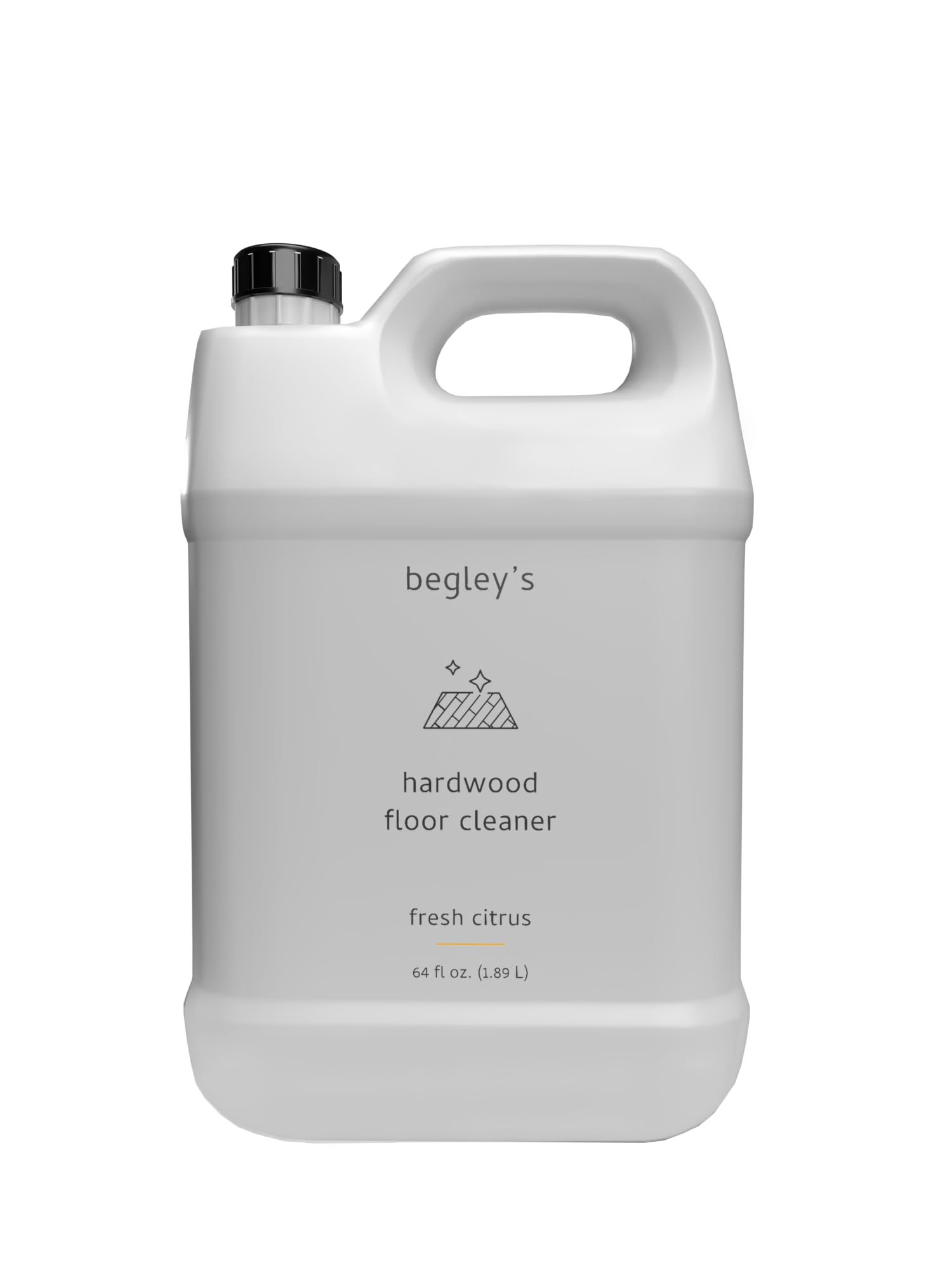
Begley’s takes a different approach to old hardwood care by going ready-to-use rather than concentrated. The spray formula contains no waxy film or shine-dulling polymers, so it cleans sealed antique wood without layering plastic on top of the existing finish. The USDA Certified Biobased label confirms that the active cleaning agents are plant-derived rather than petrochemical, reducing the risk of chemical etching on thin old polyurethane. Users consistently note that the light citrus scent fades quickly, unlike the lingering perfume notes found in most floor sprays.
Owners using this with a microfiber mop on antique pre-war oak report consistent streak-free results even in bright natural light. The formula is also safe for baseboards, door trim, and laminate — useful when cleaning an old house where various surface types converge in one room. Multiple verified purchasers mention that it doesn’t trigger fragrance-related headaches, a common problem with floor cleaners that use synthetic musk or lavender oils.
The downside is the price per use: since it is a ready-to-use spray that requires no dilution, a 64-ounce bottle covers roughly two full moppings in a 1,100-square-foot home. For daily-maintenance households, the cost adds up faster than concentrated alternatives.
Why we love it
- Spray-and-mop convenience with no mixing
- USDA Certified Biobased — safe for sensitive households
- Streak-free even in bright ambient light
Good to know
- Expensive per mopping compared to concentrates
- Citrus scent, though mild, is not fragrance-free
- No large refill size available beyond 64 oz
4. Parker & Bailey Wood Floor Cleaner – 64 oz Refill

The formula contains no wax, silicone, petrochemicals, or harmful solvents — it relies on a degreasing agent that dissolves ground-in dirt without attacking the wood finish. Users report that it works identically to Bona in terms of cleaning power, but at a significantly lower cost per ounce. For old hardwood floors that have accumulated years of greasy kitchen traffic or tracked-in soil, this cleaner’s ability to cut through that grime without leaving a chemical burn is its standout quality.
The unscented nature is another benefit for owners of old wood: fragrance carriers in floor cleaners often contain glycol ethers that can soften polyurethane over repeated application. Parker & Bailey’s odorless formulation eliminates that variable entirely. The liquid can be used in a spray bottle or poured directly into a mop cartridge, making it compatible with both traditional string mops and modern flat-mop systems.
Where it falls short is shine. The formula does not add any polysaccharide gloss or sheen, so floors emerge clean but matte. If you expect a wet-look shine, you will be disappointed; if you want clean wood without residue buildup, this is a solid mid-range choice.
Why we love it
- Professional-grade degreaser for soiled old floors
- Odorless — no chemical or perfume scent
- Cost-effective per ounce compared to Bona
Good to know
- Does not add any shine or gloss
- Not suitable for wax finishes without testing
- USPS shipping can be slower than Amazon fulfillment
5. Bruce No Wax Floor Cleaner – 32 oz (3-Pack)
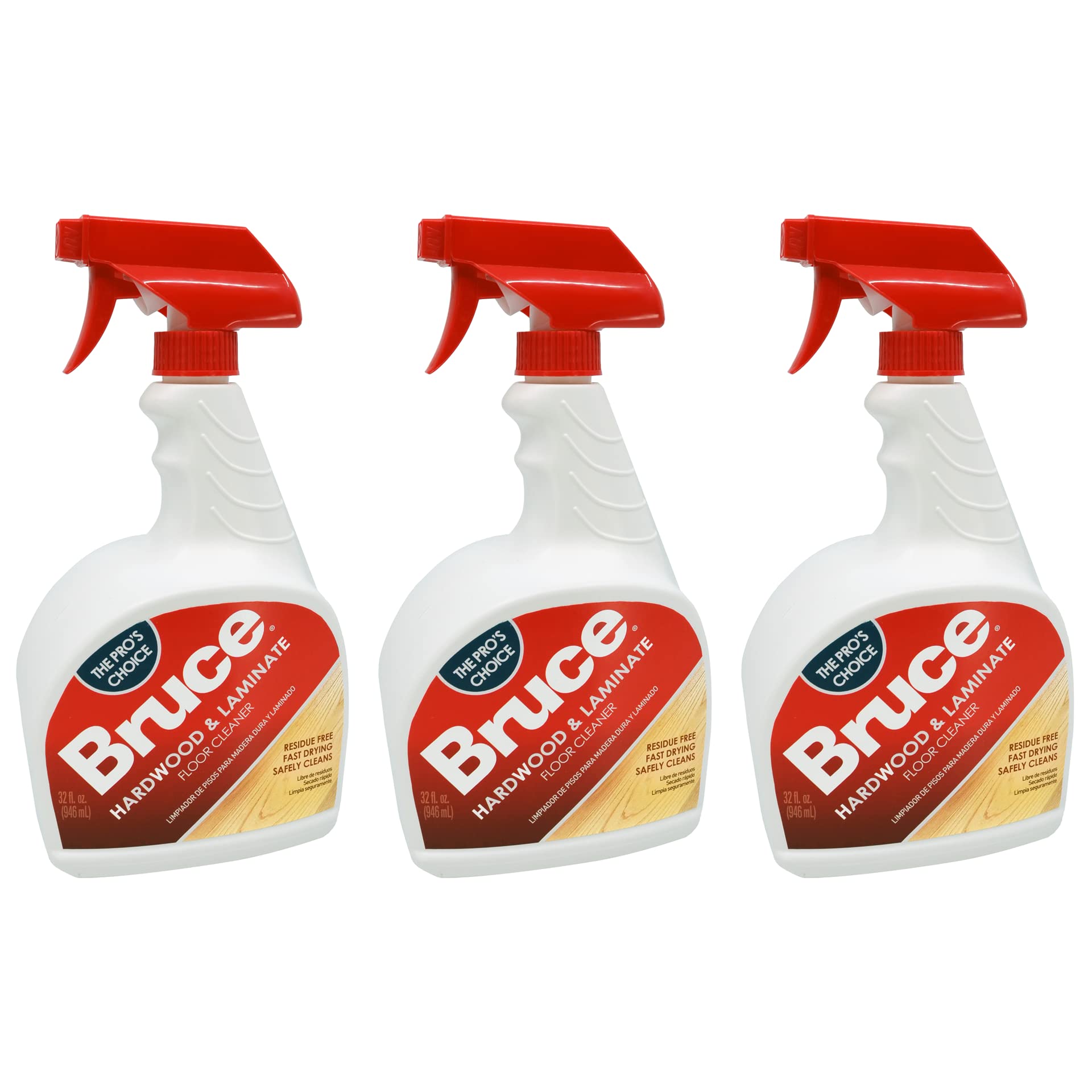
Bruce’s “No Wax” formula was designed specifically for finished hardwood floors that should never see a wax coating — a common scenario for old floors that have been sanded and resealed with polyurethane. The water-based formulation sprays on and dries quickly without requiring a rinse step, which minimizes the amount of moisture that can seep between aged planks and cause cupping. Verified owners of decades-old kitchens report that the cleaner lifts black heel marks and food spills with minimal scrubbing, leaving the wood shiny but not slick or tacky.
The 3-pack configuration gives you three 32-ounce bottles, which is convenient for multi-floor homes. The sprayer nozzle on the included bottles, however, has a tendency to fail — some owners found that two of the three sprayers broke after minimal use, forcing them to decant into a separate spray bottle. The formula itself is unscented and contains no ammonia or bleach, making it compatible with sensitive respiratory households.
One nuance: the cleaner produces a visible shine that some owners love and others find artificial. If your old hardwood has a matte or satin finish, the “reflective” effect may not match your aesthetic preference. For those who want a glossy, clean-looking floor without stripping the old polyurethane, this is an effective entry-level pick.
Why we love it
- No-rinse formula reduces moisture risk on old subfloors
- Effective on black scuff marks and kitchen spills
- Three-bottle pack provides long-term supply
Good to know
- Sprayer nozzles prone to failure
- Leaves a high-gloss look, not a natural matte finish
- Not for wax-finish floors
FAQ
Can I use vinegar and water on old hardwood floors?
How do I know if my old hardwood has a wax or polyurethane finish?
How often should I deep-clean an old hardwood floor?
Final Thoughts: The Verdict
For most homeowners, the best cleaner for old hardwood floors overall is the Eco-me Concentrated Floor Cleaner because its pH-neutral, fragrance-free concentrate dilutes to match any finish depth and leaves zero residue that can dull aged patina. If you have a wax-finish antique that needs preservation instead of stripping, the Murphy Oil Soap gallon is the only correct choice due to its conditioning oil-soap chemistry. And for households that want the fastest streak-free daily mopping without mixing anything, the Begley’s Hardwood Spray delivers reliable results on sealed wood without adding a plasticizing coat to the finish.