
Bringing houseplants into a home with cats usually means choosing between an airy jungle and a safe pet. The wrong foliage can send a curious feline to the emergency vet, so picking verified non-toxic species isn’t just a preference — it’s a necessity. The good news is that dozens of stunning, low-maintenance plants are certified safe by the ASPCA and thrive indoors without drama.
I’m Mo Mahin — the founder and writer behind Furric. I’ve spent years cross-referencing plant toxicity databases, analyzing grower feedback, and studying the real-world performance of pet-safe greenery so you can decorate with confidence.
This guide walks you through the top-rated, verified-safe options for households with furry roamers, ensuring you find the absolute best cat safe houseplants that deliver beauty, air-purifying benefits, and peace of mind.
How To Choose The Best Cat Safe Houseplants
Not every plant sold as “pet friendly” has been tested. The most reliable source is the ASPCA’s Toxic and Non-Toxic Plants database, which lists species by scientific name. Beyond safety verification, you need to match the plant’s light and water requirements to your schedule.
Check the ASPCA Status First
A seller’s “pet safe” label means little without third-party verification. Cross-reference the exact botanical name — *Maranta leuconeura*, *Chamaedorea elegans*, *Chlorophytum comosum* — against the ASPCA list. Every product in this guide has been vetted this way, so you can skip the research.
Match Growth Habit to Your Space
Trailing plants like String of Hearts work beautifully in hanging baskets away from countertops, while upright Prayer Plants fill shelves without tempting ground-level investigation. Consider your cat’s agility — determined jumpers can access high perches, so ceiling hooks sometimes offer the safest placement.
Prioritize Low-Maintenance Varieties
Cats knock over pots, so pick species that forgive missed waterings and recover from occasional leaf damage. Spider Plants and Parlor Palms rebound quickly from rough play, while more delicate Calatheas might not survive a paw-induced tumble.
Quick Comparison
On smaller screens, swipe sideways to see the full table.
| Model | Category | Best For | Key Spec | Amazon |
|---|---|---|---|---|
| Lemon Lime Maranta Prayer Plant | Mid-Range | Foliage lovers & night-movement watchers | 12–16 inch height in a 4-inch pot | Amazon |
| Red Prayer Plant | Premium | Colorful veining & trailing habit | 5–8 inch height in a 4-inch pot | Amazon |
| Variegated String of Hearts | Premium | Hanging succulent decor | 6-inch hanging planter, fully rooted | Amazon |
| Spider Plant Variety Pack | Mid-Range | Immediate collection of 4 different cultivars | 4 starter plants, 4 unique varieties | Amazon |
| Parlor Palm | Budget-Friendly | Low-light corners & beginners | 5–8 inch height in a 4-inch pot | Amazon |
In‑Depth Reviews
1. Lemon Lime Maranta Prayer Plant

The Lemon Lime Maranta Prayer Plant from Hopewind Plants Shop arrives 12–16 inches tall in a 4-inch nursery pot, with vibrant yellow-green leaves brushed by dark veins. Its most captivating trait is nyctinasty — the leaves fold upward at night like praying hands, creating a living rhythm that engages both humans and curious cats without triggering toxic ingestion concerns.
Customer reports consistently highlight how well-packaged these plants travel, with the pot taped to prevent soil spill and the foliage protected by foam. The soil arrives with organic material and requires watering only every 1–2 weeks when the top half feels dry, making it forgiving for owners who occasionally forget a watering session.
While the plant thrives in bright, indirect light and temperatures between 65–75°F, it will survive moderate dips in humidity, though misting encourages fuller leaf development. The ASPCA listing for Maranta confirms zero toxicity risk, though ingestion can still cause mild GI upset in sensitive cats — a small trade-off for such dynamic greenery.
Why we love it
- Dramatic leaf movement at night fascinates cats harmlessly
- Large, full specimen on arrival per multiple verified reviews
- Organic soil and eco-friendly packaging included
Good to know
- Prefers high humidity; may brown at leaf edges in dry climates
- Not recommended for direct sunlight exposure
2. Red Prayer Plant
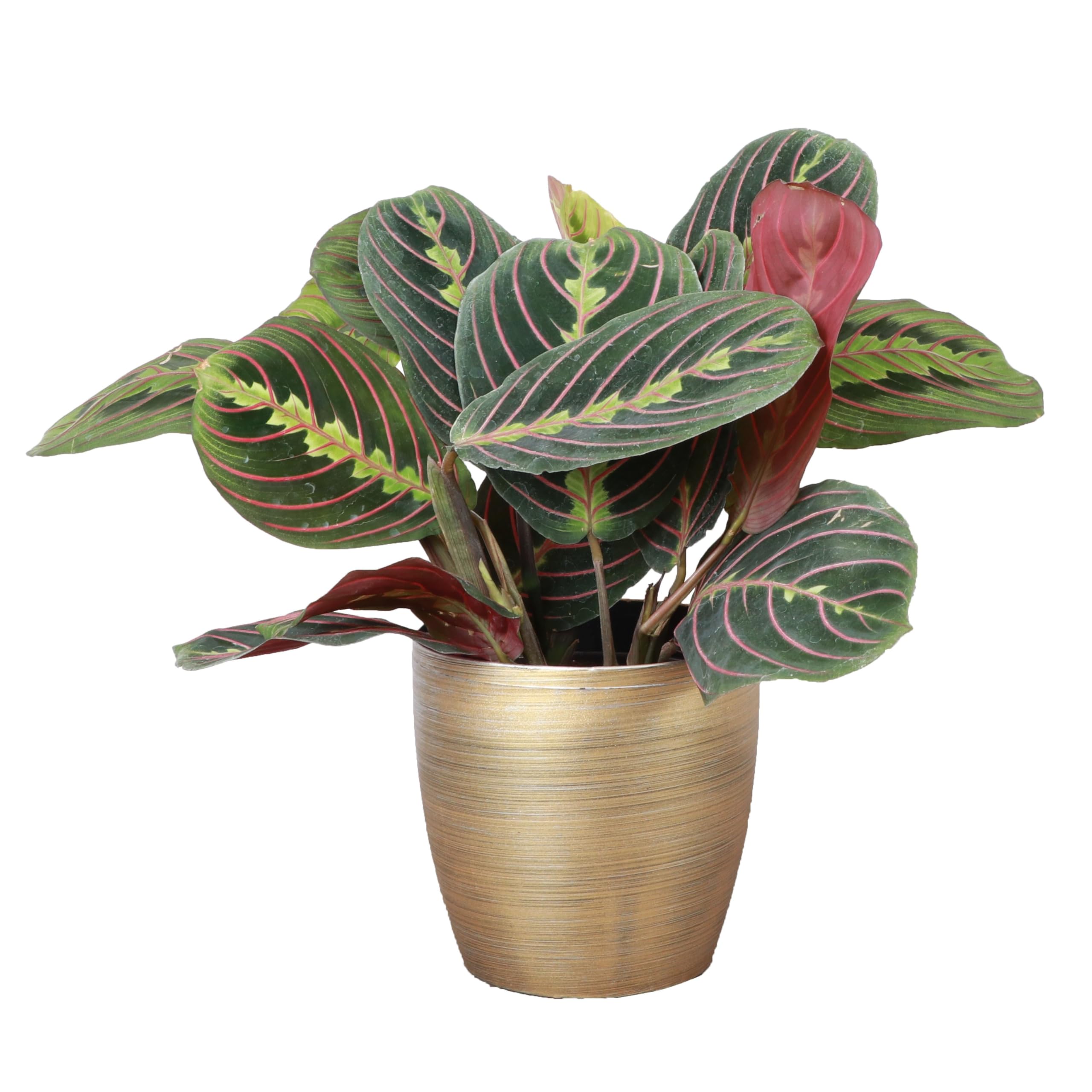
Thorsen’s Greenhouse delivers the Red Prayer Plant (*Maranta leuconeura*) in a 4-inch gold nursery pot, reaching 5–8 inches tall at shipping. The deep green leaves display bold red veining with matching undersides, creating a two-tone effect that makes it immediately stand out on a bookshelf or windowsill. This variety grows sideways rather than upright, making it a natural candidate for hanging baskets where cats can observe but not trample.
Buyers consistently mention receiving two plants in the same pot, adding immediate fullness that exceeds expectations. The ASPCA recognition covers this exact species, so you can trust the pet-friendly claim without additional research. Watering needs mirror the standard Prayer Plant — moderate moisture with a preference for slightly dry topsoil between waterings.
The growing habit pairs well with indirect to partial sun, and the plant can produce small white blooms in spring to summer with proper care. Its more compact profile compared to the Lemon Lime variety makes it suitable for tighter shelf spaces where you want visual punch without stealing the whole surface area.
Why we love it
- Dual-plant arrangement in one pot provides dense look
- Red undersides and veining create unique color contrast
- Natural trailing habit ideal for hanging placement away from paws
Good to know
- Smaller starting height than the Lemon Lime variety
- Growth rate slows in low light conditions
3. Variegated String of Hearts Hanging Basket
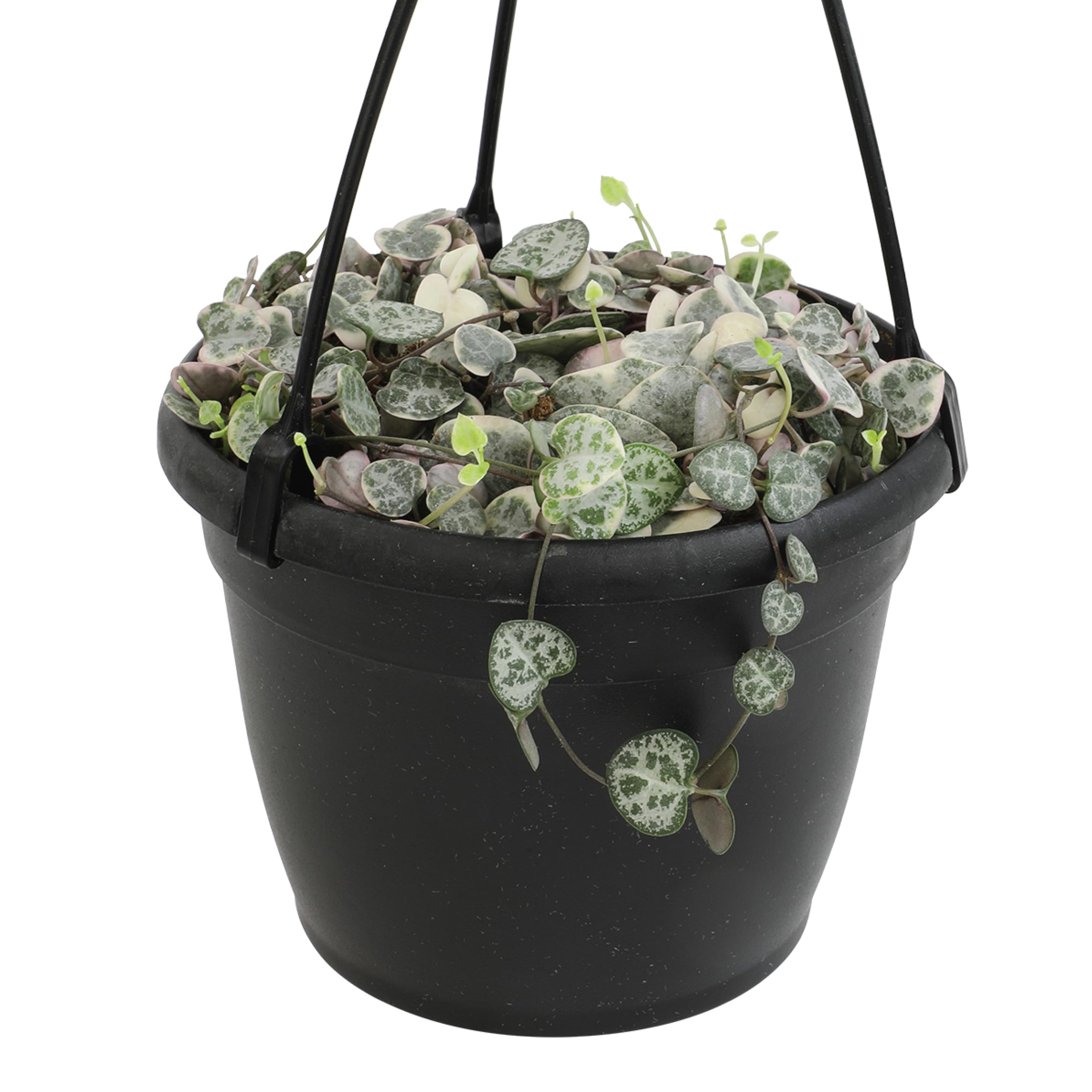
Plants for Pets offers the Variegated String of Hearts (*Ceropegia linearis Woodii*) in a ready-to-hang 6-inch planter, fully rooted and already trailing. The heart-shaped leaves feature cream and pink variegation against a green base, adding soft color that complements any room. Because it’s a succulent, the String of Hearts requires only moderate watering — the soil should dry out completely between waterings, reducing the risk of root rot from overenthusiastic care.
Verified buyers consistently report arriving plants that match the listing photos in fullness, with many mentioning the impeccable packaging and healthy root systems. A portion of every purchase goes to shelter animal placement, so buying this plant contributes to pet welfare beyond your own household. Keep it in partial sun for best variegation; too little light will cause the leaves to revert to solid green.
The trailing nature makes this an outstanding choice for elevated spots where cats can admire from below but cannot reach easily. If your cat is a determined jumper, hang it from a ceiling hook rather than a wall bracket to maintain safe distance.
Why we love it
- Ships in a hanging planter — no extra pot needed
- Donation to shelter animals with every purchase
- Variegated leaves provide unique decorative appeal
Good to know
- Soil arrives very wet; must dry out before next watering
- Requires untangling upon arrival due to trailing habit
4. Spider Plant Variety Pack
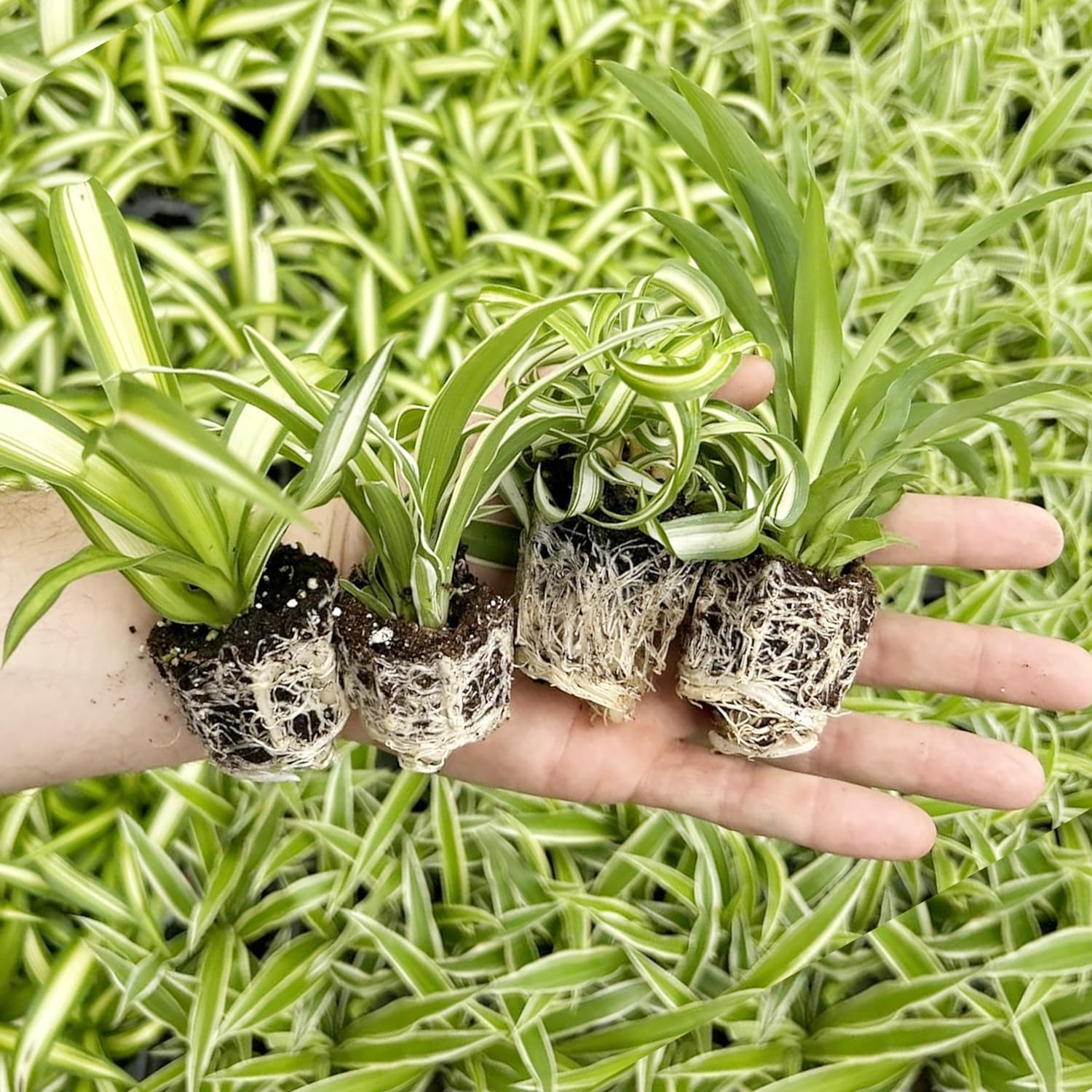
August Breeze Farm’s Spider Plant Variety Pack includes four distinct cultivars — Ocean Spider, Hawaiian Spider, Green Spider, and Bonnie Curly Spider — in a single order. Each starter plant arrives with an already-developed root system ready for immediate repotting into 4-inch pots. The Bonnie Curly variety, with its twisted, wavy leaves, is a particular favorite that’s often hard to find individually.
Spider Plants (*Chlorophytum comosum*) are widely recognized as safe for cats by the ASPCA, and their arching, grassy foliage tends to attract less destructive chewing than broad-leaf varieties. These plants are drought-tolerant and thrive in a wide range of lighting conditions, from full sun to partial shade, making them versatile. Customers report impressive root development that signals strong future growth.
The only downside mentioned across reviews is the lack of labeling to distinguish which plant is which — you’ll need to identify them visually once they grow. If you want a mini collection that fills a room with different textures while keeping costs low, this pack delivers exceptional density per dollar.
Why we love it
- Four distinct spider plant varieties in one purchase
- Established root systems ready for repotting
- Handles drought and low light better than many alternatives
Good to know
- Plants are not individually labeled by variety
- Starter size requires immediate repotting for continued growth
5. Parlor Palm
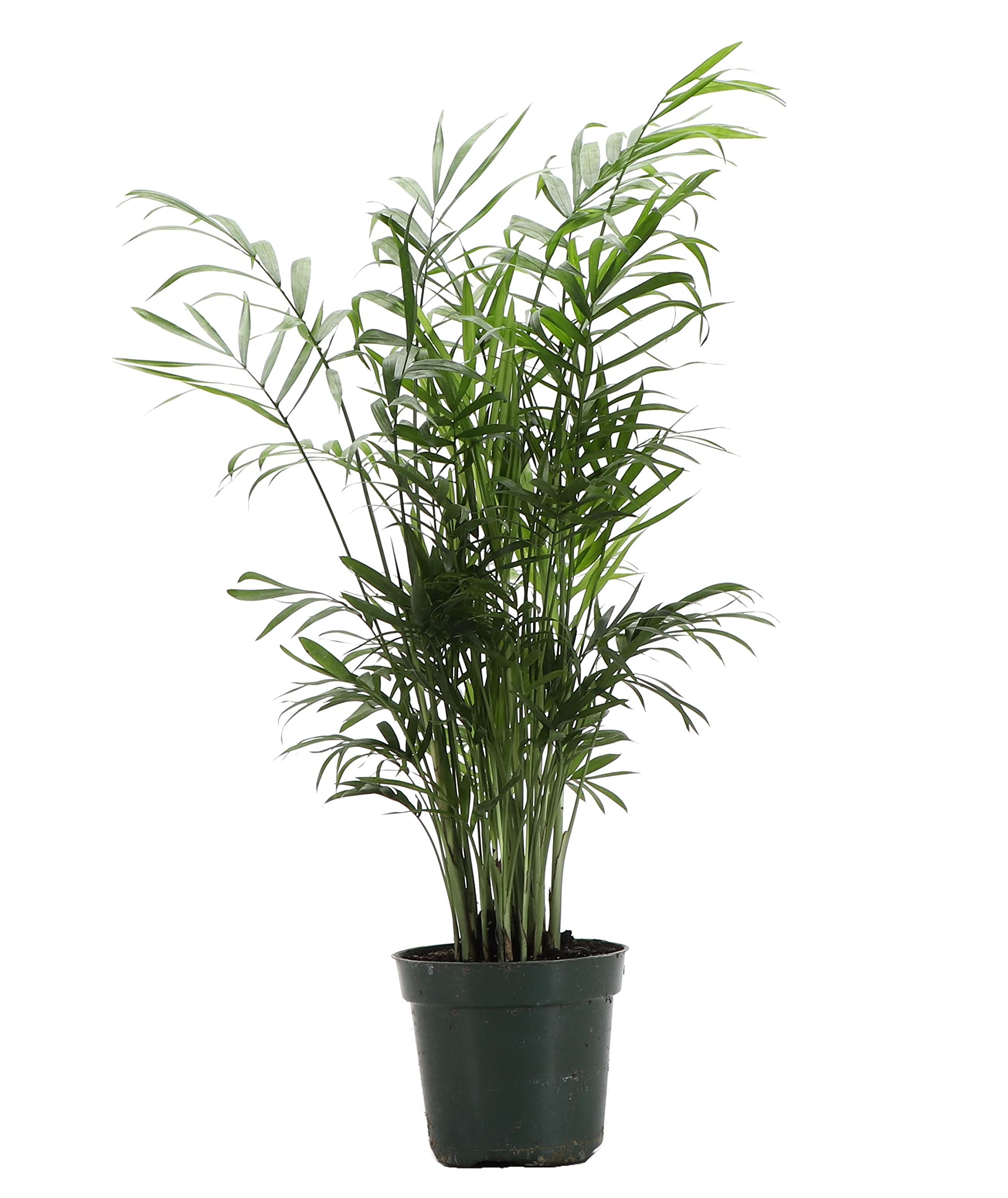
Thorsen’s Greenhouse Neanthe Bella Palm, commonly called Parlor Palm (*Chamaedorea elegans*), ships in a 4-inch nursery pot at 5–8 inches tall. Its feathery, cascading fronds provide a soft texture contrast to the broader leaves of Marantas and Spider Plants. The Parlor Palm is one of the few indoor palms that genuinely tolerates low-light conditions, making it the top choice for north-facing windows or dim corners where most plants would stretch and fade.
ASPCA certification confirms this palm is non-toxic to cats, and its air-purifying qualities have been noted in NASA studies for filtering indoor toxins. Customers report healthy arrivals even when the shipping box shows damage, crediting the protective packaging for surviving rough transit. The soil can arrive compacted or hard, so gently loosening it and adding drainage material upon repotting is recommended.
This palm is drought-tolerant and forgiving of irregular watering, another reason it suits beginner plant owners. Its slow growth means it won’t outgrow a small pot quickly, but if you want height over time, upgrade to a larger container after the first year.
Why we love it
- Thrives in low light where most plants fail
- Naturally air-purifying with NASA backing
- Drought-tolerant and forgiving of missed waterings
Good to know
- Soil may arrive compacted and require loosening
- Slow growth rate means less visible change month to month
FAQ
Are all Prayer Plant varieties equally safe for cats?
Which cat safe houseplant tolerates the most neglect?
Can I grow String of Hearts from cuttings if my cat damages the mother plant?
Do spider plants have any hallucinogenic effect on cats?
Final Thoughts: The Verdict
For most gardeners, the best cat safe houseplants winner is the Lemon Lime Maranta Prayer Plant because it combines dramatic nocturnal leaf movement, compact size for any room, and a verified ASPCA safe status. If you want deeper red tones and a trailing habit for hanging baskets, grab the Red Prayer Plant. And for a low-light bathroom or hallway where nothing else grows, nothing beats the Parlor Palm.