
Miniature Schnauzer puppies have a specific need for kibble that supports their rapid growth phase without overwhelming their sensitive digestive systems. The wrong formula can lead to loose stools, skin irritation, or a dull coat — problems that are hard to reverse once they set in during the first year. Selecting a diet built around the right kibble size, protein-to-fat ratio, and breed-specific nutrient density is the single most important decision you make for their long-term health.
I’m Mo Mahin — the founder and writer behind Furric. I’ve spent years analyzing veterinary nutritional guidelines, comparing kibble particle dimensions, and cross-referencing owner-reported outcomes for small-breed puppy formulas to identify which options actually deliver on their label claims for this exact breed profile.
Whether you are a first-time owner or switching from a breeder-recommended diet, this guide breaks down five formulas that meet the unique caloric, dental, and developmental needs of a schnauzer puppy. At the end, you will know exactly which food for miniature schnauzer puppies fits your budget and your dog’s temperament.
How To Choose The Best Food For Miniature Schnauzer Puppies
Miniature Schnauzer puppies have a unique combination of high energy, a predisposition to pancreatitis, and a sensitive GI tract. Choosing a formula is not as simple as grabbing a bag labeled “puppy” — you need to prioritize kibble size, calcium-phosphorus balance, and fat sources that are easy to digest.
Kibble Size and Chew Mechanics
These puppies have small mouths and baby teeth that can be overwhelmed by standard kibble. Look for a kibble diameter under 10mm. Formulas marketed for “small breed puppies” often use a 7–9mm disk that encourages chewing rather than inhaling, which reduces choking risk and improves digestion by allowing saliva enzymes to break down starches.
Protein Density Without Pancreatic Stress
Miniature Schnauzers are prone to hyperlipidemia, a condition where fat levels in the blood run high. A puppy food with 28–32% protein from whole meat or meal is ideal, but the crude fat content should stay between 14–18%. Avoid formulas that rely on poultry fat as the primary fat source — chicken fat is fine in moderation, but excessive rendered fat can trigger loose stools in this breed.
DHA and Omega-3 Support for Brain and Coat
The schnauzer’s signature wiry coat and sharp intelligence require targeted nutrients. DHA from fish oil supports retinal and cognitive development during the first 10 months. Omega-6 fatty acids from flaxseed or chicken fat help maintain the coat’s natural texture and reduce tear staining around the eyes, a common issue in this breed.
Calcium-to-Phosphorus Ratio for Bone Growth
Rapid growth in small breeds can lead to skeletal abnormalities if calcium is too high. The ideal ratio is approximately 1.2:1 calcium to phosphorus. A diet that exceeds 1.5% calcium on a dry matter basis can predispose a schnauzer puppy to hip dysplasia and angular limb deformities. Stick to formulations that list bone meal or dicalcium phosphate lower on the ingredient list.
Quick Comparison
On smaller screens, swipe sideways to see the full table.
| Model | Category | Best For | Key Spec | Amazon |
|---|---|---|---|---|
| NutriSource Small & Medium Puppy | Premium | Full-spectrum growth with digestive support | Chicken meal first ingredient, 4 lb bag | Amazon |
| Royal Canin Small Puppy | Premium | Breed-specific nutrition in tiny kibble | 4 lb, 7–9mm kibble diameter | Amazon |
| Wellness CORE Small Breed Puppy | Mid-Range | Grain-free high protein for active pups | 53% protein ingredients, 4 lb bag | Amazon |
| Hill’s Science Diet Small Bites Puppy | Mid-Range | Vet-recommended balanced minerals for bones | 4.5 lb, chicken & brown rice recipe | Amazon |
| Bil-Jac Small Breed Puppy | Budget-Friendly | Sensitive stomachs transitioning from weaning | Oatmeal & yam, 6 lb bag | Amazon |
In‑Depth Reviews
1. NutriSource Puppy Food for Small and Medium Breeds, Chicken Meal and Rice, 4LB

NutriSource leads the list because it starts with chicken meal as the #1 ingredient — not a generic poultry by-product — providing the concentrated amino acid profile that small breed puppies need for lean muscle development. The inclusion of brown rice, oatmeal, and barley supplies digestible carbohydrates that deliver sustained energy for a schnauzer puppy’s high daily activity without spiking blood sugar. Added L-carnitine and taurine target the breed’s predisposition to cardiac issues later in life, making this a forward-looking choice.
The 9mm kibble diameter is small enough for a 10-week-old schnauzer to pick up without struggling, yet firm enough to encourage chewing rather than gulping. Owners report well-formed stools and minimal gas after the transition period — a strong indicator that the prebiotic blend (fructooligosaccharide and yeast culture) is actually working. The calcium-to-phosphorus ratio is well within the 1.2:1 sweet spot for controlled bone growth.
Omega-3 and Omega-6 fatty acids come from chicken fat and flaxseed, contributing to a glossy coat that reduces the wiry schnauzer’s tendency to dry out between grooming. This is a grain-inclusive formula, which is generally easier on schnauzer digestion than grain-free alternatives that rely on pea protein. The 4 lb bag size is ideal for testing acceptance without committing to a 15 lb bag that might go stale.
Why we love it
- Chicken meal as first ingredient supports lean muscle without excess fat
- Grain-inclusive recipe is gentler on sensitive schnauzer stomachs
- Contains prebiotics and probiotics for stable digestion
Good to know
- Some picky schnauzer puppies may need a slow transition over 10 days
- Not formulated specifically for tear stain reduction
2. Royal Canin Size Health Nutrition Small Puppy Dry Dog Food, 4 lb Bag

Royal Canin’s Small Puppy formula is explicitly designed for puppies with an expected adult weight of 9–22 lbs — the exact bracket a miniature schnauzer occupies. The kibble is a 7mm pellet that mimics the texture of a bone-shaped chew, encouraging the puppy to bite down rather than swallow whole. This mechanical action helps scrape away plaque from baby teeth, which is critical for a breed prone to early tartar buildup.
The formula features a moderate protein level of around 28% (dry matter basis) paired with a fat content of 15%, which reduces the risk of pancreatitis in schnauzers while still providing enough calories for their bounding energy. DHA from fish oil supports brain development — many breeders of schnauzers specifically recommend this brand for its consistent stool quality and lack of gas. The prebiotic blend (including MOS and FOS) promotes a balanced gut microbiome during the vulnerable first year.
Owners switching from a breeder’s diet report that the transition is smoother than with other brands, with less digestive upset. The 4 lb bag size is compact and resealable, maintaining freshness for about three weeks of feeding a 5 lb puppy. Royal Canin also offers a complementary wet food in the same line, allowing for mixed feeding that adds moisture without changing the nutrient profile.
Why we love it
- Ultra-small kibble designed for toy and small breed mouths
- DHA and antioxidants support brain and immune development
- Formulated to reduce tartar buildup during teething
Good to know
- Contains wheat and gluten, which some owners prefer to avoid
- Higher price per pound than mid-range options
3. Wellness CORE Small Breed Puppy Dry Dog Food, Grain Free, Turkey and Salmon Recipe, 4 lb Bag
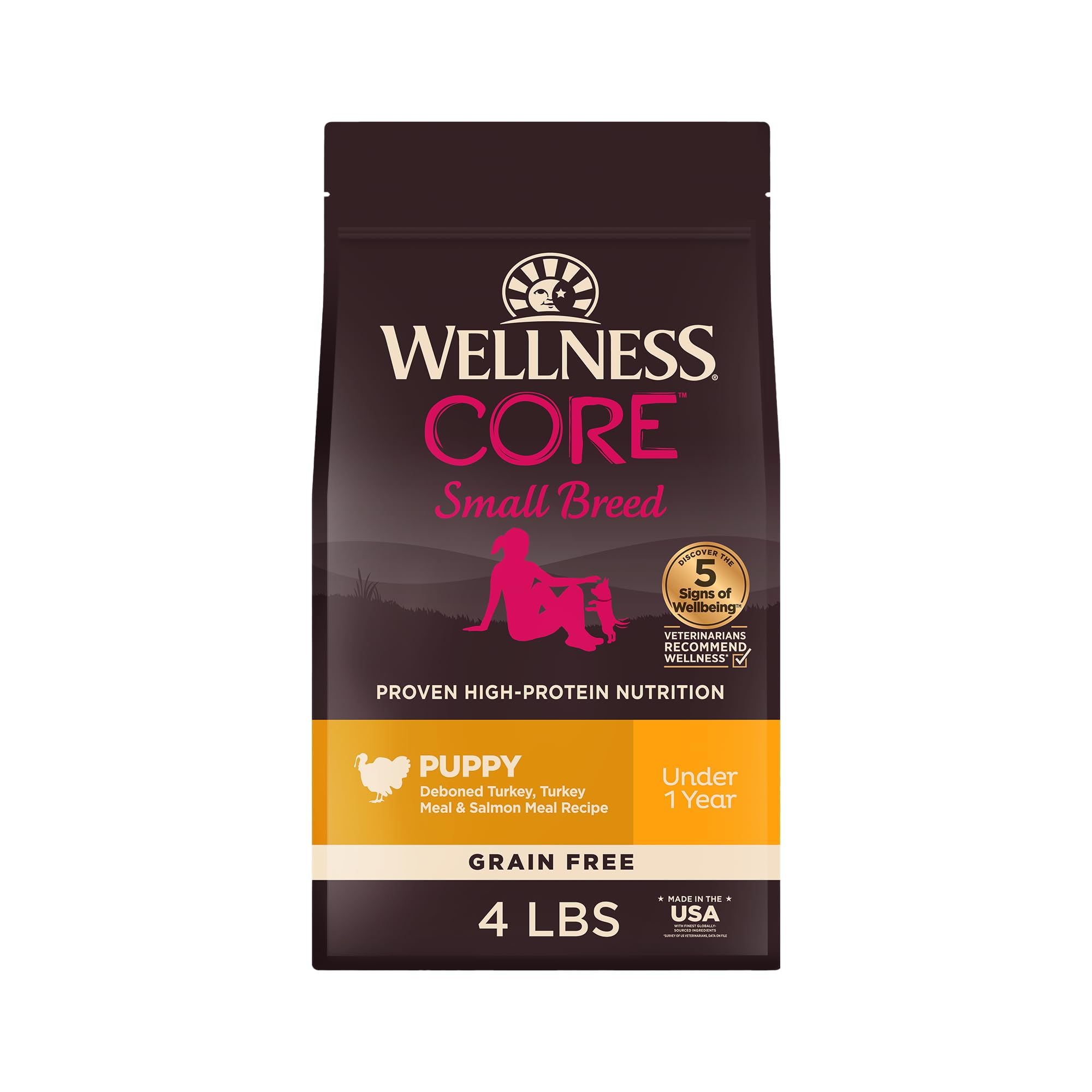
Wellness CORE leans heavily into protein density, with 53% of the formula coming from high-quality protein ingredients — turkey meal, salmon meal, and chicken meal. For a miniature schnauzer puppy that burns through calories during training and play, this density supports muscle tone and sustained satiety. The grain-free composition uses chickpeas and peas as carbohydrate sources, which can help schnauzers with wheat sensitivities maintain normal stool consistency.
The kibble is a 9–10mm round disk that is slightly harder than average, requiring the puppy to chew rather than inhale. DHA from salmon oil supports retinal development, and the antioxidant blend of vitamin E, zinc, and selenium helps build a robust immune system during the vaccination period. Owners on sensitive stomach regimens frequently report that this brand stops constant hunger behavior, likely because of the higher protein-to-fiber ratio.
One critical note: a minority of owners have reported increased urination after feeding this formula, which may indicate the protein level is too high for some individuals. If your schnauzer puppy has a history of kidney sensitivity or if you notice excessive thirst, consult your vet before committing to this as a long-term diet. The 4 lb bag is sufficient for a two-week trial to gauge tolerance.
Why we love it
- 53% protein ingredients provide excellent satiety and muscle support
- DHA from salmon oil boosts brain and eye development
- Grain-free formula suited for wheat-sensitive schnauzers
Good to know
- High protein may be too rich for puppies with kidney sensitivity
- Some owners report increased urination in the first week
4. Hill’s Science Diet Puppy Small Bites Dry Dog Food, Chicken & Brown Rice, 4.5 lb. Bag

Hill’s Science Diet is the formula most often recommended by veterinarians for miniature schnauzer puppies, largely because of its tightly controlled calcium and phosphorus levels. The balanced mineral profile supports skeletal development without overshooting the threshold that can cause hip dysplasia in growing small breeds. The chicken and brown rice recipe provides a straightforward, low-ingredient source of protein and carbohydrates that rarely triggers allergic reactions.
The “Small Bites” tag is accurate — the kibble measures roughly 8mm, making it easy for a schnauzer puppy to hold and chew. DHA from fish oil is included at guaranteed levels for cognitive development, and the antioxidant blend of vitamin C and E supports the immune system during the teething and vaccination phase. Owner reports consistently highlight firm, well-formed stools and a healthy appetite after the transition period.
This food is made in the USA in a Midwest facility with globally sourced ingredients, and the 4.5 lb bag size is slightly larger than the average mid-range offering, providing about three weeks of food for a 6 lb puppy. The flavor is palatable enough that even picky schnauzer puppies — a common breed trait — tend to eat it without prompting. If you are looking for a low-risk, vet-counciled baseline, this is the safest starting point.
Why we love it
- Vet-recommended formula with controlled calcium for safe bone growth
- Small 8mm kibble ideal for schnauzer mouths
- DHA and fish oil support brain and eye development
Good to know
- Not grain-free; contains chicken meat allergen in some sensitive dogs
- Protein content is moderate, not ideal for extremely active pups
5. Bil-Jac Small Breed Puppy Dry Dog Food, Chicken, Oatmeal & Yam Recipe, 6 lb
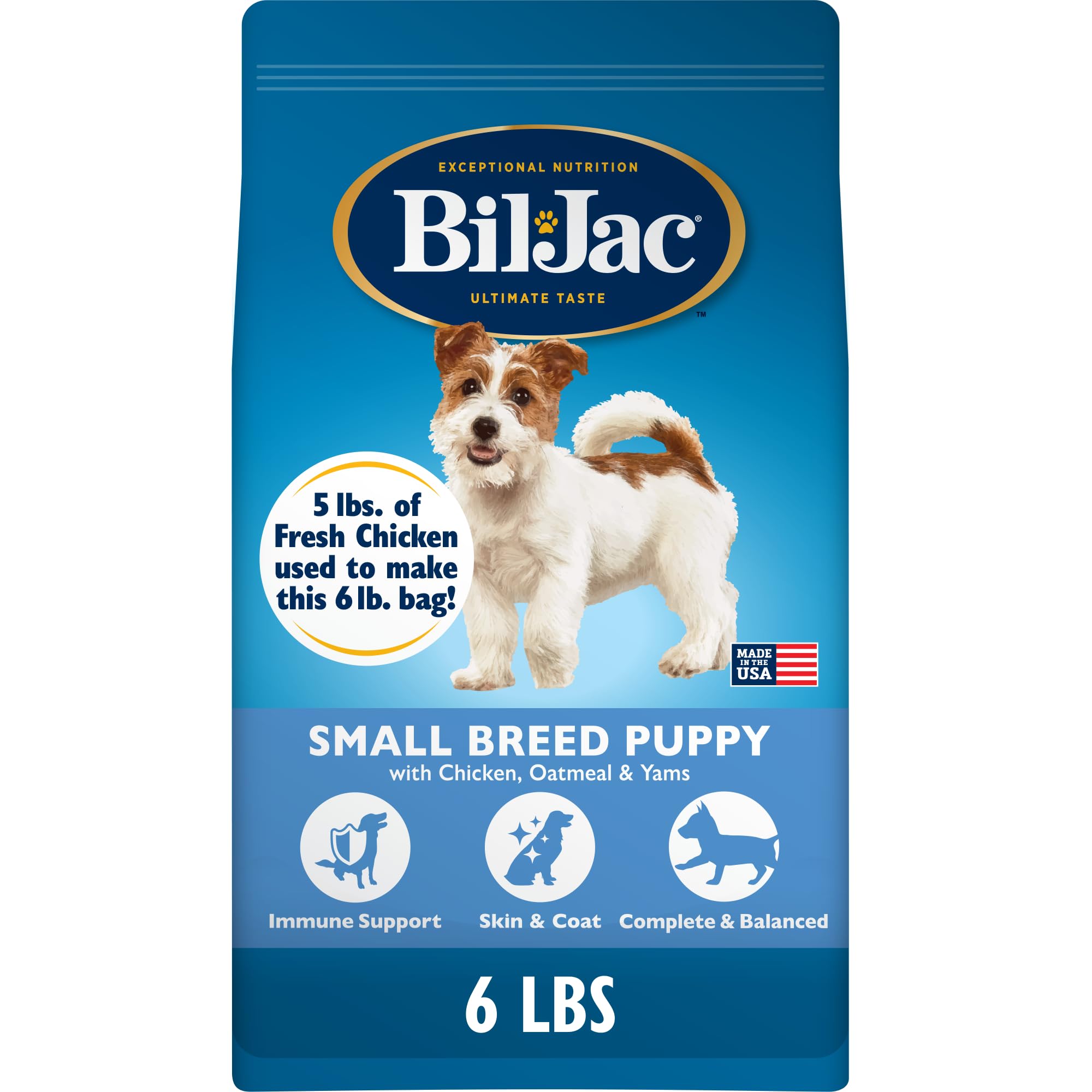
Bil-Jac takes a different approach by using a proprietary soft, porous kibble that absorbs moisture quickly, making it easier for a weaning schnauzer puppy to transition from milk to solid food. The oatmeal and yam recipe provides gentle fiber that soothes sensitive stomachs without causing loose stools. With 5 lbs of fresh chicken used to make each 6 lb bag, the protein content is optimized for growth without excessive fat that could trigger schnauzer-specific pancreatitis.
The kibble shape is an irregular 8–9mm disk with a textured surface that encourages the puppy to pick it up and chew rather than inhale. Fortified with Smart Defense Vitamin C and E, this formula targets immune system development during the first year — exactly when schnauzer puppies are most susceptible to kennel cough and other environmental pathogens. Owners with picky eaters often report high acceptance rates, and the 6 lb bag size offers the best value per pound among the five products.
One owner noted that the food was so palatable their puppy seemed frantic for more, suggesting the formula might be highly rewarding. To avoid overfeeding and the associated constipation risk, measure portions strictly according to the puppy’s weight rather than appetite cues. This is an excellent transitional diet for an 8-week-old schnauzer that has not yet developed a strong chewing habit.
Why we love it
- Soft, porous kibble ideal for weaning puppies and tiny teeth
- Oatmeal and yam fiber is gentle on sensitive digestion
- Larger bag size offers better value per pound
Good to know
- High palatability may lead to overeating if not measured carefully
- Not formulated for tartar control during teething
FAQ
How much should I feed a miniature schnauzer puppy per day?
Is grain-free food safe for miniature schnauzer puppies?
What ingredients should I avoid in schnauzer puppy food?
When should I switch from puppy to adult food for my miniature schnauzer?
Final Thoughts: The Verdict
For most miniature schnauzer puppy owners, the food for miniature schnauzer puppies winner is the NutriSource Small and Medium Breed Puppy because it offers whole-prey protein ratios, grain-inclusive digestive support, and a kibble size that suits the schnauzer mouth without triggering pancreatitis. If you want a vet-backed, ultra-low-risk option that supports bone growth, grab the Hill’s Science Diet Small Bites. And for a weaning or sensitive-stomach puppy that needs a soft, palatable starter diet, nothing beats the Bil-Jac Small Breed Puppy.