
A stray cat huddled against a freezing wall or shivering under a porch is a common winter sight for those who care for feral colonies. The difference between surviving a cold snap and suffering through it often comes down to one thing: the quality of the shelter you provide. A true winter-grade house traps body heat, blocks wind, rejects rain and snow, and gives the cat a secure place to retreat from predators.
I’m Mo Mahin — the founder and writer behind Furric. I’ve spent years analyzing product specifications, studying owner feedback from thousands of verified buyers, and comparing insulation metrics, heating safety ratings, and material durability data to separate genuine winter-ready shelters from flimsy tent-style options.
This guide breaks down the critical specs for any outdoor feral cat house for winter, helping you choose a shelter that actually performs when the temperature drops and the storms roll in.
How To Choose The Best Outdoor Feral Cat House For Winter
Not every weatherproof-looking box is safe for sub-zero nights. A shelter that looks fine on a mild autumn day can become a damp, drafty trap in January. Focus on these four criteria to make the right call.
Insulation and Heat Retention
Passive insulation matters more than most buyers realize. A shelter with thick foam walls, reflective aluminum liners, or layered fabric traps the cat’s own body heat, raising the interior temperature several degrees above the outside air. Models with 0.5-inch to 1-inch thick insulation or “5-layer” fabric constructions are the standard for reliable winter use. Avoid single-wall plastic or thin canvas boxes — they act as wind tunnels, not warm dens.
Escape Doors and Predator Safety
A single entrance is a liability if a raccoon, dog, or coyote blocks the opening. Shelters with a secondary escape door — often called a panic door or predator escape hatch — give the cat a backup exit without exposing the interior to drafts when closed. Look for models where the escape door is a one-way flap or a zippered panel the cat can push through.
Heating Pad Quality and Safety Ratings
If you opt for a heated shelter, the pad’s certification matters as much as its wattage. Units with MET Labs or UL listing pass electrical safety tests for outdoor use. A thermostatic heating pad (one that cycles off when the interior reaches a safe temperature) prevents overheating and fire risk. Pads drawing 20W to 30W are typical for cat-sized spaces — enough to take the edge off sub-freezing temps without drying out the air.
Quick Comparison
On smaller screens, swipe sideways to see the full table.
| Model | Category | Best For | Key Spec | Amazon |
|---|---|---|---|---|
| K&H Pet Products A-Frame | Heated Tent | Single feral in sub-zero temps | 20W MET Listed heated pad | Amazon |
| Pawtners Heated Shelter | Heated & Spacious | Multi-cat colonies or large strays | 30W UL listed pad, 19x17x18″ | Amazon |
| Rolimate Indestructible Camo | Heated & Ultra-Insulated | Extreme cold with wind & rain | 5-layer insulation, escape door | Amazon |
| GUTINNEEN Wood Insulated | Wooden Insulated | Permanent yard shelter | 0.78″ sponge liner, 23.6×20.9×18.3″ | Amazon |
| MEWTOGO Heated Shelter | Heated Budget | Ferals with power source access | 25W thermostatic heating pad | Amazon |
| TSEHOOHOO Stackable Plastic | Unheated Plastic | Mild winters or sheltered porches | 16.9×16.1×15″ interior, stackable | Amazon |
| Rest-Eazzzy Tent Shelter | Unheated Fabric | Short-term or mild climate use | Waterproof Oxford cloth, 13x18x14″ | Amazon |
In‑Depth Reviews
1. K&H Pet Products Heated Outdoor Cat House A-Frame

The K&H A-Frame is a well-known staple in the feral shelter space, and its reputation is earned through a combination of MET Safety Listed electrical components and thoughtful structural design. The 20-watt plush heated pad is weight-activated, meaning it only warms up when a cat is inside — saving energy and preventing the pad from running empty all night. The A-Frame shape sheds rain and snow naturally, and the polyester fabric outer holds up through several seasons of exposure.
The double-exit design is a major safety plus: two removable clear vinyl flaps on opposite sides give a trapped cat an escape route if a predator blocks one entrance. The interior measures 18 x 14 x 14 inches, which is snug for a single medium-sized cat but not large enough for two adults to curl up together. Owners report that even semi-feral cats who normally avoid closed spaces will enter this shelter within a day or two, especially when the temperature drops below freezing.
Some users find the vinyl flaps too stiff for skittish cats to push through, but removing them entirely still leaves a draft barrier in mild weather. The heated pad’s cord is short (about 6 feet), so placement near an outdoor outlet is mandatory. For a single feral cat in a truly cold climate, this shelter delivers reliable warmth with certified safety.
Why we love it
- MET Safety Listed 20W heated pad with weight activation
- Double exit doors with removable draft flaps
- Proven track record in sub-zero conditions from verified owners
Good to know
- Fits one cat only — not suitable for multiple ferals
- Short power cord limits placement options
- Some cats refuse to push through the vinyl flaps initially
2. Pawtners Heated Outdoor Cat House
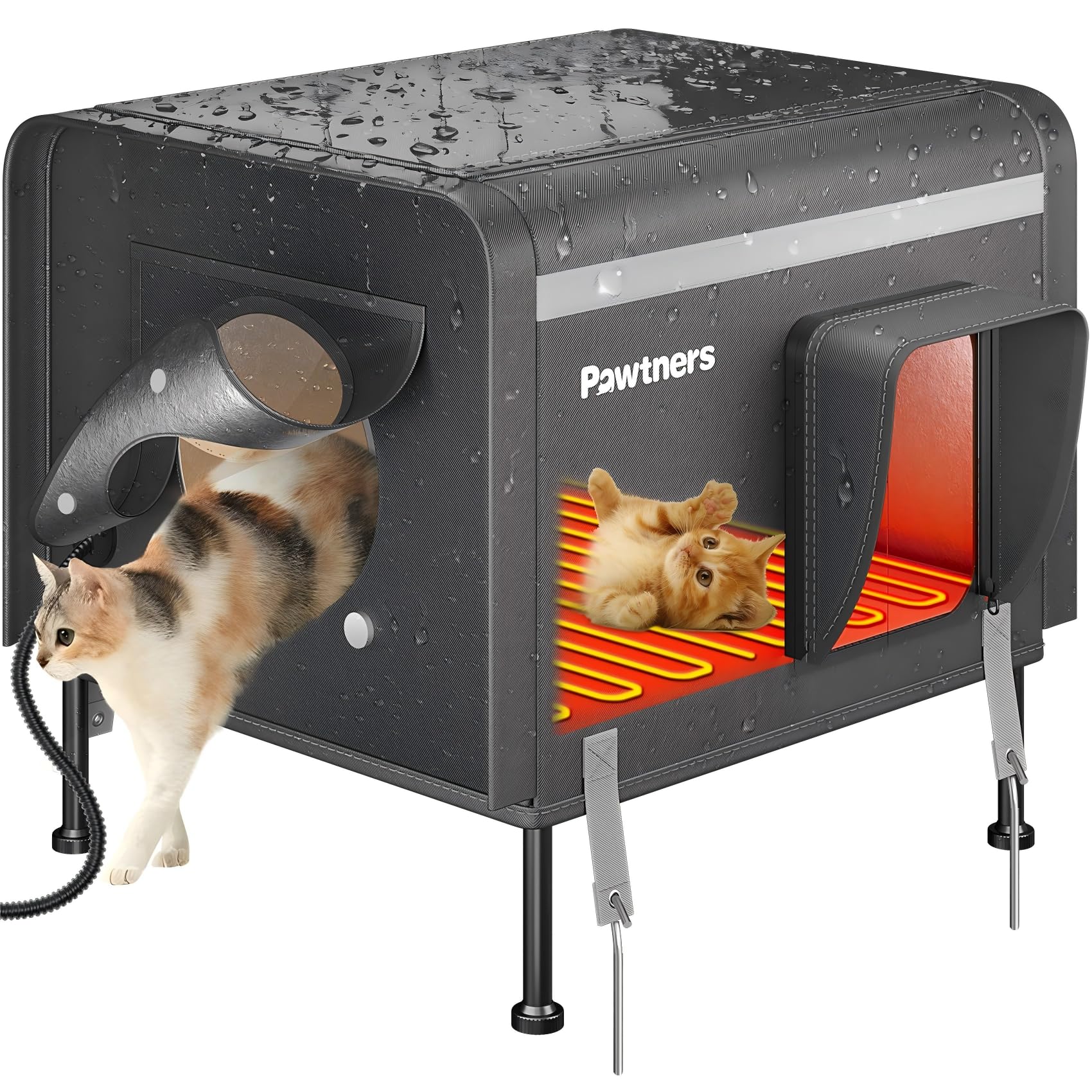
The Pawtners shelter is the largest heated option in this lineup, with internal dimensions of 19 x 17 x 18 inches that can comfortably hold two adult cats or one large tom. The all-metal frame underneath the waterproof PVC mesh fabric gives it a rigid structure that resists wind gusts and snow loads — verified owners in Minnesota and Oregon report it stayed upright through blizzards and heavy rain. The 30-watt UL listed heated pad covers the full floor area and warms up noticeably within minutes, and the anti-bite cord sheathing adds a safety layer.
The dual-entry design includes a main door and a secondary escape door on the side, both protected by transparent PVC curtains. Four windproof metal stakes keep the shelter anchored on grass or dirt, and the elevated feet with adjustable pads prevent ground moisture from seeping in. Assembly takes about 10 minutes, with the frame snapping together and the fabric cover zipping over it. The heated pad’s cover is machine-washable, which is useful for colony caretakers who need to clean between different cat occupants.
The main door is wide enough that nervous ferals can see inside before entering, which helps with adoption speed. One trade-off: the fabric zippers over the side exit are oriented top-down, meaning the flap can’t be left partially open as a weather break. A few owners with multiple cats noted that heavy daily use eventually frayed the PVC flap material, but the frame and heated pad remained functional. For colonies or large cats, this is the most livable heated shelter at this tier.
Why we love it
- Generous 19x17x18″ interior fits multiple cats or a large stray
- 30W UL listed heated pad with anti-bite cord
- All-metal frame with windproof stakes and adjustable elevated feet
Good to know
- PVC flaps may wear with intense daily use by multiple cats
- Side exit zipper orientation limits partial-open ventilation
- Still requires access to an outdoor electrical outlet
3. Rolimate Indestructible Heated Cat House (Desert Camouflage)
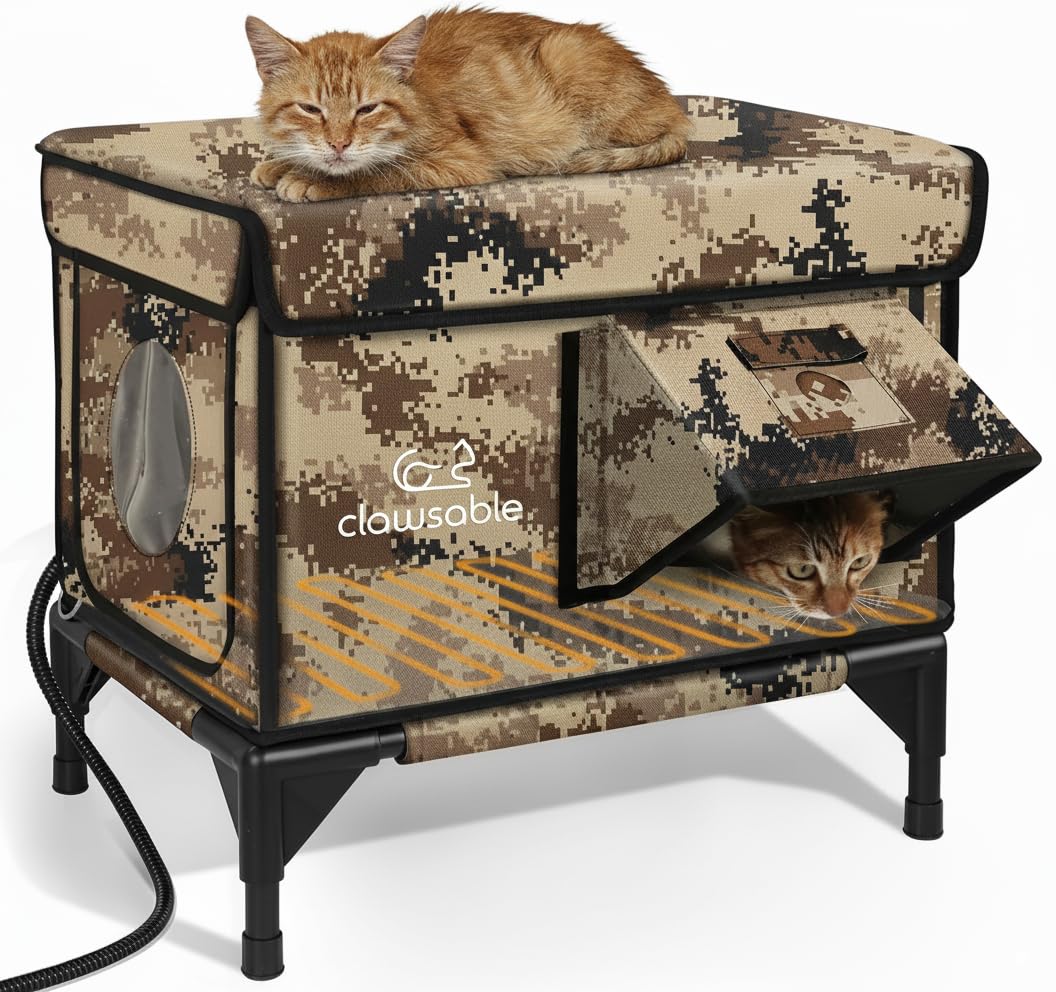
The Rolimate shelter is built for maximum passive heat retention. Its 5-layer wall construction — a weather-resistant outer fabric, reflective insulation layers, and an interior lining — creates a thermal barrier that registered an interior temperature of 58°F when the outside air was 35°F, according to a verified owner’s measurement. That kind of delta means even without power, the shelter buys a feral cat critical warmth. The included heating pad uses UL-tested heating wire and adds a supplemental heat source for nights that dip below 0°C.
Its “indestructible” claim comes from the rigid internal frame and the fully waterproof awning that extends over the entrance, preventing rain from blowing directly into the door. The escape door is a one-way exit that lets the cat flee from predators while keeping cold air out when closed. A pop-top velcro opening on the roof makes cleaning quick — no need to disassemble the whole unit to remove bedding or debris.
The interior is on the smaller side at 13 x 17 x 18.5 inches, which is plenty for one adult cat but cramped for a pair. The desert camouflage color blends into natural settings better than bright colors, which helps avoid drawing attention from neighbors who might object to a feral shelter. The assembly includes a pair of work gloves, a thoughtful detail when you’re setting it up in a cold yard. A few buyers noted that their cat took up to three weeks to enter, so patience is key.
Why we love it
- 5-layer insulation provides exceptional passive warmth without power
- One-way escape door keeps predators from trapping the cat
- Pop-top roof opening for fast cleaning without full disassembly
Good to know
- Compact interior fits one cat only
- Some cats take weeks to feel comfortable entering
- Heating pad is removable but cord management requires care
4. GUTINNEEN Outdoor Cat House with Insulated Liner

The GUTINNEEN shelter is for the buyer who wants a permanent, furniture-grade structure on their property. It’s made from solid wood — not plywood or particleboard — with a slanted asphalt-shingle roof that sheds rain effectively. The interior is lined with a 0.78-inch thick sponge thermal liner that traps body heat and insulates against the cold floor. The entire base is elevated off the ground, preventing moisture wicking from wet soil. This house weighs enough that wind is unlikely to move it, and the manufacturer backs it with a 10-year warranty.
At 23.6 x 20.9 x 18.3 inches externally, the interior is large enough for a cat weighing up to 25 pounds, or for two smaller cats to share. The single entrance design is simpler than some competitors, but the roof overhang creates a dry entryway that reduces drafts. Assembly is straightforward, with owners reporting 30-minute build times using the included hardware. One buyer rehabbing opossums noted that wild animals preferred burrowing under the raised base instead of entering the house, indicating the elevation design works well for ground-level insulation.
The main concern with a wooden shelter is long-term moisture exposure. While the asphalt roof and waterproof base are effective, some owners added a clear sealant to the wood panels after noticing small gaps in the floor that let wind through. The wood panels are not as thick as some custom-built cat shelters, but for the price and warranty length, this is a solid unheated option for milder winters or for use with an external heated pad placed inside.
Why we love it
- Solid wood with asphalt shingle roof for permanent yard installation
- 0.78″ thick sponge liner provides strong passive insulation
- 10-year manufacturer warranty shows long-term confidence
Good to know
- Single entrance — no predator escape door
- Small floor gaps may need sealing to block wind
- Requires more assembly time than fabric/pop-up shelters
5. MEWTOGO Weatherproof Heated Cat House
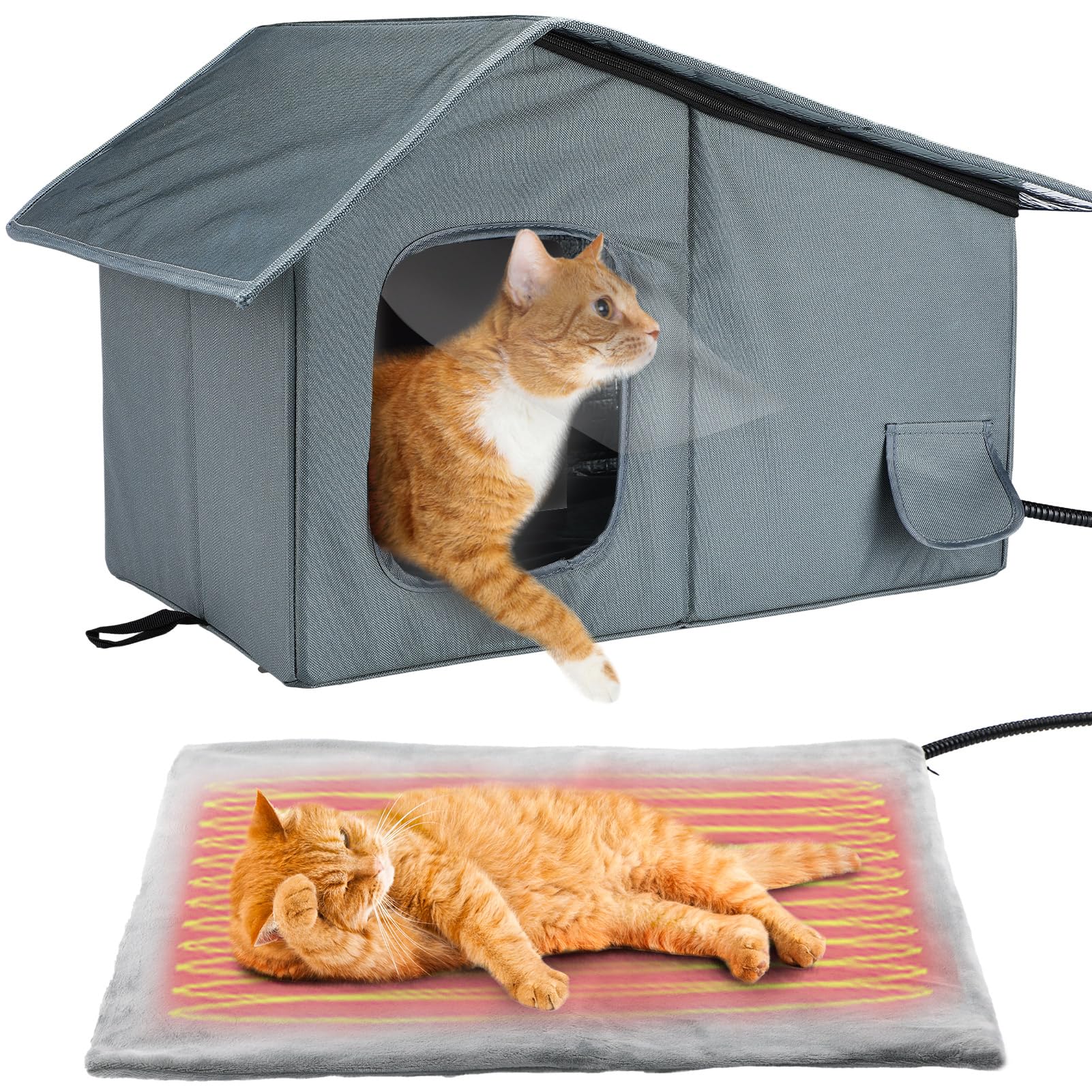
If you need a heated shelter on a tighter budget, the MEWTOGO offers a thermostatic heating pad and a weatherproof shell for well under what most premium heated models cost. The 25-watt pad has an automatic shutoff that prevents overheating, and it warms to a range of 104–131°F — warm enough to keep a feral cat comfortable in freezing conditions without posing a burn risk. The structure uses hollow board supports inside a durable Oxford fabric shell, with a PVC-coated roof that is 100% waterproof.
The interior measures 21 x 13.4 x 15.4 inches, which is long enough for an adult cat to stretch out but narrow for two cats to share comfortably. The zippered roof provides full-access cleaning, and the included dual-sided pad — warm on one side, cool on the other — lets you adjust the bedding for seasonal changes. A PVC door curtain blocks wind from the main entrance, and the escape door on the side gives the cat an emergency exit. This model includes only one ground stake in the box, though the base has slots for two, so you may need to supply a second stake for stability on windy ground.
The zipper roof is a potential long-term wear point, as fabric zippers exposed to snow and ice can stiffen or break over multiple seasons. But for a first-time buyer or a temporary shelter solution, the MEWTOGO delivers heated protection at a price that makes it a practical stopgap while you evaluate whether a permanent wooden structure is warranted. Verified owners say their ferals entered within hours and used the house through entire winter storms.
Why we love it
- Thermostatic 25W heating pad with automatic shutoff for safety
- Dual-sided pad for seasonal adjustment
- Included escape door and PVC draft curtain
Good to know
- Only one ground stake included for a two-stake system
- Zippered roof is a potential failure point in freezing weather
- Narrow interior may not suit two cats simultaneously
6. TSEHOOHOO Stackable Cat House (Medium)

The TSEHOOHOO shelter is a rigid plastic house with a stackable design that lets you create multi-level cat condos or add units for colony expansion. It’s sturdier than it looks — the double-layered thickened plastic walls have strong load-bearing capacity, and multiple units can be stacked safely. The interior measures 16.9 x 16.1 x 15 inches, which is roomy for an adult cat and suitable for two if they’re friendly. Three of the four sides are fully sealed, and the elevated base keeps the floor off cold ground.
Assembly takes about five minutes using plastic screws and snap-together panels. The house includes removable scratch pads and a soft bed, though the bed is more like a thin comforter than a thick insulated pad — you’ll want to add straw or a thermal blanket for true winter protection. The large front door lets cats see their surroundings before entering, which nervous ferals appreciate, but it also lets wind and rain enter if the house is placed in an unsheltered spot. Owners in windy areas recommend orienting the door away from the prevailing wind or placing the house under a roof overhang.
This is an unheated shelter best suited for mild winters or for use as a supplemental bed inside a larger protected area like a barn or garage. It’s easy to clean — the removable top buckle gives quick access — and the stackable feature is genuinely useful for caretakers with multiple cats. But the large door opening and lack of a draft flap make it less effective in heavy rain or snow when placed fully exposed outdoors.
Why we love it
- Sturdy stackable plastic design for multi-cat setups
- Five-minute assembly with no tools required
- Easy cleaning with removable top buckle and included scratch pads
Good to know
- Large front door lets wind and rain in without draft protection
- Included bed is thin — needs straw or thermal blanket for true winter warmth
- Unheated shell suitable only for mild winters or protected placement
7. Rest-Eazzzy Outdoor Cat House (Grey, Medium)
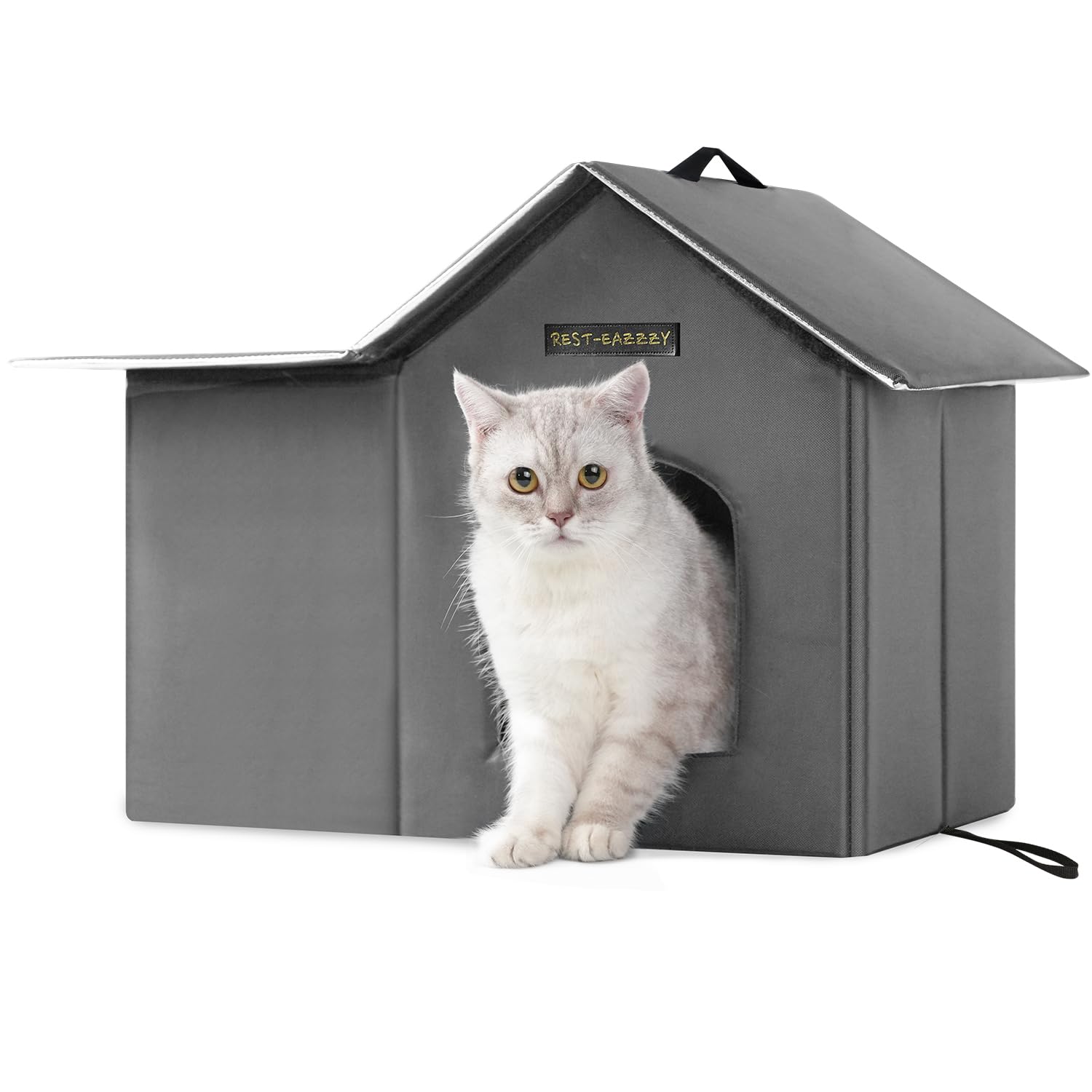
The Rest-Eazzzy is a lightweight, fabric tent-style shelter that is the most affordable option in this lineup and the fastest to set up — owners report taking less than five minutes from box to assembled. The shell is made of waterproof Oxford cloth with a sandwich insulation layer, and the included mat and curtain add basic wind and cold protection. The interior measures 13 x 18 x 14 inches, which is comfortable for one cat or small kittens but too tight for larger adults.
The portable handle on the roof makes it easy to relocate as needed, which is useful if you’re moving the shelter between different colony spots or bringing it indoors during extreme weather events. The design is simple and effective for its purpose: it keeps rain off and provides a dark, enclosed space that cats naturally gravitate toward. One owner reported that the cats still used the house well after winter ended, suggesting the basic shelter function works year-round in mild climates.
The lightweight build is also the main weakness. Multiple owners stated that this house needs to be placed in a location protected from strong wind, as the fabric structure is not heavy enough to stay put in a gust. The sun and UV damage reported by one owner after a single season indicates the Oxford cloth degrades faster than PVC or wood alternatives. For a short-term or emergency shelter in a protected nook, the Rest-Eazzzy is functional and fast — but it’s not a multi-winter investment for exposed locations.
Why we love it
- Extremely fast assembly at under 5 minutes
- Portable roof handle for easy relocation
- Very low cost entry point for emergency winter shelter
Good to know
- Lightweight design requires wind-protected placement — not stable in open areas
- Fabric may degrade from UV exposure within a season
- Interior is snug for one cat; too tight for two adults
FAQ
How do I get a feral cat to use a new winter shelter?
Is a heated shelter always better than an unheated one?
Can a wooden shelter be left outside year-round?
How many cats can share one outdoor shelter?
Final Thoughts: The Verdict
For most caretakers, the top choice for an outdoor feral cat house for winter is the K&H Pet Products A-Frame because it combines a MET-certified 20W heated pad with double exit doors and a proven track record in sub-zero weather. If you need maximum interior space for a large cat or a small colony, grab the Pawtners Heated Shelter — its 30W pad and 19-inch frame offer the most livable heated volume at this tier. And for an unheated permanent structure that will last years, the GUTINNEEN Wood Insulated House gives you solid wood construction and a 10-year warranty.