
Watching your cat hunch over and vomit yet another meal is both heartbreaking and frustrating. The cycle of trying a new food, seeing initial relief, then watching the symptoms return is a challenge that demands a fundamentally different approach—one built on digestible proteins, precise fiber blends, and ingredients that calm an inflamed gut rather than challenge it. The wrong bag can trigger a week of cleanup, while the right formulation can restore normalcy within days.
I’m Mo Mahin — the founder and writer behind Furric. I’ve spent years analyzing veterinary nutritional research, comparing the specific protein sources and prebiotic fiber ratios in dozens of sensitive-stomach formulas, and cross-referencing those specs against thousands of verified owner reports to identify which foods consistently break the vomit cycle.
This guide distills that research into actionable picks for the food for cat with upset stomach that actually stops the cycle of regurgitation while delivering complete nutrition your cat will eat consistently.
How To Choose The Best Food For Cat With Upset Stomach
Selecting the right food for a cat with digestive issues requires looking beyond the “sensitive stomach” label on the bag. The formulation details—protein digestibility, fiber source, kibble geometry, and the presence of stress-reducing additives—determine whether the food heals or hurts.
Match the Protein to the Sensitivity
Chicken is the most common feline allergen. If your cat vomits after eating standard chicken-based kibble, a novel protein like turkey, Arctic char, or a limited-ingredient turkey recipe eliminates the most likely trigger. Start with a single-protein source and stay there for at least two weeks before introducing variety.
Kibble Shape Controls Eating Speed
A cat that inhales food and regurgitates within minutes needs a shaped kibble—ring-shaped or donut-style pieces force chewing and slow consumption. Flat, tiny kibble pellets encourage gulping and immediate vomiting, even with the most digestible recipe.
Prebiotic Fiber vs. Prescription Fiber
General sensitive-stomach foods rely on prebiotic blends (inulin, beet pulp, pea fiber) to feed beneficial gut bacteria. Prescription GI biome formulas add hydrolyzed casein or L‑tryptophan to reduce stress-driven GI inflammation and use proprietary activated fiber technology for stool firming within 24 hours. Choose based on symptom severity, not label promises.
Quick Comparison
On smaller screens, swipe sideways to see the full table.
| Model | Category | Best For | Key Spec | Amazon |
|---|---|---|---|---|
| Hill’s Prescription Diet GI Biome | Prescription | Chronic GI issues & stress | ActivBiome+ fiber technology | Amazon |
| Purina Pro Plan Arctic Char Wet | Wet Pate | Hydration & grain-free diet | Novel Arctic char protein | Amazon |
| Royal Canin Digestive Care | Dry Kibble | Fast eaters & regurgitation | Ring-shaped kibble design | Amazon |
| Purina Cat Chow Gentle | Value Dry | Budget-friendly transition | Turkey as single protein | Amazon |
| Blue Buffalo Basics Mature | Limited Ingredient | Chicken-free senior diet | Turkey & potato limited recipe | Amazon |
In‑Depth Reviews
1. Hill’s Prescription Diet Gastrointestinal Biome Stress Dry Cat Food

This prescription diet uses Hill’s proprietary ActivBiome+ ingredient technology, a blend of prebiotic fibers clinically shown to stimulate beneficial gut bacteria and normalize stool within 24 hours. The formulation also includes hydrolyzed casein and L‑tryptophan, both proven to reduce stress-driven inflammation in the GI tract—making it uniquely suited for cats whose digestive flare-ups correlate with household changes, travel, or anxiety.
At 4 pounds per bag, this is a premium option that requires veterinary authorization, but the results reported by owners of IBD cats and Sphynx breeds with chronic diarrhea are consistent: many see firm stool within two days and elimination of vomiting episodes within a week. The high omega‑3 fatty acid profile (DHA and EPA) also supports coat health while the gut recovers.
The main drawback is the high cost per pound. Most owners report needing to feed slightly smaller portions because of the calorie density, and some cats reject the kibble shape initially—mixing with a small amount of warm water or a compatible wet food helps the transition. Overall, this is the most scientifically advanced option for cats with recurrent GI distress.
Why we love it
- ActivBiome+ rapid fiber technology firms stool in 24 hours
- Stress-reducing ingredients target both GI inflammation and anxiety triggers
- High omega-3 DHA/EPA supports coat recovery during healing
Good to know
- Requires vet prescription
- Higher cost per pound than non-prescription options
2. Purina Pro Plan Sensitive Skin and Stomach Wet Pate, Arctic Char Entree
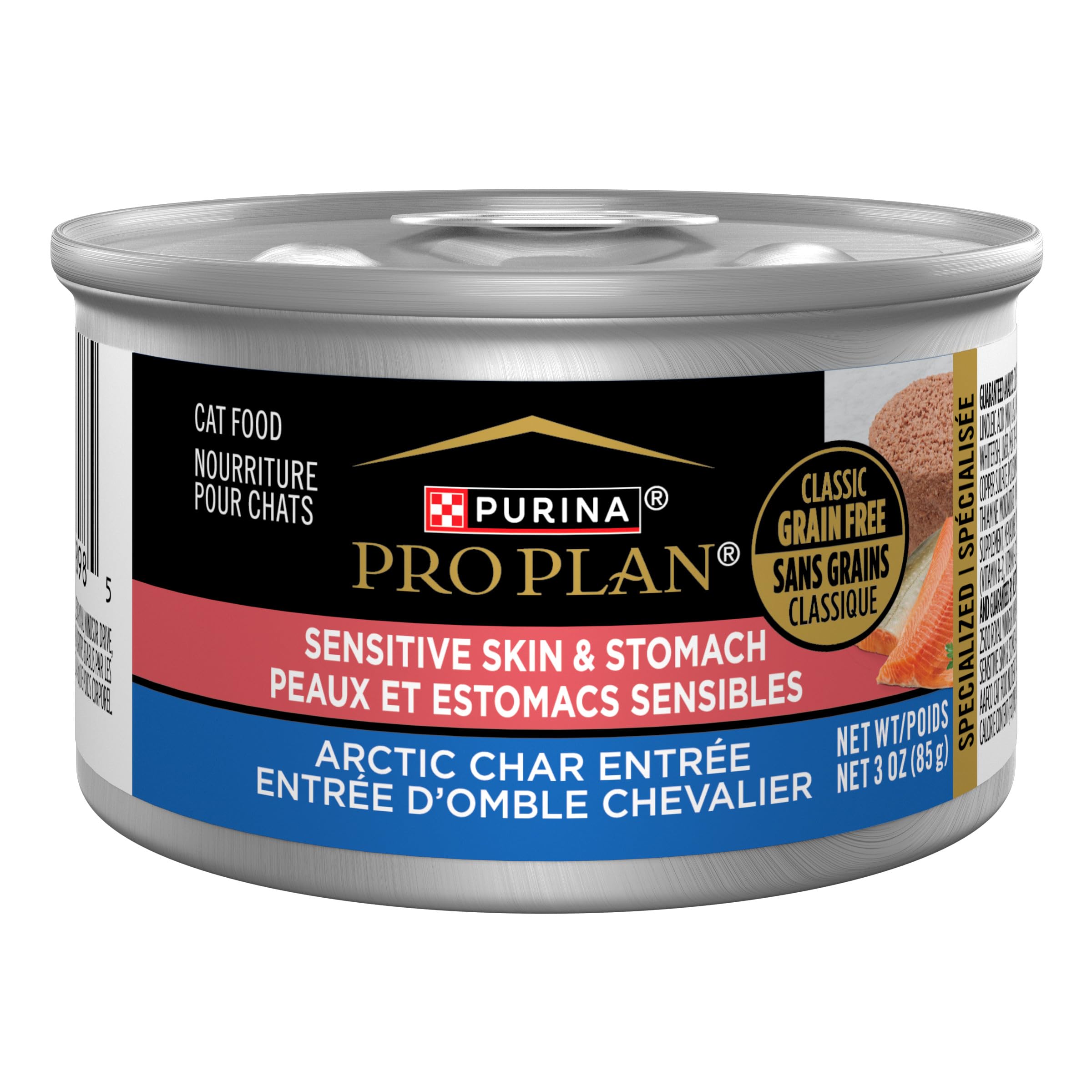
If your cat struggles with both dry kibble and standard chicken-based wet food, this pate introduces Arctic char—a novel, highly digestible protein that most cats have never encountered—to sidestep common food sensitivities. The grain-free, corn-free, soy-free, and potato-free formulation eliminates nearly every ingredient linked to feline GI inflammation, while natural prebiotic fiber supports consistent digestion.
Owners of senior cats with missing teeth report that the pate texture requires no chewing, making it ideal for cats who vomit because they cannot effectively break down dry kibble. The 3‑oz pull-top cans portion easily, and the pack of 24 provides enough supply for a two‑week exclusion trial. The inclusion of linoleic acid and vitamin A addresses the skin and coat issues that often accompany digestive problems.
The pate consistency is very soft—some cats accustomed to chunky food may initially refuse it. Transitioning by mixing with a small amount of their previous wet food for the first few days usually resolves this. The Arctic char flavor is a single-protein entrée, so rotating flavors after the gut stabilizes can help prevent future pickiness.
Why we love it
- Novel Arctic char protein bypasses common poultry allergies
- Grain-free and potato-free eliminates major irritant groups
- Pate texture ideal for senior cats with dental issues
Good to know
- Some cats may reject the pate texture initially
- Higher cost per can compared to non-specialty wet foods
3. Royal Canin Feline Care Nutrition Digestive Care Adult Dry Cat Food

This is the definitive solution for cats who regurgitate whole kibble within minutes of eating. The exclusive ring-shaped kibble is physically larger than standard pellets, forcing the cat to chew rather than inhale—a design supported by Royal Canin’s internal study showing over 95% healthy stool quality after 10 days. The prebiotic and dietary fiber blend works alongside the shape to support overall digestive transit time.
Owner reviews consistently highlight that this food stopped vomiting in cats that had regurgitated for months or years. One reviewer noted their cat refused dry food for three weeks after a health scare, then immediately ate Royal Canin Digestive Care and even returned to drinking water independently—a testament to the palatability and texture appeal. The lower calorie density (333 kcal per cup) also makes it suitable for cats on weight management plans.
Some owners report that the ring shape can occasionally trap food debris in the center hole, though cats typically manage this without issue. The 3‑lb bag size is relatively small for multi-cat households, meaning more frequent purchases. The kibble is also harder than average, so cats with severe dental pain may struggle before the pate option listed above.
Why we love it
- Ring-shaped kibble physically slows fast eaters to prevent regurgitation
- Clinically proven 95% healthy stool quality in 10‑day study
- Highly palatable texture gets picky and sick cats eating again
Good to know
- Smaller bag size requires frequent reordering
- Hard kibble texture may be difficult for cats with dental pain
4. Purina Cat Chow Gentle Sensitive Stomach and Skin Dry Cat Food
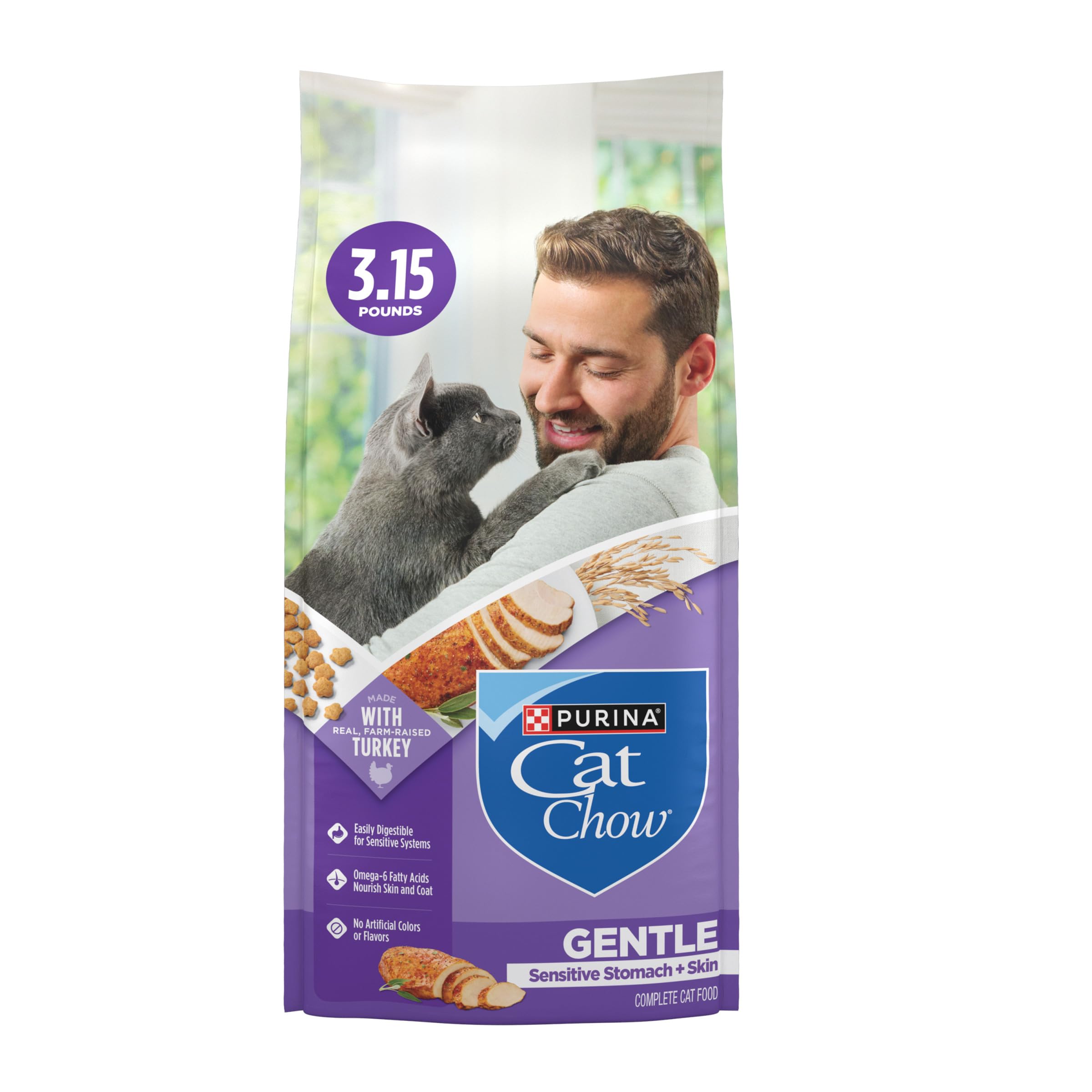
This budget-friendly option uses real farm-raised turkey as the primary protein, steering clear of the chicken that triggers many feline digestive issues. Each pack contains four 3.15‑lb bags, providing a 13‑lb total supply at a per-pound cost significantly lower than prescription or limited-ingredient competitors. The formula includes omega‑6 fatty acids for skin health and 29 essential vitamins and minerals for complete nutrition.
Owner feedback is consistently positive for cats transitioning from standard Purina Indoor formulas that caused vomiting or loose stool. Multiple reviews mention that the gentle recipe stopped vomiting episodes within days, and picky eaters accepted the kibble without a transition period. The crunchy kibble texture also provides mild dental abrasion benefit for adult cats.
The kibble is small and flat, which may not slow down a fast eater as effectively as the Royal Canin ring shape. Some owners report that cats with severe chicken sensitivity may still react if the facility processes chicken-based recipes on shared lines. For mild-to-moderate digestive upset in healthy adult cats, this remains the most economical starting point before moving to higher-tier options.
Why we love it
- Turkey-based recipe avoids common chicken allergy trigger
- Very affordable per-pound cost across 13‑lb total supply
- High palatability accepted by picky eaters without transition
Good to know
- Small kibble may not prevent fast eaters from gulping
- Potential trace chicken cross‑contamination in production facility
5. Blue Buffalo Basics Grain-Free Dry Cat Food, Skin & Stomach Care, Turkey & Potato

This limited-ingredient dry food is specifically formulated for mature indoor cats with both skin and stomach sensitivities. The turkey and potato recipe contains only a handful of ingredients: deboned turkey as the #1 source, easily digestible potato as the carbohydrate, and no chicken, corn, wheat, soy, dairy, eggs, or artificial preservatives. The LifeSource Bits—cold‑processed antioxidant pellets—provide immune support that benefits older cats with weakened systems.
Owner testimonials from long‑term Blue Buffalo users report exceptional lifespans (24–29 years) on the Basics line, with notable improvements in cats suffering from chicken allergies and grain sensitivities. The kibble pieces are very small and hard, which senior cats with missing teeth can manage but may require more effort to chew than wet alternatives. Some reviewers note that picky cats sometimes reject the LifeSource Bits, leaving them in the bowl.
The 5‑lb bag size is smaller than standard bulk options, and the per-pound cost places it in mid-range territory—not as affordable as Purina Cat Chow but cheaper than Hill’s prescription diet. For owners seeking a chicken‑free, grain‑free, limited‑ingredient dry food that avoids triggering both skin itching and digestive upset, this is a strong middle‑ground option that has decades of positive owner feedback behind it.
Why we love it
- True limited‑ingredient recipe with single protein source
- LifeSource Bits provide targeted antioxidant immune support
- Decades of positive owner feedback for seniors with allergies
Good to know
- Small, hard kibble may be tough for cats with significant dental loss
- Some cats reject the LifeSource Bits and leave them uneaten
FAQ
How do I know if my cat has a chicken allergy versus general sensitive stomach?
Should I choose dry kibble or wet pate for chronic vomiting?
Can I mix two different sensitive-stomach foods together?
How long should my cat stay on a limited-ingredient diet?
Final Thoughts: The Verdict
For most gardeners, the food for cat with upset stomach winner is the Hill’s Prescription Diet GI Biome because the ActivBiome+ technology targets both rapid stool firming and stress-driven inflammation in a single formula. If you want a softer protein that bypasses common allergens through a wet pate format, grab the Purina Pro Plan Arctic Char Entree. And for fast eaters who regurgitate dry kibble, nothing beats the Royal Canin Digestive Care ring-shaped kibble design.