
If the air inside your home leaves you reaching for tissues, coughing through the night, or wincing at lingering pet odors, the weak filtration from a basic fan isn’t going to fix it. You need a machine with specific CADR ratings, validated filter efficiency, and the right coverage for your square footage to actually pull pollen, dander, smoke, and VOCs out of your living space. Picking the wrong unit means paying for a box fan you can’t see working.
I’m Mo Mahin — the founder and writer behind Furric. I’ve spent hundreds of hours parsing independent test data from AHAM, comparing micron retention specs, analyzing real-world owner feedback on filter longevity and noise levels, and breaking down the differences between True HEPA and UltraHEPA technology so you don’t have to guess.
After combing through independent certifications, owner experiences, and technical specs across dozens of models, I’ve built this guide to the best rated home air purifiers so you can match the right filtration system to your room size, allergy needs, and budget.
How To Choose The Best Rated Home Air Purifiers
Selecting an air purifier for your home isn’t about picking the most expensive model or the one with the most filter stages. The real differentiators are independent certifications, coverage specs, and filter longevity. Here are the four factors that separate effective machines from overpriced placebos.
CADR and Room Coverage
The Clean Air Delivery Rate (CADR) tells you how many cubic feet of air the purifier cleans per minute for smoke, dust, and pollen. A higher CADR means faster cycling. Match the CADR to your room size — a unit rated for 465 square feet will struggle to clean an 800-square-foot open layout. Look for AHAM Verifide models, as those numbers have been independently validated rather than self-reported.
Filter Filtration Rating: HEPA vs UltraHEPA
True HEPA filters capture 99.97% of particles at 0.3 microns — the most penetrating particle size. Some cheaper units label themselves as “HEPA-type” or “HEPA-grade,” which fall short of that standard. Premium options like AirDoctor’s UltraHEPA capture particles down to 0.003 microns, making them relevant for removing bacteria and viruses. For standard allergy and dust control, True HEPA is sufficient; for VOC and gas concerns, prioritize models with dense activated carbon or specialized carbon filters.
Noise Levels and Sleep Modes
A purifier left on the lowest speed only moves a trickle of air. Look at the decibel rating at the medium or auto setting — 24dB to 27dB is near-silent and fine for a bedroom. High or Turbo mode on any unit will be audible (around 50-60dB), but that’s the tradeoff for maximum filtration speed. Features like automatic Sleep Mode (dimming lights and dropping fan speed) or a separate display-off button are valuable for light sleepers.
Filter Replacement Cost and Washability
The true cost of an air purifier includes ongoing filter swaps. A washable pre-filter extends the life of the main HEPA filter and saves money over time. Some models, like the Nuwave OxyPure ZERO, use fully washable electrostatic filters with zero replacement costs, while others require new HEPA and carbon filters every 6 to 12 months at – per set. Factor these consumables into your budget before buying.
Quick Comparison
On smaller screens, swipe sideways to see the full table.
| Model | Category | Best For | Key Spec | Amazon |
|---|---|---|---|---|
| WINIX 5520 | Mid-Range | Large room coverage | AHAM 392 sq ft, up to 1882 sq ft/hr | Amazon |
| Honeywell HPA300 | Premium | Proven durability | 465 sq ft, 4.8 air changes/hr | Amazon |
| Coway Airmega 250 | Premium | Open-concept living | 1,860 sq ft, 2-in-1 intake | Amazon |
| AirDoctor AD2000 | Premium | VOCs and ultrafine particles | UltraHEPA at 0.003 microns | Amazon |
| Nuwave OxyPure ZERO | Premium | Zero ongoing filter waste | 2,002 sq ft, washable filters | Amazon |
| COWAY Airmega 100 | Mid-Range | Compact bedrooms | 810 sq ft, 7.5 lbs | Amazon |
| LEVOIT Vital 100S-P | Mid-Range | Smart features and pet mode | WiFi + Auto Mode, 23dB Sleep Mode | Amazon |
| LEVOIT Core 300-P | Entry-Level | Budget bedroom cleaning | 143 CFM CADR, 1073 sq ft coverage | Amazon |
| GermGuardian AC4825E | Entry-Level | Budget large room | 743 sq ft, UV-C light | Amazon |
In‑Depth Reviews
1. WINIX 5520
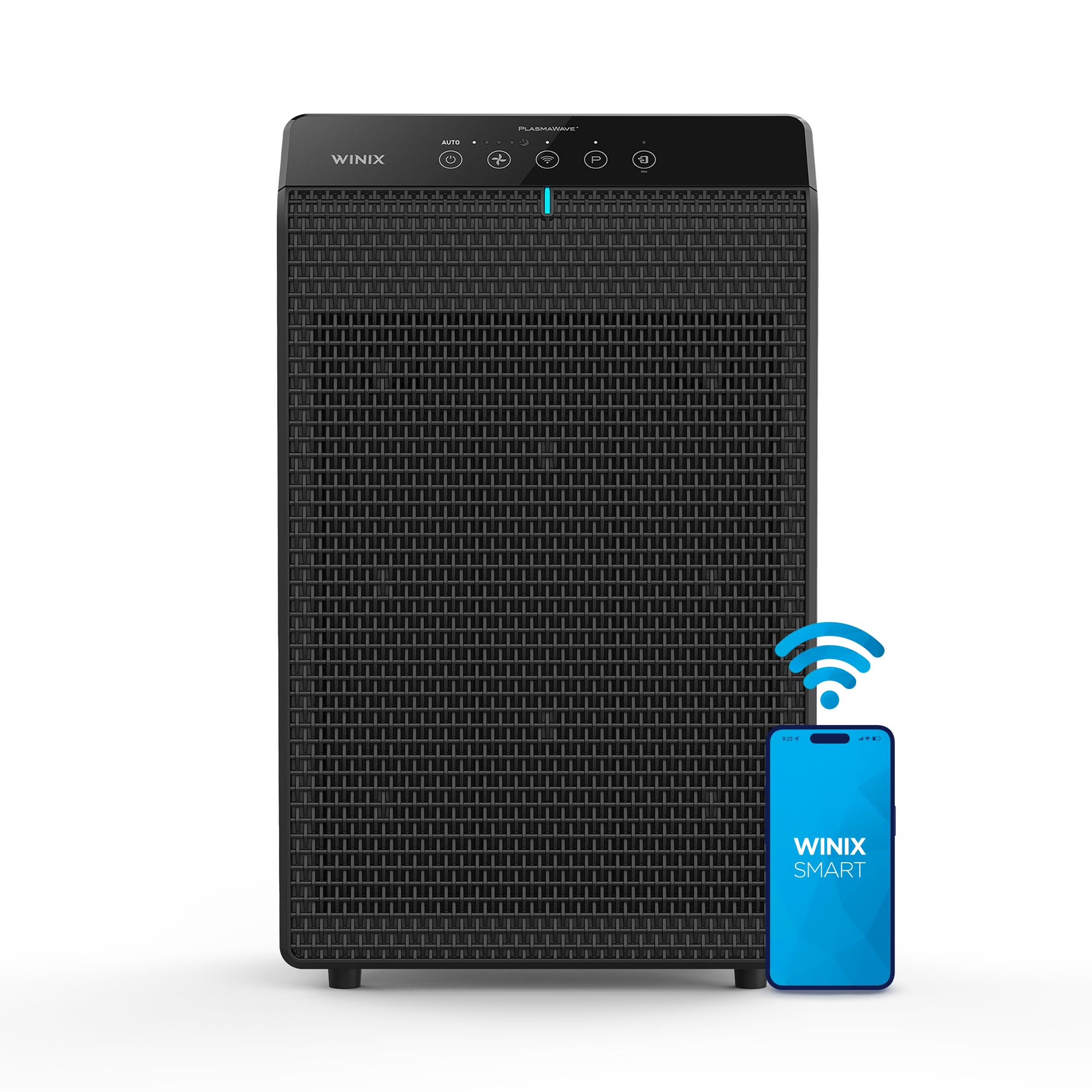
This unit punches well above its mid-range price point with an AHAM Verifide rating at 392 square feet and the ability to cycle through spaces up to 1,882 square feet per hour. For open-concept homes or large living rooms, that’s the kind of throughput that actually moves the needle on PM2.5 and airborne particulates. The four-stage filtration includes a washable fine mesh pre-filter, an activated carbon filter for VOCs, a True HEPA layer, and PlasmaWave technology to neutralize pollutants without producing harmful ozone.
Owner reports highlight the smart sensor and Auto Mode as standout features — multiple users noted it detected cooking gas and paint fumes from across the house and ramped up fan speed accordingly. On its lowest manual setting, the 23.5dB output is nearly silent, while the light-automated Sleep Mode dims the display and drops the fan to whisper levels. The unit weighs only 13.3 pounds and measures 22.7 inches tall, fitting neatly into corners without dominating the room.
One design caveat: the vertical side air intakes may lose some efficiency if placed flush against a wall. The pre-filter and carbon filter are both washable, keeping maintenance low, and the HEPA filter lasts roughly one year. The 2-year warranty and South Korean manufacturing are confidence builders for long-term use.
Why we love it
- Exceptionally high coverage for the price point
- Smart sensor detects odors and pollutants across the home
- Washable pre-filter reduces ongoing costs
Good to know
- Turbo mode is noticeably loud
- Side intake design requires careful placement for best airflow
2. Coway Airmega 250

Coway’s Airmega 250 features their HyperCaptive Filtration System, combining a washable pre-filter, activated carbon, and a True HEPA filter that captures 99.97% of particles at 0.3 microns. With a maximum coverage of 1,860 square feet, it’s built for open-concept floor plans or large master suites. The dual intake design draws air from both sides, dramatically increasing the volume processed compared to single-intake units of similar size.
Smart Mode adjusts fan speed continuously based on real-time air quality readings. Owners consistently report the auto sensor catches cooking fumes, pet odors, and wildfire smoke within minutes, ramping to full power automatically and then settling back to near-silent operation. The Rapid Mode function provides a manual boost for those moments when the air needs aggressive cycling — useful after vacuuming or when burning food in the kitchen.
An unusual but appreciated design choice: the Airmega 250 does not include WiFi. Many long-term owners see this as a reliability advantage, avoiding connectivity headaches. The pre-filter is easily cleaned with a vacuum, and replacement HEPA filters run around per year — remarkably low for a unit in this coverage class. The 3-year warranty provides additional peace of mind.
Why we love it
- Massive coverage for large, open homes
- Auto Mode reacts quickly to cooking and smoke
- Low cost of ownership with washable pre-filter
Good to know
- No WiFi or app control for automation fans
- Shipping damage reported by some buyers
3. Honeywell HPA300
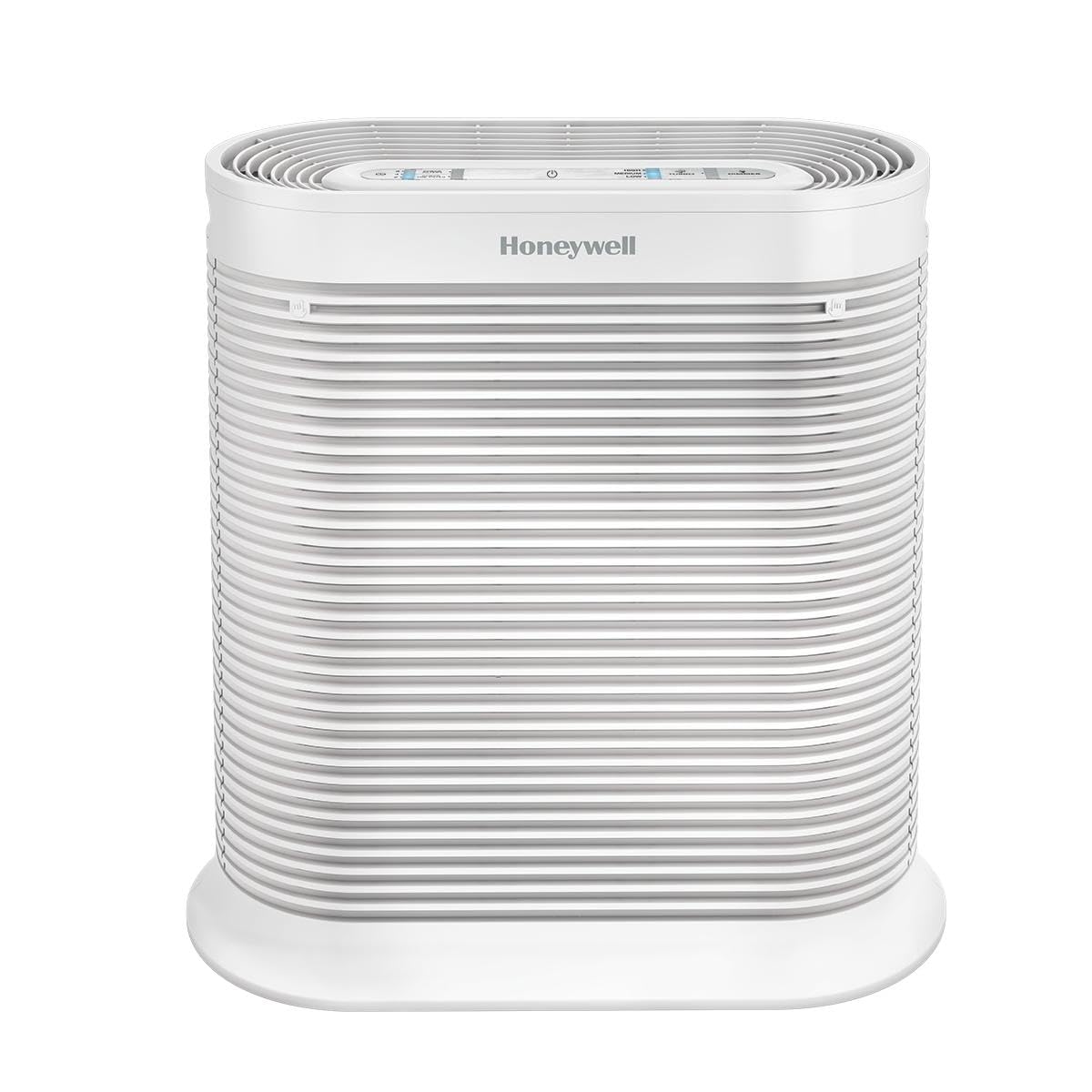
Honeywell’s HPA300 is something of a legend in this category — owners routinely report 7 to 10 years of continuous use without performance degradation. It’s rated for extra-large rooms up to 465 square feet, cycling the air 4.8 times per hour on the Turbo Clean setting. The Allergen Plus series uses a combination of a pre-filter and a True HEPA filter, with the optional activated carbon pre-filter for odor control.
Noise wise, the unit is nearly silent on the lowest “Germ” setting (the manufacturer’s term for lowest speed), making it a viable option for bedrooms if you keep the display light off. The four-speed manual control panel is straightforward — no WiFi, no app, no unnecessary complexity. This simplicity pleases buyers who want a “set it and forget it” workhorse rather than a connected gadget.
The primary tradeoff is physical size. At 20 inches deep, 22.3 inches tall, and 17 pounds, it’s one of the larger units on this list. Replacement filters come in a three-pack (three small HEPA filters per change), which some owners find inconvenient and slightly costly. But for homes with severe allergens and a need for long-term reliability, the HPA300’s track record is hard to beat.
Why we love it
- Exceptional long-term reliability and build quality
- Very quiet on lowest speed for bedroom use
- Can be placed flush against a wall
Good to know
- Large footprint occupies significant floor space
- Replacement filter pack uses three small filters
4. AirDoctor AD2000
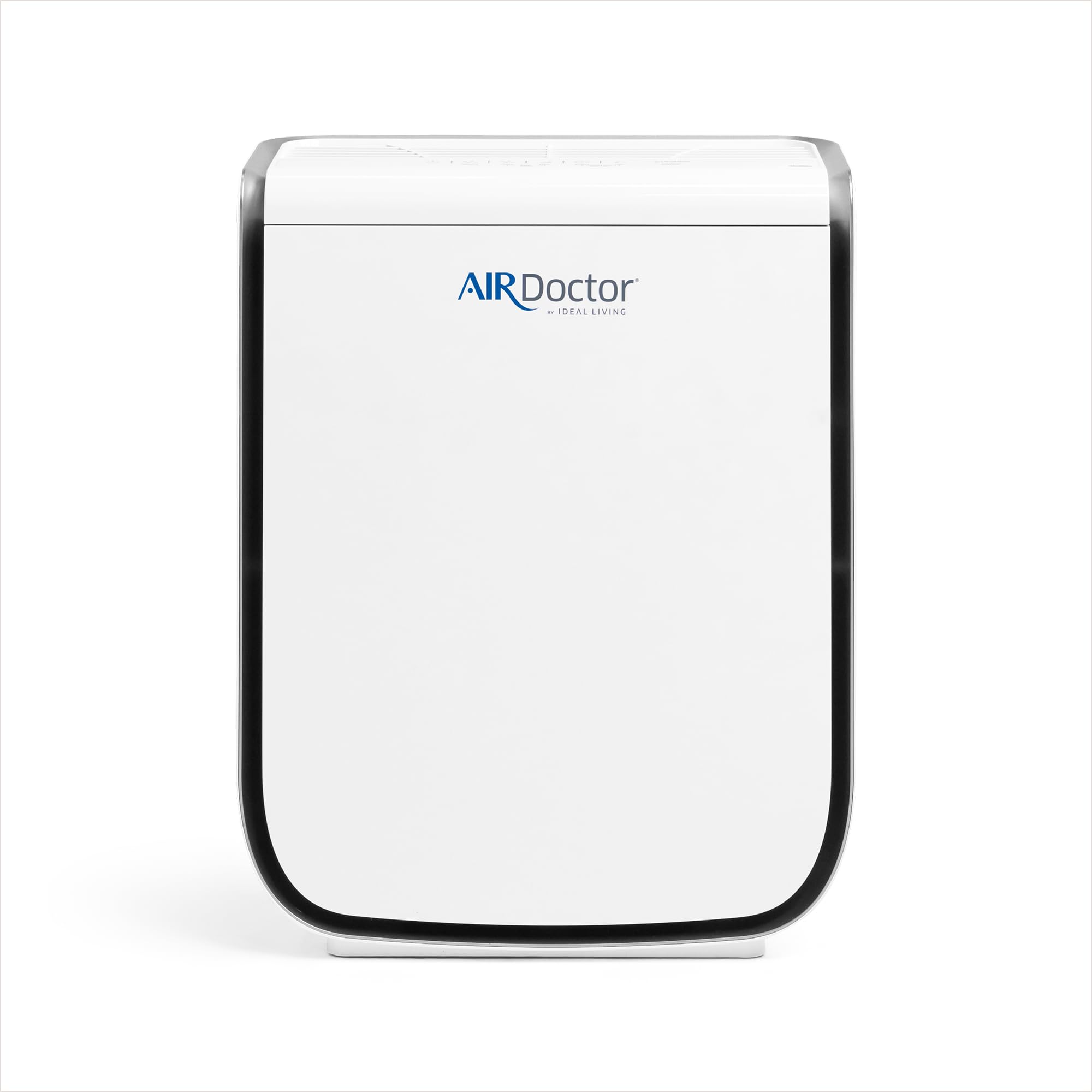
AirDoctor differentiates its AD2000 with hospital-grade UltraHEPA filtration that captures 99.99% of airborne particles at 0.003 microns — 100 times smaller than the standard HEPA threshold. This makes it the standout choice for homes concerned with VOCs, off-gassing from new furniture, formaldehyde, and ultrafine smoke particulates. The premium activated carbon filter is augmented with potassium permanganate to chemically break down gases rather than simply adsorbing them.
The Halo PM2.5 sensor provides color-coded real-time air quality feedback, and Auto Mode adjusts fan speed automatically. Owners have reported dramatic results with VOC-heavy scenarios — one user noted that a new couch’s off-gassing smell was nearly eliminated within 24 hours. The filter life indicator and four manual fan speeds give granular control over noise versus cleaning speed.
At 30dB on low, it’s whisper-quiet enough for a nursery or home office. Night Mode turns off all indicator lights, which is appreciated in dark bedrooms. The downsides are the premium filter replacement cost — the UltraHEPA filter is recommended at 12 months and the carbon filter at 6 months — and the unit’s 16.3-inch width, which makes it bulkier than the typical tower design.
Why we love it
- UltraHEPA captures particles 100x smaller than HEPA standard
- Superior VOC and gas reduction from premium carbon filter
- Halo sensor provides accurate real-time AQI
Good to know
- Ongoing filter costs are higher than average
- Wider footprint than typical tower purifiers
5. Nuwave OxyPure ZERO

The Nuwave OxyPure ZERO eliminates a major pain point in this category: ongoing filter waste and replacement costs. Its electrostatic filter technology uses washable Bio-Guard filters that last for years — the manufacturer suggests up to 10 years — with zero consumable replacements. That’s a massive long-term savings compared to models requiring annual HEPA swaps. The dual 4-stage filtration also includes stainless-steel pre-filters and ozone emission removal filters certified by the California Air Resource Board.
Coverage is class-leading at up to 2,002 square feet, making this the best option for large open-plan homes or dedicated workshop spaces. The adjustable louvers (30°, 60°, 90°) direct airflow exactly where you want it, and the 21.41dB Sleep Mode is virtually inaudible. Smart WiFi connectivity through the Nuwave Connect app allows remote monitoring and scheduling, a feature notably absent on some comparably priced competitors.
Owners consistently praise the unit’s ability to clear wildfire smoke and renovation dust rapidly, with one user reporting visible filter dirt pickup after just three hours in a smoky room. The main drawbacks are the 22-pound weight — though rolling casters help — and the fact that Turbo mode is loud enough to compete with television audio. The unit also requires careful initial setup to ensure the electrostatic filters are properly seated.
Why we love it
- Zero filter replacement cost for years of use
- Largest square footage coverage on this list
- Adjustable air direction louvers
Good to know
- Heavy at 22 pounds despite casters
- Turbo fan speed is disruptive to conversation
6. COWAY Airmega 100
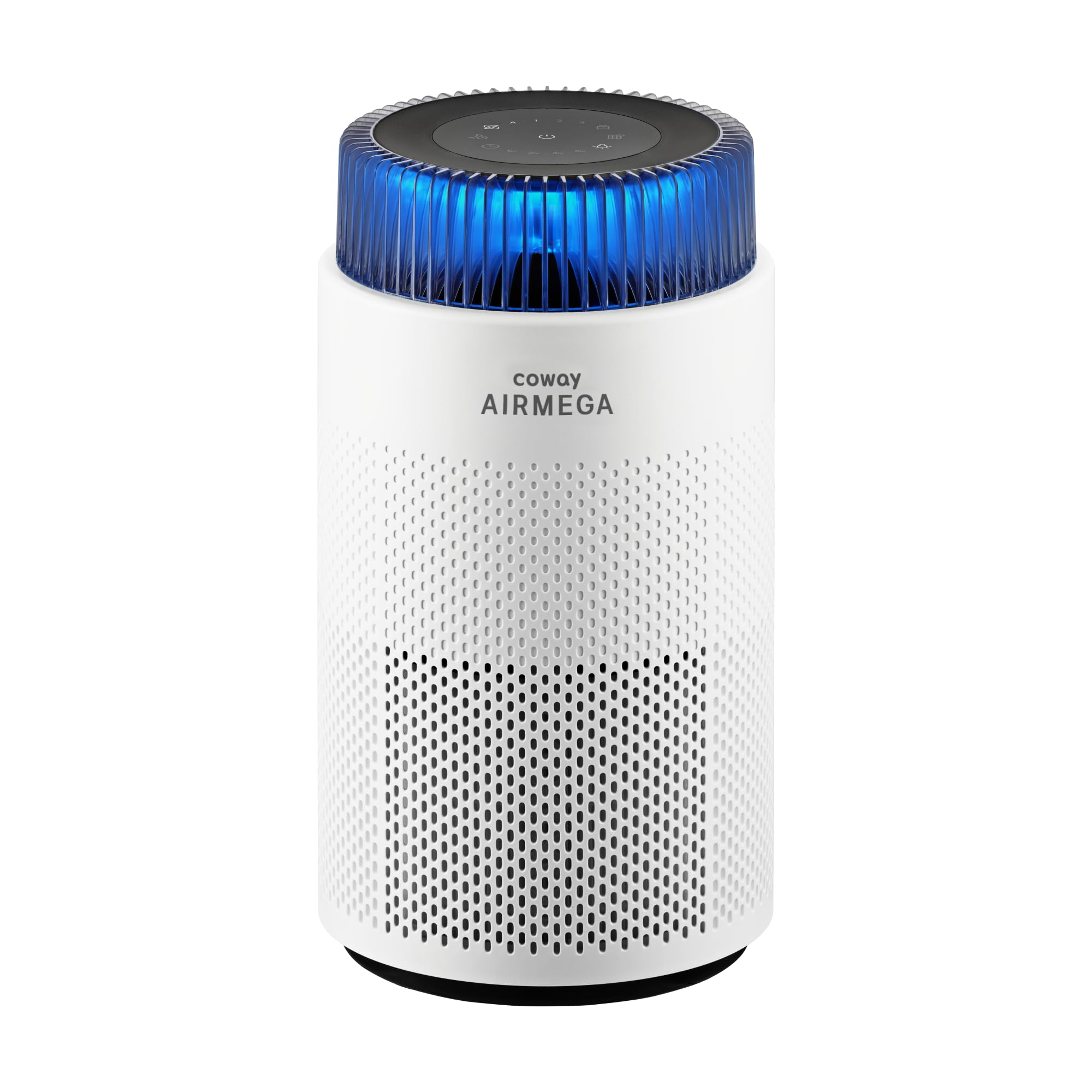
Coway’s Airmega 100 brings the brand’s reputation for reliable HEPA filtration down to a compact, budget-friendly package. Designed for rooms up to 810 square feet, it uses the same combination pre-filter, deodorization carbon filter, and True HEPA system found in the larger Airmega 250. The 7.5-pound body and 15.5-inch height make it one of the most portable units in this lineup, easily moved from bedroom to office as needed.
Auto Mode continuously monitors air quality and adjusts fan speed accordingly — an unusual feature at this price tier. Owners report it responds well to cooking odors and perceived dust levels, ramping up and down without manual intervention. Sleep Mode turns off the AQI monitor light and touch button lights while dropping the fan to its lowest speed, ensuring uninterrupted rest for light sleepers.
The three manual fan speeds (low, medium, high) offer control for those who prefer manual operation. At maximum speed, the sound is more airflow than mechanical hum, but the unit still sits at a comfortable decibel level. The 2-year warranty adds confidence, though some owners point out the timer only offers 1/2/4/8-hour options rather than a more granular 12-hour setting.
Why we love it
- Auto Mode with real-time sensor at a budget price
- Compact and lightweight for easy relocation
- Sleep Mode eliminates light disruption
Good to know
- Timer limited to 1/2/4/8-hour increments only
- Not suitable for very large open layouts
7. LEVOIT Vital 100S-P

Levoit’s Vital 100S-P builds on the company’s popular Core series with the addition of WiFi connectivity, an air quality monitor, and a dedicated Pet Mode that maximizes the wide U-shaped inlet for trapping airborne fur and dander. The 23dB Sleep Mode is one of the quietest on this list, making it a strong choice for the master bedroom. The unit covers up to 1,073 square feet, with AHAM Verifide performance ensuring 4.8 air changes per hour in a 222-square-foot space.
The washable pre-filter extends the life of the main 3-stage filtration system, and the VeSync app gives full remote control over modes, schedules, and filter life monitoring. Owners highlight the Auto Mode’s responsiveness — one user noted the unit sensed air quality changes across different rooms of the house and adjusted accordingly. The light detection sensor automatically dims the display in dark environments, a thoughtful touch for nursery or media room placement.
While the Vital 100S-P shares many internal components with the Core 300-P, the addition of smart features and the air quality monitor makes it significantly more functional for the extra upfront investment. The one recurring complaint from owners relates to quality control on warehouse deals — buying from the official channel avoids issues with missing parts or damaged panels.
Why we love it
- WiFi and app control provide scheduling convenience
- Pet Mode is genuinely useful for multi-pet households
- 23dB Sleep Mode is exceptionally quiet
Good to know
- Buy new — used units have reported QC issues
- Not as powerful as larger dual-intake models
8. LEVOIT Core 300-P

The Core 300-P established Levoit as a serious contender in the air purifier market by delivering solid performance at an easily accessible price. Its 56W high-torque motor pushes 143 CFM CADR (verified by AHAM), refreshing a 222-square-foot room 4.8 times per hour while covering up to 1,073 square feet on a single pass. The 3-in-1 filtration includes a pre-filter, True HEPA filter, and activated carbon, all housed in a compact 8.7-inch square tower standing just 14.2 inches tall.
The Sleep Mode, powered by QuietKEAP Technology, drops noise to a near-silent 24dB, making this a legitimate companion for light sleepers. The display features a timer for 2/4/6/8-hour increments and a filter replacement indicator, plus the ability to turn off all display lights completely for an uninterrupted dark room. Owners consistently praise its effectiveness for spring allergies and litter box odors, with one user using two units in a one-bedroom apartment to manage five pets.
The main compromise is filter size — the smaller filter media requires replacement more frequently (roughly every 6-8 months in continuous use), and the carbon element is minimal compared to larger units. However, the availability of specialized filters like the Toxin Absorber for VOCs or the Smoke Remover for wildfire smoke gives buyers flexibility to adapt the unit to specific seasonal challenges.
Why we love it
- AHAM Verifide CADR at an entry-level price
- 24dB Sleep Mode for undisturbed rest
- Multiple specialty filter options for VOC/smoke needs
Good to know
- Filters need replacement every 6-8 months under heavy use
- Smaller carbon filter less effective for strong odors
9. GermGuardian AC4825E

GermGuardian’s AC4825E has been a staple in the affordable air purifier market for years, offering True HEPA capture of 99.97% of particles at 0.1 microns along with optional UV-C light for reducing airborne germs, mold spores, and bacteria. Coverage spans up to 743 square feet per hour, with the 153-square-foot room cleaning down to 12.5 minutes — respectable numbers for the price tier. The 22-inch tower design weighs just 8.6 pounds, making it easy to shift between rooms.
The Zero Ozone certification is a key feature often overlooked in this segment — independently verified to produce no ozone, ensuring safety for homes with children or respiratory conditions. The three-speed rotary dial is as simple as it gets: no app, no touchscreen, no menu scrolling. Owners consistently note the unit’s effectiveness in reducing asthma and allergy symptoms after months of use, with one long-term review highlighting significant dust reduction and no stuffy nose since purchase.
On the downside, the high setting is genuinely loud — it resembles white noise machine volume rather than a whisper, making it less ideal for bedside use during sleep. The carbon filter is thin, so odor reduction is moderate but not on par with premium activated carbon blocks. Replacement filters and UV-C bulbs are widely available, but the carbon pre-filter requires replacement every three months, adding to annual maintenance costs compared to units with washable pre-filters.
Why we love it
- Proven reduction in allergy and asthma symptoms
- Zero Ozone certified for safe operation
- Extremely simple setup and operation
Good to know
- High fan speed is noisy
- Thin carbon filter limits odor control
FAQ
What does CADR mean and why does it matter for my room size?
How often should I replace the filters on a home air purifier?
Is UV-C light safe to use in a home air purifier?
Can an air purifier help with pet odors and dander?
Should I leave my air purifier on all the time or just when I’m home?
Final Thoughts: The Verdict
For most homeowners, the best rated home air purifiers winner is the WINIX 5520 because it delivers AHAM-Verifide large-room coverage, smart sensor automation, and low-maintenance washable filters at a mid-range price. If you need hospital-grade UltraHEPA filtration for VOCs and ultrafine particles, grab the AirDoctor AD2000. And for a zero-waste setup that eliminates ongoing filter costs in a very large space, nothing beats the Nuwave OxyPure ZERO.