
Whether your horse is a barrel racer, a jumper, or a pasture companion, protecting those lower legs from overreaching, brushing, and crossfire injuries is non-negotiable. The wrong boot either spins out of position, traps moisture, or wears out within weeks, leaving your horse exposed and you buying replacements twice a season.
I’m Mo Mahin — the founder and writer behind Furric. I’ve spent thousands of hours cross-referencing tensile-strength data on hook-and-loop closures, comparing ballistic denier of outer shells, and analyzing owner-verified durability reports across the full spectrum of equine leg protection.
This guide breaks down the seven most-reviewed models to help you find the right fit. Start with our curated list of the best boots for horses that balance protection, breathability, and real-world longevity.
How To Choose The Right Boots For Horses
Picking the wrong boot doesn’t just waste money — it risks bowed tendons, lost shoes, and overreaching wounds that take weeks to heal. Focus on three core factors before you add to cart: closure integrity, material breathability, and the specific anatomical purpose of the boot.
Closure Strength & Sizing Accuracy
The single most-reported owner frustration across all price tiers is Velcro that fails within months or straps that are too short to encircle the pastern correctly. Look for double-ply hook-and-loop closures with a minimum of 3 inches of contact surface. For boots with a specific anatomical function (no-turn bells or orthopedic support), the closure must be strong enough that you have to deliberately peel it off — accidental release during a gallop is a disaster. Measure your horse’s cannon bone circumference and hoof width before ordering. Sizing varies wildly between brands; a Large in one line may fit like a Medium in another.
Outer Shell & Lining Material
Boots designed for turnout need at least 1680-denier ballistic nylon or equivalent rubberized plastic to resist tears from fence posts and hoof strikes. Neoprene lining is almost universal, but its thickness matters: a 5mm neoprene liner provides superior shock absorption and prevents rubs on the fetlock, while thinner liners (2-3mm) improve airflow but offer less cushioning. If your horse lives in a wet climate or gets turned out in mud, perforated neoprene (found on the Tough1 No-Turn) dramatically speeds drying and prevents bacterial skin infections under the boot.
Boot Type vs. Activity
A single boot type cannot cover every job. Bell boots (closed, bell-shaped) protect the bulbs of the heel and prevent overreaching — ideal for turnout and horses that forge. Open-front tendon boots protect the splint bone and suspensory ligament during jumping, barrel racing, or conditioning but offer zero heel protection and should never be used for 24/7 turnout because they trap debris. Orthopedic support boots with cradle fetlock systems (like the Iconoclast and Classic Equine Legacy2) are purpose-built for horses rehabbing suspensory injuries or DSLD — they distribute load to the upper leg and are too restrictive for casual turnout. Match the boot to the horse’s daily activity, not the other way around.
Quick Comparison
On smaller screens, swipe sideways to see the full table.
| Model | Category | Best For | Key Spec | Amazon |
|---|---|---|---|---|
| Classic Equine Legacy2 | Support Boots | Competition & Rehab | Patented Cradle Fetlock System | Amazon |
| Weaver Prodigy Athletic | Sport Boots | Jumping & Trail | Dynamic Sling System / EVA Foam | Amazon |
| Iconoclast Orthopedic | Orthopedic Boots | Injury Recovery & DSLD | Patented Double Sling Strap | Amazon |
| Tough1 Hoof Saver | Medical Boot | Abscess Soaking & Wrapping | Triple-Layer Cotton Construction | Amazon |
| Weaver Leather No-Turn Bell | Bell Boots | 24/7 Turnout Protection | 2520D Ballistic Nylon Shell | Amazon |
| HORZE Chicago Tendon | Open Front Strike | Jumping & Controlled Work | Rigid Plastic Shell / Neoprene Liner | Amazon |
| Tough1 No-Turn Bell | Bell Boots | Everyday Turnout on a Budget | Perforated Neoprene / Quick-Grip | Amazon |
In‑Depth Reviews
1. Classic Equine Legacy2 Support Boots, Front
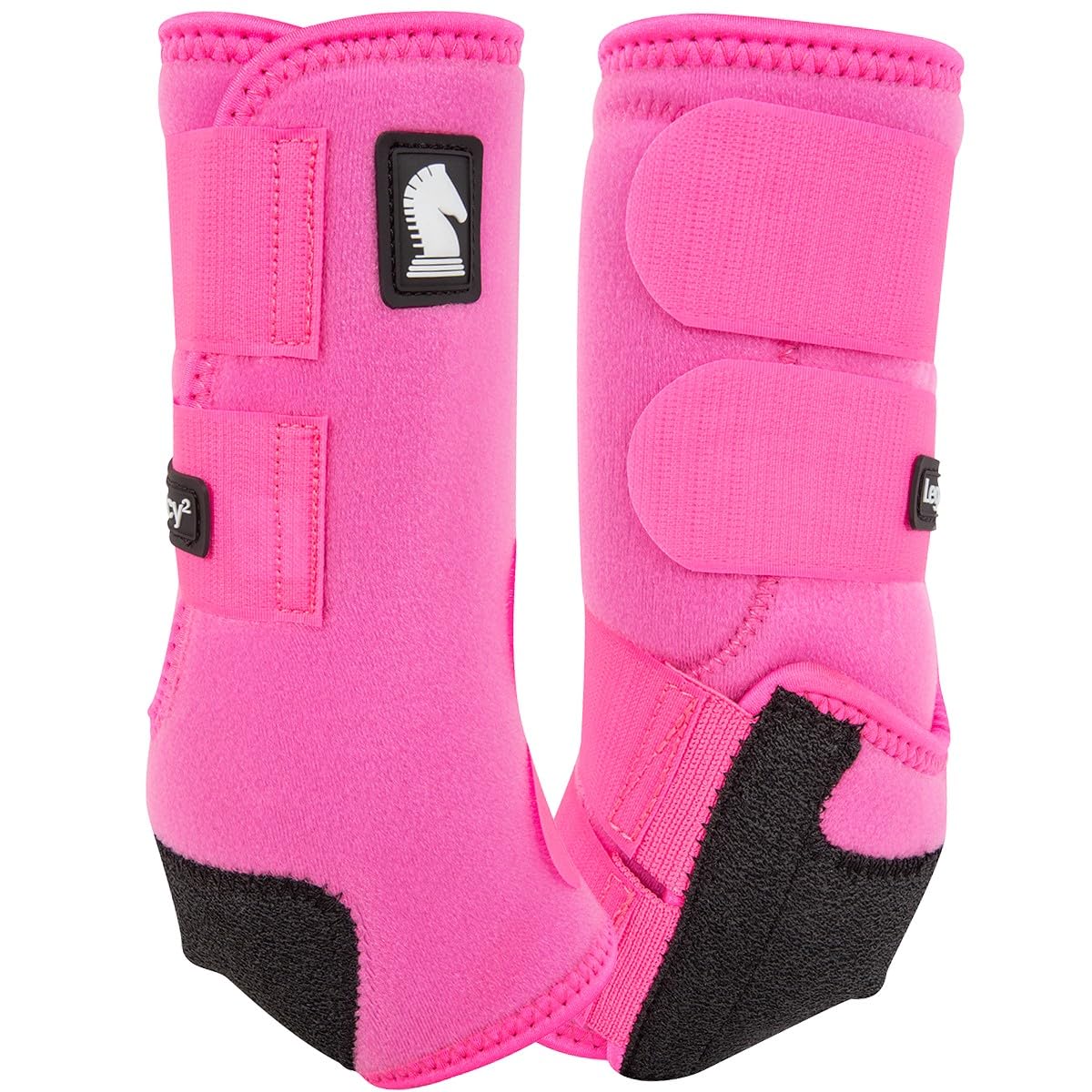
The Classic Equine Legacy2 is the top-selling support boot for good reason: its patented Cradle Fetlock System mirrors the natural anatomy of the horse’s suspensory ligaments, providing targeted support without restricting the natural gait. The hot pink Medium option shown here is just one of many colorways available in sizes Small through X-Large. The shock-absorbing splint pad is a critical feature for horses that stop, turn, and accelerate hard — it dissipates impact energy away from the splint bone and surrounding soft tissue.
Owners consistently report that the Legacy2 stays planted even during intense barrel racing patterns and stadium jumping rounds. The boot is specifically engineered to prevent crossfire injuries, which are common when a horse’s hind hoof strikes the opposite front leg during collection. The hook-and-loop closure is aggressive enough to stay locked through a full ride, yet the boots are not designed for overnight turnout — they are work boots, not pasture boots. A few buyers noted that if you order Small but receive Medium, the Medium may still fit a narrower leg due to the boot’s compression design.
For riders competing at a high level or rehabbing a horse with a known suspensory concern, the Legacy2 justifies its premium status through pure engineering. The Cradle Fetlock System distributes force differently than standard wrap boots, and the materials (a dense neoprene with reinforced stitching) survive multiple seasons with basic care. If you want the closest thing to veterinary-grade support without a prescription, this is it.
Why we love it
- Patented Cradle Fetlock System mimics natural tendon anatomy
- Shock-absorbing splint pad reduces concussion to splint bone
- Multiple sizes and colors available for custom fit
Good to know
- Not suitable for 24/7 turnout — work-only boot
- May arrive in a slightly different size than ordered; confirm fit immediately
2. Weaver Leather Prodigy Original Athletic Boots

The Weaver Prodigy Athletic Boots stand out because of their Dynamic Sling System — a design that cradles the fetlock and suspensory apparatus while allowing full range of motion. The 2-pack (sold per pair) comes in a range of colors including turquoise, which owners note is actually more blue than the online photo suggests. The outer shell uses a form-fitting EVA foam layer bonded to a neoprene liner, creating a balance between lightweight feel and serious impact absorption. The zipper closure (unique among the options here) combined with a hook-and-loop overlay ensures the boot stays put during fast transitions.
Riders of performance Quarter Horses and Appendix QHs report that the Prodigy runs small — a Large fits a 15.2hh gelding snugly, while a Medium works for a 16hh horse with finer bone. The EVA foam does an excellent job wicking sweat away from the leg, reducing the risk of rubs on long trail rides. The darted edges around the top and bottom bindings keep dirt and debris from migrating under the boot, which is a common complaint with cheaper open-front designs. After 6+ months of 3-5 rides per week, the hook-and-loop remains firm and the zipper shows no signs of jamming.
Where the Prodigy excels is in the mid-premium sweet spot: it offers professional-grade protection (the sling system genuinely feels different from generic wrap boots) at a price that undercuts high-end orthopedics like the Legacy2 while still delivering tangible structural support. If your horse is in light to moderate work — jumping, dressage, or trail — and you want the best balance of cost and engineering, this pair is hard to beat.
Why we love it
- Dynamic Sling System provides targeted fetlock support without restricting motion
- EVA foam liner wicks moisture and resists bacterial buildup
- Zipper plus hook-and-loop creates a redundant closure system
Good to know
- Runs small — size up for a secure fit
- Turquoise color may appear more blue than product images show
3. Iconoclast Front Orthopedic Support Boots
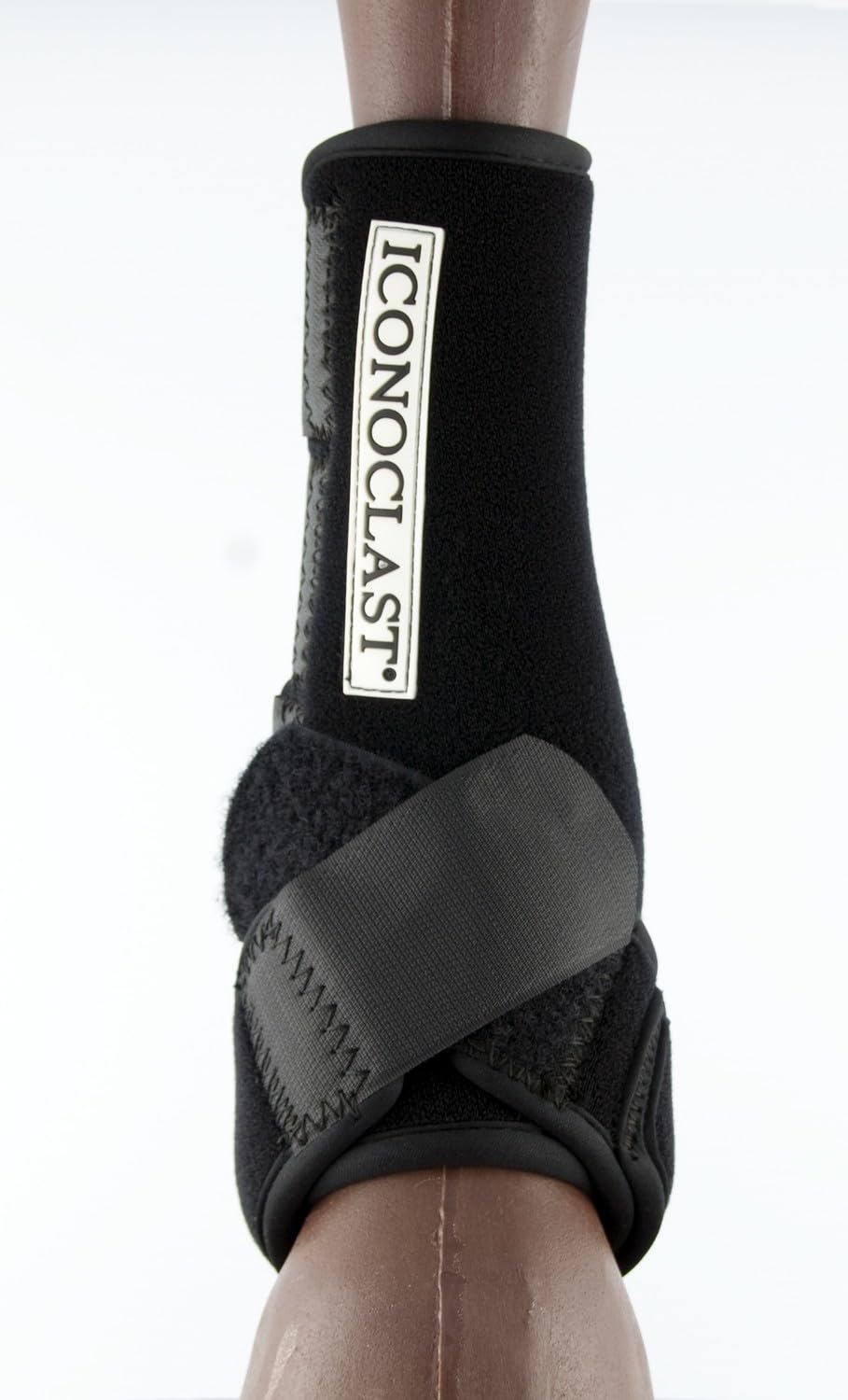
Iconoclast builds its reputation on the patented Double Sling Strap system — two independent straps that lift and cradle the equine leg, distributing load evenly to the suspensory branches. This is not a general-purpose turnout boot; it is a medical-grade support boot for horses with confirmed DSLD, bowed tendons, or suspensory desmitis. The black Large option fits horses with cannon bone circumference at the upper end of standard, but the boot is marked left and right, so orientation matters. The Velcro here is relentless — owners describe spending 10-15 minutes on the first few wears figuring out the exact placement, after which on-and-off becomes routine.
Barrel racers and reining competitors gravitate toward Iconoclast because the design prevents the boot from migrating during hard stops and spins. Unlike wrap-style boots that compress evenly, the sling straps create distinct tension zones that support specific ligament structures. The cotton outer with neoprene inner provides a reasonable moisture balance, though this boot is not intended for wet turnout. A noteworthy durability point: multiple owners report the hook-and-loop outlasting the nylon material it attaches to, which is a testament to the closure’s aggressive tooth density.
For the premium price, you get a boot that is closer to a therapeutic device than a simple protective wrap. If your horse has a diagnosed suspensory issue or you want proactive support during high-intensity work, the Iconoclast delivers measurable load distribution that generic boots cannot replicate. The lack of a warranty is a minor concern given the build quality, and the learning curve on strapping is real — but the payoff in injury prevention is substantial.
Why we love it
- Patented Double Sling Straps lift and cradle suspensory branches
- Velcro is exceptionally durable — outlasts the nylon it attaches to
- Marked left/right for precise anatomical fit
Good to know
- Steep learning curve for proper strapping; watch setup videos
- No warranty included — inspect upon arrival
4. Tough 1 Hoof Saver Boot, Royal Blue, Medium

The Tough1 Hoof Saver is a completely different category of boot — it is a medical wrap designed to hold medication and poultice against the hoof during abscess treatment or injury recovery. The royal blue Medium option is made from triple-layered cotton canvas, not neoprene or ballistic nylon, because the goal is breathability and absorbency, not impact protection. Vets frequently recommend this boot for soaking abscesses with Epsom salts and medication, as the material allows the foot to breathe while keeping the poultice secure and dry. The pull-on closure with a single hook-and-loop strap is rudimentary, and multiple owners report the strap is too short to wrap fully around a 15.3h TB/QH pastern, requiring duct tape as a secondary fastener.
Despite the strap limitation, the Hoof Saver stays on surprisingly well — owners of horses that actively try to kick off medical boots report that this one survives pasture turnout and stall rest. The cotton canvas allows water to enter if the horse steps in a pond, but for dryland abscess management, it keeps the hoof clean and medicated. The Medium size fits most light horse breeds, but the short strap is a recurring pain point that forces owners to modify the fit. The boot is also sold as a single, not a pair, which makes sense given it is typically used on one affected hoof at a time.
If you are dealing with a recurring abscess or a hoof injury that requires 24/7 topical treatment, the Tough1 Hoof Saver is the proven solution at a fair price. It is not built for longevity in the way a turnout bell boot is — the cotton will degrade after several weeks of moisture and compression — but for its intended use (temporary medical protection), it outperforms wrapping with bandages and duct tape by a wide margin.
Why we love it
- Triple-layer cotton canvas holds medication securely against the hoof
- Vet-recommended for abscess soaking and poultice application
- Breathable material reduces moisture-related skin issues
Good to know
- Hook-and-loop strap is often too short for larger pasterns; tape may be needed
- Cotton material is not waterproof — avoid pond turnout
5. No-Turn Bell Boots by Weaver Leather

Weaver Leather’s bell boots use a 2520-denier ballistic nylon outer shell — that is significantly higher denier than the 1680D commonly found on mid-market turnout boots, meaning this boot is built to withstand repeated strikes from hind hooves and fence post scrapes. The anatomical positioning bulb at the heel is precisely shaped to hook into the heel bulb and resist rotation, and owners with horses that paw aggressively or forge heavily confirm the “no-turn” claim holds up for months of 24/7 use. The Large size fits a horse with a size 0 shoe; horses with size 1-2 shoes need Extra Large.
The neoprene lining is shock-absorbing but not perforated, so in wet conditions the boot takes longer to dry than the Tough1 perforated option. However, the trade-off is superior protection of the coronet band — the dense neoprene prevents the rigid nylon from rubbing the hairline. Owners report these boots lasting 2-3 times longer than other brands under daily pasture conditions, with one verified review noting 4 years of near-24/7 use on a mare wearing hoof boots. The double-ply hook-and-loop closure stays aggressive even after repeated mud and hosing cycles.
For any horse that lives on turnout and has a history of overreaching, forging, or pulling shoes, the Weaver bell boots are the most cost-effective long-term solution in this list. The 2520D shell is overkill for a horse that only wears boots during riding, but for 24/7 protection, that material resilience translates directly to fewer replacements per year. Buy one size larger than you think you need — the no-turn bulb requires enough vertical space to engage the heel properly.
Why we love it
- 2520D ballistic nylon is the toughest shell in this comparison
- Anatomical heel bulb prevents rotation effectively
- Double-ply hook-and-loop withstands mud and repeated washing
Good to know
- Lining is not perforated — slower drying in wet climates
- Runs small; order one full size up for correct fit
6. HORZE Chicago Protective Horse Tendon Boots
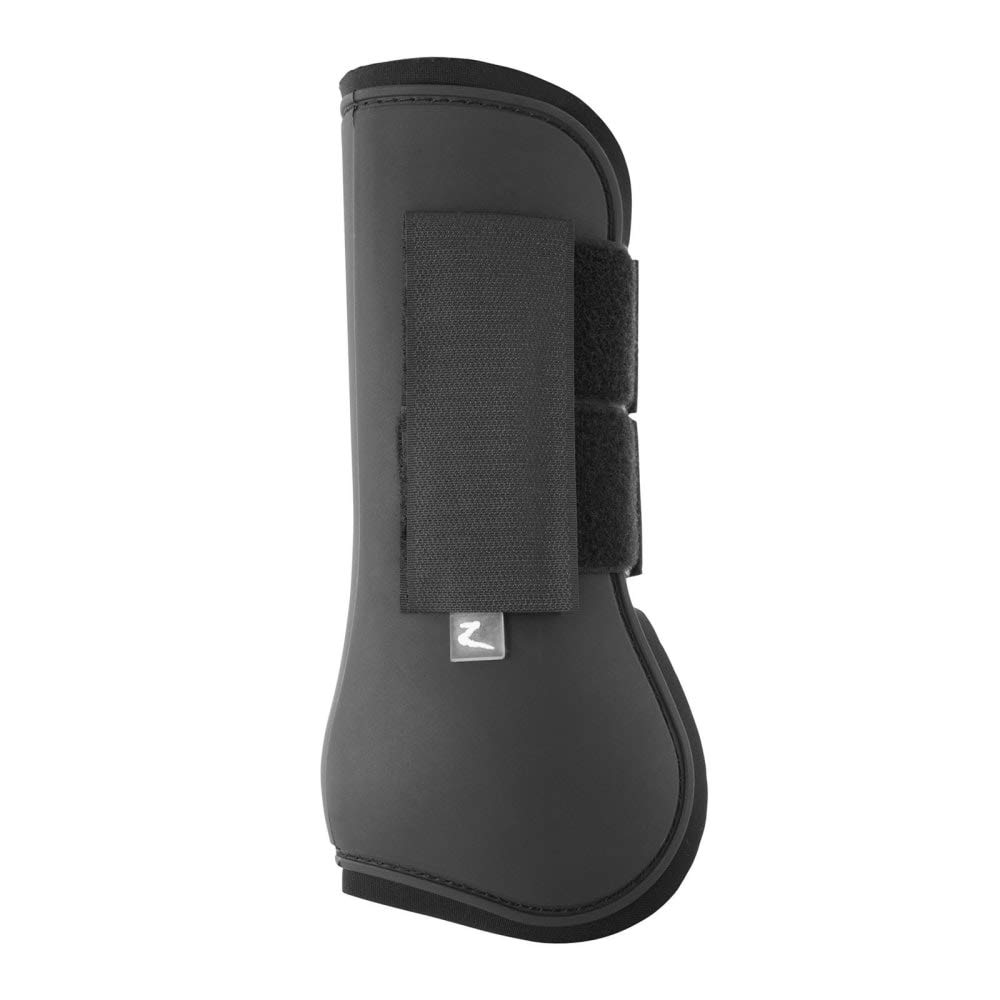
The HORZE Chicago boots are open-front strike boots designed specifically for jumping and controlled arena work — they offer rigid tendon protection through a molded plastic shell backed by a soft neoprene liner. The Small size fits a 14.2h Welsh cob accurately, and the dual-strap hook-and-loop closure prevents the boot from coming undone during active work. These are not turnout boots; the open front leaves the fetlock exposed and the rigid shell can cause indentations when a horse lies down in a stall. For their intended use (protection from brushing and overreaching during a ride), they deliver solid performance at a low entry point.
The neoprene lining is dense enough to prevent rubbing even on horses with fine hair coats, and the plastic shell is easy to wipe clean after muddy rides. Owners rehabbing ligament injuries on a budget find these boots useful as a secondary layer of tendon support during hand-walking, but they lack the Dynamic Sling System or cradle fetlock of premium options. The Velcro closure uses two main straps, and the fit is secure enough for galloping work. A few buyers noted the boots have no large brand logo on the Velcro, which is a minor aesthetic plus.
If you need a functional open-front strike boot for occasional jumping or trail riding and you are not ready to invest in high-end sport boots, the HORZE Chicago pair is a capable entry-level choice. The plastic shell is stiffer than neoprene-only boots, providing better deflection of hoof strikes, but the overall build quality aligns with its price tier — expect 6-12 months of moderate use before the plastic begins to show wear at the strike points.
Why we love it
- Rigid plastic shell provides effective deflection during high-speed work
- Soft neoprene lining prevents rubs even on sensitive skin
- Dual-strap hook-and-loop closure stays secure under gallop
Good to know
- Not suitable for 24/7 turnout or stall rest — straps mark legs
- Open front design leaves fetlock exposed to debris
7. Tough1 No Turn Bell Boots
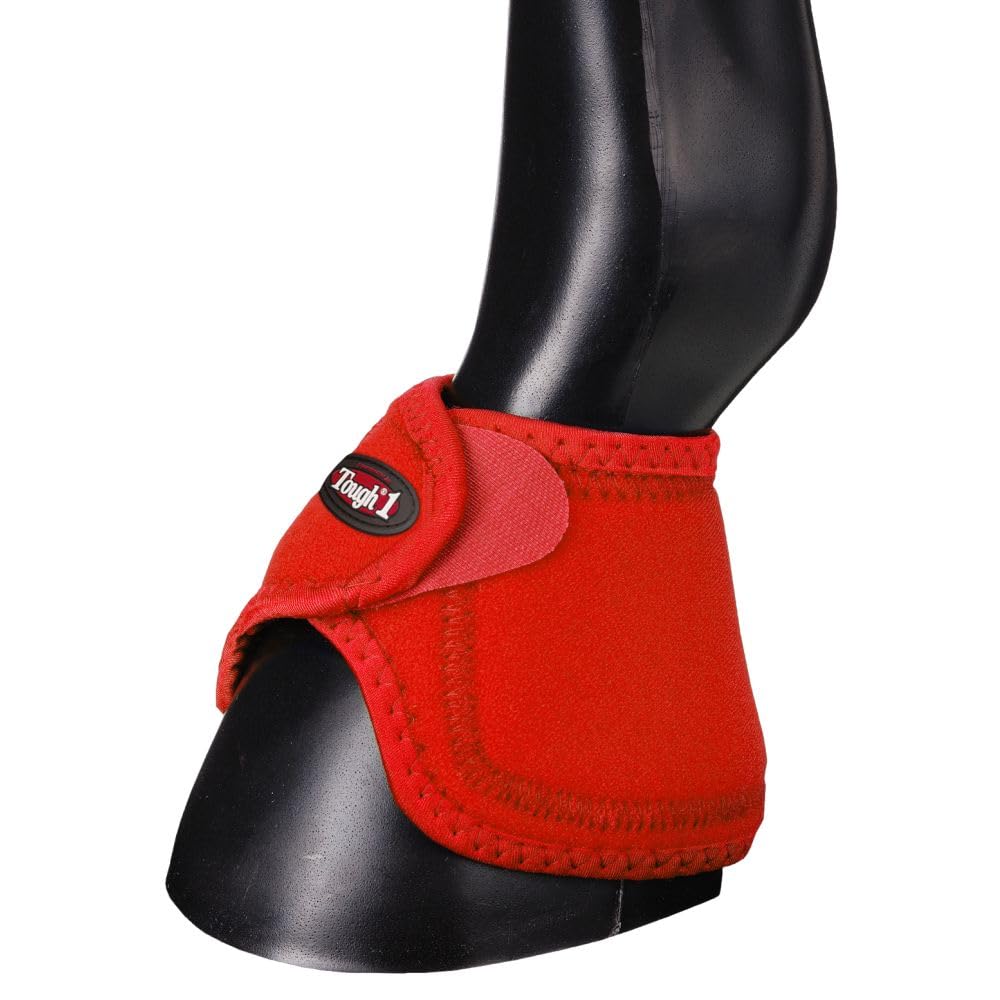
The Tough1 No Turn Bell Boots are the best-selling entry-level bell boot for one primary reason: the perforated neoprene construction keeps airflow moving around the pastern and heel, dramatically reducing sweat and moisture accumulation compared to solid neoprene boots. The cut-away design removes bulk behind the fetlock, which minimizes interference with the opposite leg. The “Quick-Grip” closure is a single wide hook-and-loop strip that is easy to operate with gloves on, and the no-turn bump at the back does reduce rotation for the first 3-4 months of use.
However, durability is the weak link here. Multiple verified owners report that the no-turn feature degrades after about three months of daily turnout, at which point the boot begins to spin and leaves the hoof unprotected. The hook-and-loop is strong initially but loses grip faster than the double-ply closures on the Weaver or Classic Equine options. For light use — a few rides per week or turnout on dry lots — the Tough1 boots hold up reasonably well and are easy to rinse clean. The Medium size fits a standard Quarter Horse leg, and the boots are lightweight enough (6.4 ounces) that horses rarely object to wearing them.
If you are on a tight budget and need a bell boot that works out of the box for 2-3 months, the Tough1 No-Turn is a legitimate value. Just be realistic about the lifespan: by month 4, you may need to replace them, and by month 6, the no-turn feature is likely gone. For the price of one premium boot like the Weaver, you can buy two sets of Tough1s and rotate them — that is the strategic value play here. Keep the Velcro dry between uses to extend its adhesive life.
Why we love it
- Perforated neoprene offers superior breathability for wet climates
- Cut-away design reduces bulk and interference
- Lightweight and easy to rinse clean after muddy turnout
Good to know
- “No turn” feature degrades after ~3-4 months of daily use
- Hook-and-loop loses grip faster than premium alternatives
FAQ
How do I measure my horse for boot size without a tape measure?
Can I leave bell boots on my horse 24/7?
Why does my horse keep losing bell boots in the pasture?
Are open-front boots better for jumping than closed boots?
Final Thoughts: The Verdict
For most owners who need a single boot that handles daily work and turnout protection, the top pick is the Classic Equine Legacy2 because its patented Cradle Fetlock System provides unmatched support during high-intensity riding while staying secure enough for light turnout. If you need a medical boot for an abscess, the Tough1 Hoof Saver is the veterinarian-recommended solution for holding medication against the hoof. And for 24/7 pasture protection on a budget, nothing beats the durability of the Weaver Leather No-Turn Bell Boots — the 2520D ballistic nylon shell will outlast your horse’s shoeing cycle.