
Pancreatitis in cats demands a nutrition strategy that prioritizes low-fat, highly digestible proteins and minimizes the inflammatory triggers found in many commercial diets. The wrong food can prolong recovery or trigger a painful flare-up, making ingredient scrutiny a non-negotiable part of managing this condition.
I’m Mo Mahin — the founder and writer behind Furric. My approach to selecting cat food for pancreatitis relies on cross-referencing veterinary nutritional guidelines with detailed analysis of limited-ingredient labels, fat content percentages, and verified owner feedback from cats with confirmed digestive sensitivities.
After evaluating dozens of formulas against the strict criteria required for feline pancreatitis management, I have curated the definitive list of the best cat food for pancreatitis that balances low-fat requirements with complete nutritional adequacy.
How To Choose The Best Cat Food For Pancreatitis
Selecting a diet for a cat with pancreatitis requires a shift away from standard commercial formulas. The inflamed pancreas cannot process high levels of fat, and certain protein sources or artificial additives can trigger further episodes. Understanding the key nutritional levers helps you make a safe choice.
Prioritize extremely low crude fat content
Most pancreatitis-safe diets target a crude fat percentage well below 10% on a dry matter basis. Wet foods should show fat values around 2–5% on the guaranteed analysis. Every gram of excess fat forces the pancreas to produce more digestive enzymes, worsening inflammation and pain.
Choose a single, novel or limited protein source
A single animal protein — turkey, duck, or rabbit — reduces the chance of an allergic or inflammatory reaction. Multiple protein sources increase the antigenic load, which can cross-stimulate the immune system and aggravate pancreatic tissue. Stick to formulas listing one meat protein and minimal vegetable ingredients.
Avoid dietary fillers and artificial additives
Peas, potatoes, corn, soy, and wheat offer no benefit to a cat with pancreatitis and may cause additional gastrointestinal distress. Artificial colors, flavors, and preservatives introduce chemical irritants that a sensitive system does not need. A clean label with fewer than ten recognizable ingredients is the gold standard here.
Quick Comparison
On smaller screens, swipe sideways to see the full table.
| Model | Category | Best For | Key Spec | Amazon |
|---|---|---|---|---|
| KOHA Bland Diet Chicken & Rice | Wet | Acute flare-up recovery | Single protein + pumpkin, 2.8 oz cans | Amazon |
| Natural Balance LID Duck & Pea | Dry | Long-term maintenance | Single animal protein, 4 lb bag | Amazon |
| Blue Buffalo Basics Turkey & Potato | Dry | Senior cats with sensitivities | Turkey #1, LifeSource Bits, 5 lb bag | Amazon |
| Instinct LID Turkey | Wet | High-moisture single protein | One protein + one veg, 5.5 oz cans | Amazon |
| Reveal Chicken Breast in Broth | Wet | Ultra-simple minimal ingredient | Chicken + broth only, 2.47 oz cans | Amazon |
In‑Depth Reviews
1. KOHA Limited Ingredient Bland Diet Chicken & White Rice
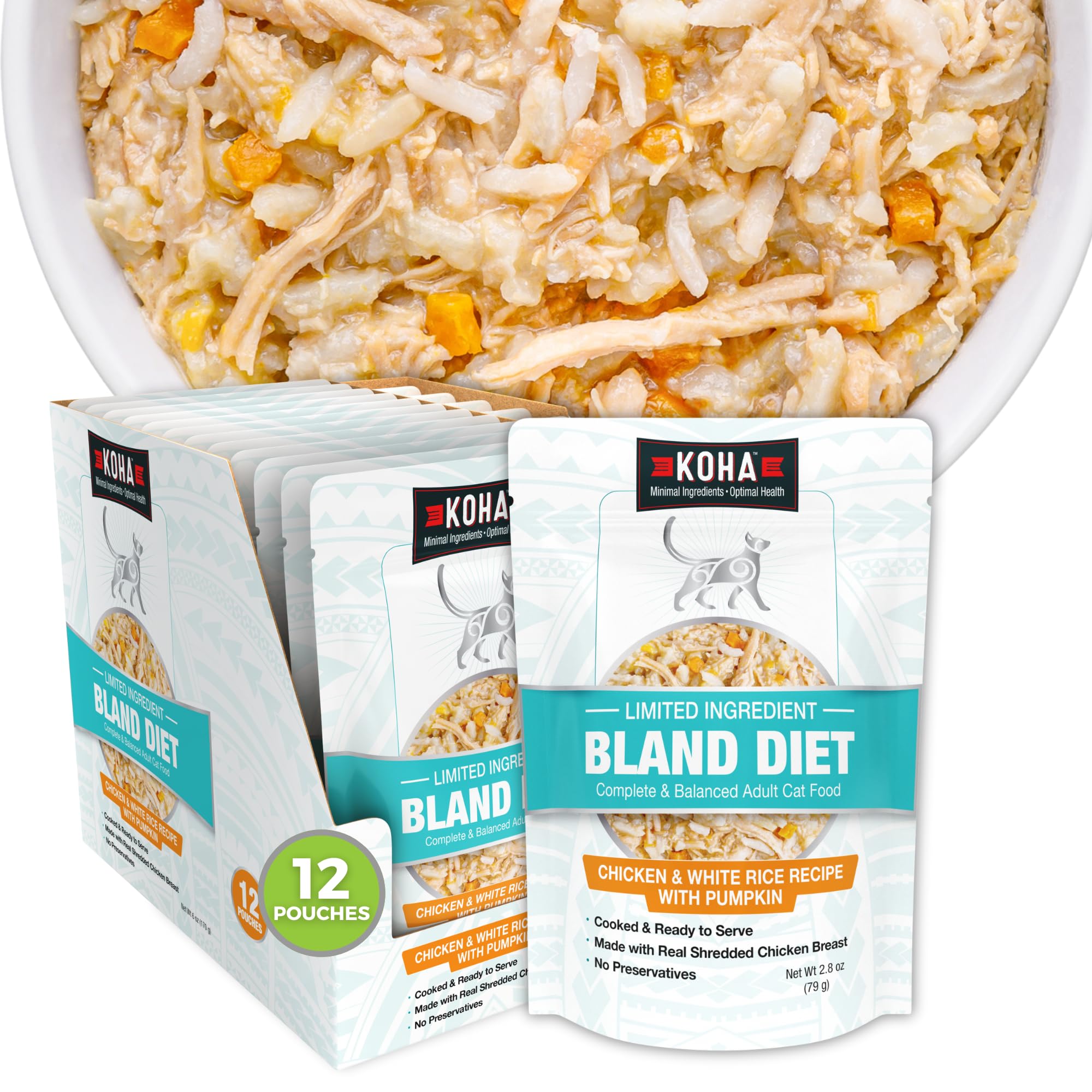
KOHA formulates this specifically as a bland diet alternative to home-cooked chicken and rice, making it one of the most practical options for a cat in the middle of a pancreatitis flare-up. The formula uses chicken as the sole protein source and incorporates pumpkin to help firm loose stools and regulate bowel movements — a critical function when pancreatic inflammation disrupts normal digestion.
The fat content is intentionally low, and the absence of peas, potatoes, corn, and soy removes the common fiber sources that can ferment and cause gas in a compromised gut. Owners report that cats with chronic IBS and pancreatitis tolerate this food well, and many note an improvement in stool quality within two to three days of switching. The 2.8-ounce can size is appropriate for smaller appetites during recovery.
One recurring observation is that the formula could benefit from slightly more liquid or broth to increase moisture intake, though the texture is generally accepted even by cats who refuse other wet foods. For a veterinarian-style bland diet that comes ready to serve without cooking, KOHA delivers the right nutritional profile for the acute phase of pancreatitis management.
Why we love it
- Designed specifically as a vet-style bland diet for digestive upset
- Single chicken protein plus pumpkin for stool regulation
- Free from common fillers that aggravate the gut
Good to know
- Some owners want more broth for extra hydration
- Chicken may not suit cats with existing poultry sensitivities
2. Natural Balance Limited Ingredient Duck & Green Pea

Natural Balance takes a disciplined limited-ingredient approach with duck as the sole animal protein source and green peas providing grain-free fiber. Duck is a novel protein for many cats, making it a strong candidate when chicken or fish have historically caused issues. The fish oil inclusion supplies omega-3 fatty acids that help control systemic inflammation — a direct benefit for pancreatic health.
The kibble size is notably small, which helps senior cats or those with reduced appetite eat without effort. Verified owners report that this formula stopped daily vomiting in a thirteen-year-old cat and significantly improved coat quality. The absence of corn, soy, and wheat aligns with the low-irritant profile required for pancreatitis management, though the pea content warrants monitoring if your cat shows signs of pea sensitivity.
The duck-based recipe is higher in fat than a wet bland diet, so it is better suited for maintenance after the acute flare resolves rather than during active inflammation. Several owners emphasize buying the 4-pound bag rather than larger sizes because the higher natural fat in duck can go rancid more quickly, potentially triggering soft stools or vomiting.
Why we love it
Why we love it
- Novel duck protein reduces risk of immune cross-reactivity
- Small kibble easy for senior cats with dental issues
- Omega-3s from fish oil support anti-inflammatory response
Good to know
- Higher fat content limits use during active flare-ups
- Duck fat can go rancid quickly in larger bags
3. Blue Buffalo Basics Turkey & Potato Mature Dry Cat Food

Blue Buffalo Basics targets the mature cat with a turkey and potato recipe that eliminates chicken, beef, dairy, eggs, corn, wheat, and soy. Turkey is a lean protein source with a naturally lower fat profile than duck or salmon, making this a reasonable option for long-term feeding once pancreatic inflammation is under control. The inclusion of pumpkin and pea fiber supports gentle digestion.
Antioxidant-rich LifeSource Bits are mixed into the kibble, though some finicky cats pick around them. Owner feedback is consistently positive for cats with chicken allergies, with multiple reports of resolved itching and reduced vomiting. The formula is more affordable than many prescription-limited diets, which helps when managing a chronic condition over months or years.
The 5-pound bag size is convenient for testing tolerance without committing to a bulk purchase. The primary caveat is that the dry food format lacks the moisture critical for pancreatitis recovery, so it should be paired with a wet food or ample fresh water. A few owners found that the 5-pound bag commands a premium compared to the 8-pound option available in stores.
Why we love it
- Turkey provides a lean, low-fat protein source
- Free from eight common allergens including chicken and dairy
- Antioxidant LifeSource Bits support immune function
Good to know
- Dry kibble alone does not provide enough moisture for recovery
- Some cats reject the LifeSource Bits in the formula
4. Instinct Limited Ingredient Diet Turkey Wet Cat Food
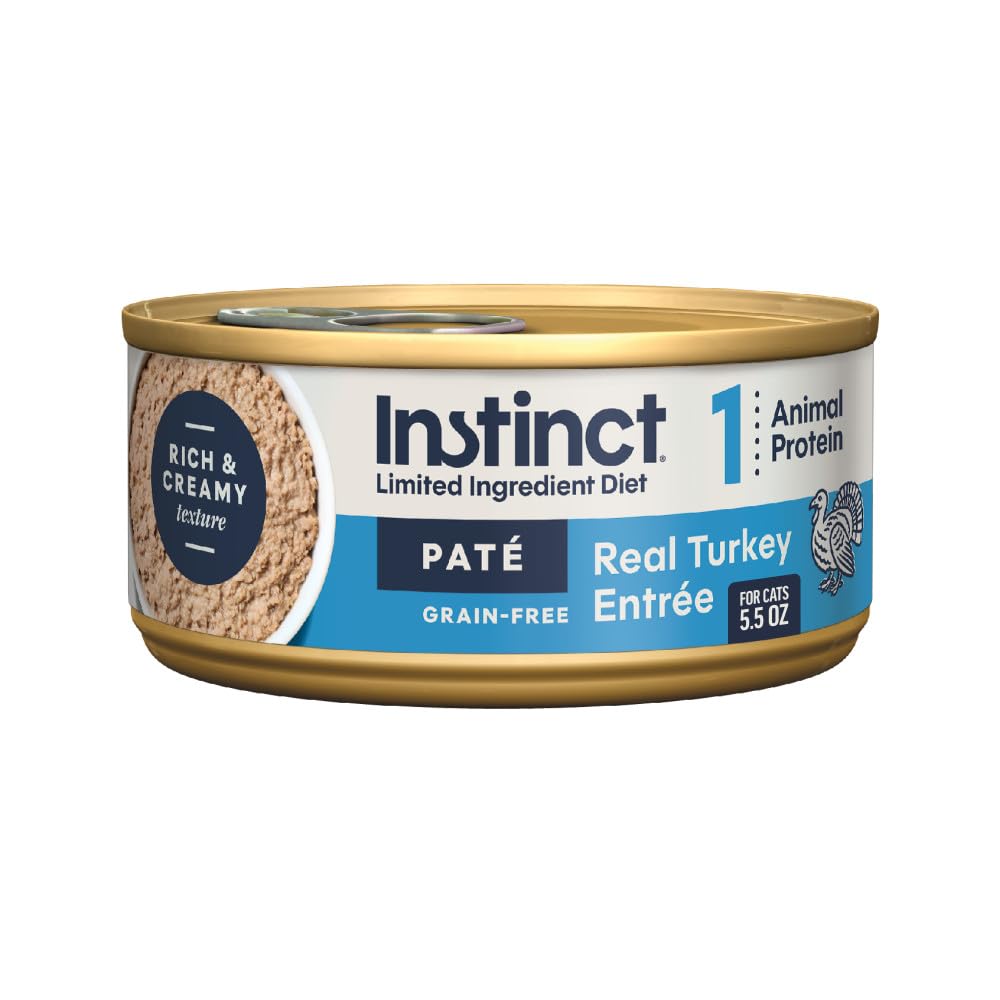
Instinct LID Turkey is built around one animal protein and one vegetable, offering the cleanest macronutrient profile for a cat with pancreatitis. The cage-free turkey provides essential amino acids without the fat load of fish or duck. This formula is approved for all life stages, which means it meets the higher nutritional demands of kittens while still being gentle enough for a senior cat managing a pancreatic condition.
The smooth pate texture is naturally high in moisture, delivering the hydration that supports pancreatic function and prevents dehydration during a flare. Owners consistently report that this is the only wet food their cat can keep down during digestive distress. The recipe avoids chicken, beef, fish, dairy, eggs, grain, potato, corn, wheat, and soy — covering nearly every trigger that could set off an inflammatory response.
One notable issue is consistency between can sizes: the 5.5-ounce cans have good moisture content and a palatable texture, but the 3-ounce cans have been described as extremely dry with a different color and consistency that many cats refuse. Stick to the 5.5-ounce format. A small percentage of cats simply reject the turkey taste, though most seem to accept it readily.
Why we love it
- Only one meat and one vegetable for minimal antigen load
- High moisture pate supports hydration during recovery
- Eliminates nearly every common dietary trigger
Good to know
- 3-ounce cans have poor texture and are often refused
- A minority of cats dislike the turkey flavor entirely
5. Reveal Natural Chicken Breast in Broth
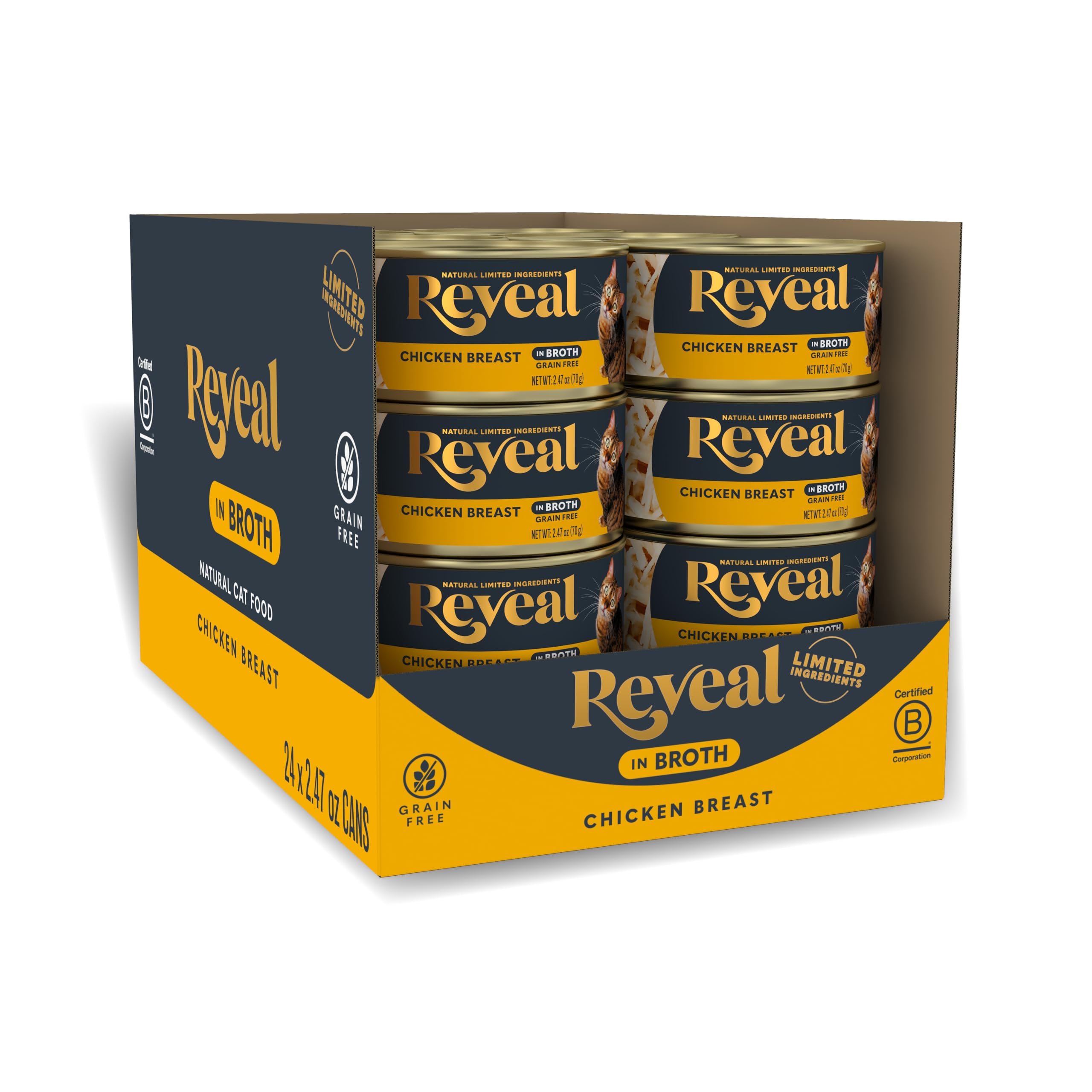
Reveal takes minimalism to its logical extreme: chicken breast, broth, and salt. This is the closest you can get to feeding whole-food protein without cooking it yourself, and for a cat with severe pancreatitis, that simplicity is the ultimate safeguard. The flake-in-broth texture provides hydration while offering a texture that even cats who refuse pate will accept.
The crude protein content is high and the fat is inherently low because chicken breast is one of the leanest meat cuts available. Owners describe the food as smelling like actual chicken — because it essentially is — and note that it is one of the few products their picky eaters consistently finish. The 24-count case of 2.47-ounce cans makes it practical for daily feeding or for mixing into a dry diet to boost moisture.
The trade-off is that this is not a nutritionally complete long-term solo diet for every cat, as it lacks the added vitamins and minerals found in balanced formulations. However, for short-term use during a pancreatitis event, or as a topper to encourage eating, it is hard to beat. A small number of owners report it works best for cats that already prefer chicken-based foods.
Why we love it
- Ingredients are literally chicken, broth, and salt — nothing else
- Extremely low fat from lean chicken breast
- High moisture broth supports hydration
Good to know
- Not a complete and balanced standalone diet for long-term feeding
- Chicken protein may not suit cats with poultry sensitivities
FAQ
Can I feed dry kibble to a cat with pancreatitis?
What crude fat percentage is safe for pancreatitis cats?
Should I choose a grain-free formula for pancreatitis?
Final Thoughts: The Verdict
For most owners managing a cat with pancreatitis, the best cat food for pancreatitis winner is the KOHA Bland Diet Chicken and White Rice because it delivers a veterinary-style bland diet ready to serve, with single-protein simplicity and pumpkin for digestive support. If you need a long-term maintenance dry food with a novel protein source, grab the Natural Balance LID Duck and Green Pea. And for the purest, lowest-fat wet option during a severe flare-up, nothing beats the Reveal Chicken Breast in Broth.