
That constant ear scratching, paw licking, and musty odor is a clear signal your dog’s body is fighting a yeast overgrowth. Finding the right solution means moving past surface-level symptom management and targeting the root cause, whether it’s topical chlorhexidine or a potent gut-restoring probiotic.
I’m Mo Mahin — the founder and writer behind Furric. I spend my days analyzing veterinary dermatology research, comparing active ingredient concentrations across formulas, and cross-referencing thousands of verified owner experiences to identify which products actually deliver measurable relief for canine yeast infections.
After reviewing hundreds of formulas, I’ve narrowed the field to the most effective solutions to help you find the best treatment for yeast infection in dogs that matches your pup’s specific symptoms and severity.
How To Choose The Best Treatment For Yeast Infection In Dogs
Canine yeast infections, primarily caused by Malassezia pachydermatis, are rarely a standalone problem — they signal an underlying imbalance in your dog’s immune system, gut microbiome, or skin barrier. Selecting an effective treatment requires matching the delivery method to the infection’s location and severity.
Assess the infection site and presentation
Yeast manifests differently depending on where it colonizes. Ear infections produce dark, waxy discharge and odor. Skin infections cause greasy, red, hairless patches, often in skin folds, armpits, or paw pads. Paw licking and brown staining between toes are classic signs. Topical washes and wipes work well for skin, while oral probiotics address systemic gut dysbiosis that drives recurring yeast.
Check the active ingredient concentration
For topical shampoos and wipes, 2% to 3% chlorhexidine gluconate is the veterinary gold standard for antibacterial and antifungal activity. Anything below 2% often lacks efficacy against stubborn yeast. Simultaneously, antifungals like ketoconazole or miconazole are effective but may be gentler for sensitive skin. For oral treatments, look for probiotic CFU counts above 1 billion — the higher the count, the better the chance of re-establishing healthy gut flora that suppresses yeast overgrowth naturally.
Evaluate the formula’s support ingredients
Treating yeast is only half the battle. The best products also soothe inflammation and repair the skin barrier. Ingredients like Ophytrium, colloidal oatmeal, aloe vera, and omega-3 fatty acids reduce redness, calm itching, and prevent secondary bacterial infections. For probiotics, prebiotic fiber sources like pumpkin and papaya feed beneficial bacteria while digestive enzymes improve nutrient absorption.
Quick Comparison
On smaller screens, swipe sideways to see the full table.
| Model | Category | Best For | Key Spec | Amazon |
|---|---|---|---|---|
| Douxo S3 PYO Shampoo | Medicated Wash | Full-body yeast & bacterial skin infections | 3% Chlorhexidine + 0.5% Ophytrium | Amazon |
| Forticept Blue Butter | Topical Gel | Hot spots & localized yeast patches | Thyme Oil + Benzethonium Chloride | Amazon |
| Googipet Probiotics Chews | Oral Supplement | Gut-driven yeast & chronic itch | 6 Billion CFU + 11 Strains | Amazon |
| Zesty Paws Allergy Immune Bites | Oral Supplement | Environmental allergy-related itching | EpiCor Pets + Colostrum + Astragalus | Amazon |
| Natouch Antifungal Wipes | Convenient Wipes | Daily maintenance & spot cleaning | Geraniol + Rosemary Oil | Amazon |
In‑Depth Reviews
1. Douxo S3 PYO Medicated Dog Shampoo
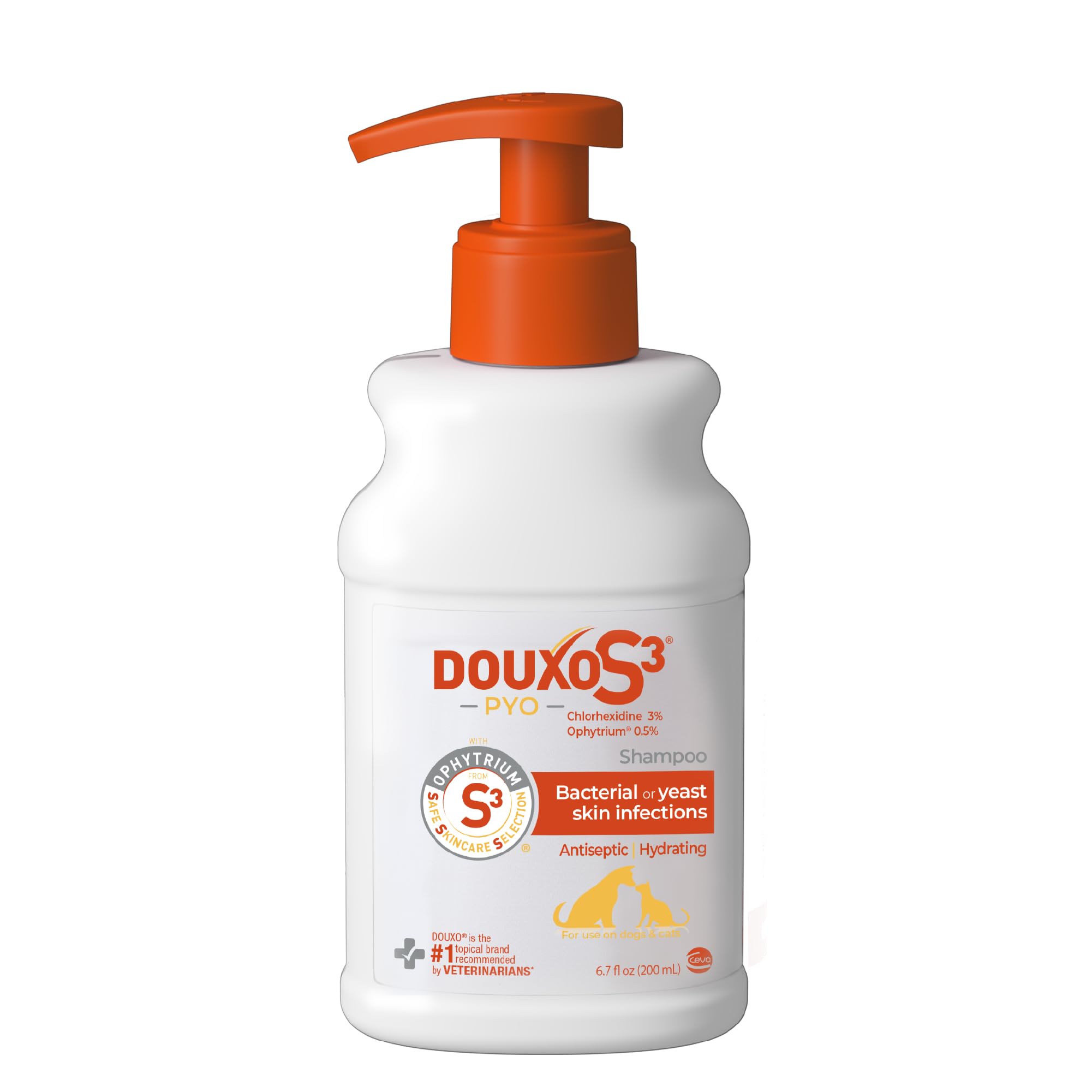
Douxo S3 PYO is a veterinary-grade medicated shampoo that delivers 3% chlorhexidine — the concentration proven most effective against bacterial and fungal skin infections in dogs. It pairs this potent antiseptic with 0.5% Ophytrium, a purified natural ingredient that soothes irritated skin and supports hydration. This dual-action approach means you’re not just killing yeast and bacteria; you’re actively repairing the compromised skin barrier that allowed the infection to take hold in the first place.
Owner reports confirm dramatic results within the 7-day clinical window. A senior French Bulldog with greasy, smelly skin and dandruff showed supple, odor-free skin and reduced bumps after a single wash. A Maltese stopped scratching to the point of bleeding, and an American Pitbull with severe environmental allergies saw significant reduction in red bumps within hours. The formula is free from soaps, sulfates, parabens, colorants, nanoparticles, and phthalates, making it safe for sensitive skin even with frequent use.
The 6.7 oz bottle is thick and requires only a small amount — 2 pumps suffice for a 64 lb dog — making the price point more economical than it initially appears. The locking pump prevents leaks and waste. For full-body yeast infections, this is the benchmark product.
Why we love it
- Clinically proven results in as soon as 7 days
- 3% chlorhexidine hits the effective therapeutic range
- Ophytrium soothes and hydrates irritated skin
Good to know
- Requires 5-10 minute contact time for effectiveness
- Some users see slower improvement; patience needed
2. Forticept Blue Butter Hot Spot Treatment
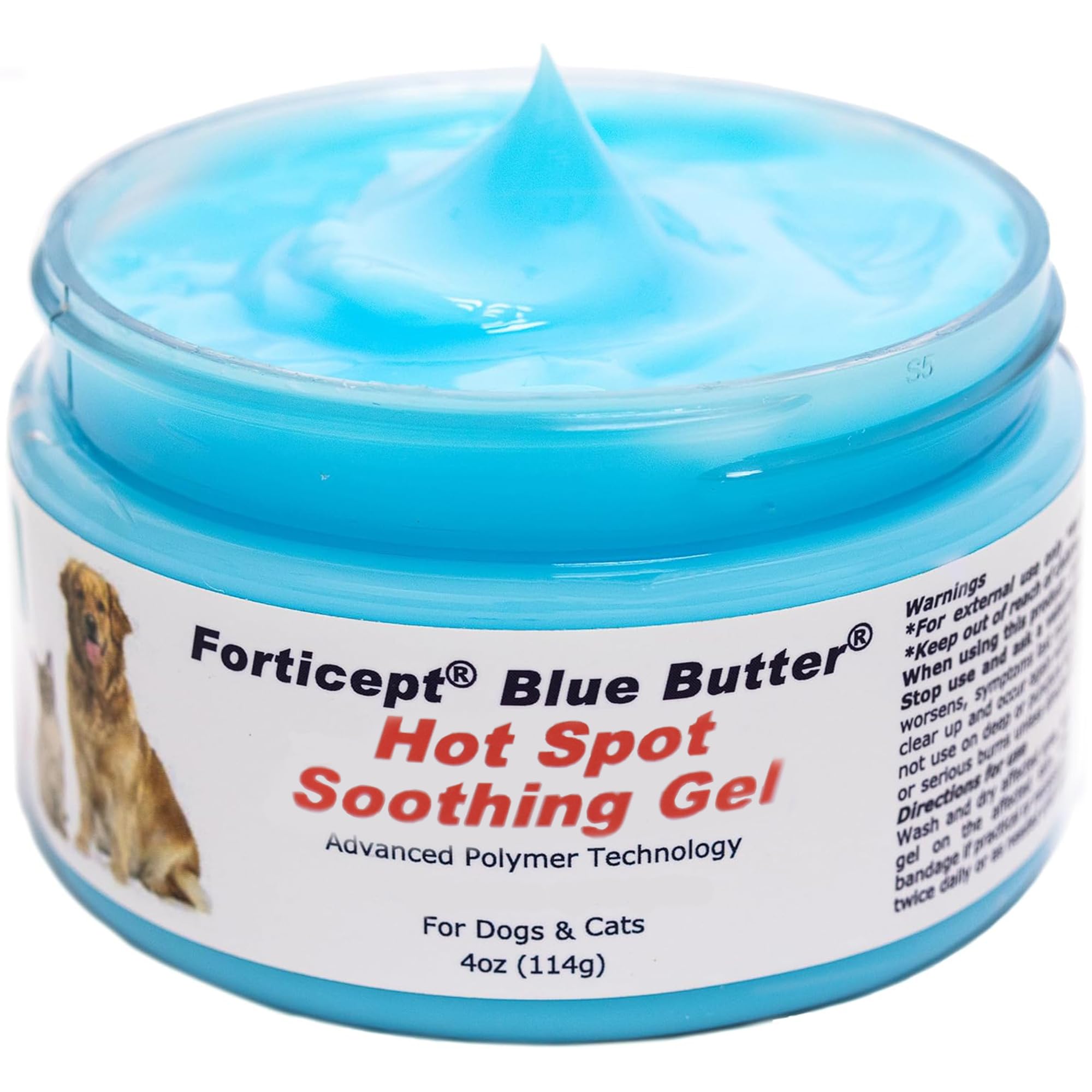
Forticept Blue Butter is a thick, blue-tinted gel designed for concentrated application on hot spots, localized yeast patches, cuts, and rashes. The active formula uses benzethonium chloride paired with thyme oil — a naturally occurring compound with documented antioxidant, anti-inflammatory, and antimicrobial properties. The blue color serves a practical purpose: it allows you to see exactly where you’ve applied the treatment, ensuring full coverage on hard-to-see areas.
Owner feedback highlights remarkable speed. A Bernadoodle with severe paw burns from artificial turf healed in just 2 days with 4-5 applications daily. A Mastiff with hotspots cleared completely in 3 days, with hair regrowth beginning shortly after. Multiple owners note that the minty-thyme scent deters licking, which is critical for allowing the treatment to work without interruption. The gel stays in place and doesn’t drip or run.
The 4 oz jar is compact enough for a first-aid kit or travel. Some owners express concern about petrolatum and polysorbate 80 in the ingredients, so if you strictly avoid those, look elsewhere. But for rapid, visible healing of acute yeast spots, this gel is hard to beat.
Why we love it
- Visible results in 2-3 days for hotspots
- Thyme scent deters licking effectively
- Blue tint allows precise application tracking
Good to know
- Contains petrolatum for some skin types may cause reaction
- Blue color may temporarily stain light coats
3. Googipet Probiotics for Dogs Digestive Health
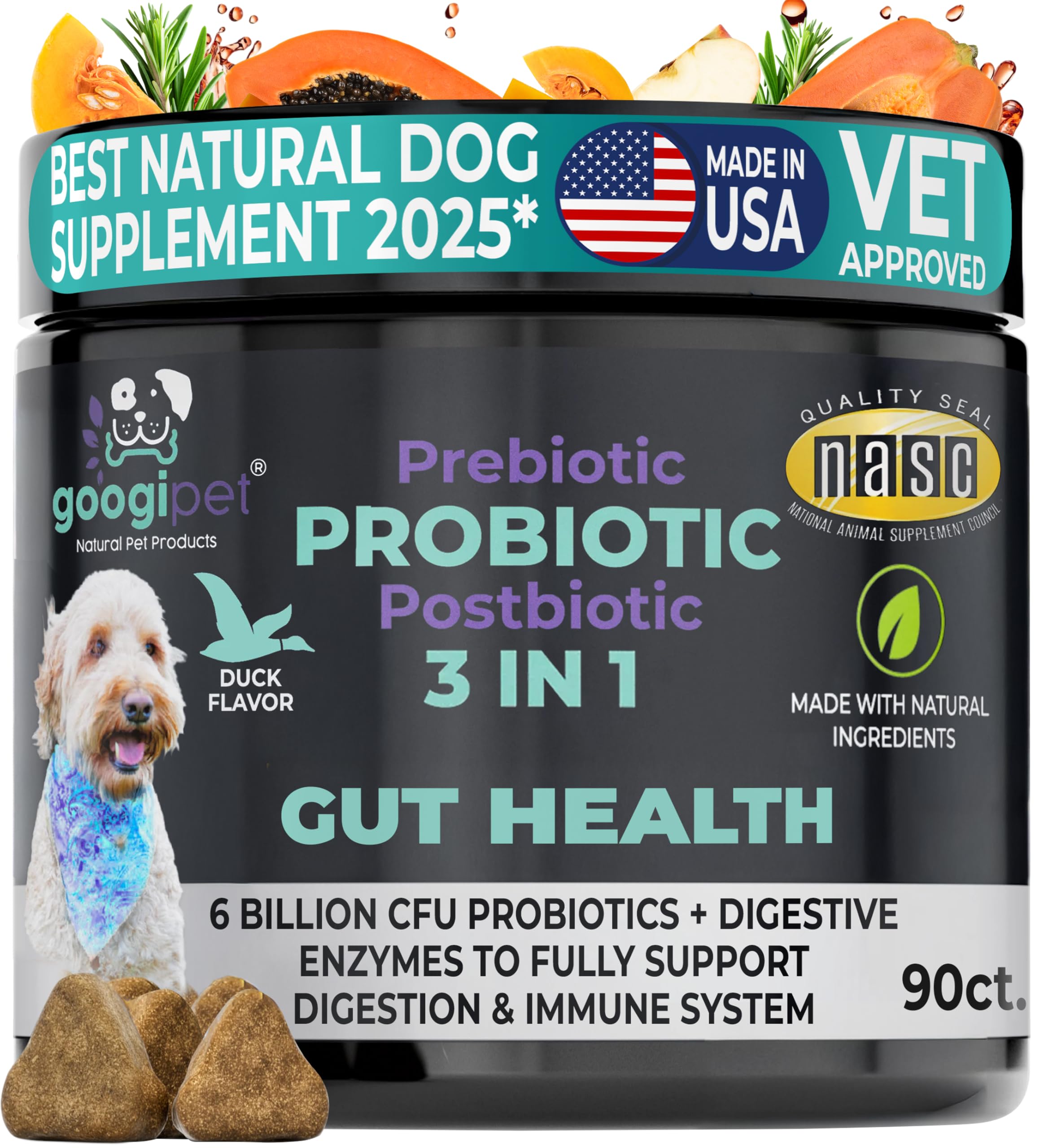
Googipet Probiotics take a fundamentally different approach to yeast management. Instead of attacking surface yeast, they deliver 6 billion CFU across 11 strains of prebiotics, probiotics, and postbiotics to restore gut microbial balance. Yeast overgrowth is often a symptom of gut dysbiosis — when the intestinal environment allows Candida or Malassezia to flourish. This formula targets that root cause by flooding the gut with high-potency beneficial bacteria, digestive enzymes, and prebiotic fiber from pumpkin and papaya.
Owner results confirm the gut-skin connection. One owner reported that a dog’s rash cleared “right away” after starting these chews. Another Yorkie owner who feeds a home-cooked diet uses these as a daily long-term supplement for digestive stability. The duck flavor is a major differentiator — soft chews that picky dogs take willingly as treats rather than fighting a pill. The formula also includes ashwagandha and other calming botanicals, which can reduce stress-induced digestive upset.
The 9.52 oz jar contains a 30-60 day supply depending on dog size. For dogs with recurring yeast infections that return after topical treatment, this is the logical next step. It addresses why the infection keeps coming back rather than just treating the current flare-up.
Why we love it
- 6 billion CFU is exceptionally high potency for dogs
- Targets gut dysbiosis rather than just surface symptoms
- Duck soft chews are palatable for picky eaters
Good to know
- Works best as a preventive or long-term support
- Immediate results are not guaranteed for active infections
4. Zesty Paws Allergy Immune Bites
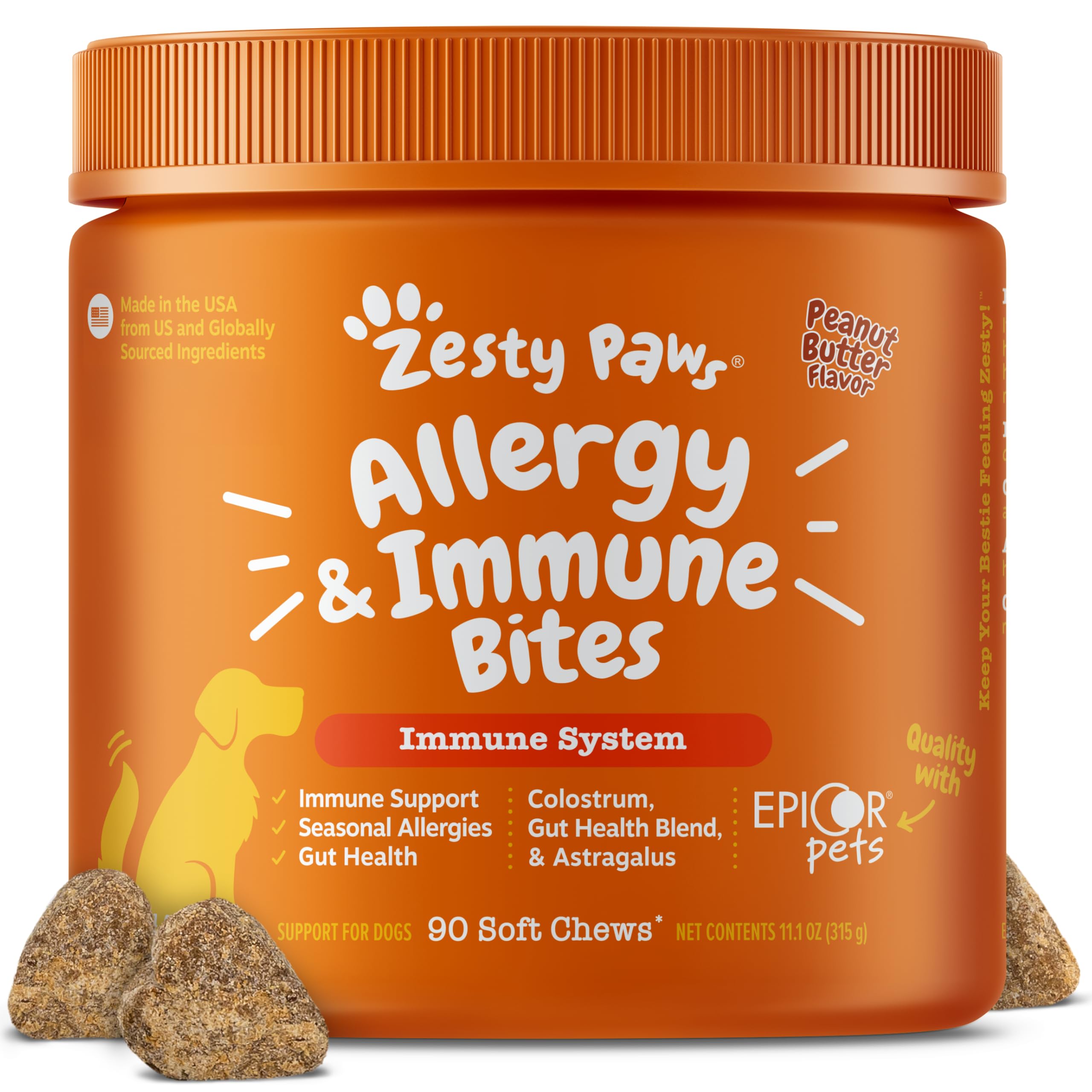
Zesty Paws Allergy Immune Bites are soft chews formulated with EpiCor Pets, a whole-food yeast fermentate that modulates immune response, plus Colostrum for passive immunity and Astragalus Root for adaptive immune support. They also deliver Omega-3 fatty acids (EPA and DHA) and a 6-strain probiotic blend including Lactobacillus acidophilus. This comprehensive immune-gut-skin approach makes them particularly effective for yeast infections triggered by environmental allergies.
Owner reports show measurable improvements when used consistently. A 5 lb dog with grass allergies stopped foot and leg biting after daily use. Another owner noted that after 2 weeks, paw biting, scratching, and ear irritation significantly decreased. However, results develop over weeks, not days. They work best for mild-to-moderate environmental allergy cases where yeast overgrowth is secondary to allergen exposure. The peanut butter flavor is a hit with most dogs, though some owners need to crush the chews into food.
The 90-count bag provides roughly a 3-month supply for a medium dog. Zesty Paws is a well-known brand with transparent sourcing, which adds trust for long-term use. If your dog’s yeast infection flares seasonally or corresponds with pollen counts, start these chews before symptoms appear.
Why we love it
- Supports immune modulation, not just gut flora
- Omega-3s directly benefit skin barrier health
- Trusted brand with consistent manufacturing standards
Good to know
- Results build over 2+ weeks, not immediate
- May not be sufficient for severe yeast infections alone
5. Natouch Antifungal and Antibacterial Wipes

Natouch Antifungal Wipes use natural active ingredients — geraniol for its antifungal and antibacterial properties, and rosemary oil for its soothing and rejuvenating qualities. These wipes are designed for quick, daily maintenance rather than aggressive treatment. For dogs that constantly lick their paws or develop mild yeast in skin folds and wrinkles, these provide a gentle but effective way to keep yeast levels in check between baths.
Owner feedback emphasizes ease of use. English Bulldog owners, in particular, find these a lifesaver for cleaning face folds and wrinkles without the mess of creams or shampoos. Dogs with summer grass allergies benefit from having their paws wiped after every outdoor trip. The wipes are thick, large, and durable — they don’t tear easily during application. They leave no sticky residue and have a mild, pleasant scent that doesn’t overwhelm.
The 160-count package offers strong value for daily use. Keep in mind that natural plant-based actives like geraniol are generally milder than chlorhexidine or ketoconazole. These wipes are best suited as a preventive tool or for mild, localized yeast. For active, widespread infections, pair them with a chlorhexidine shampoo for a complete regimen.
Why we love it
- Thick, durable wipes that don’t tear
- Natural actives safe for sensitive skin and daily use
- No chemical residue or strong medicinal smell
Good to know
- Less effective than chlorhexidine for severe infections
- May not completely stop paw licking in chronic cases
FAQ
How do I know if my dog has a yeast infection versus a bacterial infection?
Can I use human antifungal shampoo on my dog?
How long does it take for a dog yeast infection to clear up?
What causes dogs to get recurrent yeast infections?
Can I use multiple treatments together for better results?
Final Thoughts: The Verdict
For most dogs, the best treatment for yeast infection in dogs winner is the Douxo S3 PYO Shampoo because its 3% chlorhexidine concentration and added Ophytrium provide clinically proven, full-body relief for bacterial and fungal skin infections. If your dog’s yeast is centered on hotspots or localized spots, grab the Forticept Blue Butter gel for rapid targeted healing. And for dogs plagued by recurring infections that return after every bath — the Googipet Probiotics Chews tackle the gut imbalance that fuels the cycle, making them an essential foundational tool for long-term freedom from yeast.