
Finding a hay your rabbit actually eats without wasting half of it is the single biggest daily frustration for small-pet owners. Picky eaters, dust-filled bags, and inconsistent quality from batch to batch turn something as simple as feeding into a chore. This guide breaks down the hard specs—cutting type, leaf-to-stem ratio, box vs. bag packaging, and nutritional profiles—so you can confidently choose the right fiber source for your bunny’s digestive health.
I’m Mo Mahin — the founder and writer behind Furric. I analyze market data, compare nutritional specifications against AAFCO guidelines, and aggregate ownership feedback from hundreds of verified buyers to identify which hay products deliver on their promises for rabbits specifically.
Whether your bunny is a young growing kit or a senior with specific needs, the right hay for bunnies provides essential fiber for dental wear and gut motility — and this guide walks you through the best options available right now.
How To Choose The Best Hay For Bunnies
Not all hay is equal, and the wrong choice can lead to obesity, dental problems, or a rabbit that simply refuses to eat. These are the three most important factors to weigh before buying.
Grass Hay vs. Legume Hay: Timothy vs. Alfalfa
Timothy hay is the gold standard for adult rabbits — it provides a balanced calcium-to-phosphorus ratio and moderate protein (around 8–10%), supporting healthy digestion without overloading the urinary tract. Alfalfa hay, by contrast, is a legume hay richer in protein (15–18%) and calcium, making it suitable for growing bunnies under 7 months, pregnant or nursing does, and underweight seniors. For healthy adult rabbits, alfalfa should only be an occasional treat. Always check the packaging for the specific grass or legume type.
Cutting: Why Second Cutting Wins for Most Bunnies
Hay is harvested in cuttings. First cutting is coarse, stemmy, and lower in protein — good for high-fiber needs but often rejected by picky eaters. Second cutting offers the best balance: soft, leafy texture with a higher leaf-to-stem ratio and moderate protein, which most rabbits find palatable. Third cutting is very soft and leafy but can be too rich and low in long-strand fiber for proper dental wear. For daily feeding, second cutting timothy hay is the safest, most universally accepted choice.
Packaging and Freshness: Box vs. Bag
Compressed plastic bags often compromise hay structure, crushing the stems and leaves into dust by the time they arrive. Breathable cardboard boxes allow the hay to retain its natural aroma and texture, which encourages foraging and eating. Look for hand-packed boxes with minimal handling — these preserve the leaf integrity and smell that signals freshness to your bunny. Avoid hay that arrives brown, dusty, or smelling musty, as that indicates poor storage or age.
Quick Comparison
On smaller screens, swipe sideways to see the full table.
| Model | Category | Best For | Key Spec | Amazon |
|---|---|---|---|---|
| High Desert 2nd Cutting Timothy Hay | Timothy Hay | Picky adult rabbits | Second cutting, 4 lb box | Amazon |
| Small Pet Select Alfalfa Hay | Alfalfa Hay | Growing kits & nursing does | 5 lb box, 15-18% protein | Amazon |
| Small Pet Select Timothy Hay Cubes | Timothy Cubes | Low-mess feeding & travel | 5 lb, 100% straight timothy | Amazon |
| Oxbow Harvest Stacks Timothy with Carrots | Enrichment Hay | Enticing picky eaters | 35 oz, compressed discs | Amazon |
| Grandpa’s Best Alfalfa Hay | Alfalfa Hay | Budget-friendly alfalfa | 40 oz bag, soft texture | Amazon |
In‑Depth Reviews
1. High Desert 2nd Cutting Timothy Hay
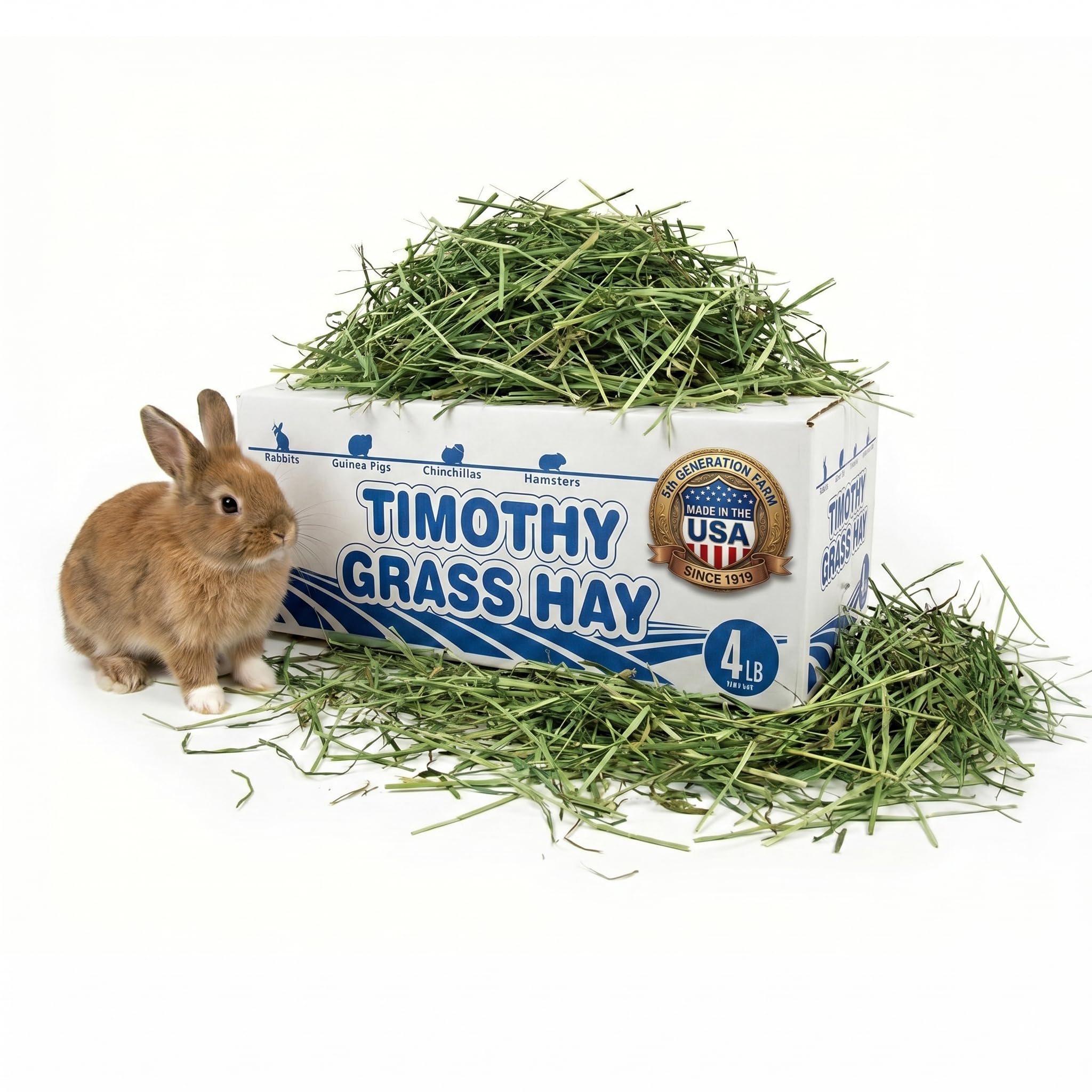
The high Desert 2nd Cutting Timothy Hay hits the sweet spot for adult rabbit feeding. It is a second cutting timothy hay, meaning it offers a soft, leafy texture with enough stem to encourage proper dental wear — not too coarse like first cutting, not too rich like third cutting. The 4-pound box comes hand-packed in breathable cardboard, which preserves the natural green color and grassy aroma that rabbits instinctively look for.
Verified owner reviews consistently note that even the most stubborn picky eaters finish this hay without waste. Multiple buyers reported switching from other brands after their rabbits developed gastric issues or refused to eat, and saw immediate improvement with High Desert. The batch consistency is generally strong — though a small number of recent reviews mention occasional dried-out batches with thicker stems, so ordering fresh stock matters.
If you have one or two adult rabbits, this box lasts approximately 2–3 weeks with daily free-feeding. It is free of additives, preservatives, and artificial flavors, aligning with a simple, plant-based diet. For owners seeking a reliable, daily feeding hay that minimizes dust and maximizes palatability, this is the most defensible choice in the category.
Why we love it
- Soft, leafy second cutting appeals to picky eaters
- Breathable box preserves freshness and aroma
- Minimal dust, sticks, and stem waste
- All-natural with no preservatives or additives
Good to know
- Recent batch quality can be inconsistent (some dry boxes reported)
- 4 lb size may require more frequent reordering for multiple rabbits
2. Small Pet Select Alfalfa Hay
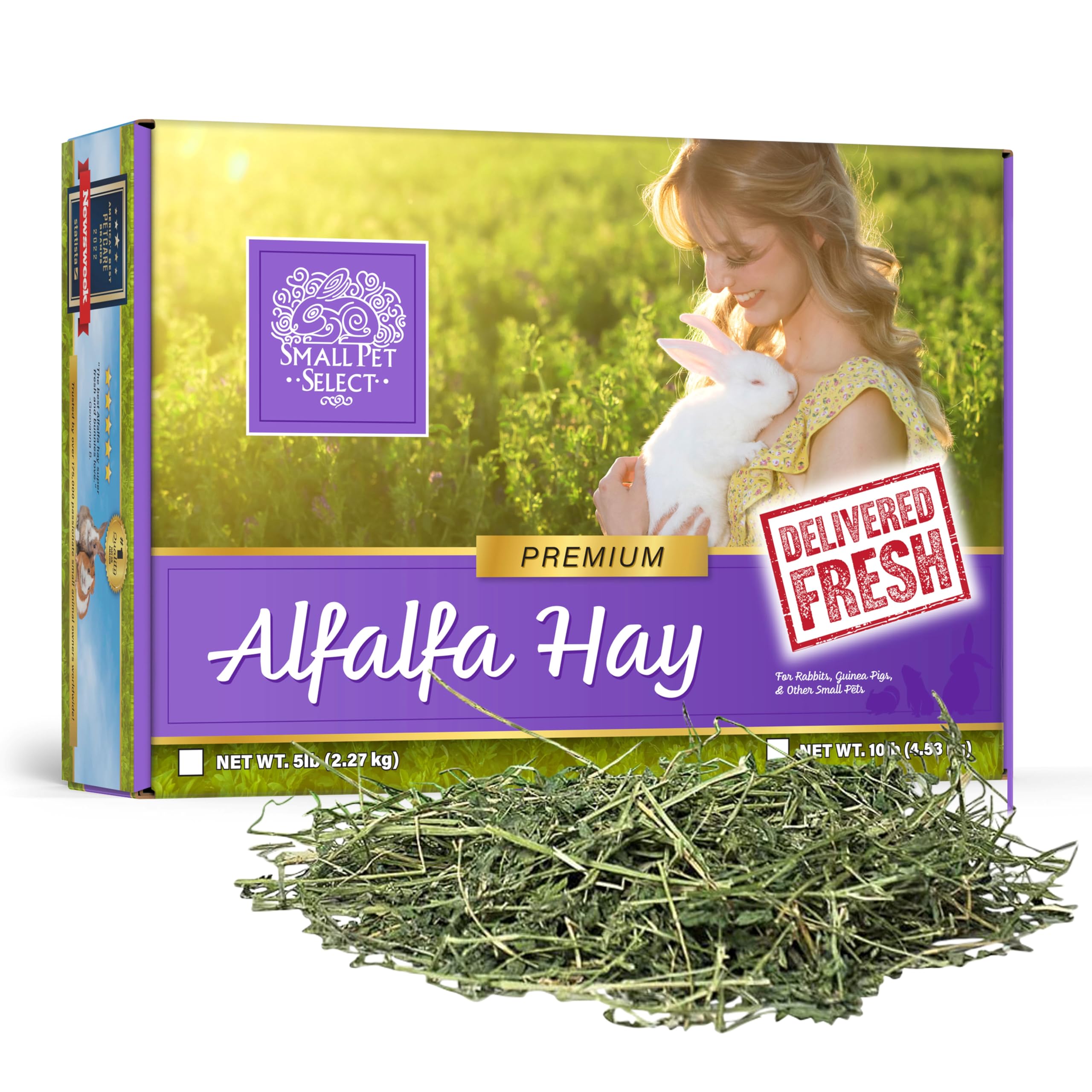
Small Pet Select positions itself as a premium alfalfa hay, and the consensus from owners bears that out. This is a legume hay with a higher protein and fat content (around 15–18% protein), making it the appropriate choice for juvenile rabbits under 7 months old, pregnant or nursing does, and senior rabbits needing extra caloric density. The 5-pound box is hand-packed in small batches and shipped without compression, preserving the stem and leaf integrity that compressed bags destroy.
Customer reports are overwhelmingly positive — owners of picky bunnies, including a six-rabbit household with ages ranging from 9 weeks to 3 years, report that all animals devour this hay without hesitation. One reviewer noted their rabbit refused Oxbow brand entirely but finished the Small Pet Select alfalfa immediately. The hay arrives smelling fresh and green, and the box format makes storage and dispensing cleaner than bagged hay.
It is critical to note that alfalfa is not a daily staple for healthy adult rabbits due to its high calcium content, which can contribute to urinary sludge or stones over time. Use this product for the specific life stages indicated on the packaging. The subscription option adds convenience for consistent replenishment, and the satisfaction guarantee protects against a bunny that turns up its nose.
Why we love it
- Hand-selected, hand-packed with minimal handling
- Bunnies of all ages (kits to seniors) find it highly palatable
- Breathable box preserves aroma and texture
- Convenient subscription option available
Good to know
- Not suitable as a daily staple for healthy adult rabbits (high calcium)
- Premium pricing compared to generic alfalfa options
3. Small Pet Select Straight Timothy Hay Cubes

For owners tired of hay scattered across the cage floor, these timothy hay cubes are a practical alternative. They are compressed into small, tidy cubes made from 100% straight timothy hay — no alfalfa filler, no blended ingredients. The smaller cube diameter (designed specifically for small pets rather than horses or livestock) makes them easy for rabbits to grip and gnaw, supporting dental wear through chewing.
Verified buyers report that these cubes work well as a daily staple for extra hay intake, especially for rabbits that waste loose hay. Multiple owners noted their bunnies actively enjoy the cubes as a foraging activity. The cubes are also hypoallergenic, which is a meaningful benefit for owners with hay allergies who struggle with loose hay dust. Some breakage and crumbling in the box is expected due to the compressed nature, but most owners find the trade-off acceptable for the reduced mess.
The packaging changed to a cardboard box without a resealable bag, so transferring cubes to an airtight container will help maintain freshness over time. This product is ideal for travel, for cages with hay racks that struggle with loose hay, or for owners who want portion-controlled feeding without the volume of a full box of loose hay.
Why we love it
- Significantly reduces mess compared to loose hay
- Smaller cube size is rabbit-appropriate
- Hypoallergenic — less dust for allergy-prone owners
- Pure timothy hay with no fillers or alfalfa
Good to know
- Some crumble and breakage in the box is common
- Not a complete replacement for long-strand loose hay for dental wear
4. Oxbow Harvest Stacks Timothy with Carrots

The Oxbow Harvest Stacks are compressed timothy hay discs with a dried carrot strip pressed into the center. They function primarily as an enrichment tool rather than a primary nutrition source — the compact form encourages rabbits to forage, nibble, and tear apart the hay, which provides mental stimulation. The discs measure approximately 2 inches tall and 4.5 inches in diameter, fitting easily into most cage setups or travel carriers.
Multiple verified reviews highlight this product as a breakthrough for picky bunnies who refuse loose hay. The carrot strip acts as a flavorful enticement, and several owners reported that their rabbits gradually began eating the surrounding hay after initially only focusing on the carrot. It is also recommended by the popular YouTube channel “Scotty’s Animals” for its space-saving and low-mess properties — ideal for small enclosures where a full hay box feels unwieldy.
Be aware that the carrot strip is small, and some bunnies will drag the entire disc around the cage, creating a different kind of mess. The discs are also more expensive per ounce than loose hay, so this is best used as a supplement to a regular loose hay diet rather than a replacement. For owners dealing with a bunny that will not eat hay at all, this is a strategic tool to rebuild the feeding habit.
Why we love it
- Effective for tempting picky bunnies into eating hay
- Compact, space-saving design for small cages
- Provides foraging enrichment and mental stimulation
- Less dust and mess than bagged loose hay
Good to know
- More expensive per ounce than standard loose hay
- Bunnies may drag discs around, creating local mess
- Best used as a supplement, not a primary hay source
5. Grandpa’s Best Alfalfa Hay

Grandpa’s Best Alfalfa Hay delivers a budget-friendly entry point into alfalfa feeding. It is labeled as a soft-textured, high-fiber, low-protein alfalfa hay — though alfalfa is inherently higher in protein than grass hays, the formulation emphasizes digestibility and palatability. At 40 ounces in a bag format, it provides a larger volume of hay for the money compared to the boxed premium options.
Owner reviews highlight strong initial impressions: the hay smells fresh and is free of the long, hard stems that plague some other bagged brands. Several owners of picky rabbits reported that their bunnies devoured this hay enthusiastically, and the value proposition is clear — roughly three times the volume of some premium brands for a comparable price. One buyer noted the hay broke apart easily and was perfect for their tortoise as well, suggesting acceptable quality for a general small-herbivore diet.
The main risk with this product is batch consistency. A notable review describes a second bag being 75% dust and completely unusable, which is a common complaint with compressed bagged hay formats. Because of this, it is best ordered when you have a backup hay source or are willing to accept the occasional dust-heavy batch. For owners on a tight budget who primarily need alfalfa for growing or nursing animals, this offers the best value-per-pound when quality holds.
Why we love it
- Excellent value — more hay per dollar than most competitors
- Soft texture with minimal hard stems
- Strong aroma that rabbits find appealing
- High fiber supports digestive health
Good to know
- Batch consistency is unreliable — some bags arrive as mostly dust
- Bag format compresses hay, leading to more breakage
- Not suitable for daily feeding to healthy adult rabbits
FAQ
What is the difference between first, second, and third cutting timothy hay for rabbits?
Can adult rabbits eat alfalfa hay every day?
How do I transition a picky bunny from treats to hay?
How much hay should a rabbit eat per day?
What does it mean when hay is “dusty” and is it dangerous?
Final Thoughts: The Verdict
For most rabbit owners, the best daily hay for bunnies is the High Desert 2nd Cutting Timothy Hay because its soft, leafy texture and consistent freshness address the two biggest pain points: picky eating and wasteful stem rejection. If you are raising young bunnies or have a nursing doe that needs extra protein and calcium, the Small Pet Select Alfalfa Hay delivers premium-grade nutrients with reliable palatability. And for owners struggling with hay mess or traveling with their rabbit, the Small Pet Select Timothy Hay Cubes provide the neatest, lowest-dust alternative without sacrificing fiber content.