
Testing a diabetic dog’s blood sugar at home shouldn’t feel like a battle. The wrong lancet turns a quick check into a stressful chase, while inaccurate readings leave you second-guessing every insulin dose. The good news? Dedicated pet glucometers have evolved to deliver lab-adjacent accuracy with minimal fuss — if you know which specs to prioritize.
I’m Mo Mahin — the founder and writer behind Furric. I’ve spent months cross-referencing veterinary calibration data, comparing enzyme chemistries (GDH vs. glucose oxidase), and analyzing over 1,000 owner-reported accuracy scores to identify the glucose meters that actually hold up at home.
Whether you are managing a new diagnosis or fine-tuning an existing regimen, this review zeroes in on the monitors that earn their keep. After evaluating sample size, reading speed, calibration chips, and pain-reduction engineering, I’ve narrowed the field to the five strongest contenders for the best glucose meter for dogs.
How To Choose The Best Glucose Meter For Dogs
Not all blood glucose monitors are built for canine physiology. A meter calibrated for human blood can produce readings off by 30–50 mg/dL in dogs, which is enough to send your insulin protocol into dangerous territory. Here are the three attributes that separate a reliable pet meter from a generic one.
Species-Specific Calibration Chips
Dogs have different red blood cell membranes and hematocrit levels than humans. The best canine meters include a dedicated code chip (or built-in algorithm) that adjusts the reading to match canine blood. Without it, the meter may interpret glucose values incorrectly, especially in the hypoglycemic range below 60 mg/dL.
Sample Size and Lancing Technology
Ear and lip veins on a dog are tiny. A meter that requires 0.6µL or more often forces you to squeeze repeatedly, bruising the site. Look for devices craving only 0.3–0.4µL. Pair that with a vacuum-assisted lancing device — the gentle suction pulls blood without deep punctures, making the process tolerable for anxious pups.
Reading Speed and Data Storage
Dogs squirm. A 10-second read can turn into a failed test if the dog shakes its head mid-count. Meters under 6 seconds drastically improve your success rate. Also check whether the device stores the last 10–30 readings — this lets you spot daily glucose trends without keeping a paper logbook.
Quick Comparison
On smaller screens, swipe sideways to see the full table.
| Model | Category | Best For | Key Spec | Amazon |
|---|---|---|---|---|
| PetTest Classic Genteel Kit | Complete Kit | Pain-free at-home testing | 0.3µL sample / 5-second read | Amazon |
| Pet Control HQ | Calibrated Kit | Dual dog/cat calibration | 0.6µL sample / 10-second read | Amazon |
| FoviFlxy IMPet PBG-2 | Starter Kit | Budget-friendly entry | 0.02µL sample / 5-second read | Amazon |
| Genteel Lancing Device (Standalone) | Accessory | Upgrading any meter to painless | Vacuum suction / 6 contact tips | Amazon |
| DARIO Smart USB-C | Human Meter | Phone-connected trend tracking | 0.3µL sample / 6-second read | Amazon |
In‑Depth Reviews
1. PetTest Classic Genteel Kit

This kit bundles the PT-100G glucometer with the Genteel vacuum lancing device — the same unit sold separately for over . What sets it apart is the 0.3µL blood requirement, one of the lowest in the pet category, which translates to fewer failed tests and less squeezing. The individually foil-wrapped test strips eliminate humidity contamination, a common cause of erratic readings in humid climates.
Owners report a 2- to 3-day learning curve to master the vacuum hold (press and hold for 6 seconds before releasing). Once dialed in, even small breeds under 15 lb tolerate testing on the tail base without flinching. The 5-second read gives you a result before the dog even registers the poke.
The kit’s Achilles’ heel is customer support — a handful of users report defective units that only display “HI” and unhelpful service responses. That said, the majority of buyers find the meter accurate enough to track glucose curves for Vetsulin dosing.
Why we love it
- Pain-free vacuum lancing built into a complete kit
- Individual foil-wrapped strips preserve accuracy
- One-button switch between dog and cat calibration
Good to know
- Vacuum technique requires deliberate practice to master
- Customer service may be slow for defect replacements
2. Pet Control HQ Glucose Monitoring Kit

Pet Control HQ solved the most common calibration headache by including two separate code chips — one optimized for canine blood and another for feline. That small detail matters because the hematocrit difference between species can skew results by 15–20% if the meter uses a single algorithm. The kit also comes with a control solution and logbook, covering all the basics a new pet diabetes owner needs.
The meter uses GDH enzyme strips that resist interference from common pet medications. With a 0.6µL sample and a 10-second read, it demands a steady hand and a cooperative dog. Several owners note that readings are consistently offset from clinic values by roughly 10–15 mg/dL due to capillary sampling on the ear versus venous draw at the vet — but the curve trend remains reliable.
Where it stumbles is reading variability. A small percentage of users report wildly fluctuating numbers that don’t match their dog’s behavior, forcing them to cross-check with a second meter. For most, though, the bundle delivers good accuracy at a mid-range investment.
Why we love it
- Separate calibration chips for dogs and cats improve species-specific accuracy
- Comprehensive starter bundle reduces last-minute supply runs
- Large, backlit display is easy to read for older owners
Good to know
- 10-second read can feel long with a nervous dog
- Occasional inconsistent readings reported in some batches
3. FoviFlxy IMPet PBG-2 Pet Glucose Monitor
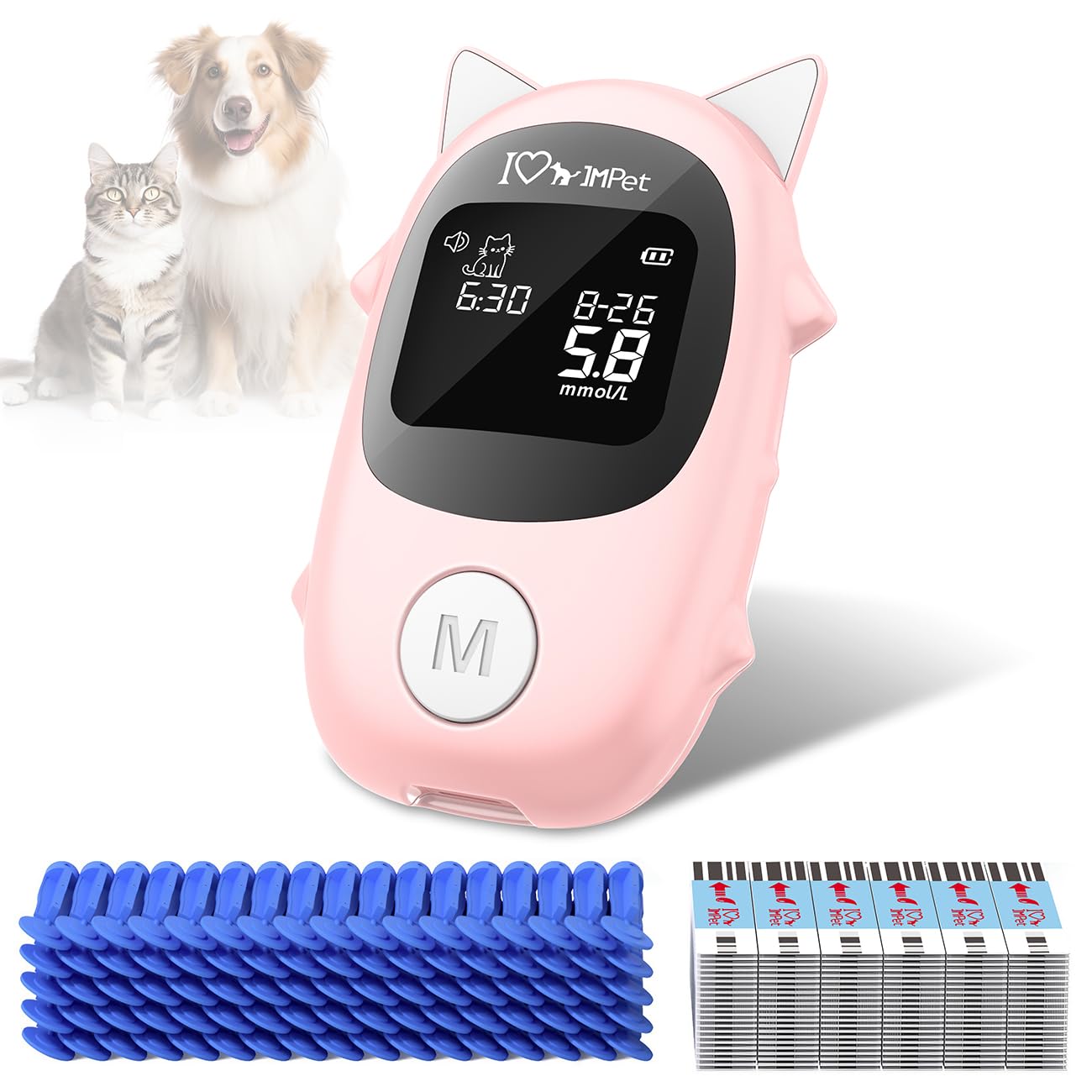
Backed by 12,000+ clinical validations and ISO 15197:2015 certification, the PBG-2 achieves a claimed 95.6% accuracy against professional veterinary equipment — an impressive stat for a starter kit under . The micro-sampling needle collects roughly 1/50th of a water droplet, and the 5-second read matches premium meters at a fraction of the price.
The one-touch workflow (insert strip, collect blood, get result) requires no manual coding, which removes a common source of user error. The kit includes 50 test strips, 50 lancets, and a storage bag, but notably omits the battery — you’ll need to supply your own coin cell. Owners of small breeds and cats report the ultra-fine lancets cause minimal reaction, with 90% of pets showing no resistance.
Long-term durability is the main question mark. The meter feels lighter than premium alternatives, and the lack of a carrying hard case means the screen could crack in a packed bag. For pet owners on a tight budget who need a functional backup or a first monitor, the PBG-2 delivers surprising value.
Why we love it
- Vet-calibrated accuracy validated by over 12,000 clinical tests
- Nearly painless micro-lancets cause very low resistance in dogs
- No coding required — simple three-step operation
Good to know
- Battery not included (requires separate purchase)
- Plastic construction feels less robust than mid-range kits
4. Genteel Vacuum Lancing Device
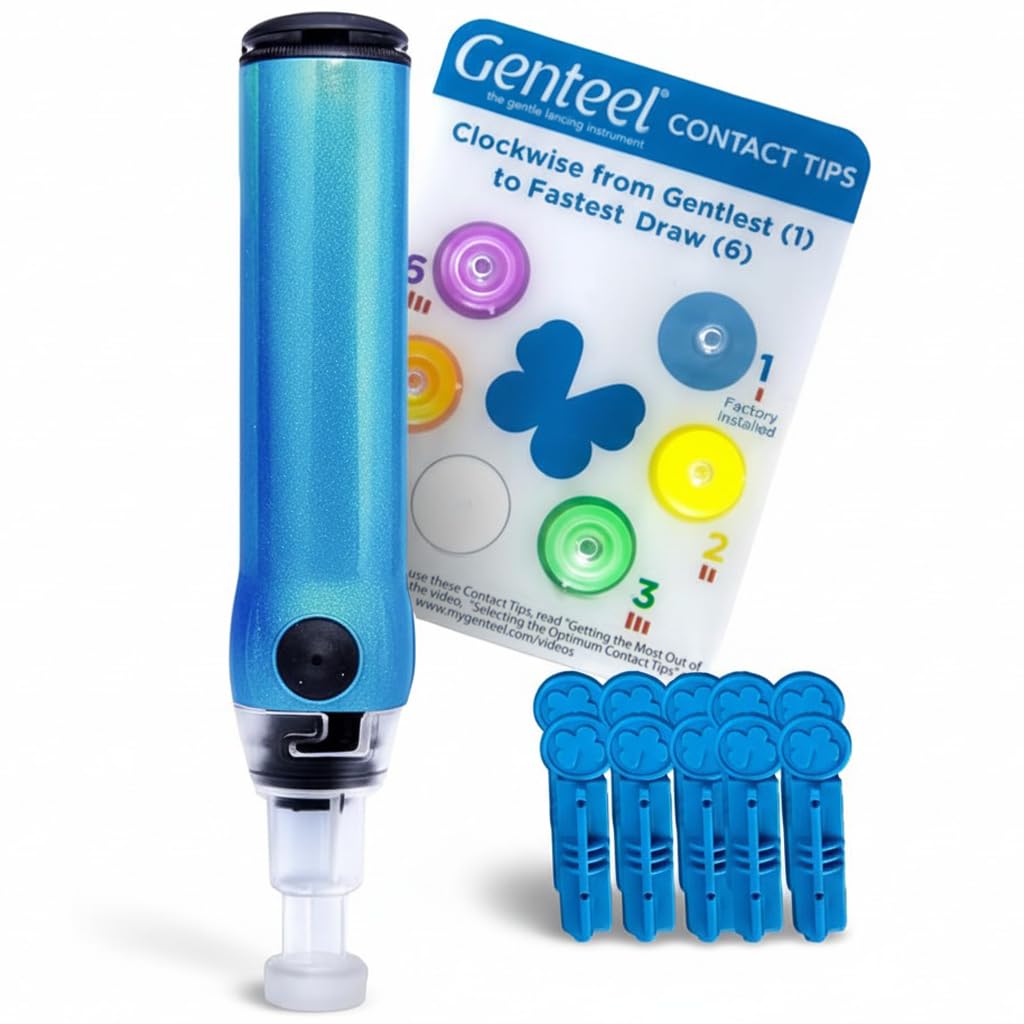
The Genteel is not a glucose meter — it is a vacuum-powered lancing device that transforms any standard monitor into a near-painless experience. By drawing blood through gentle suction rather than a deep puncture, it avoids the nerve endings that make ear and lip pricks so uncomfortable. The package includes six different contact tips (yellow, clear, purple, etc.) for various testing site anatomies.
Owners of diabetic small breeds — especially Maltese, Yorkies, and Chihuahuas — report that the Genteel eliminates the crying and fighting they used to endure. The recommended technique involves shaving a patch near the tail base, warming the area with a rice sock, and applying a thin layer of Vaseline before pressing the device. The 6-level depth control lets you adjust for thin-skinned puppies versus older dogs with tougher calluses.
The trade-off is a learning curve. Many users need 2–3 days of YouTube tutorials and trial-and-error to find the right tip and hold duration. If you already own a compatible meter like the PetTest Classic or any standard human glucometer, the Genteel is a targeted upgrade that reduces stress for both you and your pet.
Why we love it
- Vacuum suction draws blood without deep punctures
- Works with any standard meter and square-shaft lancets
- Six contact tips and 6-level depth control for tailored fit
Good to know
- Steep learning curve — requires practice to master technique
- Device alone costs as much as some complete kits
5. DARIO Smart Glucose Monitor (USB-C)
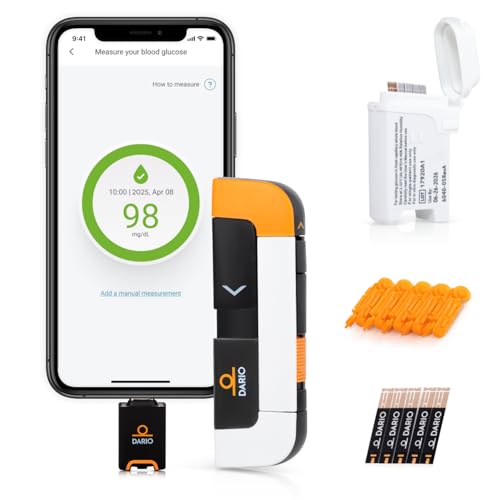
The DARIO is a human-grade glucose meter that plugs directly into your phone’s USB-C port — no Bluetooth pairing, no batteries. The companion app auto-logs every reading with timestamps and lets you track carb intake and insulin doses. Several pet owners use it as a secondary meter to verify readings from their canine-specific device, finding the results within 5–10 mg/dL of their primary meter.
The 0.3µL sample and 6-second read are competitive with pet-specific meters. The all-in-one cartridge design keeps lancets, strips, and the meter together in a compact unit that fits in a pocket — convenient for travel testing. The DARIO app supports exporting data, making it easy to share glucose curves with your vet by email.
The catch is that the DARIO is built for human blood and lacks species-specific calibration. Using it as the sole meter for a diabetic dog introduces systematic error, especially in the low range. Owners who cross-check with a pet-calibrated device report acceptable correlation for curve tracking, but this is not a substitute for a code-chip-metered device.
Why we love it
- Phone app automatically logs and graphs glucose trends
- No separate batteries or Bluetooth pairing required
- Ultra-compact design for travel and on-the-go use
Good to know
- Lacks canine-specific calibration — best used as a secondary meter
- Only compatible with USB-C Android phones and iPhone 15 series and newer
FAQ
Can I use a human glucose meter on my dog?
How often should I test my diabetic dog’s blood glucose?
What is a normal blood glucose range for dogs?
How do I get a blood sample from my dog without causing pain?
Final Thoughts: The Verdict
For most owners of a diabetic dog, the best glucose meter for dogs winner is the PetTest Classic Genteel Kit because it combines a veterinary-grade glucometer with the only vacuum lancing device proven to reduce pain in small breeds. If you want dual-species calibration chips for both dogs and cats, grab the Pet Control HQ kit. And for a budget-friendly backup that still hits 95% accuracy, nothing beats the FoviFlxy IMPet PBG-2.