
A damp, ammonia-heavy chicken coop in January isn’t just uncomfortable — it threatens your flock’s respiratory health and can lead to frostbite on combs and wattles. The right winter bedding absorbs moisture, traps heat from the deep litter composting process, and keeps your hens laying comfortably through the coldest months.
I’m Mo Mahin — the founder and writer behind Furric. I’ve spent years comparing poultry bedding specifications, studying moisture absorption rates, composting thermal output, and analyzing aggregated owner feedback from thousands of back-yard coops to determine which materials truly perform in sub-freezing conditions.
After evaluating five top options based on absorbency, dust levels, insulating value, and odor control, here is a focused guide to the best winter bedding for chickens that balances your birds’ health with practical coop maintenance.
How To Choose The Best Winter Bedding For Chickens
Winter bedding must do more than cover the floor — it must absorb daily moisture output from droppings and respiration, resist compacting into a cold mat, and ideally generate heat through aerobic composting. Here are the key factors to weigh before you buy.
Absorbency & Ammonia Control
Chicken manure releases ammonia gas quickly in an enclosed coop. A bedding that absorbs at least 2–3 times its weight in moisture will keep ammonia levels low. Hemp and paper bedding typically outperform straw in this metric, with hemp absorbing roughly twice as much moisture as pine shavings.
Dust & Respiratory Health
Chickens have sensitive respiratory systems. Bedding with visible dust clouds when poured or fluffed can cause chronic irritation and open the door to respiratory infections. Look for products labeled “99% dust free” or “low dust” — especially if your coop has limited ventilation during winter months.
Insulation & Deep Litter Compatibility
The deep litter method relies on bedding that composts from the bottom up, releasing heat. Straw and chopped straw create air pockets that trap warmth, while paper and finer hemp can mat down faster. Choose a material that stays loose enough to turn and fluff between cleanings.
Biodegradability & Composting Endgame
All winter bedding eventually becomes coop waste. Materials like hemp, straw, and recycled paper compost readily into garden soil amendments. Avoid treated wood shavings or any bedding with chemical additives if you plan to compost the spent litter.
Quick Comparison
On smaller screens, swipe sideways to see the full table.
| Model | Category | Best For | Key Spec | Amazon |
|---|---|---|---|---|
| Eaton Pet & Pasture Hemp Bedding | Hemp | Deep litter method, all-winter odor control | Absorbs 2x more than traditional bedding | Amazon |
| Fresh News Recycled Paper Bedding | Paper | Dust-sensitive flocks, brooder use | Over 99% dust free | Amazon |
| Eaton Pet & Pasture Nesting Herbs | Herbal | Nesting box enrichment, pest deterrence | 10 oz resealable bag | Amazon |
| Ryonwise Nesting Herbs | Herbal | Bulk coop refresh, stress reduction | 1 lb dried herb mixture | Amazon |
| Standlee Chopped Straw | Straw | Insulation layers, outdoor shelter bedding | Chopped ~4″ pieces, 25 lb bag | Amazon |
In‑Depth Reviews
1. Eaton Pet and Pasture Hemp Bedding

This hemp bedding delivers the trifecta poultry keepers need in winter: extreme absorbency, near-zero dust, and a natural earthy scent that masks ammonia without chemical perfumes. Owner reports consistently note that the deep litter method with Eaton Hemp suppresses odor for 5–6 months between full cleanouts, even in coops with 6–10 birds. The 28-liter bag fluffs up to cover roughly 4–5 square feet at a 4-inch depth.
Hemp fibers are naturally resistant to compaction, so the bedding stays loose enough to turn with a pitchfork every few days — critical for maintaining aerobic composting and the heat it generates. The material is grown without pesticides or herbicides, and it composts into a rich garden amendment after use. Keepers of small flocks appreciate that it doesn’t stick to eggs the way some paper bedding can.
The main drawback is cost per cubic foot compared to pine shavings or straw. However, because you replace it far less often, the yearly expense often balances out. The bag size is compact for the volume — some users wish for a larger economy option. Overall, this is the most effective single solution for winterizing a chicken coop.
Why we love it
- Extends deep litter cycles to several months without smell
- Virtually no airborne dust to irritate chicken lungs
- Composts cleanly into garden soil
Good to know
- Small bag volume relative to price per liter
- Shipping can be slower than local farm supply options
2. Standlee Chopped Straw

Standlee’s chopped straw offers the most cubic footage per dollar in this lineup, and its structure is ideally suited for insulation. The 4-inch pieces create air pockets that trap body heat, making it excellent for the top layer of a deep litter system or for filling outdoor shelters and windbreaks. The 25-pound compressed bale expands significantly when opened.
The straw is heat-treated to kill weed seeds, which also eliminates any mold spores or insect eggs that could harm your flock. It has a clean, faintly sweet smell and feels soft and pliable — not coarse like some hay-based beddings. Users with cats and small livestock also rely on this for winter shelter bedding, attesting to its versatility.
Straw is less absorbent than hemp or paper on a per-weight basis, so it performs best when layered over a more absorbent base material. Some dust is present during initial fluffing, though it settles quickly. A small number of seeds may survive treatment and germinate if the spent bedding is spread in a garden.
Why we love it
- Highest volume-per-dollar option for large coops
- Creates excellent insulating air pockets for winter warmth
- Heat-treated to remove weed seeds and pathogens
Good to know
- Less absorbent than hemp — needs a base layer for moisture
- Mild dust cloud when first pouring from bag
3. Fresh News Recycled Paper Bedding

For keepers with brooder chicks or a flock prone to respiratory issues, this paper bedding is the cleanest option available. It scores over 99% dust free per independent measurements, and the “Ammonia Locker” technology chemically neutralizes urine odors rather than just masking them. The 40-liter bag is lightweight — about 16 pounds — and the gray recycled paper particles are soft enough for young chicks to walk on without leg splay.
Users consistently report that a 3–4 inch layer lasts about 3 days between spot cleans in a small coop, and a full bag stretches roughly 2 months for a 4-bird enclosure. The material spreads easily and doesn’t clump as aggressively as some pelleted beddings, making daily scooping simple. It is fully biodegradable and made from 100% post-consumer recycled paper.
Paper bedding can mat down faster than hemp or straw in high-traffic nesting boxes, so it benefits from more frequent fluffing. Some batches have contained small plastic debris or foreign particles, so it’s worth sifting the first bag before spreading. Price per liter is higher than straw.
Why we love it
- Near-zero dust ideal for sensitive chicks and adult birds
- Ammonia Locker technology actively neutralizes coop odor
- Lightweight bag is easy to carry and pour
Good to know
- May contain trace plastic or debris from recycling process
- Mats faster than hemp in nesting boxes
4. Ryonwise Nesting Herbs
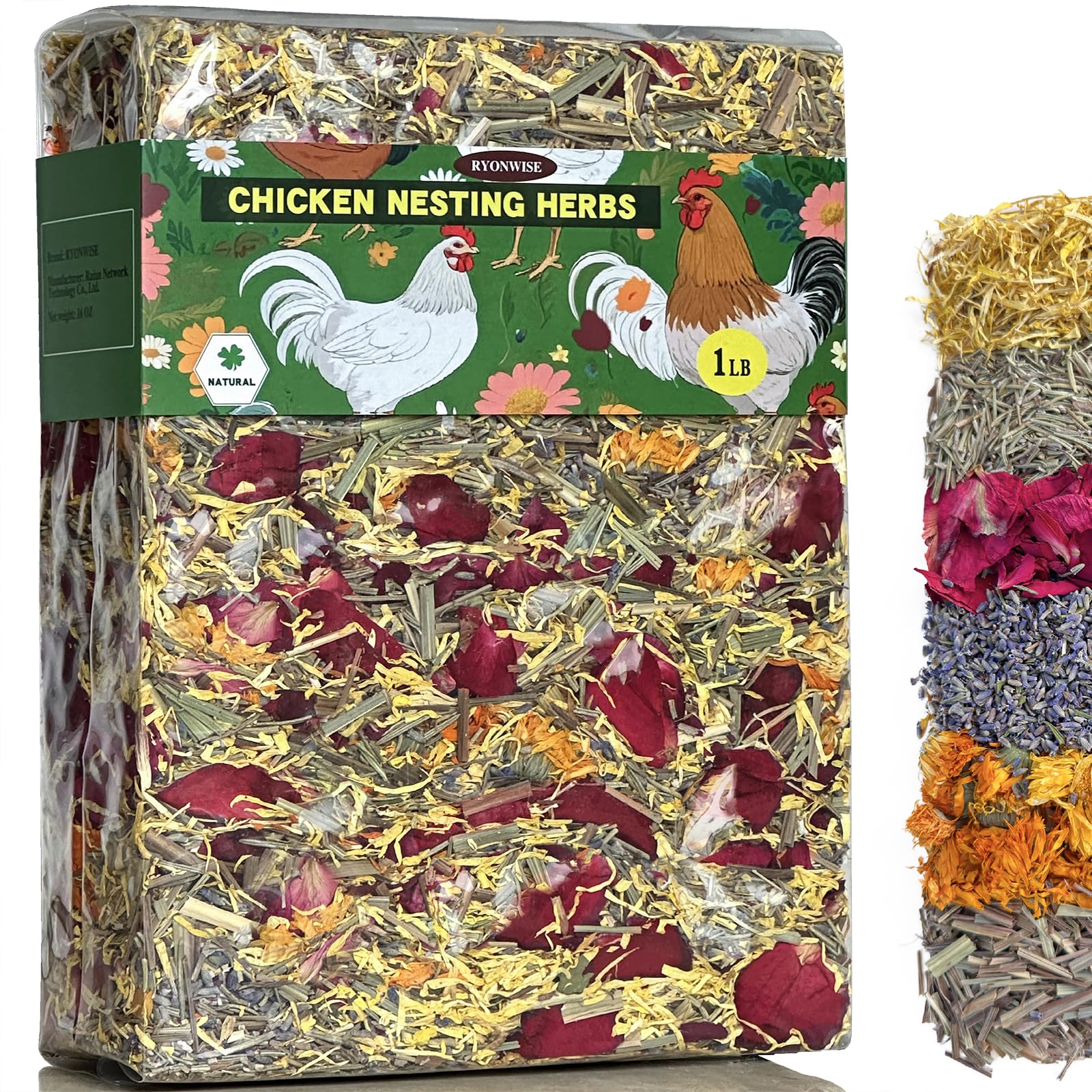
While not a primary bulk bedding, this 1-pound herbal blend serves as an excellent aromatic top-dressing for nesting boxes and coop floors during winter. The mixture includes calendula, lavender, rosemary, and other herbs known to calm hens and deter mites naturally. Sprinkling a thin layer over your base bedding infuses the coop with a gentle floral-herbal scent that effectively masks the musty winter smell without chemicals.
Users report that hens actively peck and forage through the herbs, which provides mental enrichment during the dark, cold months when outdoor ranging is limited. The herbs also add a thin moisture-wicking barrier on top of the nesting box, helping keep eggs cleaner. The resealable carton packaging keeps the blend fresh between uses.
The primary limitation is cost per pound — this is a supplement, not a full-coverage bedding. A 1-pound bag, used sparingly, lasts roughly 3–5 coop cleanings depending on box count. Some hens may eat the herbs, so monitor consumption if you use treated herbs or if your flock has dietary restrictions.
Why we love it
- Calms laying hens and encourages natural pecking behavior
- Natural pest-deterrent properties without chemicals
- Pleasant aroma transforms coop atmosphere in winter
Good to know
- Price per pound is high — use sparingly as a topper
- Some hens will eat the herbs, reducing longevity
5. Eaton Pet and Pasture Nesting Herbs

Eaton’s nesting herbs are a smaller 10-ounce blend that pairs well with their hemp bedding. The formula — calendula, basil, lavender, blue cornflower, lemon balm, rose petals, and rosemary — is designed to refresh nesting boxes while discouraging mites and lice. The pieces are finely crushed, making them easy to sprinkle evenly over a base layer without creating clumps.
Owners consistently note that a single bag lasts 4–5 weekly top-ups for a standard 4–6 nesting box setup, and the scent remains noticeable for days after application. The minimal plastic packaging aligns with the brand’s eco-friendly positioning, and the blend is hand-packed in the USA. Many users layer these herbs on top of the Eaton hemp bedding for a cohesive winter system.
The 10-ounce volume is smaller than the Ryonwise 1-pound bag, making it less economical for large coops or frequent use. The cost per ounce is higher, and the herbs may settle in the bag during shipping, requiring a shake before opening. Not all herbs appeal to every hen’s palate — some flocks ignore the blend entirely.
Why we love it
- Scientifically blended to deter pests and freshen air
- Pairs seamlessly with Eaton hemp bedding
- Resealable packaging maintains freshness
Good to know
- Smaller volume than competing herbal blends
- Higher cost per ounce for frequent users
FAQ
How deep should winter bedding be in a chicken coop?
Can I mix different types of winter bedding together?
How often should I fully change winter bedding?
Will herbal nesting herbs keep mites away in winter?
Final Thoughts: The Verdict
For most keepers, the best winter bedding for chickens winner is the Eaton Pet and Pasture Hemp Bedding because it combines top-tier moisture absorption, near-zero dust, and compatibility with the deep litter method that generates natural coop heat. If you want maximum volume per dollar for insulating large coops, grab the Standlee Chopped Straw. And for dust-sensitive chicks or flocks with respiratory issues, nothing beats the Fresh News Recycled Paper Bedding.