
That frantic scratching at the back door is often the first sign your lawn has become a flea breeding ground. Adult fleas represent only five percent of the infestation; the other ninety-five percent—eggs, larvae, and pupae—are hiding in your grass, soil, and mulch. Without a targeted lawn treatment, you are only addressing the tip of the iceberg, and the cycle will repeat as soon as the weather warms up.
I’m Mo Mahin — the founder and writer behind Furric. I’ve spent years analyzing formulation data, comparing active ingredient profiles, and cross-referencing owner-reported results across hundreds of insecticide products to separate the genuinely potent yard treatments from the quick-washout solutions.
The goal is to help you find the most effective solution for your specific situation. After reviewing the market, this guide will help you identify the best yard treatment for fleas based on active ingredients, residual duration, and application method.
How To Choose The Best Yard Treatment For Fleas
Selecting the right product requires understanding what is actually living in your lawn. Flea larvae are sensitive to sunlight and dry conditions, so they thrive in shaded, moist areas where pets rest. You need a product that hits these microclimates and provides residual activity long enough to break the 14-to-21-day life cycle.
Granules vs Liquid Concentrates vs Ready-to-Use Sprays
Granules (like Talstar PL) are broadcast across the lawn with a spreader and require watering-in to release the active ingredient into the soil and thatch layer where larvae develop. They offer the longest residual—up to 4 months—because the sand-core structure releases slowly. Liquid concentrates (like Permethrin EC 10%) must be mixed with water and sprayed; they provide broad coverage and fast knockdown but require a pump sprayer and typically last 2 to 4 weeks before reapplication is needed. Ready-to-use sprays (like Harris) are the most convenient for spot-treating hot zones like dog runs and patios but cover smaller areas per bottle.
Active Ingredient Spectrum: Permethrin vs Bifenthrin vs Natural Oils
Permethrin is a broad-spectrum synthetic pyrethroid that kills fleas and ticks rapidly but is highly toxic to bees and aquatic life—never spray near open water or flowering plants. Bifenthrin (the active in Talstar PL) is another synthetic pyrethroid with a longer soil residual (up to 90 days) and lower volatility, making it a strong choice for perimeter and lawn applications. Both of these synthetics require strict adherence to drying times before pets go back outside. Natural essential oil blends (like EcoGuard Plus using cedarwood and geraniol) offer a safer alternative for organic yards and beneficial insects, but they break down faster in rain and UV light, requiring more frequent reapplication.
Coverage Area and Reapplication Schedule
One critical mistake is under-applying. A 10-pound bag of granules treating 10,000 square feet means if your lot is 15,000 square feet, you need a bag and a half. With liquid concentrates, mixing ratios vary (e.g., Permethrin EC at 1 oz per gallon of water covers about 1,000 sq ft per gallon). Always check the labels “treats up to” number and buy enough to treat every shaded, fenced, and mulched zone where pets travel. Reapplication intervals depend on the formulation: natural sprays may need a monthly refresh, while bifenthrin granules can carry you from spring through late summer.
Quick Comparison
On smaller screens, swipe sideways to see the full table.
| Model | Category | Best For | Key Spec | Amazon |
|---|---|---|---|---|
| Talstar PL Granules | Granule | Longest residual barrier (2-4 months) | Sand-core granule; no watering needed | Amazon |
| Ortho Bug B Gon Max | Granule | Broad-label protection for food gardens | Kills 100+ insects; 3 months residual | Amazon |
| Durvet Permethrin EC 10% | Concentrate | Versatile DIY spray for lawns and dips | 10% permethrin; mix 1 oz per gallon | Amazon |
| Harris Flea & Tick Killer | Spray | Odorless spot-treatment for patios | 1 gallon RTU; odorless & non-staining | Amazon |
| EcoGuard Plus | Concentrate | Natural essential oil protection | 8 oz covers up to 43,560 sq ft; plant oils | Amazon |
In‑Depth Reviews
1. Talstar PL Granules Insecticide
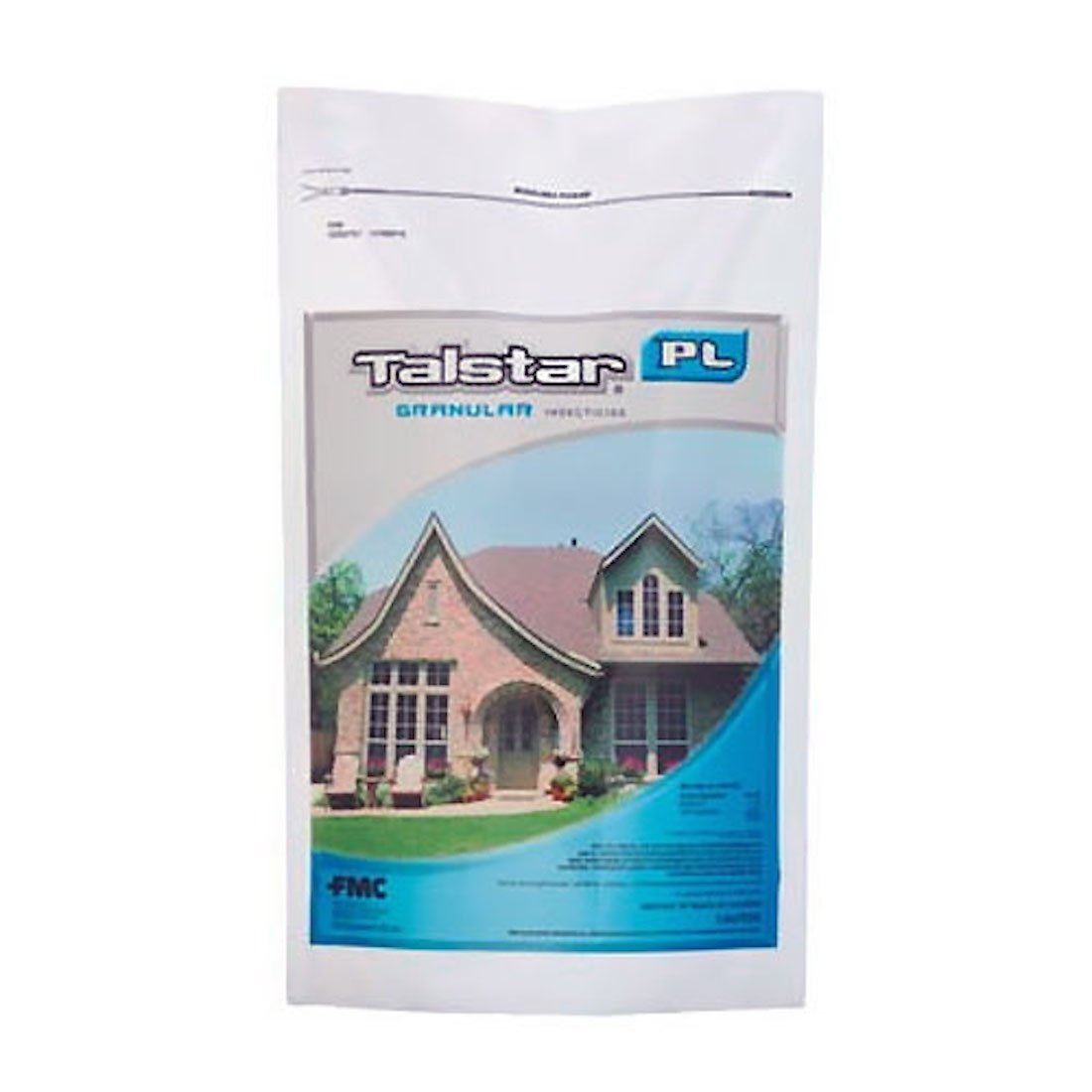
Talstar PL (Professional Line) uses bifenthrin as its active, a pyrethroid specifically engineered for soil adhesion. The sand-core granule structure means you can broadcast it with a standard lawn spreader and leave it—no watering is required because the granule weight pushes it through grass and mulch to the soil zone where flea larvae develop. With the longest residual claim of any consumer granule (2 to 4 months), a single spring treatment should break multiple generations of the flea life cycle without weekly reapplication.
Owner reports from southern climates confirm ants are gone by the next day, and fleas disappear from treated perimeters after initial watering or rainfall activates the bifenthrin. The 400-ounce bag is substantial—expect a single bag to cover around 10,000 to 15,000 square feet depending on how heavily you broadcast. Several users mention finding dead lizards that consumed poisoned insects, so this is a potent neurotoxic product that should be used with extreme care around pets.
Rating 4.7 stars across 772 reviews, Talstar PL is the top-scoring granular option in this lineup. Its biggest advantage is the hands-off longevity; your biggest con is the environmental impact on non-target insects and reptiles, making it unsuitable for organic or pollinator-friendly landscapes.
Why we love it
- Industry-leading residual duration—up to 4 months from one broadcast.
- Sand-core granule penetrates thick grass and mulch without needing water.
- Excellent owner satisfaction (4.7 stars) for long-term ant and flea suppression.
Good to know
- Bifenthrin is highly toxic to aquatic life and beneficial insects like bees.
- Requires a spreader; not a spot-treatment solution for patios.
- Has been linked to dead reptiles in some user-reported environments.
2. Ortho Bug B Gon Max Insect Killer for Lawns

Ortho Bug B Gon Max is a broad-spectrum granular insecticide from the Scotts/Ortho family, labeled against over 100 insects including fleas, ticks, ants, and chinch bugs. The 10-pound bag treats up to 10,000 square feet, and the formulation is approved for use on lawns, ornamentals, vegetable gardens, and even flower beds, making it one of the most versatile options for homeowners who want a single product for the entire property.
Customers report visible flea and tick reduction within days of application, and the manufacturer claims a 3-month residual window. One decade-long user noted that the product suppressed ant colony formation so effectively that they saw a measurable reduction in ticks pulled off their pet. The granules should be watered in after application to move the active ingredient into the soil, which means you need to time your treatment around rain or your sprinkler schedule. Some users found it cheaper at big-box retailers than on Amazon, so compare unit price if buying multiple bags.
With a 4.3-star rating, this is a middle-ground choice—longer residual than any spray, more flexible label than a simple synthetic concentrate, and safe for food gardens once the product dries. The only common complaint is that ants may return after a few weeks, requiring a perimeter reapplication around the house foundation.
Why we love it
- Approved for vegetable gardens and flower beds, not just lawns.
- Controls over 100 insect types for up to 3 months.
- Spreadable with any standard broadcast or hand-held spreader.
Good to know
- Must be watered in for activation—requires planning around rain.
- Ants may return and require a secondary perimeter treatment.
- Large properties may need two bags, making pricing inconsistent online.
3. Durvet Permethrin EC 10-Percent

Durvet’s Permethrin EC 10% is a liquid concentrate that must be diluted—typically 1 ounce per gallon of water—making it an economical choice for large properties. A single 16-ounce bottle produces up to 16 gallons of spray, covering somewhere in the range of 16,000 square feet or more depending on your spray pattern. Unlike ready-to-use sprays, this gives you full control over the dilution ratio, so you can adjust the concentration for heavy infestations or sensitive areas.
User reports describe it as “annihilating” crawling insects almost instantly, with many owners using it for both lawn treatment and flea dips for their dogs (properly diluted). The Permethrin has a noticeable chemical odor that dissipates once dry, but the toxicity to bees and aquatic life is high—the label warns against spraying flowering weeds or near ponds. Some owners report drastical mosquito reduction when sprayed at dusk, but recommend keeping pets indoors for 24 hours post-application.
With a consistent 5-star performance across dozens of reviews, the Durvet concentrate is the top choice for anyone who already owns a pump sprayer and wants to cover the most ground per dollar. The raw concentration also means you must store it securely away from children and pets, and wear protective gear during mixing.
Why we love it
- Extremely economical—1 bottle yields 16 gallons of finished spray.
- Rapid knockdown; kills fleas, ticks, and mosquitoes on contact.
- Can also be used for livestock and on-animal dips when properly diluted.
Good to know
- Requires a separate pump sprayer—not ready-to-use.
- Strong odor during application; heavy toxicity to bees and fish.
- Drying time requirements must be followed strictly around pets.
4. EcoGuard Plus Plant-Based Mosquito & Tick Spray

EcoGuard Plus relies on cedarwood oil and geraniol—both plant-based active ingredients—to repel and kill fleas, ticks, and mosquitoes. The 8-ounce super-concentrate is claimed to cover up to 43,560 square feet when mixed according to directions, making it one of the highest coverage-to-volume ratios in the natural category. It is OMRI-compatible in spirit (not formally listed) and biodegradable, leaving no synthetic residue on plants or soil.
User feedback is split on longevity: multiple customers in Alaska and the South report dramatic mosquito reduction for up to a few days with thorough application, while others note it washes away quickly in rain and requires weekly re-treatments. The pleasant herbal scent is a major plus for those sensitive to chemical smells, dissipating within two hours. Customer service from the small family business is frequently praised, with the owner helping buyers calibrate their dilution for specific infestations.
Rated 4.1 stars, this is the top-tier choice for pet-safe, bee-friendly yards where synthetic pyrethroids are not an option. Just be realistic about the reapplication frequency—especially in humid or rainy climates, the natural oils break down faster than bifenthrin or permethrin.
Why we love it
- 100% plant-based formula—safe for kids, pets, and bees.
- Very high coverage ratio per bottle (up to 43,560 sq ft).
- Pleasant herbal smell that fades quickly without staining plants.
Good to know
- Residual duration is short; may need reapplication after rain.
- Premium per-ounce cost compared to synthetic concentrates.
- Best suited to spot-treatment and perimeter spraying, not whole-lawn broadcast.
5. Harris Flea and Tick Killer, Liquid Spray

Harris Flea and Tick Killer comes ready-to-use in a 1-gallon jug with an extended trigger sprayer—no mixing, no spreader—you simply point and spray. The odorless, non-staining formulation makes it ideal for patios, dog runs, kennels, and shaded spots where fleas congregate. The kill is contact-based and activates once the spray dries, providing an extended residual kill that continues for several weeks in protected areas.
Texas owners report becoming flea-free within 45 minutes after application, praising the lack of chemical smell and the fact that it is EPA-registered for use around pets and people. However, the built-in spray nozzle is a significant point of failure: multiple reviews note the trigger mechanism stops priming after a few minutes of use, forcing manual pump-resets mid-task. The 1-gallon size is convenient for repeated spot applications, but for whole-lawn coverage you would need many gallons and a lot of manual pumping.
Rated highly for its effectiveness and sheer convenience when the sprayer works, the Harris spray is the ideal product for treating high-traffic zones like entryways, dog houses, and shaded fence lines. For large lawns, look to the granule options above for better coverage efficiency.
Why we love it
- Completely odorless and non-staining on fabrics and plants.
- Ready-to-use—no mixing, no equipment beyond the trigger sprayer.
- EPA-registered for safe use in homes with children and pets.
Good to know
- Included spray nozzle frequently fails and loses prime mid-use.
- Not economical for full-lawn coverage; best for perimeter spot treatment.
- One gallon covers less area than diluted concentrates or granules.
FAQ
How long should I wait before letting my dog on the lawn after treating for fleas?
Can I use a flea yard treatment on my vegetable garden or near fruit bushes?
Why do I need to treat the whole lawn if fleas are only in one spot?
Do natural flea yard treatments really work as well as synthetic chemicals?
Final Thoughts: The Verdict
For most homeowners dealing with a persistent flea problem, the best yard treatment for fleas overall is the Talstar PL Granules because its sand-core bifenthrin formulation delivers the longest residual barrier (2-4 months) with a single broadcast and no watering requirement. If you need a product approved for vegetable gardens and perimeter use, grab the Ortho Bug B Gon Max. And for an eco-friendly, bee-safe option with plant-based actives, nothing beats the EcoGuard Plus for spot-treating patios and play areas without synthetic chemistry.