
Your dog’s body is under constant assault from environmental toxins, processed food byproducts, and the natural wear of aging — all of which generate free radicals that damage cells at the molecular level. Antioxidants neutralize these unstable molecules before they trigger inflammation, weaken immunity, or accelerate age-related decline, making them a non-negotiable layer of daily defense for any canine wellness plan.
I’m Mo Mahin — the founder and writer behind Furric. I’ve spent the last fifteen years studying canine nutrition research, comparing pet supplement formulations, and analyzing thousands of owner-reported outcomes to understand which antioxidant delivery systems actually produce measurable health improvements.
This guide breaks down the five most vet-respected formulations currently on the market so you can confidently choose the best antioxidants for dogs that match your dog’s age, size, and specific health vulnerabilities.
How To Choose The Best Antioxidants For Dogs
Not all antioxidant supplements work the same way. The mechanism of action — how the compound enters cells, which free radicals it targets, and whether it includes a delivery system that survives stomach acid — determines real efficacy. Focus on formulations that combine multiple antioxidant pathways rather than a single high-dose compound.
Enzyme-Based vs. Vitamin-Based Antioxidants
Enzyme antioxidants like superoxide dismutase (SOD), catalase, and glutathione peroxidase directly catalyze the breakdown of free radicals at the cellular level. Vitamin-based antioxidants (A, C, E, beta-carotene) act as sacrificial molecules that neutralize radicals but get consumed in the process. The most effective dog supplements layer both strategies — enzymes for sustained cellular defense and vitamins for broad-spectrum scavenging — because each system covers gaps the other leaves behind.
Bioavailability and Delivery Form
A capsule that passes through the digestive tract without breaking down delivers zero benefit. Look for enteric-coated capsules that protect sensitive enzymes from stomach acid, or soft chews formulated with lipid carriers that improve absorption of fat-soluble antioxidants like CoQ10 and vitamin E. Powder formats that can be mixed into food offer the highest compliance for picky eaters, but verify that the active ingredients are stable at room temperature and don’t degrade when exposed to air.
Targeted Health Indications
Choose a formula that matches your dog’s current physiological challenge. Senior dogs with joint degeneration benefit more from SOD and catalase blends that reduce oxidative stress in synovial fluid. Dogs with cardiac concerns need higher CoQ10 and taurine levels. Dogs recovering from infections or managing allergies respond best to formulas heavy on vitamin C, zinc, and quercetin — compounds that modulate histamine response while supporting immune cell activity.
Quick Comparison
On smaller screens, swipe sideways to see the full table.
| Model | Category | Best For | Key Spec | Amazon |
|---|---|---|---|---|
| VetriScience Immunity Health | Capsule | All-round immune support | SOD + Catalase + CoQ10 | Amazon |
| Purina FortiFlora | Powder | Gut immunity + diarrhea | Enterococcus faecium 1×10^8 CFU | Amazon |
| Zesty Paws 8-in-1 | Soft Chew | Joints + digestion + coat | 500M CFU probiotic + Glucosamine | Amazon |
| Nzymes Antioxidant Treats | Chewable Tablet | Mobility + neurological support | Enzyme-rich SOD + Catalase | Amazon |
| CardioMAX Heart Support | Soft Chew | Cardiovascular function | L-Taurine 100mg + CoQ10 20mg | Amazon |
In‑Depth Reviews
1. VetriScience Immunity Health Easy-Open Capsules
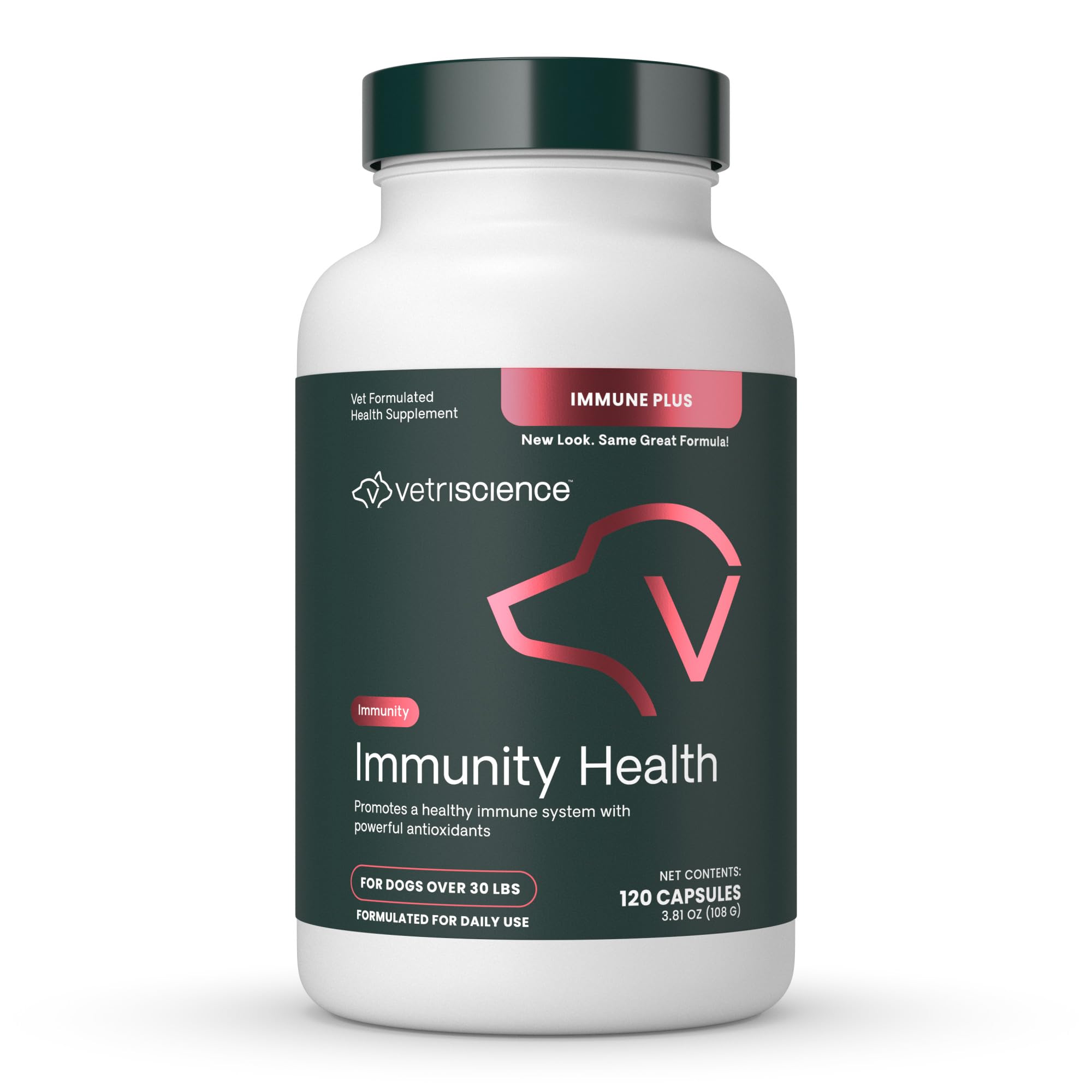
This is the most comprehensively formulated antioxidant supplement in the mid-range tier because it delivers a full enzyme panel — enteric-coated SOD, catalase, and glutathione — alongside a broad vitamin-mineral matrix that includes CoQ10, quercetin, hesperidin, and rutin. The enteric coating is the critical engineering detail here: it protects those fragile enzymes from stomach acid degradation so they reach the small intestine intact, where absorption actually occurs. Most capsule antioxidants on the market skip this coating, meaning the dog passes expensive ingredients without absorbing them.
The reported outcomes from real owners are unusually dramatic for a supplement. Chronic ear infections in a Bernese Mountain Dog resolved after three failed ear flushes. Oral papilloma in a mini Golden Doodle disintegrated within two weeks of daily use. A 14-year-old small breed dog that previously required Apoquel and in annual vet visits for seasonal allergies experienced zero rashes or itching after starting this formula. These anecdotes align with the pharmacological logic — the combination of quercetin (a mast-cell stabilizer) and zinc (a T-cell modulator) directly addresses allergic pathways.
The catch is capsule size and taste. Several owners report that the capsules are large and, if chewed, taste unpleasant enough that dogs reject them. The fix is straightforward: open the capsule and mix the powder into a high-value food like Greek yogurt or a pill pocket. The “easy-open” design is genuinely helpful for this. The 120-count supply at this price point makes it a strong value for multi-dog households or long-term use, particularly for breeds prone to immune-mediated conditions like Dobermans and Labradors.
Why we love it
- Enteric-coated SOD, catalase, and glutathione for actual absorption
- Quercetin and zinc provide dual allergy and immune modulation
- Owner reports include cancer, papilloma, and chronic infection reversal
Good to know
- Capsules are large and taste bitter if chewed
- Must be hidden in food for most dogs
- Not suitable for dogs requiring a tablet-only administration
2. Purina Pro Plan Veterinary Supplements FortiFlora

FortiFlora occupies a unique position: it is technically a probiotic, but the strain used — Enterococcus faecium SF68 — produces antioxidant metabolites that reduce oxidative stress in the gut lining. This matters because 70 percent of a dog’s immune tissue lives in the gastrointestinal tract. By stabilizing the microbiome, FortiFlora indirectly lowers systemic inflammation, which is the same endpoint targeted by direct antioxidant supplements. The mechanism is different, but the clinical result — fewer allergic flares, firmer stools, reduced ear infections — overlaps significantly.
The efficacy data on SF68 is unusually robust for a pet supplement. The strain has been studied in peer-reviewed veterinary journals for its ability to reduce diarrhea duration in shelter dogs and improve IgA levels in puppies. Owners in the dataset confirm this: Goldendoodles with chronic loose stools achieved firm consistency within days. A separate report notes that a dog with skin allergies and paw chewing stopped licking and scratching entirely after two weeks, with ear swabs showing no infection. The anti-inflammatory cascade triggered by a healthy microbiome explains these outcomes.
Each 1-gram sachet has no flavor but dogs accept it readily when sprinkled over food due to the liver-flavor base. The powder format is ideal for small-breed dogs that cannot swallow capsules or for owners who want to avoid pill pockets. The primary limitation is that FortiFlora is a narrow-spectrum intervention — it boosts antioxidant capacity indirectly through gut health, not through direct free-radical scavenging. Dogs with diagnosed cancer, severe arthritis, or cardiac disease need a dedicated antioxidant formula in addition to or instead of this probiotic.
Why we love it
- Vet-recommended strain with peer-reviewed efficacy data
- Powder format works for dogs that refuse capsules
- Improves skin allergies and ear infections through gut modulation
Good to know
- Indirect antioxidant effect — not for direct free-radical defense
- 30-count box requires monthly repurchase for continuous benefit
- Not sufficient alone for dogs with advanced disease
3. Zesty Paws Multivitamin Treats 8-in-1
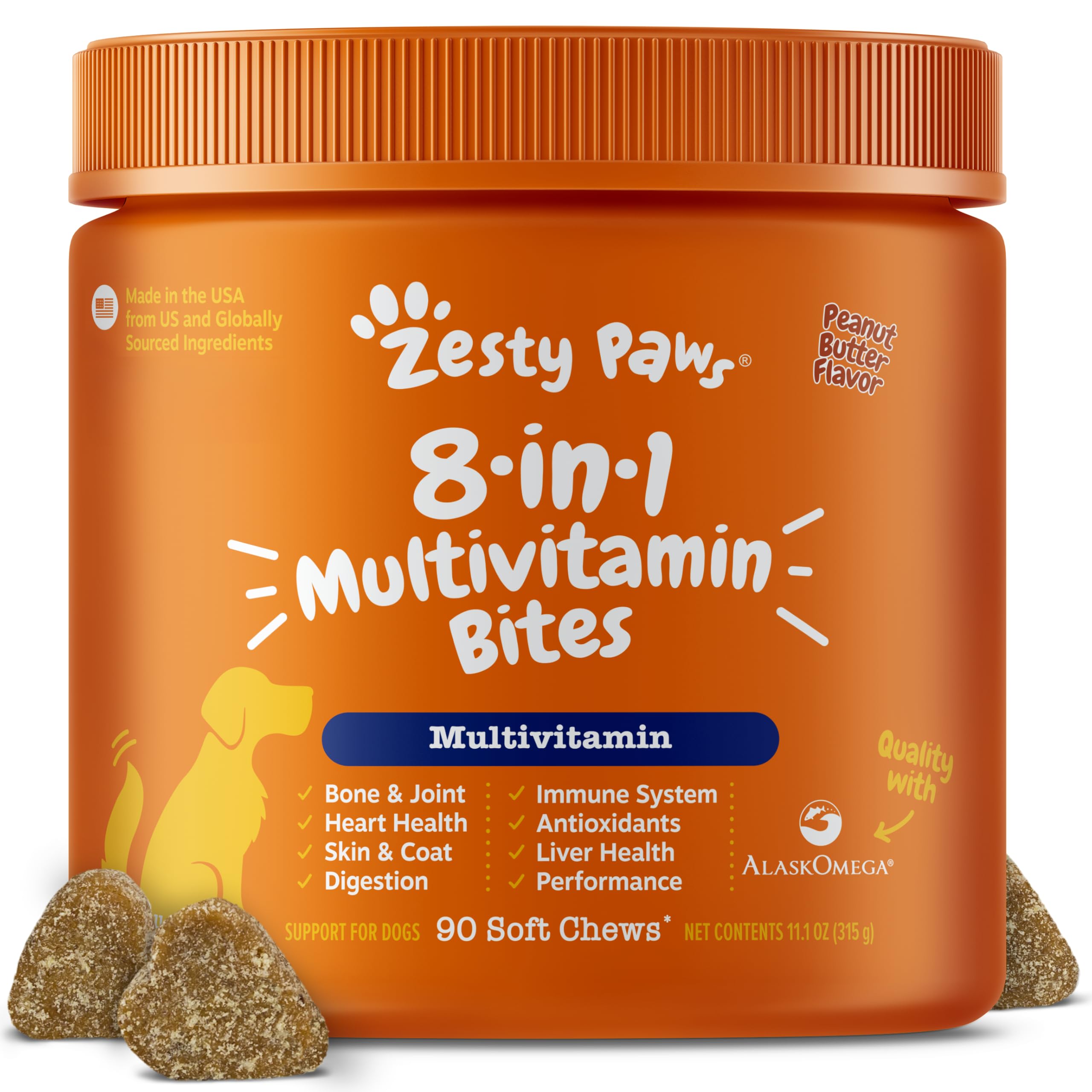
Zesty Paws packages three separate functional categories — joint support (glucosamine, chondroitin, OptiMSM), digestive health (six-strain probiotic blend with 500 million CFU), and skin/coat maintenance (cod liver oil, vitamin E, CoQ10) — into a single soft chew. The antioxidant contribution comes primarily from the CoQ10 and vitamin E, which reduce oxidative stress in joint cartilage and skin cells respectively. For owners who want one daily chew instead of three separate bottles, this consolidation is the main selling point.
The peanut-butter flavor base gives this a compliance advantage over capsule-based competitors. Owner reviews spanning two-plus years of daily use report consistent acceptance even from small breeds and picky eaters. The soft chew texture stays moist in the container rather than drying out, which matters because dried-out chews lose palatability and degrade fat-soluble vitamins. A 100-pound Amstaff owner noted increased energy and liveliness within two months, which tracks with the CoQ10 content supporting mitochondrial ATP production.
The trade-off is that no single category in this formula is dosed at therapeutic levels. The 500 million CFU probiotic is maintenance-level rather than therapeutic — dogs with active diarrhea typically need 1-2 billion CFU. The glucosamine content supports mild stiffness but won’t halt severe osteoarthritis progression. Similarly, the antioxidant panel is broad but shallow: it lacks the enteric-coated enzyme cascade that VetriScience delivers. This makes the Zesty Paws 8-in-1 ideal for healthy adult dogs on a preventative protocol but insufficient for geriatric dogs or those with diagnosed disease.
Why we love it
- Single-chew convenience for joint, gut, and coat support
- High palatability with moist peanut-butter texture
- Consistent quality across multi-year daily use
Good to know
- Antioxidant dosing is maintenance-level, not therapeutic
- 500M CFU probiotic insufficient for active diarrhea cases
- Lacks enteric-coated enzymes for targeted cellular defense
4. Nzymes Antioxidant Treats for Dogs

Nzymes operates on a fundamentally different premise than the products above: it delivers antioxidant enzymes (SOD and catalase primarily) in a treat format that dogs perceive as a reward rather than a medication. This psychological compliance factor is non-trivial — owners of dogs that require daily long-term supplementation often report supplement fatigue where the dog begins refusing pills. The chewable tablet format avoids that entirely. The enzyme profile targets oxidative stress at the cellular level, which explains the reported outcomes in mobility recovery and neurological function.
The case reports from owners are extreme. A Bernese Mountain Dog with severe hip issues that could not walk began standing within two days of starting Nzymes and was walking within a month, leaving the attending veterinarians surprised. A Bea-Tzu that was paralyzed in the rear achieved 85-90 percent recovery and now walks and jumps after a combination of Nzymes and leg exercises. While individual results vary, the pattern — rapid improvement in joint function and mobility — is consistent across multiple breed types and ages. The mechanism likely involves reduction of oxidative stress in synovial fluid and cartilage tissue.
The 60-count supply at this price point positions Nzymes as a mid-range option, but the dosing protocol matters. For dogs with active conditions, the label suggests a loading dose that can run through the container quickly. Some owners of large-breed dogs (125+ pounds) reported needing to purchase the granular format alongside the treats to achieve adequate dosing. Additionally, the treats contain soy as a binding agent — dogs with confirmed soy allergies should avoid this product despite the fact that most owners in the dataset reported no adverse reactions.
Why we love it
- Treat format eliminates pill refusal over long-term use
- Enzyme-based SOD/catalase targets joint and neurological oxidative stress
- Owner reports include recovery from near-paralysis
Good to know
- Contains soy — not suitable for confirmed soy allergies
- Loading dose for large breeds may exhaust 60-count quickly
- Individual results highly variable for severe conditions
5. CardioMAX Heart Support Supplement
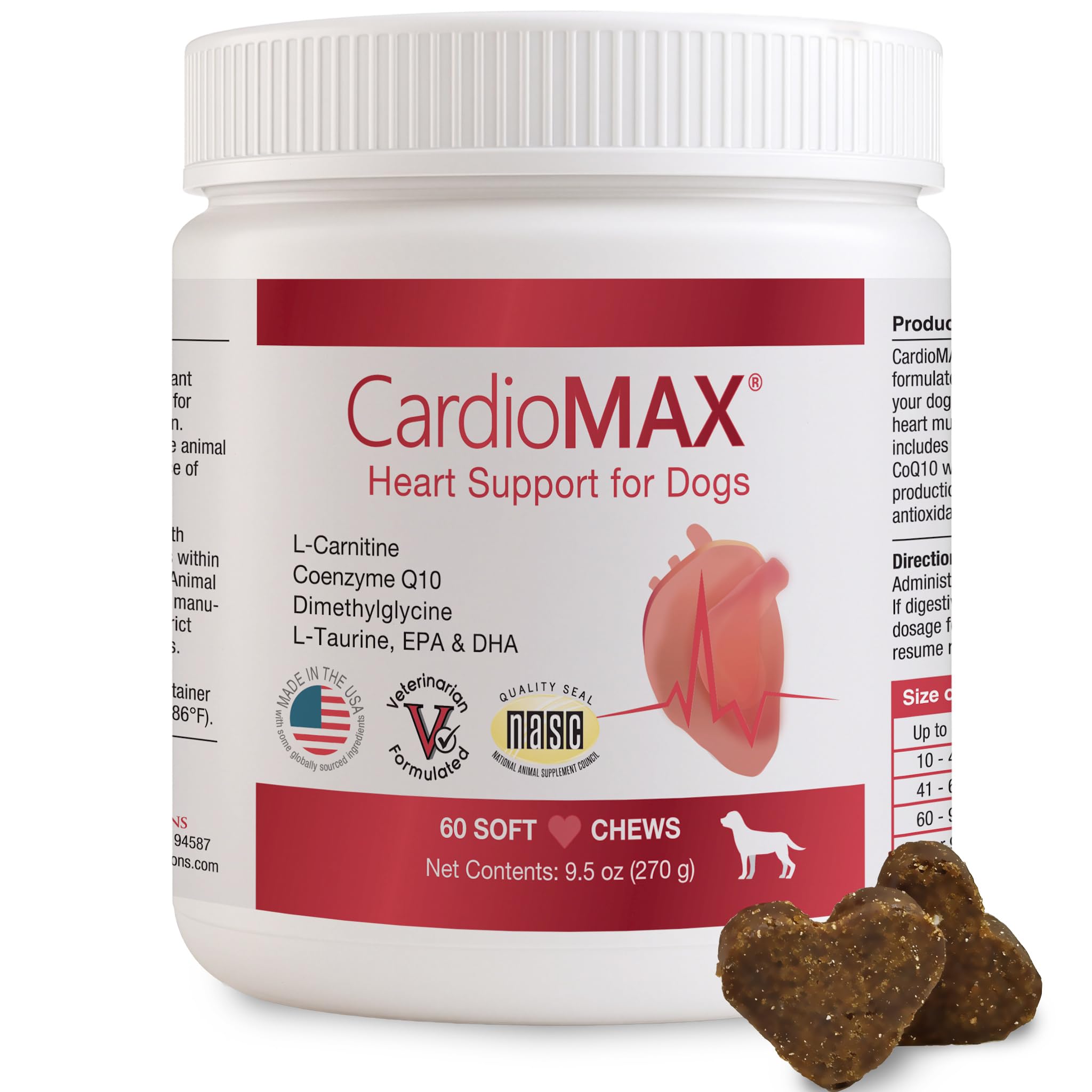
CardioMAX is a targeted formula designed specifically for the cardiac muscle, and its antioxidant profile is calibrated accordingly. The 20 mg of CoQ10 per chew is significant — CoQ10 is the electron carrier in mitochondrial ATP production, and heart tissue has the highest mitochondrial density of any organ. The 100 mg of L-taurine addresses the amino acid deficiency that directly correlates with dilated cardiomyopathy in breeds like Golden Retrievers, Dobermans, and Cocker Spaniels. Combined with hawthorn berry, which improves coronary blood flow through vasodilation, this formula attacks cardiovascular oxidative stress from three independent angles.
The owner reports skew toward senior and geriatric dogs. A 12-year-old Golden Retriever with labored breathing showed improved respiratory effort and energy within weeks of starting CardioMAX. A 15-year-old dog with a suspected heart issue maintained stable quality of life. A Yorkie with an enlarged heart and chronic cough experienced restored vitality. These outcomes align with the known pharmacology: CoQ10 supplementation reduces myocardial oxidative stress, taurine stabilizes cardiac cell membranes, and hawthorn improves contractility. The pork-flavor base makes acceptance high even for small-breed mouths.
The practical limitation is specificity. CardioMAX is not a general antioxidant supplement — it omits the broad-spectrum enzymes and vitamins needed for whole-body immune support, joint health, or allergy modulation. Dogs on this formula for cardiac support should still receive a separate full-spectrum antioxidant supplement for their other physiological systems. The 60-soft-chew supply at this price point is reasonable, but large-breed dogs with active cardiac conditions may require two chews daily, effectively halving the supply duration.
Why we love it
- Vet-formulated with 20mg CoQ10 and 100mg L-Taurine per chew
- Hawthorn berry provides vasodilation and improved coronary flow
- Owner reports document improved respiratory effort and energy
Good to know
- Narrowly targeted — does not replace full-spectrum antioxidant
- Large-breed dogs may need double dosing, reducing supply duration
- Not suitable for dogs without cardiac indication
FAQ
Can I give my dog human antioxidant supplements?
How long before I see results from antioxidant supplements?
Are there any contraindications with prescription medications?
Final Thoughts: The Verdict
For most dogs, the best antioxidants for dogs winner is the VetriScience Immunity Health because its enteric-coated enzyme cascade combined with the quercetin-zinc-CoQ10 matrix delivers the broadest cellular defense spectrum at a sustainable daily cost. If your dog needs targeted cardiac support, grab the CardioMAX Heart Support. And for gut-mediated immunity and allergy modulation, nothing beats the Purina FortiFlora.