
Damp straw bedding breeds ammonia, mites, and daily scooping fatigue — a reality every backyard flock keeper knows well. The material you pour onto your coop floor determines whether cleaning feels like a five-minute reset or a forty-minute chore involving a pitchfork and a dust mask.
I’m Mo Mahin — the founder and writer behind Furric. I’ve spent years comparing poultry bedding specifications, studying moisture-retention data across sand types and organic substrates, and cross-referencing verified owner feedback from hundreds of small-flock keepers to separate genuinely effective coop sand from overpriced filler.
Whether you prioritize parasite control, odor suppression, or easy sifting, this guide breaks down exactly which sand for chicken coop setups deliver measurable daily maintenance savings without harming your birds.
How To Choose The Best Sand For Chicken Coop
Not all sand-like materials perform equally inside a coop. The wrong choice traps moisture, cakes into hard patches, or kicks up respiratory-irritating dust. Focus on three factors that directly impact your flock’s health and your cleaning routine.
Particle Size and Dust Level
Coarse, washed sand with particles between 1 and 3 millimeters drains well and resists clumping. Ultra-fine dust — common in cheap play sand or unscreened quarry sand — can irritate chicken respiratory systems and forms mud when wet. Look for materials described as “washed,” “screened,” or “dust-free” on the label.
Moisture and Ammonia Absorption
Silica sand alone does not neutralize ammonia. Zeolite, diatomaceous earth, and calcium montmorillonite clay each trap moisture and bind ammonium ions, reducing the sharp smell that accumulates in enclosed coops. A blend that includes at least one absorbent additive typically requires fewer full cleanouts per season.
Weight and Refill Frequency
A 50-pound bag of play sand covers roughly 8 to 10 square feet at two inches deep. Lighter organic materials like spent coffee grounds or zeolite weigh less per volume but may need more frequent top-offs because they break down faster. Calculate your coop floor area before buying to avoid partial-coverage surprises.
Quick Comparison
On smaller screens, swipe sideways to see the full table.
| Model | Category | Best For | Key Spec | Amazon |
|---|---|---|---|---|
| Progressive Planet Fresh Coop Dust Bath | Clay & DE Blend | All-in-one dust bath & bedding | 20 lbs, diatomaceous earth + montmorillonite | Amazon |
| JavaEarth Loose Poultry Bedding | Coffee Grounds | Odor control in humid climates | 20 lbs, upcycled spent coffee grounds | Amazon |
| Reliant Pet Chicken Dust Bath | Chicken Sand | Daily dust bathing for small flocks | 7 lbs, non-clumping premium sand | Amazon |
| Zeolite Chicken Dust Bath (Arden Line) | Zeolite Dust | Natural parasite control | 6 lbs, finely milled zeolite | Amazon |
| All Natural Play Sand Brown | Washed Sand | Budget-friendly deep bedding | 50 lbs, washed and screened | Amazon |
In‑Depth Reviews
1. Progressive Planet Fresh Coop Dust Bath
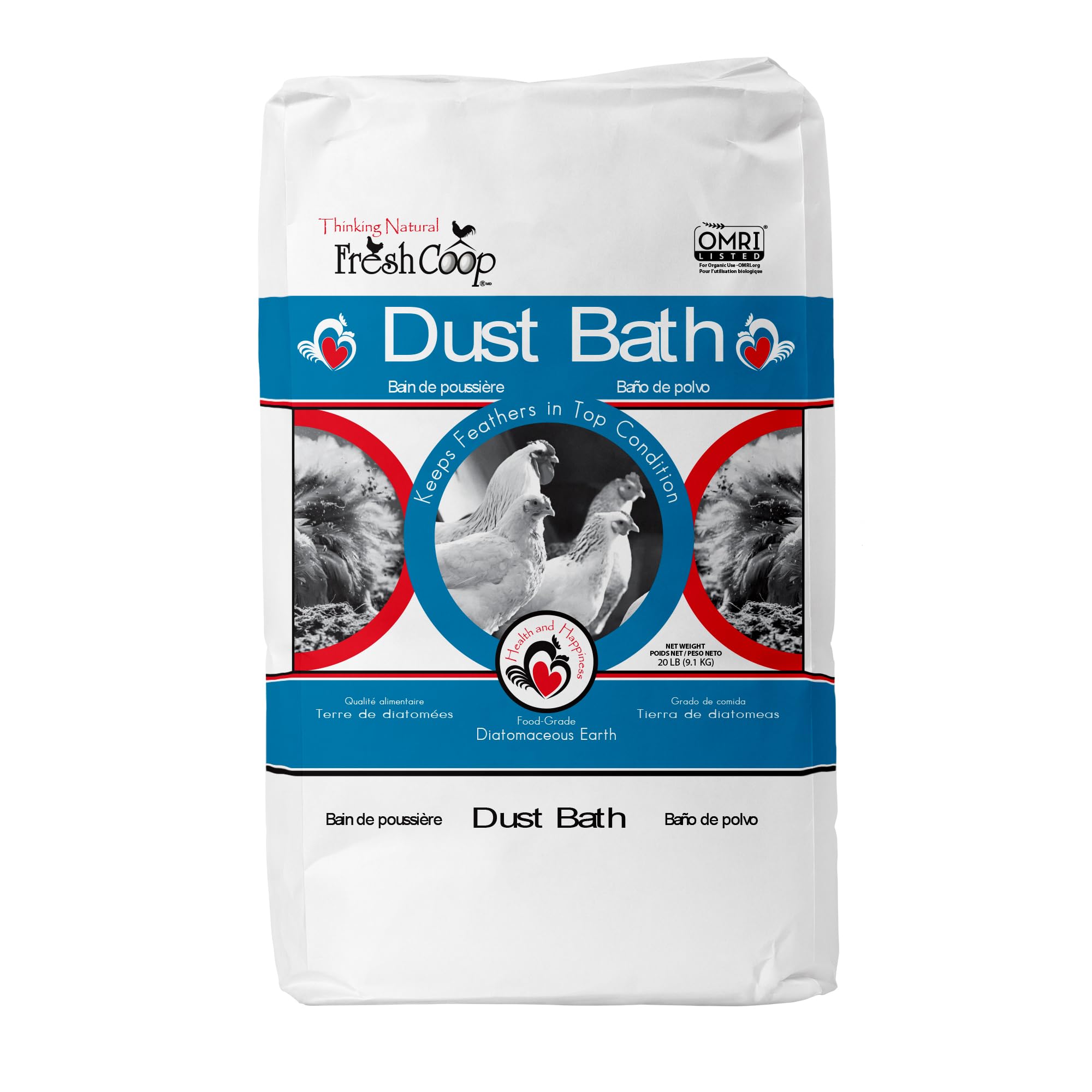
This 20-pound blend combines food-grade diatomaceous earth with calcium montmorillonite clay — two materials known for trapping excess oils and physically deterring external parasites without chemical additives. The dual-mineral composition also absorbs moisture more aggressively than plain sand, which directly reduces the ammonia spike that builds up in enclosed coops during wet weeks.
Owner reports confirm that chickens accepted the material immediately, with multiple keepers noting reduced feather picking and calmer flock dynamics after introducing it as a dedicated dust bath. The granulated texture, however, is noticeably coarser than a true fine dust — keepers who expect a powder-like consistency may be surprised by the grittier feel.
Versatility stands out here: you can pour it into a litter pan, a kiddie pool, or an old tire, and it also works as a thin top-dress over deep sand bedding. The weight-to-coverage ratio is generous — a single bag refreshes a medium dusting station several times.
Why we love it
- Food-grade DE adds mechanical pest control
- Clay component boosts moisture absorption
- Large 20-lb bag extends refill cycle
Good to know
- Granulated texture, not a fine dust
- Premium price per pound vs. plain sand
2. JavaEarth Loose Poultry Bedding
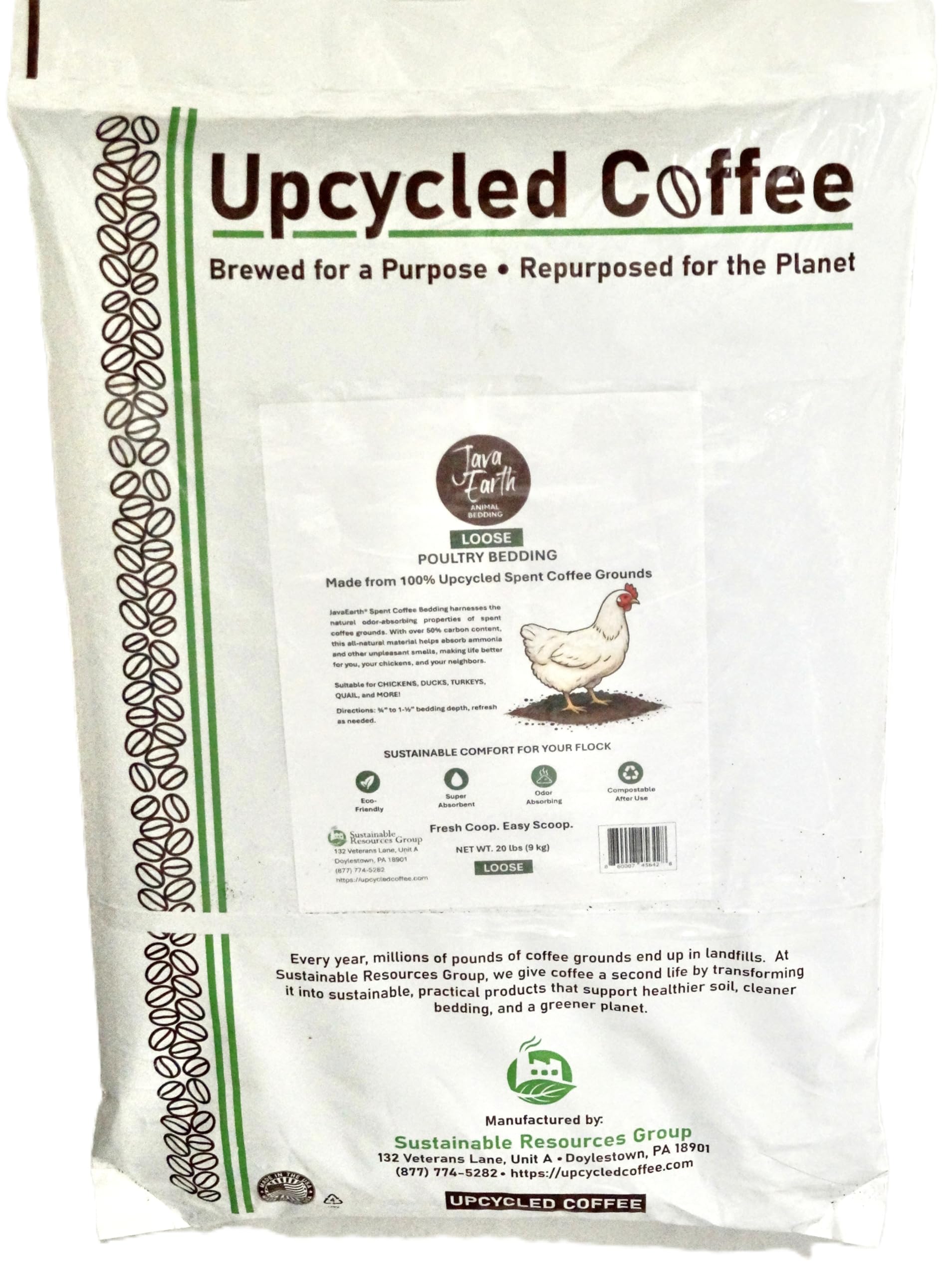
JavaEarth takes an unconventional approach by using upcycled spent coffee grounds as a direct replacement for traditional sand or shavings. The grounds are post-brewed, meaning the caffeine has been removed, so there is no stimulant risk to your flock. The material’s high surface area captures moisture quickly and releases a roasted coffee aroma that masks waste odor for up to three months according to several long-term users.
In dry climates or extreme temperature swings — one reviewer compared it against construction sand in Colorado — the grounds outperformed sand by staying loose rather than baking into a hard crust. The initial smell upon opening the bag is notably strong; airing it out for a day before spreading is recommended by experienced keepers.
Scooping is noticeably easier than with straw because the grounds clump lightly around moist droppings, allowing you to remove waste without hauling out half the bedding. The lightweight nature means six bags cover an 8×8 coop, but the material compacts faster than sand and may require more frequent full replacement.
Why we love it
- Natural odor masking without chemical sprays
- Does not crust like sand in dry heat
- Compostable after use with normal waste
Good to know
- Strong coffee aroma at initial application
- Compacts faster than washed sand
3. Reliant Pet Chicken Dust Bath
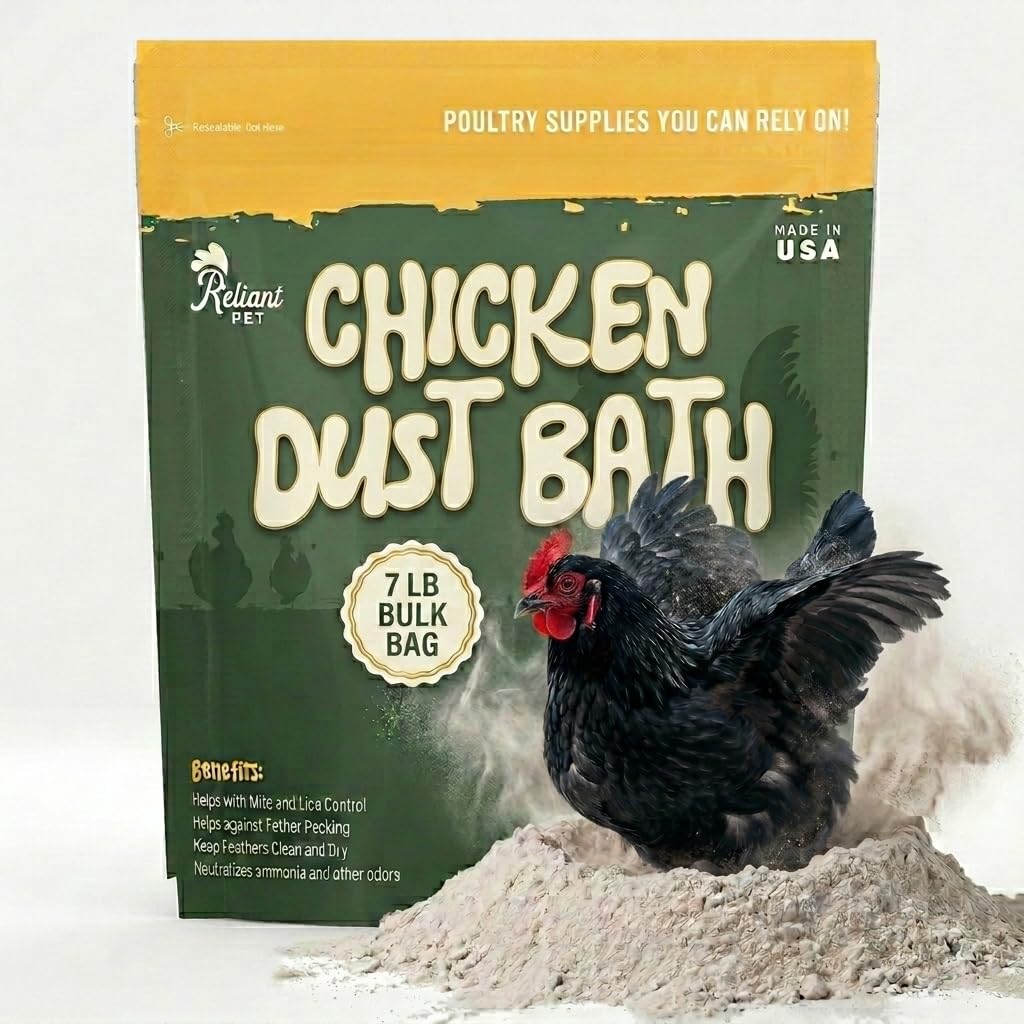
Reliant Pet positions itself as a dedicated chicken sand blend rather than repurposed construction or play sand. The 7-pound bag targets keepers with smaller flocks — around four to six birds — who need a consistent texture for daily dust bathing without the mess of ultrafine powders. The material is described as dust-free and non-clumping, which means it resists the muddy patches that form when moisture hits low-quality sand.
Reviewers consistently report that chickens accepted this mix immediately, even during rainy weather when outdoor foraging is limited. One keeper noted that all seven hens used the bath within minutes of pouring it into the tub. The primary practical complaint is bag size — multiple owners wish the 7-pound format came in a larger option, especially for multi-flock setups.
From a maintenance standpoint, the non-clumping property simplifies spot-cleaning because dry droppings can be sifted out without discarding the entire batch. The texture strikes a middle ground between fine dust and coarse grit, appealing to chickens that reject powdery substrates while still allowing effective oil absorption.
Why we love it
- Dust-free formulation reduces respiratory risk
- Non-clumping texture simplifies daily scooping
- Immediate acceptance by most flocks
Good to know
- 7-lb bag runs small for larger coops
- Higher per-pound cost than bulk alternatives
4. Zeolite Chicken Dust Bath (Arden Line)
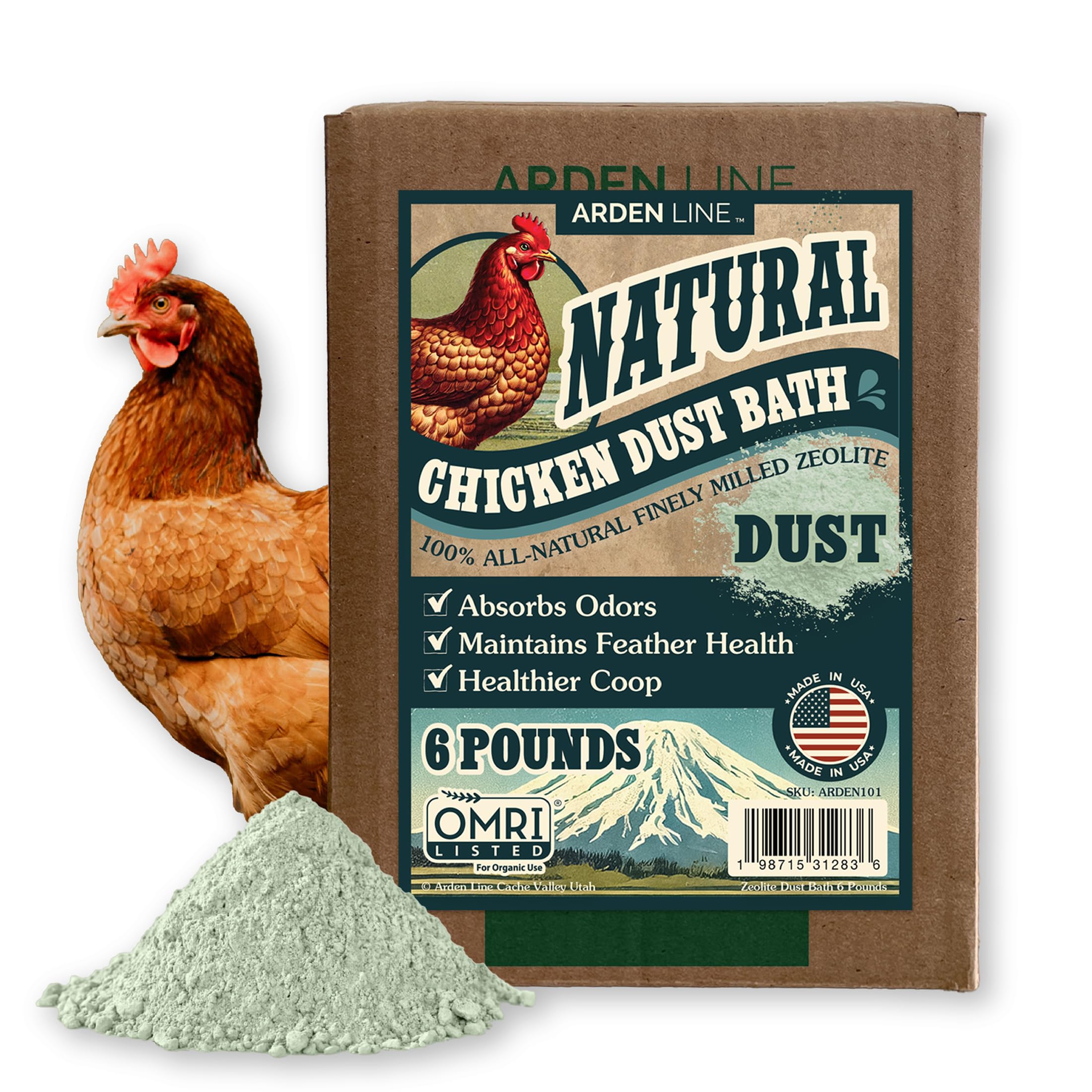
Zeolite is a volcanic mineral with a crystalline structure that acts like a molecular sieve — it traps ammonia ions and excess moisture while remaining chemically inert. Arden Line’s 6-pound box delivers this in a finely milled powder form that creates a true dust bath experience, distinct from the coarser sand blends on this list. The manufacturer emphasizes plastic-free kraft packaging, which appeals to keepers focused on reducing coop waste streams.
Multiple verified buyers report that their chickens actively preferred this over previous sand-only baths, with one keeper noting the flock would queue for turns. The fine texture, however, generates airborne dust during pouring — reviewers recommend wearing a mask during application to avoid inhalation. The 6-pound quantity drew mixed feedback: some found it sufficient for a single dust bath container, while others needed to order multiple boxes to fill their setup completely.
Because zeolite does not break down or decompose, a single application can last several weeks if kept dry and sifted regularly. The material also works as a thin top-dress layer on top of deeper sand bedding to boost ammonia control in the main coop floor.
Why we love it
- Zeolite chemically neutralizes ammonia
- Extremely fine texture mimics natural dust
- 100% plastic-free packaging
Good to know
- 6 lbs may require multiple boxes for large tubs
- Fine dust requires mask during application
5. All Natural Play Sand Brown

This entry-level option is straightforward washed play sand — no additives, no ammonia-binding minerals, no specialized processing. The 50-pound bag delivers the lowest cost per pound in this lineup, making it the practical choice for keepers who need to cover a large coop floor area (roughly 10 square feet at two inches deep) without a significant upfront investment. The sand is screened and washed, meaning it lacks the fine silt that can cause respiratory issues in birds.
Owner feedback highlights the clean, odorless nature of this sand — it arrives dry and pours easily without clumps. One reviewer specifically noted it worked perfectly in a child’s sandbox, which confirms the particle size falls within the safe, non-dusty range suitable for both kids and chickens. The plain composition, however, means it offers zero ammonia control; keepers in humid regions or with densely populated coops will need to supplement with an absorbent top dressing or plan frequent full replacements.
Deep bedding with this sand — four to six inches — creates a composting-style floor that, when stirred regularly, can go months between complete changes. The trade-off is weight: moving and spreading 50 pounds of wet sand is physically demanding, and removing saturated layers requires a shovel rather than a scoop.
Why we love it
- Lowest per-pound cost for large coops
- Washed and screened — minimal airborne dust
- Odorless and ready to use immediately
Good to know
- No ammonia or moisture absorption additives
- Heavy to move and replace
FAQ
Can I use regular play sand as chicken coop bedding?
How deep should I spread sand in a chicken coop?
Does sand get too hot for chickens in summer?
What is the difference between zeolite dust and diatomaceous earth for chickens?
How often should I replace sand in a chicken dust bath?
Final Thoughts: The Verdict
For most backyard keepers, the sand for chicken coop winner is the Progressive Planet Fresh Coop Dust Bath because it combines food-grade pest control, strong moisture absorption, and a generous 20-pound bag size in one product. If you want natural odor suppression without chemical additives, grab the JavaEarth Loose Poultry Bedding. And for keepers covering large coop floors on a tight budget, nothing beats the All Natural Play Sand Brown.