
The right kibble size and nutritional balance can make the difference between a thriving, energetic puppy and one plagued by digestive upset or poor coat quality. Pomeranian puppies have uniquely tiny mouths, fast metabolisms, and specific calcium-to-phosphorus ratio needs that generic puppy foods simply don’t address.
I’m Mo Mahin — the founder and writer behind Furric. I’ve spent years analyzing kibble dimensions, protein-to-fat ratios, ingredient sourcing, and DHA levels across dozens of small-breed formulas, cross-referencing owner-reported outcomes with veterinary nutritional guidelines.
After rigorous comparison of kibble size, guaranteed analysis, and real-world digestion feedback from owners of this specific breed, I’ve identified the formulas that deliver genuine results. This guide to the best food for pomeranian puppies breaks down exactly which recipes support healthy bone development, stable energy, and firm stools without fillers or oversized kibble that tiny jaws struggle to chew.
How To Choose The Best Food For Pomeranian Puppies
Selecting the right diet for a Pomeranian puppy requires more than grabbing any bag labeled “puppy.” Their small size, fast metabolism, and predisposition to dental crowding demand specific attention to kibble geometry, nutrient density, and ingredient digestibility.
Kibble Size and Texture
A Pomeranian puppy’s mouth is exceptionally small even for a toy breed. Kibble that exceeds 8mm in diameter can cause gagging, dropping, or reluctance to eat. Look for formulas explicitly labeled “small breed” or “toy breed” — these typically feature pieces between 5mm and 7mm. Texture also matters: overly hard kibble can stress developing teeth, while a slightly porous surface aids chewing without crumbling.
Critical Nutrient Levels for Toy Breed Puppies
Pomeranian puppies require controlled calcium levels (around 1.0% to 1.5% dry matter) to avoid skeletal overdevelopment issues. DHA at 0.1% minimum supports brain and eye development during the first year. Protein should fall between 28% and 34% dry matter — too low fails muscle growth, too high stresses the kidneys. Omega-3 and Omega-6 fatty acids should appear in a ratio near 5:1 to 10:1 for optimal skin and coat health.
Ingredient Quality Versus Marketing
“Grain-free” is not inherently superior for Pomeranian puppies unless a genuine sensitivity is confirmed. Many whole-grain formulas provide digestible carbohydrates and fiber that stabilize blood sugar in high-energy toy breeds. What matters more is the absence of corn, soy, wheat gluten, and unnamed poultry by-products. The first ingredient should name a specific protein source (chicken, turkey, salmon, lamb) — not a vague “meat meal” or “poultry by-product meal.”
Quick Comparison
On smaller screens, swipe sideways to see the full table.
| Model | Category | Best For | Key Spec | Amazon |
|---|---|---|---|---|
| NutriSource Puppy Food Small & Medium | Premium Grain-Inclusive | Teething puppies needing gentle digestion | ~5mm kibble; prebiotic + probiotic blend | Amazon |
| Royal Canin Small Puppy Dry | Premium Breed-Specific | Pomeranians 2-10 months, breed-specific nutrition | 7mm kibble; DHA + antioxidants | Amazon |
| Wellness CORE Small Breed Puppy | Premium Grain-Free | High-protein, grain-free for sensitive stomachs | ~7mm kibble; 53% protein ingredients | Amazon |
| Hill’s Science Diet Small Bites Puppy | Mid-Range Veterinary | Vet-recommended start for first-time owners | ~6mm kibble; balanced minerals for bones | Amazon |
| Solid Gold Toy & Small Breed Chicken | Mid-Range Grain-Free | Probiotic-rich digestion support for picky eaters | ~5mm kibble; 90M probiotics/pound | Amazon |
In‑Depth Reviews
1. NutriSource Puppy Food for Small and Medium Breeds

NutriSource leads this list because it nails the trifecta Pomeranian puppy owners struggle with most: tiny kibble size, digestibility, and balanced calcium for bone development. The chicken meal first ingredient delivers concentrated protein without excess moisture weight, and the inclusion of brown rice, oatmeal, and barley provides sustained energy without spiking blood sugar. The prebiotic and probiotic blend — specifically proprietary strains — addresses the sensitive digestion that Pomeranian breeders often warn about.
The kibble measures roughly 5mm in diameter, making it one of the smallest options available — a critical feature for a breed where oversized pieces cause chewing frustration and dropped food. Owner reports consistently note firm stools within the first week of transition, and the L-Carnitine and taurine supplementation supports heart health, which is particularly relevant for a breed prone to tracheal collapse and cardiac issues as they age.
Omega-3 and Omega-6 fatty acids in a balanced ratio promote the dense double coat Pomeranians are known for, and the absence of corn, soy, and wheat reduces allergy triggers. The 4lb bag size is practical for a 2-4 pound puppy that eats roughly 1/4 to 1/2 cup per day, ensuring freshness before the bag empties.
Why we love it
- Micro-kibble (~5mm) ideal for tiny Pomeranian mouths
- Prebiotic and probiotic strains promote gut health
- No corn, soy, or wheat — low allergen load
Good to know
- Bag size is small (4lb); periodic repurchase needed
- Some puppies may need a slower transition due to probiotic potency
2. Royal Canin Size Health Nutrition Small Puppy Dry Dog Food

Royal Canin’s small puppy formulation is one of the few on the market that tailors its nutrient profile to the exact developmental window of 2 to 10 months, with an expected adult weight of 9 to 22 pounds. This precision matters because Pomeranian puppies grow rapidly in the first four months, then plateau — overfeeding calcium or protein during either phase can cause orthopedic problems. The formula provides chromium and taurine for cardiovascular health, which Pomeranians need as they are predisposed to valvular heart disease.
The kibble shape is a flattened oval roughly 7mm across its longest axis — slightly larger than the NutriSource but still manageable for a Pom puppy, and the crunchy texture helps scrape away early plaque buildup that toy breeds accumulate quickly due to dental crowding. Breeders frequently recommend this brand because the kibble density ensures even small portions deliver adequate calorie density (around 3,800 kcal/kg) without requiring large volumes.
Owner feedback highlights the absence of diarrhea during transition, a common complaint with foods that are too rich or too high in insoluble fiber. The antioxidant blend (vitamin E, vitamin C, beta-carotene) supports the developing immune system during the period when Pomeranian puppies are most vulnerable to kennel cough and other respiratory infections.
Why we love it
- Exact developmental window targeting (2-10 months)
- Crunchy kibble texture promotes dental health
- High owner-reported transition success — minimal loose stool
Good to know
- Contains wheat and gluten — not suitable for confirmed sensitivities
- Kibble is noticeably larger than micro-kibble competitors
3. Wellness CORE Small Breed Puppy Dry Dog Food
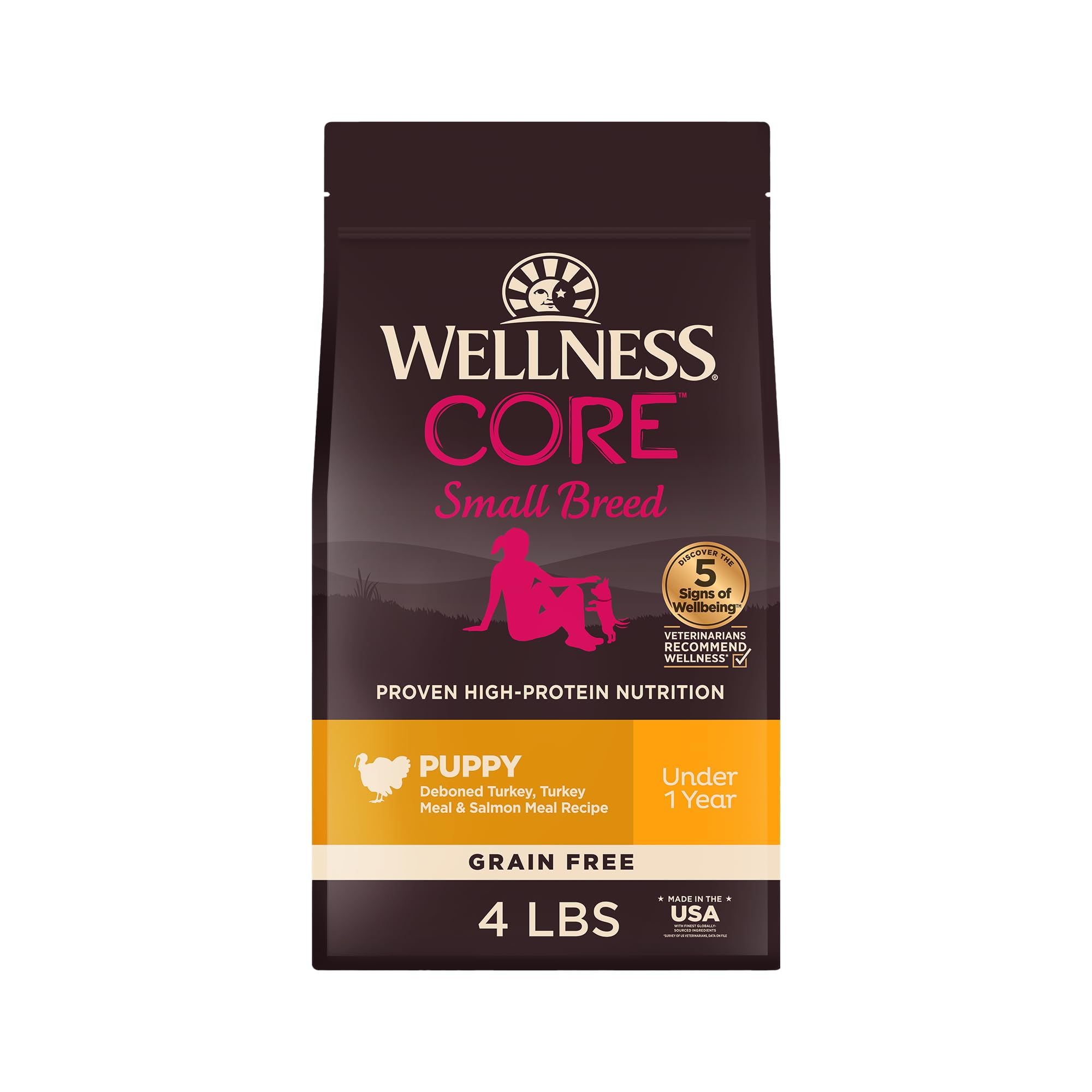
Wellness CORE is the pick for owners whose Pomeranian puppy demonstrates a consistently sensitive stomach or food aversion. The high-protein, grain-free formula uses turkey as the primary protein — a novel source for many puppies raised on chicken-based diets — which can help identify or avoid chicken allergies. The inclusion of spinach, blueberries, and pumpkin provides antioxidant and fiber diversity that grain-inclusive formulas sometimes lack.
At roughly 7mm in diameter, the kibble is slightly larger than the micro-kibble options but still within the acceptable range for Pomeranian puppies, and the texture is moderately crunchy without being rock-hard. The guaranteed DHA level (0.1% minimum) is clearly stated on the bag, meeting the recommended threshold for brain development. Owners frequently report that coat quality improves visibly within three weeks, with the omega fatty acid ratio supporting the dense undercoat Pomeranians grow during their first coat transition at 4-6 months.
The 4lb bag reseals via ziplock, which helps maintain freshness given the slow consumption rate of a toy breed puppy. One rare but noted downside: the high protein content (34% dry matter) can cause overly firm stools or mild dehydration if water intake isn’t monitored. Owners should ensure fresh water is always accessible, especially during the adjustment period.
Why we love it
- Turkey-based novel protein for suspected chicken allergies
- DHA clearly stated at 0.1% minimum for brain development
- Resealable ziplock bag for freshness
Good to know
- High protein requires monitoring water intake
- Some owners report an adjustment period of 5-7 days
4. Hill’s Science Diet Puppy Small Bites Dry Dog Food

Hill’s Science Diet is the formula most frequently recommended by veterinarians for first-time Pomeranian puppy owners, and for good reason: the nutrient profile is conservative enough to avoid common digestive upsets while still delivering the DHA and balanced calcium that developing toy breeds need. The small bites are roughly 6mm in diameter, making them approachable for a 9-week-old Pom that’s transitioning from milk or wet food to dry kibble.
The chicken and brown rice recipe uses natural ingredients without artificial colors or preservatives, and the mineral profile (calcium at 1.2%, phosphorus at 0.9%) falls squarely within the safe range for toy breed skeletal development. The antioxidant blend (vitamin E, beta-carotene) supports immune function during the vaccination and socialization period when stress often compromises digestion. Owner reviews consistently note that puppies accept this food readily, even those that had refused other brands at the breeder’s recommendation.
The kibble is slightly more porous than competitors, which helps with hydration when soaked for very young puppies or those with dental sensitivity. The 4.5lb bag is economical for a single puppy, and the resealable top maintains freshness. One consideration: the chicken and brown rice base is not novel, so puppies with suspected poultry sensitivities may need a different option.
Why we love it
- Veterinarian-recommended for safe, predictable digestion
- Calcium and phosphorus ratio ideal for small breeds
- Porous kibble softens quickly when moistened
Good to know
- Chicken-based — not suitable for chicken-sensitive puppies
- Lower protein content (28%) may not satisfy high-energy Poms
5. Solid Gold Toy & Small Breed Dry Dog Food
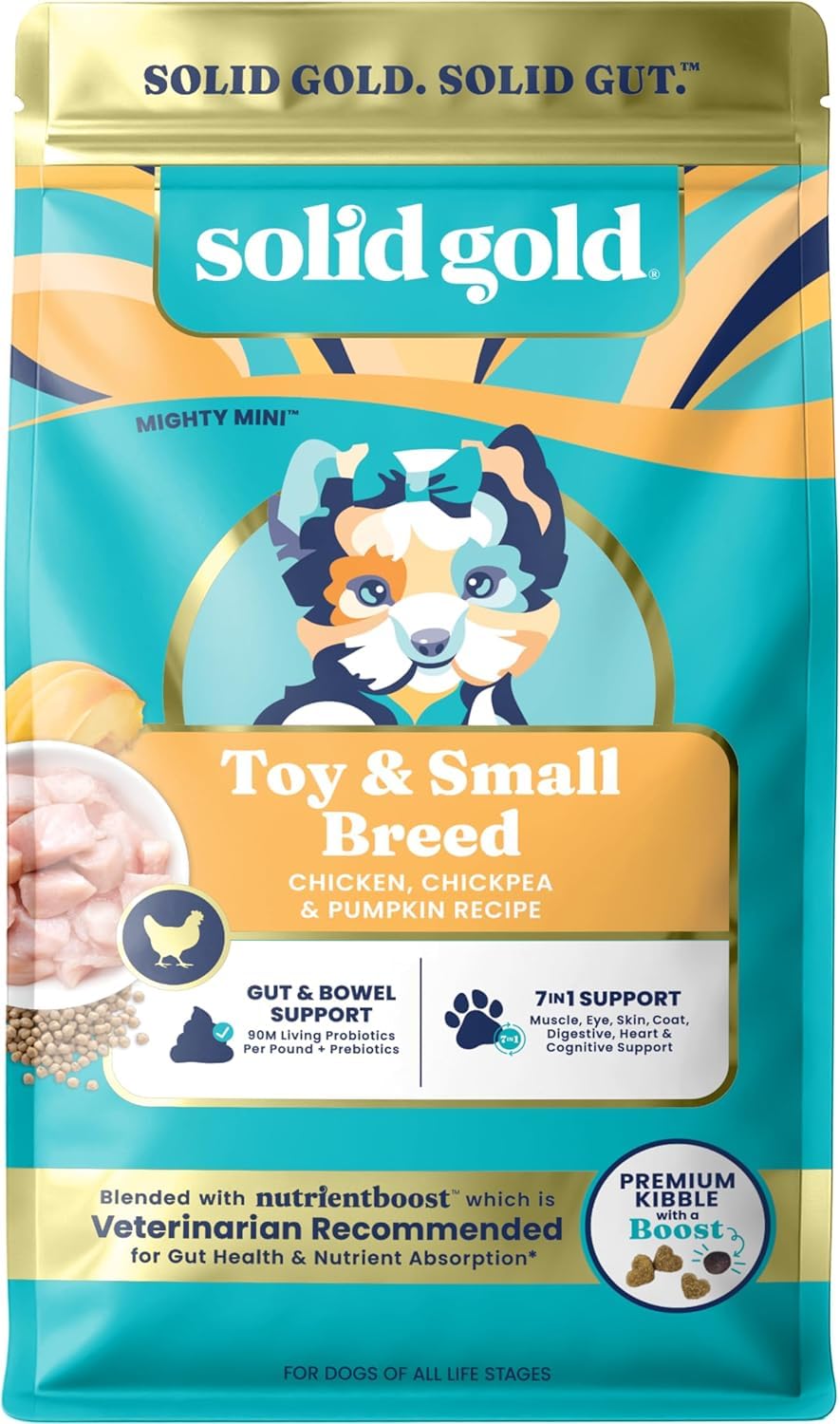
Solid Gold’s toy and small breed formula is the most aggressively designed for micro-mouths — the kibble measures roughly 5mm, among the smallest of any commercial puppy food. The grain-free, gluten-free recipe targets the segment of Pomeranian puppies with confirmed grain sensitivities that manifest as itchy paws, ear inflammation, or loose stool. The 90 million probiotics per pound is the highest concentration in this comparison, making it the strongest option for ongoing digestive maintenance.
The first ingredient is real chicken, not chicken meal, which provides moisture and palatability that picky eaters find irresistible — a common scenario with Pomeranians who can be notoriously selective. The small-breed-specific blend includes taurine for cardiac health and omega-3 from flaxseed for the double coat. Despite being labeled for “All Life Stages,” the calcium level (1.3%) is appropriate for growing puppies and won’t cause skeletal overgrowth issues.
Owner feedback emphasizes that even the pickiest Pomeranians accept this food, which is a critical win for owners dealing with weight maintenance in a breed that can easily become underweight during growth spurts. The resealable bag is practical for slow consumption, though the 3.75lb size is the smallest in this comparison and may require more frequent restocking for multi-dog households.
Why we love it
- Smallest kibble in the comparison — ideal for tiny mouths
- 90M probiotics per pound for digestive support
- High palatability for picky Pomeranian puppies
Good to know
- 3.75lb bag is relatively small for the price point
- Grain-free formulation may not suit puppies without sensitivities
FAQ
How small should the kibble be for a Pomeranian puppy?
At what age should a Pomeranian puppy transition from puppy to adult food?
Is grain-free food better for Pomeranian puppies with allergies?
How much DHA does a Pomeranian puppy need in their food?
Should I wet the kibble before feeding my Pomeranian puppy?
Final Thoughts: The Verdict
For most owners seeking the best food for Pomeranian puppies, the winner is the NutriSource Puppy Food for Small and Medium Breeds because it combines the smallest kibble size with a proven prebiotic and probiotic system that prevents the digestive upset Pomeranian puppies are notorious for. If you want a breed-specific formula with an exact developmental window and optimal dental texture, grab the Royal Canin Small Puppy Dry. And for a high-protein grain-free option that treats sensitive stomachs without sacrificing coat quality, nothing beats the Wellness CORE Small Breed Puppy.